A front door is more than an entrance to a home; it is one of the first visual statements people notice.
Throughout history, front door colors have carried symbolic meanings connected to personality, culture, protection, prosperity, and emotional expression.
Homeowners often choose front door colors based on design preferences, but many colors also represent deeper psychological and spiritual ideas.
Quick answer:
Front door color meanings describe the emotions, symbolism, and personality impressions associated with different door colors. For example, red can symbolize energy and welcome, blue can represent calm and trust, black can suggest elegance and strength, and green can represent growth and harmony.
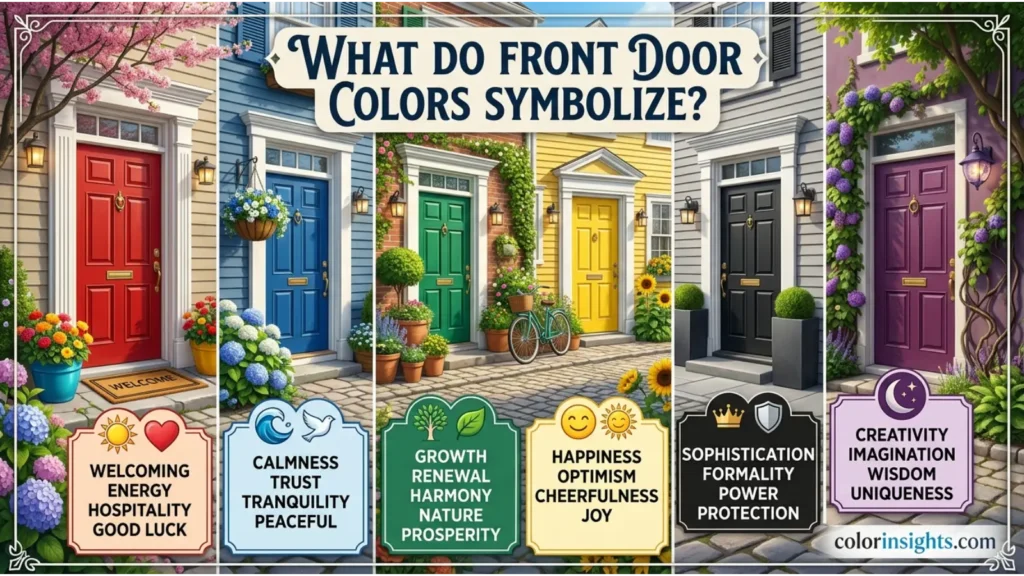
What Do Front Door Colors Symbolize?
Front door color symbolism varies depending on cultural traditions, personal experiences, architectural styles, and design trends. A front door often acts as a visual introduction to a home, communicating feelings about the people who live inside.
Color psychology suggests that different colors can influence human emotions and perceptions. While color preferences do not reveal someone’s personality with certainty, certain colors are commonly associated with specific moods and meanings.
Common front door color symbolism includes:
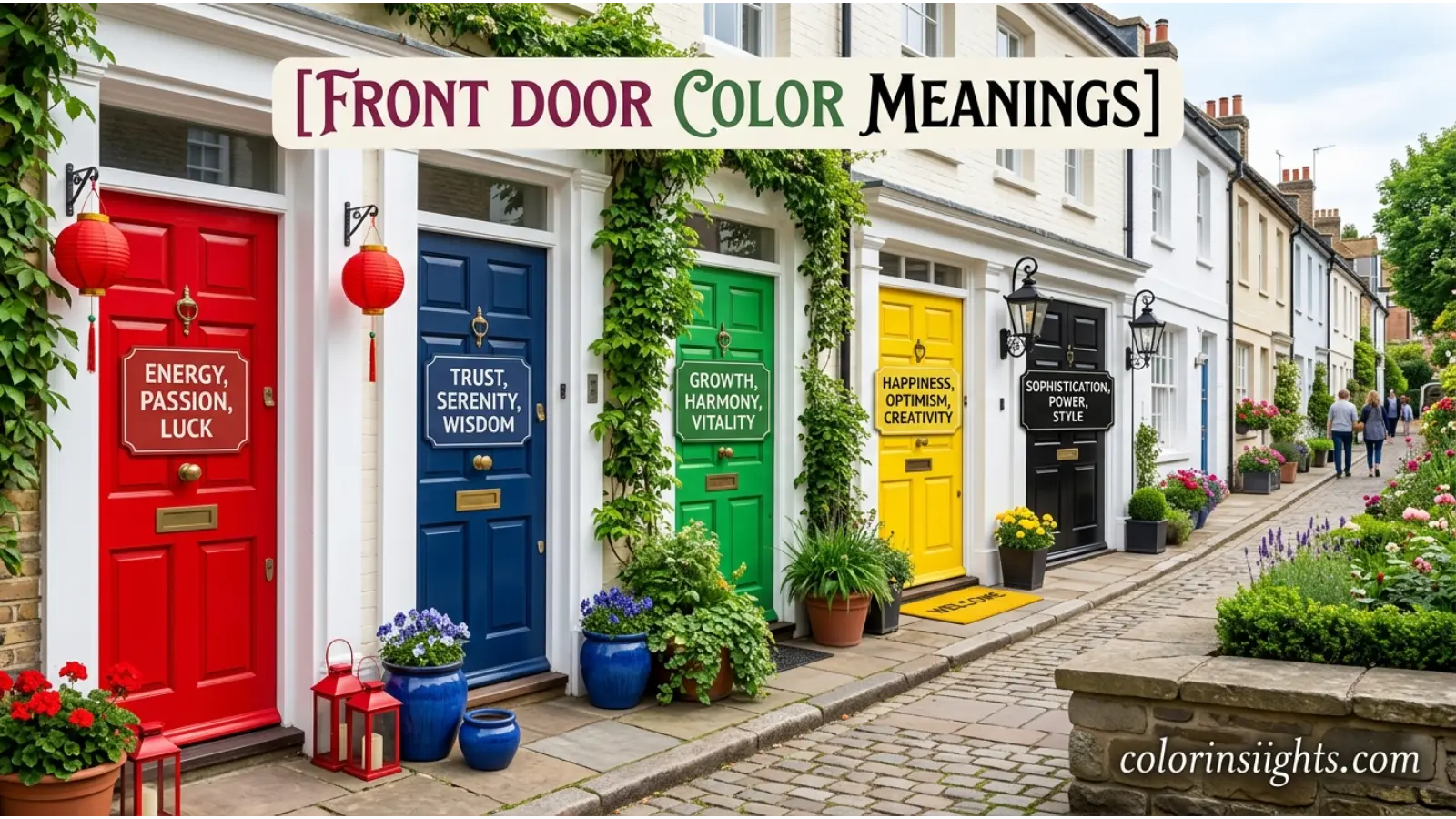
- Red front doors: Energy, passion, confidence, warmth, and hospitality.
- Blue front doors: Peace, stability, trust, relaxation, and emotional balance.
- Green front doors: Nature, renewal, prosperity, growth, and harmony.
- Black front doors: Elegance, authority, sophistication, and protection.
- White front doors: Purity, simplicity, cleanliness, and fresh beginnings.
- Yellow front doors: Happiness, optimism, creativity, and friendliness.
- Gray front doors: Balance, modernity, neutrality, and timeless style.
- Brown front doors: Reliability, comfort, tradition, and connection to nature.
- Purple front doors: Creativity, individuality, luxury, and imagination.
- Orange front doors: Enthusiasm, warmth, confidence, and social energy.
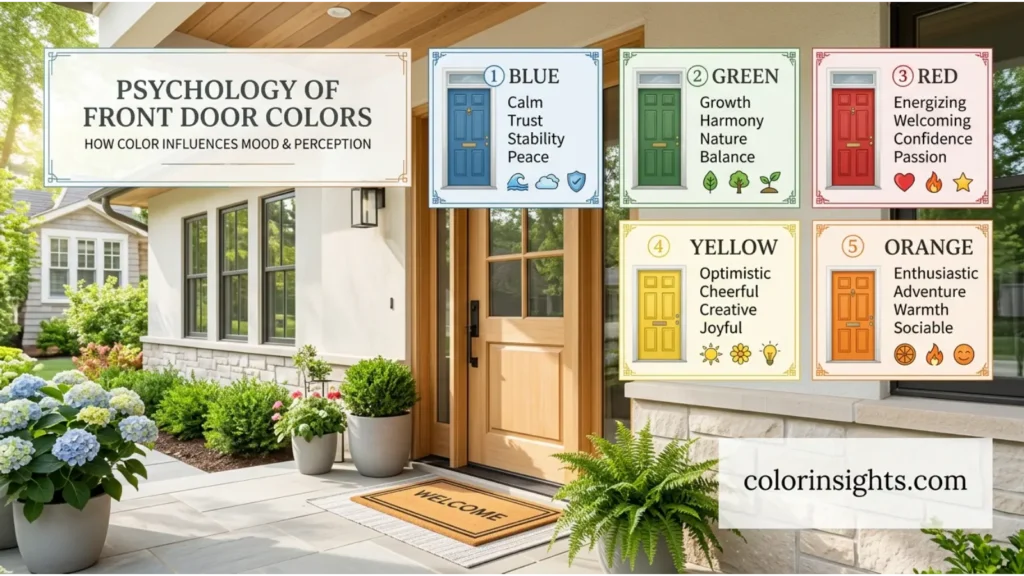
Psychology of Front Door Colors
Color psychology studies how colors influence emotions, behavior, and human perception. A front door color can shape how visitors perceive a home before entering.
Emotional Associations
Different door colors can create different emotional impressions:
- Bright colors often feel energetic, welcoming, and expressive.
- Dark colors may communicate strength, elegance, and security.
- Natural colors often create feelings of comfort, stability, and connection.
- Neutral colors can suggest simplicity, balance, and sophistication.
Psychological Effects
Front door colors may influence:
- First impressions of a home.
- Feelings of comfort and belonging.
- Perceptions of personality and lifestyle.
- Emotional reactions when entering a space.
Positive Emotional Responses
A thoughtfully selected front door color can create feelings of:
- Warmth and invitation.
- Calmness and relaxation.
- Confidence and security.
- Creativity and individuality.
- Freshness and renewal.
Negative Emotional Responses
Depending on the shade and surroundings, some colors may create impressions of:
- Excessive intensity.
- Emotional distance.
- Coldness.
- Lack of personality.
- Over-decoration.
Impact on Mood and Behavior
A welcoming front door color can encourage positive emotional responses from residents and guests. Warm shades may make an entrance feel more social, while calming shades may create a peaceful atmosphere.
However, color effects depend on lighting, architecture, neighborhood style, and personal associations.
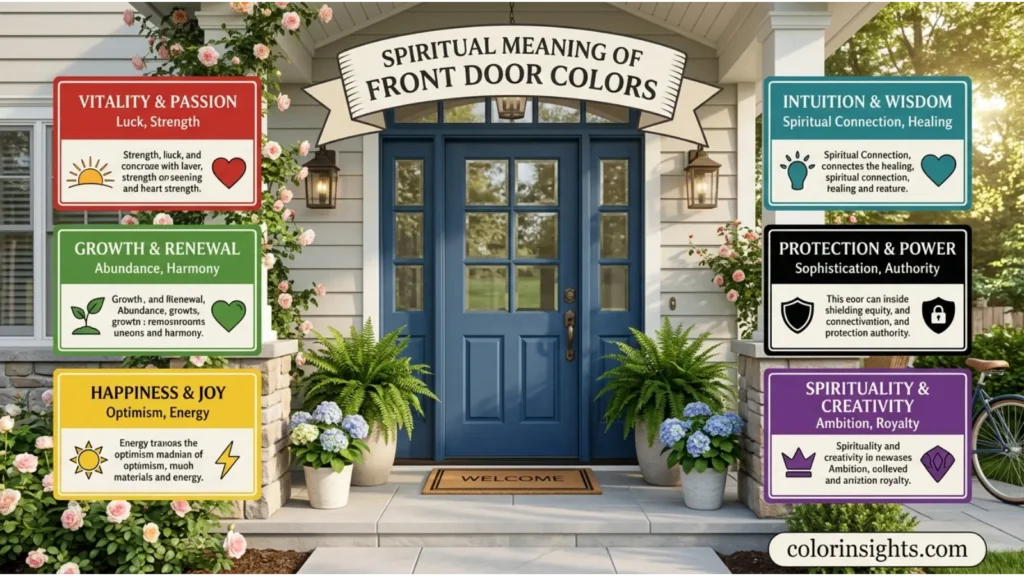
Spiritual Meaning of Front Door Colors
Many cultures view entrances as symbolic boundaries between the outside world and personal space. Because of this, front door colors often carry spiritual interpretations related to protection, energy, and transformation.
Red Front Door
Red is often connected with:
- Protection.
- Strength.
- Vital energy.
- Courage.
- Passion.
- Celebration.
In some traditions, red doors symbolize a welcoming entrance or a place of safety.
Blue Front Door
Blue is associated with:
- Spiritual peace.
- Wisdom.
- Healing.
- Protection.
- Emotional balance.
- Inner calm.
Many people choose blue because it creates a peaceful and trustworthy atmosphere.
Green Front Door
Green represents:
- Renewal.
- Growth.
- Nature.
- Abundance.
- Healing.
- Balance.
It is often connected with ideas of prosperity and harmony.
White Front Door
White symbolizes:
- Purity.
- Clarity.
- New beginnings.
- Spiritual cleanliness.
- Simplicity.
It is often associated with peaceful and fresh energy.
Black Front Door
Black is connected with:
- Protection.
- Mystery.
- Power.
- Authority.
- Stability.
- Elegance.
It can represent a strong boundary between private and public life.
Yellow Front Door
Yellow symbolizes:
- Happiness.
- Enlightenment.
- Optimism.
- Creativity.
- Positive energy.
It is often chosen by people who want their home to appear cheerful and inviting.
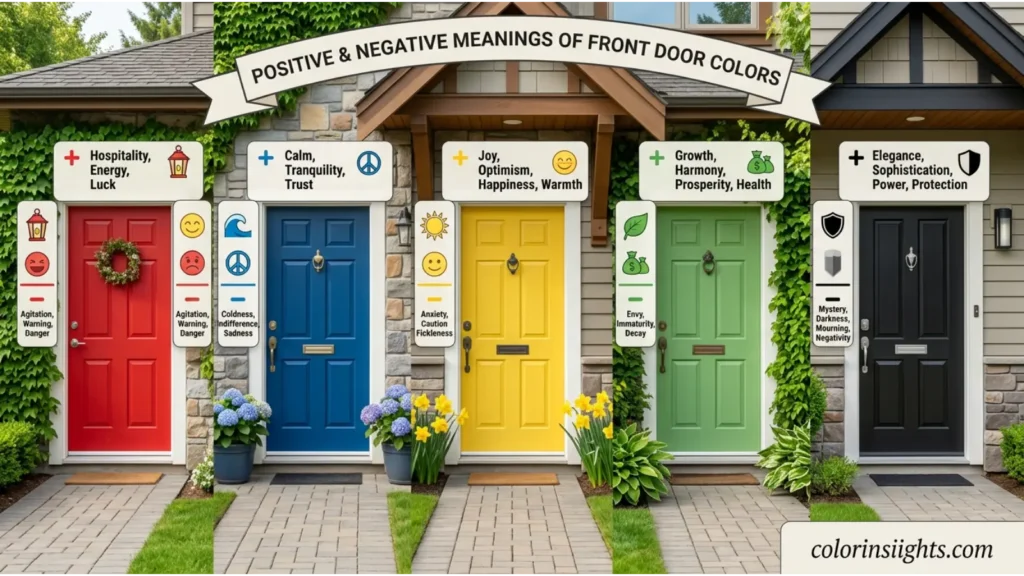
Positive and Negative Meanings of Front Door Colors
Positive Meanings
Front door colors can represent many positive qualities.
Red
Positive symbolism:
- Energy.
- Confidence.
- Passion.
- Warm hospitality.
Example:
A red front door can create a bold and welcoming appearance.
Blue
Positive symbolism:
- Peace.
- Trust.
- Stability.
- Relaxation.
Example:
A soft blue door can make a coastal or traditional home feel calm.
Green
Positive symbolism:
- Growth.
- Balance.
- Nature.
- Renewal.
Example:
A green door can complement gardens and natural landscapes.
White
Positive symbolism:
- Purity.
- Freshness.
- Simplicity.
- Clean design.
Example:
A white door can make a small entrance appear brighter.
Black
Positive symbolism:
- Sophistication.
- Strength.
- Luxury.
- Protection.
Example:
A black door can give a modern home a refined appearance.
Negative Meanings
Some colors may create less desirable impressions depending on context.
Red
Possible negative associations:
- Aggression.
- Excessive intensity.
- Overstimulation.
Example:
A very bright red door may dominate a subtle architectural style.
Blue
Possible negative associations:
- Emotional distance.
- Coldness.
- Seriousness.
Example:
A dark blue door may feel formal rather than welcoming.
Green
Possible negative associations:
- Stagnation.
- Over-traditional appearance.
Example:
Certain shades of green may appear outdated in modern homes.
White
Possible negative associations:
- Sterility.
- Emptiness.
- Lack of warmth.
Example:
An entirely white entrance may feel plain without decorative elements.
Black
Possible negative associations:
- Heaviness.
- Mystery.
- Isolation.
Example:
A black door in a poorly lit area may appear less inviting.
Meanings of Front Door Colors
The meaning of a front door color changes depending on architecture, culture, environment, and personal preference. A color that represents prosperity in one tradition may symbolize something different in another.
A homeowner selecting a door color should consider:
- The style of the home.
- Neighborhood appearance.
- Natural surroundings.
- Personal emotional connection.
- Desired first impression.
Feng Shui
In Feng Shui traditions, entrance colors are often connected with energy flow and the relationship between a home and its surroundings.
Associated Elements
Common associations include:
- Red: Fire element, passion, recognition, and energy.
- Green: Wood element, growth and renewal.
- Blue: Water element, calmness and wisdom.
- Brown: Earth element, stability and grounding.
- White: Metal element, clarity and organization.
Energy Symbolism
A front door is often considered an important energy point because it represents how opportunities and experiences enter a home.
Best Rooms
Although Feng Shui focuses mainly on entrances, related colors can also influence:
- Living rooms.
- Offices.
- Meditation spaces.
- Bedrooms.
Recommended Color Combinations
Popular combinations include:
- Blue with white for calmness.
- Green with natural wood tones for harmony.
- Black with metallic accents for elegance.
- Red with neutral colors for balance.
Home Decorating Tips
Choose a front door color that:
- Complements exterior materials.
- Matches landscaping.
- Creates visual balance.
- Reflects the atmosphere you want to create.
Marketing
Front door colors also influence how homes and properties are perceived.
Branding Psychology
Colors communicate emotional messages:
- Blue suggests trust.
- Green suggests sustainability and growth.
- Black suggests premium quality.
- Red suggests excitement and attention.
Consumer Perception
A home’s exterior color can affect:
- Perceived value.
- Professional appearance.
- Emotional connection.
Trust Signals
Neutral and traditional colors often communicate reliability, while unique colors can suggest creativity and individuality.
Product Packaging and Advertising Applications
Color psychology principles used in marketing are similar to those used in home design. Businesses carefully select colors to influence customer emotions and recognition.
Design
Front door colors play an important role in visual design.
Interior Design
A door color can:
- Create contrast.
- Highlight architectural details.
- Improve curb appeal.
- Establish a design theme.
Graphic Design
Designers use similar color principles to communicate:
- Trust.
- Energy.
- Luxury.
- Simplicity.
Web Design
Colors influence:
- User attention.
- Emotional response.
- Brand personality.
User Experience
Color choices can guide attention and create emotional impressions.
Minimalist Aesthetics
Minimalist homes often use:
- Black for sophistication.
- White for simplicity.
- Gray for modern balance.
- Natural colors for warmth.
Fashion
Front door color psychology also connects with fashion because colors communicate identity and personal style.
Clothing Symbolism
Color choices in clothing may suggest:
- Confidence.
- Creativity.
- Calmness.
- Professionalism.
Seasonal Use
Examples:
- Bright colors are popular in spring and summer.
- Deep tones often appear in autumn and winter styles.
Styling Effects
A carefully chosen color can:
- Create a memorable impression.
- Express individuality.
- Complement surroundings.
Personality Impressions
People may associate colors with traits such as:
- Confidence.
- Creativity.
- Reliability.
- Openness.
Advantages and Disadvantages
Advantages:
- Shows personal expression.
- Creates visual interest.
- Enhances style.
Disadvantages:
- Trends may change.
- Some colors may limit flexibility.
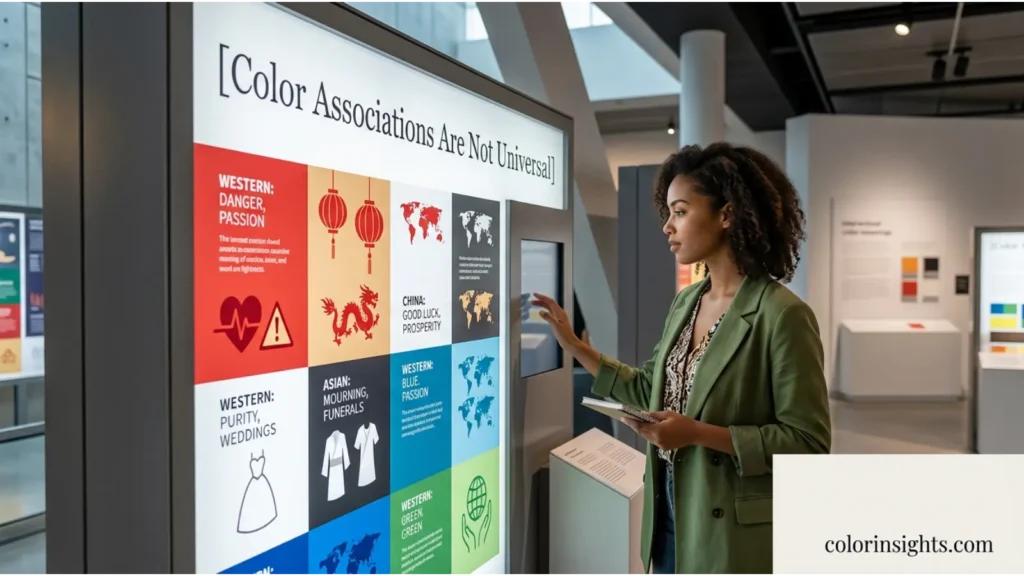
Color Associations Are Not Universal
Color meanings differ across societies, historical periods, and belief systems.
Western Cultures
In many Western cultures:
- White often represents purity and new beginnings.
- Black may represent elegance, power, or formality.
- Red may represent passion and energy.
Eastern Cultures
Eastern traditions may interpret colors differently:
- Red is often associated with luck, celebration, and prosperity.
- White may represent mourning in some cultures.
- Gold can symbolize wealth and success.
Religious Traditions
Religious symbolism varies widely:
- White is often linked with holiness and purity.
- Green may represent life and renewal.
- Blue may symbolize spirituality and protection.
Historical Interpretations
Throughout history, colors have represented:
- Social status.
- Wealth.
- Authority.
- Spiritual beliefs.
For example, certain colors were historically expensive to produce and became associated with luxury.
Modern Global Interpretations
Today, globalization has created more flexible meanings. Personal taste, architecture, and lifestyle often influence color choices as much as tradition.
What Front Door Colors Say About Your Personality
People often associate preferred colors with personality traits, although color preference alone cannot accurately determine character.
People Who Prefer Red Doors
Often associated with:
- Confidence.
- Energy.
- Sociability.
- Passion.
Possible challenges:
- Impatience.
- Desire for attention.
People Who Prefer Blue Doors
Often associated with:
- Calmness.
- Reliability.
- Thoughtfulness.
- Emotional balance.
Possible challenges:
- Reserved behavior.
- Avoiding change.
People Who Prefer Green Doors
Often associated with:
- Harmony.
- Growth.
- Nature appreciation.
- Stability.
Possible challenges:
- Resistance to disruption.
People Who Prefer Black Doors
Often associated with:
- Sophistication.
- Independence.
- Strength.
Possible challenges:
- Appearing distant.
People Who Prefer Bright-Colored Doors
Often associated with:
- Creativity.
- Optimism.
- Individuality.
- Openness.
Possible challenges:
- Desire for constant stimulation.
FAQs:
What defines front door color meanings?
Front door color meanings describe the symbolism, emotional associations, and cultural interpretations connected with different door colors.
What does a front door color symbolize?
A front door color can symbolize personality, hospitality, protection, mood, and design preferences.
Why are front door colors important?
Front door colors influence first impressions, curb appeal, and the emotional atmosphere of a home.
Is a front door color warm or cool?
It depends on the color. Red, orange, and yellow are warm colors, while blue and some greens are considered cool colors.
What emotions do front door colors represent?
Different colors may represent emotions such as happiness, calmness, confidence, trust, energy, or stability.
What is the spiritual meaning of front door colors?
Spiritual meanings vary, but many traditions connect door colors with protection, renewal, balance, and positive energy.
What colors pair well with front doors?
Popular combinations include:
- Black with white trim.
- Blue with gray or natural wood.
- Green with beige or brown.
- Red with neutral tones.
What does liking a specific front door color say about a person?
A preferred door color may reflect personal taste and design style, but it does not determine personality with certainty.
Conclusion:
Front door colors communicate more than visual-style. They can represent emotions, cultural traditions, psychological associations, and personal expression.
If someone chooses a bold red entrance, a peaceful blue doorway, a natural green design, or an elegant black door, the choice often reflects the atmosphere they want their home to create.
Understanding front door color meanings helps homeowners make informed design decisions while appreciating the deeper symbolism behind everyday colors.