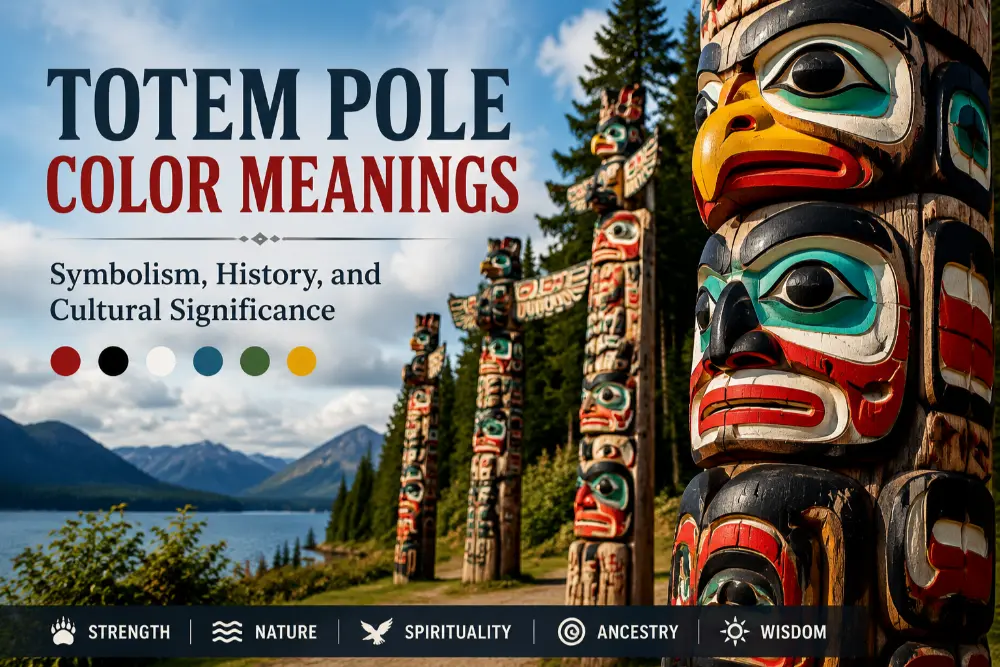
Totem pole color meanings reveal how Indigenous artists use colors, carvings, and symbols to preserve stories, histories, family connections, and cultural traditions. Created primarily by Indigenous peoples of the Pacific Northwest Coast, these carved wooden monuments communicate important messages through animals, figures, and carefully chosen colors. The colors painted on totem poles often represent natural elements, spiritual ideas, emotions, and ancestral connections. However, these meanings are not universal and can differ among Indigenous nations and communities.
The colors painted on totem poles often enhance the meaning of the carvings by representing natural elements, spiritual ideas, emotions, and ancestral connections. However, totem pole color meanings are not universal and can differ among Indigenous nations and communities.
Quick Answer:
Totem pole color meanings often connect colors with nature, spirituality, ancestry, and storytelling. Red may represent strength and life, black may symbolize mystery or transformation, blue may represent water and sky, green may connect with nature, and white may symbolize balance or light.
What Do Colors on Totem Poles Symbolize?
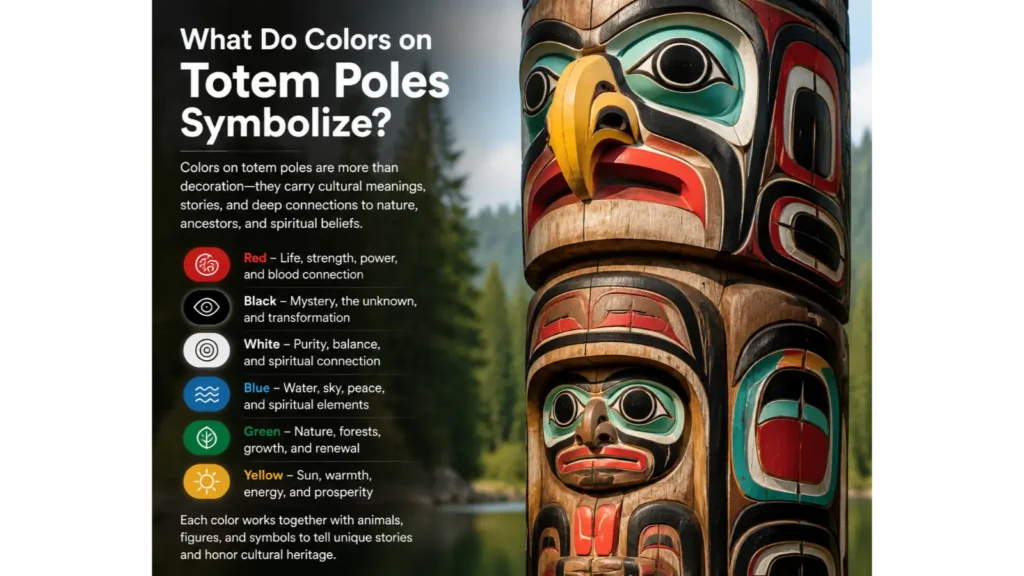
Colors on totem poles serve as visual storytelling elements. They work together with carved figures to communicate cultural identity, family history, legends, and relationships with the natural world.
Unlike a simple color chart where every color has one fixed meaning, Indigenous color symbolism is connected to specific communities, traditions, and stories. A color that represents one idea in one nation may have a different interpretation elsewhere.
Common symbolic themes connected with totem pole colors include:
- Connection to ancestors
- Relationship with animals and nature
- Spiritual teachings
- Family lineage
- Community identity
- Historical events
- Traditional stories
- Natural elements
The colors used on a totem pole are carefully chosen to support the meaning of the entire artwork. The animal figures, carving style, location, and cultural background all influence interpretation.
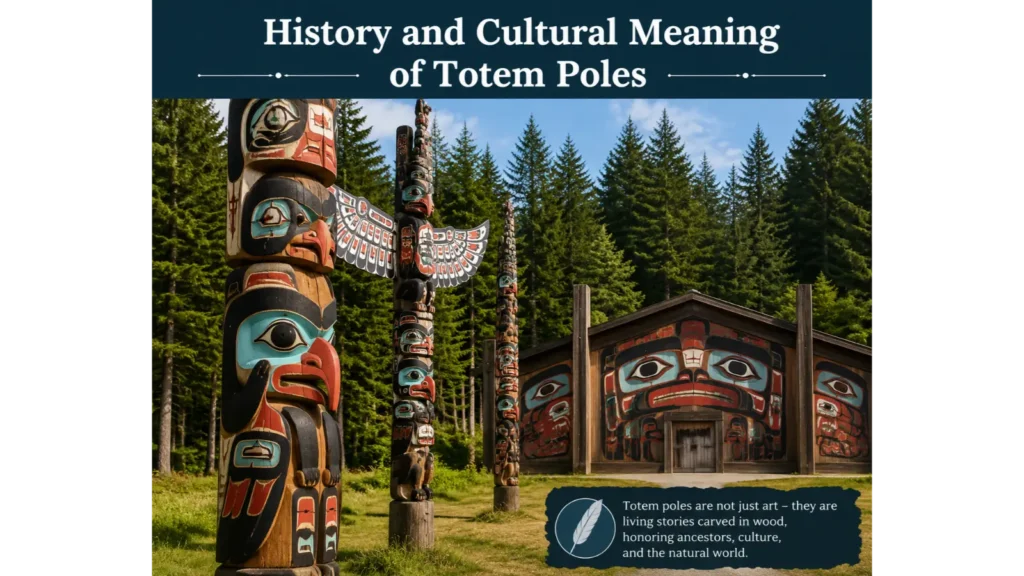
History and Cultural Meaning of Totem Poles
Totem poles originate from Indigenous cultures of the Pacific Northwest Coast, including nations such as the Haida, Tlingit, Tsimshian, and Kwakwaka’wakw peoples. These communities developed highly skilled carving traditions using cedar trees, which were important natural resources in the region.
Totem poles were created for different purposes, including:
- Honoring ancestors
- Recording family history
- Celebrating important events
- Representing clans and communities
- Sharing traditional stories
- Marking significant places
The word “totem” comes from an Algonquian language term, but many Pacific Northwest Indigenous communities have their own words and cultural explanations for these carved works.
Colors became an important part of the storytelling process. Traditional pigments were created from natural materials, including minerals, plants, charcoal, and other resources.
Common traditional pigments included:
- Red from natural minerals such as iron-rich materials
- Black from charcoal or carbon-based pigments
- White from minerals such as clay
- Blue and green from mineral sources or later commercial pigments
The use of colors helped make carvings more visible and strengthened their symbolic meaning.
Meaning of Different Totem Pole Colors
Red Color Meaning on Totem Poles
Red is one of the most commonly used colors in Indigenous Northwest Coast artwork.
Possible symbolic associations include:
- Life
- Strength
- Energy
- Power
- Blood connection
- Transformation
Red often creates a strong visual presence and may highlight important figures or details within a carving.
In many cultural traditions, red is connected with vitality and powerful forces. However, its exact meaning depends on the specific nation and story behind the artwork.
Black Color Meaning on Totem Poles
Black is frequently used to create contrast and define important shapes in carvings.
Symbolic associations may include:
- Mystery
- Depth
- The unknown
- Spiritual power
- Transformation
- The natural world
Black can emphasize eyes, outlines, and important features of carved figures. In artistic design, it provides structure and allows other colors to stand out.
White Color Meaning on Totem Poles
It is often associated with:
- Light
- Balance
- Clarity
- Purity
- Spiritual connection
White areas may represent natural elements such as snow, clouds, or brightness. Like other colors, its meaning depends on the cultural context of the specific artwork.
Blue Color Meaning on Totem Poles
Blue may represent connections with:
- Water
- Sky
- Oceans
- Natural forces
- Peace
- Spiritual elements
For coastal Indigenous communities, water has deep importance because rivers, oceans, and waterways are central to life, travel, and cultural identity.
Green Color Meaning on Totem Poles
Green is often connected with:
- Forests
- Plants
- Renewal
- Growth
- Nature
The relationship between Indigenous communities and the natural environment is central to many traditions. Green can reflect the importance of forests, plants, and living ecosystems.
Yellow Color Meaning on Totem Poles
Yellow is commonly associated with:
- Sunlight
- Warmth
- Energy
- Prosperity
- Visibility
Bright yellow pigments can draw attention to important details and may symbolize positive forces within the artwork.
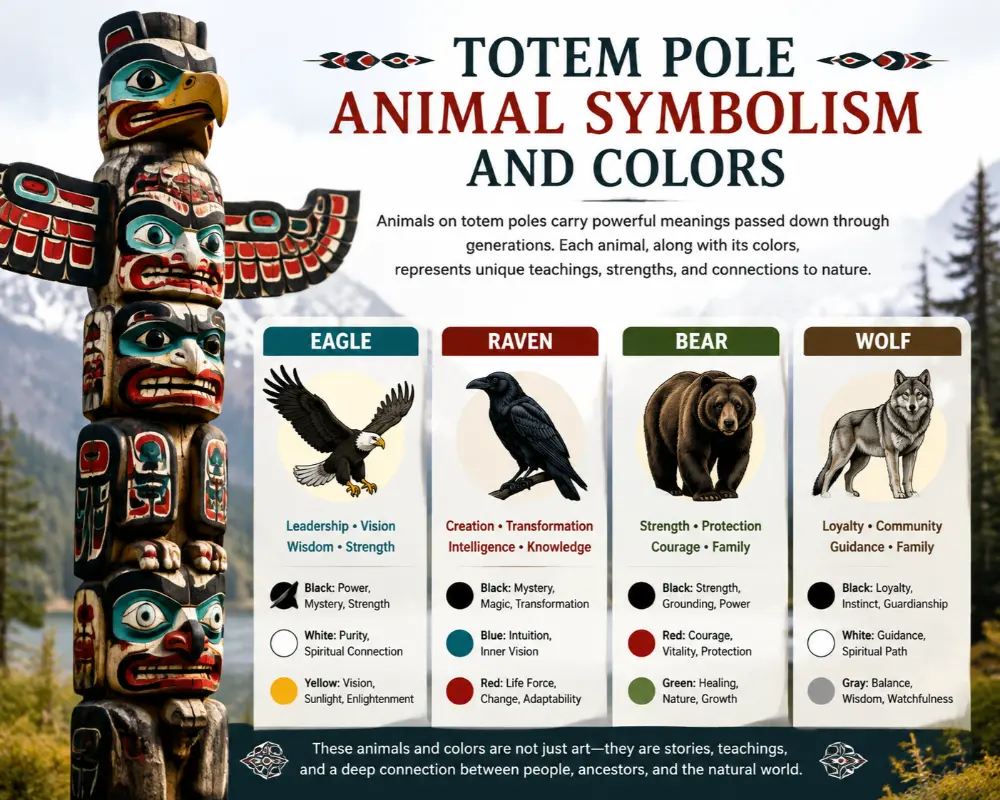
Totem Pole Animal Symbolism and Colors
Colors on totem poles often work together with animal figures. Animals are not simply decorations; they frequently represent ancestors, clan relationships, teachings, and cultural stories.
Eagle Symbolism
The eagle is often associated with:
- Leadership
- Vision
- Wisdom
- Spiritual connection
- Strength
Eagles appear in many Indigenous traditions as respected beings connected with the sky and higher perspectives.
Raven Symbolism
Raven is an important figure in many Northwest Coast stories.
Symbolic meanings may include:
- Creation
- Transformation
- Intelligence
- Knowledge
- Change
Raven stories often explain important events and natural phenomena.
Bear Symbolism
Bear symbolism may represent:
- Strength
- Protection
- Family
- Courage
- Leadership
The bear is respected as a powerful animal connected with survival and the natural world.
Wolf Symbolism
It may symbolize:
- Loyalty
- Community
- Cooperation
- Guidance
- Family relationships
Wolf imagery often highlights connections between individuals and their communities.
Psychological Characteristics of Totem Pole Colors
Color psychology can help explain why certain colors create specific emotional impressions, although cultural meanings remain the most important factor when interpreting Indigenous artwork.
Colors may influence viewers by creating feelings such as:
Red
- Energy
- Strength
- Attention
- Power
Blue
- Calmness
- Trust
- Reflection
Green
- Natural connection
- Balance
- Renewal
Black
- Mystery
- Seriousness
- Depth
White
- Simplicity
- Peace
- Clarity
The emotional response of viewers can vary depending on personal experience and cultural background.
Spiritual Meaning of Totem Pole Colors
Many Indigenous traditions view the relationship between humans, animals, ancestors, and nature as deeply connected.
Colors may support spiritual storytelling through themes such as:
- Ancestral connections
- Respect for nature
- Wisdom from animals
- Transformation
- Protection
- Community identity
- Balance between humans and the environment
Totem poles are not simply spiritual objects; they are cultural records that preserve teachings and histories.
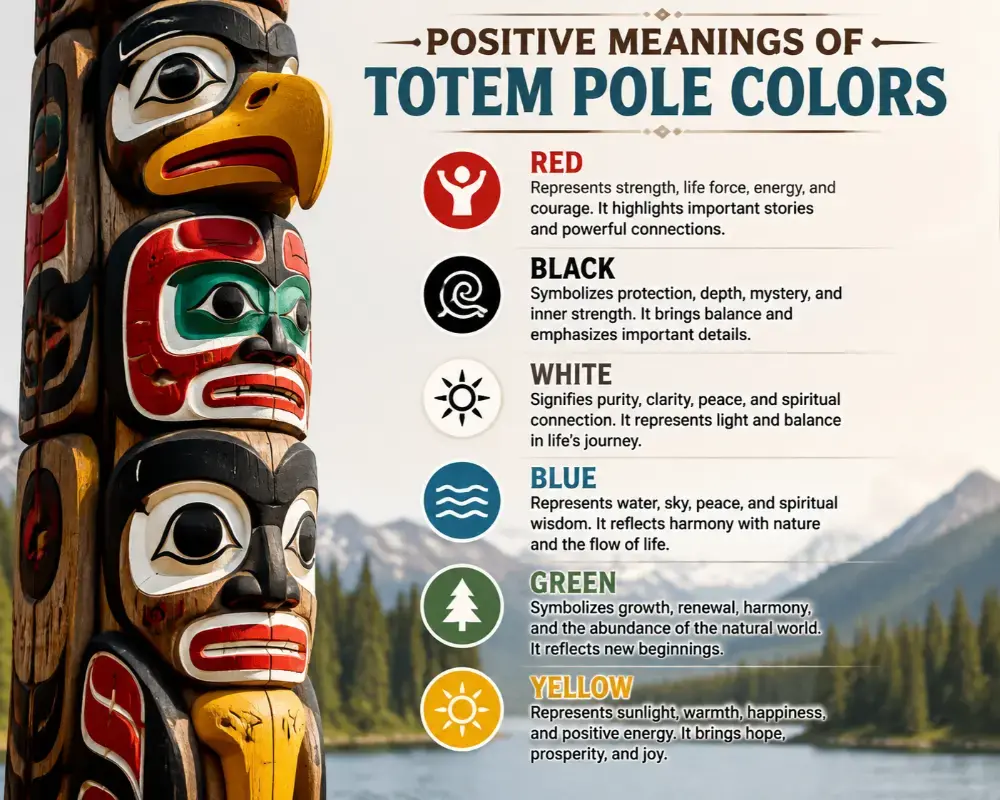
Positive Meanings of Totem Pole Colors
Colors in totem pole artwork may communicate positive themes such as:
- Strength
- Wisdom
- Connection
- Renewal
- Protection
- Respect
- Community
- Identity
- Heritage
- Natural harmony
For example, green may remind viewers of forests and environmental relationships, while red may highlight energy and importance.
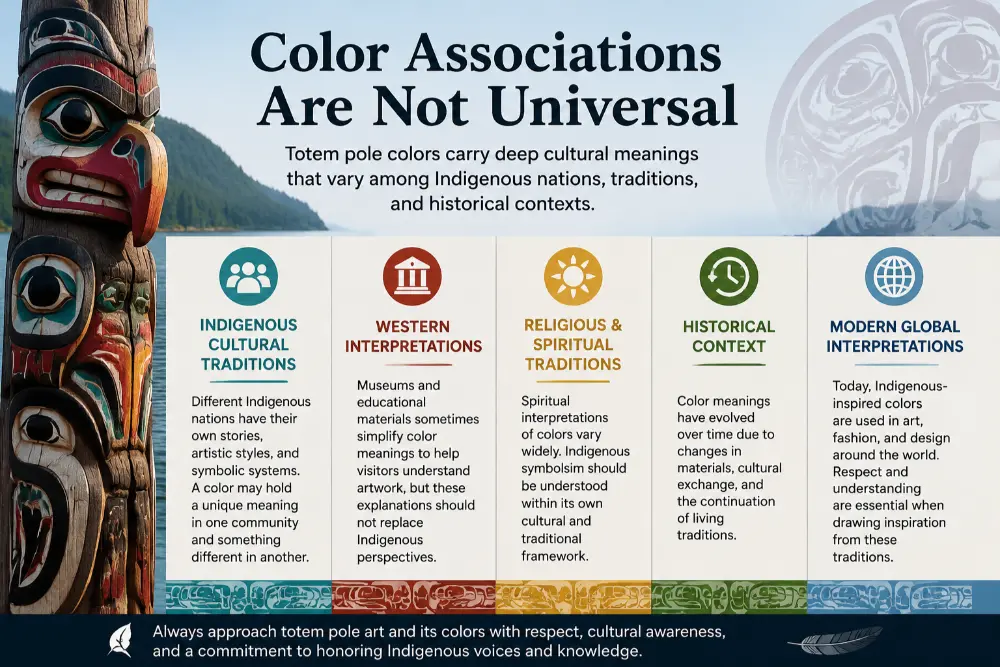
Color Associations Are Not Universal
It is important to understand that Indigenous color meanings differ between communities.
Indigenous Cultural Traditions
Different nations have their own artistic styles, stories, and symbolic systems. A color meaning used by one Indigenous group may not apply to another.
Western Interpretations
Museums and educational materials sometimes simplify color meanings to help visitors understand artwork. However, these explanations should not replace Indigenous perspectives.
Religious and Spiritual Traditions
Spiritual interpretations of colors vary widely. Indigenous symbolism should be understood within its own cultural framework rather than compared directly with unrelated traditions.
Historical Interpretations
Color meanings have changed over time because of available materials, artistic developments, and cultural changes.
Modern Global Interpretations
Today, Indigenous-inspired colors appear in art, education, and design. Respectful use requires understanding the cultural meaning behind the symbols.
Totem Pole Colors in Art and Design
Interior Design
Indigenous artwork can bring visual richness and cultural storytelling into spaces. However, authentic artwork should be respected and properly credited.
Graphic Design
Designers may study Indigenous color combinations for inspiration, but should avoid copying sacred symbols without understanding their meaning.
Education and Museums
Colors help museums and educational programs explain cultural stories, artistic techniques, and historical traditions.
Cultural Preservation
Traditional colors continue to support the preservation of Indigenous art forms and storytelling practices.
How Totem Pole Colors Connect With Identity and Heritage
Totem poles are deeply connected with:
- Family history
- Clan identity
- Community memory
- Ancestral stories
- Cultural preservation
The colors used in a carving contribute to the overall message of the artwork. They help communicate relationships between people, animals, land, and history.
FAQs:
What do colors on totem poles mean?
Totem pole colors represent cultural stories, natural elements, ancestral connections, and symbolic ideas. Meanings vary between Indigenous nations.
What does red symbolize on a totem pole?
Red may symbolize strength, life, energy, and important cultural elements, depending on the specific tradition.
What does black mean on Indigenous carvings?
Black may represent depth, mystery, transformation, and visual definition in many Northwest Coast artworks.
Why are colors important on totem poles?
Colors enhance storytelling by adding meaning, highlighting figures, and creating visual connections with cultural traditions.
What animals are commonly shown on totem poles?
Common figures include eagles, ravens, bears, wolves, whales, and other animals important to Indigenous stories.
Do all Indigenous cultures use the same totem pole colors?
No. Different Indigenous nations have their own artistic traditions and interpretations.
What is the spiritual meaning of totem poles?
Totem poles may represent ancestry, identity, relationships with nature, and important cultural teachings.
Are totem pole color meanings universal?
No. Color meanings depend on the community, historical context, and specific artwork.
Conclusion
Totem pole color meanings reveal how colors can work together with carvings to preserve stories, identity, and cultural knowledge. Red, black, white, blue, green, and yellow may carry symbolic associations connected with strength, nature, spirituality, and community, but their meanings are shaped by individual Indigenous traditions.
Understanding totem pole colors requires respect for cultural context. Rather than viewing colors as a universal code, it is more accurate to see them as part of a larger storytelling system involving animals, ancestors, history, and relationships with the natural world.
By learning about these traditions respectfully, people can better appreciate the artistry and cultural significance of totem poles.