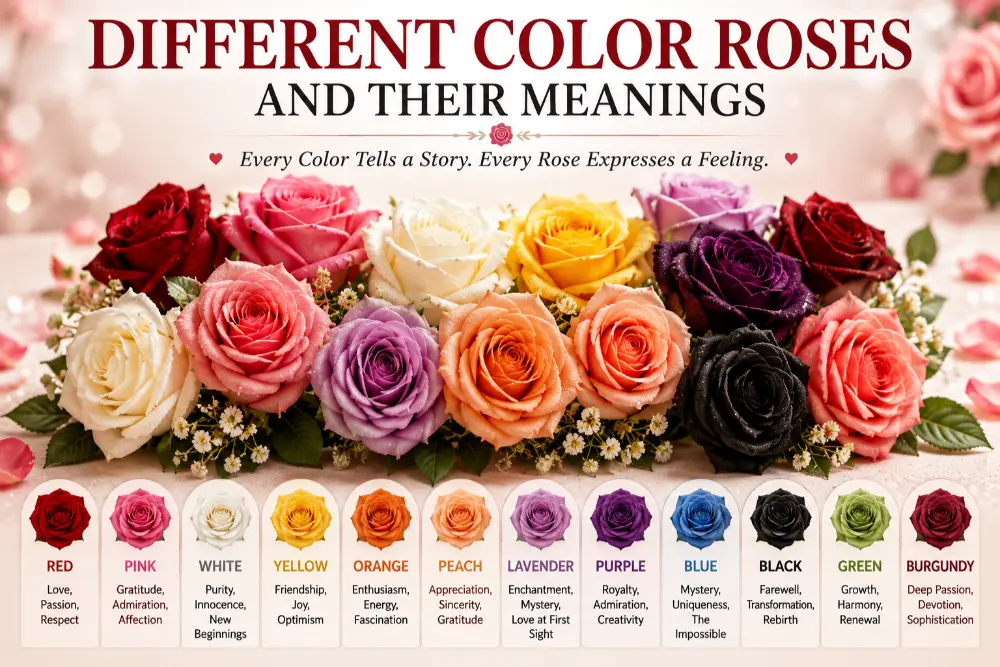
Different color roses and their meanings have helped people express emotions, celebrate milestones, and communicate heartfelt messages for centuries. Whether given as a romantic gift, a gesture of friendship, or a symbol of remembrance, each rose color carries its own traditional symbolism.
From passionate red roses to cheerful yellow blooms and elegant white flowers, the meaning often depends on the color, the occasion, and cultural traditions. Although rose symbolism has evolved over time, many color meanings remain widely recognized around the world.
Quick Answer:
Different color roses and their meanings symbolize emotions such as love, friendship, gratitude, hope, admiration, sympathy, celebration, and new beginnings. Each rose color has its own traditional message, although interpretations can vary across cultures and personal beliefs.
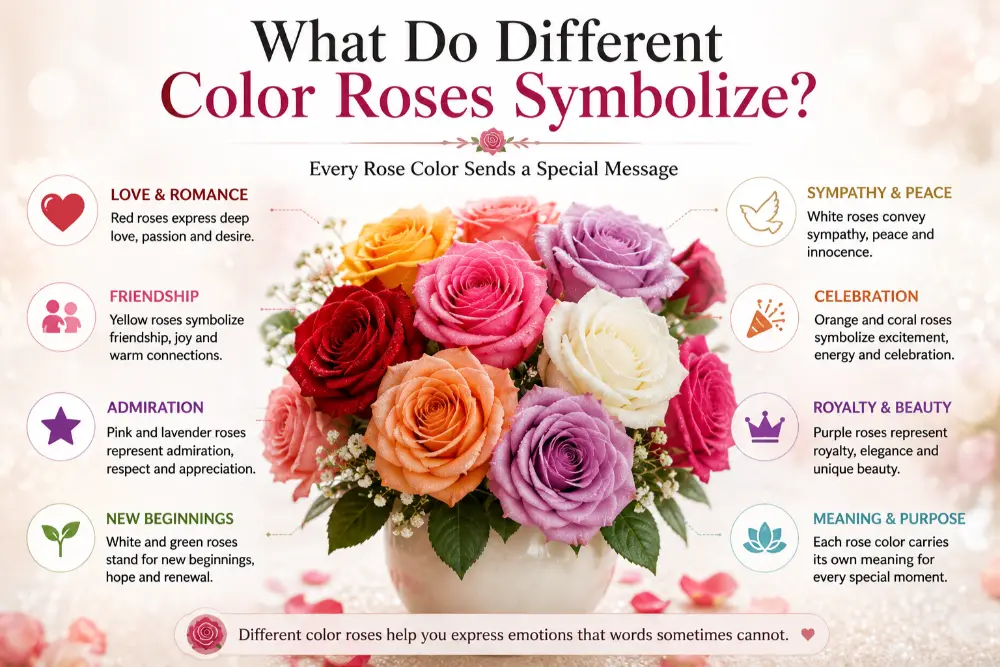
What Do Different Color Roses Symbolize?
Roses are among the world’s most recognized flowers, and their colors add important symbolic meaning. While every rose represents beauty and appreciation, each color communicates a unique message.
Rose colors commonly symbolize:
- Love and romance
- Friendship
- Gratitude
- Respect
- Hope
- Peace
- Celebration
- Sympathy
- New beginnings
- Personal admiration
The symbolism of rose colors became especially popular during the Victorian era through floriography, often called the “language of flowers.” People used flowers to express feelings that could not always be spoken openly.
Today, roses continue to communicate emotions in weddings, anniversaries, birthdays, graduations, holidays, and memorial ceremonies.
History and Symbolism of Rose Colors
Roses have been admired for thousands of years.
In Ancient Greece and Rome, roses were associated with love, beauty, and divine figures such as Aphrodite (Venus in Roman mythology). They also appeared in celebrations, gardens, and religious ceremonies.
During the Victorian era, flower symbolism became highly developed. Different rose colors allowed people to send hidden messages through bouquets, making roses an important part of social communication.
Modern florists continue using traditional meanings while also adapting them to contemporary occasions and personal preferences.
Although many rose color meanings are widely accepted, cultural traditions and individual interpretations can influence their symbolism.
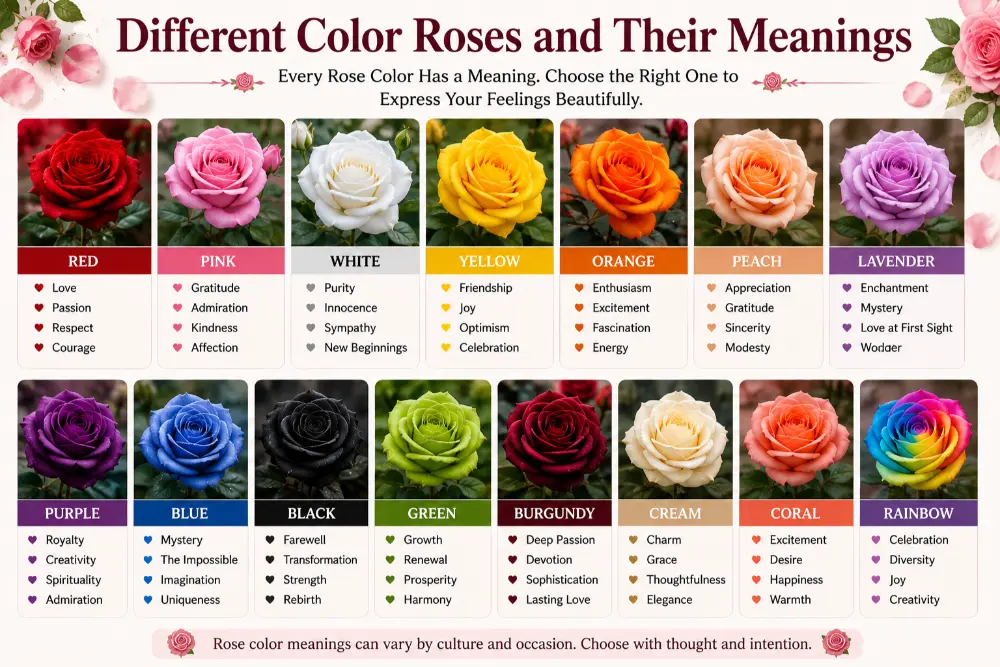
Different Color Roses and Their Meanings
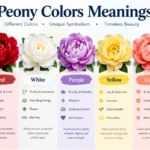
Red Roses
Red roses traditionally symbolize:
- Romantic love
- Passion
- Respect
- Courage
- Deep affection
They remain the classic choice for Valentine’s Day, anniversaries, and romantic celebrations.
Pink Roses
Pink roses represent:
- Gratitude
- Admiration
- Kindness
- Affection
- Elegance
Light pink roses often express gentleness, while darker pink roses may communicate appreciation and thankfulness.
White Roses
White roses symbolize:
- Purity
- Innocence
- Peace
- Sympathy
- New beginnings
They are commonly used at weddings, memorial services, and ceremonies celebrating fresh starts.
Yellow Roses
Yellow roses are associated with:
- Friendship
- Happiness
- Optimism
- Joy
- Celebration
Unlike red roses, yellow roses traditionally express warm friendship rather than romantic love.
Orange Roses
Orange roses symbolize:
- Enthusiasm
- Excitement
- Fascination
- Energy
- Confidence
Their vibrant appearance makes them popular for celebrations and achievements.
Peach Roses
Peach roses represent:
- Appreciation
- Gratitude
- Modesty
- Sincerity
- Thoughtfulness
They are often given as thank-you flowers or to celebrate meaningful friendships.
Lavender Roses
Lavender roses symbolize:
- Enchantment
- Mystery
- Love at first sight
- Wonder
- Uniqueness
Because naturally lavender roses are relatively uncommon, they often carry a sense of rarity.
Purple Roses
Purple roses represent:
- Royalty
- Creativity
- Spiritual reflection
- Admiration
- Elegance
These flowers have long been associated with dignity and imagination.
Blue Roses
Blue roses symbolize:
- Mystery
- Dreams
- Imagination
- Uniqueness
- The impossible
Because naturally blue roses do not occur in the same way as many other rose colors, they often represent achieving the extraordinary.
Black Roses
Black roses traditionally represent:
- Farewell
- Transformation
- Change
- Strength
- Rebirth
Most black roses are actually very deep shades of red or purple rather than true black flowers.
Green Roses
Green roses symbolize:
- Growth
- Renewal
- Prosperity
- Harmony
- Good fortune
These roses are frequently associated with fresh opportunities and positive development.
Burgundy Roses
Burgundy roses represent:
- Deep passion
- Devotion
- Sophistication
- Lasting affection
Their rich color creates a sense of elegance and maturity.
Cream Roses
Cream roses symbolize:
- Grace
- Charm
- Thoughtfulness
- Appreciation
- Elegance
They provide a softer alternative to pure white flowers.
Coral Roses
Coral roses represent:
- Excitement
- Joy
- Desire
- Energy
- Celebration
They combine the warmth of orange with the softness of pink.
Rainbow Roses
Rainbow roses symbolize:
- Celebration
- Diversity
- Creativity
- Joy
- Individuality
Their colorful appearance makes them popular for birthdays, festivals, and cheerful occasions.
Psychological Characteristics of Rose Colors
Color psychology suggests that flower colors influence emotional responses, even though personal experiences and cultural backgrounds shape interpretation.
Common emotional associations include:
Red
- Passion
- Confidence
- Energy
Pink
- Warmth
- Kindness
- Affection
White
- Peace
- Simplicity
- Calmness
Yellow
- Optimism
- Cheerfulness
- Mental energy
Orange
- Motivation
- Excitement
- Enthusiasm
Purple
- Imagination
- Wisdom
- Creativity
Blue
- Calmness
- Reflection
- Trust
Green
- Balance
- Growth
- Renewal
Spiritual Meaning of Rose Colors
Many spiritual traditions use flowers as symbols rather than literal representations.
Rose colors may symbolize:
- Love
- Compassion
- Peace
- Healing
- Hope
- Faith
- Transformation
- Gratitude
- New beginnings
- Spiritual growth
These meanings differ among cultures, religions, and personal beliefs.
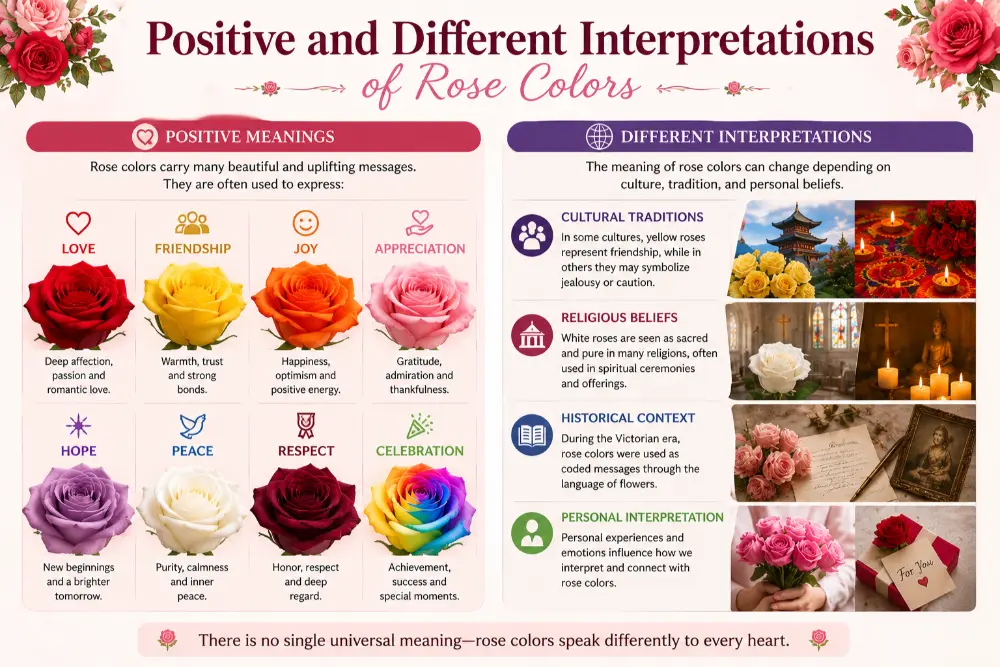
Positive and Different Interpretations of Rose Colors
Positive Meanings
Rose colors often symbolize:
- Love
- Friendship
- Joy
- Appreciation
- Hope
- Gratitude
- Harmony
- Respect
- Celebration
Flowers often become meaningful because of the intention behind the gift as much as the color itself.
Different Interpretations
Rose color meanings may change depending on:
- Cultural traditions
- Religious customs
- Personal relationships
- Historical symbolism
- Individual preferences
There is no single universal interpretation for every rose color.
Rose Colors for Different Occasions
Romantic Relationships
Best choices:
- Red
- Pink
- Lavender
Weddings
Common choices:
- White
- Cream
- Soft pink
Birthdays
Popular colors:
- Yellow
- Orange
- Coral
Sympathy
Suitable choices:
- White
- Cream
Graduation
Recommended colors:
- Yellow
- Orange
- Green
Mother’s Day
Popular options:
- Pink
- Peach
- White
Friendship
Best choices:
- Yellow
- Peach
Congratulations
Common choices:
- Orange
- Coral
- Yellow
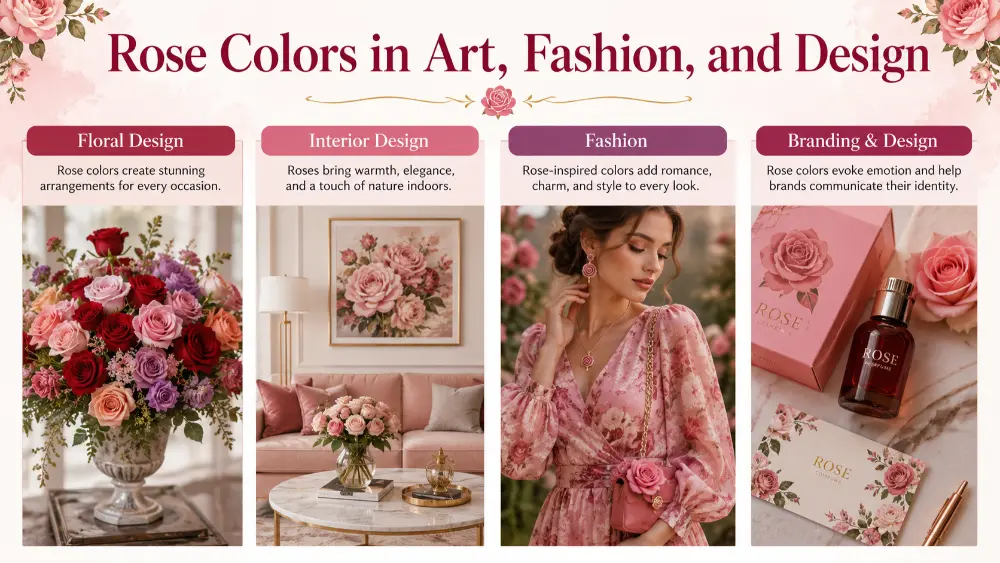
Rose Colors in Art, Fashion, and Design
Rose colors influence many creative fields.
Floral Design
Florists combine different rose colors to create meaningful arrangements.
Interior Design
Fresh or decorative roses can introduce warmth, elegance, or tranquility into a room.
Fashion
Rose-inspired colors frequently appear in clothing, accessories, and seasonal collections.
Branding
Businesses use rose-inspired color palettes to communicate romance, elegance, luxury, or freshness.
Color Associations Are Not Universal
Rose symbolism differs across cultures.
Western Traditions
Red roses often represent romantic love, while white roses symbolize weddings and remembrance.
Eastern Traditions
Certain rose colors may represent prosperity, celebration, or spiritual symbolism depending on local customs.
Victorian Floriography
Flowers were used as coded messages, allowing people to express emotions discreetly.
Modern Interpretations
Today, many people choose rose colors based on personal taste rather than traditional symbolism.
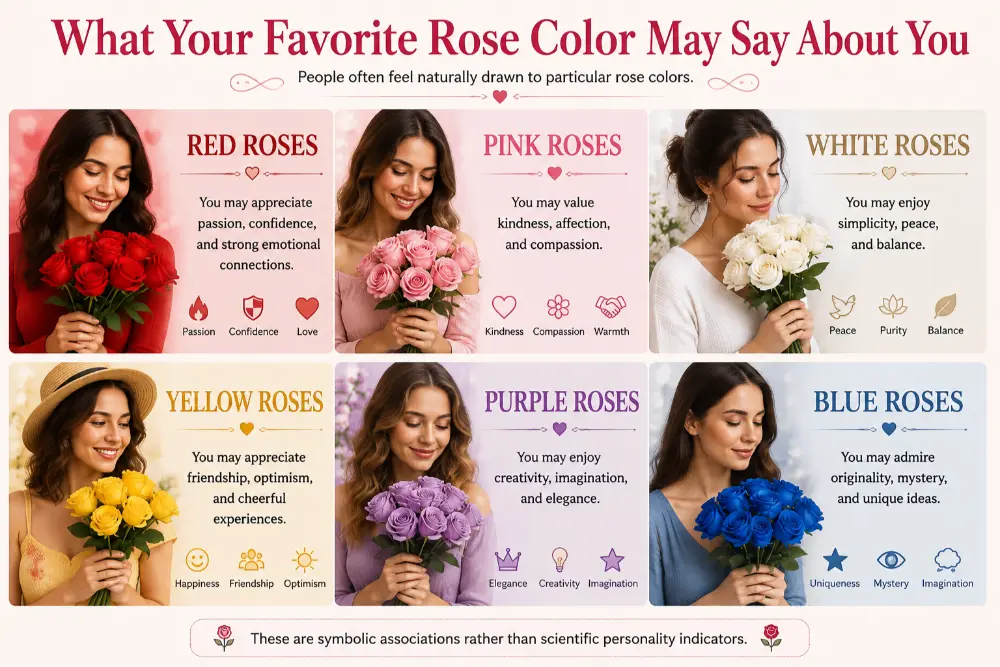
What Your Favorite Rose Color May Say About You
People often feel naturally drawn to particular flower colors.
Someone who prefers:
Red Roses
May appreciate passion, confidence, and strong emotional connections.
Pink Roses
May value kindness, affection, and compassion.
White Roses
May enjoy simplicity, peace, and balance.
Yellow Roses
May appreciate friendship, optimism, and cheerful experiences.
Purple Roses
May enjoy creativity, imagination, and elegance.
Blue Roses
May admire originality, mystery, and unique ideas.
These are symbolic associations rather than scientific personality indicators.
FAQs:
What do different color roses mean?
Different rose colors traditionally represent emotions such as love, friendship, gratitude, hope, sympathy, celebration, and admiration.
What do red roses symbolize?
Red roses symbolize romantic love, passion, respect, and devotion.
What do yellow roses represent?
Yellow roses traditionally represent friendship, happiness, optimism, and joy.
What do white roses mean?
White roses symbolize purity, peace, innocence, sympathy, and new beginnings.
What do pink roses symbolize?
Pink roses represent admiration, gratitude, elegance, kindness, and affection.
What is the rarest rose color?
Naturally blue roses are extremely rare, while many blue roses available commercially are specially developed or dyed.
What rose color represents friendship?
Yellow roses are the traditional symbol of friendship.
Which rose color means love?
Red roses are the classic symbol of romantic love.
Are black roses natural?
Most black roses are actually very dark shades of red or purple rather than true black.
What do rainbow roses symbolize?
Rainbow roses symbolize celebration, creativity, diversity, happiness, and individuality.
Which rose color is best for sympathy?
White and cream roses are commonly chosen to express sympathy and remembrance.
Do rose color meanings differ by culture?
Yes. Cultural traditions and personal beliefs influence how rose colors are interpreted around the world.
Conclusion
Different color roses and their meanings continue to help people express emotions through one of the world’s most beloved flowers. Whether you choose red for love, yellow for friendship, white for peace, pink for gratitude, or purple for admiration, each rose color carries a message that can make a gift more meaningful.
Although many traditional interpretations are widely recognized, rose symbolism is not universal. Cultural traditions, personal experiences, and the occasion all influence how flower colors are understood. Choosing roses with thought and intention allows their beauty and symbolism to create lasting memories for both the giver and the recipient.