In the world of Demon Slayer: Kimetsu no Yaiba, sword colors are far more than visual details—they symbolize a Demon Slayer’s natural abilities, personality, combat style, and potential.
Every Nichirin Sword changes color after its wielder first grips the blade, revealing a unique connection between the swordsman and their preferred Breathing Style.
Understanding Demon Slayer sword color meanings offers greater insight into the characters, their strengths, and the themes represented throughout the series.
Quick Answer:
Demon Slayer sword colors represent a swordsman’s innate talents, fighting style, personality traits, and connection to specific Breathing Techniques. Each color carries unique symbolic meanings inspired by storytelling, Japanese culture, and traditional color symbolism.
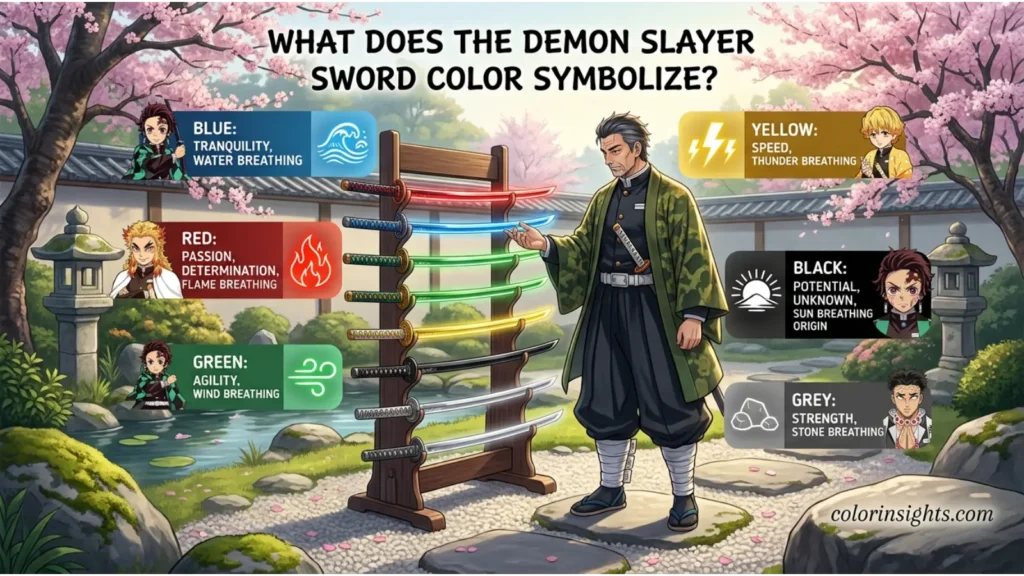
What Does the Demon Slayer Sword Color Symbolize?
The Demon Slayer sword color meanings are closely tied to the fictional world of Kimetsu no Yaiba. Unlike ordinary swords, Nichirin Blades absorb sunlight and transform into a unique color when first wielded by their owner. This color reflects the user’s hidden potential, preferred Breathing Style, and spiritual path as a Demon Slayer.
Some sword colors are common among Demon Slayers, while others are considered exceptionally rare and mysterious. Together, they reinforce the story’s central themes of courage, sacrifice, discipline, and self-discovery.
Common symbolic meanings include:
- Black — Mystery, hidden potential, and an unpredictable destiny.
- Blue — Calmness, discipline, adaptability, and Water Breathing.
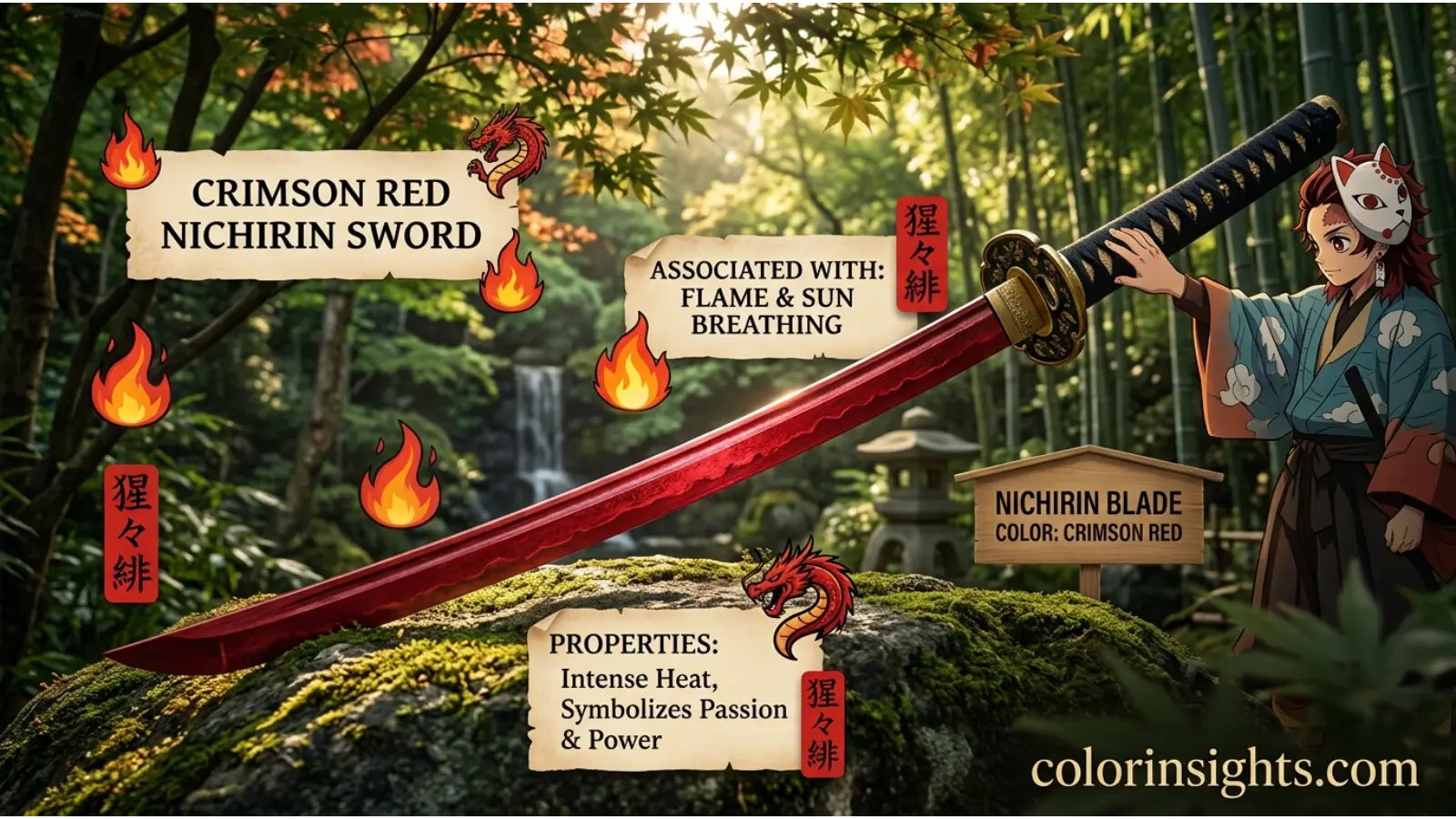
- Red — Strength, passion, determination, and enhanced demon-slaying power.
- Yellow — Speed, energy, courage, and Thunder Breathing.
- Green — Flexibility, freedom, creativity, and Wind Breathing.
- White — Purity, clarity, solitude, and Mist Breathing.
- Pink — Compassion, love, emotional strength, and Love Breathing.
- Purple — Mystery, elegance, spirituality, and Insect Breathing.
- Gray — Stability, endurance, practicality, and Stone Breathing.
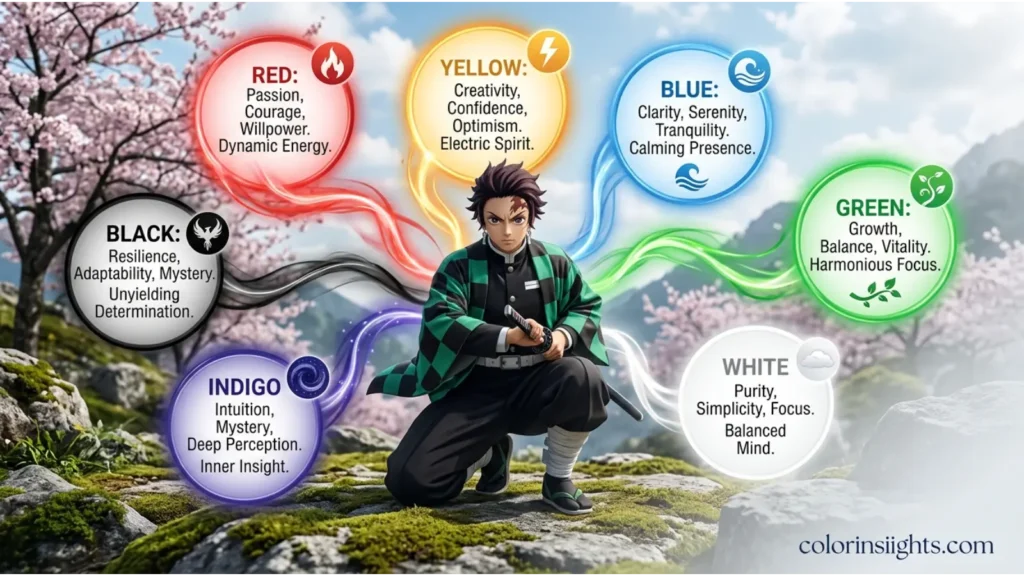
Psychological Characteristics of the Demon Slayer Sword Colors
Although the colors originate from a fictional universe, they can also be interpreted through the lens of modern color psychology. Each sword color evokes different emotional responses and reflects distinct behavioral tendencies.
Emotional Associations
Different sword colors naturally evoke different emotional impressions:
- Black inspires curiosity, mystery, determination, and resilience.
- Blue creates feelings of trust, calmness, patience, and stability.
- Red communicates passion, confidence, courage, and urgency.
- Yellow stimulates optimism, alertness, enthusiasm, and energy.
- Green suggests growth, freedom, renewal, and flexibility.
- White conveys simplicity, purity, focus, and inner peace.
- Pink expresses kindness, compassion, empathy, and affection.
- Purple symbolizes imagination, wisdom, intuition, and individuality.
- Gray represents balance, practicality, maturity, and emotional control.
Psychological Effects
Color psychology suggests that colors influence perception and emotional responses. When applied symbolically to Demon Slayer swords:
- Black encourages perseverance during uncertainty.
- Blue promotes rational thinking and emotional balance.
- Red increases feelings of motivation and determination.
- Yellow stimulates quick thinking and confidence.
- Green encourages adaptability and open-mindedness.
- White supports clarity and careful decision-making.
- Pink strengthens empathy and emotional resilience.
- Purple inspires creativity and strategic thinking.
- Gray reinforces patience, discipline, and consistency.
Positive Emotional Responses
Many sword colors are associated with empowering qualities, including:
- Confidence
- Courage
- Self-discipline
- Hope
- Loyalty
- Determination
- Wisdom
- Compassion
- Mental strength
- Adaptability
- Leadership
- Inner peace
These symbolic meanings help explain why different Demon Slayers approach challenges in unique ways while remaining committed to the same mission.
Negative Emotional Responses
Depending on context, some colors may also symbolize emotional struggles:
- Black may suggest isolation or uncertainty.
- Red can represent anger or impulsiveness.
- Yellow may indicate anxiety or restlessness.
- White may reflect loneliness or emotional distance.
- Purple can symbolize secrecy or emotional complexity.
- Gray may suggest emotional restraint or indecision.
These interpretations are symbolic rather than absolute and often contribute to a character’s depth throughout the story.
Impact on Mood and Behavior
The symbolic colors of Nichirin Swords can be viewed as reflections of how characters respond to difficult situations.
For example:
- Calm-colored swords often belong to thoughtful strategists.
- Bright colors frequently represent energetic or action-oriented fighters.
- Darker colors may symbolize individuals with hidden potential or unconventional paths.
- Balanced colors often reflect emotional maturity and patience.
This symbolic relationship between color and behavior makes each sword feel like an extension of its wielder’s personality.
How People Typically React to These Colors
From a psychological perspective, audiences commonly associate these colors with familiar emotional patterns:
- Black often appears powerful and mysterious.
- Blue feels dependable and reassuring.
- Red captures immediate attention.
- Yellow appears energetic and optimistic.
- Green feels refreshing and balanced.
- White creates a sense of cleanliness and peace.
- Pink feels caring and approachable.
- Purple appears elegant and imaginative.
- Gray feels neutral, stable, and composed.
These universal associations contribute to the emotional impact of each character’s sword within the series while also drawing on broader principles of color symbolism.
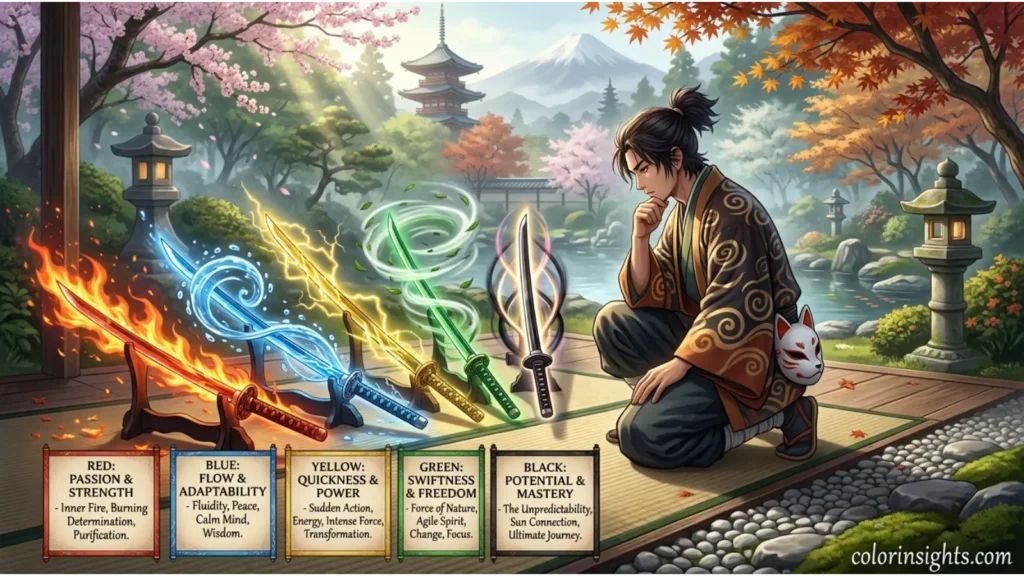
Spiritual Meaning of the Demon Slayer Sword Colors
Although Demon Slayer is a work of fiction rather than a spiritual text, its sword colors often mirror symbolic meanings found in Japanese traditions, folklore, and broader interpretations of color symbolism. Fans frequently connect these colors with themes of personal growth, inner strength, and transformation.
Holiness
- White is often associated with purity and sacred intentions.
- Bright colors can symbolize noble purpose and selfless service.
- The Demon Slayer Corps’ mission reflects devotion to protecting humanity.
Wisdom
- Blue represents thoughtful decision-making and emotional intelligence.
- Purple symbolizes higher knowledge, intuition, and insight.
- Gray reflects maturity gained through experience.
Purity
- White symbolizes moral integrity and clarity of purpose.
- Pink represents sincerity and genuine compassion.
- Blue suggests honesty and trustworthiness.
Transformation
Every Nichirin Sword changes color after choosing its owner, making transformation one of the strongest symbolic themes in the series.
This change represents:
- Personal identity
- Self-discovery
- Growth through hardship
- Acceptance of one’s true abilities
Healing
Several colors are linked symbolically with restoration and emotional healing:
- Green represents renewal and resilience.
- Blue reflects emotional recovery and peace.
- Pink symbolizes kindness and emotional support.
Protection
The primary purpose of every Nichirin Sword is to protect humanity.
Symbolically:
- Red represents fearless protection.
- Gray symbolizes steadfast defense.
- Blue reflects dependable guardianship.
- White represents protection through discipline and purity.
Power
Power appears in many forms rather than simple physical strength.
Examples include:
- Red—determination and courage.
- Black—hidden potential waiting to be realized.
- Yellow—speed and decisive action.
- Purple—strategic intelligence and adaptability.
Enlightenment
Many characters grow spiritually through discipline rather than supernatural revelation.
Sword colors can symbolize:
- Self-awareness
- Inner balance
- Acceptance of responsibility
- Continuous personal improvement
Eternity
Because the fight against evil continues across generations, sword colors may also symbolize enduring values:
- Honor
- Courage
- Loyalty
- Sacrifice
- Hope for future generations
These themes reinforce the series’ message that true strength comes from character, perseverance, and the willingness to protect others.
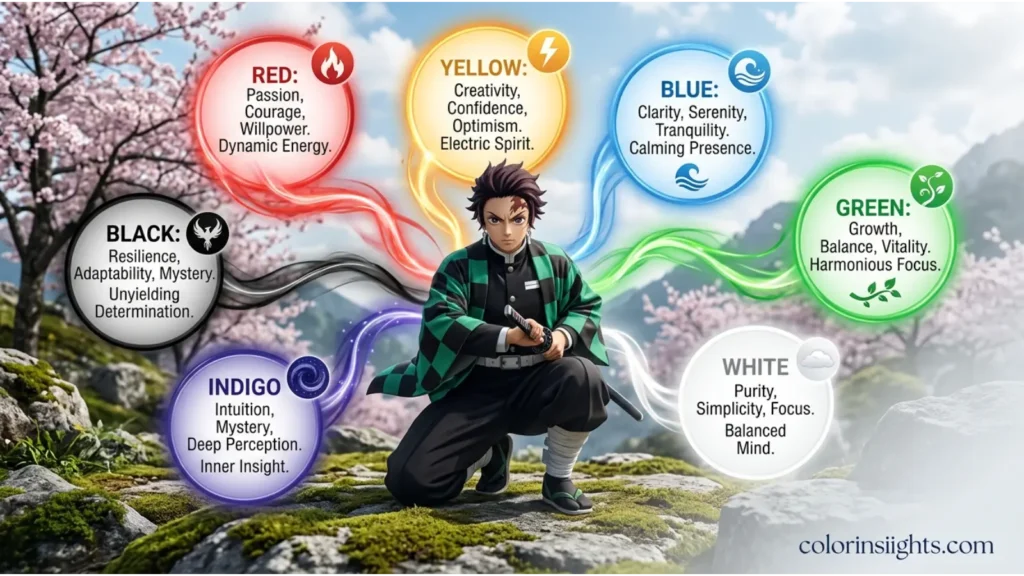
Positive and Negative Meanings of the Demon Slayer Sword Colors
Like most forms of color symbolism, the meanings of Demon Slayer sword colors depend on context. A single color can represent admirable qualities in one situation while reflecting personal struggles in another. This balance adds depth to the characters and reinforces the series’ themes of growth and resilience.
Positive Meanings
Many sword colors symbolize strengths that help Demon Slayers overcome fear and adversity.
- Courage: Red blades reflect bravery and determination in dangerous battles.
- Discipline: Blue symbolizes emotional control and careful decision-making.
- Adaptability: Green represents flexibility and the ability to respond to changing situations.
- Purity: White signifies honesty, focus, and dedication to justice.
- Compassion: Pink highlights empathy, kindness, and the desire to protect others.
- Wisdom: Purple is associated with strategic thinking and intuition.
- Perseverance: Black symbolizes resilience, hidden potential, and personal growth.
- Stability: Gray reflects patience, endurance, and unwavering commitment.
- Confidence: Yellow embodies speed, boldness, and fearless action.
Real-world example: A leader who remains calm during a crisis demonstrates qualities similar to the symbolism of a blue sword—composure, clear thinking, and reliability. Likewise, someone who faces challenges with determination and passion reflects the spirit associated with a red blade.
Negative Meanings
The same symbolic colors can also reflect challenges when taken to extremes or viewed in different contexts.
- Isolation: Black may symbolize loneliness or uncertainty about one’s path.
- Impulsiveness: Red can represent acting before thinking.
- Restlessness: Yellow may indicate impatience or nervous energy.
- Emotional Distance: White can suggest detachment or difficulty expressing emotions.
- Rigidity: Gray may reflect excessive caution or resistance to change.
- Overthinking: Purple can symbolize becoming lost in ideas rather than taking action.
- Unpredictability: Green may represent inconsistency or scattered focus.
- Overprotectiveness: Pink can sometimes reflect excessive emotional attachment.
- Complacency: Blue may symbolize avoiding necessary risks in favor of safety.
Real-world example: An employee who hesitates to embrace new ideas may display the symbolic downside of gray—stability turning into resistance to change. Similarly, unchecked ambition and aggression can mirror the negative aspects often associated with the symbolism of red.
Meanings of the Demon Slayer Sword Colors
The meaning of a Demon Slayer sword color changes depending on the context in which it is interpreted. Within Demon Slayer: Kimetsu no Yaiba, each Nichirin Sword color reflects its wielder’s natural affinity, personality, and Breathing Style. Outside the series, fans often connect these colors with principles of color psychology, Japanese symbolism, design theory, and cultural traditions.
Feng Shui
Although Demon Slayer sword colors were not created according to traditional Feng Shui principles, they can be compared with the Five Elements theory commonly used in interior design and energy balance.
Associated Elements
Each sword color aligns loosely with one of the Feng Shui elements:
- Black – Water (wisdom, depth, career growth)
- Blue – Water (calmness, knowledge, emotional balance)
- Green – Wood (growth, vitality, healing)
- Red – Fire (energy, recognition, passion)
- Yellow – Earth (stability, optimism)
- White – Metal (clarity, focus, organization)
- Gray – Metal (discipline, precision)
- Purple – Fire (abundance, spiritual awareness)
- Pink – Fire (love, relationships, compassion)
Energy Symbolism
From a Feng Shui perspective, these colors influence the flow of symbolic energy:
- Black encourages wisdom and self-reflection.
- Blue promotes peace and emotional stability.
- Green represents renewal and healthy growth.
- Red attracts vitality and motivation.
- Yellow creates warmth and emotional security.
- White supports mental clarity and fresh beginnings.
- Gray symbolizes balance and structure.
- Purple is connected with prosperity and spiritual growth.
- Pink strengthens affection and harmonious relationships.
Best Rooms
These symbolic associations make certain colors suitable for different spaces:
- Blue: Home office, study, or bedroom.
- Green: Living room, family room, or indoor garden.
- White: Kitchen, workspace, or minimalist interiors.
- Red: Dining room, gym, or entertainment area.
- Pink: Bedroom or relaxation space.
- Gray: Office or modern living room.
- Purple: Meditation room or creative studio.
- Yellow: Kitchen, breakfast area, or family room.
- Black: Accent walls or sophisticated home offices.
Recommended Color Combinations
Balanced combinations commonly include:
- Blue + White for calm, clean interiors.
- Green + Brown for a nature-inspired atmosphere.
- Gray + Black for modern elegance.
- Red + Gold for energy and celebration.
- Pink + White for warmth and softness.
- Purple + Silver for luxury and creativity.
- Yellow + Gray for cheerful contemporary spaces.
Home Decorating Tips
To use these symbolic colors effectively:
- Introduce bold colors through artwork or accessories rather than overwhelming an entire room.
- Pair neutral shades with vibrant colors to maintain visual balance.
- Use natural lighting to enhance the appearance of darker colors.
- Mix textures to create depth and prevent monochromatic spaces from feeling flat.
- Choose colors that match the room’s intended purpose and atmosphere.
Marketing
Color plays a major role in branding, advertising, and consumer psychology. While Demon Slayer sword colors are fictional, they reflect many of the same emotional cues that marketers intentionally use to influence customer perception.
Consumer Perception
Consumers often develop immediate emotional impressions based on color.
For example:
- Blue brands are frequently viewed as dependable.
- Red packaging encourages impulse purchases.
- Green products often appear environmentally friendly.
- Black products feel premium and high-end.
- White packaging suggests purity and simplicity.
Trust Signals
Brands commonly use:
- Blue to establish credibility.
- White to communicate transparency.
- Gray to reinforce professionalism.
- Green to inspire confidence in wellness or environmental products.
Advertising Applications
Advertisers strategically choose colors to reinforce campaign goals:
- Red creates urgency during sales.
- Blue reassures customers in financial and technology sectors.
- Green supports eco-friendly messaging.
- Purple highlights premium or creative services.
- Pink promotes warmth and emotional connection.
Design
The symbolic meanings of Demon Slayer sword colors also align with established principles in interior, graphic, and digital design.
Interior Design
Interior designers use color to shape the mood of a space.
For example:
- Blue creates peaceful environments.
- Green introduces natural balance.
- White makes rooms feel larger and brighter.
- Black adds sophistication and contrast.
- Gray supports modern minimalist interiors.
- Red becomes an energetic focal point.
- Purple adds elegance and creativity.
- Pink softens contemporary spaces.
Web Design
Color choices influence user experience and website usability.
Common practices include:
- Blue navigation elements for trust.
- Green confirmation buttons for success.
- Red warning messages and alerts.
- Gray backgrounds for readability.
- White space to improve visual clarity.
- Black typography for strong contrast.
Minimalist Aesthetics
Minimalist design emphasizes simplicity and functionality.
Popular combinations include:
- White with black accents.
- Gray with soft blue.
- Black with muted metallic tones.
- Neutral palettes complemented by a single bold accent color.
These principles create timeless, easy-to-navigate designs that prioritize readability and balance.
Fashion
Colors influence clothing choices just as they influence storytelling. The symbolic qualities associated with Demon Slayer sword colors can also be seen in modern fashion.
Styling Effects
Color influences how outfits are perceived.
For example:
- Black creates a slimming appearance.
- White brightens an outfit.
- Red becomes a visual focal point.
- Gray balances brighter colors.
- Blue produces a polished, professional look.
Personality Impressions
People often associate clothing colors with certain characteristics.
Examples include:
- Black—confident and sophisticated.
- Blue—trustworthy and dependable.
- Green—calm and balanced.
- White—organized and refined.
- Red—energetic and courageous.
- Purple—creative and independent.
- Pink—friendly and compassionate.
These impressions are social perceptions rather than scientifically proven facts.
Advantages and Disadvantages
Advantages
- Colors communicate personality without words.
- Strategic color choices improve first impressions.
- Balanced color combinations enhance visual appeal.
- Seasonal palettes increase wardrobe versatility.
Disadvantages
- Color meanings vary between cultures.
- Personal preferences influence interpretation.
- Trends change over time.
- Excessive use of one bold color may overwhelm an outfit.
Color Associations Are Not Universal
Although Demon Slayer sword color meanings are well established within the fictional universe of Demon Slayer: Kimetsu no Yaiba, color symbolism itself is not universal. The emotions and ideas associated with a particular color vary across cultures, religions, historical periods, and personal experiences. As a result, a sword color may carry one meaning in the anime while representing something entirely different in another cultural or symbolic context.
Western Cultures
In many Western countries, colors are commonly interpreted through psychology, design, and social traditions.
- Black often symbolizes power, elegance, mystery, and mourning.
- White represents purity, innocence, cleanliness, and peace.
- Red is associated with love, passion, courage, and danger.
- Blue signifies trust, stability, intelligence, and professionalism.
- Green symbolizes nature, growth, health, and prosperity.
- Yellow represents happiness, optimism, creativity, and caution.
- Purple is traditionally linked with royalty, luxury, and wisdom.
- Pink conveys kindness, affection, and compassion.
- Gray suggests neutrality, balance, and maturity.
These associations explain why similar colors are widely used in branding, fashion, and interior design throughout North America and Europe.
Eastern Cultures
Across many Asian cultures, color meanings are shaped by centuries of tradition, philosophy, and ceremonial practices.
For example:
- Red symbolizes happiness, celebration, prosperity, and good fortune.
- White may represent purity but is also connected with mourning in several East Asian traditions.
- Black can symbolize experience, strength, dignity, or mystery.
- Gold and yellow have historically represented authority and prosperity.
- Green is associated with renewal, harmony, and health.
- Blue often reflects immortality, calmness, and spiritual balance.
- Purple symbolizes nobility, refinement, and spiritual awareness.
Many of these traditional meanings align naturally with the themes of honor, discipline, and perseverance found throughout Demon Slayer.
Religious Traditions
Different faiths attach unique symbolic meanings to colors.
Christianity
- White represents holiness, resurrection, and purity.
- Purple symbolizes repentance, royalty, and spiritual preparation.
- Red reflects sacrifice, courage, and the Holy Spirit.
- Green represents hope, growth, and eternal life.
Buddhism
- White symbolizes enlightenment and purity.
- Blue represents wisdom and compassion.
- Red signifies life energy and protection.
- Yellow symbolizes humility and learning.
Hinduism
- Red represents marriage, strength, and prosperity.
- Yellow symbolizes knowledge and happiness.
- White reflects peace and spiritual truth.
- Green signifies harmony and renewal.
Although Demon Slayer does not directly assign these religious meanings to Nichirin Swords, fans often notice similar symbolic themes.
Historical Interpretations
Throughout history, the meaning of colors has changed significantly.
- Ancient rulers often wore purple because rare dyes made it a symbol of wealth and authority.
- Black was historically associated with both dignity and mourning.
- White represented purity in some societies but grief in others.
- Red has symbolized both warfare and celebration across different civilizations.
- Yellow has represented imperial power, sacred knowledge, or caution depending on the historical context.
These evolving interpretations demonstrate that color symbolism is influenced by culture, economics, religion, and historical events rather than remaining fixed over time.
Modern Global Interpretations
Today’s interconnected world blends traditional meanings with modern psychology and media influences.
For example:
- Black commonly represents luxury brands and premium products.
- Blue has become a universal symbol of trust in finance and technology.
- Green is widely recognized for sustainability and environmental responsibility.
- Red communicates urgency in marketing while still symbolizing celebration in many cultures.
- White is strongly associated with minimalism and modern design.
- Purple is frequently linked to creativity and innovation.
- Pink increasingly represents inclusivity and emotional warmth.
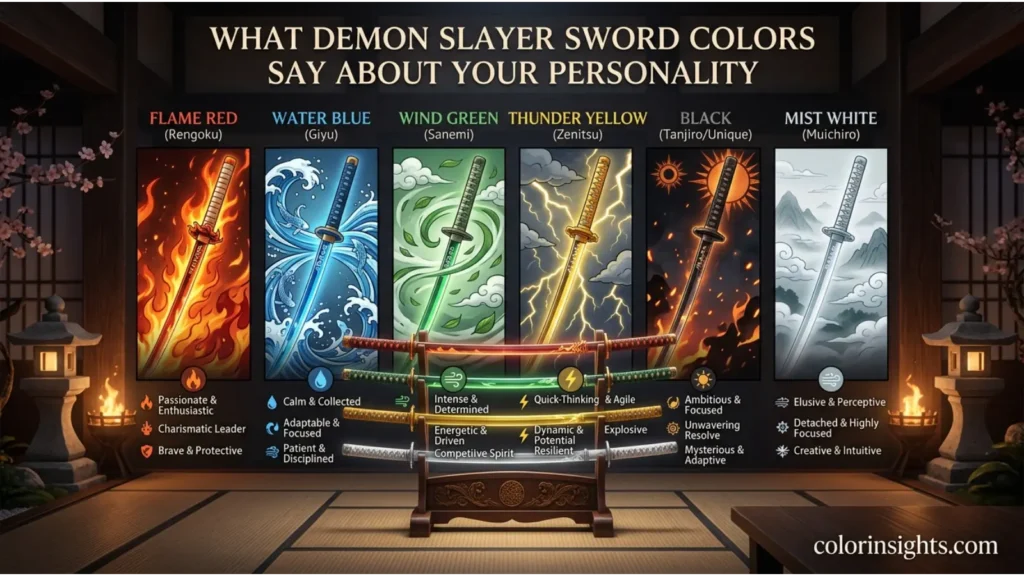
What Demon Slayer Sword Colors Say About Your Personality
Fans often enjoy comparing their favorite sword color with their own personality. While color psychology can offer interesting insights, there is no scientific evidence that a favorite color can accurately determine a person’s personality. Individual preferences are shaped by culture, experiences, memories, and personal taste.
Instead, the following traits should be viewed as symbolic tendencies rather than factual personality assessments.
Strengths
People who are drawn to different sword colors may identify with qualities such as:
- Courage and confidence (Red)
- Calmness and patience (Blue)
- Adaptability and independence (Green)
- Determination and resilience (Black)
- Compassion and empathy (Pink)
- Creativity and intuition (Purple)
- Discipline and focus (White)
- Optimism and enthusiasm (Yellow)
- Stability and reliability (Gray)
These strengths reflect qualities admired both in fictional Demon Slayers and in everyday life.
Weaknesses
Every symbolic personality also has potential challenges.
Examples include:
- Black may become overly secretive.
- Red can become impulsive.
- Blue may avoid confrontation.
- Yellow can become impatient.
- Green may struggle with consistency.
- White may become perfectionistic.
- Purple can overanalyze situations.
- Pink may prioritize others before themselves.
- Gray may resist change.
Recognizing these symbolic weaknesses encourages personal growth rather than assigning fixed personality labels.
Social Behavior
Different color preferences may also reflect preferred social styles.
For example:
- Blue personalities often enjoy dependable friendships.
- Red personalities frequently take leadership roles.
- Green personalities appreciate freedom and flexibility.
- Pink personalities value kindness and emotional support.
- Black personalities may prefer smaller, trusted social circles.
- Purple personalities enjoy thoughtful conversations and creative communities.
Again, these are symbolic interpretations rather than scientifically verified personality categories.
Work Style
Color symbolism can also be applied to workplace preferences.
Examples include:
- Blue individuals often value organization and teamwork.
- Red personalities may thrive in competitive environments.
- Green personalities adapt quickly to change.
- White personalities appreciate structure and precision.
- Gray personalities focus on consistency and long-term planning.
- Purple personalities enjoy creative problem-solving.
- Yellow personalities bring enthusiasm to collaborative projects.
- Black personalities often prefer independent work requiring deep concentration.
Successful work habits ultimately depend on skills, experience, and motivation—not color preference alone.
Relationships
Symbolically, favorite colors may also influence relationship styles.
- Pink values compassion and emotional closeness.
- Blue emphasizes loyalty and trust.
- Green encourages mutual growth and independence.
- Red brings passion and commitment.
- White values honesty and sincerity.
- Purple seeks meaningful emotional connections.
- Gray appreciates stability and reliability.
- Black values loyalty and privacy.
Healthy relationships depend on communication, respect, and shared values rather than color preferences.
Emotional Tendencies
Color symbolism is often connected with emotional expression.
Examples include:
- Blue encourages emotional balance.
- Green supports resilience.
- White promotes inner clarity.
- Red reflects determination.
- Pink encourages empathy.
- Purple inspires imagination.
- Gray symbolizes emotional stability.
- Yellow promotes optimism.
- Black reflects perseverance during difficult circumstances.
These interpretations are useful as symbolic frameworks but should never be considered psychological diagnoses.
FAQs
1. What defines Demon Slayer sword colors?
Demon Slayer sword colors are determined by a Nichirin Sword’s reaction to its wielder. The blade changes color after its first use, symbolizing the swordsman’s natural abilities, personality, and connection to a specific Breathing Style.
2. What do Demon Slayer sword colors symbolize?
They symbolize a combination of combat style, inner potential, emotional qualities, and character development. Each color represents different strengths and themes within the story.
3. Why are Demon Slayer sword colors important?
Sword colors help distinguish characters, reinforce storytelling, and visually represent each Demon Slayer’s unique identity and preferred fighting technique.
4. Are Demon Slayer sword colors warm or cool colors?
The series includes both warm colors, such as red, yellow, and pink, and cool colors, such as blue, green, white, gray, and black. Each creates a different emotional impression.
5. What emotions do Demon Slayer sword colors represent?
Depending on the color, they may represent courage, hope, calmness, determination, compassion, wisdom, mystery, resilience, or emotional balance.
6. What is the spiritual meaning of Demon Slayer sword colors?
Many fans associate the colors with spiritual themes such as transformation, protection, purity, discipline, enlightenment, healing, and personal growth, although these meanings are symbolic rather than official.
7. Which colors pair well with Demon Slayer sword colors?
Popular combinations include:
- Black and red
- Blue and white
- Green and brown
- Purple and silver
- Pink and white
- Gray and blue
- Yellow and gray
These combinations create balanced, visually appealing color palettes.
8. What does liking a certain Demon Slayer sword color say about a person?
People often associate favorite colors with symbolic personality traits such as courage, creativity, compassion, or discipline. However, there is no scientific evidence that a favorite color can accurately determine personality.
9. Which Demon Slayer sword color is the rarest?
Within the series, the black Nichirin Sword is generally considered one of the rarest and most mysterious blade colors because little is known about its long-term significance.
10. Do sword colors determine a Demon Slayer’s destiny?
No. While sword colors symbolize natural strengths and Breathing Style affinity, a character’s success depends on dedication, training, experience, and personal choices rather than color alone.
Conclusion:
Demon Slayer sword color meanings add depth and symbolism to one of anime’s most recognizable weapons. Each Nichirin Sword color represents far more than visual style—it reflects a character’s strengths, emotional qualities, preferred Breathing Style, and personal journey.
Beyond the fictional world, these colors can also be understood through the lenses of color psychology, cultural symbolism, spirituality, design, and storytelling.