Choosing a wedding dress color is about more than personal style—it often reflects tradition, culture, emotions, and symbolic meaning. While white has long been associated with Western weddings, red remains the preferred bridal color in many Eastern cultures.
Each color carries unique psychological, spiritual, and cultural messages that influence how a bride is perceived and how the wedding ceremony is experienced.
Understanding the meaning behind white and red wedding dresses can help couples make a choice that aligns with their values, beliefs, and personal expression rather than simply following convention.
Quick Answer:
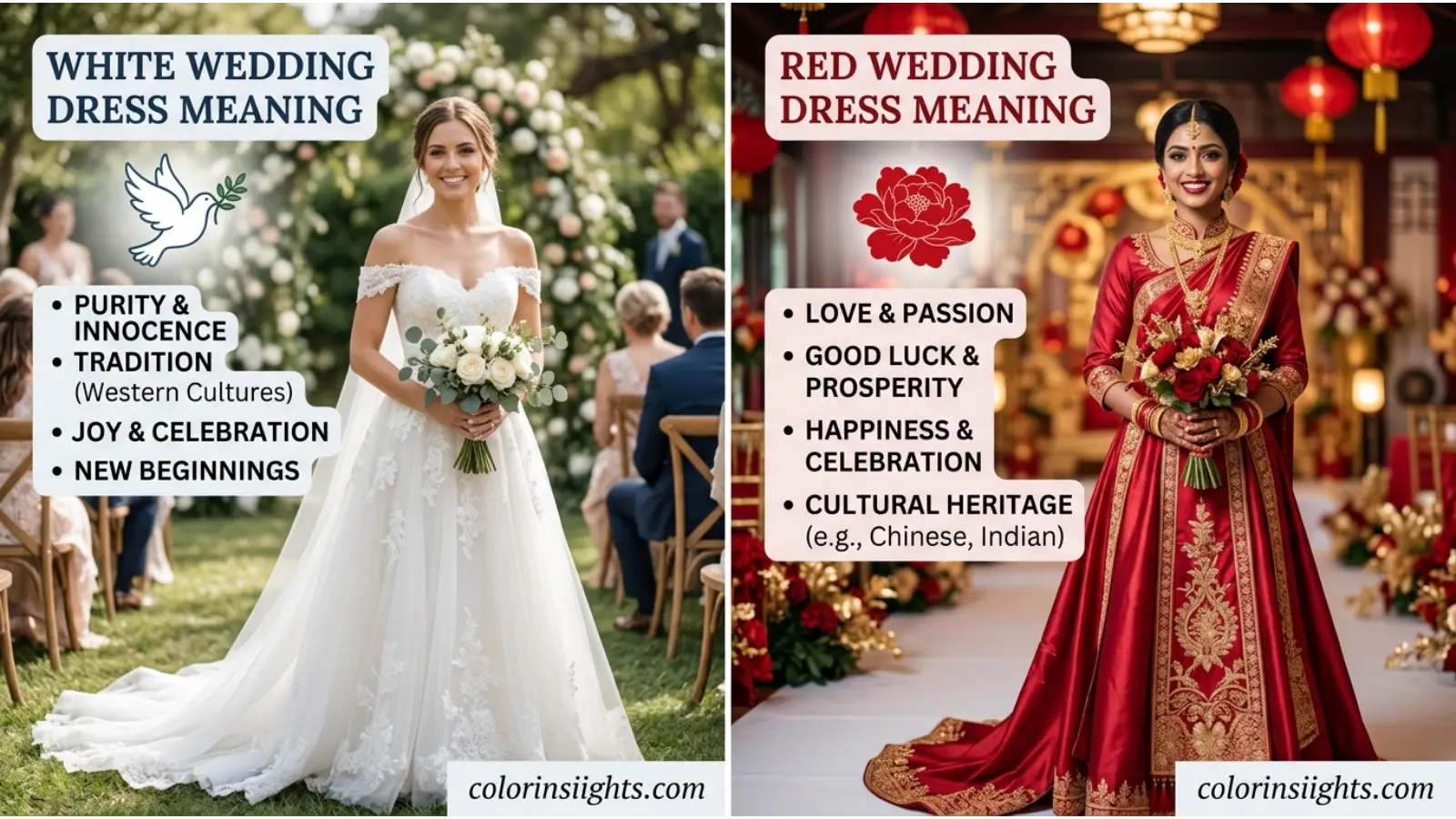
A white wedding dress commonly symbolizes purity, new beginnings, peace, sincerity, and timeless elegance, while a red wedding dress represents love, passion, prosperity, happiness, strength, good fortune, and celebration. Their meanings vary across cultures, religions, and personal traditions.
What Does the Color White or Red Wedding Dress Symbolize?
The symbolism of a wedding dress depends greatly on its color and the cultural context in which it is worn. Although fashion trends evolve over time, white and red remain the two most recognized bridal colors worldwide.
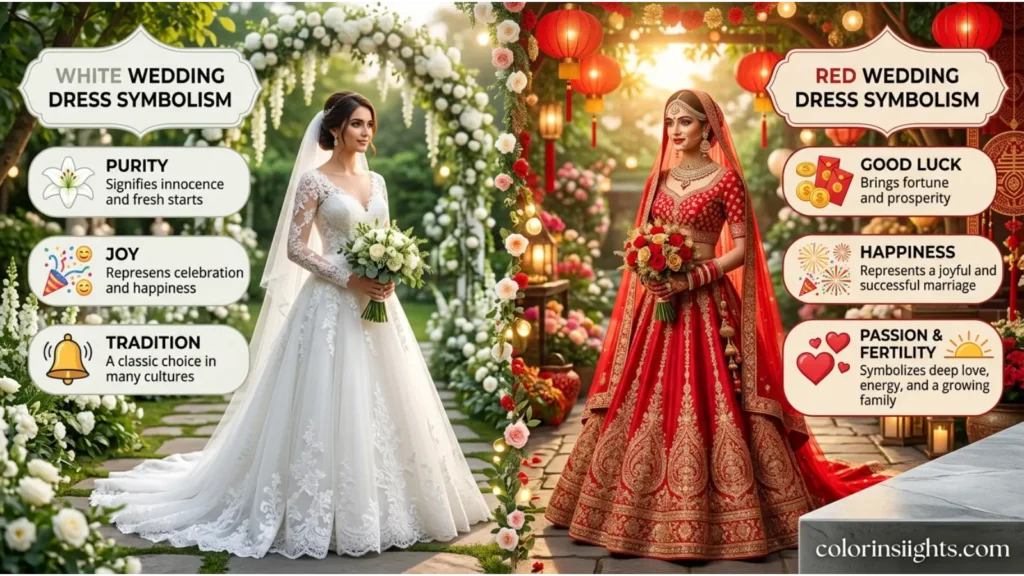
A white wedding dress is widely associated with innocence, honesty, simplicity, hope, and a fresh start. In many Western countries, white represents the beginning of a new chapter in life and symbolizes commitment, trust, and lifelong devotion between partners. Today, many brides choose white because it conveys timeless elegance and sophistication rather than solely its historical symbolism.
A red wedding dress, by contrast, symbolizes celebration, vitality, romance, courage, and prosperity. In countries such as China and India, red is traditionally considered the most auspicious bridal color because it is believed to attract happiness, fertility, success, and protection against negative energy. Rather than modesty, red communicates confidence, joy, and abundance.
Modern weddings increasingly embrace both colors, allowing couples to combine tradition with personal expression. Some brides wear white for the ceremony and change into red for the reception to honor multiple cultural traditions.
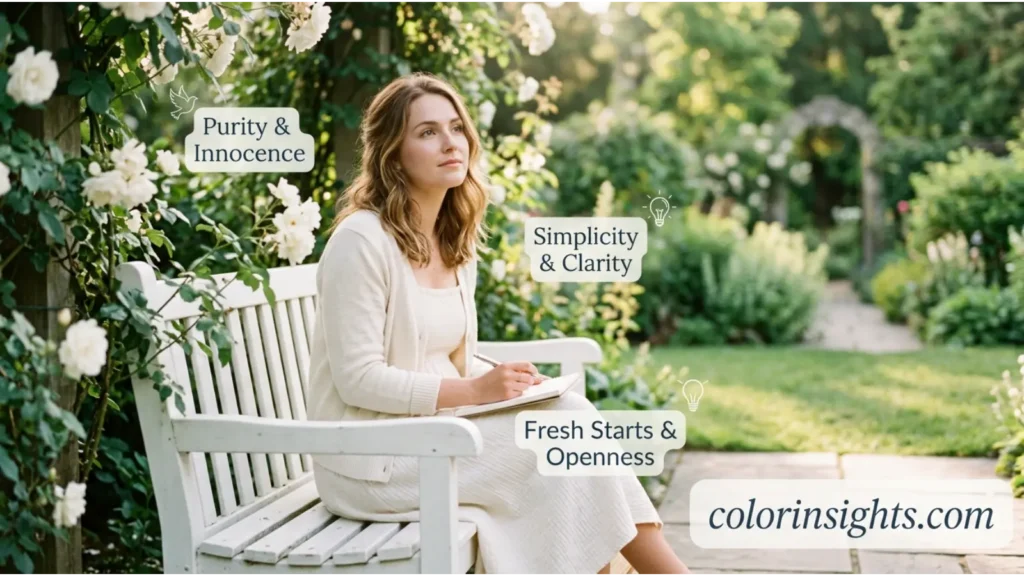
Psychological Characteristics of the Color White or Red Wedding Dress
Color psychology suggests that colors influence emotions, perceptions, and social interactions. While individual experiences differ, white and red generally produce very different psychological responses.
White Wedding Dress Psychology
White creates feelings of calmness, openness, and emotional clarity. It is often perceived as clean, organized, and trustworthy, making it a natural choice for ceremonies centered on commitment and sincerity.
Emotional Associations
- Purity and innocence
- Peace and tranquility
- Honesty and transparency
- Simplicity and balance
- Optimism and hope
Psychological Effects
- Encourages feelings of calm and emotional stability.
- Creates a sense of spaciousness and freshness.
- Enhances perceptions of elegance and refinement.
- Promotes trust and sincerity during meaningful occasions.
Positive Emotional Responses
People often associate white bridal gowns with:
- Confidence in new beginnings
- Emotional comfort
- Safety and security
- Gracefulness
- Inner peace
Negative Emotional Responses
Despite its positive symbolism, excessive white may also evoke:
- Emotional distance
- Coldness
- Perfectionism
- Sterility
- Lack of warmth
For example:
An entirely white wedding venue without complementary colors may appear elegant but could also feel impersonal or overly formal.
Impact on Mood and Behavior
White tends to encourage reflection, patience, and emotional composure. Brides wearing white are often perceived as approachable, graceful, and sincere.
Red Wedding Dress Psychology
Red is one of the most emotionally stimulating colors in psychology. It naturally attracts attention and communicates energy, passion, and determination.
Emotional Associations
- Love and romance
- Passion and desire
- Confidence
- Courage
- Celebration
Psychological Effects
- Increases excitement and emotional intensity.
- Creates a memorable visual impression.
- Enhances feelings of enthusiasm and confidence.
- Symbolizes vitality and personal strength.
Positive Emotional Responses
Red frequently inspires:
- Joy
- Excitement
- Passion
- Motivation
- Celebration
Negative Emotional Responses
When used excessively, red may also suggest:
- Aggression
- Impulsiveness
- Dominance
- Emotional intensity
- Restlessness
For instance, a wedding decorated entirely in bright red without softer accents may feel visually overwhelming for some guests.
Impact on Mood and Behavior
Red encourages expressive behavior and social interaction. Brides wearing red are often viewed as confident, charismatic, bold, and emotionally expressive.
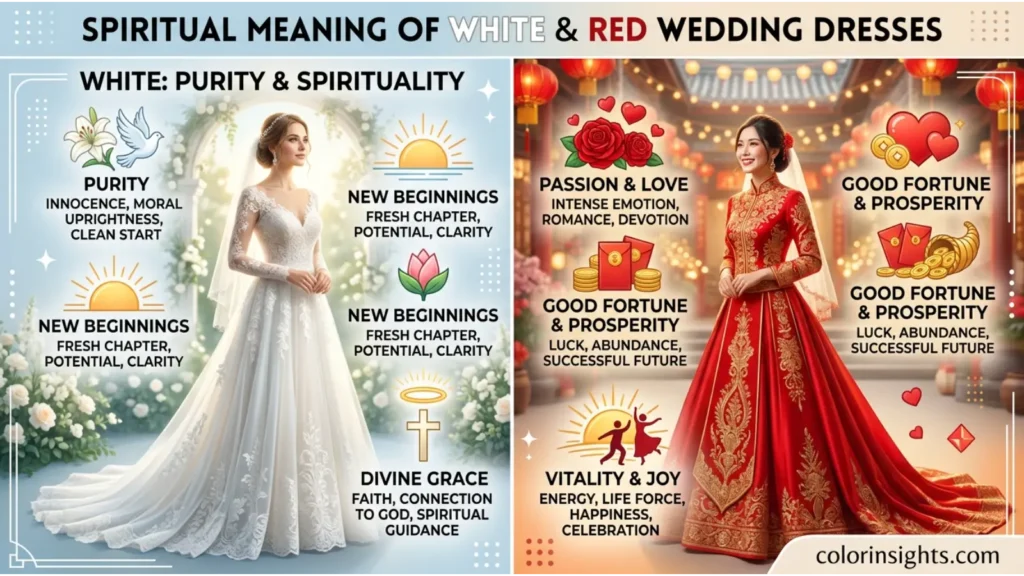
Spiritual Meaning of the Color White or Red Wedding Dress
Throughout history, colors have held deep spiritual significance across religious and cultural traditions. White and red represent different yet equally meaningful spiritual ideals.
Spiritual Meaning of White
White is commonly associated with divine light, purity, truth, and spiritual awakening.
It often represents:
- Holiness: Frequently worn during sacred ceremonies and religious celebrations.
- Wisdom: Symbolizes clarity of thought and moral integrity.
- Purity: Represents clean intentions and sincere commitment.
- Transformation: Marks the transition into a new stage of life through marriage.
- Healing: Encourages emotional renewal and forgiveness.
- Protection: In many traditions, white symbolizes spiritual safety and positive intentions.
- Enlightenment: Associated with higher consciousness and inner peace.
- New Beginnings: Reflects hope, optimism, and the start of married life.
- Eternity: Suggests everlasting love and enduring commitment.
Because of these meanings, white remains one of the most universally recognized colors for wedding ceremonies around the world.
Spiritual Meaning of Red
Red carries equally powerful spiritual symbolism, although its emphasis is often on life, vitality, and celebration.
Common spiritual meanings include:
- Power: Represents personal strength and courage.
- Protection: Many cultures believe red wards off evil influences.
- Transformation: Symbolizes life’s major transitions and personal growth.
- Love: Reflects deep emotional connection and romantic commitment.
- Prosperity: Frequently associated with abundance, wealth, and success.
- Vitality: Represents life energy, enthusiasm, and determination.
- Blessings: Seen as a color that attracts good fortune.
- New Beginnings: Celebrates the joyful start of married life.
- Fertility: In several traditions, red symbolizes family growth and future generations.
Because of these spiritual associations, red wedding dresses continue to be cherished across many Asian cultures and increasingly appear in multicultural weddings worldwide.
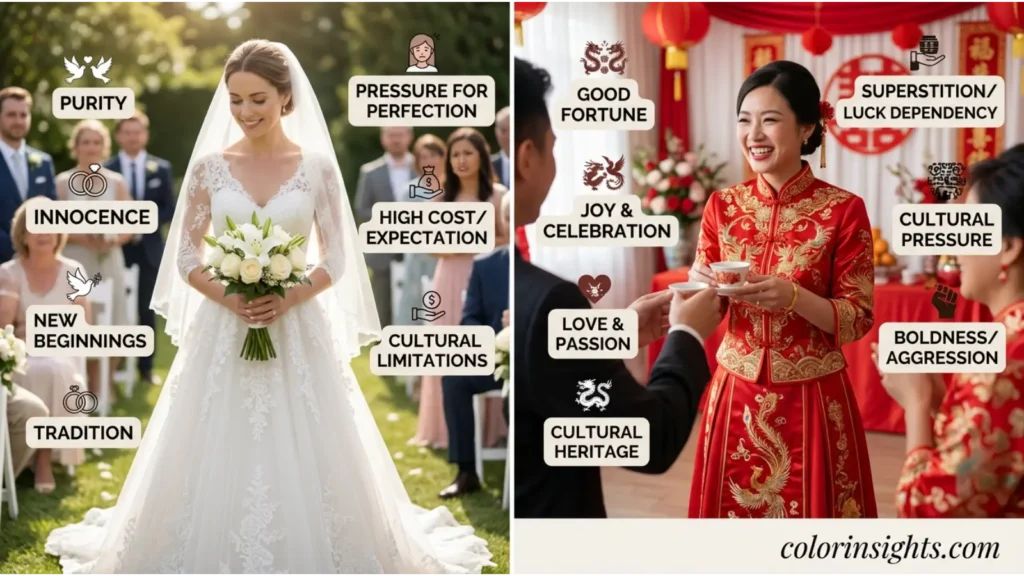
Positive and Negative Meanings of the Color White or Red Wedding Dress
Both white and red communicate positive values, yet each also carries potential negative interpretations depending on context, culture, and personal perception.
Positive Meanings
White Wedding Dress
White symbolizes many uplifting qualities, including:
- Purity: Represents sincere intentions and honest commitment.
- Peace: Creates a calm and harmonious atmosphere during the ceremony.
- Simplicity: Highlights timeless elegance without excessive decoration.
- Clarity: Reflects transparency and open communication.
- Freshness: Marks the beginning of a new life chapter.
- Hope: Inspires optimism for the future.
- Balance: Works harmoniously with nearly every wedding color palette.
- Harmony: Encourages unity between families and partners.
Real-world example:
A minimalist white wedding dress paired with natural floral arrangements often conveys sophistication and understated elegance.
Red Wedding Dress
Red also carries numerous positive meanings:
- Love: Represents deep affection and lifelong romance.
- Prosperity: Traditionally believed to attract wealth and abundance.
- Celebration: Reflects joy and festive energy.
- Strength: Symbolizes resilience and confidence.
- Passion: Expresses emotional intensity and commitment.
- Protection: Often viewed as a safeguard against negative influences.
- Good Fortune: Considered lucky in many Eastern cultures.
- Vitality: Represents health, happiness, and enthusiasm.
Real-world example:
Brides in traditional Chinese weddings often wear red silk gowns embroidered with gold to symbolize prosperity and marital happiness.
Negative Meanings
White Wedding Dress
Depending on context, white may also suggest:
- Emptiness: Large amounts of white can feel visually empty.
- Isolation: May create emotional distance if not balanced with warmer tones.
- Coldness: Extremely minimalist settings sometimes appear unwelcoming.
- Sterility: Bright white environments can resemble clinical spaces.
- Perfectionism: May create unrealistic expectations of flawless appearances.
Example:
An all-white wedding venue with little texture or decoration may appear elegant but lack warmth and intimacy.
Red Wedding Dress
Red may also communicate less desirable meanings:
- Aggression: Bright shades can appear confrontational.
- Impulsiveness: Sometimes linked with emotional intensity.
- Dominance: Can overshadow softer decorative elements.
- Overstimulation: Excessive red may become visually tiring.
- Conflict: In certain contexts, red is associated with heightened emotions.
Example:
Overusing vivid red in every aspect of wedding décor can overwhelm guests instead of creating a balanced atmosphere.
Meanings of the Color White or Red Wedding Dress
The meaning of a wedding dress color changes according to personal beliefs, cultural traditions, fashion trends, and design choices. While white generally emphasizes elegance, simplicity, and new beginnings, red highlights celebration, prosperity, and emotional strength. Understanding these contextual meanings helps couples select colors that best reflect their personalities and wedding vision.
Feng Shui
In Feng Shui, white belongs to the Metal element, representing clarity, precision, organization, and supportive energy. It works especially well in bedrooms, meditation spaces, and living rooms where calmness and balance are desired.
Red, on the other hand, represents the Fire element, symbolizing passion, recognition, vitality, and positive life force. It is ideal as an accent color in dining rooms, entryways, and celebration spaces but should be used in moderation to avoid overwhelming energy.
Recommended color combinations
- White with gold for elegance.
- White with soft gray for balance.
- Red with gold for prosperity.
- Red with cream for warmth.
- White and red together for harmony between calmness and celebration.
Home decorating tips
- Use white as a neutral foundation for spacious interiors.
- Introduce red through decorative accents such as cushions, artwork, or flowers.
- Balance bold red with softer neutrals to maintain visual harmony.
- Combine natural materials with both colors for a welcoming atmosphere.
Marketing
Color plays a powerful role in branding and consumer psychology.
White in marketing communicates cleanliness, simplicity, innovation, and transparency. Technology, healthcare, and luxury brands often incorporate white to create a premium and trustworthy image. Minimalist packaging also relies heavily on white to emphasize product quality and sophistication.
Red in marketing attracts immediate attention and encourages action. It is widely used in food, retail, entertainment, and promotional campaigns because it stimulates excitement and urgency.
Branding Psychology
- White signals honesty, simplicity, and professionalism.
- Red conveys confidence, excitement, and energy.
Consumer Perception
Consumers often perceive white-branded products as premium and modern, while red products appear bold, memorable, and emotionally engaging.
Trust Signals
White supports credibility through clean visual presentation, whereas red is commonly used to highlight important offers, limited-time promotions, or key messages.
Product Packaging
Luxury skincare, electronics, and wellness products frequently feature white packaging to reinforce purity and quality. Red packaging is commonly used for festive editions, confectionery, beverages, and products intended to create excitement.
Advertising Applications
White creates uncluttered advertisements that focus attention on the product itself. Red is frequently used for call-to-action buttons, promotional banners, and seasonal campaigns because it naturally attracts the eye.
Well-known examples include minimalist technology branding that emphasizes white and global beverage, food, and retail companies that rely on red to increase visibility and emotional appeal.
Design
White and red are among the most influential colors in design because they create distinctly different emotional and visual experiences. Designers carefully select these colors based on the message they want to communicate, whether it is elegance and simplicity or passion and energy.
Interior Design
In interior spaces, white creates an open, airy, and spacious atmosphere. It reflects natural light, making rooms appear larger and brighter. White is a cornerstone of minimalist, Scandinavian, and contemporary interior styles because it provides a clean backdrop for furniture, artwork, and decorative accents.
By contrast, red adds warmth, personality, and visual excitement. It is commonly used as an accent color in living rooms, dining rooms, and entertainment spaces where energy and conversation are encouraged. Too much red, however, can make a room feel visually intense, so designers often balance it with neutral colors like white, beige, or gray.
Graphic Design
Graphic designers use white space—also known as negative space—to improve readability and create a professional appearance. White helps organize content, reduce visual clutter, and direct attention to important information.
Red is frequently used for headlines, promotional banners, warning messages, and key design elements because it naturally attracts attention. Strategic use of red creates emphasis without overwhelming the overall layout.
Web Design
In digital design, white backgrounds improve readability and create a modern user experience. Many websites rely on white to enhance accessibility, increase visual comfort, and highlight images or products.
Red is commonly reserved for important actions such as “Buy Now,” “Subscribe,” or “Register” buttons because it encourages user interaction. However, excessive red can create visual fatigue, making moderation essential.
User Experience (UX)
Color psychology significantly influences user experience.
White supports:
- Easy navigation
- Visual clarity
- Reduced cognitive load
- Professional presentation
- Accessibility
Red supports:
- Immediate attention
- Faster decision-making
- Action-oriented behavior
- Emotional engagement
- Increased visibility of important information
Fashion
Wedding dress colors carry powerful fashion symbolism that extends beyond tradition.
Clothing Symbolism
A white wedding dress communicates elegance, grace, sophistication, innocence, and timeless beauty. It remains one of the most versatile bridal choices because it complements nearly every wedding theme, venue, and season.
A red wedding dress symbolizes confidence, celebration, romance, prosperity, and individuality. It appeals to brides who wish to honor cultural traditions or make a bold fashion statement.
Styling Effects
White creates a soft, refined, and classic bridal appearance that photographs beautifully in natural lighting.
Red produces dramatic visual contrast and creates memorable wedding photographs, especially when paired with gold embroidery, floral accessories, or luxurious fabrics.
Personality Impressions
People often perceive brides wearing white as:
- Elegant
- Calm
- Traditional
- Graceful
- Sophisticated
Brides wearing red are commonly viewed as:
- Confident
- Passionate
- Energetic
- Independent
- Charismatic
Advantages and Disadvantages
White Wedding Dress
Advantages:
- Timeless style
- Matches almost every wedding theme
- Easy to accessorize
- Symbolizes new beginnings
Disadvantages:
- Stains easily
- May appear overly traditional for some brides
- Can feel formal if not balanced with colorful accessories
Red Wedding Dress
Advantages:
- Eye-catching and memorable
- Rich cultural symbolism
- Represents prosperity and happiness
- Ideal for festive celebrations
Disadvantages:
- May not align with all cultural expectations
- Can dominate wedding photographs if overused
- Requires careful coordination with decorations
Practical Example
A multicultural wedding might feature a white gown during the ceremony followed by a traditional red dress during the reception, allowing the bride to celebrate both heritage and personal style.
Color Associations Are Not Universal
Although white and red have widely recognized symbolism, their meanings vary significantly across cultures, religions, historical periods, and modern societies. Understanding these differences helps avoid assumptions and highlights the diversity of color interpretation.
Western Cultures
In most Western countries, white is traditionally associated with weddings, innocence, honesty, peace, and fresh beginnings. It became especially popular after Queen Victoria wore a white wedding dress in 1840, influencing bridal fashion for generations.
Red generally symbolizes romance, love, passion, courage, and celebration. It is also associated with holidays such as Valentine’s Day and is commonly used to express affection and emotional intensity.
Eastern Cultures
In many Eastern cultures, particularly China, red is the traditional bridal color because it symbolizes prosperity, happiness, fertility, luck, and protection from negative influences. Red wedding dresses remain an important cultural tradition that celebrates joyful beginnings.
White, however, has historically been associated with mourning and remembrance in several Asian societies. As globalization has increased, white wedding dresses have become more common, but red continues to hold deep cultural significance.
Religious Traditions
Religious symbolism also shapes color meaning.
In Christianity, white often represents purity, holiness, forgiveness, and spiritual renewal. It is frequently worn during baptisms, weddings, and significant religious ceremonies.
In Hindu traditions, red symbolizes marriage, fertility, strength, prosperity, and divine blessings. Bridal attire commonly incorporates rich red fabrics accented with gold embroidery to represent abundance and sacred commitment.
Other faiths may interpret these colors differently depending on historical traditions, sacred texts, and ceremonial practices.
Historical Interpretations
Throughout history, color meanings have evolved.
Centuries ago, white wedding dresses were not universal. Brides often wore their finest available clothing regardless of color. White gained widespread popularity during the nineteenth century due to changing fashion trends and royal influence.
Red has maintained a long-standing connection with celebration, power, royalty, and prosperity across many civilizations, making it one of the world’s oldest ceremonial colors.
Modern Global Interpretations
Today, cultural boundaries continue to blend.
Many modern couples choose wedding dress colors based on personal identity rather than tradition alone. White symbolizes elegance and timeless beauty, while red reflects confidence, individuality, and cultural pride.
Increasingly, brides incorporate both colors into one celebration, demonstrating that contemporary wedding symbolism embraces diversity, inclusivity, and personal expression.
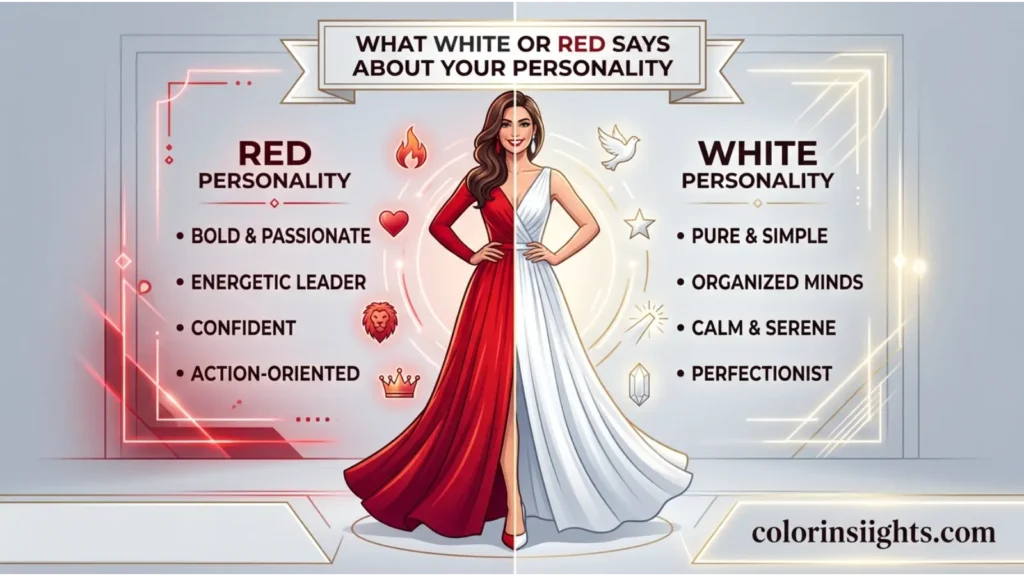
What White or Red Says About Your Personality
Although psychologists recognize that color preferences can reflect certain emotional tendencies, they do not determine personality with certainty. Personal experiences, cultural background, and individual taste all influence color choices.
People who prefer white often appreciate simplicity, organization, honesty, and peaceful environments. They may enjoy thoughtful planning, clean aesthetics, and balanced lifestyles.
Common strengths include:
- Reliable
- Organized
- Honest
- Calm
- Thoughtful
- Detail-oriented
Possible weaknesses include:
- Perfectionism
- Emotional reserve
- Cautious decision-making
- Preference for predictability
In social settings, white enthusiasts often value respectful communication and meaningful relationships. They typically prefer harmony over conflict and appreciate stable friendships.
Professionally, they may excel in careers requiring precision, organization, ethics, and careful analysis.
People who prefer red are often viewed as energetic, passionate, ambitious, and expressive. They may enjoy leadership opportunities, creative challenges, and dynamic environments.
Common strengths include:
- Confidence
- Courage
- Determination
- Charisma
- Motivation
- Enthusiasm
Possible weaknesses include:
- Impatience
- Emotional intensity
- Competitiveness
- Impulsiveness
Socially, red lovers often enjoy meeting new people and participating in lively activities. They tend to communicate openly and express emotions more directly.
At work, they may thrive in leadership positions, entrepreneurship, marketing, sales, performance, or other fast-paced professions that reward initiative and confidence.
In relationships, they often value passion, loyalty, and emotional honesty.
Ultimately, color preference offers interesting psychological insights but should never be viewed as a definitive measure of personality.
FAQs
What defines white or red wedding dress color meaning?
White symbolizes purity, peace, sincerity, and new beginnings, while red represents love, prosperity, celebration, courage, and good fortune. Their meanings vary according to culture, religion, and personal interpretation.
What does the color white or red wedding dress symbolize?
White commonly symbolizes innocence, elegance, and lifelong commitment. Red symbolizes romance, happiness, vitality, prosperity, and emotional strength.
Why are white and red wedding dress colors important?
These colors communicate cultural traditions, emotional values, and personal identity while helping establish the atmosphere and symbolism of a wedding ceremony.
Is white a warm or cool color?
White is generally considered a neutral color. Depending on its undertones, it can appear either warm or cool in fashion and interior design.
Is red a warm or cool color?
Red is traditionally classified as a warm color because it conveys energy, passion, warmth, and excitement.
What emotions do white and red represent?
White represents peace, hope, honesty, calmness, and clarity. Red represents passion, confidence, excitement, courage, celebration, and love.
What is the spiritual meaning of white and red?
Spiritually, white symbolizes holiness, purity, wisdom, healing, and enlightenment. Red represents protection, vitality, prosperity, strength, transformation, and divine blessings.
What colors pair well with white and red?
White pairs beautifully with gold, silver, navy, blush, emerald, and gray. Red complements gold, ivory, cream, black, white, and deep green for balanced, elegant designs.
What does liking white or red say about a person?
People who prefer white often appreciate order, simplicity, and harmony, while those who prefer red may enjoy excitement, confidence, and expressive lifestyles. However, color preference alone cannot accurately determine personality.
Can a bride wear both white and red?
Yes. Many modern brides combine both colors by wearing white for the ceremony and changing into a red dress for the reception, honoring multiple traditions while expressing their personal style.
Conclusion:
The meaning of a white or red wedding dress extends far beyond appearance. White continues to symbolize purity, elegance, peace, and new beginnings, making it a timeless choice in many Western traditions.
Red represents love, prosperity, celebration, strength, and good fortune, remaining deeply significant across numerous Eastern cultures. Psychology, spirituality, fashion, and cultural heritage all shape how these colors are interpreted.
Ultimately, the most meaningful wedding dress color is one that reflects the couple’s values, traditions, personality, and vision for the future, creating a celebration that is both authentic and memorable.