Semen color meanings can help explain why ejaculate sometimes appears white, gray, yellow, green, pink, red, brown, or even black. Normal semen usually has a white-to-gray appearance, but its shade can change temporarily because of factors such as age, ejaculation frequency, diet, medications, or blood.
Most short-term changes do not indicate a serious problem. However, unusual colors that persist or occur with pain, fever, urinary symptoms, or other changes deserve medical attention. Understanding semen color meanings can help you distinguish normal variation from changes that may require professional evaluation.
Quick answer:
Normal semen generally looks white-gray. A slight yellow tint can have harmless causes, while green, red, brown, or black semen may sometimes indicate infection, inflammation, or blood. Color alone cannot diagnose a medical condition.
What Does Semen Color Mean?
Unlike traditional color meanings, semen color does not have a fixed psychological, spiritual, or personality symbolism. It primarily reflects the physical composition of semen and substances that may mix with it.
Semen contains sperm along with fluids produced by the seminal vesicles, prostate, and other reproductive structures. These components normally create a whitish-gray fluid.
When the appearance changes, healthcare professionals consider the color together with symptoms, medical history, medications, recent procedures, sexual activity, and other relevant factors.
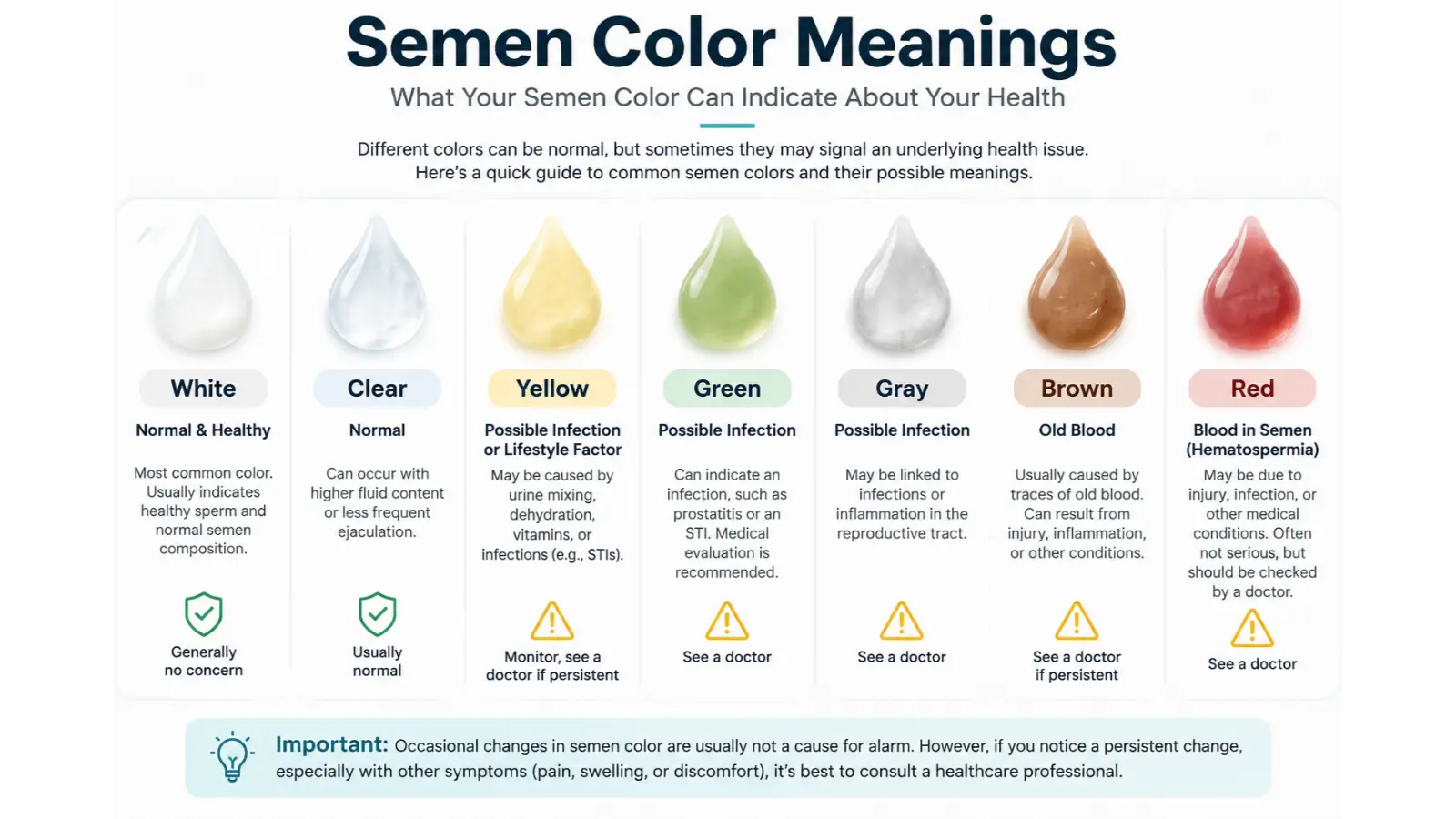
Semen Color Meanings at a Glance
| Semen color | What it may indicate | Should you seek medical advice? |
|---|---|---|
| White or gray | Typical semen appearance | Usually no concern if you have no symptoms |
| Yellow | Aging, abstinence, food, medication, urine traces, or sometimes infection | Consider evaluation if persistent or accompanied by symptoms |
| Green | Possible infection, inflammation, or medication effect | Yes, particularly with other symptoms |
| Pink | Possible small amount of blood | Seek advice if it recurs or persists |
| Red | Fresh blood may be present | Medical evaluation may be appropriate |
| Brown | Often associated with older blood | Seek advice if persistent or recurrent |
| Black | May reflect old blood or other uncommon causes | Professional evaluation is recommended |
Mayo Clinic reports that semen normally appears white-gray and that short-lived color changes often prove harmless. It also identifies infection, blood, medications, injury, and other factors as possible causes of unusual coloration.
Psychological Characteristics of Semen Color Changes
Semen itself does not have a scientifically established psychology of color. Unlike colors used in advertising, interiors, or clothing, the appearance of semen does not reliably predict emotions, behavior, or personality.
However, noticing an unexpected bodily change can produce understandable psychological reactions.
Common emotional responses
- Concern: Red or black semen can naturally cause worry.
- Anxiety: People may fear infection or another health problem.
- Curiosity: A temporary yellow color can lead someone to investigate possible causes.
- Reassurance: Learning that many temporary changes have benign explanations can reduce anxiety.
- Uncertainty: Color alone cannot identify the underlying cause.
These reactions do not mean that semen color carries psychological symbolism. They simply reflect how people respond to unexpected changes in their bodies.
Medical Significance of Different Semen Colors
For this topic, medical significance matters more than traditional color symbolism. Each shade can have different possible explanations.
White or Gray Semen
White or whitish-gray represents the typical semen appearance.
A normal variation in shade does not necessarily indicate a fertility problem or illness. Semen can also change in thickness and appearance between ejaculations.
Yellow Semen
Yellow semen can have several explanations.
Possible causes include:
- Increasing age.
- Long periods without ejaculation.
- Certain foods.
- Some medications.
- Vitamin supplements.
- Urine mixing with semen.
- Infection.
- Jaundice.
- Increased white blood cells in semen.
Mayo Clinic confirms that semen can become more yellow with age and that infection, jaundice, and some medications can also contribute to yellow or green coloration.
A temporary pale-yellow appearance without other symptoms does not automatically indicate a medical problem.
Green Semen
Green or yellow-green semen deserves closer attention.
Infection can contribute to green or yellow discoloration. Certain medications can also alter semen color. A sexually transmitted infection may cause reproductive or urinary symptoms alongside an unusual discharge or semen appearance.
Color alone cannot establish an STI diagnosis. Appropriate testing provides a much more reliable answer.
Pink Semen
Pink semen can occur when a small amount of blood mixes with ejaculate.
Blood in semen has the medical term hematospermia. Several conditions can cause it, including infection, inflammation, trauma, or recent medical procedures.
One isolated episode often does not indicate a serious condition, particularly in younger men, but recurrent episodes deserve medical assessment.
Red Semen
Red or red-streaked semen can indicate fresh blood.
Possible causes include:
- Infection.
- Inflammation.
- Injury.
- Trauma involving reproductive structures.
- Recent medical procedures.
- Certain treatments.
- Bleeding within the reproductive tract.
Mayo Clinic notes that red semen can sometimes result from blood, although dietary factors such as eating large amounts of red-colored foods can also affect appearance.
Brown Semen
Brown semen commonly suggests older blood.
Blood can become darker as it remains in the reproductive tract. Therefore, brown or rust-colored semen may appear after an earlier episode of bleeding.
Recent procedures involving the prostate or reproductive system can also cause temporary blood in semen.
Black Semen
Black semen represents an uncommon appearance.
Old blood can make semen appear brown or black. Mayo Clinic also lists infection and exposure to certain heavy metals among possible causes.
Because black semen can have several explanations, persistent or unexplained discoloration warrants professional assessment.
Positive and Negative Interpretations of Semen Color
Traditional color psychology divides colors into positive and negative symbolism. That approach does not work reliably for semen.
Reassuring Signs
Some semen appearances commonly occur without serious disease.
White-gray semen generally represents the normal appearance.
Mild yellow semen can occur because of aging, prolonged abstinence, certain foods, medications, supplements, or other harmless factors.
Temporary changes that disappear quickly and occur without other symptoms often cause less concern.
Potentially Concerning Signs
Some changes deserve closer evaluation.
Persistent discoloration: A new color that does not resolve deserves attention.
Blood-like coloration: Pink, red, brown, or black semen may indicate blood.
Green coloration: Infection or inflammation can contribute to green semen.
Associated symptoms: Pain, fever, urinary discomfort, or other physical symptoms increase the importance of medical evaluation.
Mayo Clinic advises contacting a healthcare professional when a new semen-color change continues for more than a week.
Semen Color Meanings in Different Situations
The meaning of a semen color can change depending on what else is happening in your body.
Diet
Food can sometimes influence semen appearance.
Certain foods may contribute to a yellowish tint, while heavily pigmented foods can occasionally affect body-fluid coloration. Therefore, one unusual observation does not automatically indicate disease.
Ejaculation Frequency
Long periods without ejaculation can contribute to a more yellow appearance.
Older sperm and other components remain within the reproductive system before the body naturally breaks them down and reabsorbs them.
Age
Semen can become somewhat more yellow as a person gets older. This represents one recognized explanation for changes in semen appearance.
Medications and Supplements
Some medications can alter semen color.
Certain medicines may produce yellow or green coloration. Supplements and vitamins can also influence appearance in some people.
If you notice a persistent change after starting a new medication, discuss it with your healthcare professional rather than stopping prescribed treatment on your own.
Recent Medical Procedures
Medical procedures involving the prostate or reproductive system can sometimes cause blood to appear in semen.
This can produce pink, red, brown, or rust-colored ejaculate. Your healthcare professional can tell you how long such changes should normally continue after a procedure.
Infection and Inflammation
Infection or inflammation can change semen characteristics.
A color change becomes more significant when it appears alongside:
- Fever.
- Chills.
- Pain during ejaculation.
- Burning during urination.
- Pelvic discomfort.
- Genital pain or swelling.
- Foul-smelling discharge.
- Other urinary or sexual-health symptoms.
Semen Color Meanings and Fertility
Semen color cannot tell you whether you have normal fertility.
A person can have normal-looking semen while experiencing abnormalities in sperm count, movement, or morphology. Conversely, an unusual color does not automatically mean infertility.
If fertility concerns exist, a semen analysis provides much more useful information than visual inspection.
Laboratory testing can evaluate characteristics such as sperm concentration, motility, morphology, semen volume, and other parameters.
Therefore, semen color meanings should never replace fertility testing when conception difficulties occur.
When Should You See a Doctor?
You should consider medical evaluation when a new semen color persists, repeatedly returns, or appears with other symptoms.
Contact a healthcare professional if you notice:
- Persistent yellow or green semen.
- Recurrent pink or red semen.
- Brown or black semen without an obvious explanation.
- Blood in semen that repeatedly occurs.
- Pain during ejaculation.
- Burning or pain during urination.
- Fever or chills.
- Pelvic or abdominal pain.
- Genital swelling.
- Foul-smelling semen or urine.
- Yellowing of the skin or eyes.
Mayo Clinic specifically recommends speaking with a healthcare professional when a new semen-color change continues for more than one week.
Seek prompt care if severe pain, substantial bleeding, high fever, difficulty urinating, or rapidly worsening symptoms occur.
Semen Color Associations Are Not Universal
Western Perspectives
Western medical practice generally treats semen color as a clinical observation, not a symbolic representation of personality or emotional state.
Healthcare professionals focus on physiological causes, symptoms, medical history, and diagnostic testing.
Eastern Perspectives
Some traditional health systems use concepts involving reproductive vitality, bodily balance, and life energy. These traditions may interpret bodily fluids differently from modern biomedical medicine.
Such interpretations should remain separate from evidence-based diagnosis.
Religious Traditions
Religious traditions may discuss semen in relation to reproduction, ritual purity, sexuality, or human creation.
These teachings vary substantially among religions and communities. They do not establish medical criteria for diagnosing semen color changes.
Historical Interpretations
Historical medical systems often explained bodily fluids through theories of temperament, balance, and vitality.
Modern medicine instead evaluates reproductive fluids through anatomy, physiology, microbiology, laboratory testing, and clinical examination.
Modern Global Interpretations
Today, online searches for semen color meanings often reflect concerns about reproductive or sexual health rather than traditional symbolism.
Reliable health information should distinguish normal variation from signs that may need professional attention.
What Semen Color Says About Your Personality
Semen color does not scientifically determine personality traits.
There is no established evidence that a particular semen color indicates:
- Confidence.
- Intelligence.
- Masculinity.
- Emotional stability.
- Sexual personality.
- Relationship behavior.
- Social behavior.
- Work style.
- Spiritual development.
Color psychology can examine how people respond to colors in environments, clothing, advertisements, and visual communication. However, researchers cannot use semen color as a reliable personality assessment.
Therefore, claims about semen color personality traits should be treated as unsupported rather than as established psychology.
FAQs:
What defines normal semen color?
Normal semen usually appears white to whitish-gray. Slight variations can occur naturally between ejaculations.
What do semen color meanings tell you?
Semen color meanings can point toward possible biological explanations, but color alone cannot diagnose a condition. Doctors consider symptoms, medical history, medications, procedures, and other factors.
Why is semen sometimes yellow?
Yellow semen can occur because of age, prolonged abstinence, certain foods, medications, supplements, urine traces, or infection.
What does green semen mean?
Green semen may occur with infection, inflammation, or certain medication effects. If green semen persists or accompanies pain, fever, urinary symptoms, or unusual discharge, seek medical advice.
What does red semen mean?
Red semen can indicate fresh blood in the ejaculate, although dietary factors can sometimes affect its appearance. Persistent or recurrent blood should receive medical evaluation.
What does brown semen mean?
Brown semen often indicates older blood. A recent medical procedure can also explain temporary brown or rust-colored semen.
What does black semen mean?
Black semen can result from old blood. Mayo Clinic also identifies infection and certain heavy-metal exposures as possible causes. Persistent black semen requires professional assessment.
Can semen color indicate fertility?
No. Semen color cannot reliably determine fertility. A semen analysis provides objective information about sperm concentration, movement, morphology, and other reproductive characteristics.
Can food change semen color?
Yes. Certain foods can contribute to temporary changes in semen appearance. Red or strongly pigmented foods may also influence how bodily fluids appear.
Does abstinence change semen color?
Yes. A long period without ejaculation can contribute to a yellowish appearance. This does not automatically indicate a health problem.
When should you worry about semen color?
Pay closer attention when a new change persists, repeatedly returns, or occurs with pain, fever, urinary symptoms, foul odor, or other concerning symptoms. Mayo Clinic recommends contacting a healthcare professional when a new change lasts longer than a week.
Is semen color related to personality?
No. There is no reliable scientific evidence that semen color predicts personality, emotions, intelligence, masculinity, or relationship behavior.
Conclusion
Understanding semen color meanings requires a medical perspective rather than conventional color psychology. White-gray semen generally represents the typical appearance, while temporary yellow discoloration can have several harmless explanations. Green, pink, red, brown, or black semen can have different causes, including infection, inflammation, medication effects, or blood.
The most important point is that semen color alone cannot provide a diagnosis. Look at the duration of the change and any accompanying symptoms. Persistent or recurrent discoloration, particularly when accompanied by pain, fever, urinary problems, or bleeding, deserves professional evaluation.
For fertility concerns, rely on appropriate laboratory testing rather than visual appearance. A healthcare professional can determine whether the change represents normal variation or requires further investigation.
Medical disclaimer: This article provides general educational information and does not replace individualized medical advice, diagnosis, or treatment.