Temperature Mood Ring Color are color changing accessories that respond to changes in body temperature through thermochromic liquid crystals. People often connect these changing colors with emotional interpretations, personality symbolism, and traditional mood ring meanings.
While mood rings do not scientifically measure emotions, their colors can reflect physical temperature changes that may happen during different emotional states.
Quick answer:
Heat-sensitive crystals produce symbolic color interpretations that explain temperature mood ring meanings. Common meanings include blue for calmness, green for normal balance, black for stress or low temperature, and purple for excitement or passion.
What Are Temperature Mood Ring Color Meanings?
Temperature mood ring color meanings describe the relationship between the color displayed by a mood ring and the symbolic emotions traditionally associated with that color. Mood rings contain thermochromic crystals that change appearance depending on skin temperature.
When body temperature changes, the crystals reflect different wavelengths of light, creating colors that people associate with emotional states.
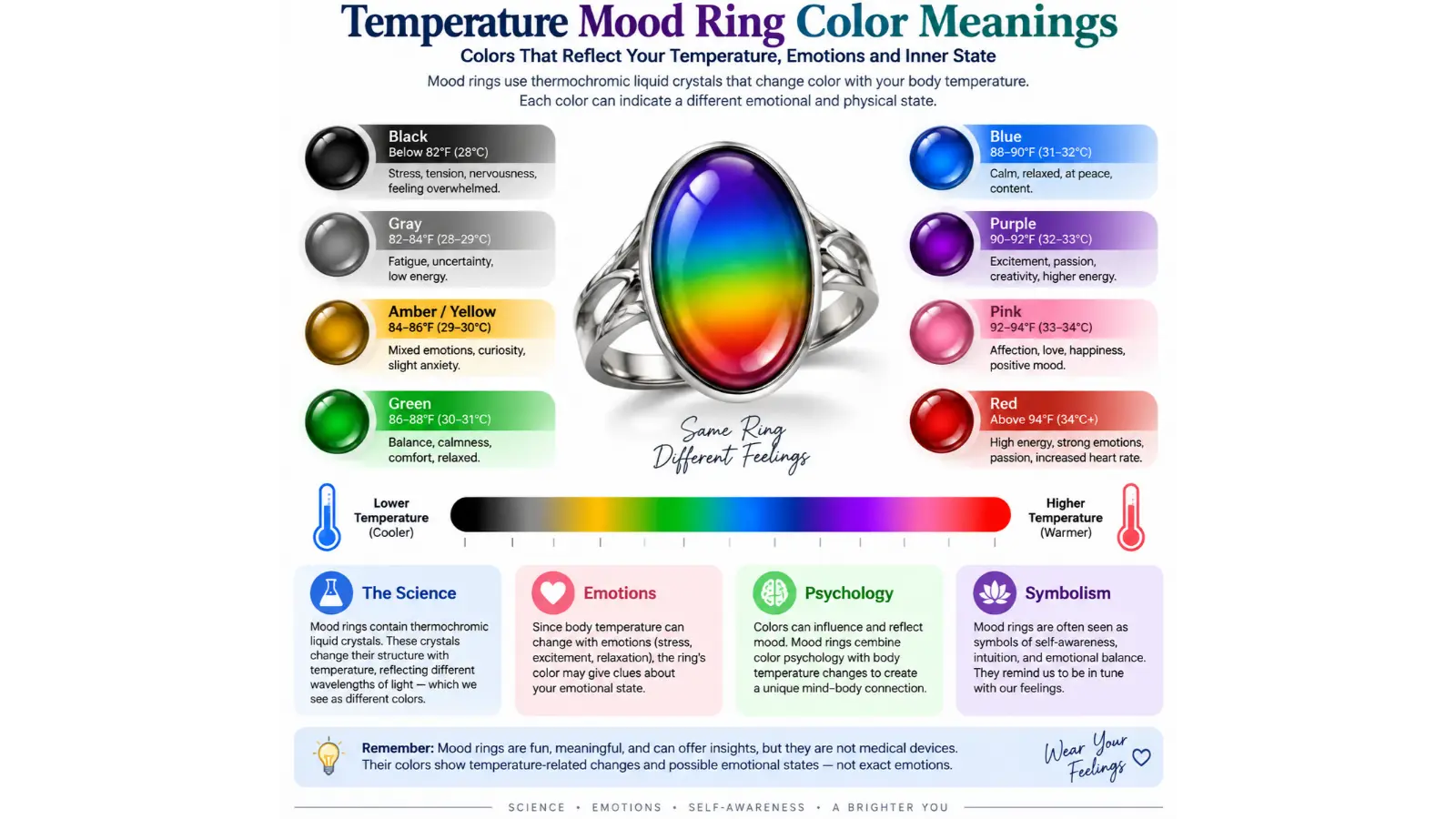
Traditional mood ring interpretations include:
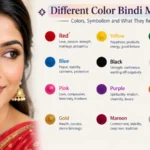
- Blue: Calmness, relaxation, and emotional balance.
- Green: Normal mood, stability, and comfort.
- Purple: Passion, excitement, creativity, or strong emotions.
- Black: Stress, tension, cold temperature, or inactivity.
- Yellow: Nervousness, uncertainty, or mixed emotions.
- Red: Energy, intensity, and strong feelings.
These meanings are cultural interpretations rather than scientifically proven emotional measurements.
How Do Temperature Mood Rings Work?
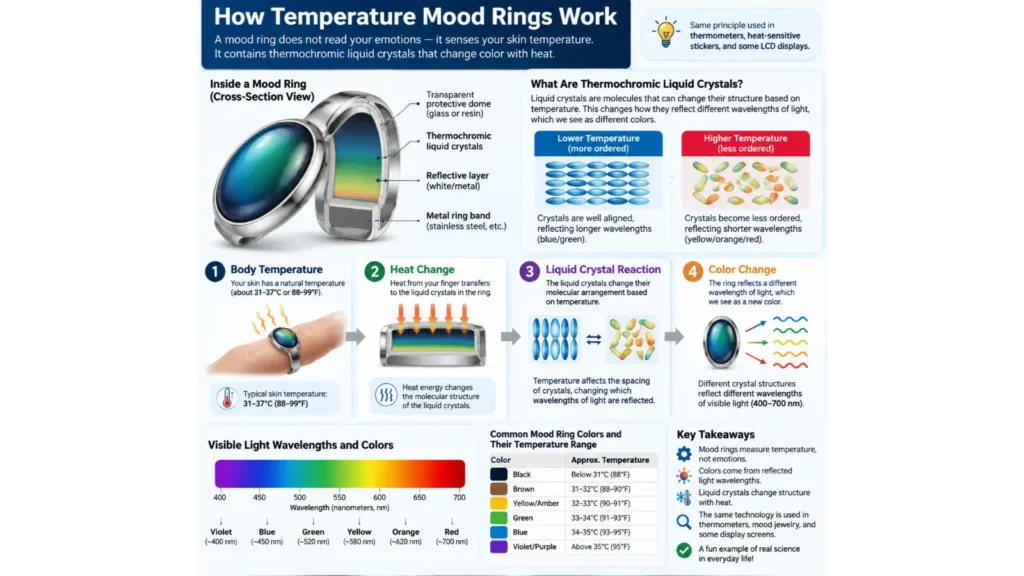
Mood rings work through a scientific process called thermochromism.
Inside the ring is a liquid crystal material that reacts to temperature changes. Human skin temperature naturally changes because of:
- Blood circulation.
- Environmental temperature.
- Physical activity.
- Stress responses.
- Relaxation levels.
The crystals adjust their structure as temperature changes, altering how light is reflected.
For example:
- Cooler skin temperatures may produce darker colors.
- Warmer skin temperatures may create lighter or brighter colors.
The ring is responding to heat changes, not directly detecting emotions.
Psychology of Mood Ring Colors
Color psychology studies how colors influence human perception, emotions, and behavior. Although mood rings are symbolic rather than diagnostic tools, people naturally connect colors with psychological meanings.
Blue Mood Ring Meaning
Blue is commonly associated with:
- Calmness.
- Trust.
- Stability.
- Peace.
- Relaxation.
Psychologically, blue environments are often perceived as peaceful and organized.
People often interpret a blue mood ring as representing:
- Emotional control.
- A relaxed state.
- Clear thinking.
- Inner harmony.
Green Mood Ring Meaning
Green is connected with:
- Balance.
- Growth.
- Renewal.
- Nature.
- Safety.
A green mood ring is traditionally interpreted as showing a comfortable and balanced emotional condition.
Purple Mood Ring Meaning
Purple has long represented:
- Creativity.
- Mystery.
- Imagination.
- Spiritual awareness.
- Luxury.
A purple mood ring is often associated with strong emotions, inspiration, or excitement.
Black Mood Ring Meaning
Black is commonly interpreted as:
- Stress.
- Emotional pressure.
- Low energy.
- Withdrawal.
However, black usually appears because of colder temperatures rather than a specific emotional condition.
Spiritual Meaning of Mood Ring Colors
Many people enjoy interpreting mood ring colors through spiritual symbolism. These meanings vary between cultures and belief systems.
Blue Spiritual Meaning
Blue is often associated with:
- Spiritual peace.
- Protection.
- Wisdom.
- Truth.
- Communication.
In many traditions, blue symbolizes connection with higher understanding and emotional healing.
Green Spiritual Meaning
Green represents:
- Renewal.
- Healing.
- Growth.
- Balance.
- Connection with nature.
It is often linked with harmony and restoration.
Purple Spiritual Meaning
Purple symbolizes:
- Enlightenment.
- Intuition.
- Transformation.
- Spiritual awareness.
- Higher consciousness.
Historically, purple has also represented power and sacred authority.
Black Spiritual Meaning
Black may represent:
- Mystery.
- Protection.
- Transformation.
- The unknown.
- Inner reflection.
Some traditions view black as a symbol of endings that lead to new beginnings.
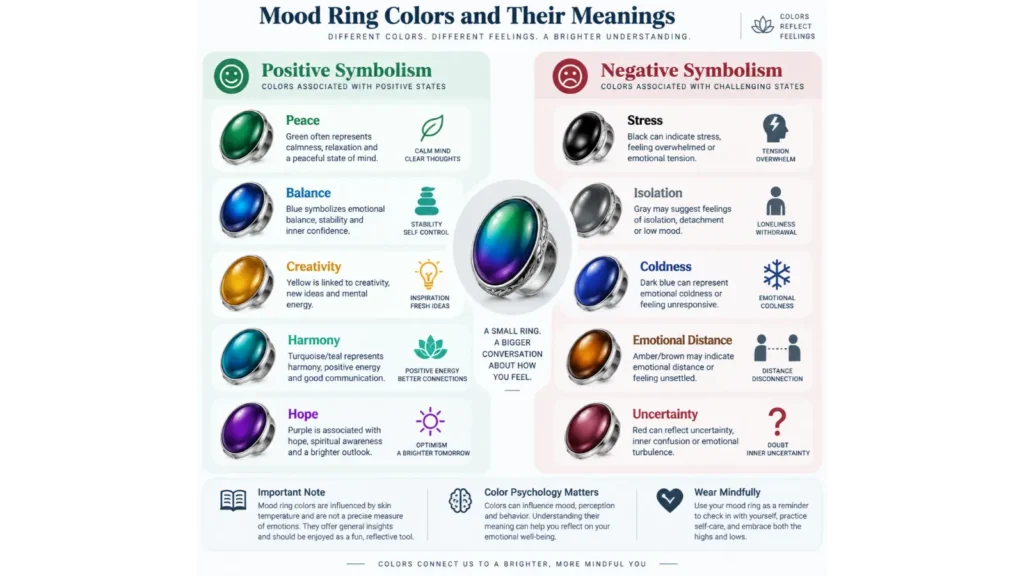
Positive and Negative Meanings of Mood Ring Colors
Positive Meanings
Mood ring colors can represent many positive qualities:
Calmness and Peace
Blue colors are often connected with relaxation, emotional stability, and peaceful thinking.
Balance and Harmony
Green symbolizes balance, natural energy, and emotional grounding.
Creativity and Inspiration
Purple represents imagination, artistic expression, and deeper thinking.
Energy and Passion
Red shades are often linked with motivation, excitement, and confidence.
Negative Meanings
Some traditional interpretations associate certain colors with challenging emotions:
Stress and Tension
Black or dark colors may symbolize stress or emotional pressure.
Nervousness
Yellow shades are sometimes associated with uncertainty or anxiety.
Emotional Distance
Cold colors may be interpreted as withdrawal or reduced emotional expression.
These meanings should be viewed as symbolism rather than scientific conclusions.
Temperature Mood Ring Color Meanings by Context
The meaning of a mood ring color depends heavily on context. The same color can have different interpretations in psychology, fashion, spirituality, and design.
Feng Shui
In Feng Shui, colors are connected with energy flow and environmental balance.
Blue
- Associated with water energy.
- Represents calmness and wisdom.
- Works well in bedrooms and meditation spaces.
Recommended combinations:
- Blue with white.
- Blue with natural wood tones.
Green
- Connected with growth and renewal.
- Suitable for living spaces and wellness areas.
Purple
- Represents spiritual energy and creativity.
- Often used in creative rooms.
Marketing
Brands use colors to influence consumer perception.
Blue Branding
Blue communicates:
- Trust.
- Reliability.
- Professionalism.
Many technology, healthcare, and financial companies use blue branding.
Green Branding
Green is commonly used for:
- Environmental products.
- Organic brands.
- Health-related companies.
Purple Branding
Purple is often associated with:
- Luxury.
- Creativity.
- Premium products.
Color choices in marketing are designed to create emotional associations with products.
Design
Mood ring colors influence design concepts through color symbolism.
Interior Design
Colors can create different atmospheres:
- Blue creates peaceful environments.
- Green brings natural feelings.
- Purple adds creativity and luxury.
Graphic Design
Designers use colors to communicate:
- Brand personality.
- Emotional tone.
- User expectations.
Web Design
Color selection affects:
- User experience.
- Trust perception.
- Visual hierarchy.
Fashion
Mood ring colors also influence fashion symbolism.
Blue Fashion
Often creates impressions of:
- Professionalism.
- Calm confidence.
- Reliability.
Green Fashion
Can suggest:
- Freshness.
- Natural style.
- Sustainability.
Purple Fashion
Often represents:
- Creativity.
- Individuality.
- Luxury.
Color Associations Are Not Universal
Color meanings differ across cultures, religions, and historical periods.
Western Cultures
In many Western societies:
- Blue is linked with trust and calmness.
- Green represents nature and health.
- Purple represents royalty and creativity.
Eastern Cultures
In some Eastern cultures:
- Colors may have different spiritual and social meanings.
- Red is often associated with celebration and good fortune.
Religious Traditions
Colors may represent:
- Purity.
- Sacredness.
- Transformation.
- Divine connection.
Interpretations depend on specific religious practices.
Historical Interpretations
Throughout history:
- Purple was associated with royalty because purple dyes were historically expensive.
- Green often represented fertility and renewal.
- Black had meanings connected with both mourning and power.
Modern Global Interpretations
Today, colors are increasingly shaped by:
- Media.
- Branding.
- Fashion trends.
- Digital culture.
What Your Favorite Mood Ring Color Says About Your Personality
Color preferences are sometimes linked with personality traits, although they do not determine personality scientifically.
People Who Prefer Blue
Often associated with:
- Calm thinking.
- Reliability.
- Preference for stability.
Possible strengths:
- Patience.
- Loyalty.
- Organization.
Possible challenges:
- Avoiding conflict.
- Being overly cautious.
People Who Prefer Green
Often associated with:
- Balance.
- Growth.
- Connection with nature.
Possible strengths:
- Adaptability.
- Compassion.
- Practical thinking.
Possible challenges:
- Seeking too much approval.
People Who Prefer Purple
Often associated with:
- Creativity.
- Imagination.
- Individuality.
Possible strengths:
- Innovation.
- Original thinking.
Possible challenges:
- Becoming overly idealistic.
Remember, liking a color does not accurately predict personality. Preferences are influenced by experiences, culture, environment, and personal memories.
FAQs:
What defines a temperature mood ring color?
A temperature mood ring color is created when thermochromic crystals react to changes in skin temperature.
What do mood ring colors mean?
Mood ring colors have traditional symbolic meanings, such as blue for calmness, green for balance, and purple for creativity.
Are mood rings scientifically accurate?
No. Mood rings measure temperature changes, not emotions directly.
Is a mood ring color change caused by body heat?
Yes. The ring responds to changes in body temperature through heat-sensitive crystals.
What emotions does a blue mood ring represent?
Blue is commonly associated with calmness, relaxation, and emotional stability.
What is the spiritual meaning of mood ring colors?
Spiritual interpretations vary but often connect colors with healing, transformation, wisdom, and energy.
What colors pair well with mood ring colors?
Common combinations include blue with white, green with earth tones, and purple with gold or silver.
Why does my mood ring turn black?
A mood ring may turn black when the crystals are at a cooler temperature or when the ring is not responding properly.
What does liking purple mood ring colors say about a person?
Purple preferences are often symbolically connected with creativity, imagination, and individuality.
Can a mood ring detect stress?
A mood ring cannot detect stress directly, but temperature changes caused by physical reactions may sometimes occur during stressful moments.
Conclusion
Temperature mood ring color meanings combine science, psychology, symbolism, and cultural interpretation. Although mood rings do not measure emotions directly, their changing colors provide an interesting way to explore color symbolism and personal expression. Understanding these meanings helps explain why certain colors are connected with emotions, personality traits, spirituality, branding, fashion, and design.