Worship flags use colors as visual expressions of faith, prayer, praise, and biblical truths. In many Christian churches and worship ministries, each flag color carries symbolic meaning that helps communicate spiritual themes such as holiness, redemption, victory, healing, hope, or the presence of God.
While many interpretations draw inspiration from biblical imagery, it is important to note that no universal biblical standard officially assigns meanings to worship flag colors. Different churches, ministries, and worship traditions may interpret them differently while maintaining similar spiritual themes.
Quick Answer:
Worship flag color meanings symbolize biblical principles, spiritual emotions, and acts of worship, with each color representing themes such as purity, love, repentance, victory, healing, royalty, or God’s presence.
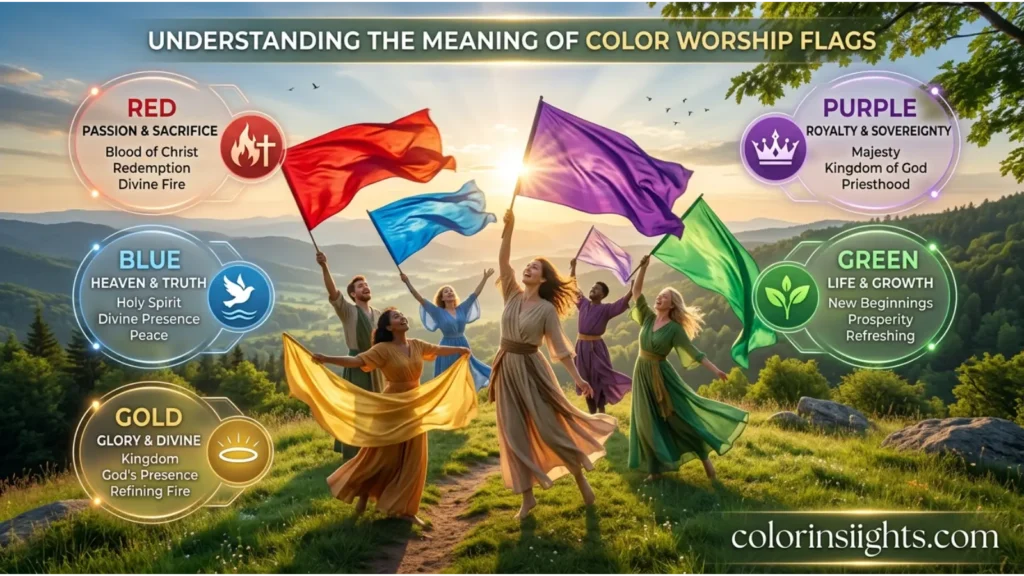
What Does the Color Worship Flag Symbolize?
Worship flag colors symbolize different aspects of God’s character, biblical teachings, and the believer’s spiritual journey. Rather than functioning as decorative elements alone, they serve as visual reminders that reinforce messages expressed through worship, music, prayer, and praise.
Many churches use worship flags during praise services, prophetic worship, conferences, and prayer gatherings. Although interpretations vary, most ministries associate specific colors with recurring biblical themes.
Some commonly recognized worship flag color meanings include:
| Color | Common Spiritual Meaning |
|---|---|
| White | Holiness, purity, righteousness, God’s presence |
| Red | Jesus’ sacrifice, love, redemption, the blood of Christ |
| Blue | Heaven, revelation, truth, the Holy Spirit |
| Purple | Royalty, kingship, authority, majesty |
| Gold | Glory, divine excellence, God’s kingdom |
| Green | Growth, restoration, healing, new life |
| Yellow | Joy, hope, faith, God’s light |
| Orange | Endurance, passion, spiritual fire |
| Pink | Compassion, grace, unconditional love |
| Silver | Redemption, refinement, wisdom |
| Black | Mourning, repentance, spiritual warfare before victory |
Rather than assigning magical significance to colors, worship leaders generally use them as meaningful visual symbols that support biblical messages.
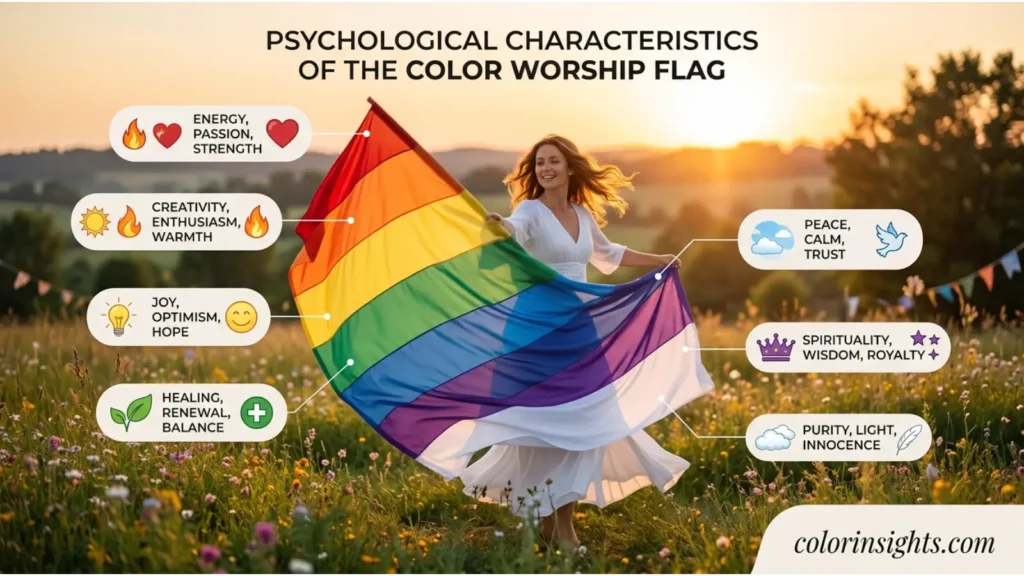
Psychological Characteristics of the Color Worship Flag
Because worship flags include many colors, their psychological influence depends on the individual color being displayed. Collectively, however, worship flag colors create emotional engagement and reinforce the atmosphere of worship.
Emotional Associations
- Inspiration
- Reverence
- Hope
- Peace
- Joy
- Encouragement
- Reflection
- Celebration
Psychological Effects
- Enhance emotional participation during worship.
- Improve visual focus within large worship spaces.
- Reinforce symbolic themes presented in sermons or songs.
- Encourage meditation and prayer.
- Increase feelings of unity during corporate worship.
Positive Emotional Responses
- Spiritual comfort
- Inner peace
- Gratitude
- Confidence
- Joyful expectation
- Renewed hope
- Sense of belonging
Negative Emotional Responses
Certain colors may also evoke more serious emotions depending on context:
- Black may encourage repentance or solemn reflection.
- Deep red may remind worshippers of sacrifice and suffering.
- Dark colors can create a contemplative mood rather than celebration.
Impact on Mood and Behavior
Visual symbolism often strengthens emotional memory. When worshippers repeatedly associate particular colors with biblical themes, the colors can help reinforce spiritual reflection, praise, and participation.
People typically respond positively when colors match the worship message. For example, white flags during Easter celebrations may emphasize resurrection and purity, while gold flags during praise services often communicate celebration and God’s glory.
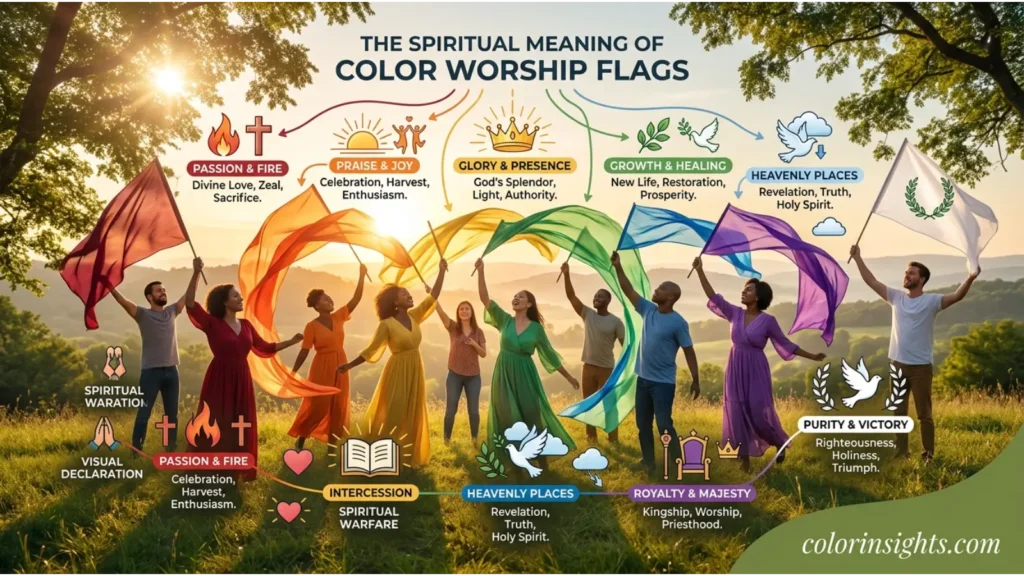
Spiritual Meaning of the Color Worship Flag
The spiritual meaning of worship flag colors comes primarily from biblical symbolism rather than psychological theory. Although Scripture rarely assigns fixed meanings to colors, recurring biblical imagery has shaped many modern interpretations.
Common spiritual themes include:
- Holiness: White symbolizes purity, righteousness, and God’s holiness.
- Wisdom: Silver and blue often represent divine wisdom and heavenly understanding.
- Purity: White reflects forgiveness, cleansing, and spiritual renewal.
- Transformation: Green represents spiritual growth and new beginnings.
- Healing: Green frequently symbolizes restoration and God’s healing power.
- Protection: Blue may represent God’s faithfulness, covenant, and heavenly covering.
- Power: Purple and red symbolize authority, kingship, and Christ’s victorious sacrifice.
- Enlightenment: Gold and yellow represent divine light, revelation, and God’s glory.
- New Beginnings: Green and white often accompany themes of renewal and resurrection.
- Eternity: Gold reflects God’s eternal kingdom, while blue points toward heaven and everlasting hope.
These meanings are devotional traditions rather than universally established biblical definitions.
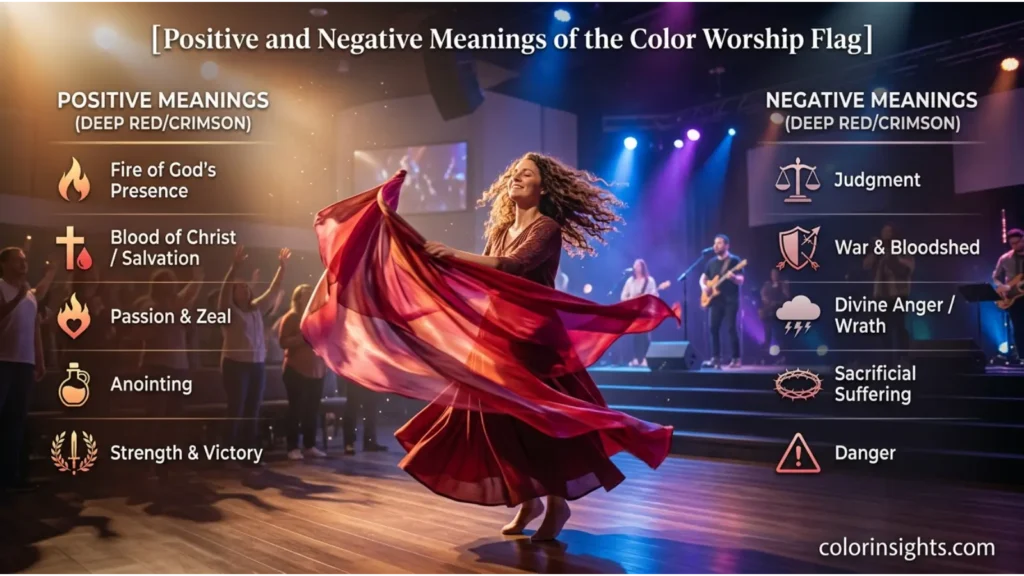
Positive and Negative Meanings of the Color Worship Flag
Positive Meanings
Worship flag colors often communicate uplifting spiritual messages.
Purity
White flags remind believers of forgiveness and righteous living during baptism or communion services.
Peace
Blue and white create a calming worship atmosphere, encouraging prayer and trust in God.
Simplicity
Neutral-colored flags keep attention on worship rather than elaborate visual effects.
Clarity
Gold and white provide strong visual contrast, helping reinforce sermon themes and worship presentations.
Freshness
Green flags symbolize renewed faith, spiritual growth, and God’s continuing work.
Hope
Yellow and gold communicate optimism, joy, and confidence in God’s promises.
Balance
Using complementary flag colors creates visual harmony while reflecting different aspects of biblical teaching.
Harmony
Coordinated worship flags can strengthen the sense of unity during congregational praise.
Negative Meanings
Color symbolism can also communicate more challenging spiritual themes depending on context.
Emptiness
Minimal color may intentionally represent spiritual longing before renewal.
Isolation
Dark monochromatic displays may express seasons of waiting or wilderness experiences.
Coldness
Excessive use of cool tones without balance may feel emotionally distant in certain worship settings.
Sterility
Overly plain visual presentations may reduce emotional engagement if they lack symbolic purpose.
Boredom
Using identical color schemes repeatedly can lessen visual impact over time.
Emotional Distance
If colors fail to match the worship message, they may seem disconnected from the congregation’s experience.
Perfectionism
Some ministries may place excessive emphasis on exact color symbolism rather than focusing on genuine worship.
Meanings of the Color Worship Flag
The meaning of worship flag colors depends on worship traditions, church practices, denominational beliefs, and the purpose of the service. The same color may represent different ideas in separate ministries while still pointing toward biblical truths.
Feng Shui
Although worship flags belong to Christian worship rather than Feng Shui, some people compare general color symbolism with interior color design.
- Associated element: Depends on the individual color rather than worship flags themselves.
- Energy symbolism: Colors influence perceived atmosphere through brightness and contrast.
- Best rooms: Prayer rooms, meditation spaces, worship halls, and quiet reflection areas.
- Recommended color combinations: White and gold for celebration, blue and silver for peaceful spaces, green and white for renewal.
- Decorating tips: Use colors that support the intended spiritual atmosphere without overwhelming the space.
Marketing
Although worship flags are primarily religious rather than commercial, color psychology still influences communication.
- Colors strengthen visual identity for churches and ministries.
- White and blue communicate trust, peace, and integrity.
- Gold suggests excellence and celebration.
- Purple conveys leadership and spiritual authority.
- Green reflects growth and community outreach.
Many faith-based organizations incorporate blue, gold, purple, and white into logos and event branding because these colors project stability, hope, and inspiration.
Design
In design, worship flag colors help shape the emotional tone of worship environments.
- Interior design: Colors complement sanctuary lighting and seasonal decorations.
- Graphic design: Churches use matching colors across banners, presentations, and printed materials.
- Web design: Ministry websites often use blue, white, and gold to create welcoming digital experiences.
- User experience: Consistent color themes improve recognition and navigation.
- Minimalist aesthetics: Limited color palettes maintain visual clarity while emphasizing key messages.
Fashion
Liturgical garments and worship dance attire often coordinate with worship flags.
- Clothing symbolism: White symbolizes purity, while purple reflects royalty.
- Seasonal use: Gold appears during celebrations, green during growth-themed events, and red during Pentecost.
- Styling effects: Coordinated costumes create visual unity during worship presentations.
- Personality impressions: Bright colors appear joyful, while darker tones encourage thoughtful reflection.
- Advantages: Enhance visual storytelling and reinforce biblical themes.
- Disadvantages: Overemphasis on appearance can distract from worship if symbolism overshadows the message.
Color Associations Are Not Universal
Western Cultures
Many Western churches associate white with holiness, red with Christ’s sacrifice, and purple with royalty. These interpretations often influence worship flag traditions throughout North America.
Eastern Cultures
In some Eastern cultures, colors such as white traditionally symbolize mourning rather than celebration. Churches may acknowledge these cultural meanings while teaching biblical symbolism within worship settings.
Religious Traditions
Different Christian denominations interpret worship flag colors differently. Pentecostal, Charismatic, Evangelical, and liturgical churches may share similar themes but use colors in unique ways during worship.
Historical Interpretations
Throughout church history, colors have appeared in stained glass, vestments, manuscripts, and liturgical calendars. Modern worship flags build upon these long-standing visual traditions while introducing contemporary expressions of praise.
Modern Global Interpretations
Today, worship ministries around the world adapt color symbolism to local cultures, artistic traditions, and congregational preferences. While many meanings overlap, no single interpretation applies universally.
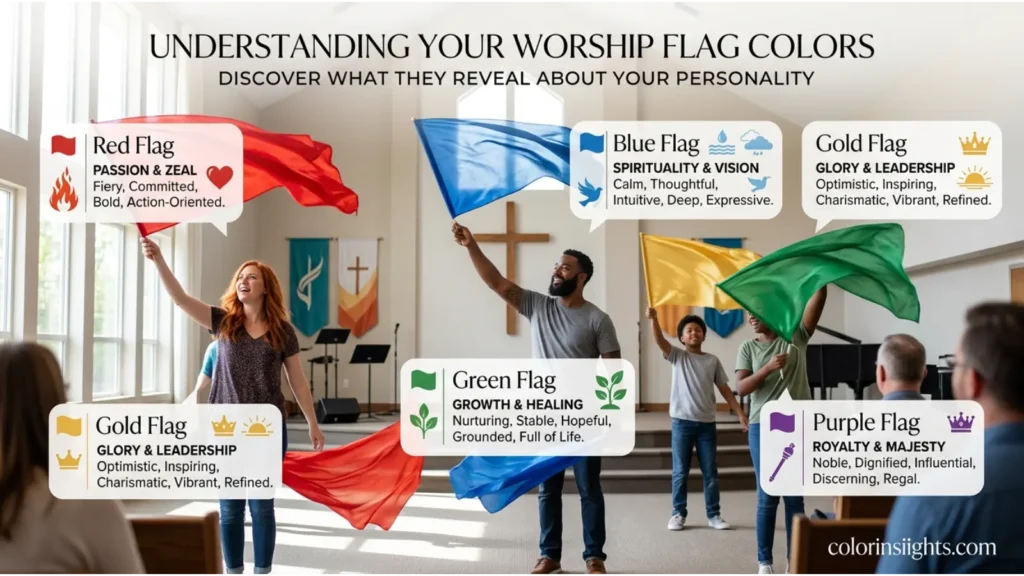
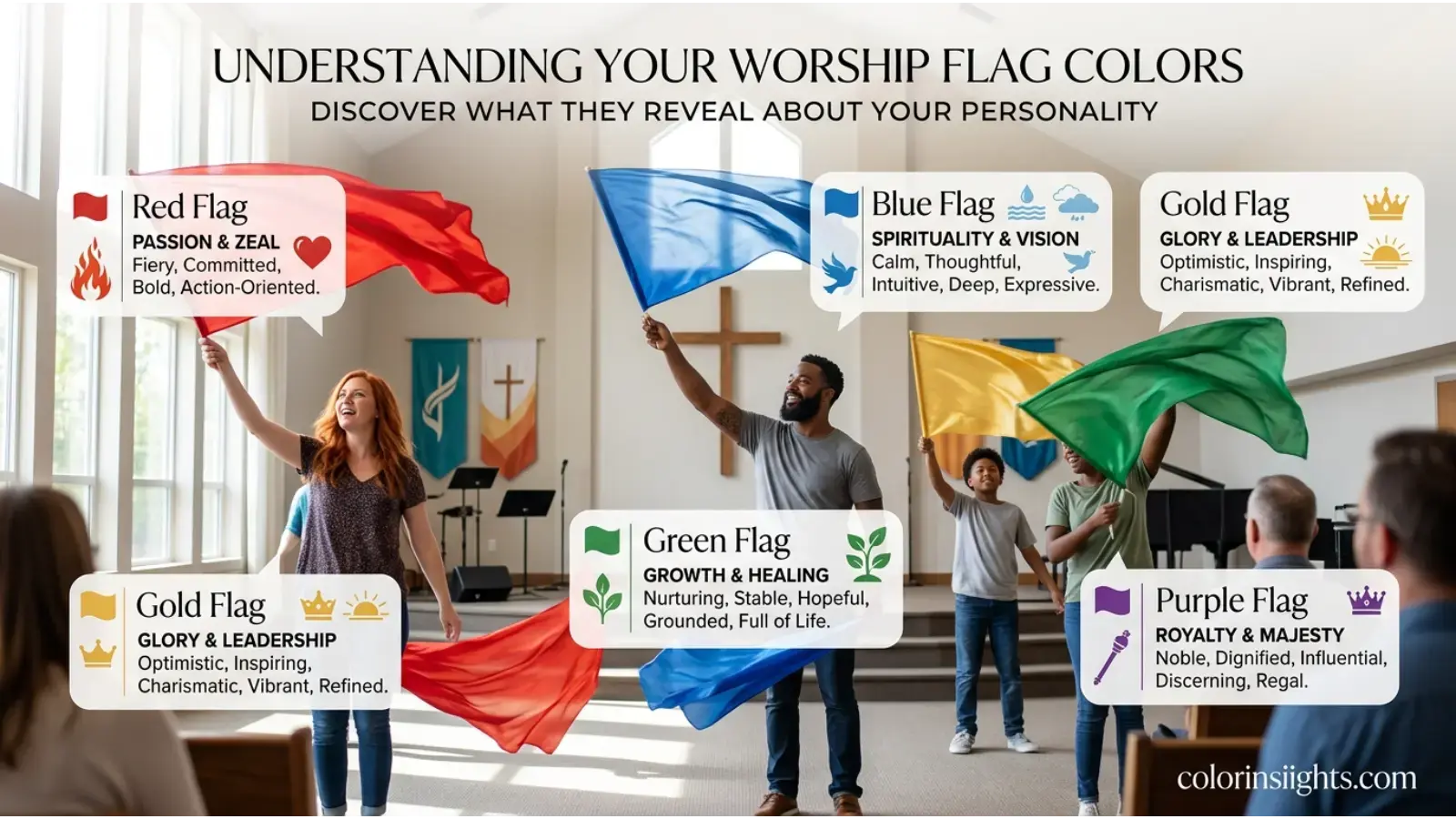
What Worship Flag Colors Say About Your Personality
Some people naturally feel drawn to certain worship flag colors because they resonate emotionally or spiritually. However, color preferences alone do not reliably determine personality.
People who prefer white may value honesty, peace, and integrity.
Those attracted to blue often appreciate calmness, faithfulness, and thoughtful reflection.
Individuals who favor red may enjoy passionate worship, courage, and active leadership.
Purple enthusiasts sometimes admire creativity, dignity, and spiritual purpose.
Green lovers frequently appreciate growth, compassion, and restoration.
Gold admirers may enjoy celebration, excellence, and joyful praise.
In general:
Strengths
- Compassion
- Hopefulness
- Faith
- Creativity
- Encouragement
- Service-oriented mindset
Weaknesses
- Emotional sensitivity
- Idealism
- Perfectionism
- Overcommitment
Social Behavior
Many people who appreciate worship symbolism enjoy collaborative environments, community service, and meaningful relationships.
Work Style
They often value purpose-driven work, teamwork, integrity, and service to others.
Relationships
They may prioritize trust, compassion, forgiveness, and spiritual connection.
Emotional Tendencies
Many seek peace, encouragement, gratitude, and hope, although these characteristics vary greatly between individuals.
FAQs
What defines worship flag colors?
Worship flag colors are symbolic visual tools used in many Christian churches to express biblical themes, praise, prayer, and spiritual truths.
What do worship flag colors symbolize?
They commonly symbolize holiness, redemption, healing, victory, hope, wisdom, God’s presence, and spiritual growth.
Why are worship flag colors important?
They reinforce worship themes, encourage reflection, and visually communicate biblical messages during services.
Are worship flag color meanings found directly in the Bible?
The Bible contains color symbolism, but it does not provide one official system for worship flag color meanings. Modern interpretations combine biblical imagery with church traditions.
Which worship flag color represents holiness?
White is most commonly associated with holiness, purity, righteousness, and God’s presence.
What emotions do worship flag colors represent?
Depending on the color, they may express joy, peace, hope, reverence, gratitude, repentance, celebration, or spiritual renewal.
What colors pair well in worship flags?
Popular combinations include white and gold, blue and silver, purple and gold, green and white, and red with white.
What does the spiritual meaning of worship flag colors include?
Common themes include holiness, healing, redemption, wisdom, divine authority, new beginnings, eternal hope, and God’s glory.
Do all churches use the same worship flag color meanings?
No. Interpretations vary among churches, denominations, and worship ministries.
What does liking certain worship flag colors say about a person?
Color preferences may reflect personal tastes or spiritual associations, but they do not accurately predict personality or character.
Conclusion
Worship flag color meanings provide a meaningful visual language that supports praise, prayer, and biblical teaching. While many interpretations draw from recurring themes in Scripture and long-standing Christian traditions, no universal system governs every color.
Their value lies in helping congregations focus on spiritual truths, deepen worship experiences, and communicate messages of hope, holiness, redemption, healing, and God’s enduring presence.
Understanding these symbolic meanings allows worship leaders and believers to use color thoughtfully while keeping the central focus on faith rather than the colors themselves.