Brand color meanings play a powerful role in shaping how people perceive businesses, products, and organizations. Color is often the first visual element consumers notice, influencing emotions, trust, recognition, and purchasing decisions within seconds. From the calming effect of blue to the energetic appeal of red, every color communicates a unique message that strengthens brand identity.
While color psychology provides valuable insights into common emotional responses, cultural traditions, industry standards, and personal experiences also influence interpretation. Understanding brand color meanings helps businesses create memorable visual identities while enabling consumers to better understand the messages behind logos, packaging, and advertising.
Quick Answer:
Brand color meanings refer to the emotional, psychological, and symbolic messages communicated through the colors a company uses in its branding. Choosing the right colors can improve brand recognition, trust, customer engagement, and overall marketing effectiveness.
What Does the Brand Color Meanings Symbolize?
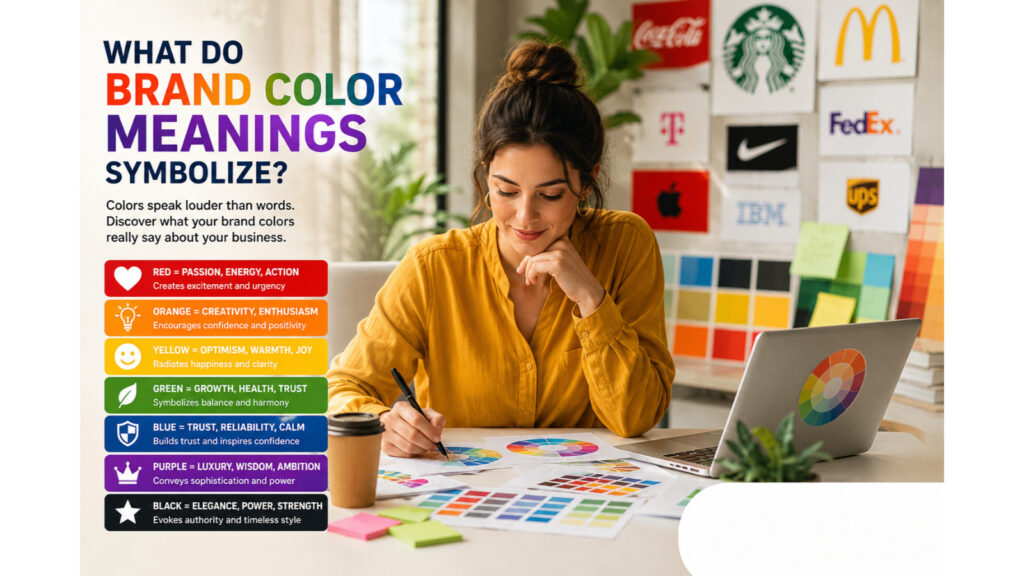
Brand color meanings symbolize a company’s personality, values, mission, and emotional appeal. Rather than representing a single color, the concept of brand color meaning explains how different colors influence customer perception and purchasing behavior.
Common symbolic associations include:
- Blue: Trust, reliability, professionalism, security
- Red: Passion, excitement, urgency, confidence
- Green: Nature, health, growth, sustainability
- Yellow: Optimism, creativity, happiness, warmth
- Orange: Enthusiasm, friendliness, innovation
- Purple: Luxury, imagination, wisdom, creativity
- Black: Sophistication, authority, exclusivity
- White: Simplicity, cleanliness, transparency
- Gray: Balance, neutrality, professionalism
- Pink: Compassion, playfulness, femininity
- Brown: Stability, authenticity, dependability
Successful brands select colors that consistently reinforce their identity across websites, packaging, advertising, and digital experiences.
Psychological Characteristics of Brand Color Meanings
The psychology of brand color meanings explains why colors influence emotions, memory, and consumer decisions. Research in color psychology suggests that visual cues can affect first impressions before customers even read a company’s message.
Emotional Associations
Brand colors commonly evoke emotions such as:
- Trust
- Excitement
- Comfort
- Luxury
- Optimism
- Confidence
- Calmness
- Security
Psychological Effects
Different colors activate different psychological responses:
- Warm colors increase energy and attention.
- Cool colors promote relaxation and confidence.
- Neutral colors create balance and sophistication.
- Bright colors encourage action and curiosity.
Positive Emotional Responses
- Increased trust
- Greater brand recognition
- Emotional connection
- Feelings of safety
- Confidence in product quality
- Higher customer loyalty
Negative Emotional Responses
Poor color selection may create:
- Confusion
- Visual fatigue
- Distrust
- Aggression
- Emotional detachment
- Low perceived quality
Impact on Mood and Behavior
Brand colors influence consumer behavior by:
- Encouraging impulse purchases
- Increasing website engagement
- Improving product recall
- Supporting premium pricing
- Strengthening brand loyalty
- Influencing perceived value
How People Typically React to Brand Colors
People often make subconscious judgments based on color before evaluating product features. Consistent color use also improves brand recognition, making companies easier to remember over time.
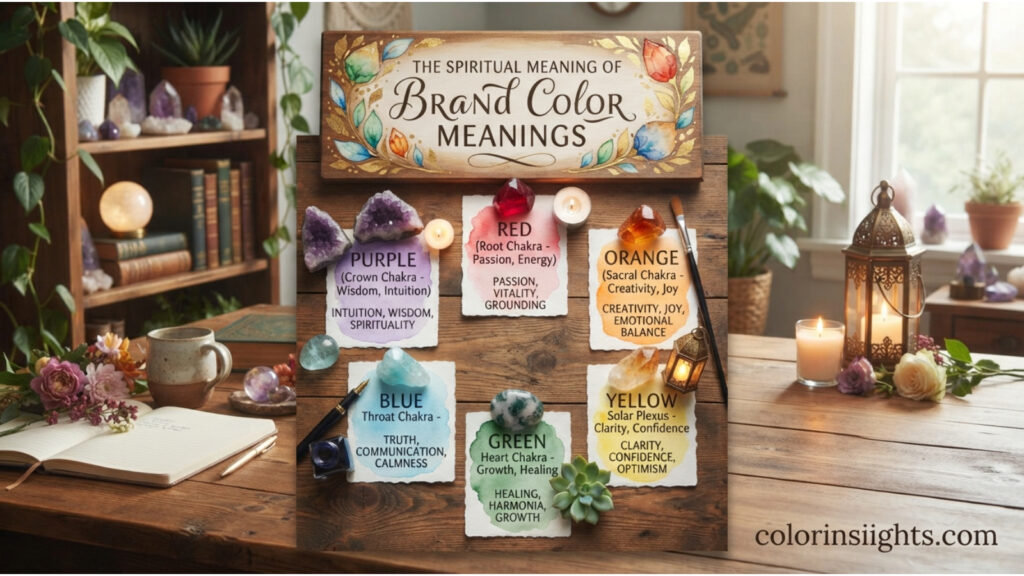
Spiritual Meaning of Brand Color Meanings
Although branding is primarily a marketing discipline, many brand colors draw from traditional spiritual symbolism found across cultures.
Holiness
White, gold, and blue often represent purity, faith, and divine guidance.
Wisdom
Purple and deep blue have long symbolized knowledge, insight, and higher understanding.
Purity
White communicates honesty, transparency, and ethical intentions.
Transformation
Green represents renewal, growth, and positive change.
Healing
Soft greens and blues are frequently associated with wellness, recovery, and emotional balance.
Protection
Dark blue and black can symbolize strength, stability, and security.
Power
Red, black, and gold communicate authority, leadership, and confidence.
Enlightenment
Gold and white often symbolize clarity, truth, and inspiration.
New Beginnings
Green reflects fresh starts, opportunity, and personal growth.
Eternity
Blue represents continuity, loyalty, and lasting commitment.
These symbolic meanings influence nonprofit organizations, wellness brands, luxury businesses, and faith-based organizations when selecting brand colors.
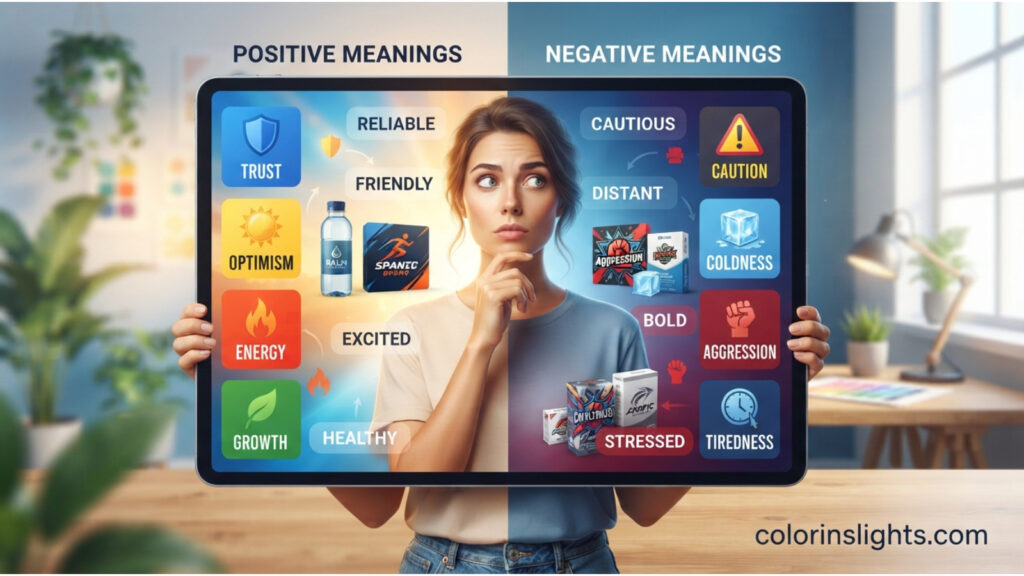
Positive and Negative Meanings of Brand Color Meanings
Positive Meanings
Effective brand color symbolism can communicate:
- Purity: Healthcare brands often use white to emphasize cleanliness.
- Peace: Financial institutions frequently choose blue to inspire confidence.
- Simplicity: Minimalist brands rely on neutral palettes for clarity.
- Clarity: White space improves readability and communication.
- Freshness: Green is widely used by organic food companies.
- Hope: Bright yellow creates feelings of optimism.
- Balance: Gray provides visual stability.
- Harmony: Blue and green combinations promote calm, balanced branding.
Negative Meanings
Brand colors may also create unintended impressions.
- Emptiness: Excessive white may appear unfinished.
- Isolation: Cool gray palettes can feel impersonal.
- Coldness: Too much blue may seem emotionally distant.
- Sterility: Pure white designs sometimes resemble clinical environments.
- Boredom: Overuse of neutral colors may reduce excitement.
- Emotional Distance: Dark colors without contrast can feel unapproachable.
- Perfectionism: Highly polished branding may appear unrealistic or intimidating.
Businesses often balance multiple colors to minimize these risks.
Brand Color Meanings in Different Contexts
Brand color meaning changes depending on industry, audience, and cultural expectations. A color that communicates excitement in retail may represent urgency in healthcare or caution in financial services.
Brand Color Meanings in Feng Shui
In Feng Shui, colors influence the flow of energy throughout a space.
- Associated element: Depends on the chosen color (wood, fire, earth, metal, or water).
- Energy symbolism: Supports harmony, prosperity, or creativity.
- Best rooms: Offices, reception areas, meeting rooms, and creative spaces.
- Recommended combinations: Blue with white, green with wood tones, red with gold.
- Home decorating tips: Use balanced color proportions instead of overwhelming a room with one dominant shade.
Brand Color Meanings in Marketing
Marketing professionals carefully select colors to influence purchasing decisions.
Key applications include:
- Reinforcing brand personality
- Increasing logo recognition
- Creating emotional connections
- Building customer trust
- Improving product packaging visibility
- Supporting advertising campaigns
Well-known examples include:
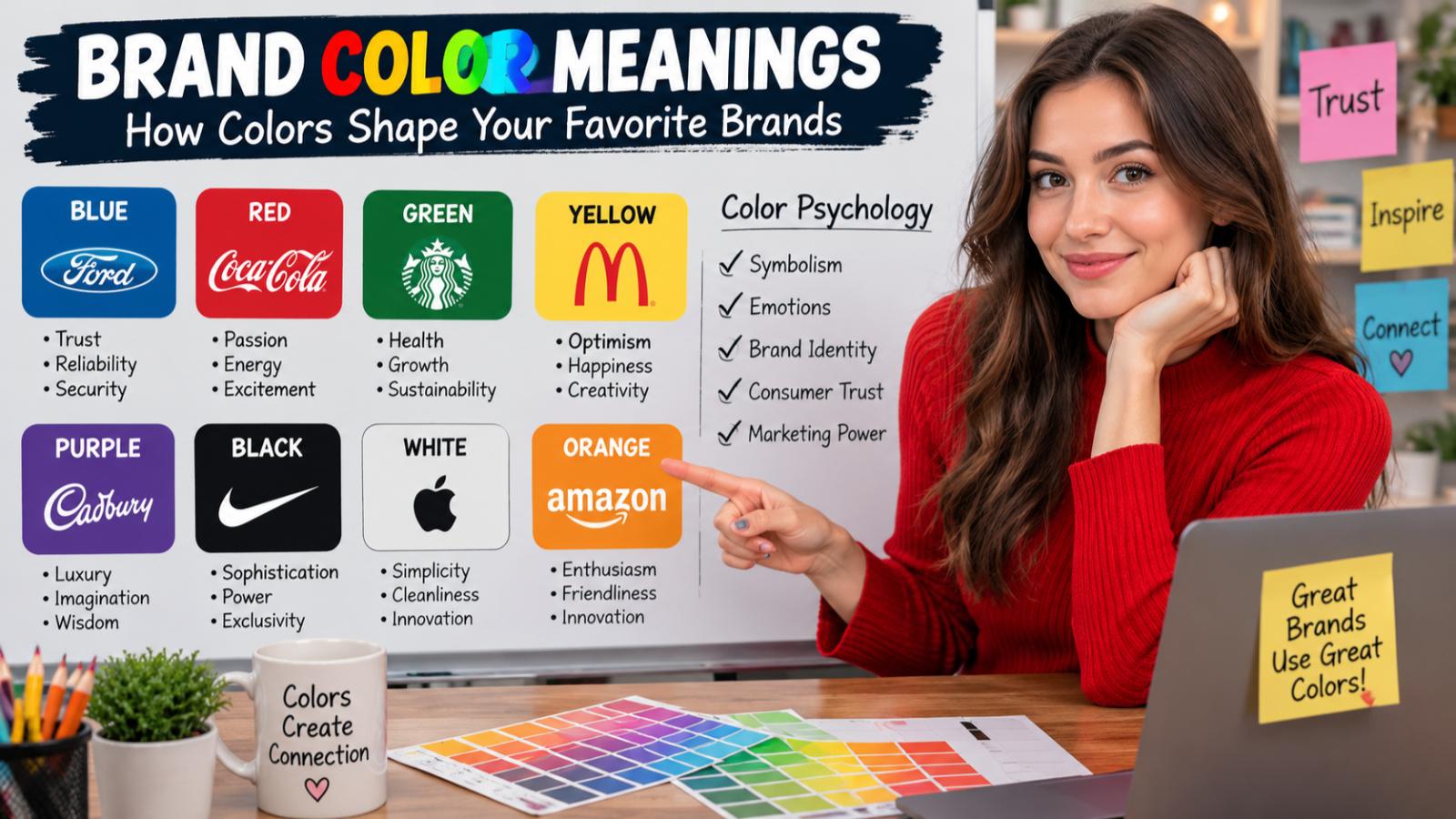
- Blue: IBM, Facebook, LinkedIn
- Red: Coca-Cola, Netflix, YouTube
- Green: Starbucks, Whole Foods
- Yellow: McDonald’s, IKEA
- Purple: Cadbury, Hallmark
- Black: Nike, Chanel, Adidas
Brand Color Meanings in Design
Designers use color strategically across many disciplines.
- Creates visual hierarchy
- Improves readability
- Supports accessibility
- Enhances user experience
- Strengthens brand consistency
- Encourages minimalist aesthetics through balanced contrast
Interior designers also use brand colors in offices, retail environments, and hospitality spaces to reinforce company identity.
Brand Color Meanings in Fashion
Fashion reflects personal branding as much as corporate branding.
Brand-inspired colors influence:
- Professional appearance
- Seasonal collections
- Personal confidence
- First impressions
- Luxury perception
- Casual versus formal styling
For example:
- Navy suits project professionalism.
- Black clothing conveys sophistication.
- Green accessories suggest sustainability.
- Red accents communicate confidence.
- White outfits emphasize simplicity and elegance.
Color Associations Are Not Universal
Although color psychology identifies common emotional patterns, color symbolism varies significantly worldwide.
Western Cultures
Blue often represents trust, while white symbolizes weddings, purity, and peace. Black commonly represents elegance or mourning depending on context.
Eastern Cultures
Red frequently symbolizes prosperity, celebration, and good fortune. White may be associated with mourning in several traditions.
Religious Traditions
Gold often represents divinity, purple symbolizes spiritual authority, green is associated with growth and paradise in some faiths, while white commonly signifies purity.
Historical Interpretations
Royal families historically reserved purple because of its rarity and expense. Gold has long symbolized wealth, power, and prestige.
Modern Global Interpretations
Global businesses increasingly adapt branding to local cultural expectations. International companies often modify packaging and advertising colors to align with regional preferences while maintaining overall brand consistency.
What Brand Color Meanings Say About Your Personality
People are often drawn to brand colors that reflect aspects of their preferences or self-image. However, color preference alone does not scientifically determine personality.
Possible associations include:
Strengths
- Creative
- Confident
- Reliable
- Optimistic
- Practical
- Organized
- Innovative
Weaknesses
- Perfectionism
- Risk aversion
- Emotional sensitivity
- Impulsiveness
- Overthinking
- Desire for control
Social Behavior
Individuals may choose brands whose colors reflect how they want others to perceive them, such as professional, adventurous, luxurious, or environmentally conscious.
Work Style
Color preferences may align with workplace values such as collaboration, leadership, creativity, precision, or stability.
Relationships
People often gravitate toward brands that create familiarity, trust, and emotional comfort.
Emotional Tendencies
Some individuals prefer calming color palettes, while others enjoy energetic combinations that inspire motivation and excitement.
Because personality develops from many biological, psychological, and environmental factors, color preferences should be viewed as interesting tendencies rather than definitive personality indicators.
FAQs:
What defines brand color meanings?
Brand color meanings describe the symbolic, emotional, and psychological messages communicated through a company’s chosen color palette.
What does the brand color symbolize?
Brand colors symbolize identity, values, trust, personality, and emotional positioning within the marketplace.
Why are brand color meanings important?
They influence first impressions, customer trust, brand recognition, purchasing decisions, and long-term loyalty.
Are brand colors warm or cool?
Brand colors may be warm, cool, or neutral depending on the specific palette chosen by the organization.
What emotions do brand colors represent?
Brand colors commonly communicate trust, excitement, optimism, security, luxury, confidence, calmness, or creativity.
What is the spiritual meaning of brand colors?
Spiritually, different colors may symbolize wisdom, healing, purity, transformation, protection, hope, enlightenment, and renewal.
What colors pair well in branding?
Popular combinations include blue and white, black and gold, green and beige, purple and silver, and red with white or black.
Do brand color meanings affect consumer behavior?
Yes. Color influences attention, emotional response, product recognition, perceived value, and purchasing decisions.
Can businesses change their brand colors?
Yes. Many companies refresh their visual identity over time to reflect evolving audiences, markets, or brand positioning while maintaining recognizable elements.
What does liking certain brand colors say about a person?
Color preferences may reflect personal tastes, values, and emotional preferences, but they should not be considered definitive evidence of personality traits.
Conclusion
Brand color meanings combine psychology, symbolism, culture, and strategic marketing to shape how organizations communicate with their audiences. The right colors help establish trust, create emotional connections, improve recognition, and reinforce a company’s identity across every customer touchpoint.
While color psychology provides useful guidance, successful branding also considers cultural differences, industry expectations, accessibility, and audience preferences. Businesses that thoughtfully apply brand color meanings can create stronger visual identities that remain memorable, meaningful, and relevant in an increasingly competitive marketplace.