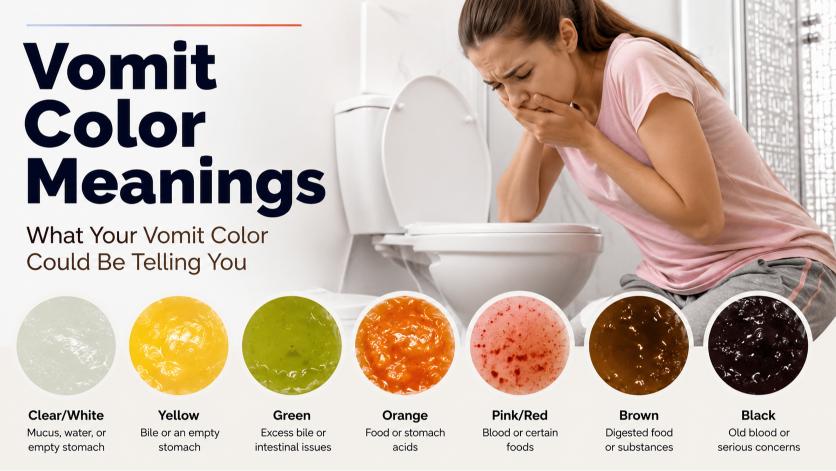
Vomit color meanings can provide valuable clues about digestion, hydration, diet, and underlying health conditions. Unlike traditional color symbolism used in psychology or design, vomit colors are interpreted primarily in a medical context. Different shades—such as yellow, green, brown, black, red, or white—often reflect stomach contents, bile, blood, medications, or digestive processes.
Understanding these colors can help individuals recognize when vomiting is harmless and when it may require prompt medical attention. While color alone cannot diagnose a condition, it serves as an important visual indicator alongside other symptoms.
Quick Answer:
Vomit color meanings generally indicate what is present in the stomach or digestive tract. Yellow often signals bile, green may indicate excess bile, red can suggest blood, black may point to digested blood, and brown may indicate material from the intestines or severe digestive problems. Persistent vomiting or unusual colors should always be evaluated by a healthcare professional.
What Does the Color Vomit Symbolize?
The vomit color meaning is rooted in physical health rather than emotional symbolism. Healthcare professionals often use vomit color as an observational clue when assessing digestive disorders, infections, food poisoning, medication effects, or internal bleeding.
Common interpretations include:
- Clear or White: Water, mucus, stomach acid, or an empty stomach.
- Yellow: Presence of bile after the stomach empties.
- Green: Higher concentrations of bile or intestinal reflux.
- Orange: Partially digested food or stomach acid mixed with food pigments.
- Pink or Red: Fresh blood or foods with red coloring.
- Brown: Digested food, intestinal contents, or in rare cases fecal material.
- Black: Old, digested blood requiring urgent medical evaluation.
Although color offers useful information, healthcare providers always consider accompanying symptoms such as abdominal pain, fever, dizziness, dehydration, and the duration of vomiting.
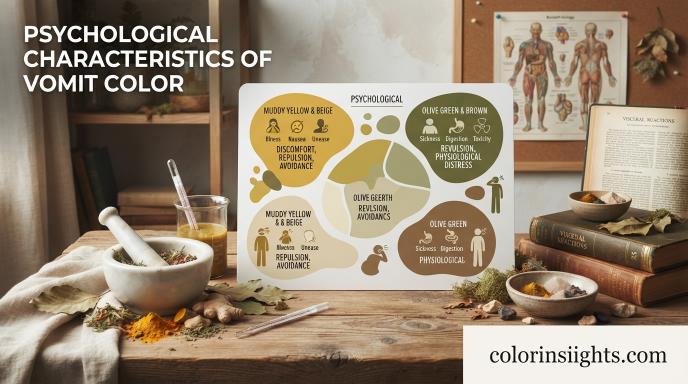
Psychological Characteristics of Vomit Color
Unlike colors used in branding or personality psychology, vomit colors influence psychological responses because they signal potential illness.
Emotional Associations
People commonly associate abnormal vomit colors with:
- Illness
- Discomfort
- Vulnerability
- Fear
- Relief after nausea subsides
- Concern about health
Psychological Effects
Seeing unusual vomit colors may:
- Increase health awareness
- Trigger anxiety
- Encourage medical consultation
- Promote caution regarding food safety
- Reinforce concerns about dehydration
Positive Emotional Responses
Although vomiting itself is unpleasant, certain interpretations may provide reassurance.
- Relief after expelling stomach irritants
- Confidence that the body is removing harmful substances
- Motivation to seek appropriate treatment
- Increased awareness of digestive health
Negative Emotional Responses
Abnormal vomit colors frequently produce:
- Fear of serious illness
- Stress
- Embarrassment
- Disgust
- Uncertainty
- Panic, especially when blood appears
Impact on Mood and Behavior
People often respond by:
- Drinking fluids
- Resting
- Monitoring symptoms
- Avoiding certain foods
- Contacting healthcare providers
- Seeking emergency care for concerning colors
Typical Psychological Reaction
Most individuals instinctively inspect vomit color because it provides immediate visual information that may help determine whether symptoms are temporary or require urgent attention.
Spiritual Meaning of Vomit Color
The spiritual meaning of vomit color varies greatly among cultures and belief systems. Unlike traditional symbolic colors, vomit itself is generally interpreted as representing release rather than possessing a universal spiritual meaning.
Holiness
Some traditions view physical cleansing as symbolic purification, although vomiting itself is rarely associated directly with holiness.
Wisdom
Experiencing illness may encourage greater appreciation for health and self-care.
Purity
Vomiting is sometimes interpreted metaphorically as removing harmful influences or toxins.
Transformation
Many spiritual traditions see physical release as representing emotional renewal and personal growth.
Healing
Recovery after illness often symbolizes restoration and renewed strength.
Protection
The body’s vomiting reflex protects against harmful toxins and spoiled food.
Power
The body’s ability to defend itself reflects natural biological resilience.
Enlightenment
Periods of illness sometimes encourage reflection on healthier lifestyles.
New Beginnings
Recovery frequently represents a fresh start after sickness.
Eternity
Most religious traditions do not directly associate vomit color with eternity, although healing may symbolize life’s ongoing cycle of renewal.
Positive and Negative Vomit Color Meanings
Positive Meanings of Vomit Color
Some vomit colors simply reflect normal digestive processes rather than disease.
Protection
Vomiting removes harmful bacteria, viruses, toxins, or spoiled food.
Example:
Food poisoning often resolves after the stomach empties.
Healing
Temporary vomiting during viral illness may be part of recovery.
Example:
Stomach viruses usually improve within a few days.
Body Awareness
Color changes encourage individuals to monitor hydration and nutrition.
Example:
Yellow vomit may remind someone to rehydrate.
Early Detection
Unusual colors may reveal serious problems before they worsen.
Example:
Red vomit may prompt early diagnosis of stomach bleeding.
Negative Meanings of Vomit Color
Certain colors require prompt medical attention.
Internal Bleeding
Bright red or black vomit can indicate gastrointestinal bleeding.
Example:
Bleeding ulcers may produce black, coffee-ground vomit.
Dehydration
Repeated vomiting may quickly lead to fluid loss.
Example:
Viral gastroenteritis.
Digestive Disorders
Green or persistent yellow vomiting may suggest digestive obstruction or bile reflux.
Serious Illness
Brown or fecal-smelling vomit may indicate intestinal blockage.
Example:
Emergency bowel obstruction.
Vomit Color Meaning in Different Contexts
The vomit color meaning changes depending on its cause, surrounding symptoms, diet, medications, and medical history.
Vomit Color Meaning in Feng Shui
Unlike decorative colors, vomit colors have no formal role in Feng Shui. However, the colors themselves can be loosely associated with traditional elements.
- Yellow: Earth element and nourishment.
- Green: Wood element and growth.
- White: Metal element and clarity.
- Black: Water element and depth.
Home Decorating Tips
Rather than using vomit colors symbolically, Feng Shui recommends maintaining clean, healthy environments that promote wellness and balance.
Vomit Color Meaning in Marketing
Brands never intentionally associate themselves with vomit imagery. However, colors commonly seen in vomit are used independently.
Branding Psychology
- Green represents health.
- Yellow communicates optimism.
- White symbolizes cleanliness.
- Red attracts attention.
Consumer Perception
Medical companies use soft greens, whites, and blues to inspire trust and cleanliness.
Trust Signals
Healthcare brands often emphasize hygiene through light neutral color palettes.
Product Packaging
Electrolyte drinks frequently use clear, blue, or green packaging to suggest hydration.
Advertising Applications
Health campaigns use clean colors instead of harsh or unpleasant imagery.
Famous Brands
Examples include:
- Johnson & Johnson
- Oral-B
- Colgate
- Lysol
- Pedialyte
Vomit Color Meaning in Design
Individual vomit colors remain valuable design tools despite their medical associations.
Interior Design
Green promotes calm.
Yellow adds warmth.
White increases brightness.
Graphic Design
Colors communicate information quickly in medical charts and educational materials.
Web Design
Healthcare websites favor white backgrounds with green or blue accents to build trust.
User Experience
Simple color coding improves readability and accessibility.
Minimalist Aesthetics
Neutral palettes help create clean, reassuring medical environments.
Vomit Color Meaning in Fashion
Individual colors commonly found in vomit maintain their own positive symbolism in fashion.
Clothing Symbolism
Green reflects freshness.
Yellow represents optimism.
White conveys simplicity.
Black suggests sophistication.
Seasonal Use
Green suits spring.
Yellow shines during summer.
Black dominates autumn and winter.
Styling Effects
Balanced combinations create visually appealing outfits.
Personality Impressions
People may perceive:
- Green lovers as balanced.
- Yellow wearers as cheerful.
- White enthusiasts as organized.
- Black wearers as confident.
Advantages
- Highly versatile.
- Easy coordination.
- Timeless appeal.
Disadvantages
Certain yellow-green shades may unintentionally remind viewers of illness if used excessively.
Vomit Color Associations Are Not Universal
Western Cultures
Western medicine focuses on vomit color as a clinical observation rather than symbolic interpretation. Red and black usually signal the need for urgent medical assessment.
Eastern Cultures
Traditional healing systems often evaluate digestive symptoms alongside energy balance, diet, and overall wellness rather than relying solely on color.
Religious Traditions
Most religions view illness as part of the human experience. Vomiting may symbolize cleansing or purification in some interpretations but generally has no fixed spiritual color symbolism.
Historical Interpretations
Ancient physicians observed vomit color centuries before modern diagnostic testing, using it as one of several indicators of digestive health.
Modern Global Interpretations
Today, healthcare professionals worldwide recognize vomit color as one component of medical evaluation, supported by laboratory testing and physical examination.
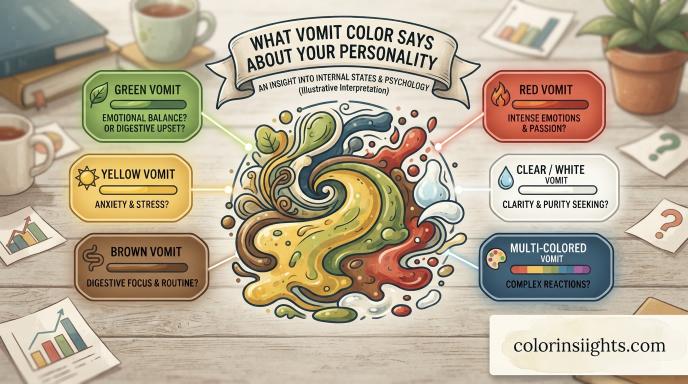
What Vomit Color Says About Your Personality
Unlike favorite colors, vomit color meanings do not determine personality traits. However, individuals who closely monitor health-related color changes often share certain behavioral tendencies.
Strengths
- Health conscious
- Observant
- Responsible
- Detail oriented
Weaknesses
- May worry excessively
- Can become overly anxious about symptoms
- May over-research medical information
Social Behavior
Often encourages family members to seek medical advice when needed.
Work Style
Usually organized and attentive to detail.
Relationships
Frequently supportive and protective of loved ones’ health.
Emotional Tendencies
Health awareness can provide reassurance but may also contribute to unnecessary anxiety if symptoms are interpreted without professional guidance.
Remember, personality is shaped by many factors, and color preferences or symptom awareness alone cannot define an individual’s character.
FAQs:
What defines vomit color meaning?
Vomit color meaning refers to the information different vomit colors provide about digestion, diet, hydration, medications, or possible medical conditions.
What does the color vomit symbolize?
It primarily symbolizes physical health processes rather than emotional or psychological symbolism.
Why is vomit color important?
It helps healthcare providers identify possible digestive issues, bleeding, bile reflux, or dehydration.
Is vomit color warm or cool?
Vomit includes many colors rather than one specific shade, so it cannot be classified as simply warm or cool.
What emotions does vomit color represent?
It commonly evokes concern, caution, discomfort, relief after illness, and increased health awareness.
What is the spiritual meaning of vomit color?
Some traditions associate vomiting with cleansing, release, healing, and transformation, although there is no universal spiritual interpretation.
What colors pair well with colors commonly seen in vomit?
In design, green pairs well with white, beige, gray, and navy. Yellow complements blue, gray, and charcoal. These combinations are unrelated to medical meanings.
What does liking these colors say about a person?
Liking green, yellow, white, or black reflects preferences for those individual colors, not an interest in vomit color symbolism.
When should abnormal vomit color be evaluated?
Immediate medical care is recommended for black, coffee-ground, bright red, or persistent brown vomit, especially when accompanied by severe pain, dizziness, or dehydration.
Can food change vomit color?
Yes. Foods, beverages, supplements, and medications frequently alter vomit color without indicating serious illness.
Conclusion
Understanding vomit color meanings can help individuals recognize important signs related to digestion, hydration, and overall health. While colors such as yellow or green often reflect bile and an empty stomach, red, black, or persistent brown vomit may indicate potentially serious medical conditions that require prompt evaluation.
Color should always be interpreted alongside symptoms, recent foods, medications, and medical history rather than in isolation. By combining careful observation with professional medical advice, individuals can make informed decisions about when home care is appropriate and when urgent medical attention is necessary.