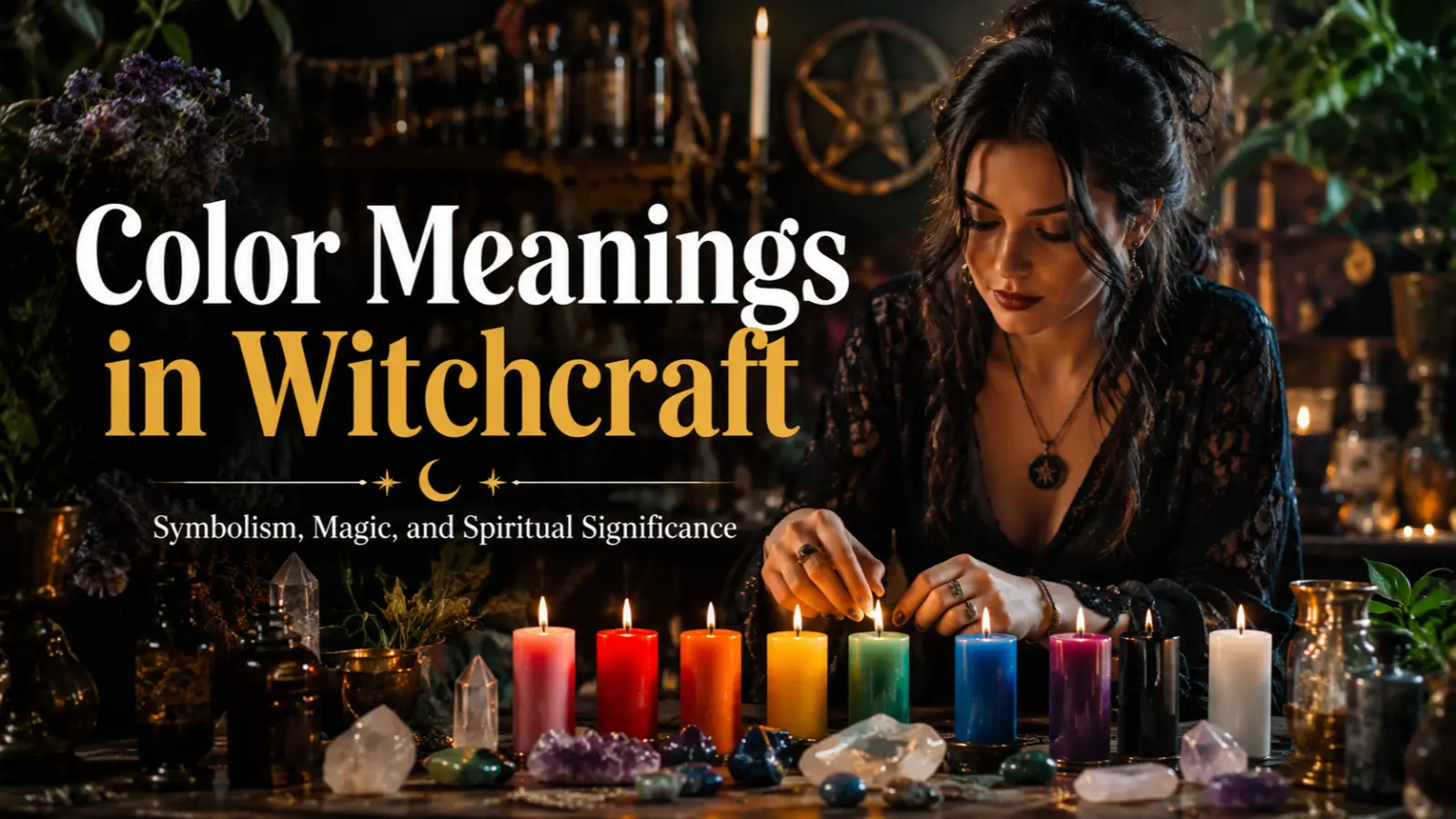
Color meanings in witchcraft play an important role in many magical traditions, rituals, and spiritual practices. Rather than being viewed as decorative, colors are often used as symbolic tools that represent specific energies, intentions, and emotional states.
Across modern witchcraft, Wicca, folk magic, and other pagan traditions, practitioners may choose candle colors, crystals, herbs, clothing, or altar decorations based on the symbolic qualities associated with each color. While interpretations vary among traditions, many color correspondences have become widely recognized over time.
Quick Answer:
In witchcraft, colors symbolize different magical intentions. For example, white represents purification and protection, black symbolizes banishing and transformation, red stands for passion and strength, green attracts prosperity, blue encourages healing, and purple supports intuition and spiritual wisdom.
What Does the Color Meanings in Witchcraft Symbolize?
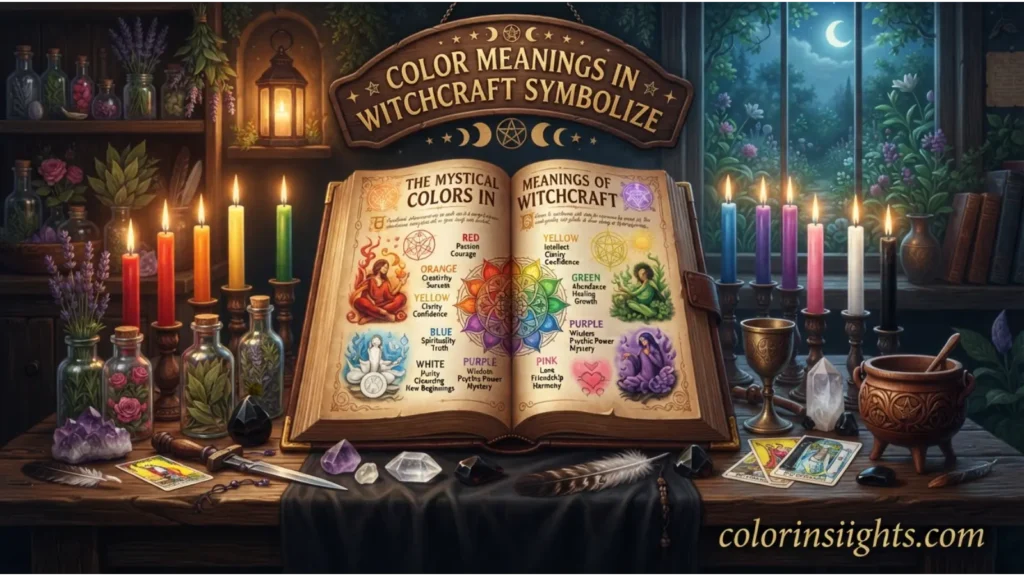
Color meanings in witchcraft symbolize intention, energy, and spiritual focus rather than supernatural power by themselves. Many practitioners believe colors help direct the mind, reinforce ritual purpose, and create meaningful symbolic associations during magical work.
Common witchcraft color symbolism includes:
- White: Purity, cleansing, peace, protection, and spiritual guidance.
- Black: Protection, banishing negativity, transformation, boundaries, and mystery.
- Red: Passion, courage, physical energy, vitality, love, and determination.
- Green: Prosperity, abundance, healing, fertility, growth, and nature.
- Blue: Wisdom, truth, emotional healing, communication, and calmness.
- Purple: Psychic awareness, intuition, spiritual power, and higher consciousness.
- Pink: Friendship, compassion, romance, kindness, and self-love.
- Yellow: Confidence, creativity, intelligence, optimism, and learning.
- Orange: Motivation, success, opportunity, enthusiasm, and confidence.
- Brown: Stability, grounding, security, animals, and home.
- Gray: Neutrality, patience, balance, and thoughtful decision-making.
- Silver: Lunar energy, intuition, dreams, feminine spirituality, and reflection.
- Gold: Solar energy, achievement, abundance, confidence, and divine blessings.
These symbolic meanings often guide the selection of candles, altar cloths, ritual garments, crystals, and magical tools.
Psychological Characteristics of the Color Meanings in Witchcraft
Although witchcraft uses symbolic correspondences rooted in spiritual traditions, many of these color choices also align with established principles of color psychology.
Emotional Associations
- White encourages feelings of peace and renewal.
- Black creates a sense of protection and personal boundaries.
- Red stimulates excitement, confidence, and determination.
- Green promotes balance and emotional restoration.
- Blue encourages relaxation and trust.
- Purple inspires imagination and introspection.
Psychological Effects
Colors influence attention, perception, and emotional responses. During rituals, they may help practitioners focus intentions more effectively by creating consistent visual associations.
Positive Emotional Responses
- Hope
- Confidence
- Comfort
- Courage
- Calmness
- Inspiration
- Gratitude
- Emotional balance
Negative Emotional Responses
- Fear (dark colors in certain contexts)
- Isolation
- Anxiety
- Emotional intensity
- Overstimulation
- Uncertainty
- Sadness
- Rigidity
Impact on Mood and Behavior
Many people naturally associate colors with emotional experiences. For example:
- Blue often slows emotional arousal.
- Green supports relaxation.
- Red increases alertness.
- Purple encourages reflective thinking.
- White creates a sense of openness.
- Black may foster feelings of seriousness or protection.
How People Typically React
Individual responses vary according to:
- Personal experiences
- Cultural background
- Religious beliefs
- Environmental influences
- Spiritual practices
No color produces identical psychological effects for every individual.
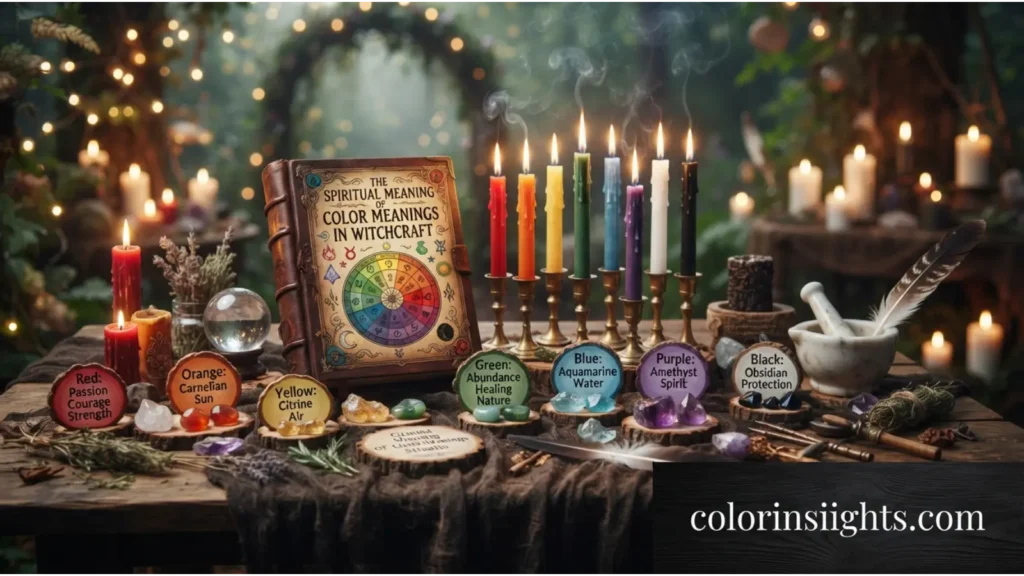
Spiritual Meaning of the Color Meanings in Witchcraft
Within witchcraft, colors are often viewed as symbolic representations of spiritual intentions rather than sources of power themselves.
Holiness
White frequently represents sacred rituals, purification, and spiritual blessings.
Wisdom
Purple and deep blue symbolize wisdom, higher knowledge, meditation, and intuition.
Purity
White remains one of the strongest symbols of cleansing, honesty, and fresh beginnings.
Transformation
Black represents endings that make room for renewal, personal growth, and transformation.
Healing
Green and blue commonly symbolize physical, emotional, and spiritual healing.
Protection
Black, white, and silver are often used in protective rituals and boundary-setting practices.
Power
Red and gold symbolize confidence, courage, leadership, and personal strength.
Enlightenment
Purple, violet, and white represent spiritual awakening and expanded awareness.
New Beginnings
White and green symbolize renewal, spring, fresh opportunities, and personal growth.
Eternity
Silver and white are sometimes associated with the moon, cycles of nature, and the continuity of life.
Positive and Negative Meanings of the Color Meanings in Witchcraft
Positive Meanings
Color symbolism in witchcraft often reflects constructive intentions.
- Purity: White candles are commonly used for cleansing rituals.
- Peace: Blue supports emotional harmony and relaxation.
- Simplicity: Neutral colors reduce distractions during meditation.
- Clarity: Yellow symbolizes mental focus and learning.
- Freshness: Green reflects renewal and natural growth.
- Hope: Pink encourages optimism and emotional healing.
- Balance: Gray represents neutrality and patience.
- Harmony: Green and blue together symbolize emotional stability.
Real-World Examples
- Lighting a white candle before meditation.
- Decorating a healing altar with green herbs.
- Wearing blue clothing during calming mindfulness practices.
- Using yellow journals for goal setting and creativity.
Negative Meanings
Colors can also symbolize difficult emotions depending on context.
- Emptiness: Excessive white may appear emotionally distant.
- Isolation: Gray can suggest emotional withdrawal.
- Coldness: Blue may sometimes feel detached.
- Sterility: Bright white spaces may appear clinical.
- Boredom: Too many neutral colors can reduce stimulation.
- Emotional Distance: Black may create feelings of separation.
- Perfectionism: White sometimes symbolizes unrealistic expectations.
Real-World Examples
- An entirely white office may feel impersonal.
- Excessive black décor can appear overly serious.
- Too much gray may reduce visual energy.
- Highly sterile interiors often feel less welcoming.
Meanings of the Color Meanings in Witchcraft
Color meanings change according to purpose, tradition, culture, and personal interpretation. A color used for protection in one magical system may represent mourning or celebration elsewhere.
Feng Shui
Although Feng Shui and witchcraft originate from different traditions, some color associations overlap.
- Associated Elements: Green (Wood), Red (Fire), White (Metal), Blue (Water), Yellow (Earth).
- Energy Symbolism: Colors influence balance and environmental harmony.
- Best Rooms: Green in living rooms, blue in bedrooms, yellow in kitchens, white in workspaces.
- Recommended Combinations: White and green, blue and silver, gold and purple.
- Home Decorating Tips: Use color intentionally to support the desired atmosphere without overwhelming a space.
Marketing
Brands carefully use color psychology to influence perception.
- Builds emotional recognition.
- Creates trust and brand identity.
- Enhances product packaging.
- Supports advertising campaigns.
- Reinforces customer expectations.
Examples include:
- Coca-Cola uses red to communicate excitement.
- Starbucks uses green to represent freshness and sustainability.
- Facebook uses blue to convey trust.
- McDonald’s combines red and yellow to encourage attention and appetite.
- Tiffany & Co. is famous for its distinctive blue associated with elegance.
Design
Color symbolism strongly influences design decisions.
- Interior Design: Colors establish mood and atmosphere.
- Graphic Design: Color improves visual hierarchy.
- Web Design: Strategic color choices enhance usability and readability.
- User Experience: Colors guide user attention and actions.
- Minimalist Aesthetics: Neutral palettes create clean, balanced interfaces.
Fashion
Color symbolism also shapes clothing choices.
- Clothing Symbolism: Black conveys elegance, white suggests simplicity, red expresses confidence.
- Seasonal Use: Bright colors suit spring and summer, while darker tones are common in autumn and winter.
- Styling Effects: Color affects visual balance and perceived personality.
- Personality Impressions: Purple may appear creative, blue dependable, green approachable.
- Advantages: Colors help communicate mood and personal style.
- Disadvantages: Cultural expectations may influence how colors are interpreted.
For example, wearing black at a formal event communicates sophistication, while green clothing may project calmness and balance.
Color Associations Are Not Universal
Western Cultures
In many Western countries, white symbolizes weddings and purity, while black often represents mourning. Red frequently expresses passion, courage, or celebration.
Eastern Cultures
Some Eastern traditions associate white with mourning and remembrance rather than weddings. Red often symbolizes prosperity, happiness, and good fortune.
Religious Traditions
Religious symbolism differs considerably. Christianity often associates white with holiness, while many pagan traditions connect green with nature and seasonal renewal. Buddhism frequently uses saffron and gold to represent wisdom and enlightenment.
Historical Interpretations
Throughout history, purple represented royalty because purple dyes were rare and expensive. Gold has long symbolized wealth and divine authority.
Modern Global Interpretations
Today, globalization has blended many traditional meanings. Marketing, media, fashion, and digital culture continue to shape how people interpret colors across different societies.
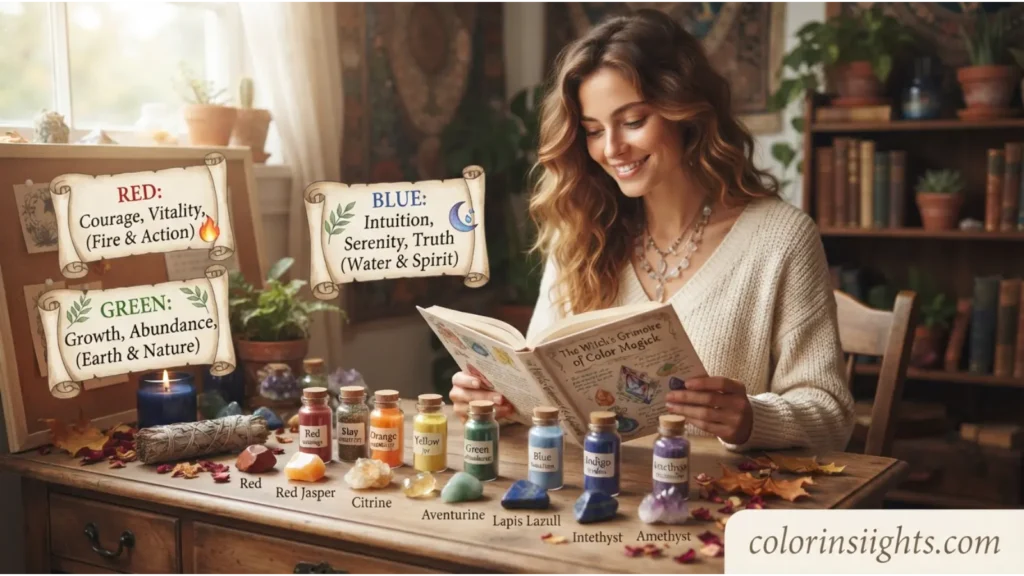
What Color Meanings in Witchcraft Says About Your Personality
People attracted to specific colors sometimes identify with the qualities those colors symbolize. However, personality cannot be accurately determined by color preference alone.
Possible personality associations include:
Strengths
- Creative
- Thoughtful
- Compassionate
- Independent
- Curious
- Emotionally aware
- Adaptable
- Open-minded
Weaknesses
- Overthinking
- Emotional sensitivity
- Perfectionism
- Idealism
- Impatience
- Self-criticism
Social Behavior
People drawn to symbolic color traditions often enjoy meaningful conversations, creative hobbies, and personal growth.
Work Style
They may appreciate structured goals while also valuing imagination and innovation.
Relationships
They often seek trust, honesty, empathy, and emotional connection.
Emotional Tendencies
Many value self-reflection, mindfulness, and emotional balance while recognizing the importance of healthy boundaries.
FAQs:
What defines color meanings in witchcraft?
They are symbolic associations that connect specific colors with magical intentions, spiritual themes, and ritual purposes.
What does the color symbolize in witchcraft?
Different colors symbolize different intentions, such as protection, healing, prosperity, love, courage, purification, or wisdom.
Why are color meanings important in witchcraft?
They help practitioners organize rituals, strengthen focus, and express symbolic intentions during spiritual practices.
Is there one universal witchcraft color system?
No. Different traditions, cultures, and individual practitioners may use different color correspondences.
What emotions do witchcraft colors represent?
They commonly represent love, hope, courage, peace, confidence, transformation, protection, healing, and balance.
What is the spiritual meaning of witchcraft colors?
Spiritually, colors often symbolize personal growth, purification, intuition, wisdom, protection, and renewal.
What colors pair well together in witchcraft?
Popular combinations include white and blue for peace, black and silver for protection, green and gold for prosperity, and purple with white for spiritual work.
What does liking symbolic colors say about a person?
Color preferences may reflect personal interests or emotional associations, but they do not scientifically determine personality.
Which candle color is most versatile?
Many practitioners consider white the most versatile because it is commonly associated with purification, protection, and general spiritual intention.
Are color meanings based on science?
The psychological effects of color are supported to some extent by color psychology research, while magical correspondences are rooted in cultural, historical, and spiritual traditions rather than scientific evidence.
Conclusion
Color meanings in witchcraft combine symbolism, psychology, history, spirituality, and cultural tradition into a meaningful system for expressing intention. Whether used in candle magic, meditation, altar decoration, or personal reflection, colors serve as powerful symbolic tools that help practitioners focus their goals and reinforce ritual purpose.
At the same time, color associations are not universal and vary across cultures, religions, and magical traditions. Understanding these diverse interpretations allows for a more balanced and informed appreciation of how colors continue to influence spiritual practices, emotional experiences, design, fashion, and everyday life.