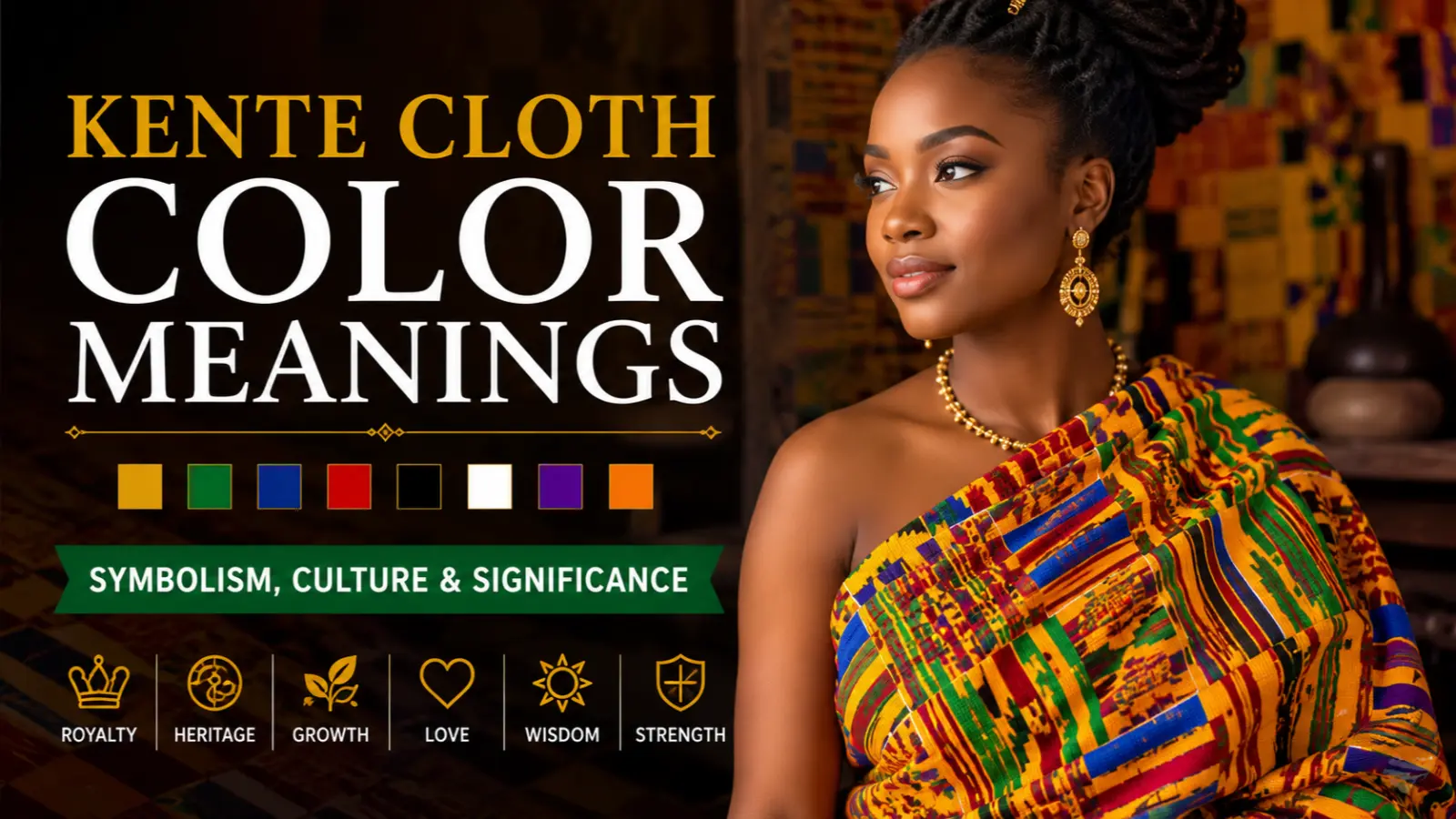
Kente cloth color meanings reflect one of the richest color traditions in the world. Originating with the Akan people of Ghana, Kente cloth combines vibrant colors and intricate woven patterns to communicate values, history, wisdom, leadership, spirituality, and identity.
Unlike ordinary color symbolism, each Kente color carries cultural messages that become even more meaningful when woven together into specific patterns. While interpretations can vary among communities, many meanings have been preserved through generations and continue to influence fashion, design, education, and cultural celebrations worldwide.
Quick Answer:
Kente cloth color meanings symbolize virtues such as royalty, spirituality, prosperity, peace, strength, renewal, wisdom, and unity, with each color representing a unique aspect of life and cultural identity.
What Does the Color Kente Cloth Symbolize?
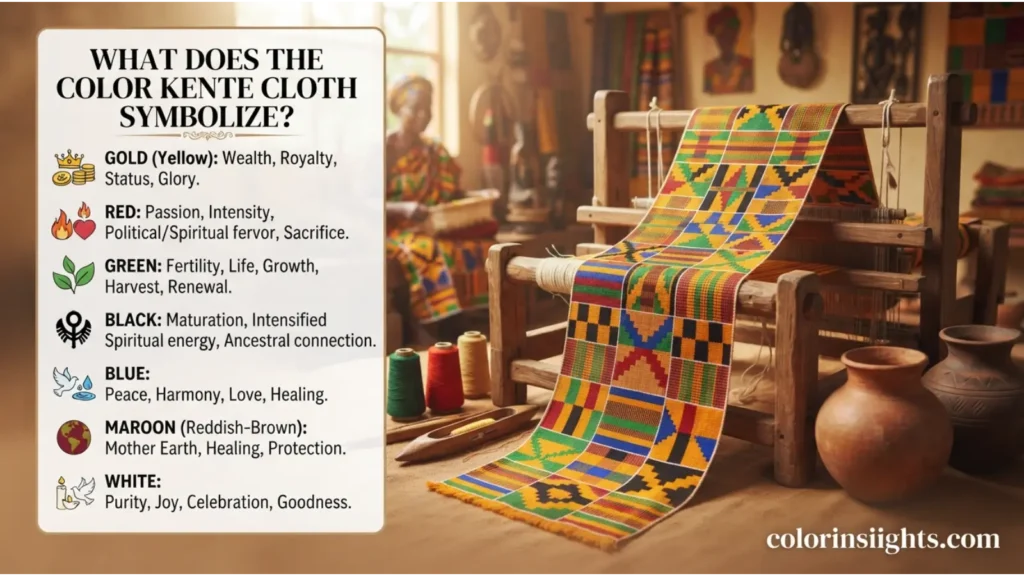
Kente cloth is not a single color but a carefully woven combination of symbolic colors. Together, these colors represent the balance of human life, community values, leadership, heritage, and spiritual beliefs.
Traditional Kente colors commonly symbolize:
- Gold – Wealth, royalty, prosperity, spiritual purity
- Yellow – Fertility, abundance, optimism, preciousness
- Green – Growth, agriculture, renewal, healing
- Blue – Peace, harmony, love, patience
- Red – Sacrifice, courage, political struggle, strength
- Black – Maturity, wisdom, ancestral connection
- White – Purity, victory, cleansing, sacred ceremonies
- Purple – Spirituality, healing, feminine strength
- Pink – Gentleness, compassion, nurturing
- Brown – Stability, earth, resilience
- Gray – Balance, humility, maturity
- Silver – Serenity, joy, protection
Rather than standing alone, these colors work together to tell stories about family, leadership, achievement, faith, and community.
Psychological Characteristics of the Color Kente Cloth
From a color psychology perspective, Kente cloth creates emotional richness because it combines multiple colors into a harmonious visual language.
Emotional Associations
- Cultural pride
- Community
- Heritage
- Celebration
- Achievement
- Hope
- Respect
- Confidence
Psychological Effects
Viewing Kente cloth often creates feelings of warmth, belonging, inspiration, and optimism. The contrast between bright and dark colors stimulates visual interest while reinforcing harmony and balance.
Positive Emotional Responses
- Inspiration
- Joy
- Confidence
- Creativity
- Gratitude
- Respect for tradition
- Cultural appreciation
Negative Emotional Responses
Although generally positive, some people may perceive highly vibrant Kente patterns as:
- Visually overwhelming
- Too formal for everyday settings
- Symbolically complex
- Emotionally intense due to bold color combinations
Impact on Mood and Behavior
Kente-inspired colors can encourage:
- Greater confidence
- Social connection
- Creative thinking
- Cultural awareness
- Celebration of achievements
- Positive group identity
How People Typically React
Many people associate Kente cloth with:
- African heritage
- Academic graduation stoles
- Leadership
- Cultural festivals
- Pride
- Artistic craftsmanship
- Authenticity
Spiritual Meaning of the Color Kente Cloth
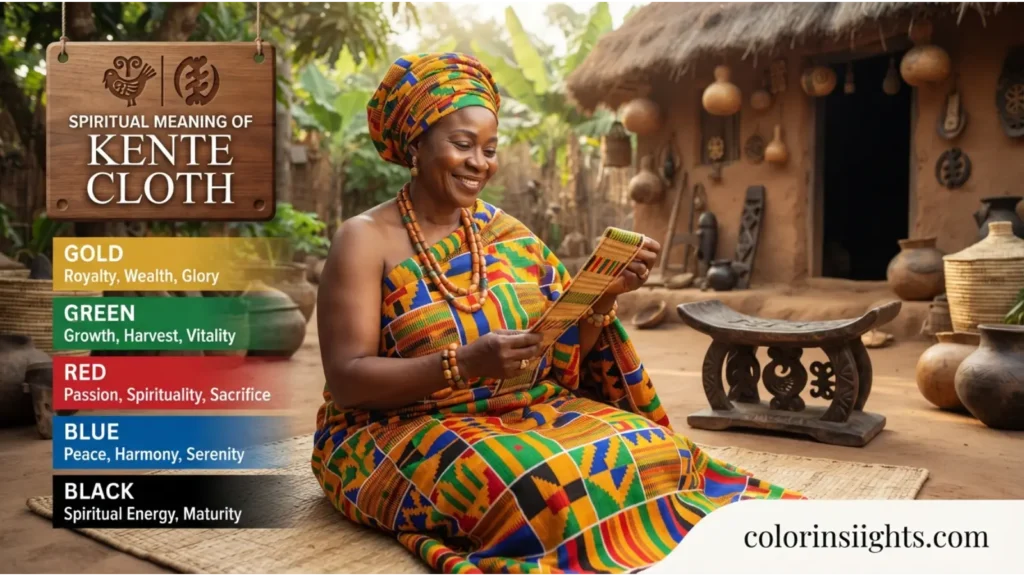
The spiritual meaning of Kente cloth colors reflects traditional Akan beliefs, respect for ancestors, and values passed from one generation to another. Rather than representing one religious tradition, Kente symbolism emphasizes moral character, community, and spiritual balance.
Common spiritual associations include:
- Holiness: White and gold symbolize sacred ceremonies and purity.
- Wisdom: Black represents maturity, knowledge, and ancestral guidance.
- Purity: White signifies spiritual cleansing and moral integrity.
- Transformation: Green reflects renewal, growth, and life’s continuous cycles.
- Healing: Green and purple are linked with restoration and well-being.
- Protection: Black and silver symbolize strength and resilience.
- Power: Gold and red represent leadership, courage, and authority.
- Enlightenment: Gold symbolizes higher understanding and noble character.
- New Beginnings: Green represents fresh opportunities and renewal.
- Eternity: The combination of traditional colors reflects continuity between ancestors, present generations, and future descendants.
Positive and Negative Meanings of the Color Kente Cloth
Positive Meanings
Kente cloth is widely admired for representing positive cultural values.
- Royal dignity through gold
- Peace and harmony through blue
- Growth and renewal through green
- Courage through red
- Wisdom through black
- Spiritual purity through white
- Unity through multicolored weaving
- Hope through vibrant combinations
- Cultural pride through traditional craftsmanship
- Balance between individual and community
Example:
During graduation ceremonies, Kente stoles celebrate educational achievement while honoring African heritage and perseverance.
Negative Meanings
Context influences how colors are interpreted. Some colors may also symbolize more challenging experiences.
- Red: Sacrifice, conflict, or historical struggle.
- Black: Mourning in certain ceremonial contexts.
- Gray: Humility that may be mistaken for emotional distance.
- Dark combinations: Seriousness during memorial events.
- Highly formal patterns: Can seem intimidating in casual settings.
- Traditional symbolism: May be misunderstood when removed from its cultural context.
- Complex meanings: Different regions may interpret colors differently.
For example, a predominantly red ceremonial cloth may commemorate sacrifice rather than celebration.
Meanings of the Color Kente Cloth
Kente cloth color meaning changes depending on cultural setting, ceremonial purpose, pattern, and the combination of colors used. The same gold color may represent royalty in one context and prosperity in another. Understanding both the colors and the woven pattern provides the most accurate interpretation.
Feng Shui
Although Kente cloth comes from West African tradition rather than Chinese Feng Shui, its colors can complement Feng Shui principles.
- Associated element: Primarily Wood (green), Fire (red), Earth (gold and yellow), and Water (blue).
- Energy symbolism: Encourages vitality, abundance, creativity, and harmony.
- Best rooms: Living rooms, home offices, creative studios, and entryways.
- Recommended color combinations: Gold with green, blue with white, or red with black in moderation.
- Decorating tips: Use Kente-inspired textiles as statement pieces while balancing them with neutral surroundings.
Marketing
Brands often draw inspiration from Kente-inspired color palettes to communicate authenticity, diversity, celebration, and craftsmanship.
Branding psychology includes:
- Heritage and authenticity
- Community connection
- Creativity
- Premium craftsmanship
- Optimism
- Cultural storytelling
Consumer perception often associates Kente-inspired colors with quality, originality, and meaningful tradition.
These colors appear in:
- Cultural campaigns
- Educational institutions
- Festival promotions
- Heritage products
- Fashion collections
- Community organizations
Major global brands such as Nike, Adidas, and Google have occasionally incorporated Kente-inspired color palettes into limited-edition products or cultural celebration campaigns, while educational institutions frequently use Kente stoles during graduation ceremonies.
Design
Kente colors bring energy and symbolism into many design disciplines.
Interior Design
- Accent pillows
- Wall art
- Upholstery
- Statement rugs
- Cultural décor
Graphic Design
- Festival posters
- Educational materials
- Cultural branding
- Nonprofit campaigns
Web Design
- Bold accent colors
- Inclusive branding
- Storytelling websites
- Event pages
User Experience
Designers often use Kente-inspired palettes carefully to create warmth, diversity, and memorable visual identity without overwhelming users.
Minimalist Aesthetics
Small Kente-inspired accents against neutral backgrounds create visual balance while preserving cultural significance.
Fashion
Kente remains one of Africa’s most recognizable textiles.
Clothing Symbolism
- Heritage
- Achievement
- Leadership
- Family pride
- Celebration
Seasonal Use
Suitable throughout the year but especially popular during graduations, weddings, festivals, Black History Month, and cultural celebrations.
Styling Effects
- Creates bold visual statements
- Adds cultural richness
- Draws attention
- Expresses confidence
Personality Impressions
People wearing Kente-inspired clothing are often perceived as:
- Confident
- Creative
- Proud of their heritage
- Expressive
- Community-oriented
Advantages
- Rich symbolism
- Timeless craftsmanship
- Vibrant appearance
- Strong cultural identity
Disadvantages
- Requires thoughtful styling
- Meanings may be misunderstood without cultural context
Color Associations Are Not Universal
Color meanings vary across societies, religions, and historical periods.
Western Cultures
Western audiences often associate Kente cloth with African heritage, graduation ceremonies, diversity, and cultural pride. Individual colors may also retain familiar meanings, such as blue for trust or green for growth.
Eastern Cultures
Eastern interpretations may emphasize prosperity, harmony, balance, or luck while appreciating Kente primarily as an artistic textile rather than a traditional cultural symbol.
Religious Traditions
Christian, Islamic, and traditional African communities may incorporate Kente into celebrations differently. While colors often retain symbolic meanings, religious interpretations depend on local customs rather than universal rules.
Historical Interpretations
Historically, Kente cloth was reserved for royalty and important ceremonies among the Akan people. Over time, it evolved into a global symbol of African identity, education, excellence, and cultural resilience.
Modern Global Interpretations
Today, Kente colors are recognized internationally as symbols of diversity, heritage, creativity, and cultural appreciation. Designers increasingly emphasize respectful representation and acknowledgment of the cloth’s Ghanaian origins.
What Kente Cloth Says About Your Personality
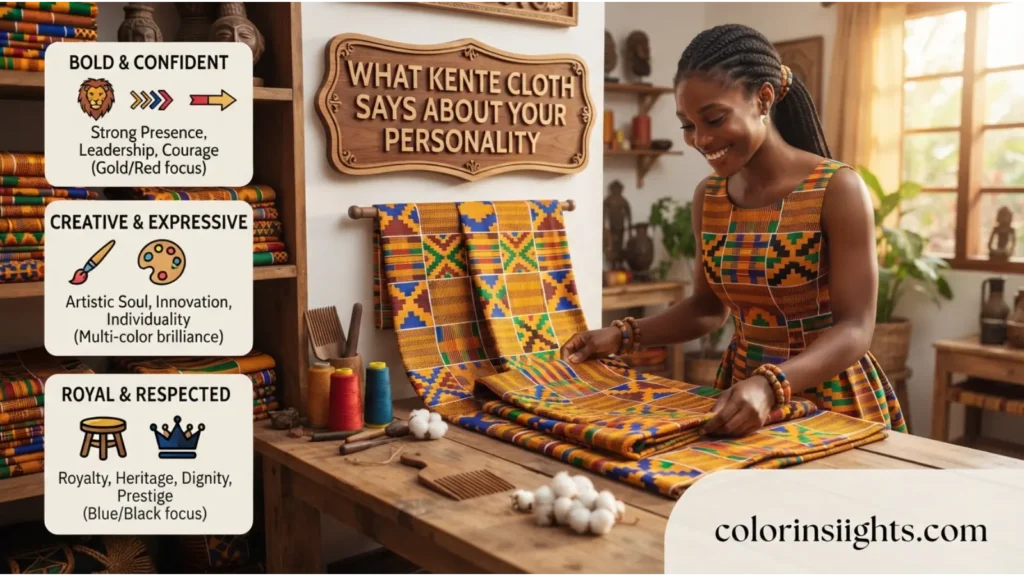
People attracted to Kente-inspired colors often appreciate creativity, meaningful traditions, and expressive design. However, color preference alone cannot accurately determine personality, and individual experiences play a much larger role.
Common personality associations include:
Strengths
- Creative
- Optimistic
- Respectful of culture
- Confident
- Open-minded
- Community-focused
- Resilient
Weaknesses
- Emotionally expressive
- Sensitive to social issues
- May become overwhelmed by conflict
- Sometimes idealistic
Social Behavior
They often enjoy teamwork, celebrations, storytelling, learning, and building meaningful relationships.
Work Style
They typically value collaboration, innovation, leadership, diversity, and purposeful work.
Relationships
People drawn to Kente colors often appreciate loyalty, respect, family traditions, and mutual support.
Emotional Tendencies
They usually seek balance between personal success and community well-being while expressing empathy and cultural appreciation.
FAQs:
What defines Kente cloth color meanings?
Kente cloth color meanings are traditional symbolic interpretations assigned to individual colors used in Ghanaian Kente weaving, representing values such as wisdom, courage, prosperity, spirituality, and unity.
What does Kente cloth symbolize?
Kente symbolizes heritage, leadership, community, cultural identity, achievement, and respect for tradition.
Why is Kente cloth important?
It preserves Akan history, communicates cultural values, celebrates important life events, and represents African identity worldwide.
Is Kente cloth a warm or cool color?
Kente is a multicolored textile containing both warm and cool colors that work together in balanced compositions.
What emotions does Kente cloth represent?
It commonly evokes pride, joy, confidence, hope, unity, inspiration, and respect.
What does Kente cloth mean spiritually?
Spiritually, Kente colors represent wisdom, purity, renewal, protection, courage, and continuity between generations.
What colors pair well with Kente-inspired designs?
Neutral shades such as white, black, beige, and gray allow vibrant Kente colors to stand out while maintaining visual balance.
What does liking Kente colors say about a person?
People who enjoy Kente-inspired colors often appreciate creativity, culture, diversity, and meaningful traditions, though personality cannot be determined solely by color preferences.
Is every Kente color meaning the same across Ghana?
No. Interpretations can vary slightly between communities, weaving traditions, and ceremonial contexts.
Why are Kente patterns as important as the colors?
Patterns often carry names and historical messages, meaning the complete symbolism comes from both the woven design and the colors together.
Conclusion
Kente cloth color meanings represent far more than attractive combinations of vibrant shades. Each color contributes to a sophisticated visual language that communicates wisdom, courage, prosperity, spirituality, leadership, and cultural identity.
Together with traditional weaving patterns, these colors preserve centuries of Akan history while continuing to inspire modern fashion, design, education, and global cultural appreciation.
Understanding Kente cloth respectfully means recognizing both the symbolism of its individual colors and the cultural traditions that give those colors their enduring significance.