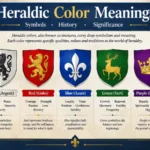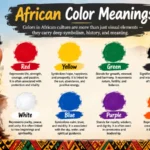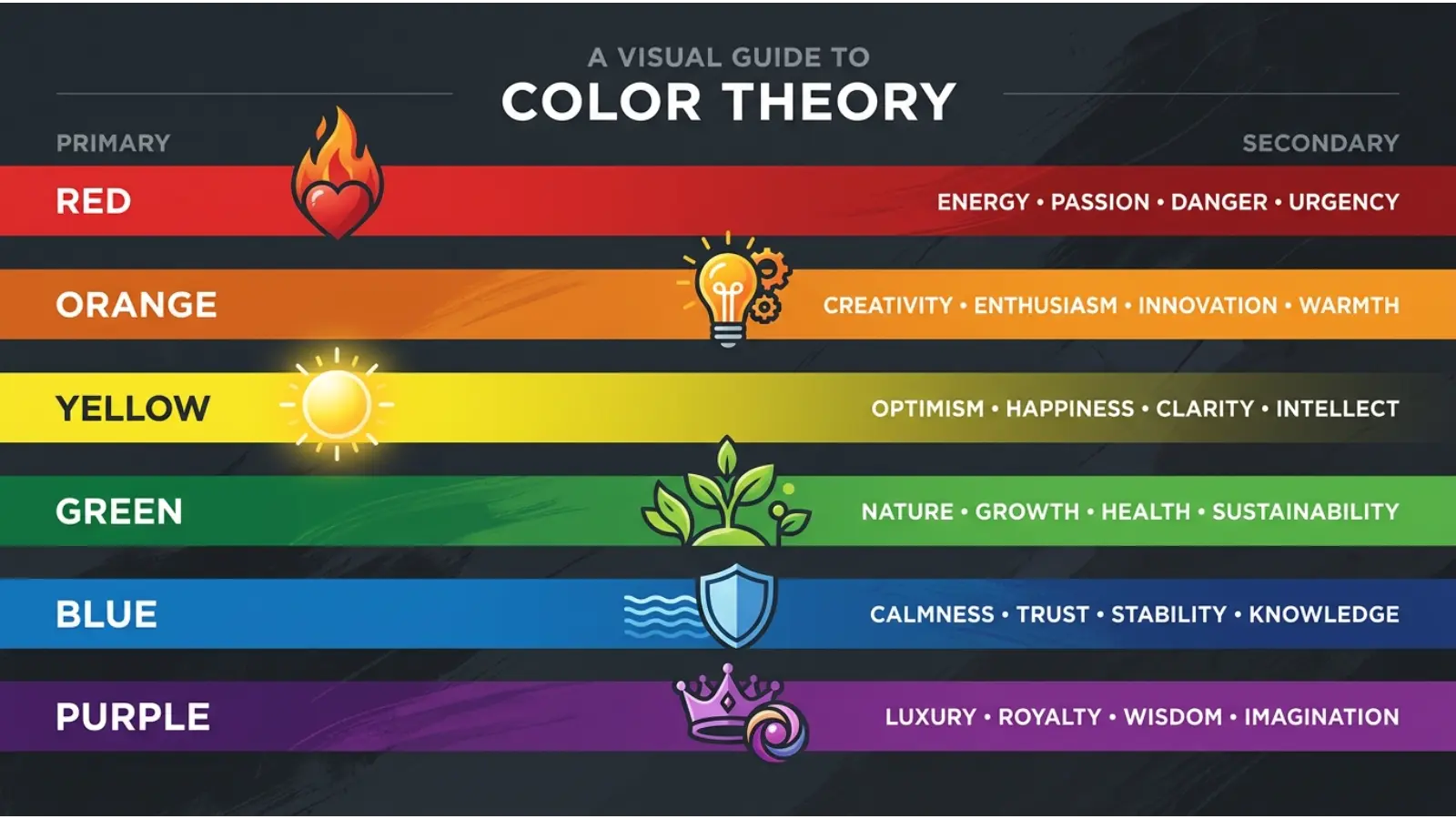
Color theory meanings explain how colors can communicate ideas, influence visual perception, create emotional associations, and shape the way people interpret images, products, spaces, and messages. Colors such as red, blue, yellow, green, purple, orange, pink, black, white, brown, and gray can carry different symbolic meanings depending on context, culture, saturation, brightness, and personal experience. In psychology and design, color is often studied as a perceptual and communicative element rather than a universal emotional code.
Quick answer:
Color Theory Meanings are context-dependent. A color may suggest an emotion or concept in one situation while communicating something very different in another.
What Does Color Theory Symbolize?
Color Theory Meanings is a framework for understanding relationships among colors and how those relationships affect visual communication. It includes concepts such as the color wheel, hue, saturation, value, temperature, contrast, complementary colors, analogous colors, and color harmony.
Color Theory Meanings symbolism goes one step further by examining the ideas and associations people attach to particular colors.
Common color associations include:
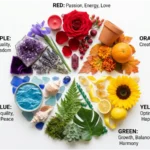
- Red: energy, urgency, passion, danger, love, and power.
- Blue: calmness, trust, stability, communication, and professionalism.
- Yellow: optimism, attention, warmth, creativity, and caution.
- Green: nature, renewal, growth, health, and balance.
- Orange: enthusiasm, warmth, activity, friendliness, and confidence.
- Purple: creativity, spirituality, luxury, imagination, and mystery.
- Pink: affection, tenderness, playfulness, compassion, and romance.
- Black: sophistication, authority, formality, mystery, and mourning.
- White: simplicity, cleanliness, peace, openness, and purity.
- Brown: earthiness, reliability, comfort, tradition, and natural materials.
- Gray: neutrality, sophistication, restraint, technology, and seriousness.
These Color Theory Meanings associations are tendencies rather than fixed psychological rules. The same color can communicate different meanings depending on its surroundings and the purpose for which it is used.
Psychological Characteristics of Color Theory
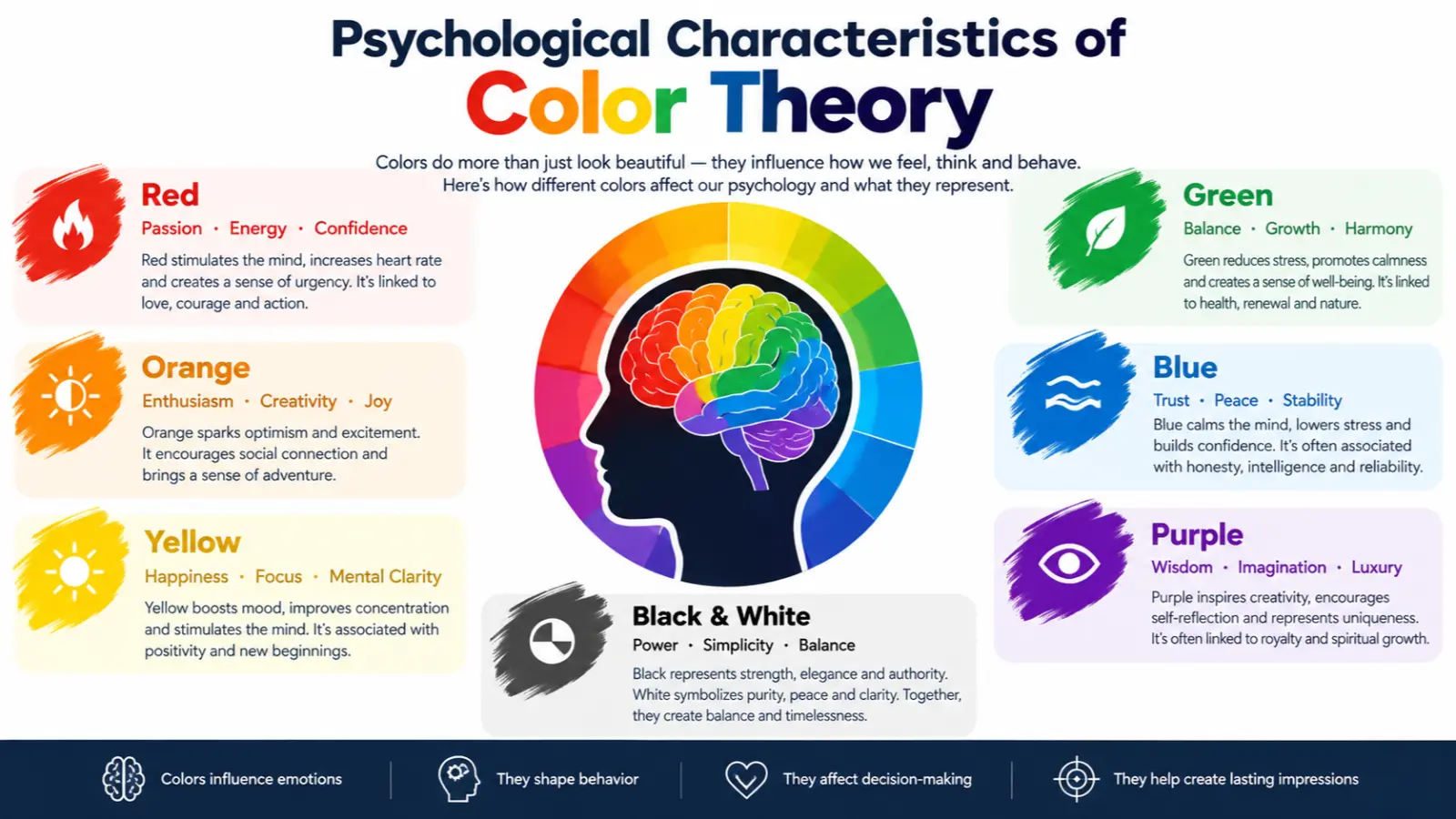
The psychology of Color Theory Meanings examines how visual characteristics of color can interact with perception, attention, emotion, memory, expectations, and behavior.
Color Theory Meanings does not affect every person in exactly the same way. Individual experiences, cultural learning, lighting conditions, surrounding colors, and context can all influence interpretation.
Emotional Associations
Different Color Theory Meanings frequently evoke different learned or situational associations.
For example:
- Red may attract attention and suggest urgency or intensity.
- Blue is often associated with calmness, reliability, and professionalism.
- Yellow can communicate optimism and energy but may also signal caution.
- Green commonly evokes nature, growth, and freshness.
- Purple can suggest creativity, imagination, or luxury.
- Black can communicate authority, elegance, or seriousness.
- White can suggest cleanliness, simplicity, or openness.
Psychological Effects
Color can influence visual attention and perceived atmosphere.
Important factors include:
- Hue: the basic color family.
- Saturation: how intense or muted a color appears.
- Value: how light or dark the color is.
- Contrast: the difference between colors or visual elements.
- Color temperature: the perceived warmth or coolness of a color.
- Context: surrounding colors, objects, words, and cultural associations.
A bright, saturated color may attract more visual attention than a muted version of the same hue. A dark color may appear more formal or dramatic, while a lighter version can appear softer.
Positive Emotional Responses
Depending on context, colors may encourage associations such as:
- Happiness
- Calmness
- Confidence
- Energy
- Comfort
- Creativity
- Hope
- Security
- Freshness
- Connection
Negative Emotional Responses
Colors can also be associated with:
- Anxiety
- Aggression
- Sadness
- Coldness
- Isolation
- Danger
- Fatigue
- Excessive stimulation
- Formality
- Emotional distance
These effects should not be interpreted as universal psychological reactions. Color psychology is more nuanced than assigning one emotion to each color.
Impact on Mood and Behavior
Color can influence how people perceive an environment and can affect attention and expectations. For example, a restaurant may use warm colors to create an energetic atmosphere, while a healthcare website may use restrained blues and greens to communicate cleanliness and calm.
In user-interface design, color can also communicate functional information. Red may indicate an error, green may indicate successful completion, and yellow may signal caution. These meanings work partly because users learn the visual conventions.
How People Typically React to Color
Human responses to color depend on:
- Personal memories
- Cultural background
- Age and life experience
- Lighting
- Color combinations
- Saturation and brightness
- Environmental context
- Social conventions
- The object associated with the color
Therefore, color should be treated as a communication tool rather than a guaranteed psychological trigger.
Spiritual Meaning of Color Theory
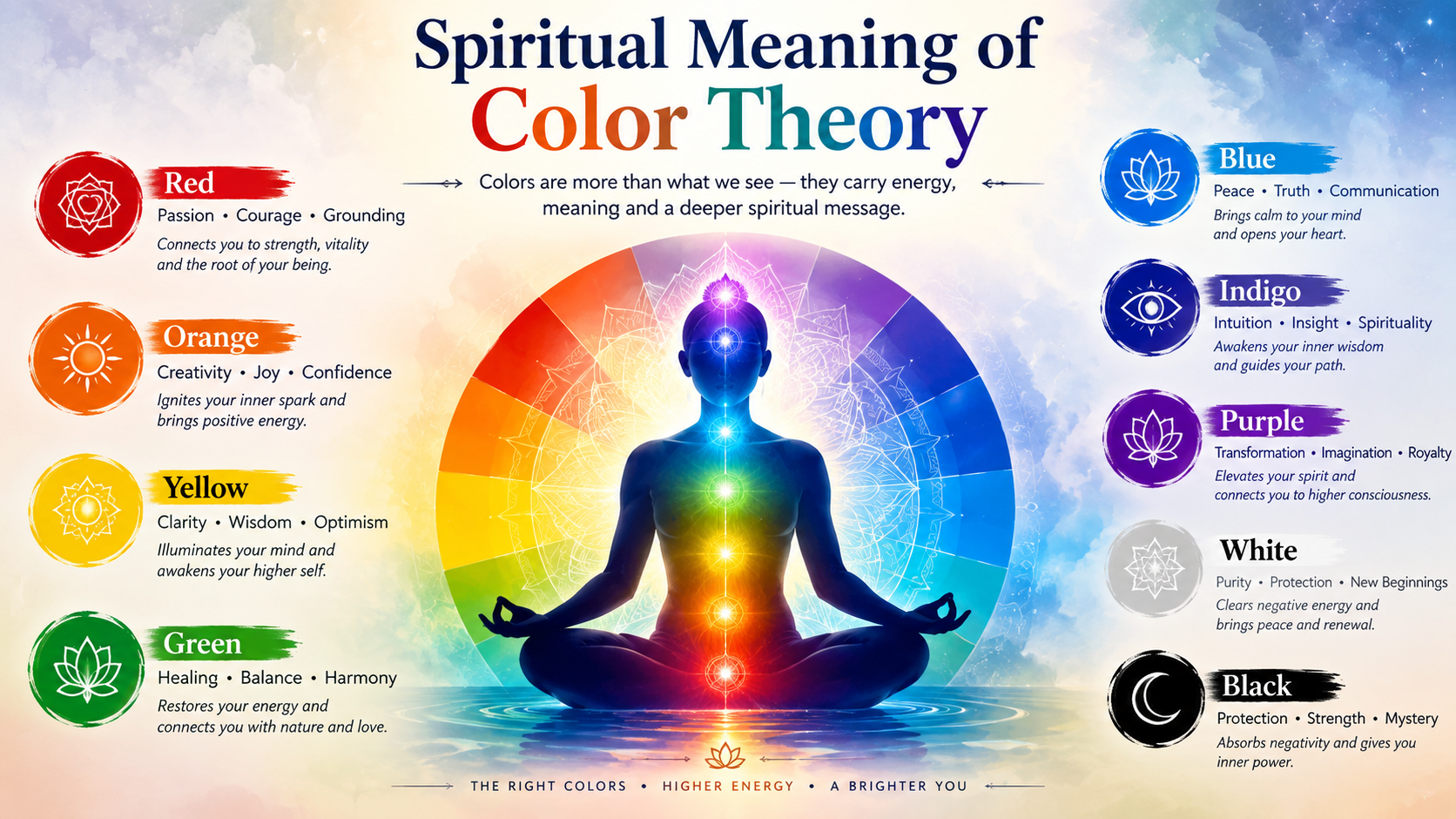
Color has been used symbolically in religious, spiritual, ceremonial, and philosophical traditions for centuries. However, there is no single universal spiritual color dictionary.
Different traditions may connect colors with concepts such as:
- Holiness: White and gold are frequently used in religious and ceremonial settings to communicate sacredness or transcendence.
- Wisdom: Blue, purple, white, and gold may represent knowledge or spiritual understanding in different traditions.
- Purity: White commonly symbolizes purity or innocence in many Western contexts.
- Transformation: Purple, gold, red, and other colors can symbolize transformation depending on the tradition.
- Healing: Green and blue are frequently associated with nature, restoration, peace, or healing imagery.
- Protection: Dark or highly saturated colors may be used symbolically in protective rituals, while particular sacred colors may represent divine protection.
- Power: Red, purple, black, and gold have historically been associated with authority or status.
- Enlightenment: White, gold, yellow, and light blue may be used to represent illumination or spiritual awakening.
- New beginnings: White, green, yellow, and other light or natural colors may symbolize renewal.
- Eternity: Gold, white, blue, and circular color symbolism can represent concepts of permanence or infinity.
Spiritual meanings should always be interpreted within the specific religious or cultural tradition rather than treated as universal facts.
Positive and Negative Meanings of Color Theory
Positive Meanings
Color symbolism can communicate many positive concepts:
Purity:
White is frequently associated with cleanliness and purity. Hospitals, wedding attire, and minimalist interiors may use white to reinforce these associations.
Peace:
Soft blue, white, and green can create visual impressions of calm and peacefulness.
Simplicity:
Neutral palettes can reduce visual complexity and create an organized appearance.
Clarity:
High contrast can make information easier to distinguish, particularly in interfaces and signage.
Freshness:
Green, white, light blue, and yellow can suggest freshness in food, environmental, and lifestyle branding.
Hope:
Bright or light colors may communicate optimism and possibility.
Balance:
Balanced combinations of complementary or analogous colors can create visual stability.
Harmony:
Colors that share related hues can create cohesive visual systems.
Negative Meanings
The same colors can also acquire less favorable associations.
Emptiness:
An excessive amount of white may make a space feel empty or unfinished.
Isolation:
Cool or highly desaturated palettes can sometimes appear emotionally distant.
Coldness:
Blue-gray environments may feel cold when combined with stark lighting and minimal warm elements.
Sterility:
Extremely white environments may suggest clinical sterility rather than comfort.
Boredom:
A palette with little contrast or variation can become visually monotonous.
Emotional Distance:
Very restrained neutral palettes may communicate professionalism but can sometimes feel impersonal.
Perfectionism:
Highly controlled, symmetrical, minimalist visual systems may be interpreted as precise or perfection-oriented, although this is a design impression rather than a personality diagnosis.
Meanings of Color Theory
Color meaning changes according to the situation in which the color appears.
A red heart can communicate love, while a red warning sign communicates danger. A green leaf may suggest nature, while green on a financial dashboard can indicate positive performance. Black clothing may communicate sophistication in one setting and mourning in another.
The meaning of color is therefore influenced by:
- Cultural context
- Historical period
- Industry
- Product category
- Geographic location
- Religious tradition
- Personal experience
- Color combinations
- Typography
- Shape
- Lighting
- Saturation
- Brightness
Feng Shui
In Feng Shui, colors are commonly connected with the Five Elements: Wood, Fire, Earth, Metal, and Water. Specific associations vary by school and practice.
- Wood: commonly represented by green and sometimes blue; associated with growth and vitality.
- Fire: commonly represented by red, orange, and strong warm tones; associated with activity and energy.
- Earth: commonly represented by yellow, beige, brown, and earthy tones; associated with stability.
- Metal: commonly represented by white, gray, and metallic tones; associated with clarity and structure.
- Water: commonly represented by black and dark blue; associated with depth and flow.
For home decorating, color should be selected according to the desired atmosphere as well as the principles of the particular Feng Shui tradition being followed.
Recommended combinations might include:
- Green with earthy neutrals for a natural atmosphere.
- Blue with white for a clean, calm appearance.
- Warm earth tones for comfort and stability.
- White and metallic tones for a structured, contemporary look.
Color should complement lighting, room size, furniture, and personal preference rather than being selected solely from a symbolic chart.
Marketing
Color plays an important role in branding and visual identity.
Branding Psychology
Companies use color to establish recognizable visual identities. A brand may select a color palette to support qualities such as energy, reliability, luxury, affordability, nature, or creativity.
Consumer Perception
Color can influence first impressions of packaging, advertisements, websites, and products. However, consumers interpret colors alongside logos, typography, imagery, product quality, price, and previous brand experiences.
Trust Signals
Blue is frequently used by financial, technology, healthcare, and corporate organizations because it can communicate professionalism, stability, and reliability.
Product Packaging
Packaging colors can help distinguish products on crowded shelves. Green may be used for products positioned around nature or sustainability, while black and metallic colors can create a premium appearance.
Advertising Applications
Advertisers may use high-contrast colors to attract attention, warm colors to create energy, or restrained palettes to communicate sophistication.
Examples of companies known for distinctive color identities include:
- Coca-Cola — red
- Tiffany & Co. — its distinctive blue
- McDonald’s — red and yellow
- Starbucks — green
- UPS — brown
- IBM — blue
A brand’s color is only one component of its identity, and successful branding cannot be reduced to color alone.
Design
Interior Design
Interior designers use color to influence perceived atmosphere, visual balance, and spatial character.
Light colors can make rooms appear more open, while dark colors can create visual depth and intimacy. Warm colors may feel energetic, while cool colors can create a calmer atmosphere.
Graphic Design
Graphic designers use color hierarchy to guide attention and distinguish information.
Color can separate:
- Headlines
- Buttons
- Icons
- Backgrounds
- Warnings
- Navigation
- Calls to action
Web Design
Website color systems should balance aesthetics with usability. Text and background combinations require sufficient contrast so users can read content comfortably.
User Experience
Color can communicate interactive states such as:
- Success
- Error
- Warning
- Selection
- Disabled states
- Navigation
- Calls to action
However, designers should not rely on color alone to communicate important information because some users have color-vision deficiencies.
Minimalist Aesthetics
Minimalist design often uses neutral colors, restrained accents, and strong contrast. White, black, gray, beige, and muted colors are common because they allow typography, shape, texture, and spacing to become more prominent.
Fashion
Clothing Symbolism
Color influences how clothing is perceived. Black may create a formal or sophisticated appearance, white may appear clean and simple, while red can create a bold visual statement.
Seasonal Use
Fashion palettes often change seasonally. Pastels and lighter shades are frequently associated with spring and summer collections, while darker earth tones and saturated jewel colors commonly appear in fall and winter.
Styling Effects
Color can influence perceived proportion, contrast, and visual emphasis.
Examples include:
- Dark monochromatic outfits can create a streamlined appearance.
- Bright accessories can create focal points.
- Complementary colors can produce strong contrast.
- Neutral clothing can make statement accessories more noticeable.
Personality Impressions
People sometimes associate particular colors with personality characteristics. For example, bright colors may be perceived as expressive, while neutral colors may be perceived as understated.
These are social impressions rather than reliable personality assessments.
Advantages and Disadvantages
Advantages of thoughtful color selection include:
- Stronger visual identity
- Better coordination
- Improved emphasis
- Greater stylistic consistency
- Easier wardrobe planning
Potential disadvantages include:
- Excessive contrast
- Poor coordination
- Colors inappropriate for a particular setting
- Overly strong visual stimulation
- Cultural misinterpretation
Color Associations Are Not Universal
Color meanings vary substantially across cultures, historical periods, and social contexts.
Western Cultures
In many Western contexts, white is associated with weddings, cleanliness, and purity, while black may be associated with formality, sophistication, and mourning. Red can represent love, danger, passion, or urgency depending on context.
These associations are widespread but not universal across all Western communities.
Eastern Cultures
Color symbolism differs throughout Asian cultures, and there is no single “Eastern” interpretation.
For example, red can have strong associations with prosperity, celebration, happiness, and good fortune in several Chinese cultural contexts. White may have mourning associations in some East Asian traditions, demonstrating why Western assumptions about white cannot automatically be applied globally.
Religious Traditions
Religious traditions often assign particular significance to colors.
Liturgical colors in Christianity can communicate different stages or themes within the religious calendar. In Hindu traditions, colors may have varied associations with deities, festivals, spiritual practices, and philosophical ideas.
These meanings depend on the specific tradition and should not be generalized across all religions.
Historical Interpretations
Color symbolism changes over time.
Purple, for example, has historically been connected with wealth and status partly because some purple dyes were difficult and expensive to produce. As manufacturing technology changed, access to purple became much broader.
Similarly, the meanings of colors used in political, military, artistic, and commercial contexts can change across historical periods.
Modern Global Interpretations
Modern media, international commerce, fashion, technology, and social media have created increasingly shared visual conventions. Nevertheless, global exposure does not eliminate cultural differences.
A successful international brand therefore needs to consider:
- Local traditions
- Religious symbolism
- Regional preferences
- Historical associations
- Language
- Accessibility
- Advertising conventions
What Color Theory Says About Your Personality
Color preferences are sometimes used in informal personality discussions, but liking a particular color does not scientifically determine someone’s personality.
A person’s color preference can be influenced by memories, culture, fashion, environment, age, social identity, and current trends.
Nevertheless, people may associate certain preferences with particular characteristics.
Strengths
Someone who prefers bold colors may be perceived as:
- Expressive
- Energetic
- Confident
- Adventurous
- Creative
Someone who prefers restrained neutrals may be perceived as:
- Organized
- Practical
- Understated
- Professional
- Detail-oriented
These are impressions, not psychological diagnoses.
Weaknesses
Color preferences may sometimes be interpreted negatively when taken to an extreme.
For example:
- Strong preference for highly controlled palettes may be perceived as rigid.
- Preference for very dark palettes may be perceived as serious or reserved.
- Preference for extremely bright colors may be perceived as attention-seeking.
- Preference for minimal color may be perceived as emotionally distant.
These interpretations depend heavily on context.
Social Behavior
Color choice can influence social impressions. Bright clothing may attract attention, whereas neutral clothing may communicate subtlety or formality.
Work Style
In professional environments, color choices can affect perceived formality and visual presence. Corporate environments often favor restrained palettes, while creative industries may allow more expressive color choices.
Relationships
Color preferences may influence romantic symbolism, gift selection, clothing choices, and home decoration. However, they cannot reliably predict compatibility or relationship behavior.
Emotional Tendencies
People may use certain colors to express their current emotional state. Someone might choose dark clothing during a quiet period or brighter colors when seeking a more energetic appearance.
This does not mean that the color reveals the person’s underlying psychological condition.
Frequently Asked Questions
What defines color theory?
Color theory is a system for understanding relationships among colors and how hue, saturation, value, contrast, temperature, and harmony affect visual communication.
What does color symbolize?
Color can symbolize emotions, ideas, cultural values, social roles, and concepts such as love, danger, peace, nature, power, purity, or luxury. The exact meaning depends on context.
Why is color theory important?
Color theory helps artists, designers, marketers, architects, fashion professionals, and digital creators make intentional decisions about visual communication.
Is color theory scientific?
Color theory combines principles from art and design with knowledge about visual perception. Color psychology is related to psychological research, but popular claims that every color produces a fixed emotional response are often oversimplified.
What emotions do colors represent?
Common associations include red with passion or urgency, blue with calmness or trust, green with nature or growth, yellow with optimism, purple with creativity, and black with sophistication or authority. These associations are not universal.
What does color mean spiritually?
Spiritual color meanings vary by religion and tradition. White may symbolize purity in some contexts, green may represent life or renewal, gold may suggest sacredness, and purple may represent spiritual or royal themes in particular traditions.
What colors pair well together?
Effective combinations depend on the desired visual effect. Complementary colors create strong contrast, analogous colors create harmony, and neutral colors can balance brighter accent colors.
What does liking a certain color say about a person?
A color preference may communicate aesthetic taste or social identity, but it does not reliably determine personality. Personality is influenced by many psychological, biological, social, and environmental factors.
Are warm colors more emotional than cool colors?
Warm colors such as red, orange, and yellow are often perceived as energetic or visually stimulating, while cool colors such as blue and green are often associated with calmness. However, emotional responses depend on context and individual experience.
How do colors affect branding?
Colors can contribute to brand recognition and influence visual impressions. Companies select colors based on industry conventions, target audiences, positioning, differentiation, and overall brand identity.
Why do color meanings differ between cultures?
Color symbolism develops through history, religion, language, social customs, geography, and shared experiences. Consequently, the same color can have very different meanings in different cultural environments.
Conclusion
Color theory meanings provide a useful framework for understanding how color communicates visually, emotionally, culturally, and symbolically. Colors can influence attention, create visual hierarchy, shape environmental impressions, support brand identities, and communicate cultural ideas. Yet color should never be treated as a universal psychological code. The meaning of any color depends on context, culture, saturation, brightness, surrounding colors, personal experience, and the purpose of the design. Understanding these variables allows designers, marketers, artists, fashion professionals, and everyday users to make more informed and intentional color choices.