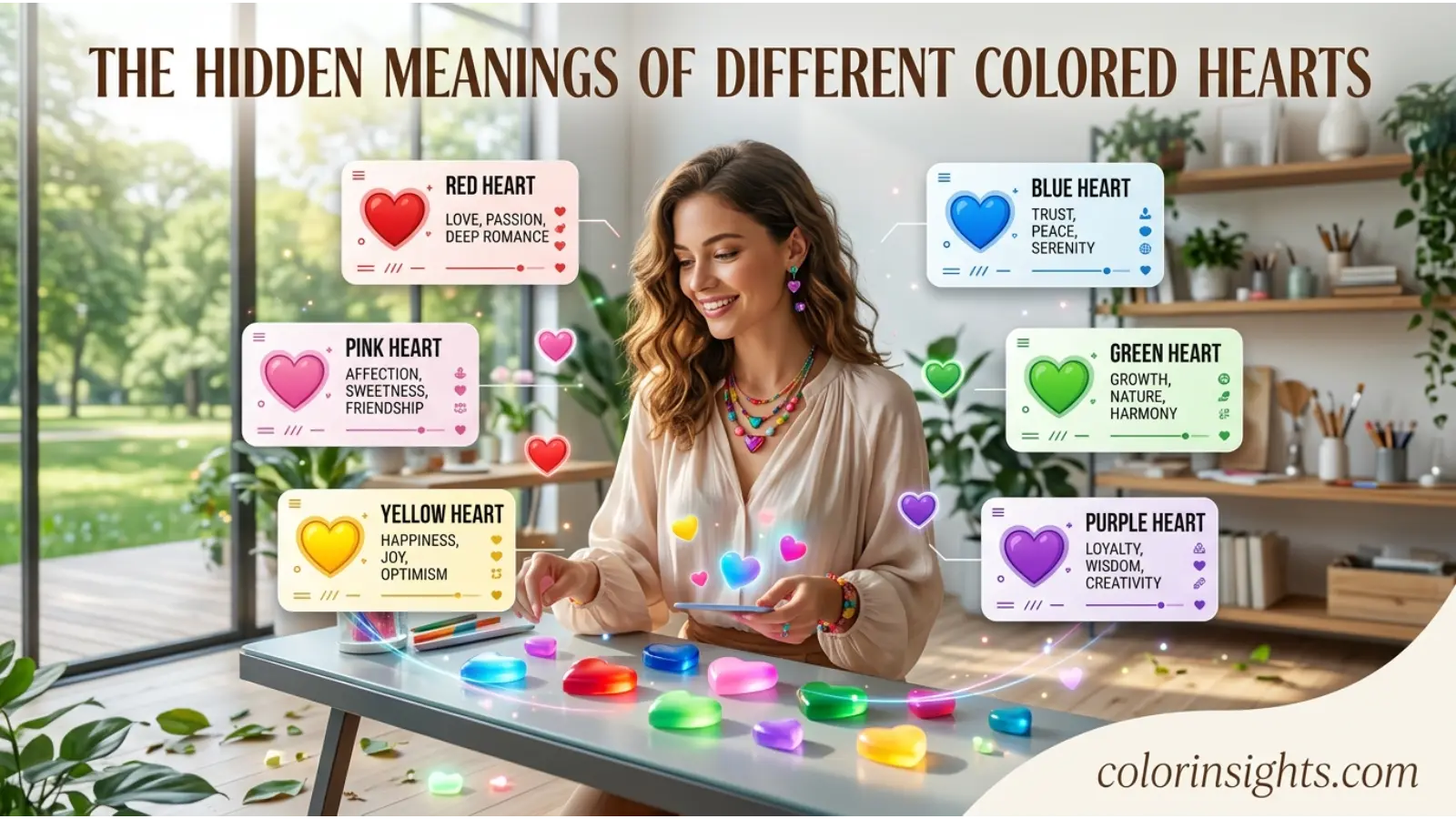
Different Color Heart emojis and heart symbols have become a universal language of emotion in digital communication.
From social media posts and text messages to branding and personal expression, different colored hearts carry unique meanings that go far beyond simple love.
Each heart color represents distinct emotions, personality traits, spiritual symbolism, and cultural interpretations.
Understanding different color heart meanings can help you communicate more effectively, interpret messages accurately, and appreciate the deeper symbolism behind these popular icons.
If you’re curious about friendship, romance, healing, loyalty, or personal growth, use color heart meanings and emojis each heart color tells its own story.
Quick Answer:
Different heart colors symbolize different emotions and relationships. Red hearts represent love and passion, yellow hearts symbolize friendship and happiness, blue hearts signify trust and loyalty, green hearts represent growth and nature, purple hearts symbolize compassion and luxury, while black hearts often convey grief, irony, or strength.
Understanding the Symbolism Behind Different Colored Hearts
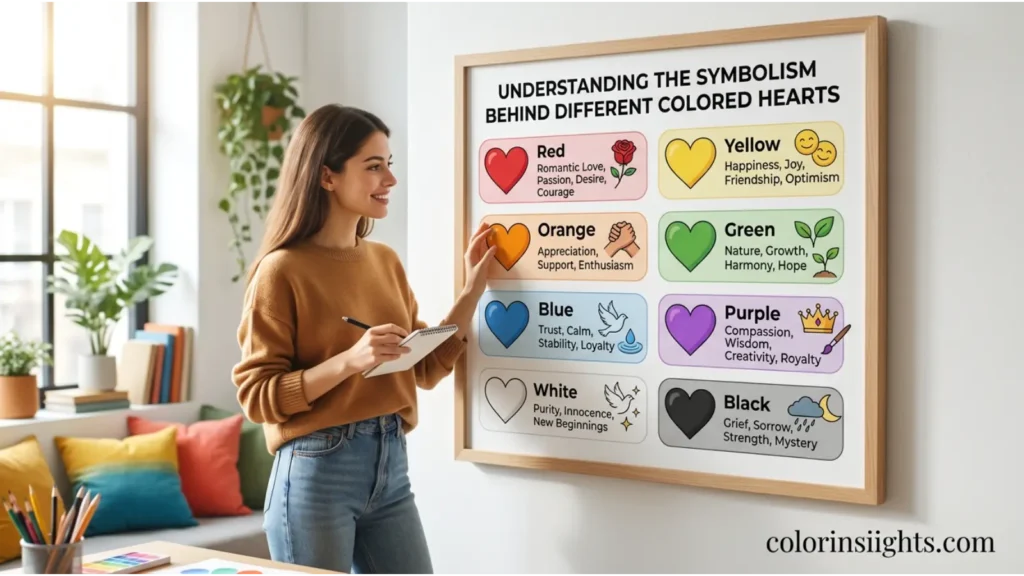
Different colored hearts serve as visual representations of emotions, relationships, values, and personal experiences. While the traditional red heart remains the universal symbol of romantic love, modern digital communication has expanded the meaning of heart symbols considerably.
Heart colors often symbolize:
- Love and affection
- Friendship and loyalty
- Trust and honesty
- Growth and healing
- Compassion and support
- Spiritual connection
- Personal identity
- Emotional expression
The meaning of a heart color can also vary depending on context, culture, age group, and platform.
Psychological Meanings of Different Heart Colors
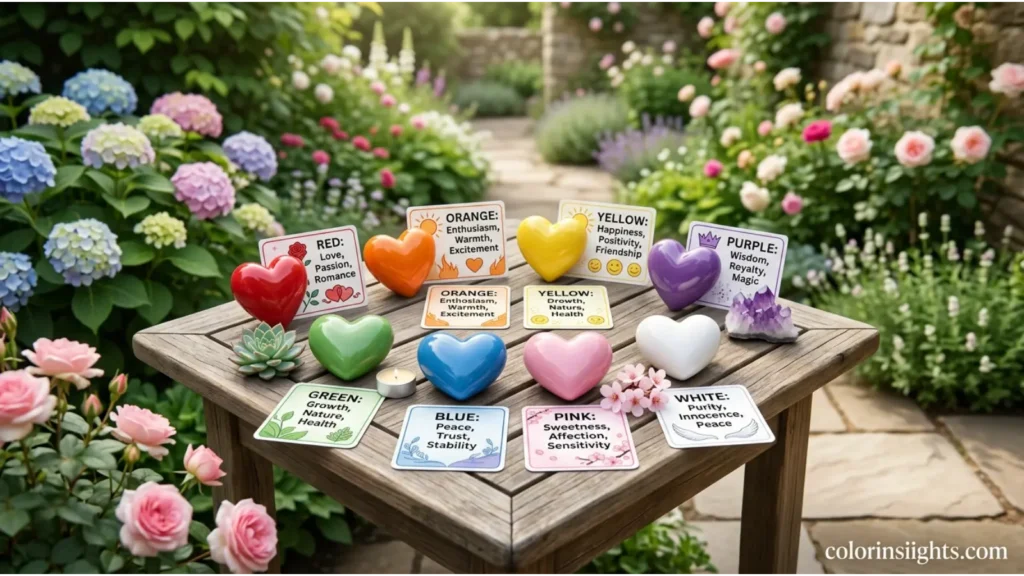
Color psychology suggests that colors influence emotions, perceptions, and behavior. When applied to heart symbols, these psychological associations become even more meaningful.
Emotional Associations
- Red Heart ❤️ – Passion, romance, desire, deep affection.
- Pink Heart 🩷 – Tenderness, sweetness, admiration.
- Orange Heart 🧡 – Enthusiasm, warmth, friendship.
- Yellow Heart 💛 – Happiness, positivity, joy.
- Green Heart 💚 – Growth, renewal, balance.
- Blue Heart 💙 – Trust, stability, loyalty.
- Purple Heart 💜 – Creativity, compassion, wisdom.
- Black Heart 🖤 – Mystery, resilience, grief.
- White Heart 🤍 – Purity, peace, sincerity.
- Brown Heart 🤎 – Security, comfort, reliability.
Positive Psychological Effects
- Encourages emotional expression.
- Creates social connection.
- Strengthens relationships.
- Enhances communication clarity.
- Promotes feelings of support and belonging.
Negative Psychological Effects
- Misinterpretation of intent.
- Emotional confusion due to varying cultural meanings.
- Overreliance on symbolic communication.
- Ambiguous emotional signals.
Impact on Mood and Behavior
Heart colors can influence how messages are perceived. A red heart may increase feelings of intimacy, while a blue heart can create a sense of trust and reassurance. Yellow hearts often inspire positivity, whereas black hearts may evoke seriousness or emotional complexity.
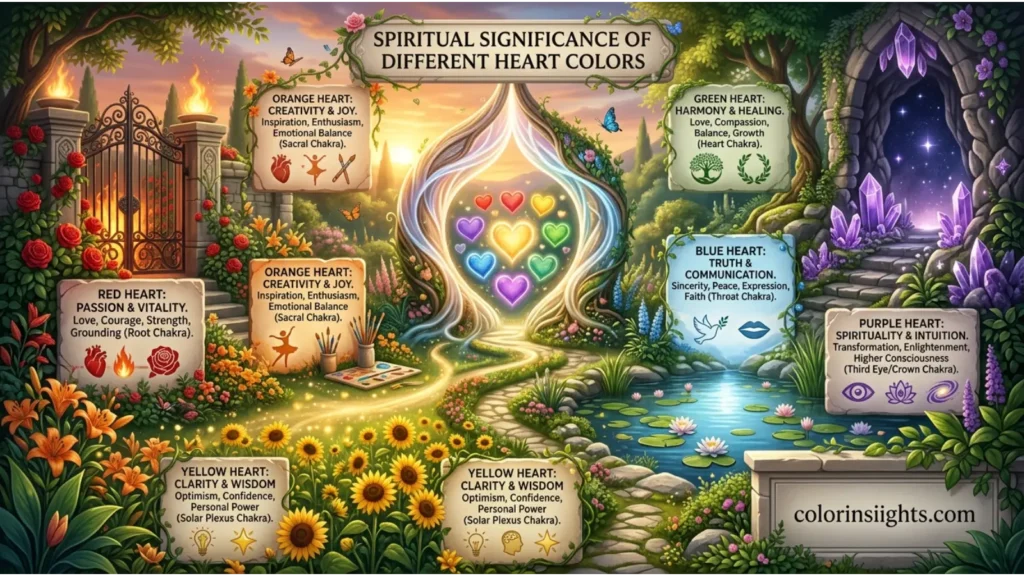
Spiritual Significance of Different Heart Colors
Many spiritual traditions associate colors with energy centers, virtues, and life experiences. Heart colors can therefore carry deeper spiritual meanings.
Spiritual Symbolism by Color
- Red Heart ❤️
- Life force
- Vitality
- Courage
- Passion
- Pink Heart 🩷
- Unconditional love
- Compassion
- Emotional healing
- Orange Heart 🧡
- Creativity
- Motivation
- Personal growth
- Yellow Heart 💛
- Wisdom
- Optimism
- Enlightenment
- Green Heart 💚
- Healing
- Balance
- Renewal
- Harmony
- Blue Heart 💙
- Truth
- Faith
- Protection
- Inner peace
- Purple Heart 💜
- Spiritual awakening
- Higher consciousness
- Transformation
- White Heart 🤍
- Purity
- Holiness
- New beginnings
- Divine connection
- Black Heart 🖤
- Transformation
- Strength through adversity
- Endings leading to new beginnings
These interpretations vary among spiritual traditions and should be viewed as symbolic rather than universal truths.
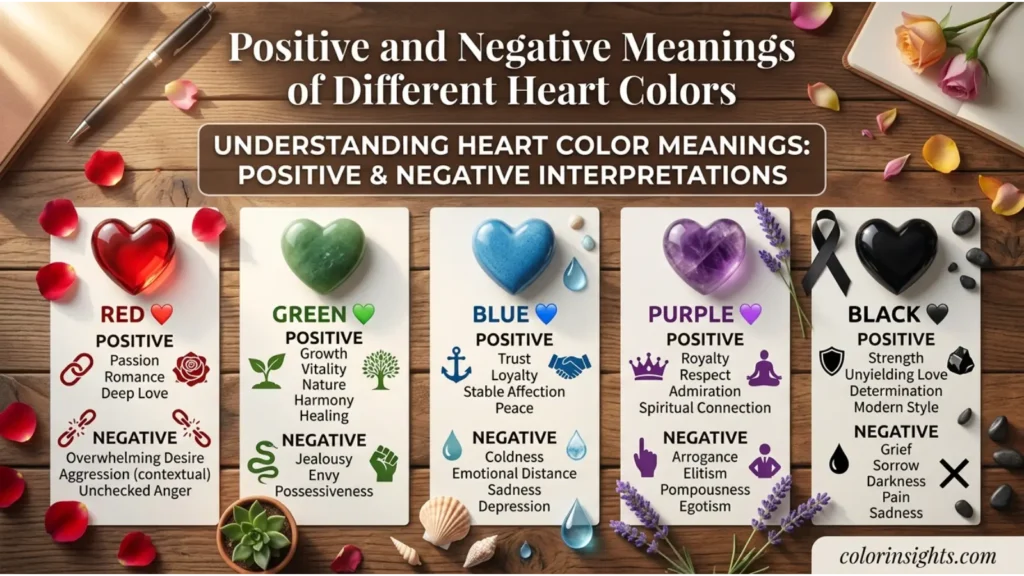
Positive and Negative Meanings of Different Heart Colors
Positive Meanings
Different heart colors often symbolize:
- Love – Red and pink hearts.
- Friendship – Yellow and orange hearts.
- Trust – Blue hearts.
- Growth – Green hearts.
- Compassion – Purple hearts.
- Peace – White hearts.
- Reliability – Brown hearts.
- Strength – Black hearts.
Examples:
- Sending a yellow heart to a close friend.
- Using a blue heart to show loyalty.
- Sharing a green heart to encourage healing and growth.
Negative Meanings
Depending on context, some heart colors can also symbolize:
- Jealousy – Green heart.
- Emotional distance – Blue heart.
- Grief – Black heart.
- Immaturity – Excessive use of colorful hearts.
- Ambiguity – Mixed heart color messages.
Real-World Examples:
- A black heart may express mourning after a loss.
- A blue heart may seem emotionally reserved in romantic conversations.
- A green heart can sometimes imply envy rather than growth.
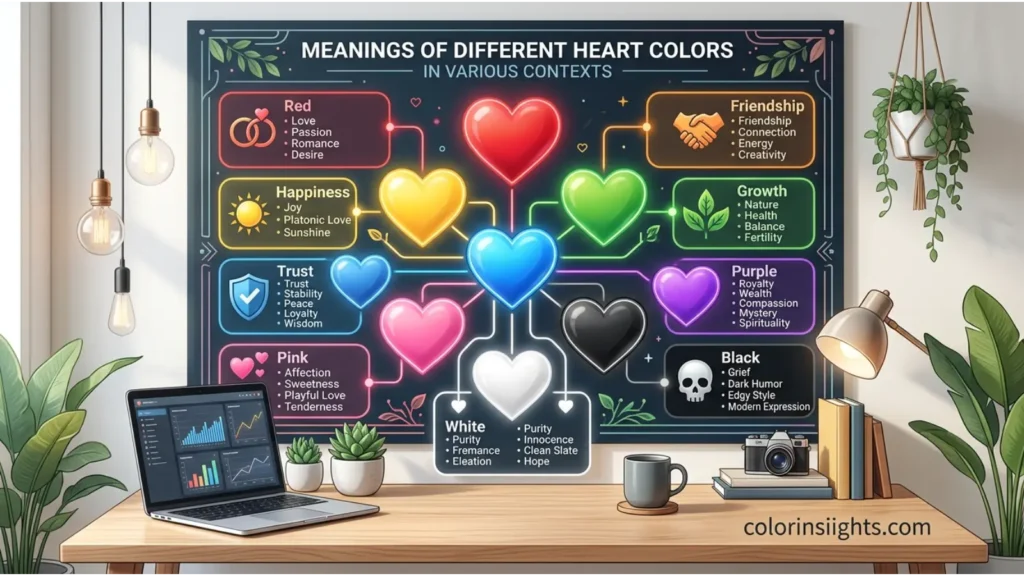
Meanings of Different Heart Colors in Various Contexts
The symbolism of heart colors changes based on where and how they are used.
Feng Shui and Heart Color Energy
Heart colors can align with Feng Shui principles.
Associated Elements
- Red – Fire
- Yellow – Earth
- Green – Wood
- Blue – Water
- White – Metal
Energy Symbolism
- Red promotes passion and action.
- Green encourages growth.
- Blue supports calmness.
- Yellow inspires positivity.
Best Rooms
- Red: Living rooms.
- Green: Bedrooms.
- Blue: Offices.
- Yellow: Kitchens.
Recommended Combinations
- Green and white.
- Blue and silver.
- Red and gold.
Decorating Tips
Use heart-themed accents sparingly to maintain balance and avoid visual clutter.
Marketing and Branding Applications
Brands use color symbolism to influence consumer perception.
Branding Psychology
- Red conveys excitement and passion.
- Blue builds trust.
- Green suggests sustainability.
- Purple implies luxury.
Consumer Perception
Consumers often associate colors with specific emotional experiences.
Trust Signals
Blue hearts and blue-themed branding frequently communicate reliability.
Packaging and Advertising
Colorful heart imagery is common in:
- Greeting cards
- Charity campaigns
- Wellness products
- Social media marketing
Common Brand Associations
Many brands use red for passion, blue for trust, and green for eco-friendly messaging.
Design Applications
Heart colors play important roles in design.
Interior Design
Colored heart accents can introduce emotional warmth and personality.
Graphic Design
Heart icons improve visual storytelling and emotional engagement.
Web Design
Heart colors often indicate likes, favorites, support, or emotional reactions.
User Experience
Different heart colors help users communicate nuanced emotions.
Minimalist Aesthetics
White, black, and soft pink hearts are especially popular in minimalist design.
Fashion and Personal Style
Heart colors influence clothing and accessories.
Clothing Symbolism
- Red hearts express confidence.
- Pink hearts suggest kindness.
- Black hearts create edgy aesthetics.
Seasonal Trends
- Spring: Pink and yellow hearts.
- Summer: Orange hearts.
- Autumn: Brown hearts.
- Winter: White and blue hearts.
Personality Impressions
People may perceive wearers differently based on heart color motifs.
Advantages
- Easy self-expression.
- Emotional storytelling.
- Visual appeal.
Disadvantages
- Meanings may be misunderstood.
- Cultural differences can create confusion.
Color Associations Are Not Universal
Heart color meanings differ significantly across cultures and historical periods.
Western Cultures
Western societies commonly associate:
- Red with romance.
- White with purity.
- Black with mourning.
- Blue with trust.
Eastern Cultures
In many Eastern traditions:
- Red symbolizes luck and prosperity.
- White may be associated with mourning.
- Yellow can represent honor and wisdom.
Religious Traditions
Different faiths assign unique symbolism to colors.
- White often represents holiness.
- Purple may symbolize spiritual authority.
- Green frequently signifies renewal and life.
Historical Interpretations
Throughout history, color symbolism has evolved alongside cultural changes, religious influences, and artistic movements.
Modern Global Interpretations
Social media has created more standardized meanings, but cultural differences still influence interpretation. Younger generations often use heart colors in ways that differ from traditional symbolism.
What Different Heart Colors Say About Your Personality
People often identify with certain heart colors because they reflect aspects of their preferences and self-expression.
Red Heart Lovers
Strengths
- Passionate
- Confident
- Loyal
Weaknesses
- Impulsive
- Intense
Yellow Heart Lovers
Strengths
- Friendly
- Optimistic
- Sociable
Weaknesses
- Restless
- Easily distracted
Green Heart Lovers
Strengths
- Balanced
- Supportive
- Growth-oriented
Weaknesses
- Overly cautious
- Resistant to change
Blue Heart Lovers
Strengths
- Dependable
- Honest
- Calm
Weaknesses
- Emotionally reserved
- Conservative
Purple Heart Lovers
Strengths
- Creative
- Compassionate
- Visionary
Weaknesses
- Sensitive
- Idealistic
Black Heart Lovers
Strengths
- Independent
- Resilient
- Authentic
Weaknesses
- Guarded
- Misunderstood
Color preferences can provide insight into personality tendencies, but they do not determine character with certainty.
FAQs
What defines different heart colors?
Different heart colors are symbolic representations of various emotions, relationships, and personality traits communicated through visual symbols and emojis.
What do different heart colors symbolize?
They symbolize emotions such as love, friendship, trust, healing, loyalty, compassion, growth, and remembrance.
Why are heart color meanings important?
They help people communicate emotions more precisely and understand the intended message behind digital interactions.
Is the red heart the strongest symbol of love?
Yes. The red heart is widely recognized as the universal symbol of romantic love, passion, and deep affection.
What emotions does a yellow heart represent?
A yellow heart usually represents happiness, friendship, optimism, and positive energy.
What does a blue heart mean spiritually?
Spiritually, blue hearts often symbolize truth, faith, inner peace, protection, and emotional stability.
What does a green heart symbolize?
A green heart commonly represents growth, renewal, healing, balance, and a connection to nature.
What colors pair well with heart symbols in design?
Popular combinations include red and gold, blue and white, green and beige, purple and silver, and pink with neutral tones.
What does liking a specific heart color say about a person?
It may reflect personal preferences, emotional tendencies, values, or aesthetic tastes, but it does not definitively determine personality.
Why does the black heart have multiple meanings?
The black heart can symbolize grief, strength, mystery, irony, independence, or emotional resilience depending on context.
Conclusion:
Different color heart meanings extend far beyond simple decoration. Each heart color carries unique emotional, psychological, spiritual, and cultural symbolism that helps people express feelings with greater precision.
From the passionate red heart and cheerful yellow heart to the trustworthy blue heart and transformative black heart, these symbols enrich communication across digital and real-world interactions.
Understanding their meanings allows for clearer expression, deeper connection, and greater appreciation of the powerful role color symbolism plays in modern culture.