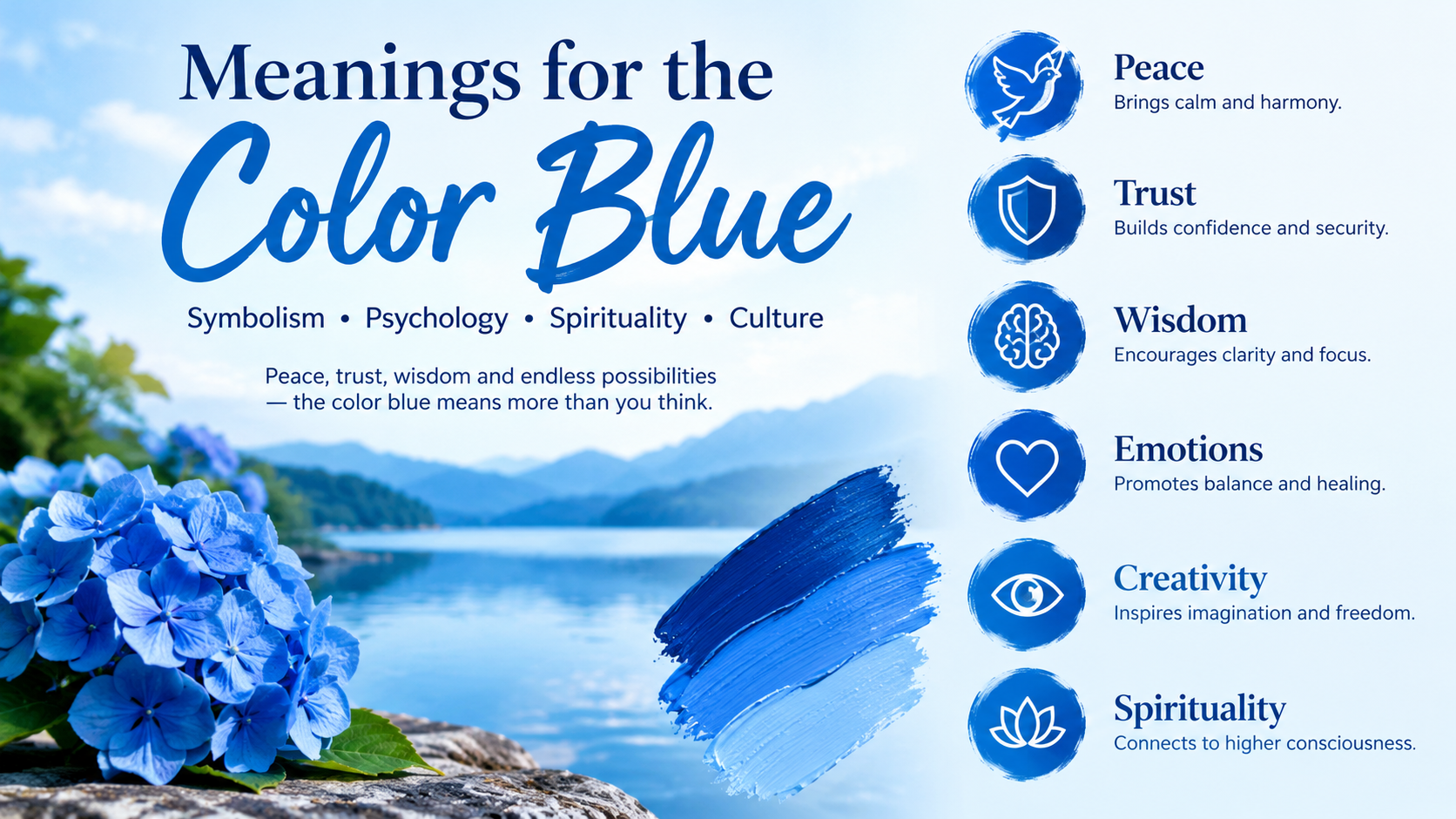
meanings for the color blue is one of the most recognizable colors in nature, appearing in the sky, oceans, and many natural landscapes. Its meanings often include peace, trust, stability, wisdom, loyalty, and emotional depth. In color psychology, blue is frequently associated with calmness and reliability, although its effects depend on personal experiences, cultural traditions, and the shade being used.
From corporate branding and interior design to spiritual symbolism and fashion, blue communicates different messages in different contexts. Understanding the meanings for the color blue helps explain why it remains a popular choice in everyday life, artistic expression, and visual communication.
Quick answer:
Blue commonly symbolizes calmness, trust, loyalty, wisdom, and stability, but it can also represent sadness, emotional distance, or coldness.
What Does the Color Blue Symbolize?
The color blue has several widely recognized symbolic meanings. Its associations with the sky and water often connect it with openness, freedom, depth, and tranquility. Because these natural elements can appear vast and seemingly endless, blue may also suggest possibility, reflection, and infinity.
In everyday communication, blue is frequently used to represent trustworthiness and dependability. Banks, technology companies, healthcare organizations, and professional services often incorporate blue into their visual identities to communicate stability and competence. However, these associations are not universal rules; people interpret colors through their experiences and cultural environments.
Blue can also symbolize:
- Peace and calm: Light and muted blues often create a gentle, restful impression.
- Trust and loyalty: Medium and dark blues frequently communicate reliability and commitment.
- Wisdom and intelligence: Blue may suggest thoughtful judgment, knowledge, and professionalism.
- Freedom and openness: Its connection with the sky and sea can evoke spaciousness.
- Sadness and longing: Expressions such as “feeling blue” associate the color with melancholy.
- Authority and confidence: Navy blue is commonly used in uniforms, formal clothing, and business settings.
The specific shade matters. Pale blue may feel refreshing and delicate, while navy blue can appear serious, traditional, and authoritative.
Psychological Characteristics of the Color Blue
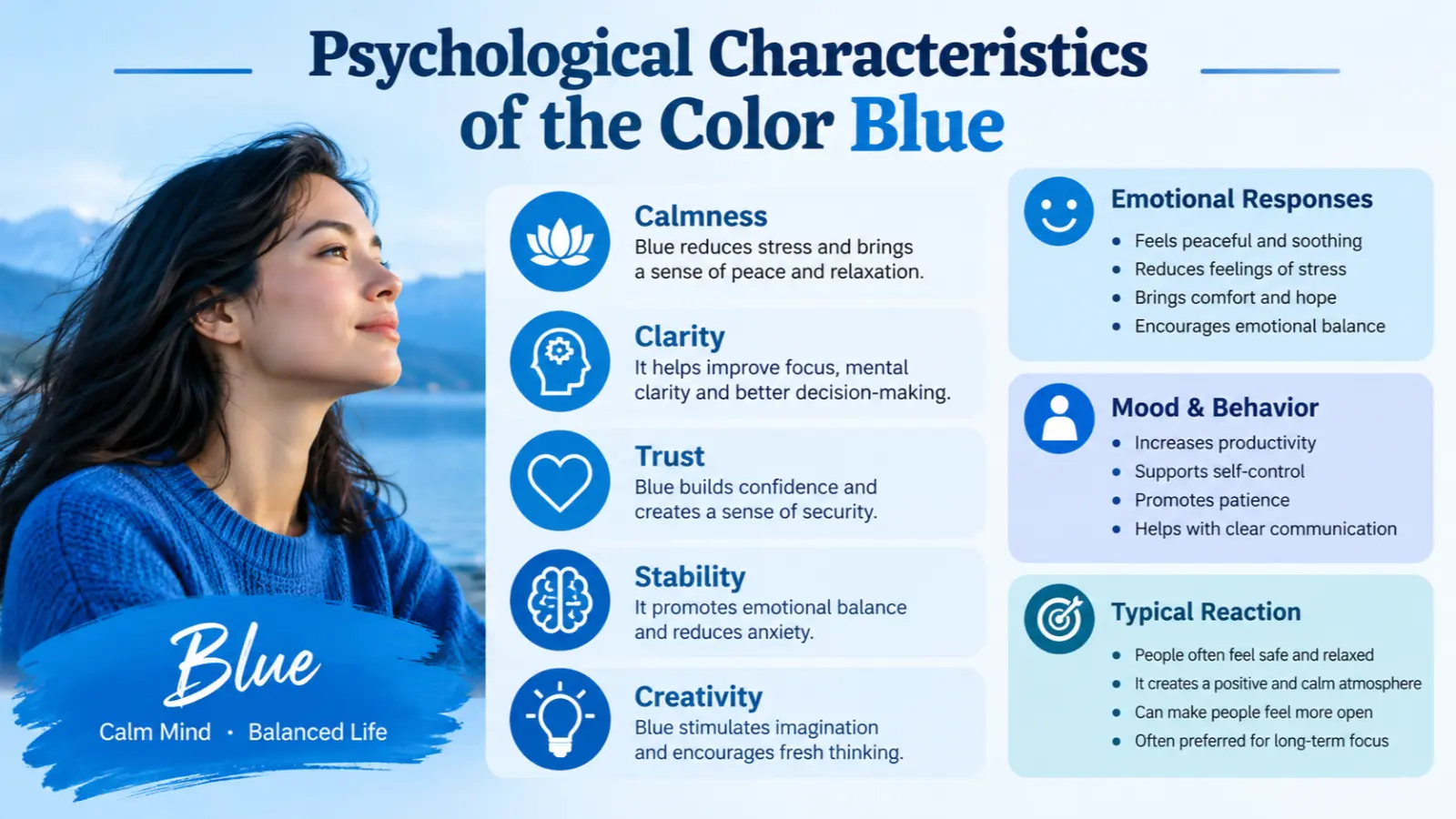
Color psychology examines how people perceive colors and how those perceptions relate to emotions, attention, behavior, and decision-making. Blue is often associated with calmness, trust, and mental clarity, but its psychological effects vary according to context, individual differences, and the surrounding environment.
Emotional Associations
Blue commonly evokes feelings of peace, security, loyalty, and reflection. Its connection with water and open skies may contribute to impressions of spaciousness and relaxation.
Different shades communicate different emotional qualities. Sky blue can feel cheerful and open, turquoise may seem energetic and refreshing, and deep navy often appears mature and dependable. Very dark or desaturated blues may also feel somber.
Psychological Effects
Blue is frequently selected for environments where people want to communicate professionalism or create a composed atmosphere. A carefully chosen blue palette can make a website appear organized or a room feel visually restful.
However, claims that blue always lowers stress or improves concentration should be treated cautiously. Research on color and behavior suggests that responses depend on multiple factors, including lighting, saturation, cultural learning, and the task being performed. Color alone cannot guarantee a particular psychological outcome.
Positive Emotional Responses
Blue may be associated with:
- Calmness and relaxation.
- Confidence and emotional security.
- Trust and dependability.
- Focus and thoughtful reflection.
- Loyalty and consistency.
- Openness and a sense of freedom.
For example, a soft blue bedroom may create a restful visual atmosphere, while a navy business presentation can communicate seriousness and professionalism.
Negative Emotional Responses
Blue can also have less favorable associations, including:
- Sadness or melancholy.
- Emotional distance.
- Coldness or lack of warmth.
- Passivity or low energy.
- Isolation and loneliness.
- Excessive formality.
A room dominated by dark blue with limited natural light may feel heavy to some people. Similarly, a brand that uses only cool blues and rigid typography might appear distant rather than approachable.
Impact on Mood and Behavior
Blue can influence the impression of an environment, which may indirectly affect mood and behavior. A light blue interface with clear spacing, for instance, may appear calm and easy to navigate. A bright, saturated blue can feel more stimulating than a muted version.
The surrounding design matters as much as the color itself. Warm lighting, natural textures, readable typography, and contrasting accents can make blue spaces feel welcoming. In contrast, excessive use of dark, cool blue may create a formal or emotionally restrained atmosphere.
People typically interpret blue through both learned associations and immediate visual experience. Therefore, it is more accurate to describe blue as a color that can suggest calmness or trust than one that produces identical effects in everyone.
Spiritual Meaning of the Color Blue
The spiritual meaning of blue varies among religious traditions, cultural practices, and personal belief systems. It is often connected with the heavens, truth, divine presence, wisdom, protection, and inner peace. These meanings are symbolic rather than universal.
- Holiness: Blue may represent a connection with the heavens or the sacred. In some Christian artistic traditions, blue is associated with the Virgin Mary.
- Wisdom: Its association with reflection and depth can make blue a symbol of thoughtful understanding and spiritual insight.
- Purity: Pale blue may suggest sincerity, clarity, and freedom from harmful intentions, although white is more commonly associated with purity in many traditions.
- Transformation: Blue skies following a storm can symbolize renewal, hope, or a transition toward calmer circumstances.
- Healing: In contemporary wellness settings, blue is sometimes used to represent restoration and tranquility. This symbolism should not be confused with evidence that blue itself treats illness.
- Protection: Blue beads and amulets are used in some cultures as protective symbols, including the evil-eye tradition.
- Power: Deep blue can represent authority, dignity, and spiritual majesty.
- Enlightenment: Blue may evoke contemplation, truth-seeking, and a desire for deeper understanding.
- New beginnings: Clear blue skies can symbolize optimism and a fresh start.
- Eternity: The apparent vastness of the sky and ocean can suggest infinity, continuity, and timelessness.
Spiritual interpretations are most meaningful when considered within their specific traditions. Blue does not have one fixed spiritual definition, and its significance may differ between communities and individuals.
Positive and Negative Meanings of the Color Blue
Blue carries both reassuring and challenging associations. Its interpretation depends on the shade, setting, cultural context, and combination of colors.
Positive Meanings
Peace: Soft blue is often used in bedrooms, meditation spaces, and wellness environments because it creates a gentle visual impression.
Trust: Banks, insurance providers, and professional services frequently use blue to communicate reliability. Navy suits can similarly project confidence during interviews or business meetings.
Simplicity: Clean blue-and-white palettes are common in websites and product packaging because they can appear uncluttered and easy to understand.
Clarity: Bright blue skies are associated with clear weather and visibility. In design, blue accents can help establish a visual hierarchy when used consistently.
Freshness: Aqua and turquoise suggest clean water, making them popular in personal-care, travel, and summer-themed branding.
Hope: A clear blue sky after difficult weather can represent optimism and better possibilities.
Balance: Muted blues work well with neutral colors such as beige, gray, and white, helping a design feel visually composed.
Harmony: Blue can complement green, creating a palette associated with nature, water, and environmental themes.
Negative Meanings
Emptiness: Vast blue spaces may sometimes suggest distance or an absence of activity. A large room with sparse furnishings and cool blue walls may feel impersonal.
Isolation: Blue is associated with loneliness in some artistic traditions and everyday expressions. A solitary figure against a blue landscape can reinforce this feeling.
Coldness: Icy blue tones can feel chilly, especially when combined with cool lighting and hard surfaces.
Sterility: Excessive use of pale blue and white in a clinical environment may appear clean but impersonal.
Boredom: A repetitive blue palette without changes in texture or contrast can feel monotonous.
Emotional distance: Dark, restrained blues may communicate formality but can also make a setting feel less intimate.
Perfectionism: Blue is sometimes associated with order, precision, and control. When a design emphasizes rigid consistency, it may seem inflexible rather than reassuring.
These negative meanings are not inherent properties of blue. They are possible interpretations shaped by context, design choices, and individual associations.
Meanings of the Color Blue
The color blue changes meaning according to how it is used. In a corporate logo, it may communicate reliability; in a painting, it may convey sadness or mystery; in clothing, it may suggest confidence or understated elegance. Understanding context is essential when applying blue in everyday life.
Feng Shui
In Feng Shui, blue is commonly associated with the Water element, which symbolizes flow, wisdom, reflection, and abundance. Traditional interpretations vary according to the particular school and placement system being used.
Blue may be suitable for bathrooms, meditation areas, studies, or bedrooms where a calm atmosphere is desired. Navy and other deep blues can add depth, while pale blue can make a room feel airy.
Useful combinations include:
- Blue and white: Clean, balanced, and refreshing.
- Blue and green: Connected with nature, growth, and renewal.
- Blue and black: A deeper palette associated with sophistication and the Water element.
- Blue and beige: A softer combination that balances coolness with warmth.
For decorating, introduce blue through walls, cushions, rugs, artwork, or ceramics. Balance darker shades with natural wood, warm lighting, or textured fabrics to prevent the space from feeling cold.
Marketing
Blue is widely used in marketing because consumers often associate it with reliability, competence, and professionalism. These associations can be useful for brands that want to communicate security or technical expertise.
Branding psychology: Dark blue frequently suggests authority and stability, while brighter blues may appear modern, energetic, and accessible.
Consumer perception: Blue packaging can make products appear clean, dependable, or sophisticated, depending on the category and overall design.
Trust signals: Financial services, technology companies, healthcare providers, and communication platforms often use blue to support an image of reliability. However, color alone cannot establish genuine trust; product quality, transparency, and customer experience remain essential.
Product packaging: Blue is common in bottled water, hygiene products, household goods, and some food packaging. It can communicate freshness or cleanliness, although its effect depends on the product and market.
Advertising applications: Blue backgrounds and accents are frequently used in corporate websites, technology campaigns, and professional presentations to create a consistent visual identity.
Famous brands that use blue prominently include Facebook, IBM, Intel, and Ford. Their brand identities combine blue with distinctive typography, symbols, and other design elements. Their success should not be attributed to color alone.
Design
Blue is versatile across interior, graphic, and digital design because it offers a wide range of shades, from delicate pastels to saturated electric blues and deep navy.
- Interior design: Light blue can make a room feel open and restful. Navy adds depth and contrast to kitchens, offices, and living rooms.
- Graphic design: Blue can create a strong visual hierarchy in posters, brochures, presentations, and infographics.
- Web design: Blue is frequently used in navigation, links, buttons, and branding. Designers should ensure sufficient contrast between text and background.
- User experience: Consistent blue accents can help users recognize interactive elements, but meaning should not depend on color alone. Labels, icons, and accessible contrast are also important.
- Minimalist aesthetics: Blue paired with white, gray, or neutral backgrounds can create a clean and restrained appearance without looking entirely monochromatic.
The best shade depends on the audience, purpose, accessibility needs, and desired emotional tone.
Fashion
In fashion, blue represents a broad range of impressions, including reliability, ease, sophistication, and individuality. Denim makes blue a familiar everyday color, while navy is a traditional option for formal and professional clothing.
Clothing symbolism: Navy suits often communicate professionalism, while pale blue shirts can look approachable and polished. Bright blue garments create a more noticeable statement.
Seasonal use: Light blue is popular in spring and summer collections because it can feel airy and fresh. Navy, cobalt, and deep teal are also used in fall and winter outfits.
Styling effects: Blue pairs well with white, gray, beige, brown, black, and many shades of green. A navy blazer with white trousers creates a classic look; blue denim with a neutral sweater produces a relaxed outfit.
Personality impressions: People wearing blue may be perceived as dependable, composed, or practical. These are social impressions, not reliable conclusions about a person’s character.
Advantages: Blue is versatile, easy to coordinate, suitable for many occasions, and available in shades that work across different styles.
Disadvantages: Some blue outfits may seem overly conservative or understated. Very cool shades can also appear less flattering under certain lighting or alongside particular colors.
Practical example: For a job interview, a navy suit may create a polished impression. For casual wear, medium-blue jeans and a white shirt offer a familiar, adaptable combination.
Color Associations Are Not Universal
Western Cultures
In many Western contexts, blue is associated with trust, professionalism, calmness, and sadness. Navy appears frequently in uniforms and business clothing, while the phrase “feeling blue” connects the color with melancholy. These meanings vary by community, generation, and situation.
Eastern Cultures
Blue symbolism differs across Asian societies and historical periods. In some Chinese cultural contexts, blue or blue-green has connections with wood, spring, and growth within traditional five-phase systems, although terminology and interpretations vary. In Japan, indigo dyeing has a long history in textiles and workwear. These examples demonstrate cultural richness rather than a single meaning shared across all Eastern cultures.
Religious Traditions
In Christianity, blue is often used in imagery associated with the Virgin Mary and may suggest heavenly devotion. Judaism, blue is significant in certain ritual contexts, including the blue thread known as tekhelet in traditional garments. In Hindu traditions, blue skin is associated with deities such as Krishna and, in many depictions, Rama. Meanings depend on religious texts, artistic traditions, and local practice.
Historical Interpretations
Blue pigments were historically difficult or expensive to produce in some places, which helped make particular blue materials valuable. Ultramarine made from lapis lazuli was prized in European religious painting. Indigo, meanwhile, became important in textile production and trade across several regions. Blue’s meaning has therefore been shaped by materials, technology, commerce, and artistic convention as well as symbolism.
Modern Global Interpretations
Today, blue is common in international branding, digital interfaces, sports uniforms, and public communication. It may suggest technology, cleanliness, authority, or environmental themes. At the same time, its associations with sadness and distance remain present in language and art. Global exposure can spread shared conventions, but it does not erase local cultural meanings.
What the Color Blue Says About Your Personality
People who prefer blue are sometimes described as calm, loyal, dependable, thoughtful, or emotionally steady. These descriptions come from popular color associations rather than a scientifically reliable personality test. A favorite color alone cannot determine someone’s character.
Strengths: Blue preferences are commonly associated with valuing consistency, trust, reflection, and organization. Someone who favors navy may enjoy classic styles or structured environments, but these choices do not prove particular personality traits.
Weaknesses: Popular interpretations sometimes connect blue preferences with caution, reserved behavior, or a reluctance to embrace change. These are possibilities within symbolic descriptions, not dependable judgments about individuals.
Social behavior: Blue may communicate approachability and reliability in clothing or professional settings. Whether a person is sociable, introverted, or outgoing depends on many factors beyond their wardrobe or color preferences.
Work style: Blue is often associated with concentration, planning, and professionalism. People may choose blue workspaces because they like the appearance or because it fits their workplace’s visual identity.
Relationships: Blue symbolism frequently emphasizes loyalty, honesty, and stability. Actual relationship behavior is better understood through communication, empathy, boundaries, and consistent actions.
Emotional tendencies: Some people find blue comforting, while others associate it with sadness, cold weather, or specific memories. Personal history can be more influential than general symbolism.
Ultimately, blue can be a useful starting point for reflecting on preferences and impressions, but it should not be used to diagnose personality or predict behavior.
Frequently Asked Questions
1. What defines the color blue?
Blue is a color in the visible spectrum commonly associated with light wavelengths of approximately 450–495 nanometers, although boundaries vary by definition. It ranges from pale sky blue to deep navy and vivid cobalt.
2. What does the color blue symbolize?
Blue commonly symbolizes peace, trust, loyalty, wisdom, stability, and openness. Depending on context, it may also represent sadness, emotional distance, or coldness.
3. Why is blue important?
Blue plays a significant role in communication, branding, art, clothing, and interior design. Its familiar associations with trust and calmness make it useful in many visual identities, although its meaning depends on the audience and application.
4. Is blue a warm or cool color?
Blue is generally classified as a cool color. However, some blues appear warmer than others depending on their undertones and neighboring colors. Blue-violet and blue-green shades can create different visual impressions.
5. What emotions does blue represent?
Blue is often linked to calmness, security, trust, loyalty, and reflection. It can also evoke sadness, loneliness, or emotional restraint, especially in particular artistic or cultural contexts.
6. What is the spiritual meaning of blue?
Blue may represent heavenly connection, wisdom, truth, protection, peace, and eternity in different spiritual traditions. Its meaning depends on the belief system and should not be treated as universal.
7. What colors pair well with blue?
Blue pairs well with white, gray, beige, brown, green, and certain shades of orange. White and blue create a fresh appearance, while orange provides contrast and navy with beige offers a more understated style.
8. What does liking blue say about a person?
Popular color symbolism associates a preference for blue with dependability, calmness, loyalty, and thoughtfulness. However, color preference does not reliably reveal personality, intelligence, emotional stability, or relationship behavior.
9. Why do businesses use blue in their logos?
Businesses often use blue because it can communicate professionalism, reliability, competence, and technological expertise. Effective branding also depends on typography, messaging, service quality, and audience expectations.
10. What is the difference between light blue and dark blue symbolism?
Light blue often suggests openness, freshness, gentleness, and relaxation. Dark blue, especially navy, commonly communicates authority, stability, maturity, and formality. Neither shade has a fixed meaning in every situation.
11. Does blue have negative meanings?
Yes. Blue can represent sadness, coldness, isolation, passivity, or emotional distance. These associations depend on the shade and context rather than being inherent characteristics of the color.
12. How is blue used in interior design?
Blue is used on walls, furniture, textiles, and decorative accents to create different moods. Pale blue can make a room feel airy, while navy adds depth. Warm lighting and natural materials can balance its cooler appearance.
Conclusion
The meanings for the color blue extend across psychology, spirituality, culture, fashion, marketing, and design. Its most familiar associations include calmness, trust, loyalty, wisdom, and stability, while darker or more subdued contexts may suggest sadness, coldness, or emotional distance. Shade, cultural background, personal experience, and surrounding colors all influence how blue is perceived. Understanding blue symbolism can help people make more intentional choices in branding, decorating, clothing, and visual communication. Still, color meanings are interpretive rather than absolute, and blue alone cannot determine emotional outcomes or personality traits.