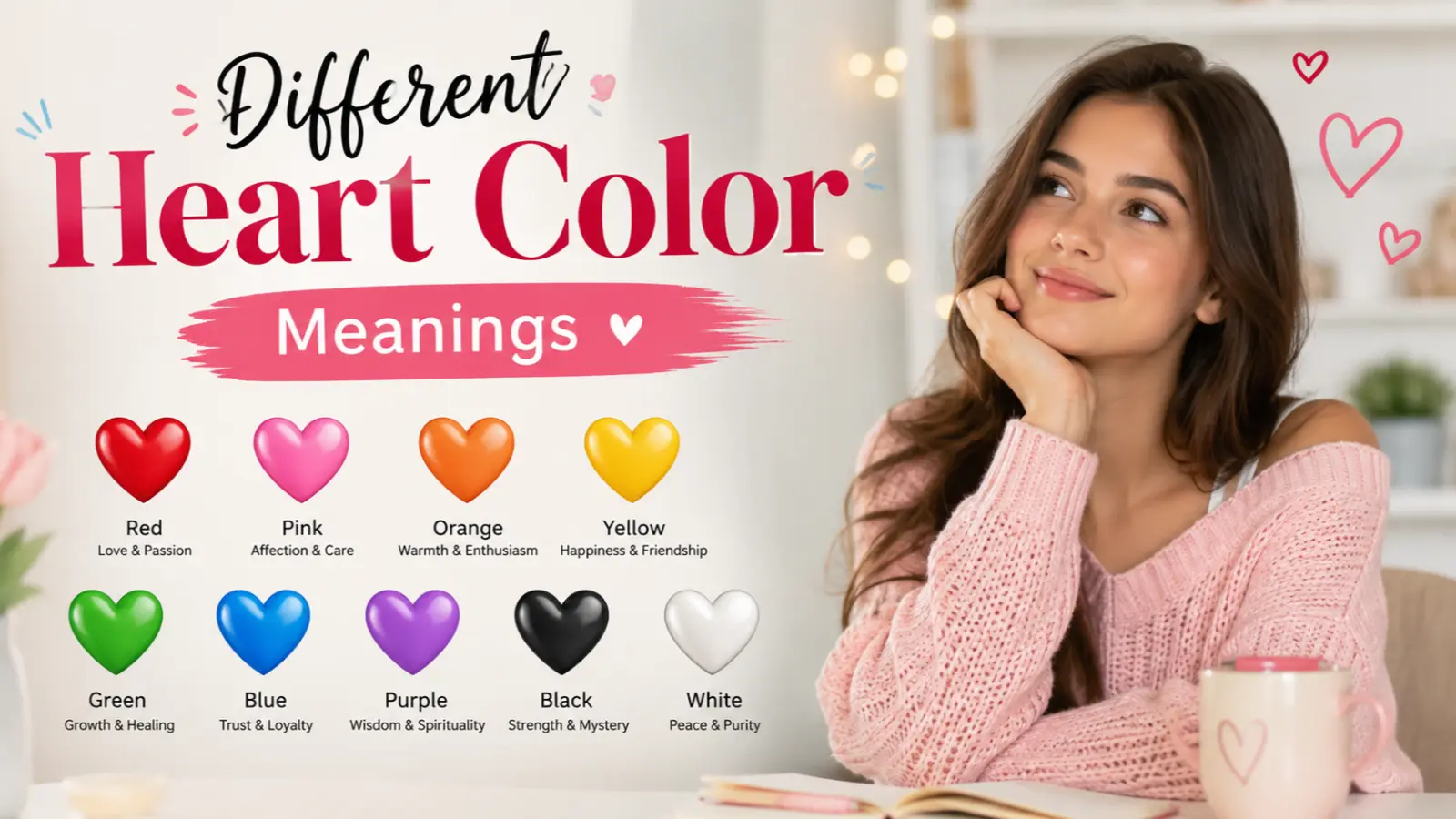
Different heart color meanings help people express emotions, relationships, intentions, and personality without using words. From the classic red heart representing passionate love to the black heart symbolizing grief or dark humor, each colored heart emoji carries unique emotional, psychological, spiritual, and cultural significance.
Their meanings may also vary depending on context, culture, and personal interpretation. Understanding these symbols can improve communication on social media, in text messages, and in everyday digital conversations.
Quick Answer:
Different heart color meanings represent various emotions, including love, friendship, trust, compassion, healing, hope, loyalty, peace, grief, and self-expression. The exact meaning depends on the specific heart color and the situation in which it is used.
What Do Different Heart Colors Symbolize?
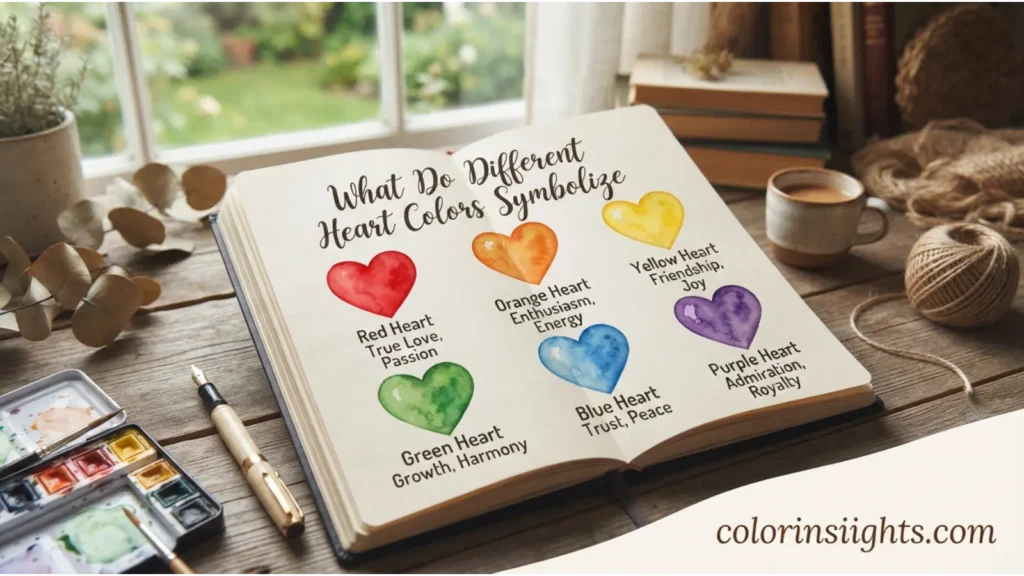
Heart colors symbolize different forms of love, affection, emotional states, and personal values. While red remains the universal symbol of romantic love, other heart colors communicate friendship, gratitude, loyalty, healing, spirituality, creativity, optimism, and even mourning.
Below is a quick overview of the most common heart color meanings.
| Heart Color | Primary Meaning |
|---|---|
| ❤️ Red | Romantic love, passion, devotion |
| 🩷 Pink | Affection, kindness, admiration |
| 🧡 Orange | Enthusiasm, friendship, warmth |
| 💛 Yellow | Happiness, optimism, friendship |
| 💚 Green | Growth, health, nature, renewal |
| 🩵 Light Blue | Calmness, trust, serenity |
| 💙 Blue | Loyalty, confidence, stability |
| 💜 Purple | Luxury, wisdom, spirituality |
| 🤎 Brown | Reliability, comfort, simplicity |
| 🖤 Black | Grief, strength, mystery, dark humor |
| 🤍 White | Peace, purity, innocence |
| 🩶 Gray | Neutrality, balance, maturity |
Psychological Characteristics of Different Heart Colors
Color psychology suggests that people naturally associate colors with particular emotions and behaviors. Although reactions differ among individuals, many heart colors evoke similar psychological responses worldwide.
Emotional Associations
- ❤️ Red encourages excitement and deep emotional attachment.
- 🩷 Pink creates feelings of comfort and compassion.
- 🧡 Orange inspires enthusiasm and optimism.
- 💛 Yellow promotes happiness and positivity.
- 💚 Green encourages emotional balance.
- 💙 Blue builds trust and reliability.
- 💜 Purple stimulates creativity and imagination.
- 🤍 White creates feelings of peace and simplicity.
- 🖤 Black reflects seriousness, elegance, or emotional intensity.
Psychological Effects
- Colors influence mood before words are processed.
- Warm-colored hearts often increase emotional energy.
- Cool-colored hearts tend to reduce stress and create calmness.
- Neutral colors communicate stability and balance.
Positive Emotional Responses
- Love
- Trust
- Security
- Hope
- Compassion
- Gratitude
- Friendship
- Peace
- Confidence
Negative Emotional Responses
- Jealousy
- Isolation
- Sadness
- Emotional distance
- Grief
- Anxiety
- Loneliness
- Uncertainty
Impact on Mood and Behavior
Different heart colors can encourage empathy, strengthen social connections, express support during difficult times, or communicate romantic intentions more clearly than plain text.
Typical Reactions
People often interpret:
- ❤️ as romantic affection.
- 💛 as cheerful friendship.
- 💙 as dependable loyalty.
- 💜 as elegance or admiration.
- 🖤 as mourning or edgy humor.
- 🤍 as sincerity and peace.
Spiritual Meaning of Different Heart Colors
Across many spiritual traditions, colors represent different forms of energy and consciousness. Heart colors are often interpreted as symbolic expressions of emotional and spiritual growth.
- ❤️ Love, life force, courage, compassion
- 🩷 Gentle love, emotional healing
- 🧡 Creativity, enthusiasm, confidence
- 💛 Joy, optimism, inner wisdom
- 💚 Healing, renewal, abundance
- 🩵 Peace, emotional clarity
- 💙 Truth, protection, communication
- 💜 Spiritual awakening and intuition
- 🤎 Grounding, stability, connection with Earth
- 🤍 Purity, enlightenment, divine peace
- 🖤 Transformation, endings, resilience
- 🩶 Reflection, neutrality, acceptance
Many spiritual systems associate these colors with:
- Holiness: White and gold-toned symbolism
- Wisdom: Purple and blue
- Purity: White
- Transformation: Black and green
- Healing: Green and pink
- Protection: Blue and black
- Power: Red and purple
- Enlightenment: White and violet
- New beginnings: Green and white
- Eternity: White and blue
Positive and Negative Meanings of Different Heart Colors
Positive Meanings
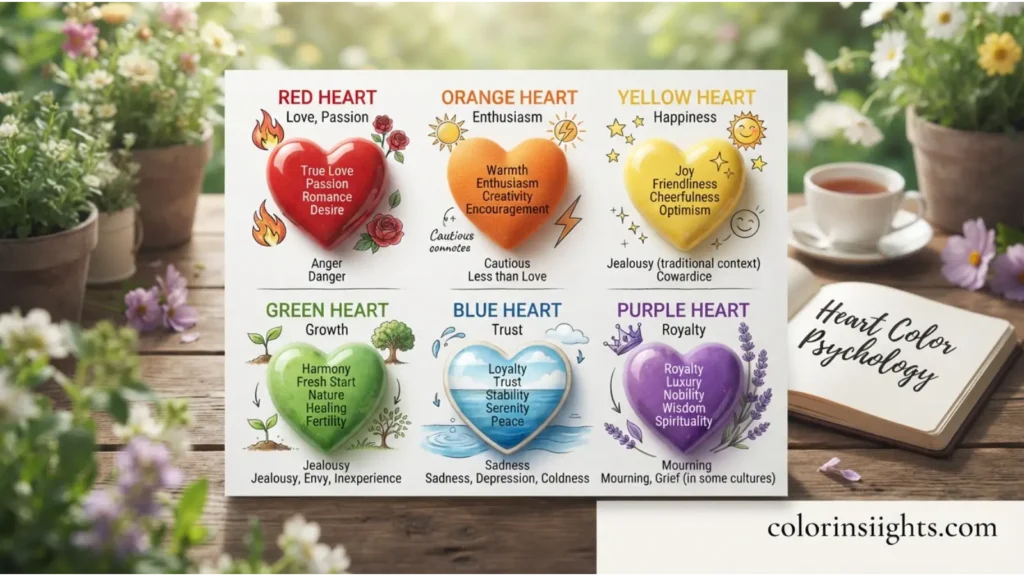
Heart colors commonly symbolize positive human emotions and values.
Examples include:
- Love and romance (❤️)
- Friendship (💛)
- Trust (💙)
- Healing (💚)
- Compassion (🩷)
- Peace (🤍)
- Creativity (💜)
- Stability (🤎)
Real-world example:
Sending a 💙 heart after a successful business partnership often communicates appreciation and long-term trust.
Negative Meanings
Depending on context, some heart colors may also communicate difficult emotions.
Examples include:
- 🖤 Grief after losing a loved one.
- 🩶 Emotional uncertainty.
- ❤️ Jealousy in romantic conflicts.
- 💛 Friendship instead of romance, causing misunderstanding.
- 💚 Envy in certain cultures.
- 🤍 Emotional distance or detachment.
Real-world example:
A black heart may express mourning during memorial posts but represent sarcasm in humorous conversations.
Meanings of Different Heart Colors
The meaning of heart colors changes based on relationships, social platforms, culture, and personal communication styles. The same blue heart may symbolize friendship in one conversation but emotional support in another.
Feng Shui
Although heart emojis themselves are digital symbols, the colors follow traditional Feng Shui color associations.
Elements
- Red — Fire
- Green — Wood
- Blue — Water
- White — Metal
- Brown — Earth
Energy Symbolism
Each heart color influences emotional energy differently, encouraging harmony, confidence, compassion, or stability.
Best Rooms
- Red: Dining room or social spaces
- Green: Living room or home office
- Blue: Bedroom
- White: Meditation room
- Brown: Family room
Recommended Color Combinations
- Blue + White
- Green + Brown
- Pink + White
- Red + Gold
- Purple + Silver
Decorating Tips
Use heart-inspired accent colors sparingly through artwork, cushions, flowers, or decorative accessories to promote emotional balance without overwhelming a room.
Marketing
Brands frequently use heart-inspired colors to influence customer emotions.
Branding Psychology
- Red attracts attention and stimulates action.
- Blue builds trust.
- Green communicates sustainability.
- Purple suggests luxury.
- Pink appeals to compassion.
Consumer Perception
Consumers often associate:
- Red with excitement
- Blue with reliability
- Green with wellness
- Pink with care
- White with simplicity
Trust Signals
Healthcare, banking, and technology companies commonly rely on blue branding because consumers perceive it as dependable.
Packaging
Food packaging often uses red, while eco-friendly products commonly feature green.
Advertising Applications
Heart colors strengthen emotional storytelling during Valentine’s Day, awareness campaigns, charity fundraising, and wellness promotions.
Examples of Brands
- Coca-Cola (Red)
- Facebook (Blue)
- Whole Foods Market (Green)
- Barbie (Pink)
- Hallmark (Red and Gold)
Design
Heart color symbolism also influences visual communication.
Interior Design
Colored accents create specific moods.
- Blue promotes calm.
- Green creates balance.
- Red energizes.
- White enlarges visual space.
Graphic Design
Designers select heart colors to reinforce emotional messaging in logos, infographics, and promotional graphics.
Web Design
Heart icons improve engagement in:
- Like buttons
- Donation pages
- Customer testimonials
- Wellness websites
User Experience
Appropriate heart colors improve visual hierarchy and emotional clarity.
Minimalist Aesthetics
Neutral heart colors like white, gray, and black complement minimalist layouts while maintaining elegance.
Fashion
Heart colors influence clothing symbolism.
Clothing Symbolism
- Red symbolizes confidence.
- Pink communicates warmth.
- Blue represents professionalism.
- Purple expresses individuality.
- Green reflects freshness.
Seasonal Use
- Spring: Pink and green
- Summer: Yellow and orange
- Autumn: Brown
- Winter: White and blue
Styling Effects
Bright heart colors create energetic outfits, while neutral tones produce sophisticated appearances.
Personality Impressions
People often perceive wearers of:
- Red as confident
- Blue as trustworthy
- Pink as approachable
- Black as sophisticated
- Green as balanced
Advantages
- Easy emotional communication
- Versatile styling
- Strong symbolic value
Disadvantages
- Cultural misunderstandings
- Overuse may weaken emotional impact
Color Associations Are Not Universal
Heart color meanings differ considerably around the world.
Western Cultures
Red symbolizes romance, while white often represents weddings, innocence, and purity. Black commonly reflects mourning.
Eastern Cultures
In several East Asian traditions, red symbolizes prosperity, celebration, and good fortune. White may represent mourning rather than weddings.
Religious Traditions
Christian symbolism often associates white with holiness, red with sacrifice, purple with spiritual authority, and green with renewal. Other faiths may assign different meanings to these colors based on their traditions.
Historical Interpretations
Ancient civilizations frequently linked purple with royalty because purple dyes were rare and expensive. Green represented fertility in many agricultural societies.
Modern Global Interpretations
Social media has created shared meanings for many heart emojis, but personal interpretation still varies depending on age, culture, community, and platform.
What Different Heart Colors Say About Your Personality
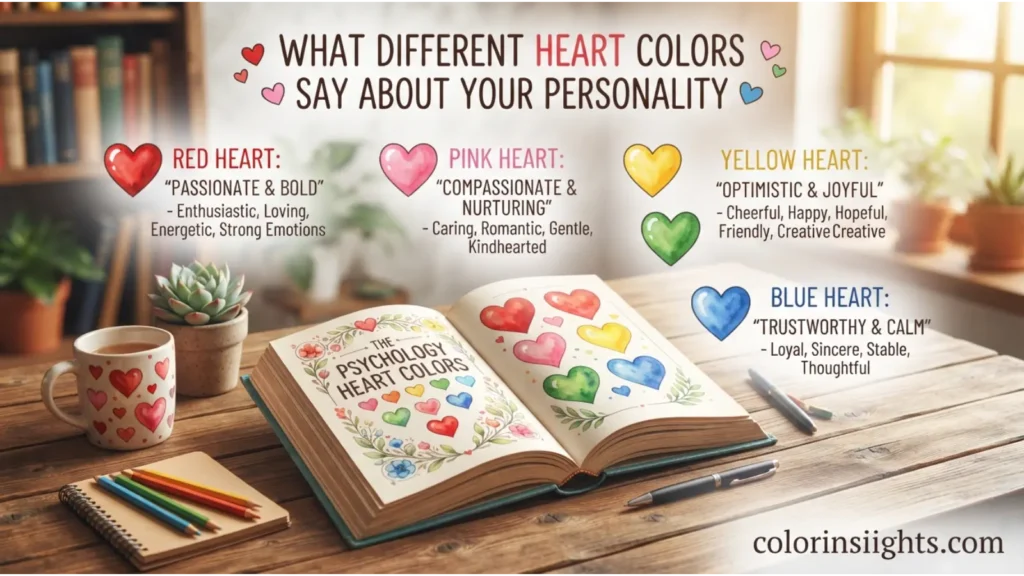
People often associate favorite heart colors with certain personality characteristics. However, color preferences alone cannot accurately determine personality.
Strengths
People drawn to different heart colors may value:
- Compassion
- Loyalty
- Creativity
- Optimism
- Emotional intelligence
- Stability
Weaknesses
Possible tendencies include:
- Emotional sensitivity
- Perfectionism
- Overthinking
- Mood fluctuations
- Idealism
Social Behavior
Some individuals naturally express affection openly through colorful heart emojis, while others reserve them for close relationships.
Work Style
Color preferences may reflect communication styles, leadership tendencies, creativity, or reliability rather than actual job performance.
Relationships
Different heart colors often communicate:
- Romance
- Friendship
- Family affection
- Emotional support
- Appreciation
Emotional Tendencies
People frequently choose heart colors that match their current emotions or the message they wish to communicate rather than their permanent personality.
FAQs:
What defines different heart color meanings?
Different heart color meanings are symbolic interpretations assigned to heart-colored emojis, representing emotions, relationships, personality, and communication styles.
What do different heart colors symbolize?
They symbolize love, friendship, trust, healing, compassion, loyalty, peace, hope, and emotional expression depending on the specific color.
Why are different heart colors important?
They help communicate emotions quickly and add emotional context to digital conversations.
Are heart colors warm or cool colors?
Some are warm (red, orange, yellow), while others are cool (green, blue, purple). White, black, brown, and gray are generally considered neutral.
What emotions do different heart colors represent?
They represent love, happiness, sympathy, trust, gratitude, peace, healing, confidence, grief, and emotional support.
What do different heart colors mean spiritually?
Spiritually, heart colors often symbolize healing, enlightenment, protection, transformation, compassion, wisdom, and inner growth.
What colors pair well with heart-themed designs?
Popular combinations include red and white, blue and silver, green and brown, pink and gold, and purple and white.
What does liking different heart colors say about a person?
It may reflect temporary emotional preferences or aesthetic taste rather than fixed personality traits.
Which heart color is best for friendship?
The yellow heart is widely associated with friendship, happiness, and positive social connections.
Which heart color is most romantic?
The red heart remains the most universally recognized symbol of romantic love and deep emotional commitment.
Conclusion
Different heart color meanings provide a powerful visual language for expressing emotions, values, and relationships. Whether representing romance, friendship, healing, peace, loyalty, or personal growth, each heart color carries unique psychological, spiritual, cultural, and symbolic significance.
While many meanings are widely recognized, interpretations can vary across cultures, communities, and individual experiences. Understanding these differences helps you communicate more thoughtfully in digital conversations, choose meaningful designs, and appreciate the rich symbolism behind every colored heart.