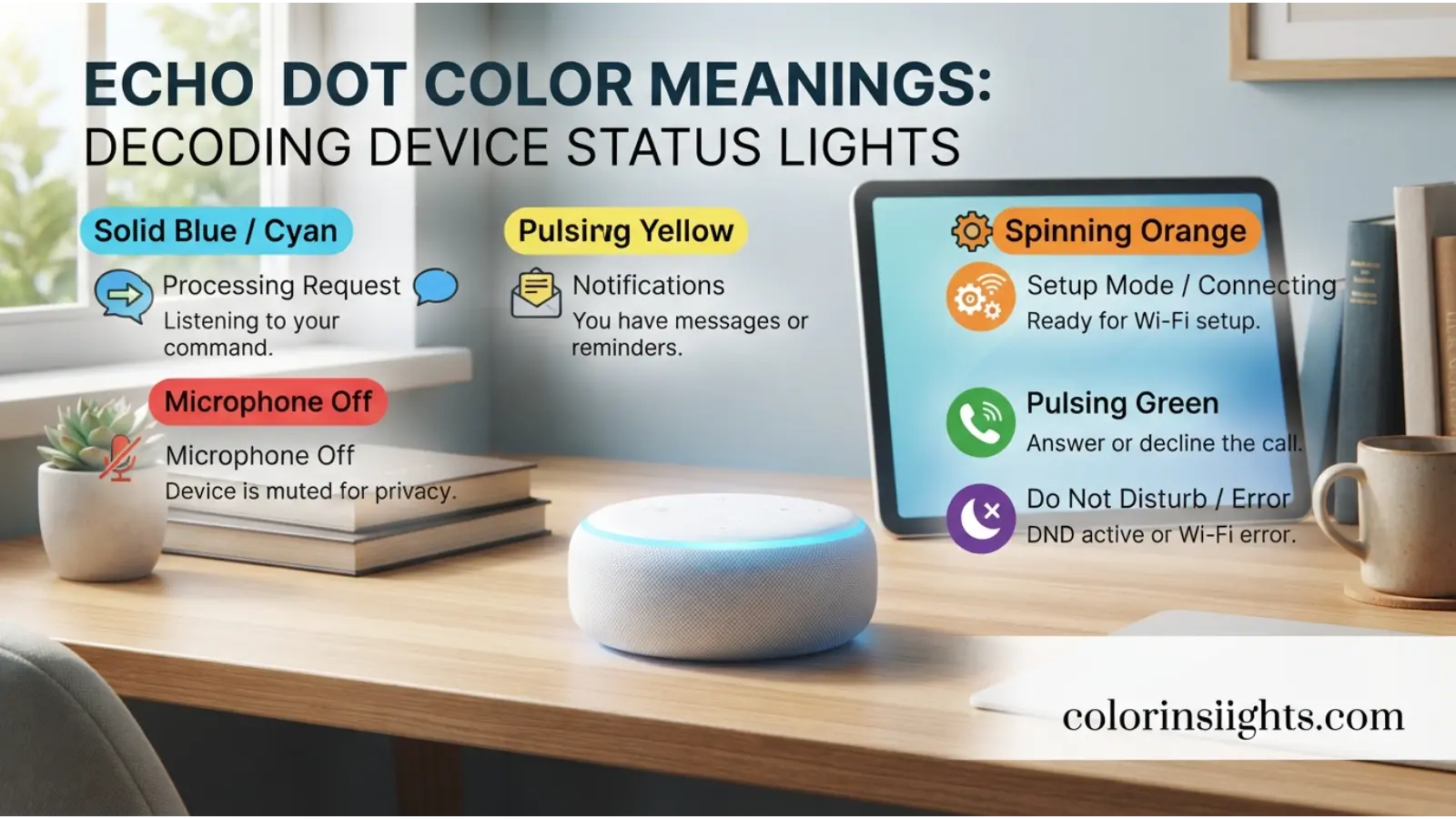
Echo Dot color meanings help users understand the current status of their Amazon Alexa device through its LED light ring. Unlike traditional color psychology topics, these colors are functional indicators rather than symbolic colors.
Each light color communicates a specific message, such as listening, processing, connectivity, notifications, microphone status, or errors. Learning these meanings allows users to troubleshoot issues quickly and interact with Alexa more effectively.
While the colors themselves carry psychological associations, Amazon intentionally uses them to create intuitive user experiences.
Quick Answer:
Echo Dot color meanings indicate your device’s current status. Blue shows Alexa is listening or responding, orange means setup mode, yellow signals notifications, red indicates the microphone is off, green represents calls, purple relates to Do Not Disturb, and white displays volume or Alexa Guard status.
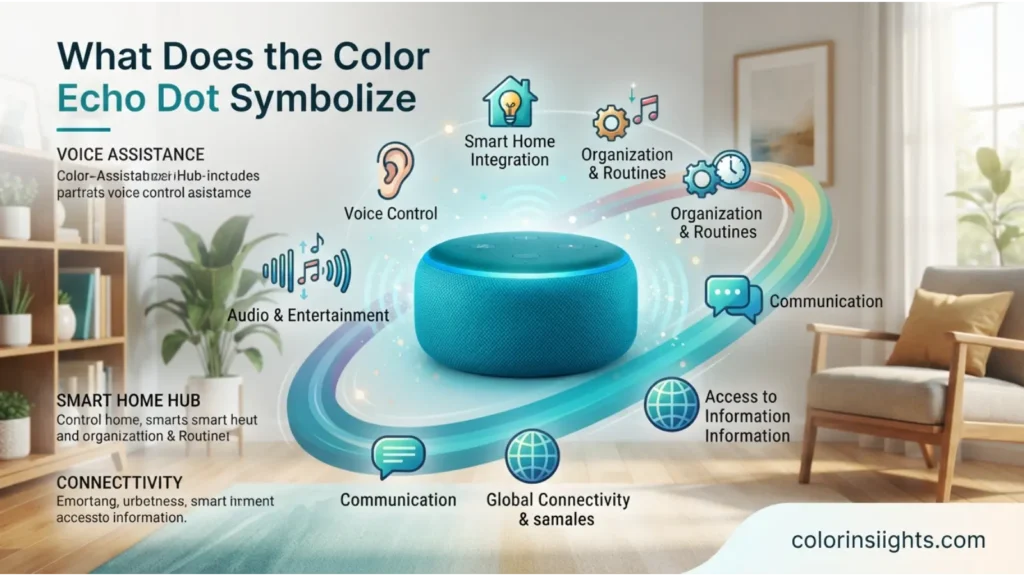
What Does the Color Echo Dot Symbolize?
Unlike decorative colors, Echo Dot colors are designed as communication signals between the smart speaker and the user. Every LED color has a functional purpose that reduces confusion and improves usability.
Here’s what each Echo Dot color generally symbolizes:
| Blue | Alexa is listening, processing, or responding |
| Cyan (Blue Highlight) | Indicates which direction Alexa heard your voice |
| Orange | Device is entering setup mode or reconnecting to Wi-Fi |
| Yellow | Notification or missed message waiting |
| Red | Microphone is muted |
| Green | Incoming or active call, Drop In feature |
| Purple | Do Not Disturb enabled or Wi-Fi setup issue |
| White | Volume level adjustment or Alexa Guard Away Mode |
Amazon selected these colors because users naturally associate many of them with common emotional expectations—for example, red as “stop,” green as “communication,” and blue as “active.”

Psychological Characteristics of the Color Echo Dot
Although Echo Dot lights serve technical purposes, their design reflects established principles of color psychology.
Emotional Associations
- Blue promotes trust, intelligence, and reliability.
- Orange creates attention and signals action.
- Yellow attracts awareness without causing panic.
- Green communicates connection and communication.
- Red immediately signals caution.
- Purple suggests privacy and quietness.
- White represents simplicity and neutral system feedback.
Psychological Effects
The LED colors help users instantly understand device status without reading text.
Benefits include:
- Faster decision making
- Reduced cognitive effort
- Better accessibility
- Improved user confidence
- Lower frustration during troubleshooting
Positive Emotional Responses
- Confidence
- Convenience
- Security
- Trust
- Ease of use
- Modern technology
Negative Emotional Responses
Some colors may temporarily create concern:
- Red may suggest something is wrong.
- Orange may imply setup problems.
- Purple can confuse first-time users.
- Flashing yellow may become distracting if notifications remain unread.
Impact on Mood and Behavior
Users quickly learn to associate each light with a specific action.
Examples:
- Blue encourages speaking.
- Yellow encourages checking notifications.
- Orange prompts Wi-Fi setup.
- Red reminds users the microphone is disabled.
Typical User Reactions
- Speak when blue appears.
- Check Alexa notifications after seeing yellow.
- Reconnect Wi-Fi when orange appears.
- Turn microphone back on after seeing red.
Spiritual Meaning of the Color Echo Dot
Echo Dot colors themselves are not intended to have spiritual meanings. However, because each light uses universally recognized colors, many people naturally associate them with traditional symbolism.
Blue
- Wisdom
- Calmness
- Trust
- Spiritual awareness
- Divine communication
Orange
- Transformation
- Creativity
- Personal growth
- Positive change
- Energy
Yellow
- Hope
- Knowledge
- Optimism
- Enlightenment
- Awareness
Green
- Healing
- Renewal
- Balance
- Compassion
- Prosperity
Red
- Protection
- Power
- Strength
- Courage
- Boundaries
Purple
- Spiritual wisdom
- Meditation
- Higher consciousness
- Inner peace
- Reflection
White
- Purity
- Peace
- Holiness
- New beginnings
- Eternity
These meanings originate from cultural and religious traditions rather than Amazon’s product design.
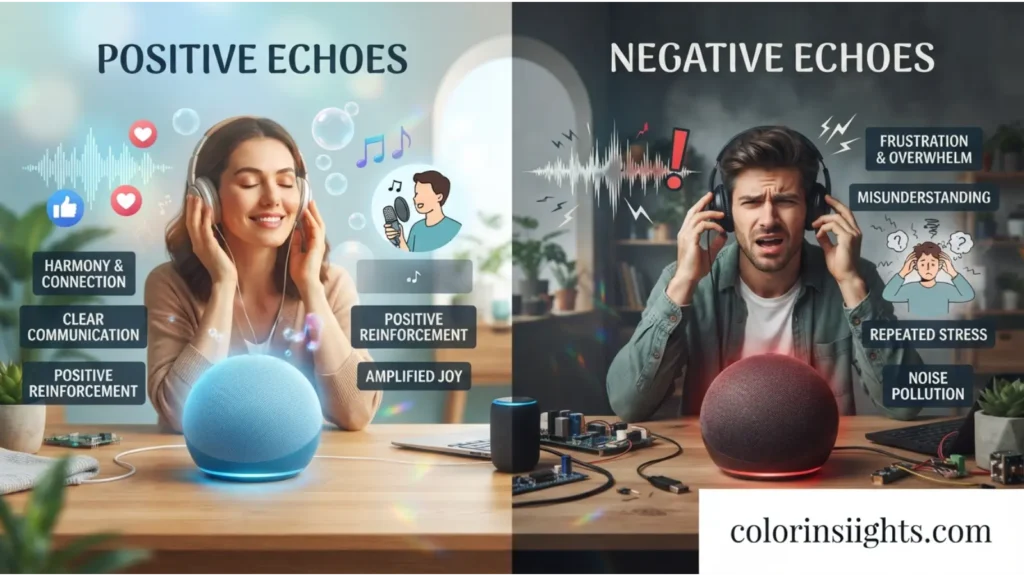
Positive and Negative Meanings of the Color Echo Dot
Positive Meanings
Echo Dot colors often create reassuring user experiences.
Examples include:
- Blue: Confidence that Alexa heard your command.
- Green: Easy communication during calls.
- Yellow: Helpful reminders that important information is waiting.
- White: Clear feedback while adjusting volume.
- Orange: Guidance during initial setup.
- Purple: Protection from interruptions through Do Not Disturb mode.
These signals improve usability and reduce uncertainty.
Negative Meanings
Some colors can create temporary concern.
Examples include:
- Red: Users may worry the device is malfunctioning, though it simply means the microphone is muted.
- Orange: Indicates connectivity issues if setup continues too long.
- Purple: Can confuse users unfamiliar with Do Not Disturb.
- Yellow: Persistent notifications may become annoying.
- Flashing Blue: May cause uncertainty if Alexa seems unresponsive.
Fortunately, these colors usually indicate normal operating states rather than hardware failures.
Meanings of the Color Echo Dot
The meaning of an Echo Dot light depends entirely on its color, brightness, flashing pattern, and context. A solid blue ring means something different from a spinning blue ring, and a pulsing green light differs from a flashing green light. Understanding these combinations helps users interpret Alexa’s behavior accurately.
Feng Shui
Echo Dot colors are not traditionally used in Feng Shui, but their symbolic associations can align with common design principles.
- Associated elements: Blue (Water), Green (Wood), Red (Fire), White (Metal), Yellow (Earth), Purple (Fire), Orange (Fire/Earth)
- Energy symbolism: Balance, communication, awareness, and harmony depending on the light shown.
- Best rooms: Living room, office, study, kitchen, or smart home hub.
- Recommended color combinations: White, gray, wood tones, soft blue, and natural green.
- Home decorating tips: Place the Echo Dot where its status lights remain visible without becoming distracting.
Marketing
Amazon uses simple, recognizable colors to improve user experience.
Key branding principles include:
- Instant recognition
- Reduced learning curve
- Trust-building
- Accessibility
- Consistent visual language
Consumers quickly associate each color with a specific action.
The color system reinforces Amazon’s reputation for user-friendly smart technology.
Design
Echo Dot’s light ring demonstrates excellent user-centered design.
Applications include:
- Minimalist interface
- Visual feedback
- Accessibility
- Smart home interaction
- Non-verbal communication
The absence of a screen makes color the primary communication tool.
Fashion
Although Echo Dot colors are not fashion colors, their psychological associations appear in clothing choices.
Examples:
- Blue clothing suggests professionalism.
- White represents simplicity.
- Purple expresses creativity.
- Green conveys balance.
- Red attracts attention.
Advantages include versatility and recognizable symbolism, while disadvantages arise when strong colors are overused.
Color Associations Are Not Universal
Western Cultures
In the United States and much of Europe, blue often represents trust, red indicates warning, green suggests permission or communication, and yellow attracts attention. These familiar associations make Echo Dot’s interface easy to understand.
Eastern Cultures
Some Asian cultures assign different meanings to colors. Red commonly symbolizes luck and celebration, while white may represent mourning. Despite these traditions, users generally learn Echo Dot colors through device functionality.
Religious Traditions
Many religions associate blue with heaven, white with purity, green with life, purple with spiritual authority, and red with sacrifice or protection. These meanings are symbolic and separate from Amazon’s technical use.
Historical Interpretations
Historically, colors communicated social status, political identity, and religious symbolism. Today’s smart devices adapt familiar color expectations for digital communication.
Modern Global Interpretations
Across modern technology, red commonly signals stop, green indicates connection, blue suggests activity, and yellow provides alerts. Echo Dot follows these widely recognized digital design conventions.
What Echo Dot Says About Your Personality
Preferring certain Echo Dot colors does not determine personality. However, people often feel more comfortable with colors that match their emotional preferences.
Possible associations include:
Strengths
- Appreciates technology
- Organized
- Curious
- Efficient
- Practical
Weaknesses
- May overanalyze technology
- Can become frustrated by technical issues
- Prefers predictable systems
Social Behavior
People attracted to blue may value communication, while those who appreciate green often enjoy collaboration.
Work Style
Many users prefer systems that provide clear visual feedback, helping improve productivity and organization.
Relationships
Clear communication and reliability are commonly valued by users who appreciate intuitive technology.
Emotional Tendencies
People often respond positively to predictable visual cues because they reduce uncertainty and improve confidence.
It is important to remember that color preferences are influenced by culture, personal experiences, and context rather than determining personality with certainty.
FAQs:
What defines Echo Dot color?
Echo Dot colors are LED light indicators that communicate the device’s current status, including listening, notifications, calls, Wi-Fi setup, volume, and microphone settings.
What does the Echo Dot symbolize?
The colors symbolize operational states rather than emotional symbolism. Each color provides quick visual feedback for users.
Why are Echo Dot colors important?
They allow users to understand device activity instantly without needing a screen, improving accessibility and usability.
Is Echo Dot a warm or cool color?
Echo Dot does not have one defining color. It displays multiple warm and cool colors depending on the device’s status.
What emotions do Echo Dot colors represent?
Blue often represents trust, green communication, yellow awareness, red caution, purple calmness, white simplicity, and orange activity.
What is the spiritual meaning of Echo Dot colors?
Any spiritual meaning comes from traditional interpretations of the individual colors rather than the Echo Dot itself.
What colors pair well with Echo Dot in home design?
Neutral shades such as white, gray, black, natural wood, beige, and soft blue create a modern appearance around Echo Dot devices.
What does liking Echo Dot colors say about a person?
It may suggest an appreciation for intuitive technology, organization, and efficient communication, although color preference alone does not define personality.
Why is my Echo Dot showing a yellow light?
A yellow light indicates that you have a notification, reminder, or missed message waiting.
Why is my Echo Dot showing a red light?
A red light means the microphone has been turned off and Alexa is not listening for voice commands.
Conclusion
Echo Dot color meanings transform simple LED lights into an intuitive communication system that helps users understand their device at a glance. While these colors are primarily functional, they also draw upon familiar psychological and cultural associations that make interactions feel natural and easy to interpret.
Blue encourages conversation, yellow highlights notifications, orange guides setup, green supports communication, red signals microphone mute, purple represents Do Not Disturb, and white provides system feedback.
By understanding each light’s purpose, users can troubleshoot problems faster, improve their Alexa experience, and appreciate the thoughtful design principles behind Amazon’s visual interface.