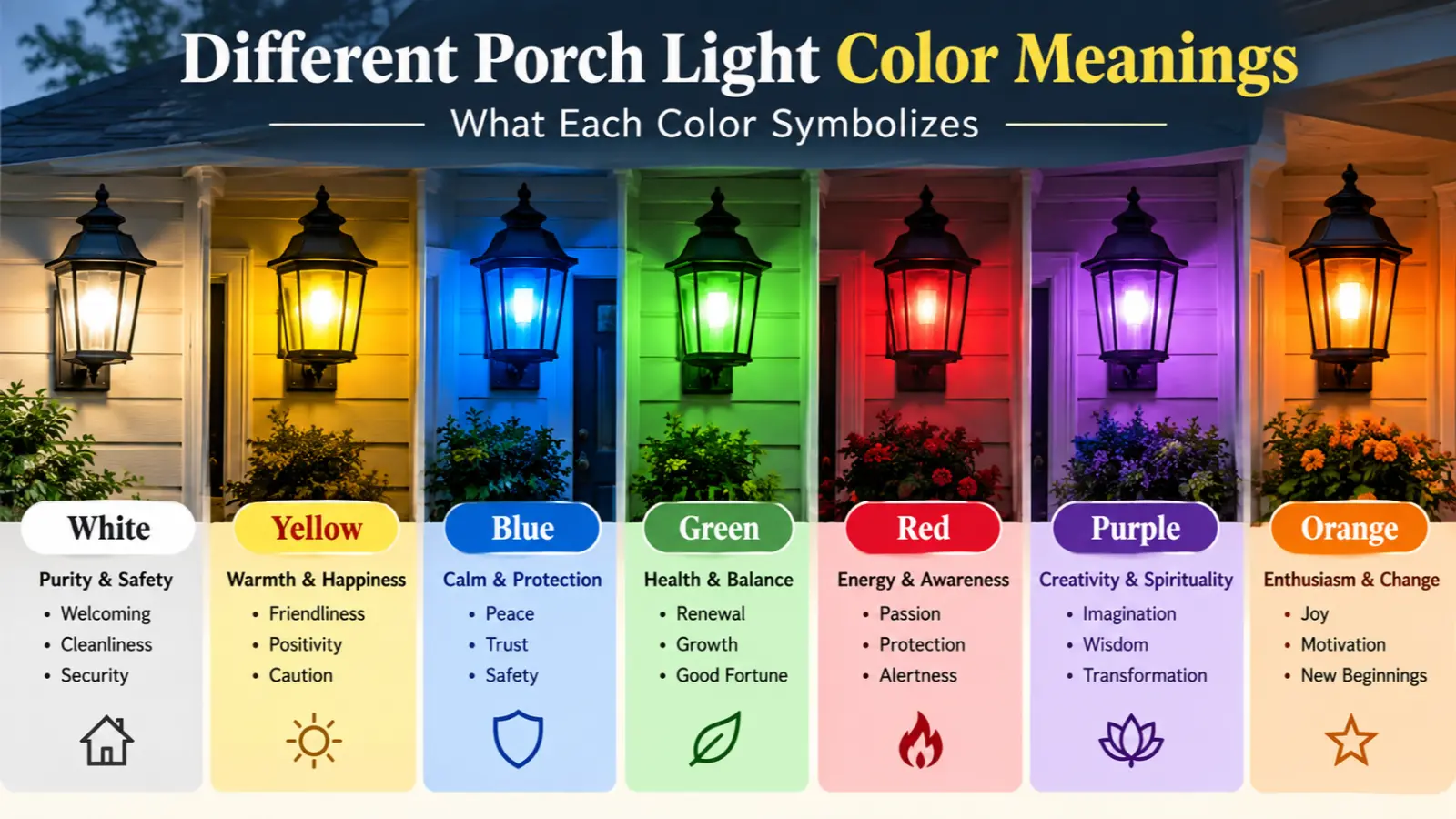
Different porch light color meanings can communicate mood, symbolism, seasonal themes, community support, or personal style. Unlike traffic signals or standardized warning lights, porch light colors do not have one universal meaning in the United States.
A green porch light may represent support for veterans in one context, while blue may be used for autism awareness, and purple can be associated with domestic violence awareness. Other colors may simply be chosen for ambiance, holidays, security lighting, or home décor. Meaning therefore depends heavily on color, context, timing, community, and personal intention.
Quick answer:
porch light colors commonly create associations such as welcome, calm, celebration, awareness, remembrance, support, or seasonal atmosphere, but no single color should automatically be interpreted as a specific message.
What Does the Color of a Porch Light Symbolize?
A porch light is both a practical lighting feature and a visible part of a home’s exterior identity. Because it can be seen from the street, changing its color can communicate an intentional visual message without using words.
The meaning of a porch light generally comes from three overlapping sources:
- Color psychology: Colors can influence visual impressions and emotional associations.
- Cultural symbolism: Communities and traditions may attach particular meanings to colors.
- Situational context: Holidays, awareness campaigns, local events, and personal occasions can give a color a specific meaning.
For example, a green porch light may be used during Operation Green Light to show support for U.S. veterans. The U.S. Department of Veterans Affairs describes green lighting as a visible gesture of support, appreciation, hope, and moving forward for veterans. (VA News)
A blue porch light can be associated with autism awareness through the “Light It Up Blue” initiative, although blue lighting can also simply be decorative. Autism Speaks notes that buildings, homes, landmarks, and communities have used blue lighting for World Autism Awareness Day. (Autism Speaks)
A purple porch light may be used in domestic violence awareness campaigns, while red lighting can appear in cardiovascular-health awareness activities. These examples demonstrate why the surrounding context matters. (WomenSafe, Inc.)
Psychological Characteristics of Different Porch Light Colors
Color psychology examines how people perceive and respond to color, but color responses are not identical for everyone. Brightness, saturation, surrounding colors, cultural learning, and personal experience can all influence perception.
Red Porch Light
Red is visually intense and tends to attract attention quickly.
Common associations include:
- Energy
- Passion
- Excitement
- Urgency
- Warmth
- Romance
- Alertness
A red porch light can create a dramatic nighttime appearance. It may also be used for awareness campaigns. For example, the American Heart Association’s Go Red for Women movement uses red to raise awareness about women’s cardiovascular health. (www.goredforwomen.org)
Orange Porch Light
Orange combines some of the visual warmth of red and yellow.
It is often associated with:
- Enthusiasm
- Warmth
- Creativity
- Friendliness
- Celebration
- Autumn
- Energy
Orange porch lighting can be particularly effective for Halloween, fall decorations, outdoor parties, and seasonal displays.
Yellow Porch Light
Yellow and warm-white lighting can create a welcoming residential atmosphere.
Common psychological associations include:
- Happiness
- Optimism
- Warmth
- Friendliness
- Comfort
- Cheerfulness
A yellow-toned porch light may make an entryway feel more inviting than a harsh, cool light.
Green Porch Light
Green is frequently associated with nature, renewal, balance, and growth.
Possible associations include:
- Renewal
- Hope
- Nature
- Stability
- Peace
- Freshness
- Community support
Its social meaning can become particularly strong during veteran-support campaigns. Operation Green Light encourages people to display green lights to show support and appreciation for veterans. (VA News)
Blue Porch Light
Blue is commonly associated with calmness, trust, stability, and coolness.
Possible associations include:
- Calm
- Peace
- Trust
- Security
- Serenity
- Reflection
- Dependability
Blue can also carry awareness-related meanings. The Light It Up Blue initiative has encouraged homes and other structures to use blue lighting for autism awareness. (Autism Speaks)
Purple Porch Light
Purple combines the visual qualities of red and blue and is often perceived as distinctive or symbolic.
Possible associations include:
- Dignity
- Reflection
- Mystery
- Spirituality
- Compassion
- Awareness
- Remembrance
Purple lighting is also used by some organizations for domestic violence awareness campaigns. (WomenSafe, Inc.)
Pink Porch Light
Pink is frequently associated with:
- Compassion
- Affection
- Gentleness
- Hope
- Care
- Celebration
Its meaning can change significantly depending on the event or campaign in which it is used.
White Porch Light
White is strongly associated with:
- Cleanliness
- Simplicity
- Clarity
- Safety
- Neutrality
- Freshness
colour is the most conventional choice for everyday exterior lighting because it tends to prioritize visibility and practicality over symbolic messaging.
Warm White vs. Cool White
Not every porch light needs to be a saturated color.
Warm white often creates a cozy, traditional, residential feeling, while cool white can appear cleaner, brighter, and more contemporary.
Psychological Effects on Mood and Behavior
The effect of a porch light is influenced by both its hue and its brightness.
- Warm colors can make an outdoor space feel energetic or cozy.
- Cool colors can create a calmer or more contemporary atmosphere.
- Very bright saturated colors may draw attention to the property.
- Dim colored lighting can create a subtle decorative effect.
- Rapidly changing colors can feel festive but may be visually distracting.
- Soft, steady illumination generally creates a more stable environmental impression.
People also interpret lighting based on expectations. A red light used for Halloween will not necessarily be interpreted the same way as a red light displayed during a health-awareness campaign.
Spiritual Meaning of Different Porch Light Colors
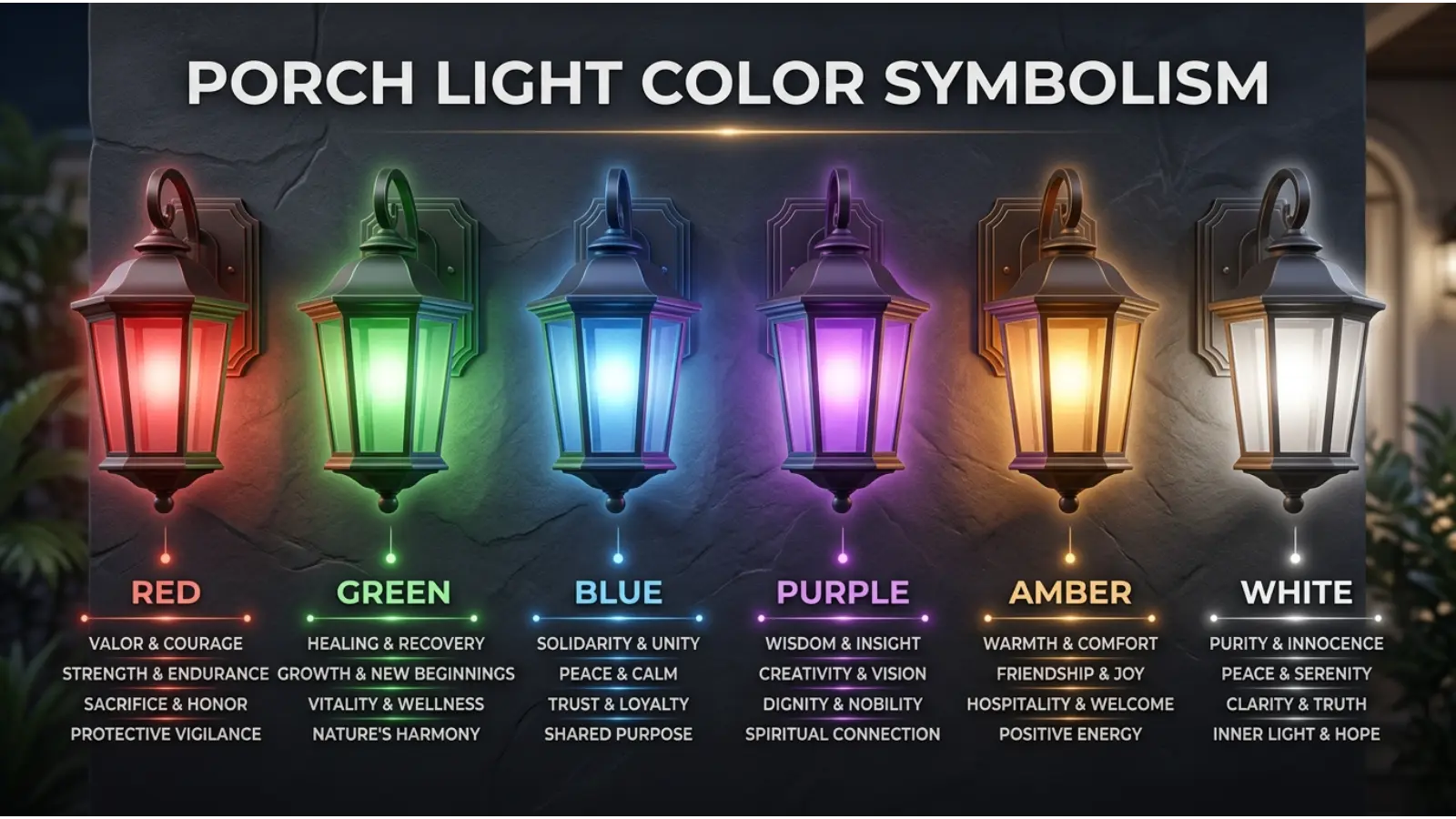
There is no single religious system that assigns universal spiritual meanings to porch lights. Spiritual interpretations generally come from broader color symbolism rather than from porch lighting itself.
Red
- Passion
- Vitality
- Courage
- Sacrifice
- Spiritual intensity
- Transformation
Orange
- Creativity
- Vitality
- Joy
- Personal energy
- Celebration
- Change
Yellow
- Illumination
- Wisdom
- Optimism
- Awareness
- Hope
- Mental clarity
Green
- Renewal
- Growth
- Healing
- Balance
- Compassion
- New beginnings
The U.S. Department of Veterans Affairs also describes green in Operation Green Light as symbolizing hope, renewal, and moving forward. (VA News)
Blue
- Peace
- Reflection
- Spiritual calm
- Trust
- Protection
- Serenity
Purple
- Spirituality
- Mystery
- Contemplation
- Dignity
- Transformation
- Inner reflection
Pink
- Compassion
- Love
- Gentleness
- Emotional connection
- Hope
White
- Purity
- Peace
- Clarity
- Light
- New beginnings
- Eternity
Because religious symbolism differs substantially among traditions, a homeowner should not assume that a particular porch light will communicate one specific spiritual message to every observer.
Positive and Negative Meanings of Different Porch Light Colors
Positive Meanings
Warmth and Welcome
Warm white, yellow, orange, and some red tones can create a welcoming exterior.
Real-world example: A homeowner may choose a warm-white porch bulb to make guests feel comfortable when arriving after dark.
Peace and Calm
Blue and softer green tones can create a quieter visual atmosphere.
Real-world example: A blue-toned light may be used around a patio where the goal is a relaxing evening environment.
Hope and Renewal
Green is frequently associated with renewal and hope. Operation Green Light provides a concrete example of green exterior lighting being used as a public expression of support. (VA News)
Clarity and Simplicity
White lighting provides straightforward illumination and can make architectural details easier to see.
Real-world example: A homeowner may choose neutral white lighting for a modern home where clean lines are central to the design.
Celebration
Orange, pink, purple, red, and multicolor lighting can be used for parties, holidays, and seasonal decorations.
Real-world example: Orange porch lighting is particularly common during Halloween and autumn decorating.
Community Support
Colored lights can serve as visible signs of participation in awareness campaigns.
For example, blue lighting has been used in autism-awareness initiatives, while green lighting has been used for veteran-support campaigns. (Autism Speaks)
Negative Meanings
The same colors can produce different interpretations depending on saturation, brightness, context, and culture.
Emptiness
Extremely stark white lighting can sometimes make an exterior feel less warm or residential.
Example: A high-intensity cool-white fixture can make a traditionally styled porch appear clinical.
Isolation
Very cool blue lighting may feel distant if used excessively.
Example: A home illuminated entirely with intense blue light may appear less traditionally welcoming than one using warm-white lighting.
Coldness
Blue-white or highly cool lighting can visually reduce the sense of warmth.
Example: A cool-white LED may feel less cozy than a 2700K warm-white bulb.
Sterility
Bright, highly uniform white lighting can create a commercial or institutional impression.
Example: Excessive floodlighting may make a residential entryway resemble a parking or commercial environment.
Boredom
Neutral lighting can become visually uninteresting when there is no variation in landscaping, architecture, or decorative elements.
Emotional Distance
Very dark or cool color schemes may create a formal or distant appearance.
Overstimulation
Highly saturated red, orange, or rapidly changing RGB lighting can become visually intense.
Example: A porch using constantly changing colors may attract attention but can make a quiet residential property feel more like an entertainment venue.
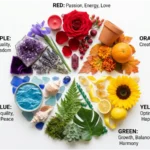
Meanings of Different Porch Light Colors
The meaning of a porch light depends on color + context + timing + location + intention.
A useful way to understand the major colors is:
| Porch Light Color | Common Associations | Possible Public/Seasonal Meaning |
|---|---|---|
| Red | Energy, passion, urgency | Health awareness, holidays, romance |
| Orange | Warmth, creativity, enthusiasm | Halloween, autumn, celebrations |
| Yellow | Happiness, optimism, welcome | Decorative and seasonal use |
| Green | Renewal, hope, nature | Veteran support and awareness |
| Blue | Calm, trust, peace | Autism awareness and decorative use |
| Purple | Spirituality, dignity, reflection | Domestic violence awareness and remembrance |
| Pink | Compassion, affection, hope | Awareness campaigns and celebrations |
| White | Purity, clarity, simplicity | Everyday security and residential lighting |
| Warm White | Comfort, hospitality, coziness | Everyday porch illumination |
| Multicolor | Celebration, creativity, playfulness | Holidays and parties |
The table should be viewed as a guide rather than a universal code. A colored porch light does not automatically prove that the homeowner is supporting a particular organization or cause.
Feng Shui
Traditional Feng Shui associates colors with broader elemental and energetic concepts, although a porch light itself does not have one universally prescribed color.
Common color-element associations include:
- Red: Fire — energy, visibility, activity, recognition.
- Green: Wood — growth, renewal, vitality.
- Blue/black: Water — calm, flow, reflection.
- Yellow/earth tones: Earth — stability and grounding.
- White: Metal — clarity, order, precision.
For an entryway, homeowners can select a color according to the atmosphere they want to create.
Practical combinations:
- Warm white + wood tones for a welcoming entrance.
- Green + natural stone for a nature-inspired exterior.
- Blue + white for a clean coastal appearance.
- Red + neutral colors for a bold focal point.
- Purple + soft white for a more decorative evening environment.
The best choice should also consider the home’s architecture, neighborhood character, visibility, and local lighting regulations.
Marketing
Colored exterior lighting can influence how a property, business, event, or organization is perceived.
Branding Psychology
Brands often use color strategically because colors can create recognizable visual identities. Red may communicate energy, blue can suggest reliability, green can suggest nature or sustainability, and purple can create a distinctive premium or creative impression.
Consumer Perception
Color is only one element of consumer perception. Typography, imagery, lighting intensity, product quality, brand reputation, and cultural context also contribute.
Trust Signals
Blue is frequently used in corporate and technology branding because it can communicate stability or professionalism. However, a blue porch light should not automatically be interpreted as a signal of trust or safety.
Product Packaging
The same color associations used in packaging can influence outdoor displays, storefronts, event entrances, and promotional lighting.
Advertising Applications
Businesses may use colored exterior lighting during awareness months, product launches, sporting events, holidays, or community campaigns.
For example, red is strongly connected with the American Heart Association’s Go Red for Women initiative, while green is used by Operation Green Light for Veterans. (www.goredforwomen.org)
Design
Interior Design
Although porch lighting is exterior design, it should visually connect with the home’s interior aesthetic.
A traditional home may work well with warm white or amber-toned lighting, while contemporary architecture can accommodate cooler or more dramatic colors.
Graphic Design
Designers use color contrast, saturation, hierarchy, and complementary relationships to attract attention. These principles can also inform exterior lighting schemes.
Web Design
Digital interfaces frequently use colors to communicate status, action, or emphasis. However, those meanings should not automatically be transferred to residential lighting.
User Experience
For homes, the “user experience” of a porch light includes:
- Finding the entrance.
- Seeing steps and pathways.
- Identifying the door.
- Feeling comfortable approaching the property.
- Understanding whether the space is decorative, private, or event-oriented.
Minimalist Aesthetics
Minimalist homes generally benefit from restrained lighting.
A single warm-white fixture can provide architectural emphasis without competing with the structure. A saturated color can instead become the visual focal point.
Fashion
Although porch lights are not clothing, color symbolism in fashion provides another useful example of how context changes interpretation.
Clothing Symbolism
Red clothing may appear bold and energetic, blue can appear calm or professional, green can suggest natural themes, and purple can appear distinctive or expressive.
Seasonal Use
The same seasonal associations often appear in outdoor lighting:
- Orange for autumn and Halloween.
- Red and green for Christmas.
- Blue and white for winter themes.
- Pink for spring or awareness campaigns.
- Multicolor for celebrations.
Styling Effects
A home’s exterior can be treated like an outfit. Neutral architectural colors allow a porch light to become an accent, while colorful architecture may require more restrained lighting.
Personality Impressions
A colorful porch can suggest creativity or playfulness, while a simple warm-white light may communicate traditional hospitality.
Advantages and Disadvantages
Advantages of colored porch lights:
- Creates visual identity.
- Supports seasonal decorating.
- Can communicate participation in a cause.
- Adds architectural interest.
- Makes an entryway distinctive.
Potential disadvantages:
- Some colors can reduce natural-looking visibility.
- Strong saturated light can disturb neighbors.
- Certain colors may have unintended social associations.
- Excessive brightness can create glare.
- Constantly changing colors can become visually distracting.
Color Associations Are Not Universal
Western Cultures
In the United States and other Western societies, red may be associated with passion, energy, danger, or urgency; blue with calmness and trust; green with nature and renewal; and white with cleanliness or simplicity.
However, these are broad associations rather than universal rules.
A green porch light in the United States may have a specific veteran-support meaning during an organized campaign, while the same green light outside a home at another time may simply be decorative. (VA News)
Eastern Cultures
Color meanings across Asian societies can differ significantly from common American interpretations.
Red, for example, can have particularly strong associations with luck, prosperity, celebration, or auspicious occasions in parts of East and South Asia. White can carry associations with mourning in some cultural contexts.
Therefore, interpreting a porch light based only on American color symbolism can lead to misunderstandings.
Religious Traditions
Religious symbolism is especially context-dependent.
White may symbolize purity in some Christian traditions, while purple can be associated with particular liturgical seasons. Green may represent growth or renewal in certain religious settings.
These associations should not be generalized across every denomination or faith.
Historical Interpretations
Color symbolism changes over time.
Technological developments have also changed exterior lighting. Traditional incandescent bulbs primarily produced warm illumination, while modern LED systems can produce a much broader range of hues.
This means contemporary porch lighting offers symbolic possibilities that were not practical for earlier generations.
Modern Global Interpretations
Social media and global awareness campaigns have accelerated the spread of color symbolism.
A person may see a particular colored building or porch online and associate the color with an awareness campaign, even if that association is not locally recognized.
For this reason, context is essential when interpreting a colored porch light.
What Different Porch Light Colors Say About Your Personality
People sometimes choose exterior colors that reflect their aesthetic preferences, but a porch light cannot reliably diagnose personality.
Color preference may provide clues about someone’s design taste, mood, or desired atmosphere, but it does not establish personality traits scientifically.
Red
Someone who chooses red lighting may want an exterior that feels:
- Energetic
- Bold
- Dramatic
- Noticeable
- Festive
Orange
Orange lighting may appeal to people who enjoy:
- Creativity
- Playfulness
- Warmth
- Social environments
- Seasonal decoration
Yellow
Yellow may appeal to someone seeking:
- Cheerfulness
- Hospitality
- Brightness
- Optimism
- Traditional warmth
Green
Green may be selected because of associations with:
- Nature
- Renewal
- Calm
- Community
- Freshness
Blue
Blue lighting may appeal to people who prefer:
- Calm environments
- Contemporary aesthetics
- Cool color palettes
- Simplicity
- Serene atmospheres
Purple
Purple can appeal to people who enjoy:
- Individuality
- Creativity
- Mystery
- Dramatic aesthetics
- Symbolic decoration
White
White lighting may reflect a preference for:
- Simplicity
- Clean design
- Functionality
- Neutral aesthetics
- Architectural clarity
Balanced Perspective
These associations describe possible impressions, not personality diagnoses. Someone may choose a green porch light because they like green, because they are participating in a campaign, because it matches their landscaping, or simply because they found a discounted LED bulb.
Therefore, different porch light color preferences do not determine personality with certainty.
Frequently Asked Questions
What defines different porch light color meanings?
Different porch light color meanings are determined by color symbolism, cultural context, awareness campaigns, seasonal traditions, personal preference, and the purpose of the lighting.
What does a green porch light symbolize?
A green porch light can symbolize hope, renewal, nature, and support. In the United States, green lighting is notably used in Operation Green Light to show support for veterans. (VA News)
What does a blue porch light mean?
A blue porch light can represent calmness, peace, trust, or a decorative preference. Blue has also been used in autism-awareness campaigns, including Light It Up Blue. (Autism Speaks)
What does a purple porch light mean?
Purple porch lighting can symbolize reflection, dignity, spirituality, awareness, or remembrance. In some communities and campaigns, purple lighting is used to raise awareness about domestic violence. (WomenSafe, Inc.)
Why is the color of a porch light important?
A porch light color can affect the visual character of a home and may communicate seasonal, decorative, cultural, or awareness-related messages. Its importance depends on the context.
Is a porch light color a universal code?
No. Porch light colors do not have a universal communication system. The same color can have different meanings in different communities, countries, organizations, or situations.
What emotions do different porch light colors represent?
Red can suggest energy or passion, orange warmth and enthusiasm, yellow optimism, green renewal, blue calm, purple reflection, pink compassion, and white clarity. These are general associations rather than fixed emotional definitions.
What does a porch light mean spiritually?
Spiritually, porch lighting can symbolize guidance, welcome, protection, hope, illumination, or transition. The interpretation depends on the religious or spiritual tradition involved.
What colors pair well with porch lighting?
Warm white pairs well with wood, stone, brick, and neutral siding. Blue works well with white and gray. Green complements natural landscaping. Purple and red can function as accent colors against neutral architectural backgrounds.
What color porch light is best for everyday use?
For ordinary residential illumination, warm white or neutral white is often practical because it provides visibility while maintaining a comfortable appearance. The ideal choice depends on the fixture, brightness, surrounding environment, and homeowner preference.
Does a colored porch light mean something specific?
Not necessarily. A colored porch light may be purely decorative. If it appears during a recognized awareness campaign or holiday, however, the color may carry an additional public meaning.
What does liking a particular porch light color say about a person?
It may reflect someone’s aesthetic preferences or desired atmosphere, but color preference does not reliably determine personality. Personal experiences, culture, architecture, practical needs, and current events can all influence the choice.
Conclusion
Different porch light color meanings are best understood as a combination of color psychology, cultural symbolism, practical lighting, seasonal traditions, and social context. Red can create an energetic or attention-grabbing appearance, orange can feel festive and warm, yellow can suggest hospitality, green can represent renewal or veteran support, blue can create a calm atmosphere and participate in awareness campaigns, purple can communicate reflection or awareness, pink can suggest compassion, and white can provide simple and functional illumination. Most importantly, there is no universal dictionary for porch light colors. A homeowner’s purpose, local community, cultural background, and timing can change the message completely.