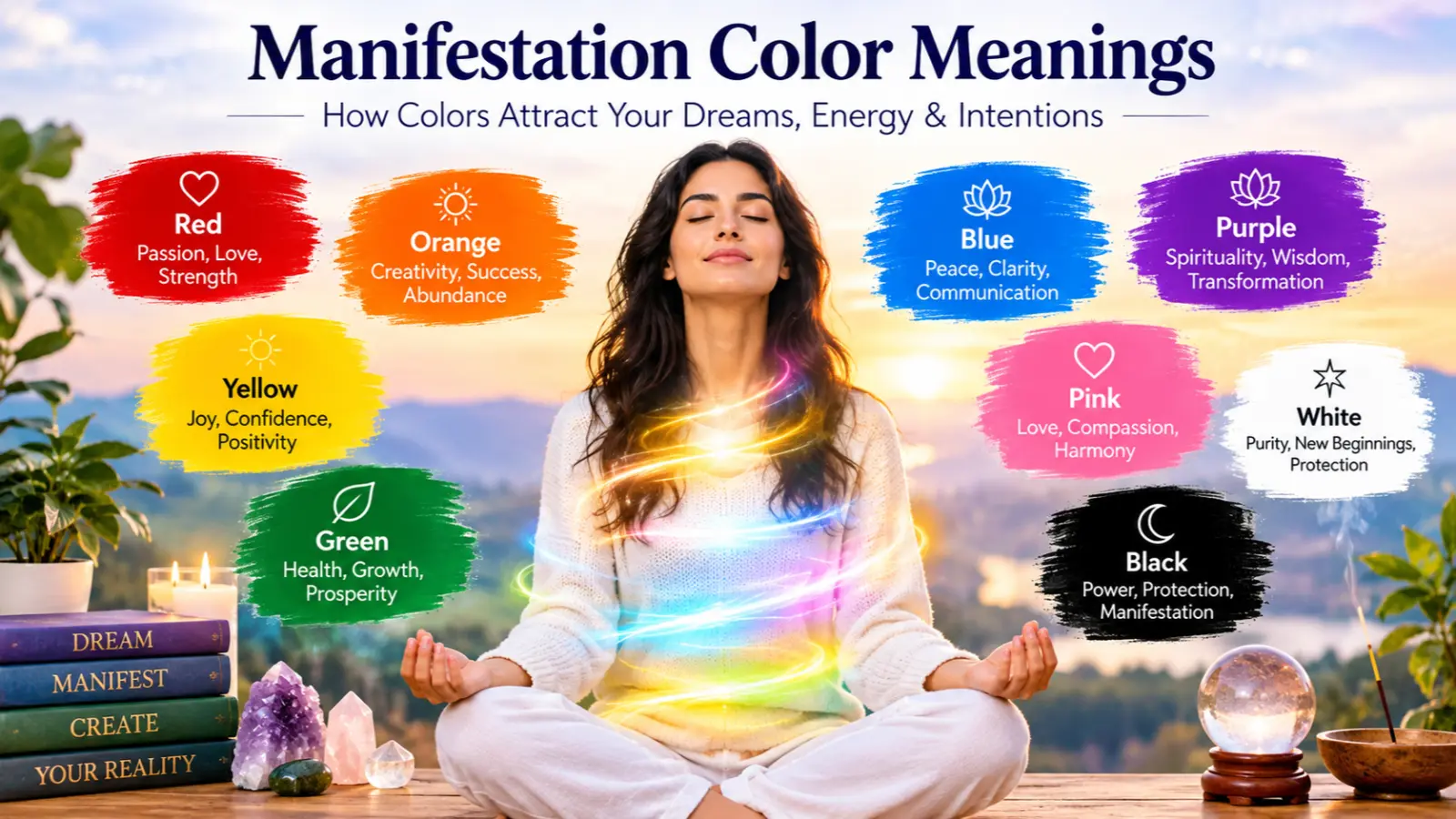
Manifestation color meanings describe the symbolic associations people give to different colors when setting intentions, visualizing goals, practicing meditation, or creating spiritual rituals. In modern manifestation practices, colors are often selected to represent intentions such as love, abundance, healing, confidence, peace, protection, or personal transformation.
Different traditions may assign different meanings to the same color, so these interpretations are not universal. Color psychology also suggests that colors can influence perception, attention, and emotional responses, although there is no established scientific evidence that a particular color can directly cause a desired life outcome.
Quick answer:
manifestation colors are symbolic tools that can help people focus their intentions and create a meaningful visual or emotional association with their goals.
What Does the Color Manifestation Symbolize?
There is no single “manifestation color.” Instead, manifestation practices commonly associate different colors with different intentions. The color chosen usually represents the quality or outcome a person wants to emphasize.
For example, someone focusing on financial goals may choose green or gold because these colors are traditionally associated with prosperity, growth, abundance, or success. Someone concentrating on romantic relationships may use pink or red, while blue may represent peace, communication, emotional balance, or spiritual reflection.
Common manifestation color associations include:
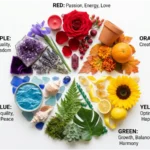
- Red: passion, courage, vitality, motivation, action, and physical energy.
- Orange: creativity, enthusiasm, confidence, sociability, and opportunity.
- Yellow: optimism, happiness, confidence, mental clarity, and personal power.
- Green: growth, abundance, prosperity, balance, healing, and renewal.
- Blue: peace, communication, trust, calmness, wisdom, and emotional stability.
- Purple: spirituality, intuition, transformation, imagination, and higher consciousness.
- Pink: love, compassion, tenderness, emotional connection, and self-love.
- White: purity, clarity, peace, new beginnings, and spiritual cleansing.
- Black: protection, boundaries, mystery, strength, grounding, and transformation.
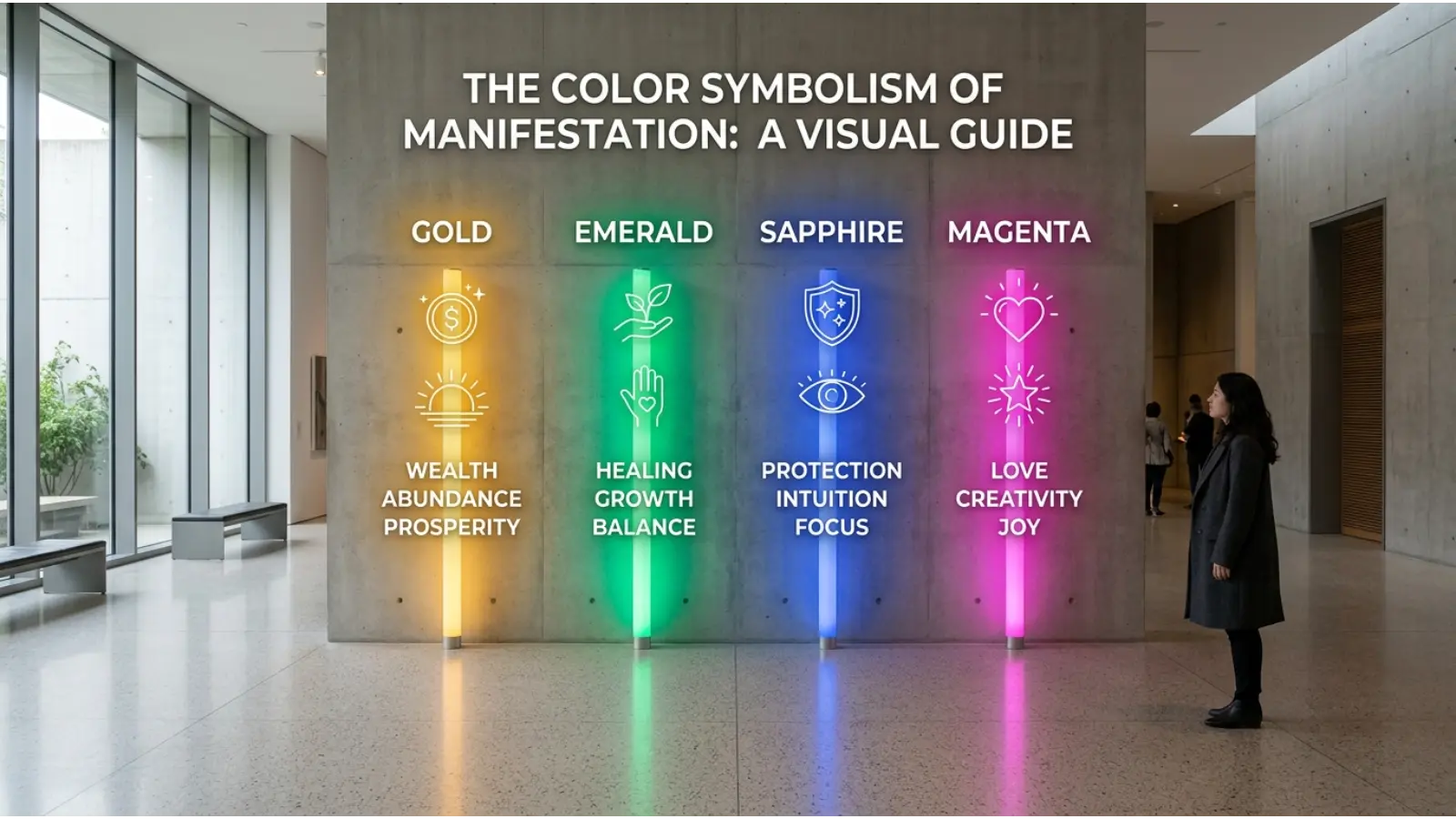
- Gold: success, prosperity, achievement, confidence, and symbolic wealth.
- Silver: intuition, reflection, receptivity, modernity, and lunar symbolism.
- Brown: grounding, stability, practicality, security, and connection with nature.
These meanings should be understood as symbolic associations rather than guaranteed energetic effects. A person may use a color because it reminds them of a goal, creates a particular atmosphere, or helps make an intention feel more concrete.
Psychological Characteristics of Manifestation Colors
Emotional Associations
Color can affect how people perceive environments, products, clothing, and visual messages. However, responses vary according to context, personal experience, culture, saturation, brightness, and individual preference.
In manifestation practices, color is often used as a psychological cue. Seeing a particular color repeatedly can remind someone of an intention and encourage them to return their attention to that goal.
Common emotional associations include:
- Red: excitement, urgency, passion, determination, and intensity.
- Orange: energy, enthusiasm, warmth, and creativity.
- Yellow: optimism, attention, happiness, and mental stimulation.
- Green: calmness, nature, growth, and renewal.
- Blue: tranquility, trust, stability, and communication.
- Purple: imagination, mystery, spirituality, and introspection.
- Pink: affection, compassion, softness, and emotional warmth.
- White: cleanliness, simplicity, openness, and peace.
- Black: seriousness, sophistication, authority, mystery, and protection.
Psychological Effects
The psychological meaning of a color depends heavily on how it is presented.
A bright red wall, for example, can create a very different impression from a small red accent in a meditation journal. Similarly, pale blue may feel more tranquil than an extremely saturated blue.
For manifestation, the psychological usefulness of color may therefore come from association and attention rather than from a proven ability to produce supernatural outcomes.
A person who consistently uses green while planning financial goals may begin to associate green with saving, budgeting, career development, or abundance. The color becomes a visual reminder of the intended behavior.
Positive Emotional Responses
Depending on context, manifestation colors may be associated with:
- Hope
- Motivation
- Confidence
- Calmness
- Optimism
- Creativity
- Love
- Compassion
- Security
- Spiritual reflection
- Renewal
- Personal empowerment
Negative Emotional Responses
The same colors can also create less comfortable associations.
For example:
- Red can suggest anger or danger.
- Yellow can sometimes appear overwhelming or anxious when highly saturated.
- Green may be associated with jealousy in some contexts.
- Blue can sometimes suggest sadness or emotional distance.
- Purple can feel artificial or overly dramatic when used excessively.
- Black can suggest grief, fear, authority, or heaviness.
- White can sometimes appear sterile or emotionally distant.
These responses demonstrate why color symbolism should not be treated as universal.
Impact on Mood and Behavior
Colors may influence attention, expectations, aesthetic preference, and emotional interpretation. Environmental color can also affect how people describe a space or product.
In manifestation routines, color can function as an intentional environmental cue. A person might use a specific color in a vision board, journal, candle arrangement, digital wallpaper, artwork, or meditation space.
The important distinction is that the color itself is not scientifically established as a mechanism for producing a desired external event. Its potential value is more realistically understood through attention, symbolism, motivation, and personal meaning.
How People Typically React to Manifestation Colors
People do not react to manifestation colors in exactly the same way. Responses can depend on:
- Cultural background
- Personal memories
- Age and life experiences
- Religious or spiritual beliefs
- Color preference
- Context
- Brightness and saturation
- Combinations with other colors
- Social and historical associations
For this reason, manifestation color meanings are best used as flexible symbolic guidelines rather than fixed psychological rules.
Spiritual Meaning of Manifestation Colors
Spiritual interpretations of colors appear across many traditions, although the meanings differ considerably. Modern manifestation practices often combine elements from spirituality, meditation, visualization, New Age traditions, folk symbolism, and personal ritual.
Holiness
White and gold are frequently associated with sacredness, divine light, purity, or holiness in various religious and spiritual contexts.
Wisdom
Blue, purple, white, and gold can symbolize wisdom or spiritual knowledge in different traditions. Purple is especially common in modern spiritual practices involving intuition and contemplation.
Purity
White is widely associated with purity, cleanliness, innocence, and renewal, although its cultural meaning varies.
Transformation
Purple, black, red, and deep blue may be used symbolically to represent transformation, personal growth, endings, or movement into a new stage of life.
Healing
Green is commonly connected with nature, restoration, growth, and healing symbolism. Blue may also be associated with calmness and emotional restoration.
These are symbolic associations and should not be interpreted as evidence that colored objects can medically heal illness.
Protection
Black, blue, white, and red may be used in different spiritual systems to symbolize protection, boundaries, strength, or defensive energy.
Power
Red, gold, purple, and black have all been associated with power in different historical and cultural contexts.
Enlightenment
White, gold, purple, and blue may represent illumination, spiritual awareness, insight, or higher understanding in contemporary spiritual symbolism.
New Beginnings
White, green, yellow, and light blue can symbolize renewal, growth, hope, and fresh starts.
Eternity
Gold, white, blue, and purple may be associated with timelessness, the divine, infinity, or spiritual continuity in particular traditions.
The exact interpretation depends on the belief system being used. There is no single universal spiritual dictionary for colors.
Positive and Negative Meanings of Manifestation Colors
Positive Meanings
Manifestation color symbolism commonly emphasizes positive concepts such as:
- Purity: White can represent a clean beginning or clear intention.
- Peace: Blue and white are often used to create a calm visual atmosphere.
- Simplicity: White and neutral colors can reduce visual complexity.
- Clarity: Yellow, white, and blue can symbolically represent clear thinking.
- Freshness: Green and white are often associated with renewal.
- Hope: Yellow, green, and light blue can communicate optimism.
- Balance: Green is frequently connected with equilibrium and harmony.
- Harmony: Blue, green, and pink can represent cooperation and emotional balance.
- Abundance: Green and gold are commonly used to symbolize prosperity.
- Love: Pink and red are frequently used for romantic or emotional intentions.
- Confidence: Red, orange, yellow, and gold can represent personal power.
Real-world example: A person creating a vision board for a new career might use gold for achievement, green for financial growth, and blue for professional communication.
Negative Meanings
Colors can also acquire negative symbolism depending on context.
- Emptiness: Excessive white may sometimes be perceived as blank or emotionally empty.
- Isolation: Blue or gray can suggest distance or solitude in certain contexts.
- Coldness: Cool colors may feel emotionally distant when used without warmer accents.
- Sterility: White can communicate clinical cleanliness rather than spiritual purity.
- Boredom: Neutral colors may feel uninspiring when there is little visual variation.
- Emotional distance: Dark blue, gray, or black may create a more reserved impression.
- Perfectionism: White can symbolically represent an ideal of flawlessness or purity that becomes unrealistic.
- Overstimulation: Bright red, orange, or yellow can become visually intense when overused.
- Materialism: Gold may symbolize wealth but can also communicate excessive luxury depending on context.
Real-world example: An abundance-themed room decorated entirely in metallic gold could communicate prosperity, but too much gold may make the space feel excessive rather than balanced.
Meanings of Manifestation Colors
Manifestation color meanings change according to the intention, cultural background, personal symbolism, and visual context.
Someone manifesting love may choose pink, while another person may choose red because they associate red with passion. Someone focusing on financial stability might select green, gold, or brown depending on whether they emphasize growth, success, or security.
A useful approach is to select colors based on the meaning you personally want the color to reinforce.
Feng Shui
Feng Shui is a traditional Chinese practice involving the arrangement of spaces and the relationship between people and their environments. Color associations in Feng Shui are connected with the Five Elements, although exact applications vary among schools and practitioners.
Common traditional associations include:
- Red: Fire; vitality, visibility, warmth, and activation.
- Orange: Fire; enthusiasm and social energy.
- Yellow: Earth; stability, nourishment, and grounding.
- Green: Wood; growth, vitality, and renewal.
- Blue: Water; calmness, depth, and flow.
- Black: Water; depth and introspection.
- White: Metal; clarity, precision, and cleanliness.
- Gray: Metal; neutrality and refinement.
- Brown: Earth; stability and grounding.
For manifestation-oriented decorating, colors can be chosen according to the desired atmosphere rather than assuming that a particular shade guarantees an outcome.
Best rooms: Green may suit spaces intended for growth and renewal, blue can work well in calm areas, and warm colors may be useful in social spaces.
Recommended combinations: Green and natural wood tones can create a nature-inspired environment. Blue and white can create a calm aesthetic. Gold can be used as an accent with neutral colors.
Home decorating tips: Use manifestation colors as accents through artwork, textiles, journals, plants, accessories, or small decorative objects rather than covering an entire room in one intense color.
Marketing
Color is an important component of branding, packaging, advertising, and visual identity. Marketers use color strategically because it can influence attention and contribute to brand associations.
Branding Psychology
Brands may select colors to communicate concepts such as:
- Energy
- Trust
- Luxury
- Nature
- Innovation
- Youthfulness
- Stability
- Creativity
However, color alone does not determine consumer behavior. Typography, imagery, product quality, pricing, brand reputation, and cultural context also matter.
Consumer Perception
Red may attract attention and communicate energy. Blue is frequently used in corporate and technology branding because it can suggest reliability or professionalism. Green commonly appears in environmental, wellness, and financial contexts.
These associations are tendencies rather than universal psychological responses.
Trust Signals
Blue is frequently used by organizations seeking a professional or dependable visual identity. White can reinforce simplicity and clarity, while dark colors can communicate seriousness or premium positioning.
Product Packaging
Packaging designers may use green for natural products, gold for premium products, pink for beauty or relationship-oriented products, and bright colors for products intended to feel energetic or youthful.
Advertising Applications
Manifestation-related businesses may use purple, gold, green, pink, and blue to create spiritual, aspirational, calming, or abundance-oriented visual identities.
Famous brands that use strong color identities include Tiffany & Co., associated with its distinctive blue; Coca-Cola, strongly associated with red; Starbucks, associated with green; and McDonald’s, whose visual identity prominently uses red and yellow.
Design
Manifestation colors can be incorporated into visual design according to the psychological and symbolic impression a project needs to create.
Interior Design
Green can create a natural and restorative atmosphere. Blue may support a calm visual environment. Gold can add a sense of luxury, while purple can introduce a spiritual or creative quality.
Graphic Design
Color hierarchy helps direct attention. A designer might use gold for an important achievement, green for growth-related information, or red for a strong call to action.
Web Design
Manifestation websites often combine soft gradients, natural tones, purple, gold, white, and blue to create spiritual or aspirational aesthetics.
Good web design should still prioritize contrast, readability, accessibility, and usability over symbolism.
User Experience
Color can help distinguish actions, categories, warnings, status indicators, and interactive elements. Symbolic meaning should never replace clear UX conventions.
Minimalist Aesthetics
White, beige, muted green, soft blue, and neutral tones can create a minimalist manifestation aesthetic. Small accents of gold or purple can provide emphasis without overwhelming the interface.
Fashion
Manifestation color meanings can also influence clothing choices. Some people intentionally wear a color because they want to psychologically connect themselves with a particular intention.
Clothing Symbolism
- Red can communicate confidence, passion, and energy.
- Green can symbolize growth and renewal.
- Blue can suggest calmness and professionalism.
- Purple can create a creative or spiritual impression.
- Pink can communicate softness and affection.
- Black can suggest authority, sophistication, or mystery.
- White can communicate simplicity and freshness.
- Gold can create a luxurious or celebratory appearance.
Seasonal Use
Pastel colors are often popular in spring and summer fashion, while darker and richer colors frequently appear in fall and winter collections. Fashion trends can change these associations considerably.
Styling Effects
A small amount of a manifestation color can function as an accent. For example, someone focusing on confidence could wear a red accessory rather than an entirely red outfit.
Personality Impressions
Color can contribute to first impressions, but clothing color should not be treated as a reliable personality test. A person’s outfit is influenced by culture, profession, occasion, comfort, fashion trends, and individual preference.
Advantages and Disadvantages
Advantages:
- Creates a visible reminder of an intention.
- Can strengthen personal symbolism.
- Helps coordinate a personal aesthetic.
- Makes ritual or journaling practices more visually memorable.
- Allows people to express identity and mood.
Potential disadvantages:
- Color meanings can become overly rigid.
- Cultural symbolism can be misunderstood.
- Excessive reliance on color may replace practical goal-setting.
- Very bright colors may be inappropriate for certain professional or social settings.
- Symbolic associations can differ dramatically between people.
Practical example: Someone preparing for a job interview might choose blue clothing because they associate it with calmness and professionalism while using a small gold accessory as a personal symbol of achievement.
Color Associations Are Not Universal
Western Cultures
In many Western contexts, white is commonly associated with weddings, cleanliness, simplicity, and new beginnings, while black can represent sophistication, formality, mourning, or authority. Red can signify romance, danger, urgency, or passion depending on context.
Even within Western societies, meanings vary between industries and social groups.
Eastern Cultures
Color meanings in Asian cultures can differ significantly from Western conventions. Red, for example, has strong associations with celebration, prosperity, luck, and happiness in many Chinese cultural contexts. White can have associations with mourning in some East Asian traditions.
These examples demonstrate why a color should not automatically be assigned one universal meaning.
Religious Traditions
Religious traditions frequently use colors symbolically in clothing, architecture, ceremonies, art, and sacred objects. Purple, white, red, green, blue, gold, and other colors may carry specific meanings within particular denominations or traditions.
A spiritual interpretation should therefore be attributed to the tradition in which it occurs rather than presented as a universal fact.
Historical Interpretations
Color symbolism has changed throughout history because pigments, dyes, social structures, trade networks, political institutions, and religious practices changed.
Purple, for example, was historically difficult and expensive to produce in some societies, contributing to associations with status and authority.
Modern Global Interpretations
Today, social media, advertising, entertainment, fashion, and international commerce constantly mix cultural color associations.
A modern manifestation practice may combine Western self-help language with Eastern-inspired meditation, contemporary branding aesthetics, astrology, or other spiritual influences.
Because of this blending, modern manifestation color meanings are best understood as contemporary symbolic conventions rather than a single ancient or universal system.
What Manifestation Color Preference Says About Your Personality
People sometimes use color preferences as a way of reflecting on personality. However, liking a particular color does not reliably determine personality traits.
Color preference can be influenced by memories, culture, fashion, environment, age, personal experiences, and current emotional state.
Still, symbolic interpretations may provide useful prompts for self-reflection.
Strengths
People who consistently prefer energetic colors such as red or orange may describe themselves as motivated, expressive, or action-oriented. Those who prefer blue or green may value calmness, stability, or balance.
These are symbolic interpretations rather than established personality classifications.
Weaknesses
A strong preference for highly controlled or minimalist color schemes might symbolically be associated with order and structure, while very dark palettes may be interpreted as reserved or serious.
Such interpretations should not be treated as psychological diagnoses.
Social Behavior
Color preferences can influence how someone presents themselves socially. Bright colors may attract attention, whereas neutral or darker colors can create a more understated appearance.
Work Style
A person who uses green and blue in their workspace may be trying to create a calm and organized environment. Someone using orange, yellow, or red may prefer a more stimulating visual atmosphere.
The chosen colors reveal something about the environment the person wants, but they do not establish a particular work personality.
Relationships
Pink and red are commonly used symbolically for love and intimacy, while blue may represent communication and trust. Green can symbolize emotional growth and balance.
These associations can be useful for personal reflection but should not be used to judge a person’s relationships.
Emotional Tendencies
Someone might select blue when seeking calmness or yellow when focusing on optimism. The color may therefore reflect a current intention rather than a permanent emotional characteristic.
Ultimately, manifestation color preference is better viewed as a personal symbolism system than as a scientifically validated personality test.
Frequently Asked Questions
What defines manifestation color meaning?
Manifestation color meaning refers to the symbolic associations assigned to colors within manifestation, visualization, spiritual, and intention-setting practices. Different systems may assign different meanings to the same color.
What does manifestation color symbolize?
Manifestation colors symbolize different intentions. Green is commonly associated with growth and abundance, red with passion and action, blue with peace and communication, purple with spirituality, pink with love, and gold with achievement or prosperity.
Why are manifestation colors important?
They can provide visual reminders of personal goals and make an intention more memorable. Their usefulness is primarily symbolic and psychological rather than evidence that colors can directly produce external outcomes.
Is manifestation color a warm or cool color?
There is no single manifestation color. Red, orange, and yellow are generally considered warm colors, while blue, green, and many blue-based purples are generally considered cool colors.
What emotions do manifestation colors represent?
Different colors are associated with different emotions. Red may suggest passion or energy, blue calmness or trust, green renewal or balance, yellow optimism, purple spirituality, and pink affection.
What does manifestation color mean spiritually?
Spiritually, colors may represent qualities such as protection, healing, transformation, purity, wisdom, abundance, love, or enlightenment. The exact meaning depends on the spiritual or religious tradition.
What colors pair well with manifestation colors?
Common combinations include green and gold for abundance, blue and white for peace, purple and gold for spirituality and luxury, pink and white for love and compassion, and red with neutral colors for energy and emphasis.
What does liking a manifestation color say about a person?
It does not establish a person’s personality. Color preference can reflect personal taste, cultural experience, memories, fashion, environment, or current intentions.
What color is commonly used for money manifestation?
Green and gold are frequently used symbolically for financial abundance and prosperity. Their use comes from cultural associations with money, growth, wealth, and value rather than scientific evidence that the colors themselves attract money.
What color is used for love manifestation?
Pink and red are among the most common symbolic choices. Pink is often associated with affection and compassion, while red can represent passion, romance, vitality, and desire.
What color represents protection in manifestation?
Black, white, blue, and red may be used symbolically for protection depending on the spiritual tradition. There is no universally accepted protection color.
What color represents new beginnings?
White, green, yellow, and light blue can symbolize new beginnings, renewal, hope, and fresh opportunities. The best choice depends on the personal symbolism a person finds meaningful.
Conclusion
Manifestation color meanings provide a visual language for expressing intentions, emotions, aspirations, and spiritual ideas. Green may represent abundance and growth, red passion and action, blue peace and communication, purple spirituality and transformation, pink love, white new beginnings, and gold achievement or prosperity. However, these associations are not universal, and there is no established scientific evidence that a particular color can directly manifest a desired event. The most practical approach is to use colors as intentional reminders alongside realistic goal-setting, planning, reflection, and action. A color can help make an intention memorable and emotionally meaningful, while the actual achievement of a goal depends on circumstances, decisions, resources, behavior, and opportunity. Understanding both the symbolism and the limitations of manifestation colors allows them to be used thoughtfully in spirituality, design, fashion, journaling, branding, and everyday life.