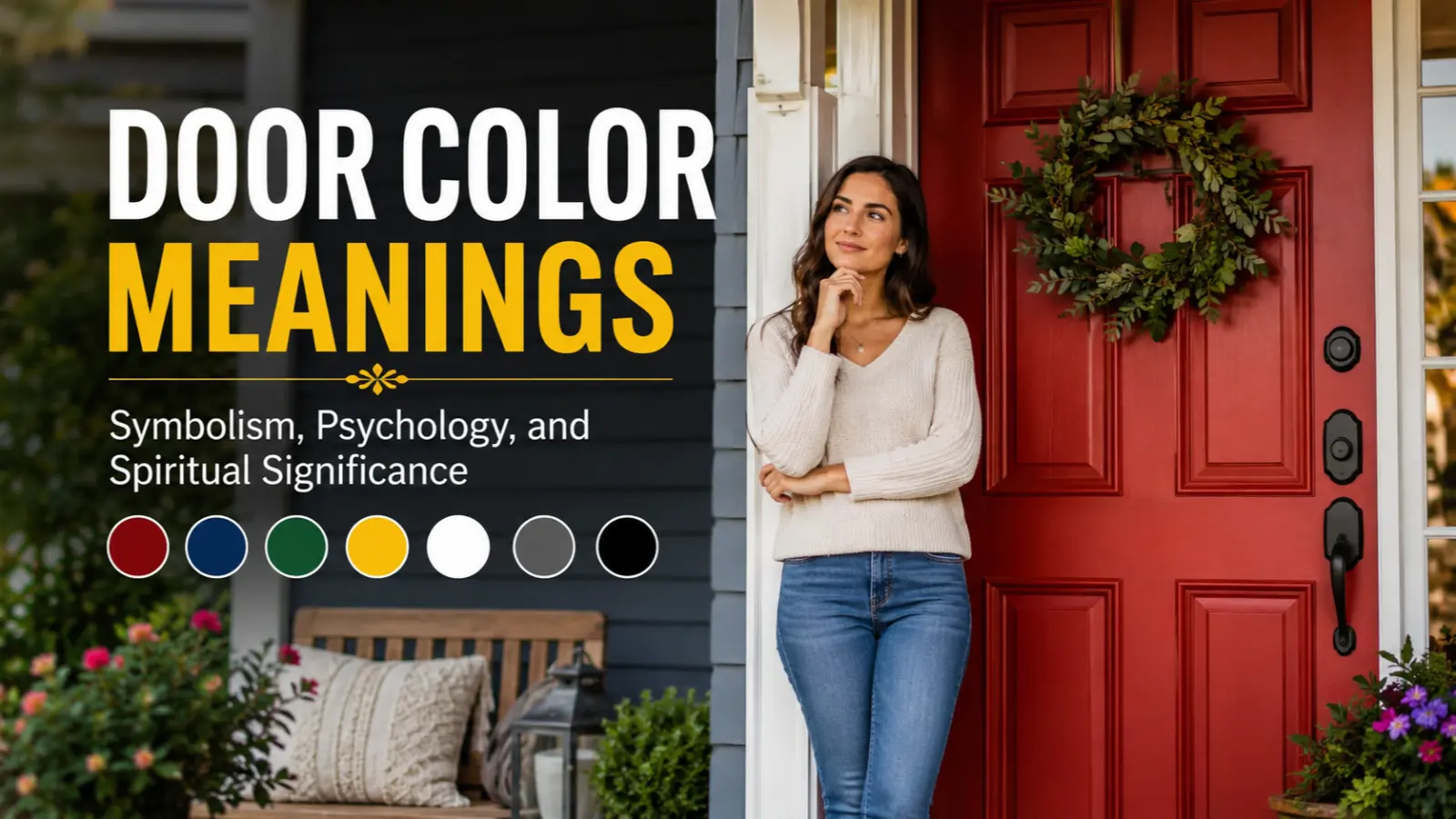
Choosing a door color is about more than improving curb appeal. Across cultures and traditions, door colors communicate personality, values, emotions, and even intentions. In color psychology, the color of a front door can influence first impressions, create emotional expectations, and reflect the atmosphere within a home or business.
Whether you prefer a bold red entrance, a calming blue doorway, or a timeless black finish, each shade carries unique symbolism. Understanding door color meanings helps homeowners, designers, and businesses make intentional choices that balance aesthetics with emotional impact.
Quick Answer:
Door color meanings vary by color, culture, and context, but they commonly symbolize welcome, protection, personality, prosperity, security, and the emotional tone of a home or building.
What Does the Color Door Symbolize?
Unlike individual colors, door color meanings focus on what each color communicates when applied to an entrance. A door represents transition, opportunity, protection, and hospitality, while its color adds another layer of symbolism.
Common symbolic meanings include:
- Red: Energy, welcome, passion, and good fortune.
- Blue: Trust, peace, reliability, and stability.
- Green: Growth, renewal, prosperity, and harmony.
- Yellow: Happiness, optimism, creativity, and warmth.
- Black: Elegance, authority, sophistication, and security.
- White: Purity, simplicity, cleanliness, and fresh beginnings.
- Gray: Balance, professionalism, neutrality, and maturity.
- Brown: Stability, comfort, dependability, and connection to nature.
- Purple: Luxury, creativity, wisdom, and spirituality.
- Orange: Enthusiasm, friendliness, adventure, and confidence.
The symbolism of a door color often depends on architectural style, neighborhood traditions, cultural beliefs, and personal preference.
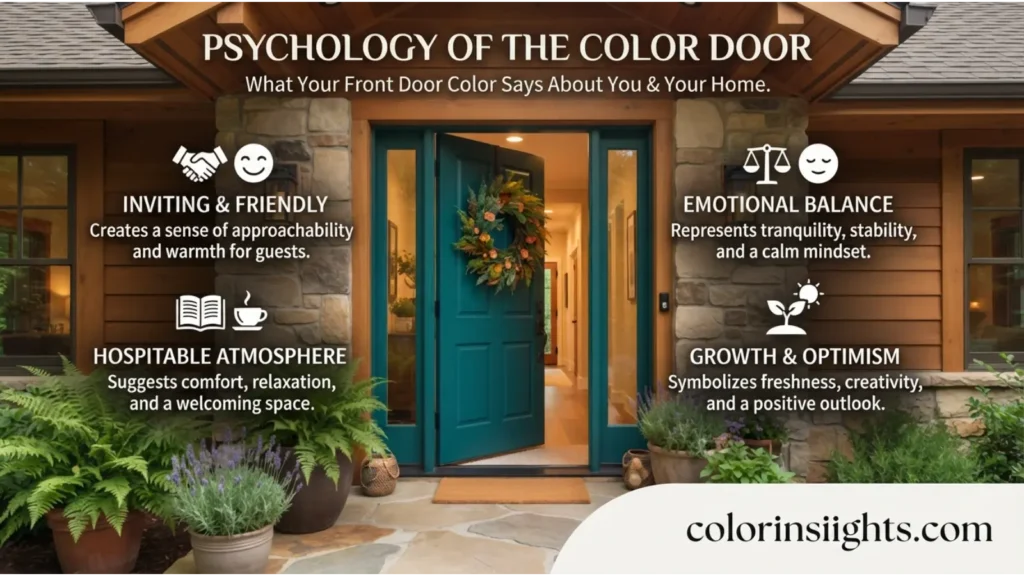
Psychological Characteristics of the Color Door
From a psychological perspective, door colors shape expectations before someone even enters a building. Environmental psychology shows that color influences emotional responses and first impressions.
Emotional Associations
- Creates feelings of welcome or caution.
- Reflects the homeowner’s personality.
- Sets expectations for the interior environment.
- Influences perceived warmth or professionalism.
Psychological Effects
- Warm colors encourage energy and social interaction.
- Cool colors promote calmness and relaxation.
- Neutral shades communicate stability and sophistication.
- Dark colors create authority and privacy.
Positive Emotional Responses
- Comfort
- Trust
- Curiosity
- Excitement
- Confidence
- Safety
- Hospitality
Negative Emotional Responses
- Intimidation
- Coldness
- Distance
- Overstimulation
- Boredom
- Formality
- Uncertainty
Impact on Mood and Behavior
A brightly colored entrance often feels inviting and memorable, while muted colors create a calm and understated appearance. Visitors frequently make subconscious judgments about a property’s warmth, cleanliness, and security based on the front door color.
Typical Reactions
People often associate:
- Red doors with confidence and friendliness.
- Blue doors with dependability.
- Black doors with luxury.
- Green doors with balance.
- White doors with cleanliness.
- Yellow doors with optimism.
Spiritual Meaning of the Color Door
Many spiritual traditions consider a doorway the symbolic boundary between the outer world and personal space. Therefore, the chosen color often represents spiritual intentions.
Common spiritual meanings include:
- Holiness: White doors symbolize purity and sacred spaces.
- Wisdom: Purple and deep blue doors represent higher understanding.
- Purity: White reflects innocence and spiritual cleansing.
- Transformation: Green symbolizes growth and personal renewal.
- Healing: Soft blue and green encourage emotional restoration.
- Protection: Red and black are traditionally believed to ward off negative energy in various cultures.
- Power: Black and deep red communicate strength and resilience.
- Enlightenment: Gold and yellow symbolize knowledge and optimism.
- New Beginnings: White and light green represent fresh starts.
- Eternity: Deep blue reflects stability and timelessness.
Although these meanings differ among cultures and religions, many people intentionally choose door colors based on symbolic beliefs.
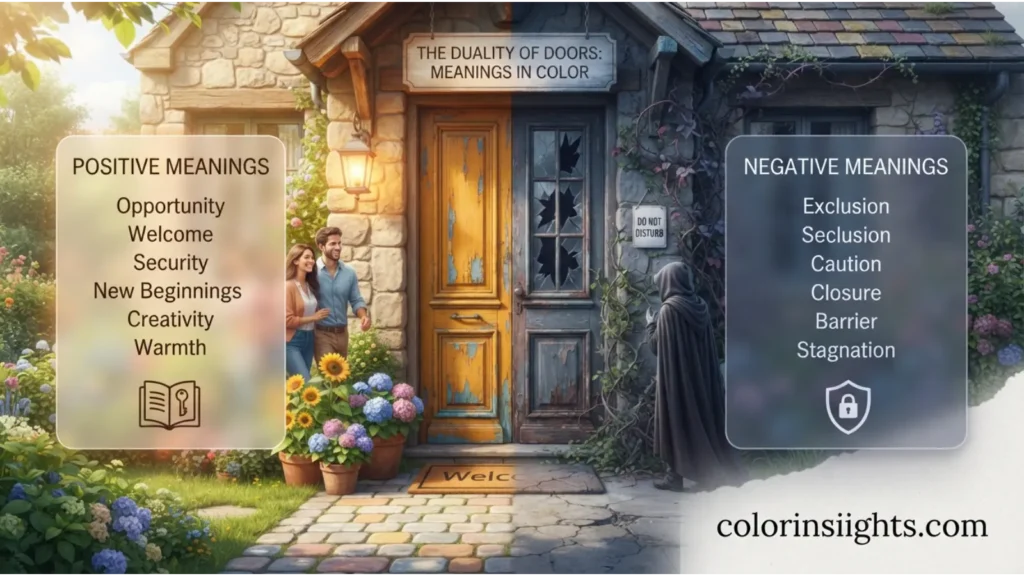
Positive and Negative Meanings of the Color Door
Positive Meanings
Door colors can communicate many uplifting qualities.
- Purity: White doors create a fresh, clean appearance.
- Peace: Blue entrances encourage calm surroundings.
- Simplicity: Neutral colors complement minimalist homes.
- Clarity: Gray offers a balanced and organized impression.
- Freshness: Green symbolizes nature and renewal.
- Hope: Yellow creates an optimistic welcome.
- Balance: Earth tones blend naturally with outdoor spaces.
- Harmony: Soft colors encourage emotional comfort.
Real-world example:
Many healthcare facilities choose calming blue or green entrances to reduce visitor anxiety.
Negative Meanings
Context also influences negative interpretations.
- Emptiness: Plain white may appear lifeless without accents.
- Isolation: Dark gray or black can seem uninviting.
- Coldness: Cool colors may feel emotionally distant.
- Sterility: Bright white sometimes resembles institutional buildings.
- Boredom: Neutral shades may appear plain when overused.
- Emotional Distance: Excessive black can feel intimidating.
- Perfectionism: Crisp monochromatic designs may seem overly formal.
Real-world example:
A business using a dark, unwelcoming entrance might discourage walk-in customers despite excellent products or services.
Meanings of the Color Door
Door color meanings change depending on architecture, culture, climate, and intended emotional effect.
Feng Shui
In Feng Shui, the front door is considered the “mouth of chi,” where energy enters a home.
- Associated element: Depends on the color. Green represents Wood, red represents Fire, black and blue represent Water, white represents Metal, and yellow or brown represent Earth.
- Energy symbolism: Different colors attract prosperity, health, harmony, or career opportunities.
- Best rooms: Front entrances, garden gates, and main access points.
- Recommended combinations: Black with white, green with natural wood, navy with gray, or red with neutral stone.
- Home decorating tips: Match the door color with the home’s orientation and surrounding landscape for balanced energy.
Marketing
Businesses carefully select entrance colors to reinforce their brand identity.
- Builds strong first impressions.
- Influences customer expectations.
- Reinforces trust and professionalism.
- Improves brand recognition.
- Enhances storefront visibility.
Branding psychology
- Blue communicates trust.
- Red creates urgency.
- Green signals sustainability.
- Black suggests luxury.
- White emphasizes simplicity.
Consumer perception
Customers often associate door colors with business quality, reliability, and atmosphere before entering.
Trust signals
Banks, medical offices, and technology companies frequently incorporate blue or neutral entrances to encourage confidence.
Product packaging and advertising
Door colors frequently appear in advertising visuals because they symbolize hospitality, opportunity, and security.
Brands using these color strategies
Companies such as Apple, Starbucks, Whole Foods Market, Tiffany & Co., Target, and McDonald’s consistently use carefully selected brand colors that influence customer expectations and emotional responses.
Design
Door colors play an important role in visual communication.
Interior Design
- Create focal points.
- Improve visual balance.
- Complement architectural styles.
- Enhance room transitions.
Graphic Design
Colored doors frequently symbolize opportunity, mystery, security, or transformation in illustrations and advertising.
Web Design
Designers often use door-inspired color palettes to represent accessibility, trust, and user journeys.
User Experience
Entrance colors help users recognize important access points in hospitals, schools, hotels, and office buildings.
Minimalist Aesthetics
Simple black, gray, or white doors create clean, timeless designs that remain popular in contemporary architecture.
Fashion
Although doors themselves are not fashion items, door colors influence fashion photography, lifestyle branding, and home aesthetics.
- Clothing symbolism: Door colors often complement wardrobe choices in lifestyle photography.
- Seasonal use: Bright doors work well during spring and summer, while darker tones suit autumn and winter.
- Styling effects: Contrasting door colors create visually striking backgrounds.
- Personality impressions: Bold colors suggest confidence, while soft neutrals communicate elegance.
- Advantages: Enhances photographs, boosts curb appeal, and expresses individuality.
- Disadvantages: Trendy colors may become outdated faster than classic neutrals.
For example, a navy-blue door paired with white trim creates a timeless look suitable for both traditional and modern homes.
Color Associations Are Not Universal
Door color symbolism varies across societies and historical periods.
Western Cultures
In North America and much of Europe, red often symbolizes hospitality, black represents sophistication, and blue communicates trust. White is commonly associated with cleanliness and simplicity.
Eastern Cultures
Many Asian traditions associate red with prosperity, happiness, celebration, and protection. Gold often represents wealth, while green may symbolize health and growth.
Religious Traditions
Religious buildings frequently use symbolic door colors. White can represent holiness, purple signifies spiritual authority, green reflects renewal, and blue symbolizes divine protection in various traditions.
Historical Interpretations
Historically, brightly painted doors identified prosperous households, while darker colors reflected durability and practicality. In colonial America, a red front door often signaled that travelers were welcome.
Modern Global Interpretations
Today’s homeowners increasingly choose door colors based on personal style, branding, neighborhood aesthetics, and social media trends rather than traditional symbolism alone.
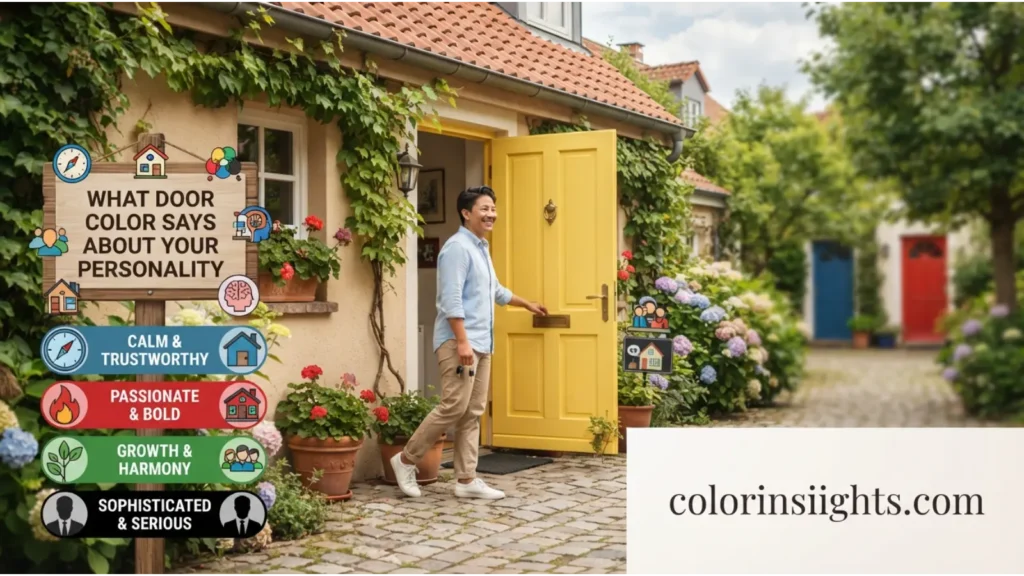
What Door Color Says About Your Personality
Although personality cannot be accurately determined by a favorite door color, psychologists acknowledge that color preferences may reflect certain emotional tendencies and aesthetic values.
People attracted to bold entrance colors may value self-expression and confidence, while those choosing neutral shades often appreciate stability and simplicity.
Possible personality associations include:
Strengths
- Creative
- Welcoming
- Organized
- Optimistic
- Reliable
- Practical
- Independent
Weaknesses
- Perfectionism
- Cautious decision-making
- Desire for control
- Risk avoidance
- Sensitivity to criticism
Social Behavior
People choosing warm door colors often enjoy social interaction, whereas cool or neutral colors may reflect a preference for calm environments.
Work Style
Color preferences can indicate appreciation for organization, creativity, innovation, or consistency, depending on the chosen shade.
Relationships
Door colors emphasizing warmth may reflect openness and hospitality, while darker colors may suggest privacy and personal boundaries.
Emotional Tendencies
Individuals often choose colors that match their desired emotional environment rather than their permanent personality.
Remember that personality is shaped by life experiences, culture, and environment—not by color preference alone.
FAQs:
What defines door color meaning?
Door color meaning refers to the symbolic, psychological, cultural, and decorative significance associated with the color of an entrance.
What does the color door symbolize?
A door color symbolizes welcome, protection, personality, opportunity, security, and emotional atmosphere.
Why is door color important?
It influences first impressions, enhances curb appeal, reflects personal style, and can affect how visitors perceive a property.
Is there a warm or cool door color?
Yes. Reds, oranges, and yellows are warm colors, while blues, greens, and purples are cool. White, gray, black, and brown are generally neutral.
What emotions do door colors represent?
Depending on the shade, they may express trust, confidence, peace, creativity, luxury, optimism, stability, or comfort.
What is the spiritual meaning of door colors?
Many traditions associate door colors with protection, prosperity, healing, renewal, wisdom, and positive energy entering the home.
What colors pair well with front doors?
Popular combinations include black with white trim, navy with gray, green with natural wood, red with cream, and charcoal with stone accents.
Does door color affect home value?
An attractive, well-maintained front door can improve curb appeal and positively influence buyer perception, although value depends on many additional factors.
Which door color is considered the luckiest?
Many cultures consider red, green, and certain shades of blue to bring prosperity, protection, or positive energy.
What does liking certain door colors say about a person?
Color preferences may reflect individual tastes, emotional goals, and design preferences, but they do not reliably determine personality.
Conclusion
Door color meanings combine psychology, symbolism, culture, spirituality, and design into one powerful visual statement. The right door color can communicate warmth, confidence, elegance, creativity, or tranquility while strengthening a property’s character and curb appeal.
Because meanings differ across cultures and personal experiences, there is no universally “correct” choice. Instead, selecting a door color should balance emotional impact, architectural style, cultural significance, and personal preference.
By understanding the symbolism behind different door colors, homeowners and businesses can create entrances that are both visually appealing and psychologically meaningful.