Sign color meanings play a vital role in how people interpret information, make decisions, and respond to visual messages. Whether on road signs, safety labels, business signage, or public information boards, colors communicate instantly without requiring words.
Different sign colors are carefully selected because they trigger specific psychological responses, represent universal safety standards, and reflect cultural expectations.
Understanding sign color meanings helps businessmen, designers, drivers, and everyday consumers interpret signs more accurately while improving communication and safety.
Quick Answer:
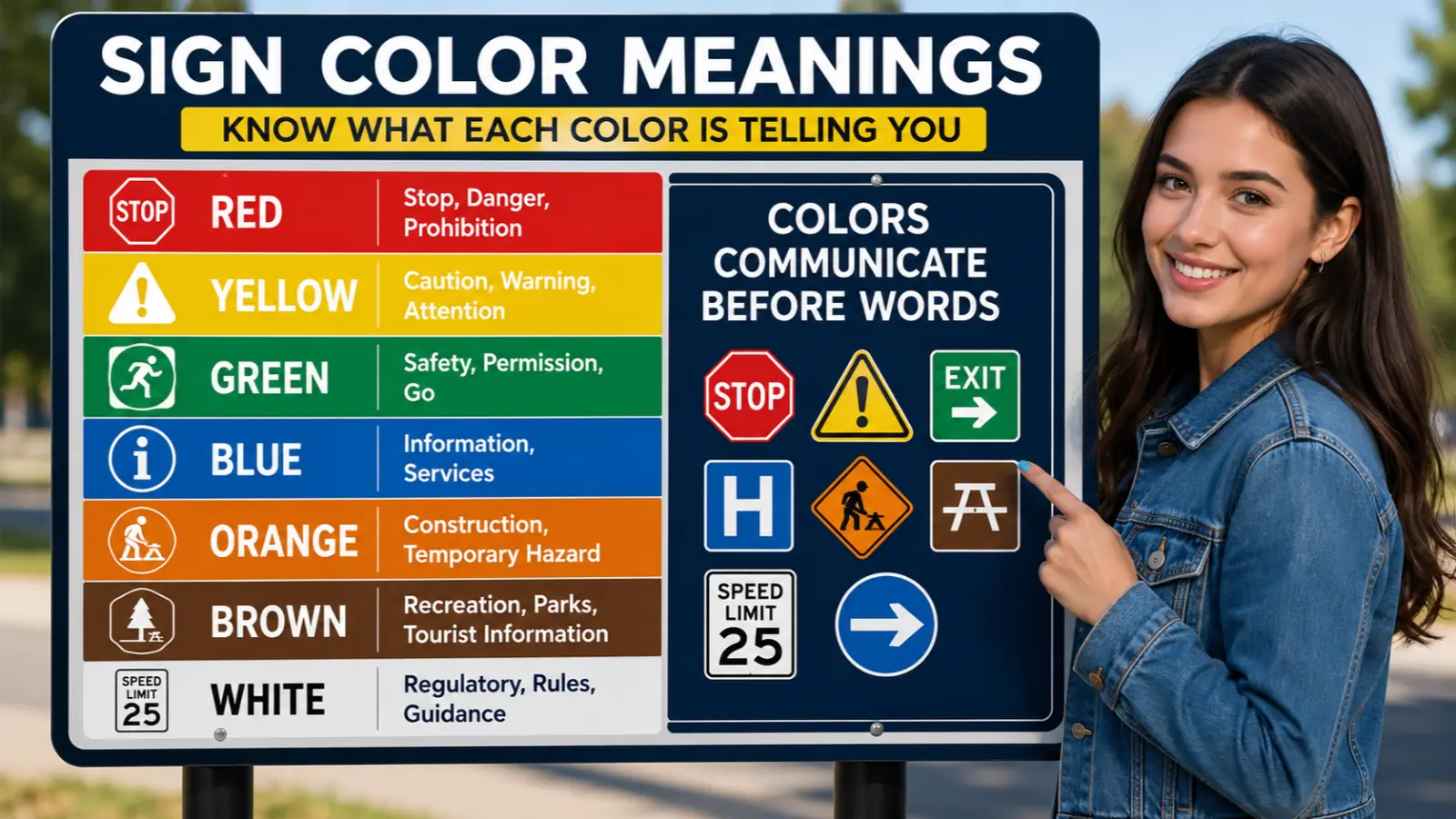
Sign colors are designed to convey specific meanings. Red signals danger or prohibition, yellow warns of caution, green indicates safety or permission, blue provides information, orange highlights temporary hazards, brown identifies recreational sites, and white or black communicate regulations or directions.
What Does the Color Sign Symbolize?
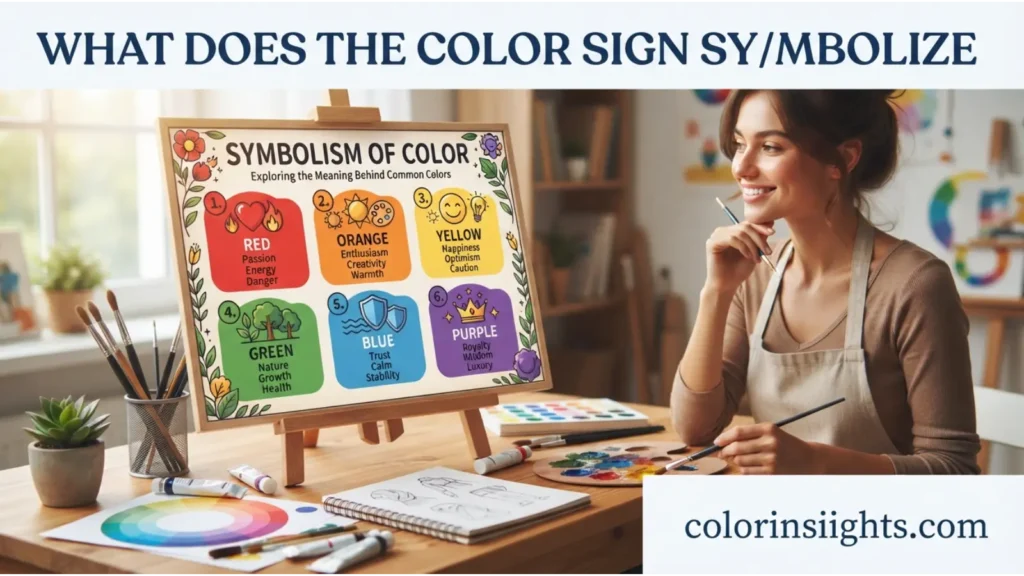
Unlike a single color, sign color meanings represent a standardized visual communication system. Every sign color symbolizes a different message depending on its purpose, industry, and location.
Some of the most recognized sign color meanings include:
- Red: Stop, danger, prohibition, emergency.
- Yellow: Warning, caution, attention.
- Green: Safety, permission, direction, first aid.
- Blue: Information, mandatory instructions, services.
- Orange: Construction zones and temporary hazards.
- Brown: Parks, historical landmarks, recreational destinations.
- White: Regulatory information and traffic rules.
- Black: Directional information, authority, and contrast.
- Purple: Electronic toll routes and restricted roadway information.
These standardized meanings reduce confusion, improve safety, and help people react quickly in critical situations.
Psychological Characteristics of the Color Sign
Color psychology explains why sign colors influence attention, emotions, and behavior almost instantly. Human brains process color faster than text, making color one of the most effective communication tools.
Emotional Associations
- Red creates urgency and alertness.
- Yellow encourages awareness and caution.
- Green produces feelings of safety and reassurance.
- Blue communicates trust, order, and reliability.
- Orange creates alertness without causing panic.
- Brown feels natural, stable, and welcoming.
Psychological Effects
- Colors speed up decision-making.
- Bright colors improve visibility.
- High-contrast combinations increase readability.
- Familiar colors reduce cognitive effort.
Positive Emotional Responses
- Confidence
- Security
- Trust
- Clarity
- Organization
- Calmness
- Direction
- Preparedness
Negative Emotional Responses
- Anxiety from excessive red
- Stress caused by warning colors
- Confusion if colors are inconsistent
- Fear when danger colors are overused
Impact on Mood and Behavior
Sign colors influence how quickly people react.
For example:
- Drivers immediately slow down after seeing yellow warning signs.
- Red stop signs trigger instant braking behavior.
- Green exit signs create reassurance during emergencies.
- Blue information signs encourage calm decision-making.
How People Typically React
Most people unconsciously associate sign colors with learned meanings developed through education, driving experience, workplace safety training, and everyday life.
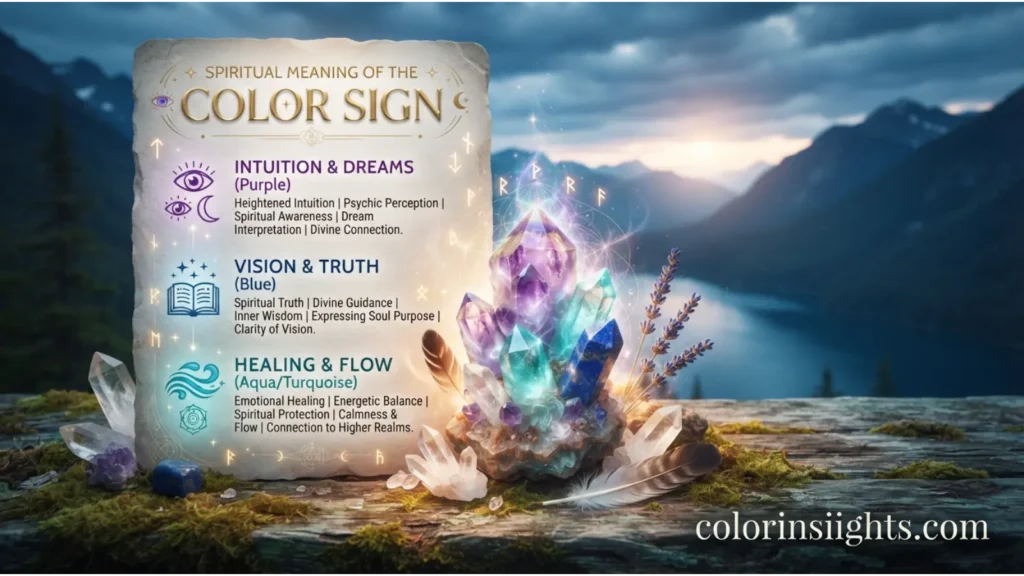
Spiritual Meaning of the Color Sign
Although sign colors primarily serve practical purposes, each color carries spiritual symbolism across different traditions.
Holiness
- White represents divine purity.
- Gold symbolizes sacred wisdom.
- Blue often reflects heavenly guidance.
Wisdom
- Blue signifies knowledge and truth.
- Purple symbolizes spiritual understanding.
- Green represents growth and learning.
Purity
- White symbolizes innocence.
- Light blue suggests peace.
- Silver reflects clarity.
Transformation
- Orange encourages positive change.
- Green represents renewal.
- Yellow symbolizes awakening.
Healing
- Green is commonly associated with health.
- Blue promotes emotional healing.
- White represents restoration.
Protection
- Red symbolizes protection from danger.
- Blue represents divine guardianship.
- Green suggests safety.
Power
- Red symbolizes strength.
- Black represents authority.
- Purple reflects leadership.
Enlightenment
- White symbolizes higher consciousness.
- Yellow represents intellectual awakening.
- Gold reflects divine illumination.
New Beginnings
- Green symbolizes fresh starts.
- White represents clean beginnings.
- Yellow encourages optimism.
Eternity
- Blue reflects infinity.
- White represents everlasting peace.
- Purple symbolizes spiritual continuity.
Positive and Negative Meanings of the Color Sign
Positive Meanings
Sign colors create positive associations when used correctly.
Safety
Green emergency exits help people find safe routes during emergencies.
Peace
Blue informational signs reduce confusion in airports and hospitals.
Simplicity
Black-and-white regulatory signs communicate rules clearly.
Clarity
High-contrast signs improve readability from long distances.
Freshness
Green signs often represent parks, nature, and environmental initiatives.
Hope
Hospital directional systems frequently use calming green and blue colors.
Balance
Consistent sign colors improve navigation and reduce mental workload.
Harmony
Color-coded systems create organized environments in schools, offices, and transportation hubs.
Negative Meanings
Improper use of sign colors can create unwanted reactions.
Emptiness
Overly plain white signs may appear uninviting.
Isolation
Minimal signage may make spaces feel disconnected.
Coldness
Excessive blue may seem impersonal.
Sterility
Too much white can create a clinical atmosphere.
Boredom
Poor color contrast reduces visual engagement.
Emotional Distance
Neutral colors sometimes lack warmth in customer-facing environments.
Perfectionism
Overly rigid color systems may appear inflexible.
Real-world example:
A retail store using only gray signs may seem less welcoming than one combining blue, green, and white for better visual balance.
Meanings of the Color Sign
Sign color meanings vary depending on context, culture, industry, and intended audience.
Feng Shui
In Feng Shui, sign colors influence energy flow.
- Element: Depends on color (green—Wood, red—Fire, white—Metal, blue—Water, yellow—Earth).
- Energy symbolism: Encourages harmony and balance.
- Best rooms: Entryways, offices, reception areas, and workspaces.
- Recommended combinations: Green with wood tones, blue with white, red with gold.
- Decorating tips: Match sign colors with the room’s purpose while maintaining clear visibility.
Marketing
Businesses strategically choose sign colors to influence customer behavior.
Branding Psychology
- Red attracts immediate attention.
- Blue builds trust.
- Green supports sustainability.
- Yellow communicates optimism.
Consumer Perception
People often judge a business within seconds based on signage colors.
Trust Signals
Blue and green are commonly associated with professionalism.
Product Packaging
Color consistency between signs and packaging strengthens brand identity.
Advertising Applications
Bright colors increase visibility on storefronts and billboards.
Examples of Brands
- Coca-Cola uses red for excitement.
- Walmart uses blue for trust.
- Starbucks uses green for growth.
- McDonald’s combines red and yellow for energy and appetite.
Design
Sign colors are essential in visual communication.
Interior Design
Color-coded signs improve navigation in hospitals, hotels, and office buildings.
Graphic Design
High contrast increases readability.
Web Design
Colored icons guide users toward important actions.
User Experience
Consistent color systems reduce confusion.
Minimalist Aesthetics
Simple palettes improve clarity while maintaining a clean appearance.
Fashion
Although sign colors originate in communication systems, they also influence fashion.
Clothing Symbolism
- Red communicates confidence.
- Blue represents reliability.
- Green reflects balance.
- White symbolizes simplicity.
Seasonal Use
Bright colors suit spring and summer, while darker tones work well during fall and winter.
Styling Effects
Color combinations influence perceived professionalism and creativity.
Personality Impressions
People wearing blue are often viewed as dependable, while red creates bold first impressions.
Advantages
- Enhances personal branding.
- Improves visual appeal.
- Supports self-expression.
Disadvantages
- Wrong color combinations may send unintended messages.
- Cultural interpretations differ internationally.
Color Associations Are Not Universal
Although many sign colors are standardized internationally, interpretations still vary.
Western Cultures
Red commonly represents danger, while green indicates permission or safety. Blue is associated with trust and professionalism.
Eastern Cultures
Red often symbolizes prosperity, celebration, and good fortune rather than danger. White may represent mourning in several East Asian traditions.
Religious Traditions
Christian symbolism often associates white with purity, green with hope, purple with repentance, and gold with divine glory. In Islam, green is widely connected with life, mercy, and spiritual significance. Hindu traditions frequently use saffron to symbolize sacrifice and spirituality.
Historical Interpretations
Ancient civilizations used pigments to signify power, status, or religious authority. As transportation systems developed, standardized sign colors became essential for public safety.
Modern Global Interpretations
International standards have made many sign colors universally recognizable, but cultural symbolism still influences branding, advertising, and public communication.
What Sign Color Meanings Say About Your Personality
While personality cannot be determined by color preferences alone, favorite sign colors may reflect certain tendencies.
Red
- Strong leadership
- Confidence
- Determination
- Competitive nature
Blue
- Reliable
- Calm
- Logical
- Trustworthy
Green
- Balanced
- Compassionate
- Patient
- Nature-oriented
Yellow
- Optimistic
- Creative
- Curious
- Energetic
Orange
- Adventurous
- Friendly
- Enthusiastic
- Social
White
- Organized
- Honest
- Minimalistic
- Peace-loving
Black
- Independent
- Sophisticated
- Determined
- Reserved
These associations are based on general observations in color psychology rather than scientific personality assessments. Individual experiences, culture, and context play a significant role in shaping color preferences.
FAQs:
What defines sign color meanings?
Sign color meanings are standardized visual cues that communicate safety information, directions, warnings, regulations, or services through color.
What do sign colors symbolize?
They symbolize specific messages such as danger, caution, safety, guidance, information, or mandatory actions depending on the color used.
Why are sign colors important?
They improve communication, increase safety, reduce confusion, and help people make quick decisions.
Are sign colors universal?
Many traffic and safety sign colors follow international standards, but cultural interpretations can differ.
What emotions do sign colors represent?
Different colors evoke urgency, trust, caution, confidence, calmness, optimism, or security depending on their use.
What is the spiritual meaning of sign colors?
Spiritually, sign colors can represent purity, healing, wisdom, protection, transformation, hope, and enlightenment depending on the individual color.
Which colors pair well in sign design?
High-contrast combinations such as white on blue, black on yellow, white on green, and white on red maximize readability and accessibility.
How do businesses use sign colors?
Companies use color psychology to strengthen branding, attract customers, reinforce trust, and improve recognition.
Do sign colors affect human behavior?
Yes. Research in environmental psychology and visual perception shows that colors influence attention, reaction time, emotional responses, and decision-making.
What do favorite sign colors say about a person?
Color preferences may reflect personality tendencies such as confidence, creativity, calmness, or organization, but they do not reliably define someone’s character.
Conclusion
Sign color meanings are much more than aesthetic choices—they form a universal visual language that supports safety, communication, branding, and navigation. From the urgency of red to the reassurance of green and the trust conveyed by blue, each color has been carefully associated with specific psychological and practical functions.
While many meanings are standardized worldwide, cultural traditions and personal experiences can shape how colors are interpreted. Understanding sign color meanings enables designers, businesses, educators, and everyday users to communicate more effectively and create environments that are both visually engaging and easy to understand.