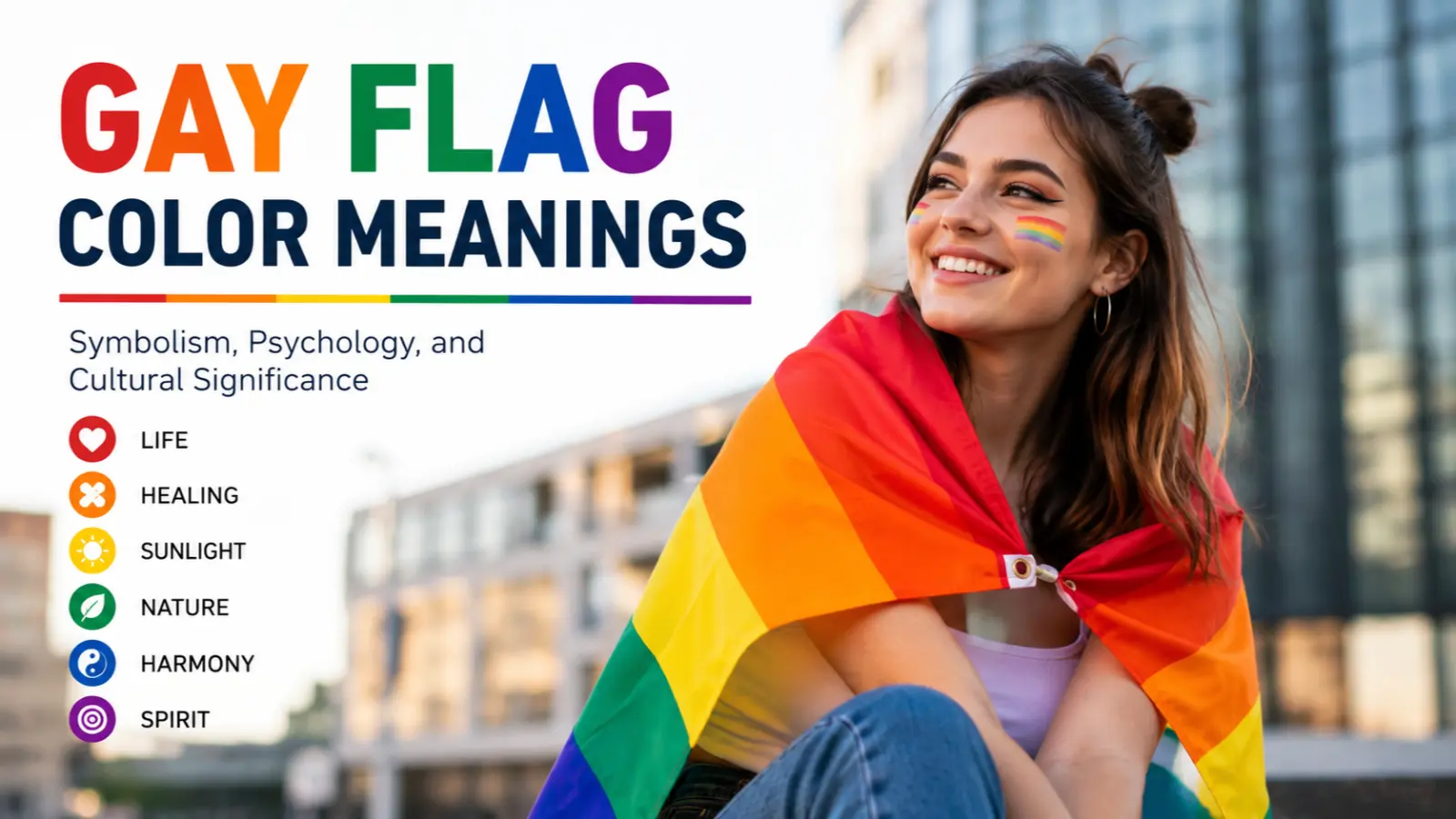
The gay flag color meanings represent far more than a colorful design. The rainbow pride flag is a globally recognized symbol of LGBTQ (people are individuals who are lesbian, gay, bisexual, transgender, or queer)+ identity, equality, diversity, resilience, and hope. Each stripe carries a unique meaning that reflects different aspects of human life and the shared values of the LGBTQ+ community.
Over time, the flag has evolved to become a universal emblem of acceptance, visibility, and inclusion. Understanding the symbolism behind each color provides deeper insight into LGBTQ+ history, activism, and cultural identity while appreciating the flag as one of the world’s most meaningful modern symbols.
Quick Answer:
The gay flag color meanings symbolize life, healing, sunlight, nature, harmony, and spirit, representing the diversity, unity, and resilience of the LGBTQ+ community.
What Does the Color Gay Flag Symbolize?
The rainbow pride flag symbolizes the diversity of human identity and the belief that every individual deserves dignity, equality, and freedom regardless of sexual orientation or gender identity.
Originally designed by artist Gilbert Baker in 1978, each color was intentionally chosen to represent an important aspect of life and the LGBTQ+ experience.
The modern six-color rainbow flag generally represents:
- Red – Life
- Orange – Healing
- Yellow – Sunlight
- Green – Nature
- Blue – Harmony and Serenity
- Purple (Violet) – Spirit
Collectively, these colors symbolize:
- Diversity
- Pride
- Equality
- Unity
- Hope
- Freedom
- Inclusion
- Self-expression
- Courage
- Community
- Visibility
- Love
Rather than representing one single meaning, the rainbow illustrates the beauty of differences existing together in harmony.
Psychological Characteristics of the Color Gay Flag
Unlike individual colors, the rainbow pride flag combines multiple psychological influences into one powerful visual identity.
Emotional Associations
The rainbow commonly evokes feelings of:
- Joy
- Hope
- Optimism
- Freedom
- Belonging
- Acceptance
- Celebration
- Confidence
- Safety
- Authenticity
Many people associate the flag with positive memories of community events, Pride celebrations, and growing social acceptance.
Psychological Effects
Color psychology suggests that rainbow color combinations may:
- Increase visual stimulation
- Encourage creativity
- Promote inclusiveness
- Improve emotional warmth
- Inspire optimism
- Strengthen feelings of community
- Increase approachability
Because every major color is represented, the rainbow communicates diversity more effectively than a single-color symbol.
Positive Emotional Responses
The flag often inspires:
- Confidence
- Self-acceptance
- Happiness
- Hope
- Empowerment
- Unity
- Compassion
- Celebration
Negative Emotional Responses
Depending on personal experiences or cultural context, some individuals may associate the flag with:
- Political debates
- Social conflict
- Polarization
- Misunderstanding
- Controversy
These reactions typically arise from societal or cultural viewpoints rather than the colors themselves.
Impact on Mood and Behavior
The rainbow flag can encourage:
- Greater openness
- Emotional expression
- Social inclusion
- Respect for diversity
- Community participation
Many people perceive environments displaying the rainbow flag as more welcoming and inclusive.
Typical Reactions
People often respond to the pride flag by feeling:
- Supported
- Recognized
- Safe
- Inspired
- Encouraged
- Accepted
Others simply recognize it as an international symbol of equality and human rights.
Spiritual Meaning of the Color Gay Flag
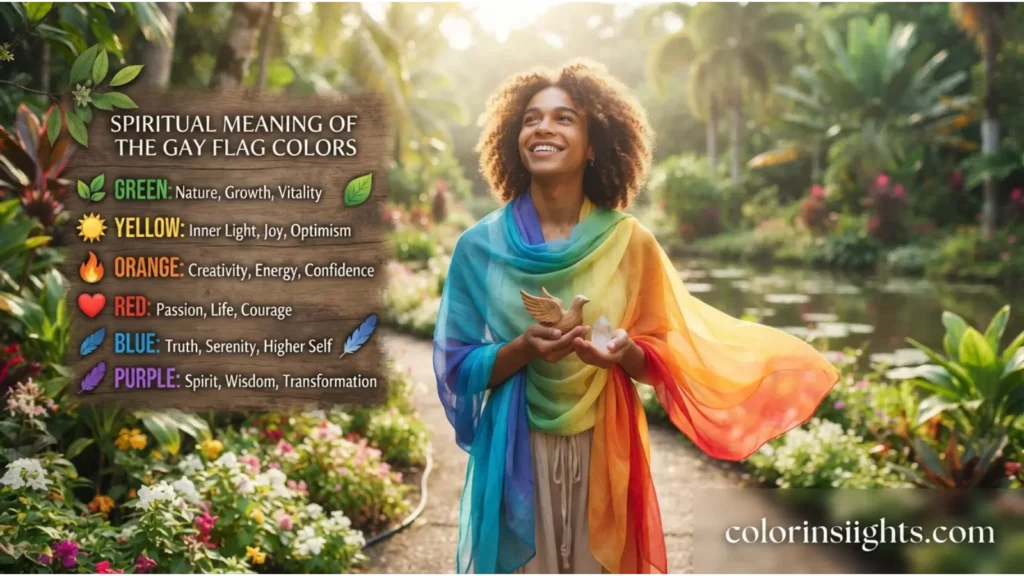
Although the pride flag is primarily a cultural symbol rather than a religious one, many people interpret its colors through spiritual symbolism.
Common spiritual interpretations include:
- Holiness: Respect for every human life.
- Wisdom: Understanding diversity and compassion.
- Purity: Living authentically.
- Transformation: Personal growth and self-discovery.
- Healing: Emotional recovery from discrimination and hardship.
- Protection: Safe spaces and supportive communities.
- Power: Collective strength through unity.
- Enlightenment: Acceptance, awareness, and empathy.
- New Beginnings: Freedom to live openly.
- Eternity: The ongoing pursuit of equality and human dignity.
Many spiritual traditions also associate rainbows with hope, renewal, and promises after difficult times.
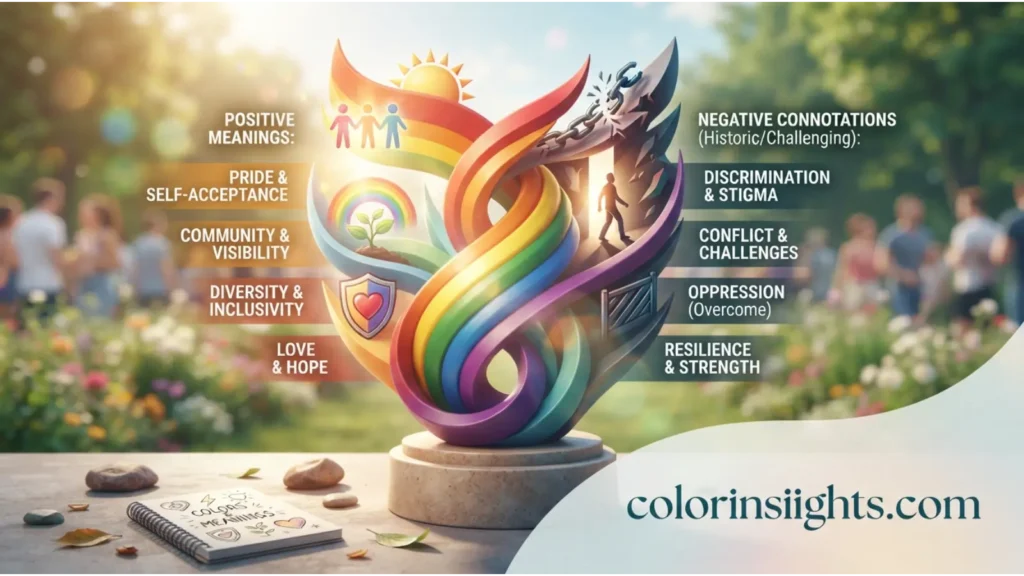
Positive and Negative Meanings of the Color Gay Flag
Positive Meanings
The pride flag commonly symbolizes:
Diversity
People from different backgrounds living together respectfully.
Example:
Pride festivals welcoming participants from every culture.
Equality
Every individual deserves equal rights.
Example:
Anti-discrimination campaigns.
Love
Celebrating relationships based on mutual respect.
Example:
Marriage equality.
Hope
Optimism for future generations.
Example:
Youth support organizations.
Harmony
Different identities coexisting peacefully.
Example:
Inclusive workplaces.
Community
Building supportive social networks.
Example:
LGBTQ+ community centers.
Authenticity
Encouraging people to live openly.
Example:
Coming-out stories.
Courage
Standing against discrimination.
Example:
Civil rights activism.
Negative Meanings
The colors themselves are positive, but in certain contexts the flag may become associated with broader social tensions.
Controversy
Debates over LGBTQ+ rights.
Example:
Public policy discussions.
Social Conflict
Differing cultural beliefs.
Example:
Protests or political disagreements.
Polarization
Strong emotional reactions from opposing viewpoints.
Misinterpretation
Some mistakenly assume the flag represents politics rather than inclusion.
Commercialization
Businesses using Pride imagery without meaningful support.
Example: “Rainbow washing” during Pride Month.
Meanings of the Color Gay Flag
The meanings of the pride flag vary depending on cultural, artistic, social, and professional settings.
Feng Shui
Although the rainbow itself is not a traditional Feng Shui color, each stripe contributes different forms of energy.
Associated Element
A balanced combination of all five Feng Shui elements.
Energy Symbolism
Represents harmony, life balance, optimism, and positive energy flow.
Best Rooms
- Creative studios
- Children’s rooms
- Community spaces
- Art rooms
- Wellness areas
Recommended Color Combinations
- White
- Natural wood
- Soft gray
- Light blue
- Green
Home Decorating Tips
Use rainbow-inspired accents rather than overwhelming an entire room. Artwork, cushions, and decorative pieces can introduce color while maintaining balance.
Marketing
Brands increasingly use rainbow colors to communicate inclusivity and diversity.
Branding Psychology
The rainbow suggests:
- Openness
- Innovation
- Creativity
- Diversity
- Human connection
Consumer Perception
Consumers often associate rainbow branding with:
- Inclusiveness
- Modern values
- Community support
- Social awareness
Trust Signals
Authentic year-round LGBTQ+ support builds stronger trust than seasonal campaigns alone.
Product Packaging
Rainbow packaging often appears during Pride Month to celebrate diversity.
Advertising Applications
Companies use rainbow imagery in campaigns promoting equality and inclusion.
Examples include brands such as:
- Apple
- Microsoft
- Levi’s
- Converse
- Ben & Jerry’s
Design
Rainbow palettes create energetic, memorable visual experiences.
Interior Design
Rainbow accents add personality without overwhelming a space.
Graphic Design
Used to represent diversity, creativity, festivals, and community organizations.
Web Design
Highlights inclusive messaging and accessible branding.
User Experience
Bright colors attract attention while creating welcoming digital environments.
Minimalist Aesthetics
Rainbow elements often work best as accent colors paired with neutral backgrounds.
Fashion
Rainbow colors have become iconic within LGBTQ+ fashion while also appearing in mainstream trends.
Clothing Symbolism
Expresses:
- Pride
- Confidence
- Individuality
- Celebration
Seasonal Use
Especially popular during:
- Pride Month
- Summer festivals
- Community events
Styling Effects
Adds vibrancy and optimism to outfits.
Personality Impressions
Often perceived as:
- Friendly
- Creative
- Outgoing
- Confident
Advantages
- Eye-catching
- Positive
- Memorable
- Expressive
Disadvantages
- Can dominate an outfit if overused.
- Bright combinations may not suit every professional environment.
Color Associations Are Not Universal
Color symbolism changes across cultures, traditions, and historical periods.
Western Cultures
In many Western countries, the rainbow pride flag is widely recognized as a symbol of LGBTQ+ rights, inclusion, diversity, and equality.
Eastern Cultures
Interpretations vary significantly. While the rainbow often represents happiness and good fortune, the Pride flag’s cultural recognition differs depending on local history, laws, and public attitudes toward LGBTQ+ communities.
Religious Traditions
Many religions view the rainbow as a symbol of hope, renewal, divine promise, or harmony. However, attitudes toward the Pride flag itself vary among religious groups based on theological interpretations and cultural perspectives.
Historical Interpretations
Rainbows have long symbolized peace, prosperity, transformation, and bridges between worlds in mythology and folklore. Gilbert Baker’s design adapted this positive symbolism into a modern emblem of LGBTQ+ visibility and civil rights.
Modern Global Interpretations
Today, the rainbow flag is recognized internationally as a symbol of diversity, human rights, and inclusion. However, its social and political significance continues to vary across countries and communities.
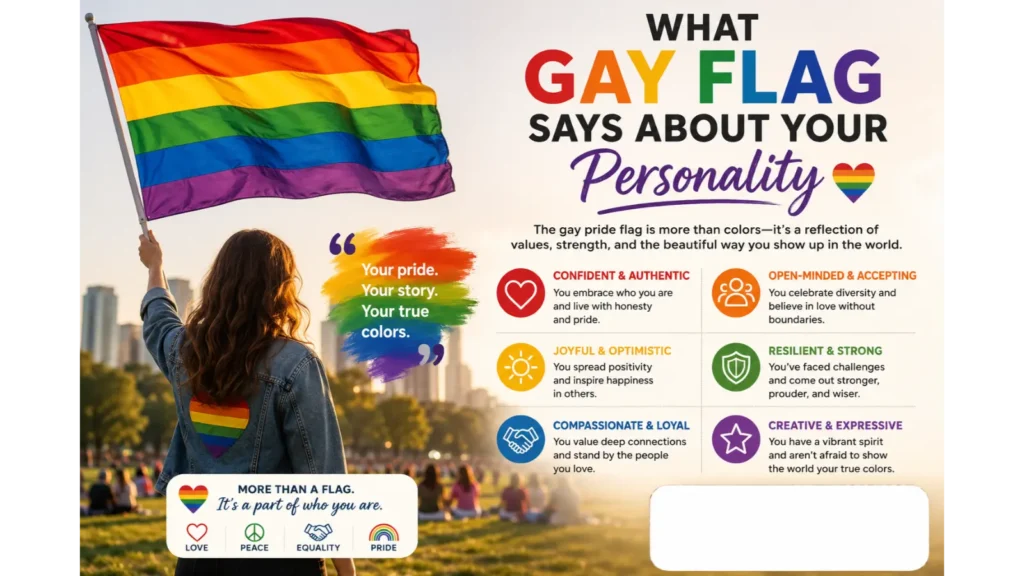
What Gay Flag Says About Your Personality
People who are drawn to rainbow colors are often described as appreciating diversity, creativity, and openness. However, color preferences do not determine personality with certainty, and individual experiences always matter more than favorite colors.
Strengths
People who enjoy rainbow symbolism may value:
- Acceptance
- Creativity
- Optimism
- Empathy
- Open-mindedness
- Compassion
Weaknesses
Possible tendencies include:
- Emotional sensitivity
- Idealism
- Overcommitment to helping others
- Difficulty avoiding conflict
Social Behavior
Often associated with:
- Inclusiveness
- Strong friendships
- Community involvement
- Respect for differences
Work Style
May appreciate:
- Team collaboration
- Creative problem-solving
- Diverse workplaces
- Innovation
Relationships
Frequently value:
- Honesty
- Mutual respect
- Emotional openness
- Equality
Emotional Tendencies
May seek:
- Harmony
- Belonging
- Positive communication
- Personal authenticity
Again, these associations are descriptive rather than predictive and should not be viewed as scientific personality assessments.
FAQs:
What defines the gay flag color?
The gay pride flag is a rainbow flag whose colors symbolize life, healing, sunlight, nature, harmony, and spirit, representing diversity and LGBTQ+ pride.
What does the gay flag symbolize?
It symbolizes equality, inclusion, diversity, resilience, visibility, authenticity, and hope for LGBTQ+ communities.
Why is the gay flag important?
The flag represents decades of LGBTQ+ history, activism, civil rights, and the ongoing pursuit of equal treatment and acceptance.
Is the gay flag a warm or cool color?
It includes both warm colors (red, orange, yellow) and cool colors (green, blue, violet), creating a balanced and vibrant spectrum.
What emotions does the gay flag represent?
Common emotional associations include joy, hope, pride, belonging, confidence, compassion, and optimism.
What does the gay flag mean spiritually?
Many people interpret it as representing healing, transformation, unity, hope, authenticity, and renewal, though meanings vary by individual and tradition.
What colors pair well with the gay flag?
Neutral colors such as white, black, gray, and natural wood tones help balance rainbow colors. Pastels and metallic accents can also complement rainbow-inspired palettes.
What does liking the gay flag say about a person?
A preference for rainbow symbolism may reflect an appreciation for diversity, creativity, self-expression, and inclusivity. However, color preferences alone cannot accurately define personality.
Who created the original rainbow pride flag?
Artist and activist Gilbert Baker designed the original rainbow pride flag in 1978 to celebrate the diversity and resilience of the LGBTQ+ community.
Why are there different versions of the Pride flag?
Over time, additional Pride flag designs have been created to highlight the diversity of LGBTQ+ experiences and to recognize specific communities and identities within the broader movement.
Conclusion
The gay flag color meanings extend far beyond their vibrant appearance. Each stripe represents a core human value—life, healing, sunlight, nature, harmony, and spirit—while the rainbow as a whole celebrates diversity, equality, and authentic self-expression. From psychology and design to fashion and branding, the Pride flag has become one of the world’s most recognizable symbols of inclusion and resilience.
Although cultural and personal interpretations vary, its enduring message remains one of hope, respect, community, and the belief that every person deserves dignity and acceptance.