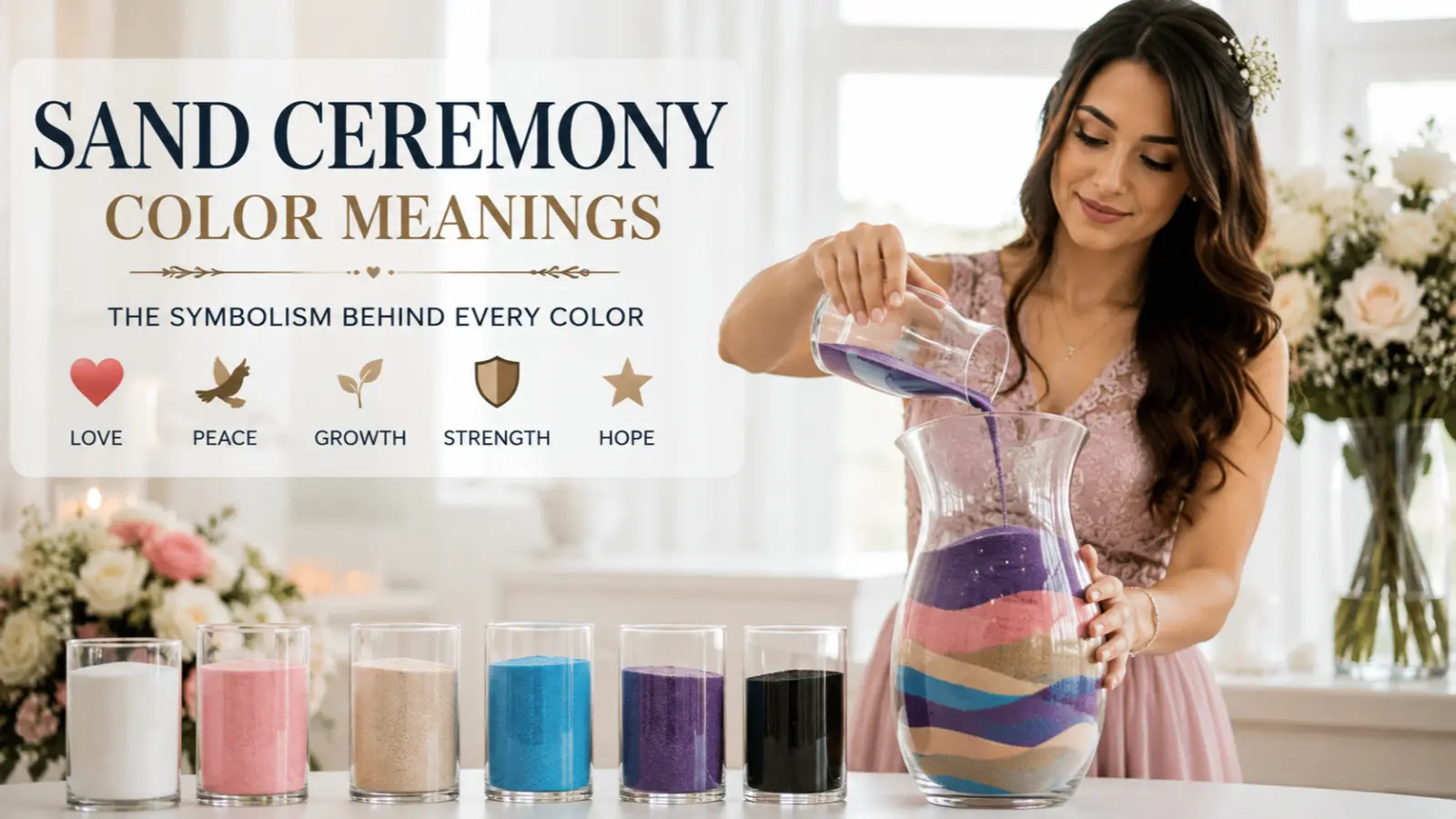
Sand ceremonies have become one of the most meaningful traditions in modern weddings, vow renewals, commitment ceremonies, and family celebrations. During sand ceremony color meanings each participant pours a different color of sand into a single container, creating a lasting visual reminder that individual lives, personalities, and values have united into one. Every sand color carries its own symbolism, representing emotions, virtues, hopes, and spiritual intentions.
While meanings can vary among cultures and personal beliefs, many colors share widely recognized psychological and symbolic associations. Understanding sand ceremony color meanings helps couples choose colors that reflect their relationship, family values, and future aspirations.
Quick Answer:
Sand ceremony color meanings symbolize the unique qualities each participant brings into a relationship. Common meanings include purity (white), love (red), trust (blue), growth (green), joy (yellow), wisdom (purple), strength (black), peace (gray), happiness (orange), compassion (pink), prosperity (gold), and faith (silver).
What Does the Color Sand Ceremony Symbolize?
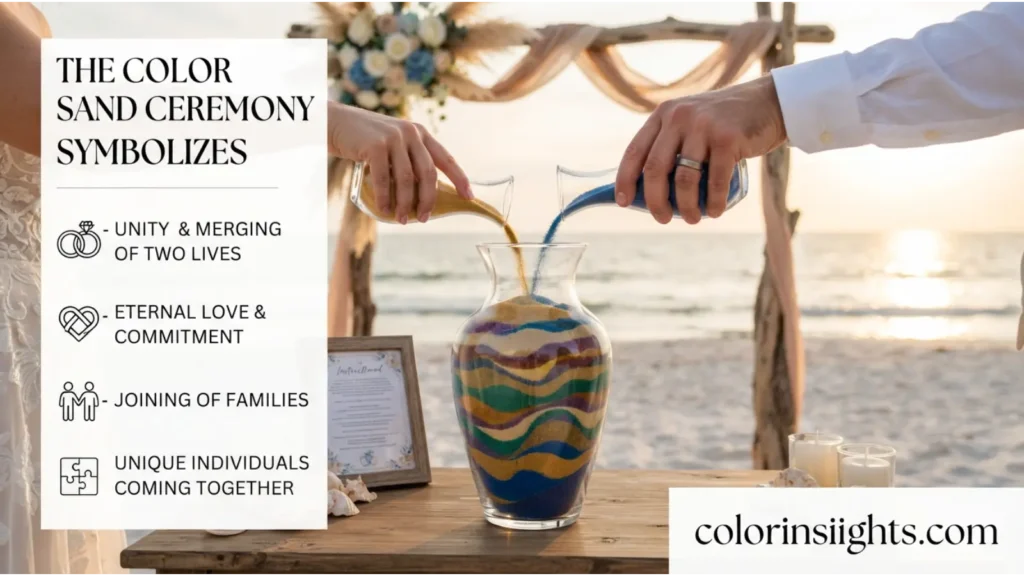
Unlike a single color, a sand ceremony represents unity through diversity. Every colored sand layer symbolizes an individual identity while the blended design represents an unbreakable union. Once the sand is combined, separating each grain becomes nearly impossible, making the ceremony a powerful metaphor for lifelong commitment.
Common symbolic themes include:
- Love and commitment
- Unity and partnership
- Family togetherness
- Individuality within marriage
- Trust and loyalty
- Hope for the future
- Shared dreams
- Strength through cooperation
- Lasting memories
- Spiritual connection
Each chosen color adds another layer of meaning to the overall ceremony.
Psychological Characteristics of the Sand Ceremony Colors
Color psychology suggests that different colors influence emotions, perceptions, and behavior. Couples often select colors that reflect their personalities or the emotional qualities they want to nurture in their marriage.
Emotional Associations
Different sand colors commonly represent:
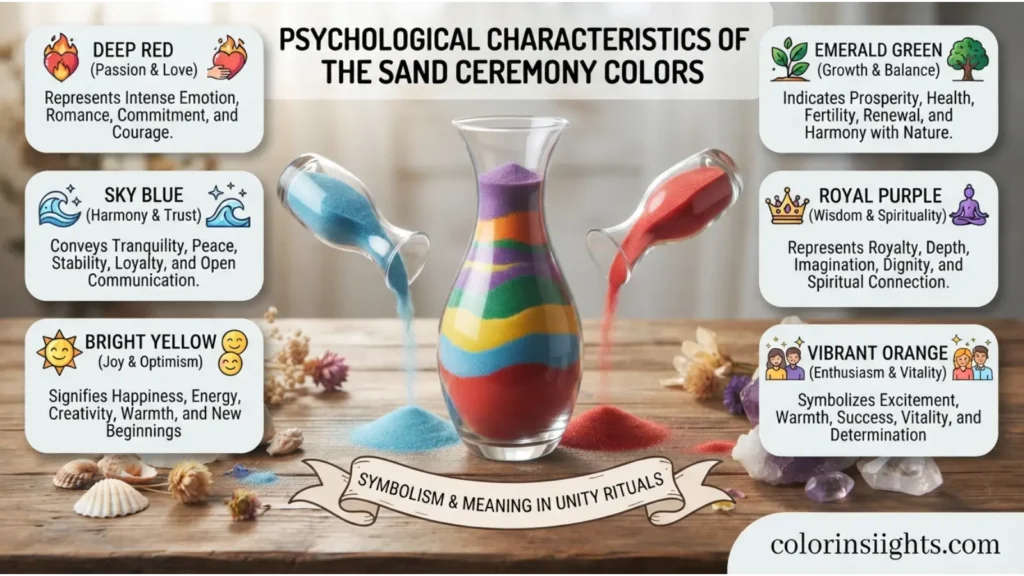
- White — Purity and honesty
- Blue — Trust and emotional stability
- Red — Passion and deep love
- Green — Growth and renewal
- Yellow — Happiness and optimism
- Purple — Wisdom and spirituality
- Orange — Enthusiasm and creativity
- Pink — Kindness and affection
- Black — Strength and resilience
- Gray — Balance and maturity
- Gold — Prosperity and success
- Silver — Grace and intuition
Psychological Effects
These colors may encourage feelings such as:
- Emotional security
- Calmness
- Confidence
- Optimism
- Stability
- Creativity
- Compassion
- Determination
Positive Emotional Responses
Many people associate sand ceremony colors with:
- Hope
- Joy
- Trust
- Romance
- Security
- Family unity
- Peace
- Personal growth
Negative Emotional Responses
Depending on context, some colors may also symbolize:
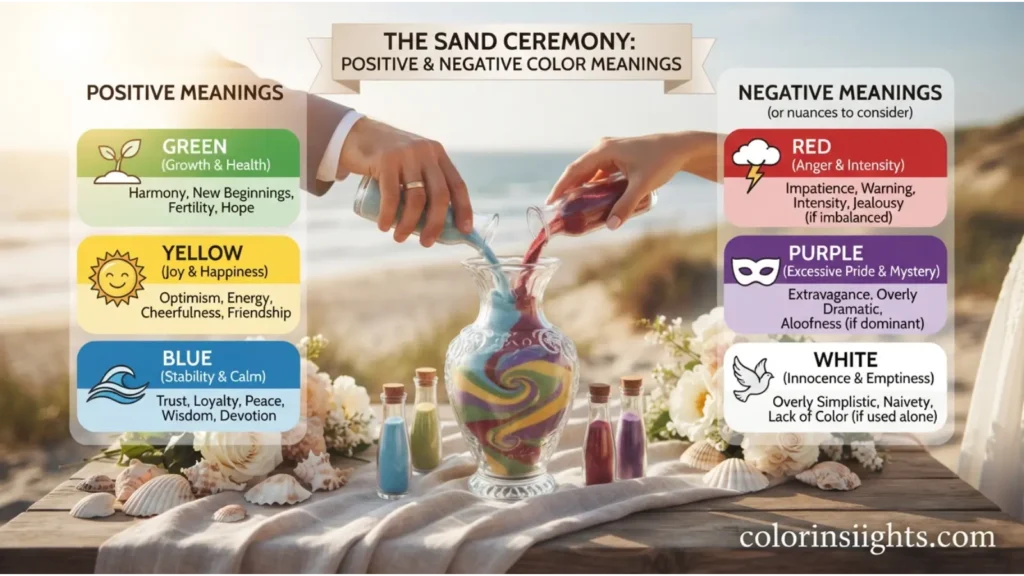
- Black — Grief or mystery
- Gray — Emotional distance
- Red — Conflict or intensity
- Yellow — Anxiety or caution
- Purple — Pride or extravagance
Impact on Mood and Behavior
Color choices often influence the emotional atmosphere of the ceremony by creating feelings of warmth, celebration, serenity, or elegance.
Typical Reactions
Guests often perceive carefully chosen colors as meaningful, thoughtful, and deeply personal, enhancing the emotional impact of the ceremony.
Spiritual Meaning of the Sand Ceremony Colors
Across many spiritual traditions, colors are believed to represent higher values, divine qualities, and life’s journey.
Common spiritual symbolism includes:
- White — Purity, holiness, divine light
- Blue — Faith, truth, heavenly peace
- Green — Healing, renewal, abundance
- Purple — Wisdom, enlightenment, spiritual growth
- Gold — Divine blessings and prosperity
- Silver — Protection, intuition, inner guidance
- Red — Life force, courage, sacrificial love
- Pink — Compassion and unconditional love
- Orange — Joy, inspiration, transformation
- Yellow — Hope and enlightenment
- Black — Strength through adversity
- Gray — Balance and humility
Many couples choose colors that reflect the blessings they hope to receive throughout married life.
Positive and Negative Meanings of the Sand Ceremony Colors
Positive Meanings
Sand ceremony colors often symbolize:
- Love
- Peace
- Harmony
- Commitment
- Faithfulness
- Growth
- Forgiveness
- Hope
- Joy
- Prosperity
- Wisdom
- Compassion
- Courage
- Stability
- Unity
Example:
A couple selecting white and blue may wish to represent honesty, peace, and lifelong trust.
Negative Meanings
Although generally positive, some colors can carry alternative meanings.
Black
May symbolize grief, loss, or uncertainty.
Example:
In some cultures, black represents mourning.
Gray
Can suggest emotional reserve.
Example:
Gray may symbolize neutrality or emotional distance.
Red
May represent conflict when associated with anger.
Example:
Bright red may evoke strong emotions beyond romance.
Yellow
Sometimes symbolizes caution.
Example:
Traffic warning signs commonly use yellow.
Purple
Occasionally represents excessive pride or luxury.
Example:
Historically, purple signified royal privilege and wealth.
Meanings of the Sand Ceremony Colors
The symbolism of each sand color changes according to personal beliefs, cultural traditions, religious values, and the overall purpose of the ceremony.
White
- Purity
- New beginnings
- Honesty
- Peace
- Innocence
Blue
- Trust
- Loyalty
- Faithfulness
- Calm
- Stability
Red
- Passion
- Love
- Courage
- Devotion
- Strength
Green
- Growth
- Healing
- Prosperity
- Renewal
- Fertility
Yellow
- Happiness
- Optimism
- Friendship
- Energy
- Hope
Orange
- Creativity
- Adventure
- Enthusiasm
- Warmth
- Confidence
Pink
- Kindness
- Romance
- Compassion
- Gentleness
- Affection
Purple
- Wisdom
- Spirituality
- Nobility
- Creativity
- Transformation
Black
- Strength
- Protection
- Determination
- Mystery
- Resilience
Gray
- Balance
- Maturity
- Patience
- Neutrality
- Stability
Gold
- Success
- Wealth
- Achievement
- Divine blessing
- Celebration
Silver
- Grace
- Reflection
- Faith
- Intuition
- Hope
Feng Shui
Although sand ceremonies are not a traditional Feng Shui practice, couples often choose colors based on Feng Shui principles.
- Element: Depends on the chosen colors (white–metal, blue–water, green–wood, red–fire, yellow–earth).
- Energy symbolism: Harmony, balanced life energy, and unity.
- Best rooms: Display the completed sand vessel in the living room, family room, or relationship area of the home.
- Recommended combinations: White and blue, green and gold, red and white, purple and silver.
- Decorating tip: Match the sand colors with the home’s décor for a meaningful keepsake.
Marketing
Wedding businesses frequently use color symbolism to help couples personalize ceremonies.
Color meanings influence:
- Wedding branding
- Ceremony themes
- Invitation designs
- Decorative packaging
- Personalized keepsakes
Luxury wedding brands often feature white, gold, blush pink, navy blue, and champagne tones to communicate elegance and trust.
Design
Sand ceremony colors work well in:
- Interior décor displays
- Personalized keepsake jars
- Graphic design for wedding stationery
- Wedding websites
- User-friendly minimalist layouts
Neutral colors create timeless elegance, while bold combinations produce vibrant visual contrast.
Fashion
Wedding attire often complements sand ceremony colors.
Examples include:
- White dresses symbolize purity.
- Navy suits suggest loyalty.
- Gold accessories communicate celebration.
- Green accents symbolize growth.
- Blush pink reflects romance.
Advantages include cohesive wedding styling and meaningful symbolism, while excessive color variety may reduce visual harmony.
Color Associations Are Not Universal
Western Cultures
White commonly represents weddings, innocence, and new beginnings. Blue symbolizes trust, while red often signifies romance.
Eastern Cultures
In many Asian traditions, red symbolizes happiness, prosperity, and celebration. White may instead be associated with mourning in certain cultures.
Religious Traditions
Christian ceremonies often associate white with holiness, purple with spiritual devotion, and gold with divine glory. Other faiths may assign different meanings based on their traditions.
Historical Interpretations
Historically, purple was linked to royalty due to its rarity, while gold reflected wealth and authority. Black frequently represented dignity or mourning.
Modern Global Interpretations
Today, couples often personalize color meanings, choosing shades that reflect their shared experiences, favorite colors, family heritage, or future goals rather than following fixed traditions.

What Sand Ceremony Colors Say About Your Personality
People often choose colors that reflect their preferences, values, or aspirations. However, color preferences do not scientifically determine personality and should be viewed as symbolic rather than diagnostic.
Strengths
Those drawn to meaningful color symbolism may value:
- Commitment
- Loyalty
- Creativity
- Compassion
- Optimism
- Stability
Weaknesses
Some may also display:
- Perfectionism
- Emotional sensitivity
- Cautious decision-making
- Idealism
Social Behavior
They often enjoy meaningful relationships, family traditions, and celebrating milestones with personal significance.
Work Style
People who appreciate symbolic colors may value organization, teamwork, creativity, and long-term planning.
Relationships
They often prioritize trust, communication, shared goals, and emotional security.
Emotional Tendencies
Many seek harmony, optimism, and resilience while appreciating symbols that reinforce hope and unity.
FAQs:
What defines sand ceremony colors?
Sand ceremony colors are colored sands selected to symbolize personal qualities, emotions, values, or hopes during a unity ceremony.
What do sand ceremony colors symbolize?
They symbolize love, commitment, individuality, family unity, trust, growth, hope, and lifelong partnership.
Why are sand ceremony colors important?
They make the ceremony more personal by visually representing each participant’s unique identity and the union they create together.
Are sand ceremony colors warm or cool?
Both. Warm colors such as red, orange, and yellow express energy and passion, while cool colors such as blue, green, and purple symbolize calmness, healing, and wisdom.
What emotions do sand ceremony colors represent?
Depending on the color, they may represent love, joy, peace, trust, courage, compassion, hope, prosperity, or spiritual growth.
What is the spiritual meaning of sand ceremony colors?
Spiritually, they often symbolize unity, divine blessings, healing, protection, transformation, faith, and new beginnings.
Which colors pair well together in a sand ceremony?
Popular combinations include white and blue, red and white, green and gold, purple and silver, blush pink and champagne, and navy with white.
What does liking certain sand ceremony colors say about a person?
It may reflect personal values, aesthetic preferences, or symbolic intentions, but it does not reliably determine personality.
Can families participate in a sand ceremony?
Yes. Children and other family members can each pour a different color of sand to symbolize unity and belonging.
Can couples create their own color meanings?
Absolutely. Many couples assign personal meanings to colors based on shared memories, family traditions, faith, or future goals, making the ceremony uniquely meaningful.
Conclusion
Sand ceremony color meanings transform a beautiful wedding tradition into a deeply personal expression of love, unity, and shared purpose. Each color represents unique qualities—from purity and trust to growth, wisdom, and prosperity—while the blended sand serves as a lasting reminder that individual lives have become permanently connected.
Although traditional symbolism provides helpful guidance, the most meaningful sand ceremony colors are those that reflect a couple’s personal story, values, and vision for the future. By thoughtfully selecting colors with special significance, couples create a keepsake that celebrates both their individuality and the enduring strength of their union.