Lucky New Year’s color meanings have been part of celebrations for centuries, symbolizing hope, prosperity, health, love, success, and fresh beginnings. Around the world, people wear, decorate with, and exchange items in specific colors to attract positive energy for the year ahead.
While these traditions vary across cultures, color psychology also explains how different colors influence emotions, confidence, and decision-making during this symbolic time. Understanding lucky New Year’s color meanings can help you choose colors that align with your personal goals, whether you’re seeking financial success, stronger relationships, better health, or inner peace.
Quick Answer:
Lucky New Year’s colors generally represent prosperity (gold), wealth (green), happiness (yellow), love (red and pink), peace (white), wisdom (purple), and new beginnings (blue and white), although meanings vary by culture and tradition.
What Is the Lucky New Year’s Color?
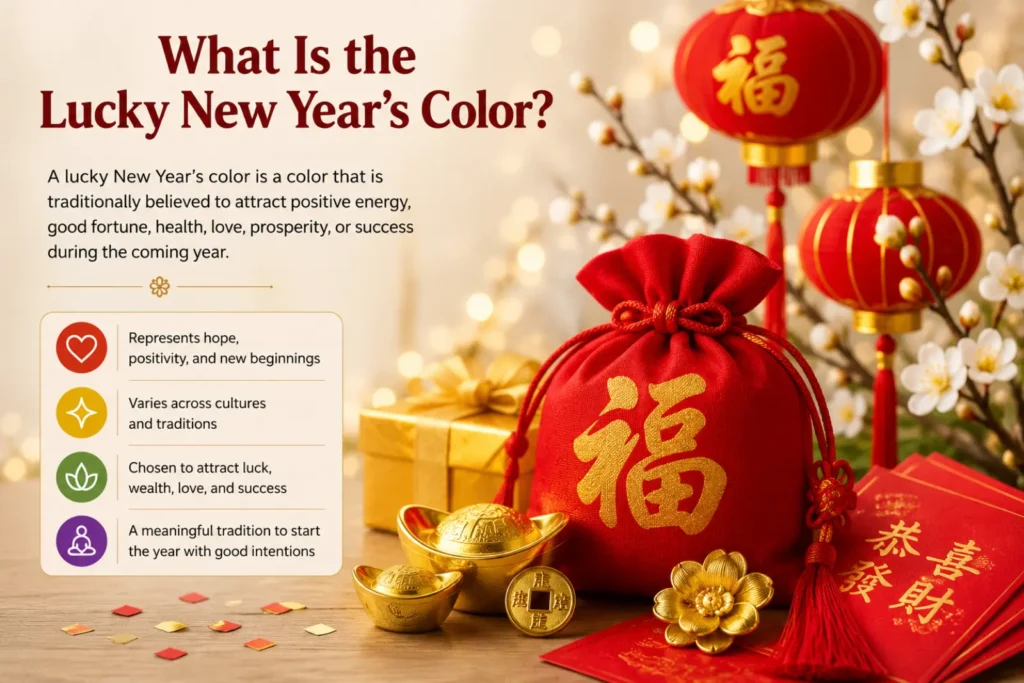
People traditionally choose a lucky New Year’s color to attract positive energy, good fortune, health, love, prosperity, and success in the coming year. Around the world, many people wear lucky colors, decorate their homes with them, or include them in New Year’s celebrations as a symbol of hope and fresh beginnings.
The meaning of a lucky New Year’s color often depends on cultural traditions. For example, Chinese culture associates red with good luck and prosperity, while gold symbolizes wealth and success. Many traditions link white with new beginnings and peace, and people commonly associate green with growth, renewal, and good health.
Although no color can guarantee good fortune, choosing a lucky New Year’s color is a meaningful tradition that helps many people celebrate the start of a new year with optimism and positive intentions. Understanding these common color meanings can help you select a color that reflects your personal goals and cultural traditions. orations, candles, flowers, and festive meals to begin the year with positive intentions.
What Do Different New Year’s Colors Mean?
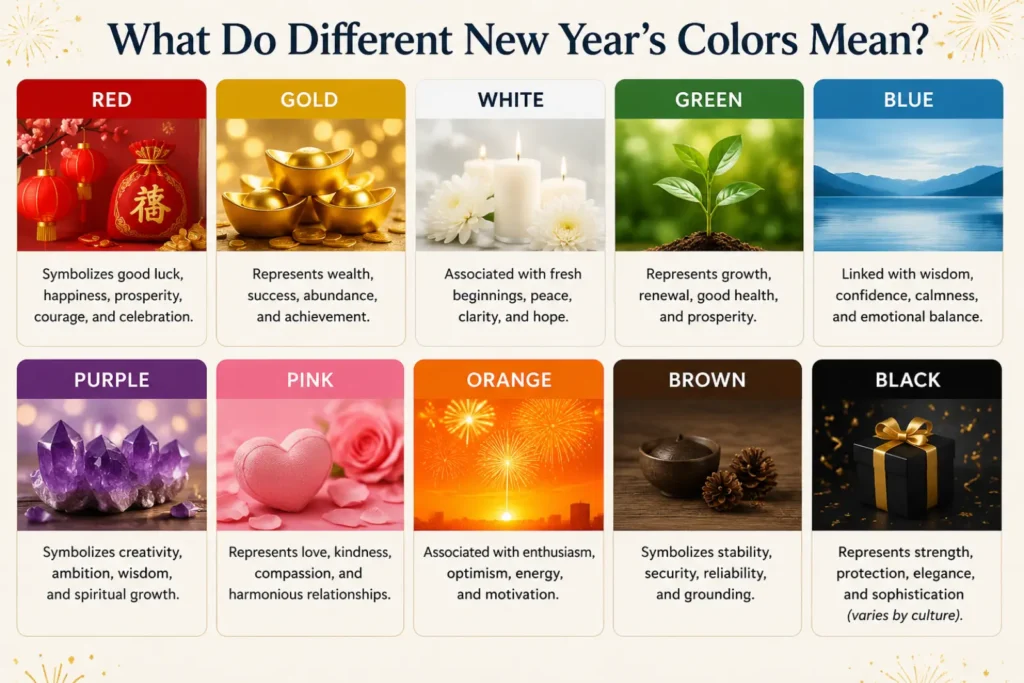
Different New Year’s colors traditionally represent specific hopes, goals, and positive intentions for the year ahead. While these meanings vary across cultures, many people choose certain colors because they symbolise qualities they would like to attract in the coming year.
Red
Red is one of the most popular lucky New Year’s colors. It commonly represents good luck, happiness, prosperity, courage, and celebration. During Chinese New Year, many Asian cultures, especially Chinese communities, use the color red to welcome good fortune and ward off negative energy.
Gold
Gold symbolises wealth, success, abundance, and achievement. People often use it in New Year’s decorations and clothing to represent financial prosperity and new opportunities.
White
White is associated with fresh beginnings, peace, clarity, and hope. Many people choose white to symbolise a clean start and positive changes in the year ahead.
Green
Green represents growth, renewal, good health, and prosperity. It is a popular choice for people hoping to achieve personal development or financial stability.
Blue
Choose blue to represent wisdom, confidence, calmness, and emotional balance. Many people select this color when they want greater stability and inner peace.
Purple
Purple symbolises creativity, ambition, wisdom, and spiritual growth. People frequently associate it with personal transformation and the achievement of long-term goals.
Pink
Pink represents love, kindness, compassion, and harmonious relationships. It is often worn by people wishing to strengthen friendships or attract positive relationships.
Orange
Orange inspires enthusiasm, optimism, energy, and motivation, making it a cheerful choice to welcome a new year filled with opportunities.
Black
In some traditions, black symbolises strength, sophistication, and protection, while in others it may have different cultural meanings. Its interpretation depends largely on local customs and beliefs.

How to Choose Your Lucky New Year’s Color
Choosing a lucky New Year’s color depends on your personal goals, cultural traditions, and the message you want to express as you welcome the new year. While no color can guarantee good fortune, many people enjoy following traditions that symbolise hope, prosperity, and positive change.
If your goal is financial success, colors such as gold and red are commonly associated with wealth, abundance, and prosperity. If you’re hoping for personal growth or better health, green is a popular choice because it represents renewal and progress. Those seeking peace and fresh beginnings may prefer white, while pink is often chosen to symbolise love, compassion, and stronger relationships.
You can also coordinate your clothing, home decorations, table settings, or party accessories with your chosen lucky color to reflect your intentions for the year ahead. Some people even combine multiple colors to represent different goals, such as pairing red and gold for luck and prosperity or green and white for growth and new beginnings.
Ultimately, the best lucky New Year’s color is one that aligns with your traditions, personal aspirations, and the positive mindset you want to carry into the new year.
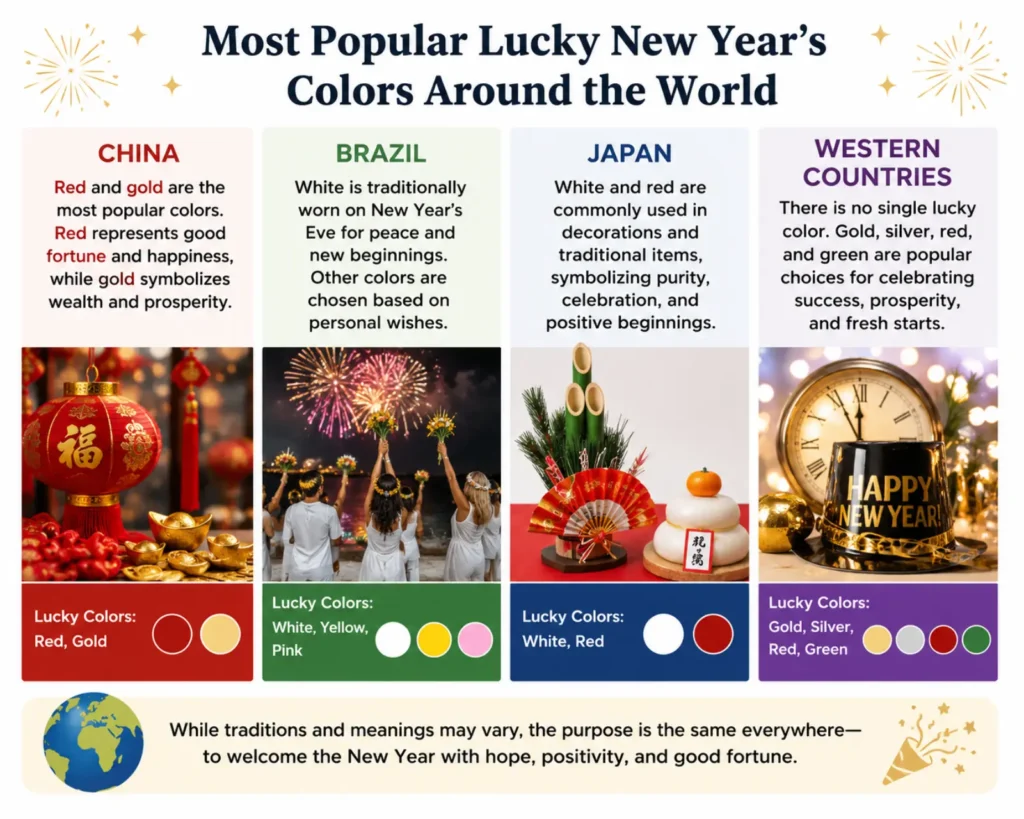
Most Popular Lucky New Year’s Colors Around the World
Lucky New Year’s colors are celebrated in many cultures, but their meanings and traditions are not always the same. Different countries and communities have their own customs for choosing colors that symbolise good fortune, happiness, health, and success.
China
Red and gold are the most recognised lucky New Year’s colors. Red symbolises good fortune and happiness, while gold represents wealth, prosperity, and success. These colors are widely used in decorations, clothing, and festive celebrations during Chinese New Year.
Brazil
Many people wear white on New Year’s Eve to symbolise peace, hope, and new beginnings. Some also choose other colors based on personal wishes, such as yellow for prosperity or pink for love.
Japan
Traditional New Year celebrations often emphasise purity, harmony, and renewal rather than a single lucky color. White and red frequently appear in festive decorations and ceremonial items because they represent celebration and positive beginnings.
Western Countries
In many Western traditions, there is no official lucky New Year’s color. People often choose gold, silver, red, or green in clothing and decorations because these colors are commonly associated with celebration, success, prosperity, and fresh starts.
Although these traditions differ, they all share a common purpose: welcoming the new year with optimism, hope, and positive intentions for the months ahead.
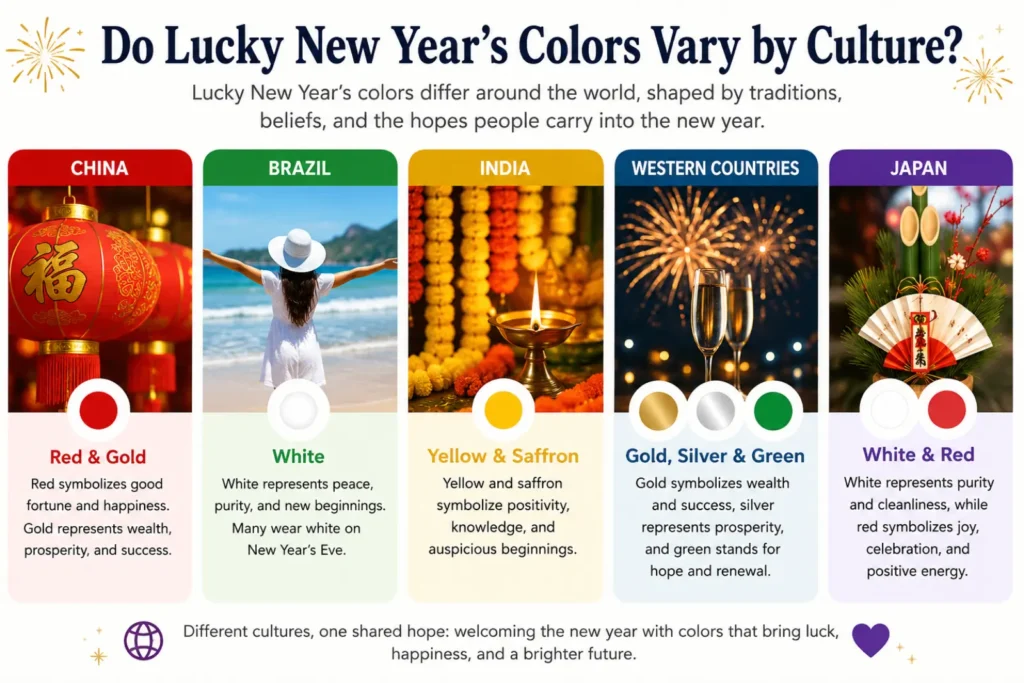
Do Lucky New Year’s Colors Vary by Culture?
Yes. Lucky New Year’s colors can vary significantly between cultures, traditions, and celebrations. While certain colors are widely recognised for symbolising prosperity, happiness, or new beginnings, there is no single set of lucky colors that applies everywhere.
For example, red is considered one of the luckiest colors during Chinese New Year because it symbolises good fortune, happiness, and prosperity. In Brazil, however, many people traditionally wear white on New Year’s Eve to represent peace and a fresh start. Other countries may favour gold for wealth, green for growth, or different colors based on local customs and personal beliefs.
Modern New Year’s celebrations have also become more diverse, with many people choosing colors that reflect their own goals rather than following long-standing traditions. Some select a color to symbolise love, success, health, or confidence, while others simply choose colors they enjoy wearing or decorating with.
Understanding these cultural differences helps you see lucky New Year’s colors as meaningful traditions rather than universal rules Choosing a color that aligns with your own culture, beliefs, or personal aspirations can make your New Year’s celebration more meaningful.
FAQs:
What defines Lucky New Year’s colors?
Lucky New Year’s colors traditionally attract prosperity, happiness, protection, health, love, and success during New Year celebrations.
What does Lucky New Year’s symbolize?
It symbolizes hope, renewal, abundance, positive change, and the beginning of a new chapter.
Why are Lucky New Year’s colors important?
They help express cultural traditions, personal intentions, and optimism for the year ahead while creating a festive atmosphere.
Are Lucky New Year’s colors warm or cool?
There is no single Lucky New Year’s color. The palette includes warm colors like red, gold, and yellow, as well as cool colors such as blue, green, and white.
What emotions do Lucky New Year’s colors represent?
They commonly represent joy, confidence, hope, excitement, peace, gratitude, love, and optimism.
What is the spiritual meaning of Lucky New Year’s colors?
Spiritually, these colors symbolize protection, abundance, healing, transformation, wisdom, purity, and new beginnings.
What colors pair well with Lucky New Year’s colors?
Popular combinations include:
- Red and gold
- Blue and silver
- Green and gold
- White and gold
- Purple and gold
- Black and gold
What does liking Lucky New Year’s colors say about a person?
People who enjoy these colors may appreciate optimism, celebration, growth, and meaningful traditions. However, personality cannot be determined solely by color preference.
Which Lucky New Year’s color is best for wealth?
Gold and green are commonly associated with financial prosperity, while red is widely believed to attract good fortune in many traditions.
Which Lucky New Year’s color represents love?
Red and pink are most frequently associated with romance, affection, emotional warmth, and strong relationships.
Conclusion
Lucky New Year’s colors are a meaningful part of celebrations in many cultures, symbolising hopes for prosperity, happiness, health, love, and new beginnings. Whether you choose to wear a lucky color, decorate your home, or incorporate it into your New Year’s traditions, each color represents a positive intention for the year ahead.
Red and gold are widely recognised as symbols of good fortune, but different cultures and individuals may interpret these colors in different ways based on their traditions and personal beliefs. Rather than following a universal rule, the best lucky New Year’s color is one that reflects your goals, values, and the traditions that are most meaningful to you.
As you welcome the new year, let your chosen colors inspire optimism, confidence, and fresh opportunities. Whether you celebrate with family, friends, or your local community, selecting a meaningful New Year’s color is a simple way to begin the year with hope and positive intentions.