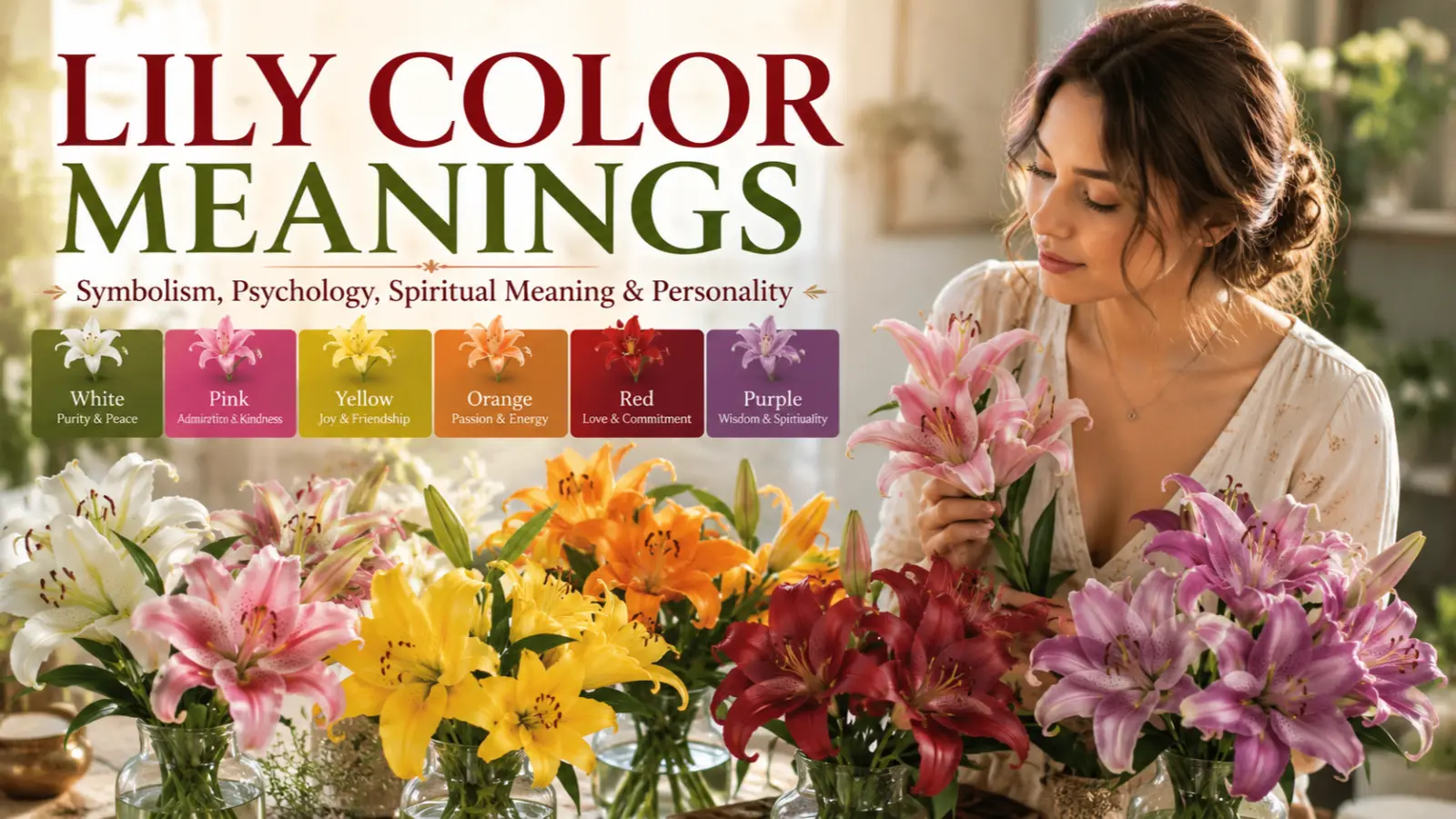
Lily color meanings have fascinated people for centuries because each lily color conveys a unique message through symbolism, culture, spirituality, and emotion. While lilies generally represent purity, beauty, renewal, and devotion, the meaning changes depending on the bloom’s color. White lilies symbolize innocence and peace, pink lilies express admiration and compassion, yellow lilies represent happiness and friendship, orange lilies convey confidence and passion, and red lilies symbolize love and commitment.
Understanding lily color meanings can help you choose the right flowers for celebrations, gifts, weddings, memorials, and home décor.
Quick Answer:
Lily color meanings vary by color, but overall they symbolize purity, hope, renewal, love, spirituality, beauty, remembrance, and emotional connection.
What Do Lily Colors Mean?
Although lilies naturally appear in many colors, the flower itself has become a universal symbol of elegance and emotional expression. Across cultures, different lily colors communicate different feelings and intentions.
Common lily symbolism includes:
- Purity and innocence
- New beginnings
- Hope and optimism
- Love and romance
- Compassion
- Renewal
- Peace
- Respect
- Honor
- Prosperity
- Femininity
- Devotion
- Spiritual awakening
- Beauty
- Eternal life
Lily Color Meanings at a Glance
The table below provides a quick overview of the most popular lily colors and the meanings they are commonly associated with. While interpretations may vary across cultures, these symbolic meanings are widely recognised in floral traditions and gift-giving.
| Lily Color | Common Meaning |
|---|---|
| 🤍 White | Purity, innocence, remembrance, peace |
| 🩷 Pink | Admiration, prosperity, femininity |
| ❤️ Red | Love, passion, deep affection |
| 💛 Yellow | Friendship, happiness, gratitude |
| 🧡 Orange | Confidence, enthusiasm, energy |
| 💜 Purple | Royalty, success, admiration |
| 🌸 Stargazer Lily | Ambition, prosperity, celebration |
| 🖤 Black Lily (rare varieties) | Mystery, elegance, transformation |
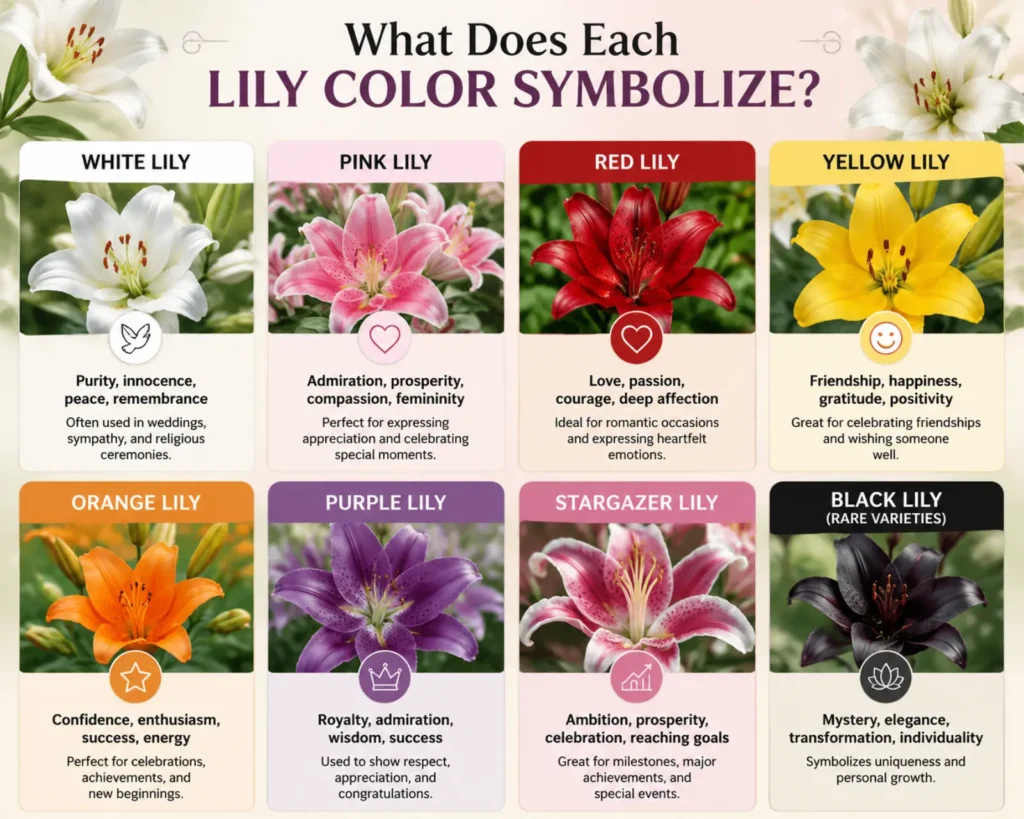
What Does Each Lily Color Symbolize?
Different lily colors carry unique meanings, making them suitable for a variety of occasions, emotions, and relationships. Although interpretations can vary slightly across cultures, the following symbolism is widely recognised in floral traditions and gift-giving.
White Lily
White lilies symbolise purity, innocence, peace, and remembrance. They are commonly chosen for weddings, religious ceremonies, and sympathy arrangements because they represent respect, hope, and eternal love.
Pink Lily
Pink lilies are associated with admiration, prosperity, compassion, and femininity. They are often given to express appreciation, celebrate achievements, or honour someone special on birthdays, Mother’s Day, or anniversaries.
Red Lily
Red lilies represent love, passion, courage, and deep affection. They make a meaningful gift for romantic occasions such as anniversaries, Valentine’s Day, or to express heartfelt emotions.
Yellow Lily
Yellow lilies symbolise friendship, happiness, gratitude, and positivity. They are a popular choice for celebrating friendships, congratulating someone on an achievement, or wishing someone well.
Orange Lily
Orange lilies represent confidence, enthusiasm, success, and energy. Their vibrant appearance makes them ideal for celebrations, graduations, promotions, and new beginnings.
Purple Lily
Purple lilies are commonly associated with royalty, admiration, wisdom, and success. They are often chosen to express respect, appreciation, or congratulations.
Stargazer Lily
Stargazer lilies symbolise ambition, prosperity, celebration, and reaching new goals. Their striking appearance makes them a favourite for festive occasions and milestone celebrations.
Black Lily
Rare black lily varieties are often linked with mystery, elegance, transformation, and individuality. Their symbolism is largely based on modern floral interpretations rather than traditional meanings.
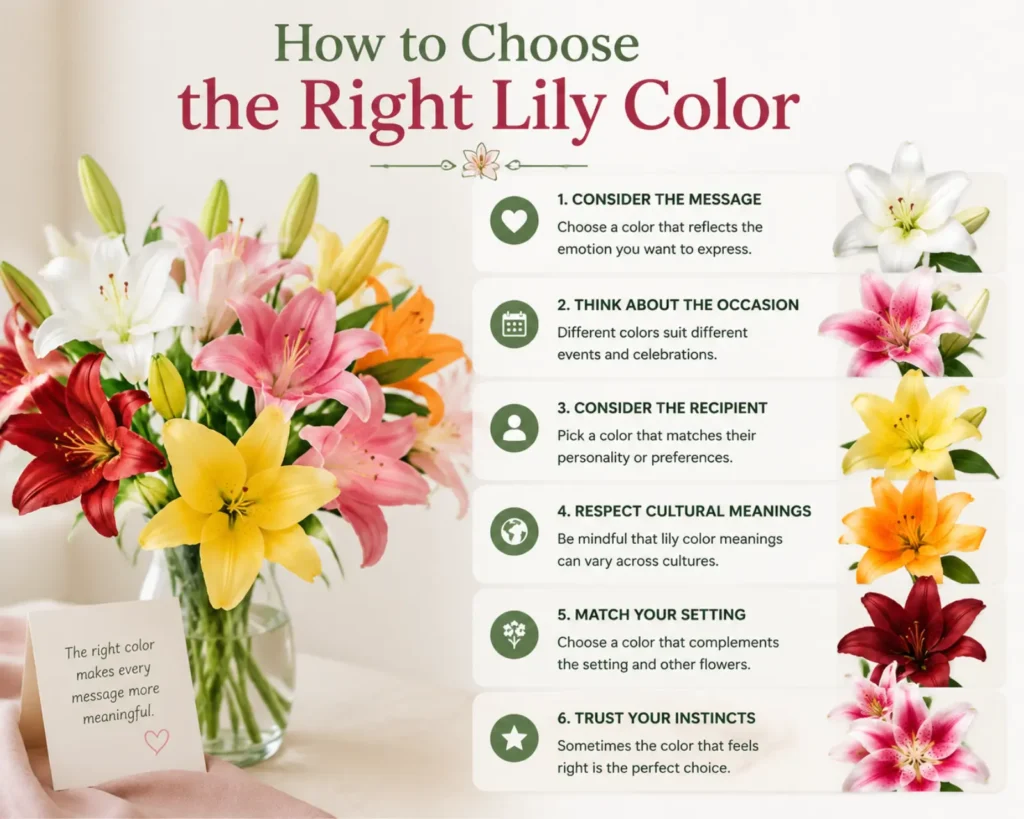
How to Choose the Right Lily Color
Choosing the right lily color depends on the occasion, the message you want to convey, and your relationship with the recipient. Each lily showcases elegance and beauty, but its unique color adds symbolic meaning that makes your gift more thoughtful and meaningful.
If you want to express love and romance, red lilies are a meaningful choice because they symbolise deep affection and passion. White lilies are ideal for weddings, memorial services, and religious ceremonies, where they represent purity, peace, and remembrance. To celebrate a friendship or congratulate someone on an achievement, yellow lilies are a cheerful option that symbolises happiness, gratitude, and positive wishes.
For birthdays, Mother’s Day, or anniversaries, pink lilies express admiration, appreciation, and compassion. If you’re celebrating a promotion, graduation, or another major milestone, orange lilies represent confidence, enthusiasm, and success. People often choose purple lilies to express respect, admiration, and appreciation, making them ideal for formal occasions or for recognising someone’s accomplishments.
When selecting a lily color, consider both its traditional symbolism and the recipient’s personal preferences. A bouquet that reflects the occasion and the recipient’s tastes is often more meaningful than following symbolism alone.
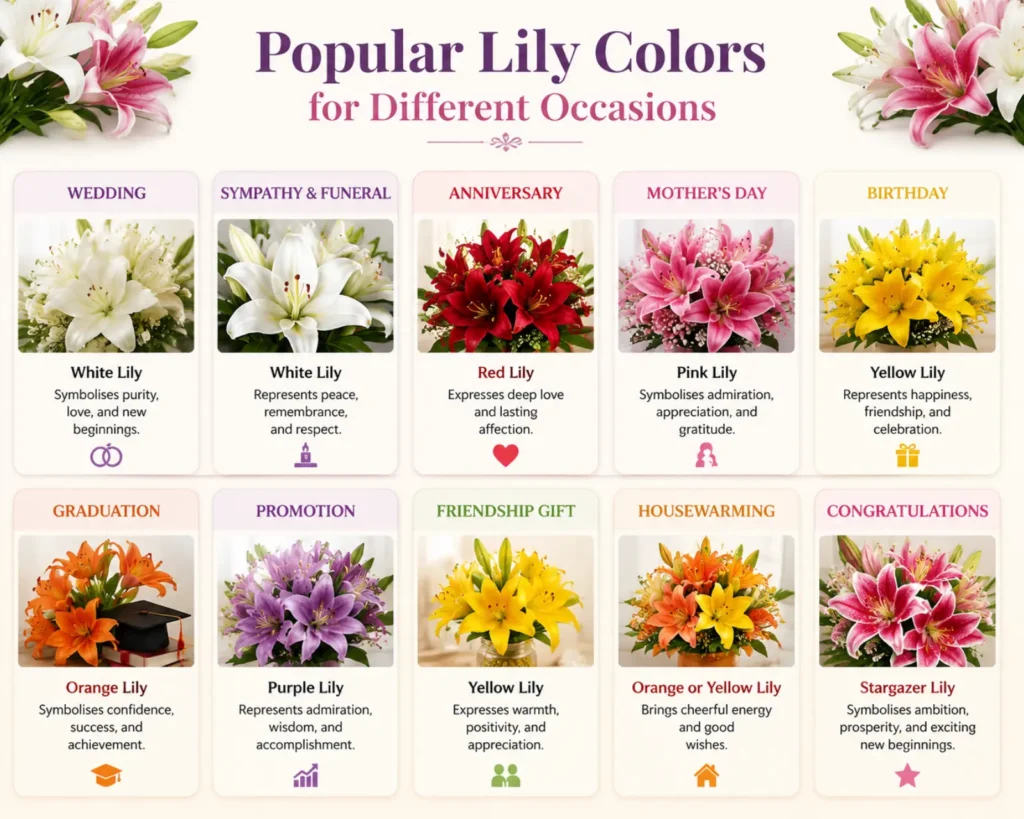
Popular Lily Colors for Different Occasions
People traditionally choose different lily colors for different life events and celebrations. Selecting the right color can make a floral gift feel more thoughtful while reflecting the emotions or message you want to share.
| Occasion | Best Lily Color | Why It’s a Good Choice |
|---|---|---|
| Wedding | 🤍 White Lily | Symbolises purity, love, and new beginnings |
| Sympathy & Funeral | 🤍 White Lily | Represents peace, remembrance, and respect |
| Anniversary | ❤️ Red Lily | Expresses deep love and lasting affection |
| Mother’s Day | 🩷 Pink Lily | Symbolises admiration, appreciation, and gratitude |
| Birthday | 💛 Yellow Lily | Represents happiness, friendship, and celebration |
| Graduation | 🧡 Orange Lily | Symbolises confidence, success, and achievement |
| Promotion | 💜 Purple Lily | Represents admiration, wisdom, and accomplishment |
| Friendship Gift | 💛 Yellow Lily | Expresses warmth, positivity, and appreciation |
| Housewarming | 🧡 Orange or 💛 Yellow Lily | Brings cheerful energy and good wishes |
| Congratulations | 🌸 Stargazer Lily | Symbolises ambition, prosperity, and exciting new beginnings |
Although many people widely recognise these associations, different cultures, floral traditions, and personal preferences often give lily colors different meanings. Choosing a color that suits both the occasion and the recipient often creates the most meaningful gift.
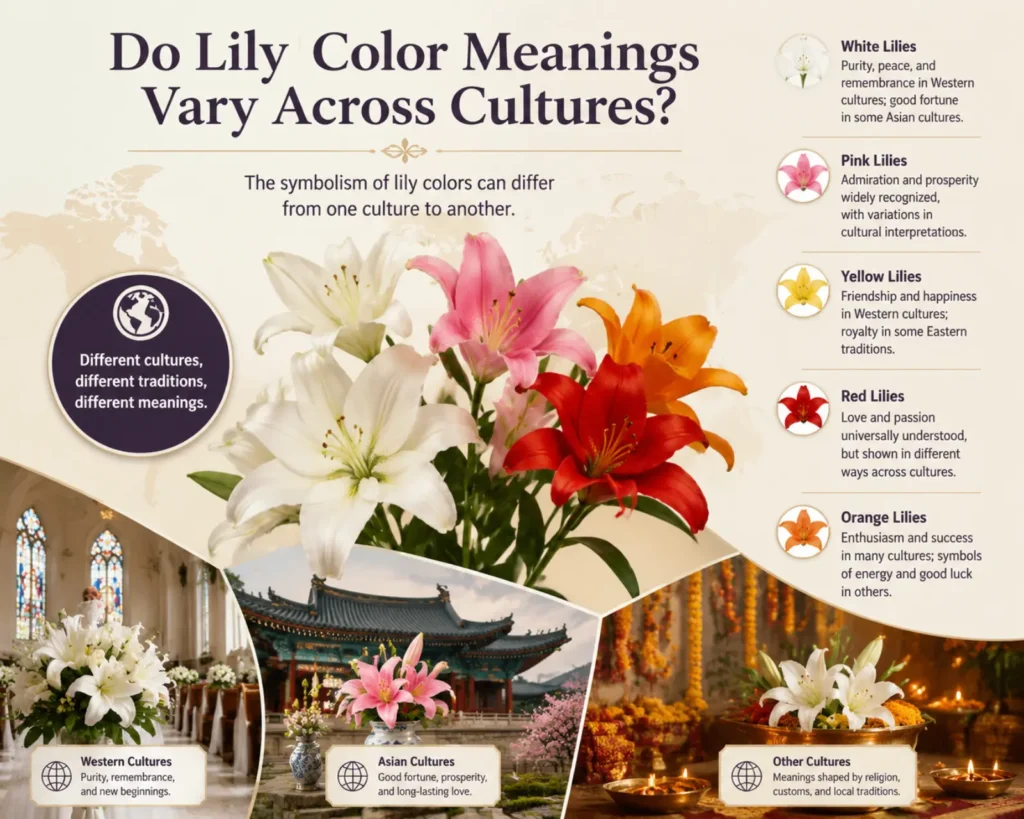
Do Lily Color Meanings Vary Across Cultures?
Yes. Cultural traditions, religious beliefs, and local floral customs shape lily color meanings. As a result, people in different parts of the world may associate the same lily color with different ideas or use it for different occasions.
For example, many Western countries associate white lilies with purity, peace, and remembrance, making them a popular choice for weddings and sympathy arrangements. Christian traditions also connect white lilies with purity and renewal. In some Asian cultures, however, lilies may symbolise good fortune, lasting love, or abundance, especially when given during celebrations or weddings.
Likewise, red, pink, yellow, and orange lilies may represent love, admiration, friendship, or success, but their exact meanings often depend on local customs and personal interpretation rather than universal rules. Modern floral gifting has also influenced how people choose lily colors, with many selecting blooms based on the occasion or the recipient’s favourite colour.
Understanding these cultural differences helps you choose lilies more thoughtfully and respectfully. Instead of assuming one meaning applies everywhere, consider the occasion, the recipient’s background, and local traditions when selecting a lily color.
FAQs:
What defines lily color meaning?
Lily color meaning refers to the symbolism and emotional message associated with each lily color, such as purity, love, friendship, remembrance, or prosperity.
What does the color lily symbolize?
Lilies generally symbolize purity, beauty, hope, renewal, peace, devotion, and emotional connection.
Why is lily important?
People value lilies for their widespread use in weddings, funerals, religious ceremonies, celebrations, and cultural traditions around the world.
What emotions does lily represent?
Lilies commonly represent love, compassion, gratitude, peace, hope, admiration, and remembrance.
What does lily mean spiritually?
Spiritually, lilies symbolize purity, divine grace, renewal, eternal life, transformation, healing, and spiritual awakening.
What colors pair well with lily-inspired colors?
White, cream, sage green, blush pink, lavender, gold, silver, charcoal, and soft beige create harmonious combinations.
What does liking lilies say about a person?
People who appreciate lilies often value kindness, elegance, optimism, and emotional depth. However, flower preferences alone do not reliably determine personality.
Which lily color represents love?
People often associate red lilies with romantic love and passion, while they use pink lilies to express admiration and affection.
Which lily color is best for sympathy?
People traditionally choose white lilies for sympathy arrangements because they symbolize peace, purity, remembrance, and eternal rest.
Conclusion
Lily color meanings offer far more than visual beauty. Each color communicates a distinct emotional, cultural, and spiritual message, making lilies one of the world’s most meaningful flowers. Whether expressing purity through white lilies, admiration with pink blooms, joy with yellow flowers, confidence with orange varieties, or love with red blossoms, understanding their symbolism helps people choose the right flower for every occasion.
History and tradition have established these meanings, but different cultures and personal experiences continue to shape how people interpret them. This enduring symbolism makes lilies timeless representations of beauty, hope, renewal, and human connection.