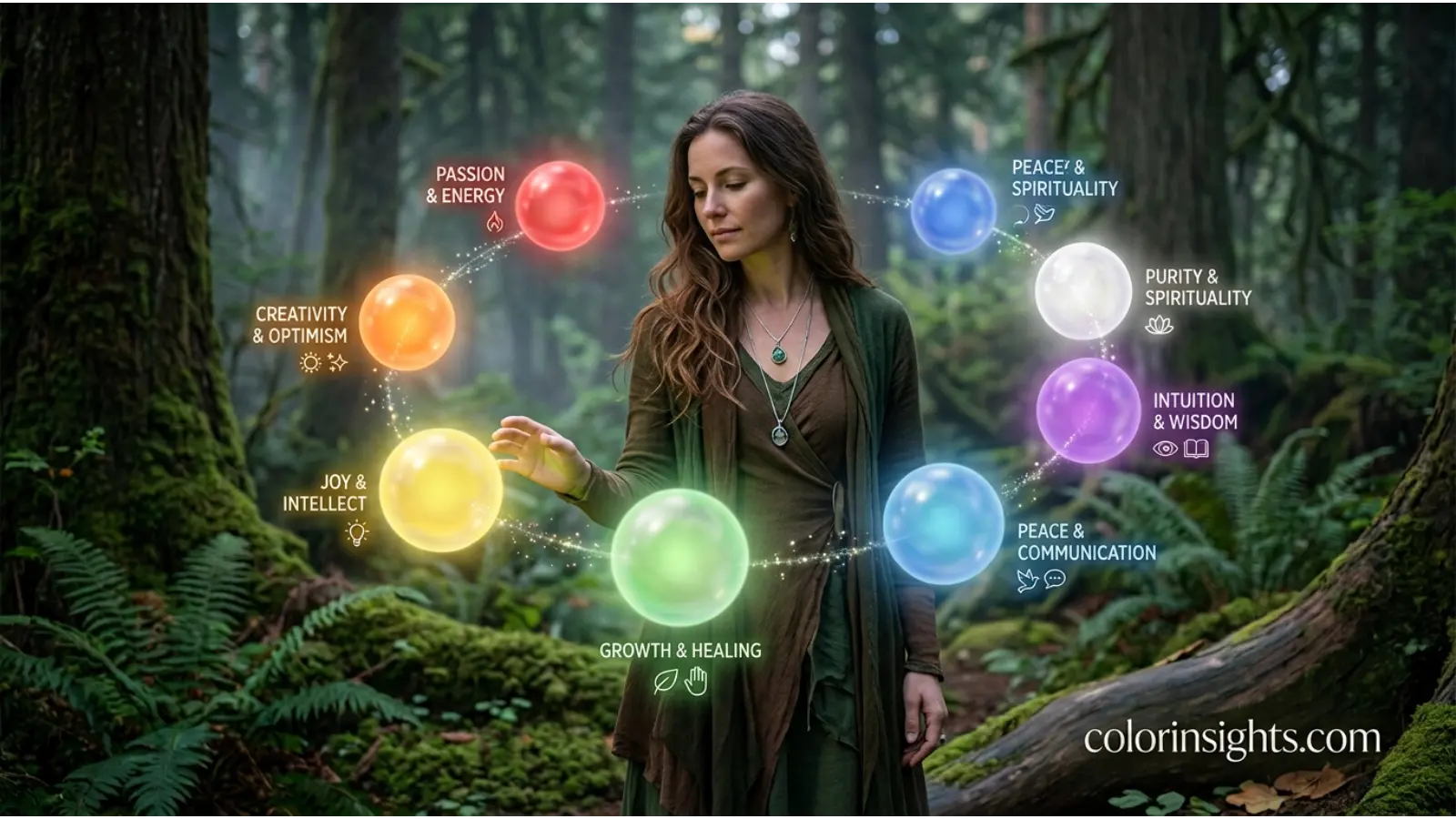
Orb color meanings have fascinated people for centuries, especially in spiritual traditions, meditation practices, photography, and paranormal discussions.
Many believe that colored orbs represent different forms of energy, emotional states, or spiritual messages, while others view them as symbolic interpretations rather than scientifically verified phenomena.
The meaning of an orb often depends on its color, cultural background, and personal beliefs. Whether encountered during meditation, in photographs, or in artistic representations, orb colors are commonly associated with emotions, healing, wisdom, protection, and transformation.
Quick Answer:
Orb color meanings generally symbolize different types of energy, emotions, and spiritual qualities. For example, white often represents purity, blue symbolizes peace, green signifies healing, red reflects vitality, and purple is linked with intuition and spiritual growth.
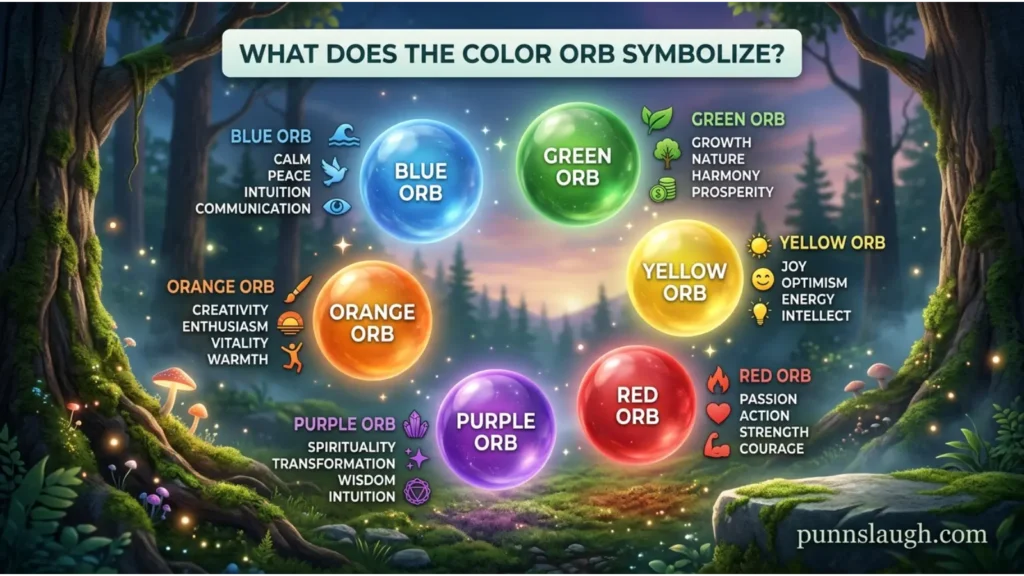
What Does the Color Orb Symbolize?
Unlike a single color, orb color symbolism refers to the meaning associated with different colored energy spheres. Across spiritual traditions, colored orbs are often interpreted as symbols of guidance, protection, emotional balance, or personal transformation.
Common symbolic meanings include:
- White orbs symbolize purity, divine protection, and higher consciousness.
- Blue orbs represent peace, wisdom, communication, and calmness.
- Green orbs signify healing, renewal, growth, and compassion.
- Red orbs symbolize strength, passion, courage, and physical energy.
- Yellow orbs reflect optimism, creativity, confidence, and mental clarity.
- Purple orbs are associated with spirituality, intuition, enlightenment, and transformation.
- Gold orbs often symbolize divine wisdom, abundance, and higher purpose.
- Pink orbs represent unconditional love, kindness, and emotional healing.
The interpretation of orb colors varies depending on spiritual beliefs, cultural traditions, and personal experiences.
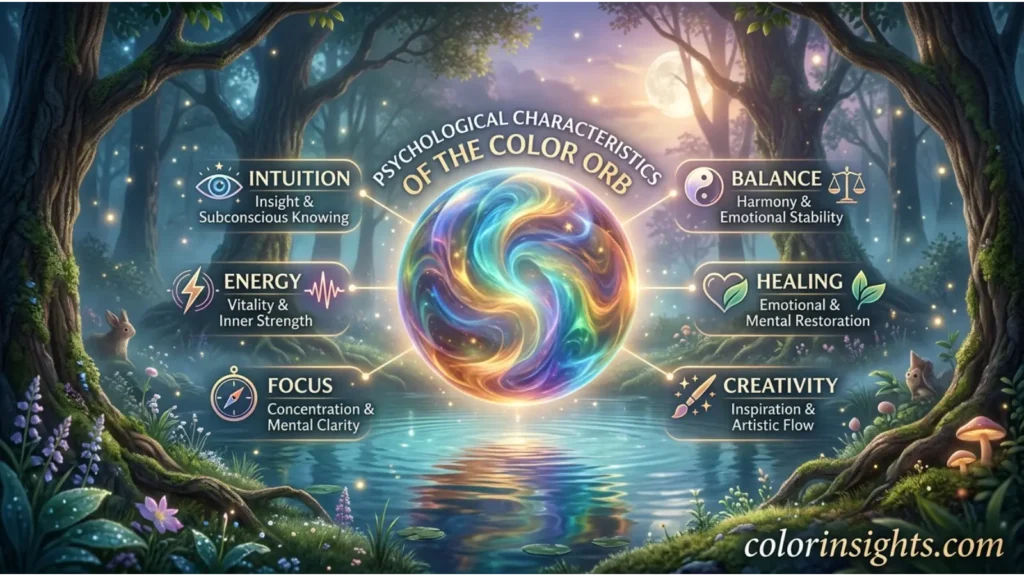
Psychological Characteristics of the Color Orb
From a color psychology perspective, people often respond emotionally to orb colors because each color naturally influences mood and perception.
Emotional Associations
- White promotes peace and mental clarity.
- Blue encourages relaxation and trust.
- Green creates feelings of balance and renewal.
- Yellow stimulates optimism and creativity.
- Purple inspires imagination and self-reflection.
- Red increases excitement and determination.
Psychological Effects
Different orb colors may encourage various emotional responses:
- Calmness and emotional stability
- Increased confidence
- Mental focus
- Creative thinking
- Compassion and empathy
- Personal motivation
Positive Emotional Responses
- Hope
- Inner peace
- Confidence
- Inspiration
- Emotional healing
- Spiritual comfort
Negative Emotional Responses
When interpreted negatively, some orb colors may symbolize:
- Fear of the unknown
- Emotional intensity
- Overthinking
- Isolation
- Anxiety
- Uncertainty
Impact on Mood and Behavior
People often associate warm-colored orbs with action and motivation, while cool-colored orbs encourage relaxation, patience, and thoughtful decision-making.
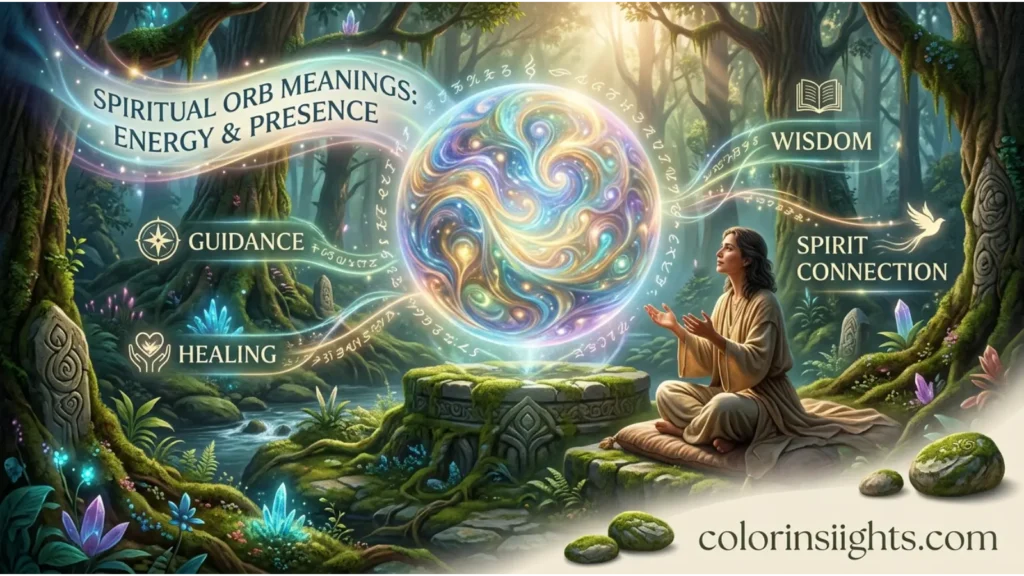
Spiritual Meaning of the Color Orb
In many spiritual practices, orb colors are believed to represent different energetic frequencies rather than physical objects. Although interpretations vary, the following meanings are widely recognized.
- Holiness: White and gold orbs symbolize divine presence and sacred energy.
- Wisdom: Blue and indigo represent knowledge, truth, and understanding.
- Purity: White signifies innocence, cleansing, and spiritual purity.
- Transformation: Purple symbolizes personal growth and higher awareness.
- Healing: Green represents emotional, physical, and spiritual healing.
- Protection: Blue and white are commonly associated with spiritual protection.
- Power: Red and gold symbolize strength, courage, and determination.
- Enlightenment: Violet and gold reflect expanded consciousness.
- New Beginnings: Green and white represent fresh starts and renewal.
- Eternity: White and gold often symbolize timeless spiritual existence.
These meanings are symbolic rather than scientifically proven and are interpreted differently across belief system
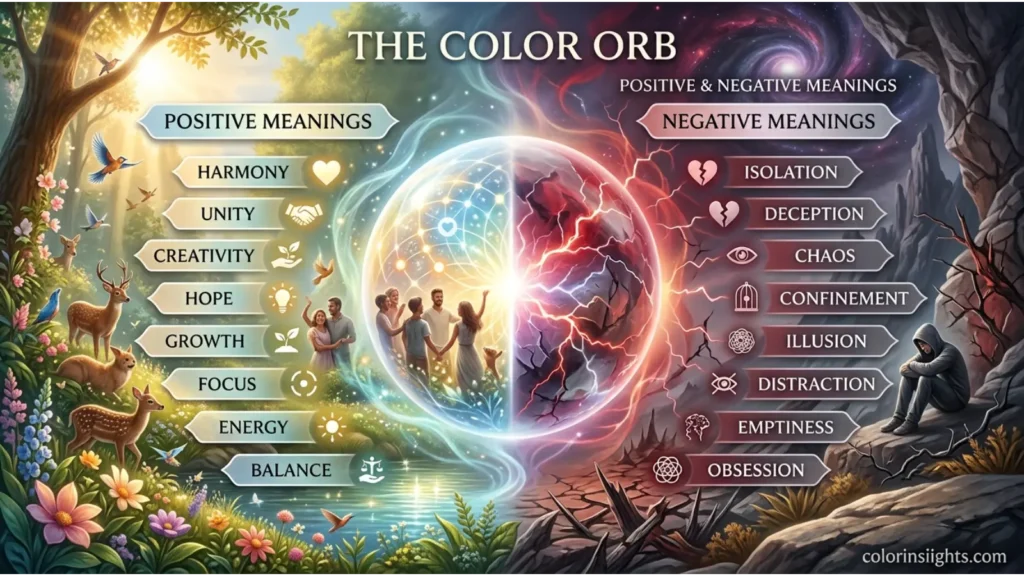
Positive and Negative Meanings of the Color Orb
Positive Meanings
Orb colors frequently represent uplifting qualities.
- Purity: White orbs symbolize honesty and spiritual cleansing.
- Peace: Blue encourages emotional calm during meditation.
- Simplicity: White reflects mental clarity and focus.
- Clarity: Yellow enhances logical thinking and learning.
- Freshness: Green represents growth and renewal.
- Hope: Gold symbolizes optimism and future success.
- Balance: Green reflects harmony between emotions and reason.
- Harmony: Pink encourages compassion and healthy relationships.
Negative Meanings
Depending on context, orb colors may also carry less favorable symbolism.
- Emptiness: White may represent emotional detachment.
- Isolation: Blue can symbolize loneliness when overly emphasized.
- Coldness: Silver or pale blue may appear emotionally distant.
- Sterility: Excessive white may suggest lifelessness.
- Boredom: Gray-toned orbs can represent stagnation.
- Emotional Distance: Cool colors sometimes imply reduced emotional expression.
- Perfectionism: White may symbolize unrealistic expectations.
Real-world interpretations often depend on personal beliefs, surrounding colors, and cultural context.
Meanings of the Color Orb
Orb color meanings change depending on where they appear, whether in spiritual practices, interior design inspiration, branding, or artistic expression.
Feng Shui
In Feng Shui, orb-inspired colors represent different forms of energy.
- Associated elements: Green (Wood), Red (Fire), White (Metal), Blue (Water), Yellow (Earth).
- Energy symbolism: Each color supports different life areas, including health, prosperity, relationships, and wisdom.
- Best rooms: Green works well in living rooms, blue in bedrooms, yellow in kitchens, and white in offices.
- Recommended color combinations: White with gold, blue with gray, green with brown, and purple with silver.
- Home decorating tips: Use orb-inspired accent colors through artwork, lighting, cushions, or decorative accessories rather than overwhelming an entire room.
Marketing
Businesses often use orb-related colors because each color creates distinct emotional impressions.
- White communicates simplicity and cleanliness.
- Blue builds trust and professionalism.
- Green suggests sustainability and health.
- Red captures attention and excitement.
- Purple conveys luxury and creativity.
- Gold represents prestige and success.
Brands commonly using these color strategies include Apple (white), Facebook (blue), Starbucks (green), Coca-Cola (red), Cadbury (purple), and Rolex (gold).
Design
Orb-inspired color palettes are popular across many design fields.
- Interior design: Soft orb colors create calming living spaces.
- Graphic design: Color gradients add depth and visual interest.
- Web design: Blue and green improve user trust and readability.
- User experience: Balanced colors help users navigate interfaces comfortably.
- Minimalist aesthetics: White, gray, and soft gold create elegant, uncluttered designs.
Fashion
Orb colors influence clothing choices and personal style.
- White conveys sophistication and cleanliness.
- Blue projects confidence and reliability.
- Green reflects natural elegance.
- Purple creates a luxurious appearance.
- Red expresses confidence and energy.
Seasonally, lighter orb-inspired shades are popular during spring and summer, while deeper reds, blues, and purples dominate autumn and winter collections.
Advantages include versatile styling and emotional expression, while disadvantages may include overly strong impressions if certain colors are overused.
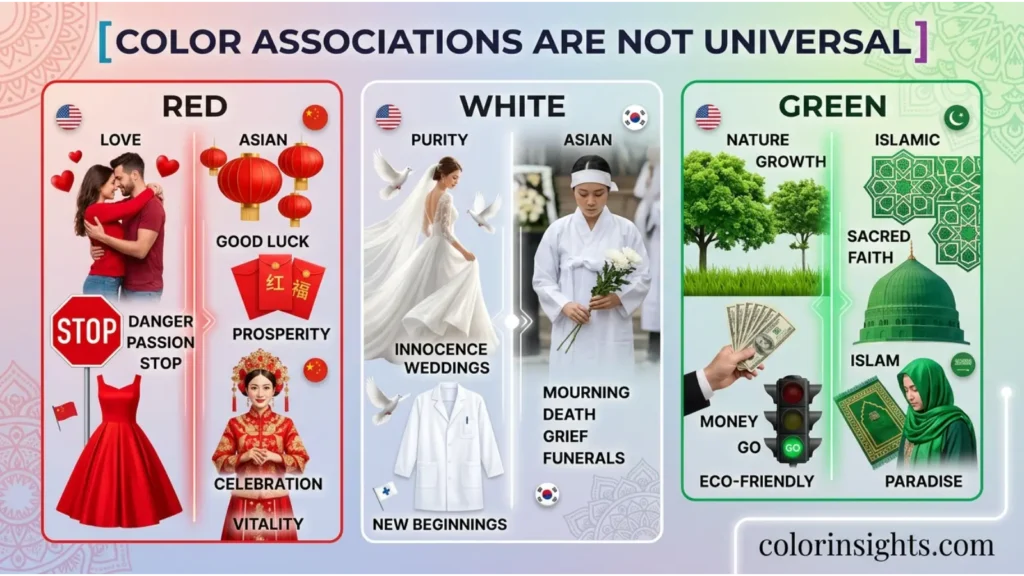
Color Associations Are Not Universal
Color symbolism varies significantly across cultures and historical traditions.
Western Cultures
In many Western societies, white symbolizes purity, weddings, and peace, while black often represents mourning. Blue is associated with trust and professionalism, and green commonly reflects nature and environmental awareness.
Eastern Cultures
Several Eastern traditions associate white with mourning rather than celebration. Red frequently symbolizes happiness, prosperity, good fortune, and festive occasions, particularly during celebrations and weddings.
Religious Traditions
Many religions assign symbolic meanings to colors. White often represents holiness and purity, gold signifies divine glory, purple symbolizes spiritual authority, and green is connected with life, mercy, or paradise in various traditions.
Historical Interpretations
Ancient civilizations used colors to represent royalty, social status, religious ceremonies, and military power. Purple was historically reserved for royalty because its dye was rare and expensive.
Modern Global Interpretations
Global communication and digital media have made color meanings more flexible. Companies often adapt branding colors for different markets while respecting regional cultural preferences.
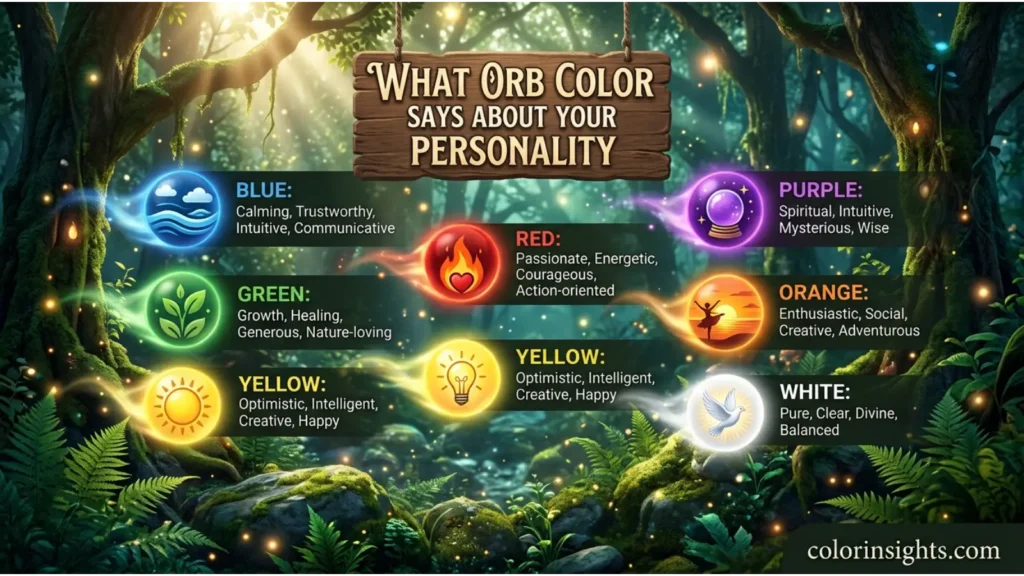
What Orb Color Says About Your Personality
People who feel especially drawn to certain orb colors may identify with related personality traits. However, color preferences should not be considered reliable personality tests.
Strengths
Depending on preferred colors, individuals may value:
- Compassion
- Creativity
- Confidence
- Wisdom
- Emotional balance
- Curiosity
- Leadership
Weaknesses
Potential challenges may include:
- Emotional sensitivity
- Perfectionism
- Overthinking
- Impatience
- Idealism
- Difficulty letting go
Social Behavior
People attracted to calming colors often enjoy meaningful conversations and supportive friendships, while those preferring energetic colors may seek excitement and leadership opportunities.
Work Style
Different color preferences may reflect different working styles.
- Blue lovers often appreciate organization.
- Green enthusiasts value teamwork.
- Red admirers enjoy competitive environments.
- Purple supporters frequently embrace creative problem-solving.
Relationships
Color preferences may influence communication styles, emotional expression, and relationship expectations, although many other factors shape compatibility.
Emotional Tendencies
Individuals may naturally seek peace, adventure, creativity, security, or personal growth depending on the symbolic qualities they associate with their favorite orb colors.
FAQs
What defines orb color meanings?
Orb color meanings refer to the symbolic, psychological, and spiritual interpretations associated with differently colored energy orbs.
What do orb colors symbolize?
They commonly symbolize emotions, healing, wisdom, protection, transformation, and different forms of spiritual energy.
Why are orb colors important?
They help people interpret symbolic experiences, artistic representations, meditation practices, and spiritual beliefs.
Are orb colors warm or cool colors?
Orb colors include both warm colors, such as red and yellow, and cool colors, including blue, green, and purple.
What emotions do orb colors represent?
Depending on the color, they may represent peace, love, confidence, hope, courage, creativity, or emotional healing.
What is the spiritual meaning of orb colors?
Many traditions associate orb colors with divine guidance, protection, healing, enlightenment, and personal transformation.
What colors pair well with orb-inspired color palettes?
Popular combinations include white and gold, blue and silver, green and brown, purple and gray, and yellow with white.
What does liking certain orb colors say about a person?
It may suggest personality preferences such as creativity, compassion, leadership, or calmness, but color preference alone cannot accurately determine personality.
Are orb color meanings scientifically proven?
The psychological effects of colors have been studied, but spiritual interpretations of orb colors remain matters of personal belief rather than established scientific fact.
Can orb color meanings change?
Yes. Meanings vary according to culture, religion, context, and individual interpretation.
Conclusion
Orb color meanings combine symbolism, psychology, spirituality, and cultural tradition into a rich system of interpretation. Whether viewed as representations of emotional energy, artistic symbolism, or spiritual guidance, different orb colors offer unique associations ranging from healing and protection to wisdom, creativity, and transformation.
While many interpretations are rooted in personal beliefs rather than scientific evidence, understanding orb color symbolism provides valuable insight into how colors influence emotions, design, branding, culture, and personal expression.
Appreciating these diverse meanings encourages a more balanced and informed perspective on the powerful role color plays in everyday life.




 Welcome to The colorinsiights.com