Beach flag color meanings play an essential role in keeping swimmers, surfers, and beachgoers safe. These internationally recognized safety flags communicate water conditions, hazards, and swimming restrictions without relying on language, making them effective for visitors from different countries.
While exact flag systems may vary by region, most beaches use a common set of colors to warn about strong currents, dangerous marine life, poor water quality, or safe swimming zones. Understanding these colors helps prevent accidents and allows visitors to make informed decisions before entering the water.
Quick Answer:
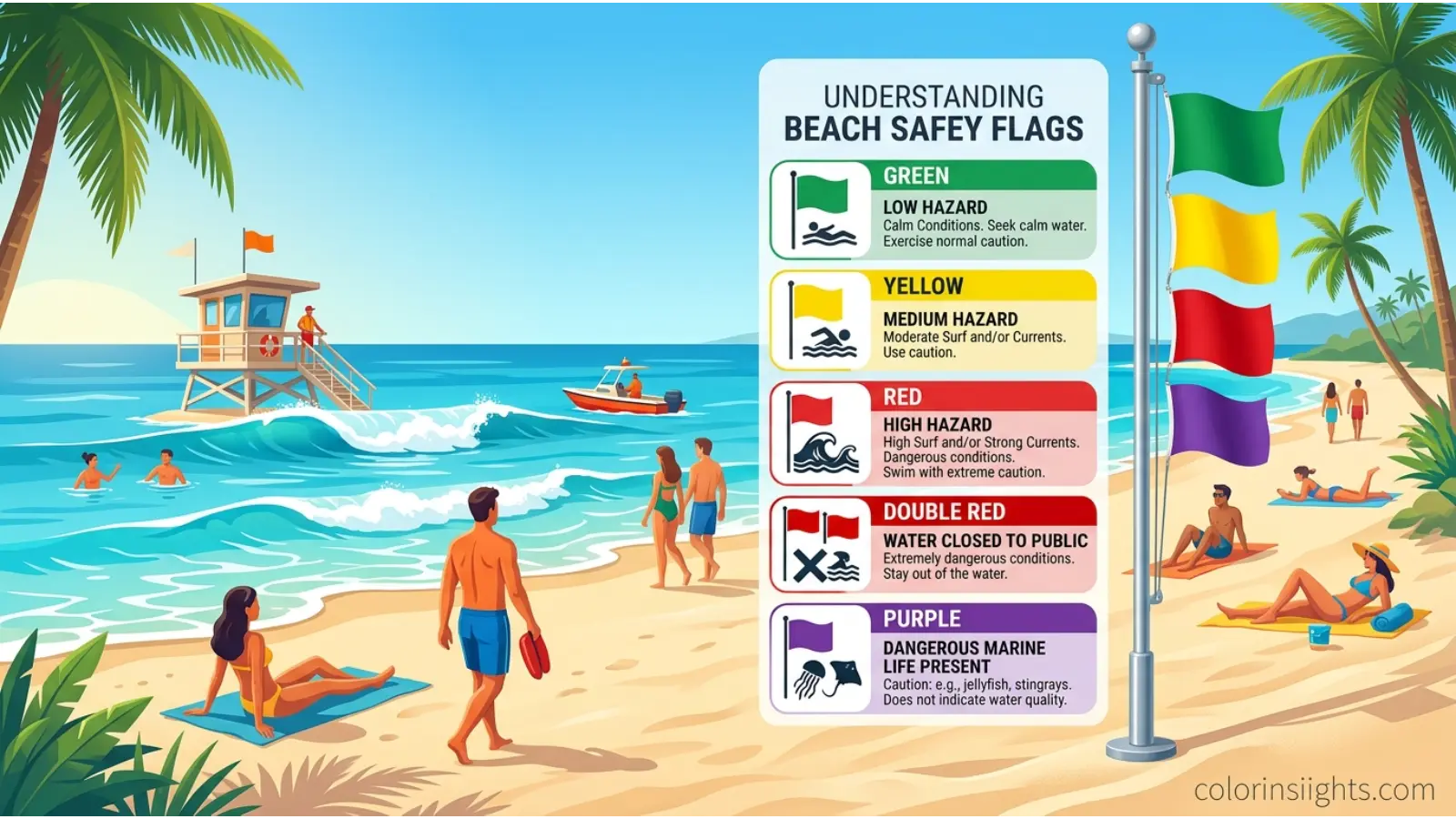
Beach flag color meanings indicate beach and water safety conditions. Green generally signals low hazard, yellow means moderate caution, red warns of high danger, double red prohibits water entry, purple alerts visitors to dangerous marine life, and black-and-white flags designate areas for surfing or other water sports.
What Does the Color Beach Flag Symbolize?
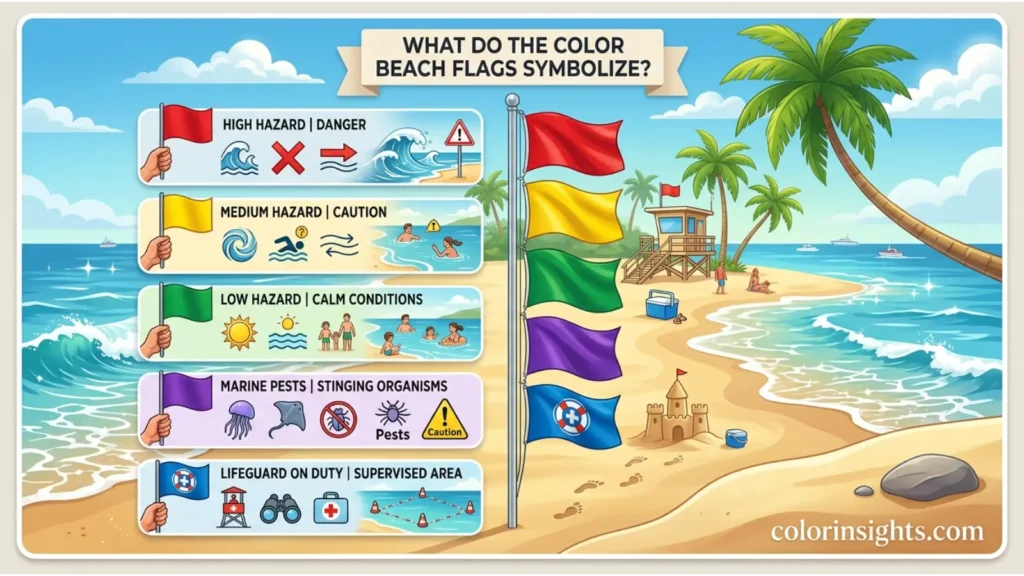
Beach flag colors symbolize different levels of safety, risk, and permitted activities at beaches. Rather than representing emotions or personality like traditional color psychology, these colors function as a universal visual communication system designed to protect lives.
Each color delivers a specific message:
- Green symbolizes safe or low-hazard swimming conditions.
- Yellow represents caution due to moderate surf or currents.
- Red indicates dangerous water conditions with a high risk of injury.
- Double Red means the beach is closed to swimming.
- Purple warns of potentially dangerous marine life, such as jellyfish or stingrays.
- Black and White Checkered marks designated zones for surfing or watercraft, separating them from swimming areas.
These meanings allow beach visitors to quickly understand changing environmental conditions without needing lengthy explanations.
Beyond safety, beach flag colors symbolize preparedness, public awareness, and responsible recreation. Lifeguards rely on these standardized colors to communicate hazards efficiently, reducing confusion during emergencies.
Psychological Characteristics of the Color Beach Flag Meanings
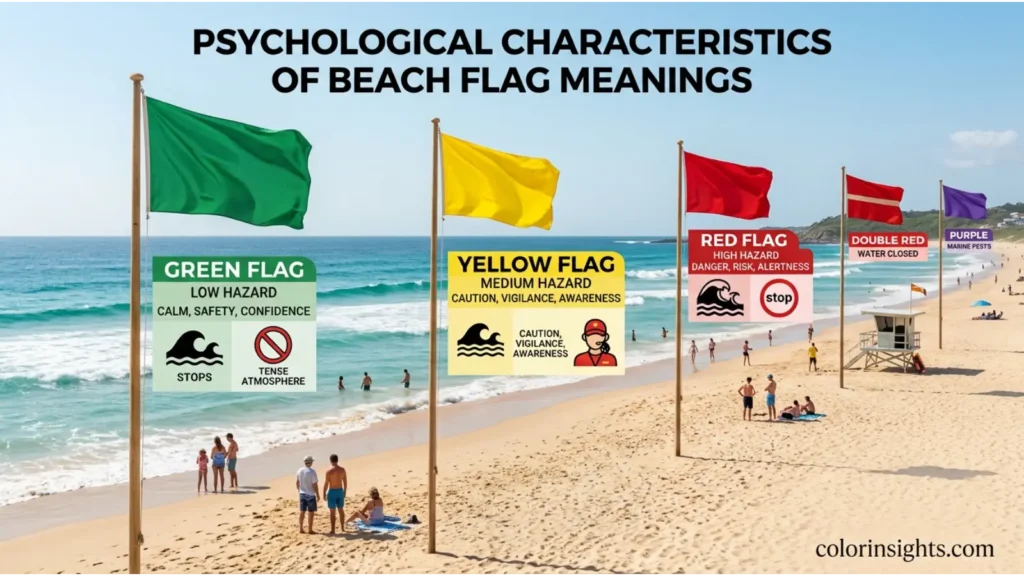
Although beach flags are primarily safety tools, each flag color triggers distinct psychological responses that influence human behavior. Color psychology explains why these colors are effective warning systems.
Emotional Associations
Different beach flag colors evoke different emotions:
- Green: Security, confidence, relaxation
- Yellow: Awareness, attentiveness, caution
- Red: Urgency, danger, alertness
- Purple: Curiosity mixed with concern
- Black and White: Order, organization, clear boundaries
Psychological Effects
Beach safety colors are intentionally designed to influence decision-making.
- Green encourages people to enjoy the water while remaining aware.
- Yellow increases alertness and encourages more careful behavior.
- Red immediately captures attention and discourages risky actions.
- Purple prompts beachgoers to watch for marine hazards.
- Black-and-white flags help people recognize activity zones quickly.
Positive Emotional Responses
When visitors understand beach flag meanings, they often experience:
- Greater confidence
- Reduced uncertainty
- Increased trust in lifeguards
- Better situational awareness
- A stronger sense of security
Negative Emotional Responses
Certain colors naturally trigger protective emotions:
- Anxiety during severe weather
- Concern about ocean hazards
- Hesitation before entering rough water
- Fear when beaches are closed
- Increased vigilance around marine wildlife
These reactions are intentional because they encourage safer choices.
Impact on Mood and Behavior
Beach flag colors influence behavior by encouraging people to:
- Follow lifeguard instructions.
- Stay within designated swimming areas.
- Avoid dangerous surf.
- Supervise children more carefully.
- Postpone swimming when conditions become hazardous.
Studies in environmental psychology suggest that highly visible warning colors improve compliance with safety guidance because they are processed quickly by the human brain.
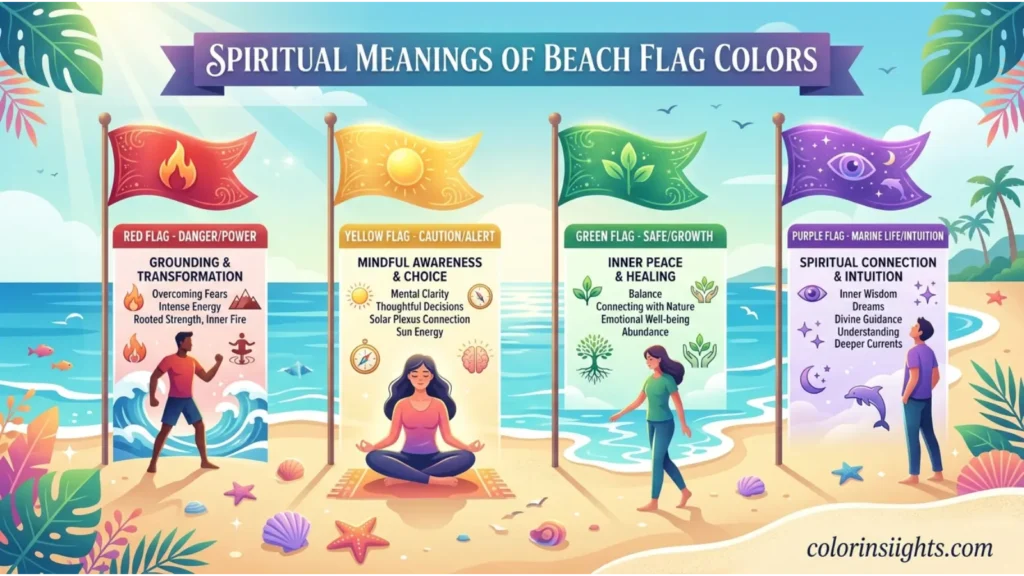
Spiritual Meaning of the Color Beach Flag Meanings
Beach flag colors were developed for public safety rather than spiritual symbolism. However, many cultures associate these colors with broader symbolic meanings that can enrich their interpretation.
Green
- Symbolizes renewal and harmony.
- Represents healing and growth.
- Encourages hope and emotional balance.
- Reflects nature’s calming influence.
Yellow
- Represents wisdom and awareness.
- Encourages mindfulness.
- Symbolizes learning through caution.
- Reminds people to respect natural forces.
Red
- Symbolizes protection through warning.
- Represents strength and survival.
- Reflects life’s powerful energy.
- Encourages respect for danger rather than fear.
Purple
- Traditionally represents intuition and spiritual awareness.
- Symbolizes mystery and hidden forces.
- Encourages heightened observation.
- Reflects respect for nature’s unseen risks.
Black and White
- Symbolize balance between opposing forces.
- Represent order and structure.
- Encourage discipline and clear boundaries.
- Reflect responsible coexistence between different beach activities.
While these interpretations vary among spiritual traditions, they demonstrate how color symbolism extends beyond practical communication.
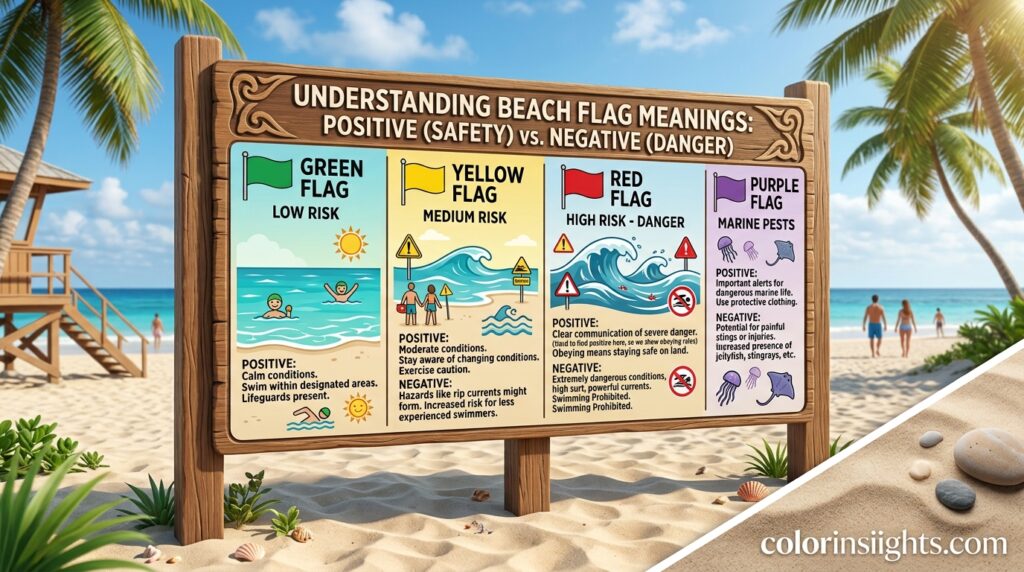
Positive and Negative Meanings of the Color Beach Flag Meanings
Positive Meanings
Beach flag colors promote public safety through clear visual communication.
Safety
Green and yellow flags encourage responsible enjoyment of the beach by informing visitors about current conditions.
Example:
Families often choose to swim when green flags are displayed because conditions are generally calmer.
Awareness
Yellow and purple flags increase awareness of changing environmental conditions.
Example:
Swimmers may avoid deeper water after seeing a yellow flag indicating stronger currents.
Protection
Red and double-red flags protect lives by discouraging dangerous activities.
Example: Beaches close during hurricanes or severe rip currents using double-red flags.
Organization
Black-and-white flags create separate zones for swimmers and surfers.
Example:
Keeping surfboards away from swimming areas reduces collision risks.
Trust
Consistent flag systems build confidence in lifeguard services and public safety programs.
Visitors who understand the system can respond quickly without needing lengthy instructions.
Negative Meanings
Some beach flag colors communicate hazards that require immediate attention.
Danger
Red flags indicate hazardous surf, powerful waves, or dangerous currents.
Example:
High winds creating strong rip currents often result in red flag warnings.
Restricted Access
Double-red flags mean entering the water is prohibited.
Example:
Severe storms or unsafe water conditions may require complete beach closures.
Uncertainty
Purple flags suggest the possible presence of dangerous marine life rather than guaranteeing encounters.
Example:
Jellyfish sightings may prompt a purple flag even if only a few are present.
Caution
Yellow flags remind swimmers that conditions require additional care.
Example:
Moderate waves may be manageable for experienced swimmers but challenging for children.
Environmental Risk
Some flag warnings reflect changing natural conditions rather than permanent hazards.
For example:
Tides, storms, and offshore winds can rapidly alter beach safety throughout the day.
Meanings of the Color Beach Flag Meanings
Beach flag meanings depend entirely on context. Unlike decorative colors, these flags communicate practical information about water safety, weather, and permitted recreational activities. Their purpose is to help beach visitors make informed decisions while reducing accidents and improving emergency response.
Feng Shui
Beach flag colors are not traditionally part of Feng Shui practices, but their individual colors align with common Feng Shui symbolism.
- Associated elements: Green relates to Wood, red to Fire, yellow to Earth, black to Water, and white to Metal.
- Energy symbolism: Together they represent balance, awareness, and harmony with natural forces.
- Best rooms: Green suits living rooms and offices, yellow complements kitchens, red enhances social areas when used moderately, while white and black create balanced modern spaces.
- Recommended color combinations: Green with white, yellow with blue, and black with white are popular harmonious combinations.
- Home decorating tips: Use these colors thoughtfully to create balanced, functional spaces without overwhelming the room.
Marketing
Although beach flag colors are primarily safety signals, marketing professionals often rely on the same psychological associations.
Trust Signals
Organizations responsible for safety frequently incorporate green, blue, and white to reinforce reliability and professionalism.
Product Packaging
Outdoor equipment, sunscreen, water safety gear, and travel products often use these colors to communicate intended benefits.
Advertising Applications
Travel campaigns frequently feature blue and green to suggest relaxation, while safety campaigns prominently use yellow and red for warnings.
Examples of well-known brands using these color associations include:
- Spotify (green for growth and freshness)
- McDonald’s (red and yellow for visibility and energy)
- Hallmark (purple for quality and creativity)
- The Red Cross (red for emergency recognition and protection)
Design
Beach flag colors also influence modern design because they communicate information quickly and effectively.
Interior Design
Green creates calm, yellow adds warmth, red introduces visual emphasis, and black-and-white combinations produce clean contemporary spaces.
Graphic Design
Designers use high-contrast color combinations inspired by safety flags to improve readability and accessibility.
Web Design
Many websites use:
- Green confirmation buttons
- Yellow notification banners
- Red error messages
- Purple informational highlights
These choices align with users’ learned expectations.
User Experience (UX)
Color-coded alerts help users understand system status instantly, reducing confusion and improving navigation.
Minimalist Aesthetics
Simple color palettes with one dominant accent color often achieve a clean, modern appearance while maintaining strong visual hierarchy.
Fashion
Although beach flag colors are functional, their individual shades also influence fashion choices and personal style.
Clothing Symbolism
- Green reflects freshness and an active lifestyle.
- Yellow conveys optimism and energy.
- Red projects confidence and boldness.
- Purple suggests creativity and individuality.
- Black and white communicate sophistication and timeless elegance.
Seasonal Use
Bright greens and yellows are popular during spring and summer, while deeper reds and purples become more common in autumn and winter collections.
Styling Effects
A red jacket creates an eye-catching statement, while green clothing often appears approachable and relaxed. Black-and-white outfits remain versatile for both casual and formal occasions.
Personality Impressions
People may perceive someone wearing green as calm, red as confident, yellow as cheerful, and purple as imaginative. However, clothing choices are influenced by fashion trends, culture, and personal preference rather than personality alone.
Advantages
- High visibility outdoors
- Easy color coordination
- Strong visual impact
- Wide seasonal versatility
Disadvantages
- Bright reds may appear overly dominant in some settings.
- Yellow stains more visibly than darker colors.
- Certain shades can fade with repeated sun exposure.
- Highly vibrant combinations may overwhelm minimalist styles.
Practical examples include wearing bright yellow athletic apparel for visibility during outdoor activities, choosing green resort wear for a relaxed vacation aesthetic, or incorporating black-and-white accessories for a classic coastal look.

Color Associations Are Not Universal
Although beach flag color meanings are widely recognized, color symbolism itself is not universal. Cultural traditions, religious beliefs, historical events, and regional practices all influence how people interpret colors. While most countries follow standardized beach safety systems, emotional and symbolic associations with each color may differ.
Western Cultures
In the United States, Canada, and much of Europe, beach flag colors are closely associated with public safety and risk communication.
- Green represents safety, permission, and favorable conditions.
- Yellow signals caution and encourages careful decision-making.
- Red universally communicates danger, emergency, or prohibition.
- Purple often indicates unusual hazards, including dangerous marine life.
Because these meanings are reinforced through road signs, emergency services, and workplace safety standards, most Western visitors quickly understand beach flag warnings.
Eastern Cultures
Many Eastern cultures attach additional symbolic meanings to colors beyond their practical use.
For example, red is widely associated with good fortune, prosperity, and celebration in countries such as China. However, when displayed as a beach safety flag, it still communicates hazardous water conditions. Similarly, green often symbolizes harmony, health, and nature, while yellow may represent wisdom, royalty, or honor depending on cultural traditions.
These broader cultural interpretations exist alongside internationally recognized beach safety standards.
Religious Traditions
Religious symbolism also shapes how colors are perceived.
- Green is frequently associated with life, hope, renewal, and paradise.
- White often represents purity, peace, and spiritual cleansing.
- Red can symbolize sacrifice, courage, or divine protection.
- Purple is traditionally linked with dignity, reflection, and spiritual authority.
Despite these religious meanings, beach flags are designed to communicate safety information rather than spiritual messages.
Historical Interpretations
Throughout history, colors have represented authority, warning, and social identity.
Red banners have long been used to signal danger or military alerts, making them a natural choice for modern warning systems. Green has historically symbolized fertile land and safe passage, while black-and-white patterns have been used for clear visual distinction in transportation and sporting events.
These historical associations continue to influence today’s public safety signage.
Modern Global Interpretations
Global tourism has encouraged greater consistency in beach safety communication.
Organizations responsible for water safety increasingly promote standardized flag systems so that visitors from different countries can recognize hazards regardless of language. While exact regulations vary by location, the overall purpose remains the same: helping people make safer decisions before entering the water.
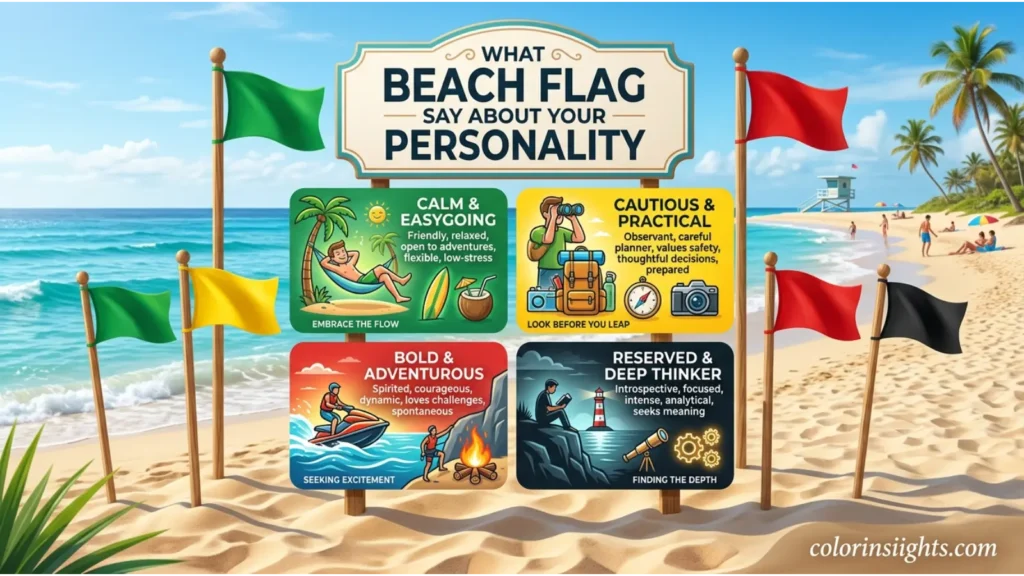
What Beach Flag Colors Say About Your Personality
Some people naturally prefer certain colors over others, and color psychology suggests these preferences may reflect aspects of personality. However, color preference alone cannot accurately determine someone’s character. Personality is influenced by many factors, including life experiences, culture, environment, and individual values.
People who are drawn to colors commonly seen in beach flag systems may identify with the following characteristics.
Strengths
Individuals who prefer green often value balance, stability, and personal growth. They may enjoy nature and appreciate peaceful environments.
Those attracted to yellow frequently display optimism, curiosity, and enthusiasm for learning. They often enjoy social interaction and creative thinking.
People who favor red may appear confident, energetic, determined, and action-oriented. They often enjoy challenges and leadership opportunities.
Those who like purple are commonly associated with imagination, creativity, and independent thinking.
Individuals who appreciate black-and-white combinations often value organization, simplicity, and logical decision-making.
Weaknesses
Every preference may also have potential challenges.
- Green lovers may resist rapid change.
- Yellow enthusiasts can become distracted by new ideas.
- Red admirers may occasionally act impulsively.
- Purple fans might overthink complex situations.
- Black-and-white thinkers may sometimes view issues too rigidly.
These tendencies are possibilities rather than proven personality traits.
Social Behavior
People attracted to calming colors such as green often enjoy supportive relationships and cooperative environments. Those who prefer brighter colors like yellow and red may seek excitement, conversation, and active social lives.
Meanwhile, people drawn to black-and-white aesthetics frequently appreciate structure, clarity, and straightforward communication.
Work Style
Different color preferences may influence working styles.
- Green supporters often excel in teamwork and long-term planning.
- Yellow personalities enjoy brainstorming and innovation.
- Red-oriented individuals thrive in fast-paced environments.
- Purple thinkers often succeed in artistic or strategic roles.
- Black-and-white personalities value organization and consistency.
Relationships
Color preferences may also reflect communication styles.
People who enjoy green often prioritize trust and emotional stability. Red enthusiasts may express passion and confidence, while yellow lovers often bring enthusiasm and optimism to relationships. Purple admirers frequently value meaningful conversations and creativity.
Healthy relationships ultimately depend on communication, respect, and shared values rather than favorite colors.
Emotional Tendencies
Color preferences can influence emotional comfort but should never be viewed as scientific predictors of personality.
Many people choose colors because they evoke pleasant memories, match their surroundings, or simply appeal to their personal taste. Therefore, beach flag colors should be viewed primarily as safety signals rather than personality assessments.
FAQs
What defines beach flag colors?
Beach flag colors are standardized visual safety signals used to communicate swimming conditions, water hazards, restricted areas, and permitted recreational activities at beaches.
What do beach flag colors symbolize?
Beach flag colors symbolize different levels of safety and risk. Green generally indicates low hazard, yellow means caution, red warns of dangerous conditions, double red prohibits water entry, and purple alerts visitors to potentially dangerous marine life.
Why are beach flag colors important?
They provide immediate safety information that helps swimmers, surfers, and beach visitors recognize hazards quickly and make informed decisions before entering the water.
Are beach flag colors universal?
Many countries follow similar beach safety standards, but exact flag systems may vary by region. Visitors should always check local beach regulations and lifeguard instructions.
Are beach flag colors considered warm or cool colors?
The beach flag system includes both warm and cool colors. Red and yellow are warm colors that attract attention, while green is generally considered a cool color associated with safety and calmness.
What emotions do beach flag colors represent?
Green often represents confidence and reassurance, yellow encourages caution and awareness, red creates urgency, and purple promotes vigilance regarding marine hazards.
What is the spiritual meaning of beach flag colors?
Beach flag colors do not have official spiritual meanings. However, traditional symbolism often associates green with renewal, yellow with wisdom, red with protection and strength, and purple with intuition and transformation.
Which colors pair well with beach flag colors in design?
Green pairs well with white, blue, and gray. Yellow complements navy and charcoal. Red works effectively with black, white, and neutral shades, while purple combines well with silver, white, and deep blue.
What do beach flag colors say about a person?
Color preferences may reflect certain tendencies such as creativity, confidence, optimism, or appreciation for balance. However, they do not reliably determine personality or behavior.
Should you always follow beach flag warnings?
Yes. Beach flags are designed to protect public safety. Visitors should always follow lifeguard instructions and obey posted flag warnings, even if water conditions appear calm.
Conclusion:
Understanding Beach Flag Color Meanings is an important part of enjoying the coast safely. These internationally recognized flags provide clear visual guidance about swimming conditions, ocean hazards, and designated activity zones.
While colors also carry psychological, cultural, and symbolic meanings, their primary purpose on the beach is to communicate safety information quickly and effectively.
Whether you are planning a family beach vacation, surfing, or simply relaxing by the shoreline, recognizing the meaning of each beach flag helps reduce risks and supports responsible decision-making.
By paying attention to lifeguard instructions and beach safety flags, visitors can enjoy the ocean with greater confidence while helping protect themselves and others.