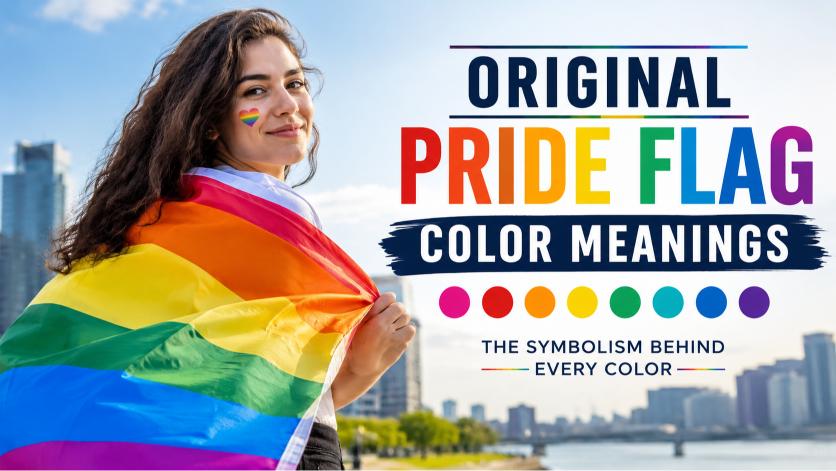
The Original Pride Flag Color Meanings represent far more than a colorful design—they tell a story of identity, hope, resilience, and community. Designed in 1978 by artist Gilbert Baker, the original eight-stripe Pride flag assigned a unique meaning to each color, reflecting different aspects of human life and LGBTQ+ pride.
Although modern Pride flags have evolved over time, the symbolism behind the original colors continues to inspire people around the world. Understanding these color meanings offers valuable insight into LGBTQ+ history, cultural identity, emotional expression, and the universal language of color symbolism.
Quick Answer:
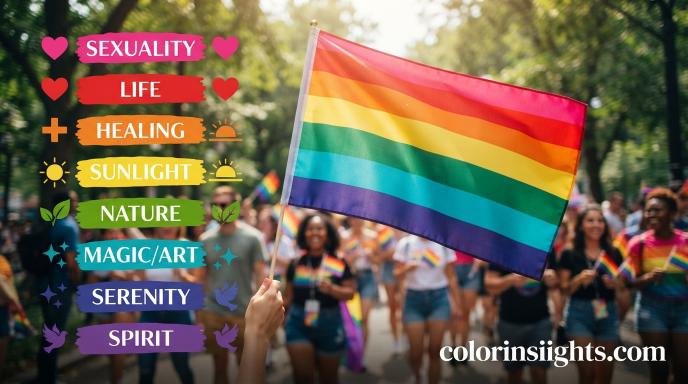
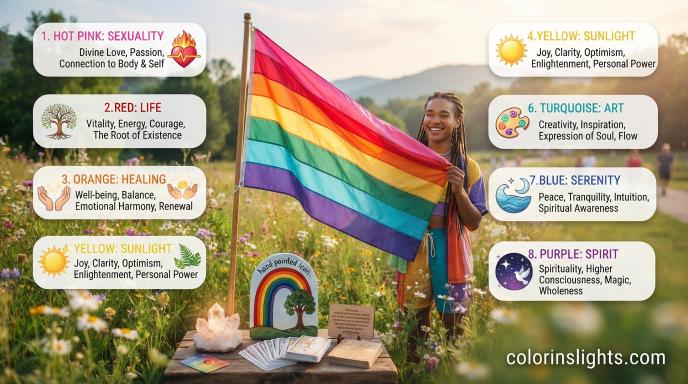
The original Pride flag features eight colors representing sex (hot pink), life (red), healing (orange), sunlight (yellow), nature (green), serenity (turquoise), harmony (indigo), and spirit (violet).
What Does the Color Original Pride Flag Symbolize?
Unlike a single color, the Original Pride Flag combines eight symbolic colors to represent the diversity of human experience and the LGBTQ+ community. Each stripe contributes a unique message while working together to communicate unity, inclusion, equality, freedom, and hope.
The original color meanings are:
- Hot Pink: Sex and self-expression
- Red: Life and vitality
- Orange: Healing and recovery
- Yellow: Sunlight, optimism, and joy
- Green: Nature, growth, and renewal
- Turquoise: Magic, art, and serenity
- Indigo: Harmony and inner peace
- Violet: Spirit and human connection
Together, these colors symbolize the idea that every individual deserves dignity, acceptance, and the freedom to live authentically.
Psychological Characteristics of the Color Original Pride Flag
From a color psychology perspective, the Original Pride Flag combines colors that stimulate a wide range of emotional and psychological responses. Instead of representing one emotional state, it reflects the complexity of human identity and emotional well-being.
Emotional Associations
- Identity and authenticity
- Belonging and acceptance
- Hope and resilience
- Diversity and inclusion
- Confidence and self-expression
- Community and solidarity
Psychological Effects
The balanced arrangement of warm and cool colors creates emotional harmony. Warm colors energize and inspire, while cool colors encourage calmness, reflection, and trust.
Positive Emotional Responses
- Optimism
- Happiness
- Courage
- Creativity
- Compassion
- Empowerment
- Emotional healing
- Pride and confidence
Negative Emotional Responses
Although widely positive, some viewers may associate the flag with:
- Social conflict
- Political debates
- Cultural misunderstanding
- Personal discomfort due to differing beliefs
- Emotional memories related to discrimination
These reactions are influenced more by individual experiences and cultural context than by the colors themselves.
Impact on Mood and Behavior
The Original Pride Flag often encourages:
- Greater self-confidence
- Open communication
- Community participation
- Emotional resilience
- Creative thinking
- Increased feelings of belonging
How People Typically React
Many people experience:
- Inspiration
- Joy
- Curiosity
- Emotional connection
- Respect for diversity
- A stronger sense of inclusion
Spiritual Meaning of the Color Original Pride Flag
Although the Pride Flag is primarily a cultural and social symbol rather than a religious one, many people interpret its colors through broader spiritual themes. Together, the colors reflect the journey toward personal authenticity, compassion, and inner growth.
Spiritual Symbolism
- Holiness: Respect for the dignity of every human life.
- Wisdom: Encourages understanding, empathy, and lifelong learning.
- Purity: Represents honesty and living authentically.
- Transformation: Symbolizes personal growth, self-discovery, and acceptance.
- Healing: Orange reflects emotional recovery and resilience.
- Protection: Community support provides emotional and social safety.
- Power: Personal empowerment through self-acceptance.
- Enlightenment: Living truthfully with self-awareness.
- New Beginnings: Freedom to embrace one’s authentic identity.
- Eternity: The enduring pursuit of equality, love, and human rights.
While these interpretations are meaningful for many individuals, they are symbolic rather than tied to any single religious tradition.
Positive and Negative Meanings of the Color Original Pride Flag
Positive Meanings
The Original Pride Flag communicates many uplifting values.
- Acceptance: Welcoming people regardless of identity.
- Hope: Looking toward a more inclusive future.
- Unity: Different identities standing together.
- Healing: Emotional recovery from discrimination.
- Love: Celebrating relationships and human connection.
- Freedom: Living openly without fear.
- Balance: Multiple colors representing diverse experiences.
- Harmony: Different communities coexisting respectfully.
Real-world examples
- Pride celebrations promoting equality.
- Educational diversity campaigns.
- Inclusive workplace initiatives.
- Community support organizations.
- Mental health awareness programs.
Negative Meanings
No color combination is universally interpreted the same way. Some people may associate the flag with:
- Social polarization
- Political disagreement
- Identity conflicts
- Misunderstanding
- Cultural tension
- Resistance to social change
Real-world examples
- Public debates surrounding LGBTQ+ rights.
- Cultural disagreements between generations.
- Political controversies over symbolic displays.
- Different legal or social attitudes across countries.
These meanings reflect social context rather than the inherent symbolism of the colors.
Meanings of the Color Original Pride Flag
The meaning of the Original Pride Flag changes depending on where and how it is used. In education it represents inclusion, while in public celebrations it symbolizes community pride. In design it communicates diversity, and in activism it represents equal rights and visibility.
Feng Shui
Although the Pride Flag is not a traditional Feng Shui symbol, its colors can be associated with the Five Elements.
- Associated elements: Fire, Wood, Earth, Water, and Metal through its multi-color balance.
- Energy symbolism: Positive life energy, harmony, creativity, and renewal.
- Best rooms: Creative studios, community spaces, living rooms, and art rooms.
- Recommended color combinations: White, natural wood, soft gray, and neutral backgrounds.
- Decorating tips: Use balanced color placement to avoid visual overload while creating an uplifting atmosphere.
Marketing
Brands increasingly use rainbow-inspired color palettes to communicate diversity and inclusion.
Branding psychology
- Signals openness and acceptance.
- Appeals to younger, socially conscious audiences.
- Creates memorable visual identity.
Consumer perception
Consumers often associate rainbow colors with:
- Diversity
- Equality
- Creativity
- Innovation
- Modern values
Trust signals
Organizations displaying inclusive messaging may strengthen relationships with audiences when their actions genuinely support diversity.
Product packaging
Limited-edition Pride packaging often emphasizes celebration, visibility, and community support.
Advertising applications
Rainbow-inspired campaigns frequently appear during Pride Month to promote inclusion, charitable partnerships, and social awareness.
Examples include brands such as Apple, Google, Microsoft, Levi’s, Adobe, and Converse, which have supported Pride-themed campaigns or initiatives.
Design
The Original Pride Flag has become one of the world’s most recognizable examples of symbolic color design.
Interior design
- Adds vibrant focal points.
- Encourages welcoming environments.
- Works well in creative spaces.
Graphic design
- Represents diversity visually.
- Creates immediate recognition.
- Supports inclusive messaging.
Web design
- Used for Pride campaigns.
- Highlights diversity initiatives.
- Improves visual storytelling.
User Experience (UX)
Designers often incorporate Pride colors thoughtfully to communicate inclusivity while maintaining accessibility and sufficient color contrast.
Minimalist aesthetics
Instead of using every stripe equally, designers often apply subtle rainbow accents against neutral backgrounds for a modern appearance.
Fashion
The Original Pride Flag has influenced fashion for decades.
Clothing symbolism
Rainbow-inspired clothing often expresses:
- Pride
- Authenticity
- Confidence
- Allyship
- Celebration
Seasonal use
Most visible during Pride Month but increasingly worn throughout the year.
Styling effects
- Creates bold visual impact.
- Adds personality.
- Encourages self-expression.
Personality impressions
People may perceive rainbow-inspired fashion as:
- Friendly
- Creative
- Confident
- Inclusive
- Outgoing
Advantages
- Highly expressive.
- Easily recognizable.
- Promotes positive conversations.
Disadvantages
- May attract differing opinions depending on cultural or political environments.
Practical examples include rainbow sneakers, scarves, accessories, jackets, and graphic T-shirts.
Color Associations Are Not Universal
Western Cultures
In many Western countries, the Original Pride Flag is widely recognized as a symbol of LGBTQ+ rights, equality, diversity, and inclusion. It is commonly displayed during Pride events, educational programs, and community celebrations.
Eastern Cultures
Interpretations vary across Asia and other Eastern regions. Some communities embrace the flag as a universal symbol of human rights, while others interpret it differently due to cultural traditions, religious beliefs, or local laws.
Religious Traditions
Religious perspectives differ significantly. Some faith communities interpret the Pride Flag as representing compassion, dignity, and respect for every individual, while others hold theological views that influence how they understand its symbolism.
Historical Interpretations
Since its creation in 1978, the flag has evolved from a community symbol into an internationally recognized emblem of equality, visibility, and social progress.
Modern Global Interpretations
Today, the Original Pride Flag symbolizes much more than LGBTQ+ identity. It also represents human dignity, inclusion, diversity, freedom of expression, and the ongoing pursuit of equal rights worldwide.
What Original Pride Flag Says About Your Personality
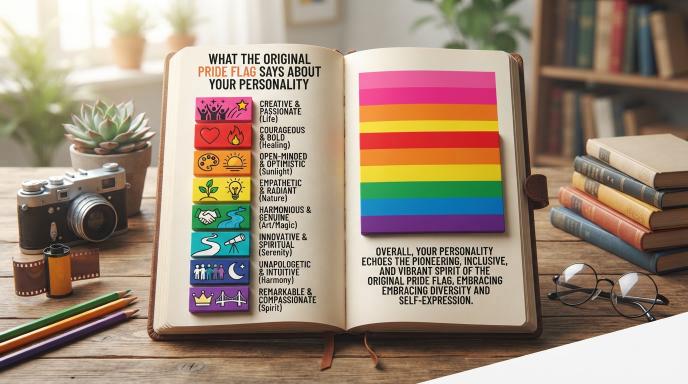
People who feel drawn to the symbolism of the Original Pride Flag are often associated with certain personality characteristics. These observations are based on symbolic interpretation rather than scientific personality assessment.
Strengths
- Compassionate
- Open-minded
- Creative
- Courageous
- Empathetic
- Optimistic
- Inclusive
Weaknesses
- Emotionally sensitive
- Idealistic
- Occasionally overwhelmed by social injustice
- Strong emotional investment in fairness
Social Behavior
They often enjoy diverse communities, meaningful conversations, teamwork, and inclusive environments.
Work Style
Many value collaboration, creativity, innovation, fairness, and supportive leadership.
Relationships
They typically appreciate honesty, authenticity, mutual respect, emotional openness, and acceptance.
Emotional Tendencies
People attracted to the symbolism often seek belonging, emotional security, personal growth, and genuine human connection.
Remember:
Color preferences and symbolic associations do not determine personality with certainty. Individual experiences, culture, upbringing, and personal values all play a much larger role.
FAQs:
What defines the Original Pride Flag?
The original Pride Flag is an eight-color flag created by Gilbert Baker in 1978, with each stripe representing a unique aspect of life and LGBTQ+ identity.
What does the Original Pride Flag symbolize?
It symbolizes diversity, equality, hope, authenticity, healing, unity, and human dignity.
Why is the Original Pride Flag important?
It serves as one of the most recognizable symbols of LGBTQ+ history, visibility, inclusion, and equal rights.
Is the Original Pride Flag warm or cool?
It contains both warm and cool colors, creating a balanced emotional and visual composition.
What emotions does the Original Pride Flag represent?
The flag commonly represents hope, pride, joy, courage, belonging, resilience, compassion, and optimism.
What is the spiritual meaning of the Original Pride Flag?
Many interpret it as symbolizing healing, transformation, authenticity, compassion, inner growth, and human connection.
What colors pair well with the Original Pride Flag?
Neutral colors such as white, black, gray, beige, and natural wood tones help balance its vibrant palette.
What does liking the Original Pride Flag say about a person?
It may suggest an appreciation for diversity, creativity, equality, openness, and self-expression, though color preferences are not reliable indicators of personality.
Why did the original Pride Flag have eight colors?
Each of the eight stripes represented a distinct concept, including sex, life, healing, sunlight, nature, magic, harmony, and spirit.
Why does the modern Pride Flag have fewer colors?
Manufacturing limitations and design standardization led to the removal of hot pink and turquoise, resulting in the more familiar six-stripe version.
Conclusion
The Original Pride Flag Color Meanings remain one of the most meaningful examples of symbolic color design in modern history. Each of its eight colors represents a unique aspect of the human experience, from life and healing to creativity, harmony, and spirit. Beyond its visual appeal, the flag reflects decades of advocacy, resilience, and the ongoing pursuit of equality.
Whether viewed through the lenses of color psychology, cultural symbolism, design, fashion, or social history, the original Pride flag continues to inspire conversations about authenticity, inclusion, and respect for human diversity. Understanding its color meanings helps preserve the history behind this iconic symbol while promoting greater awareness and appreciation across communities.