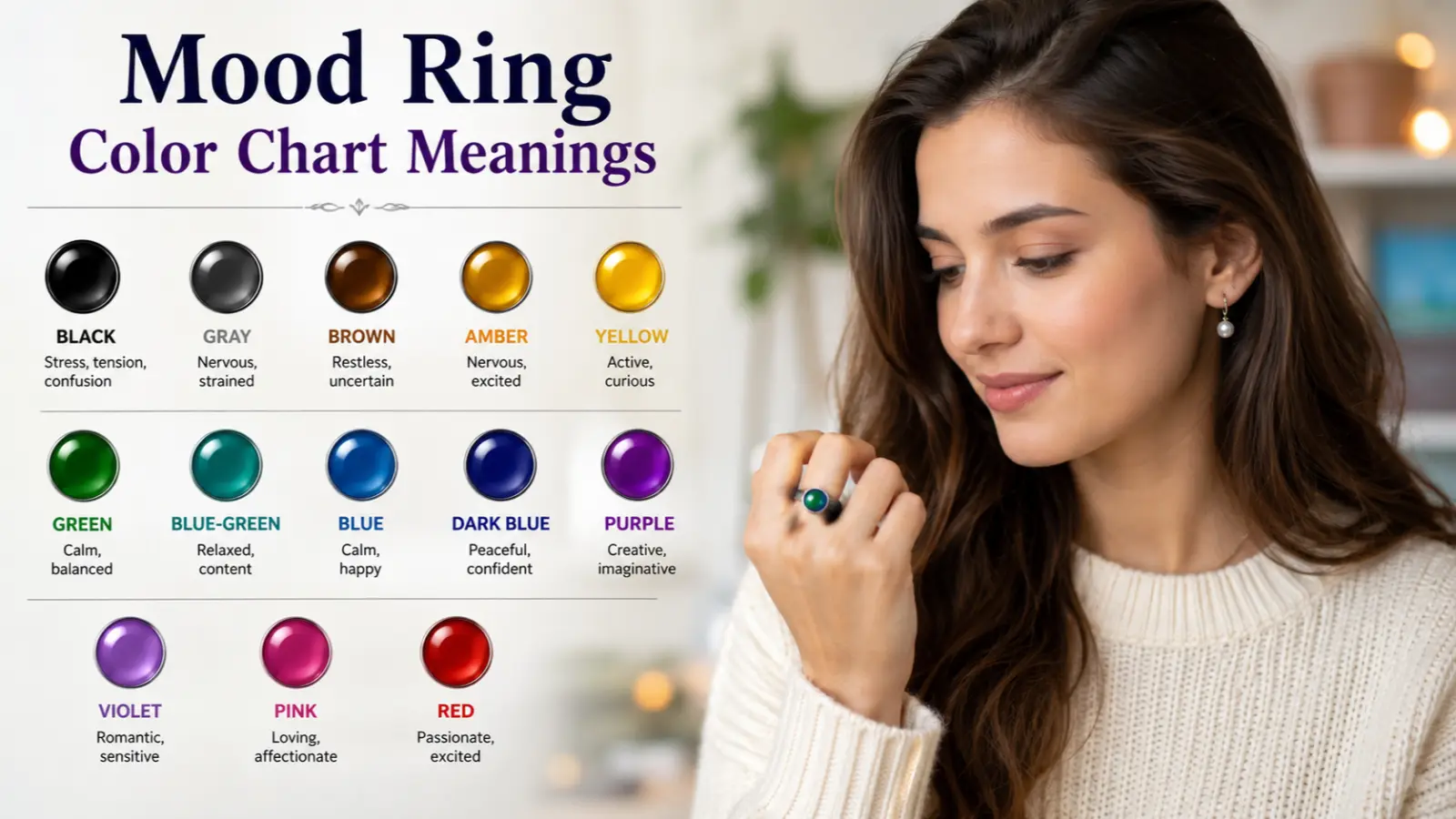
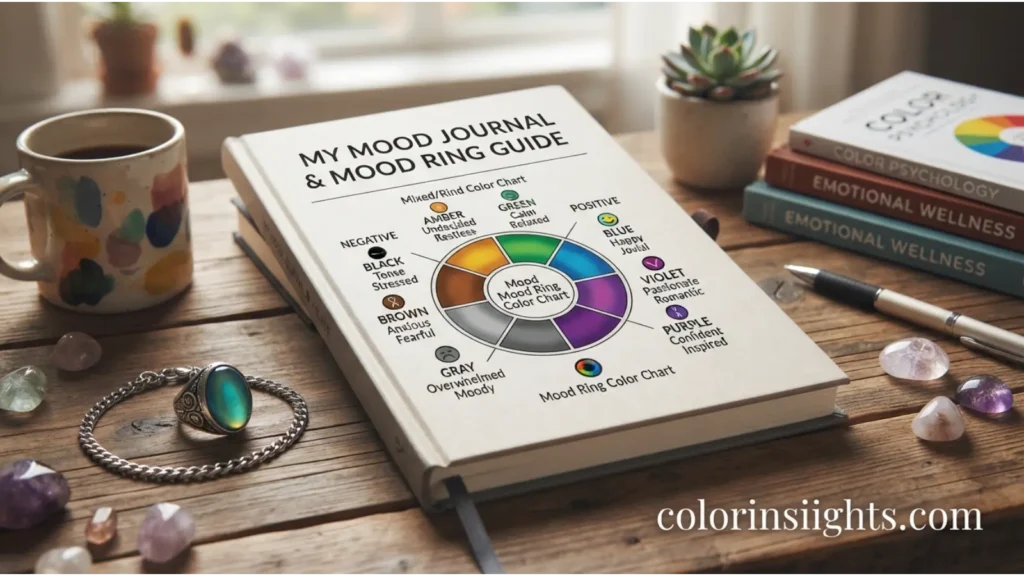
A mood ring color chart helps interpret the changing colors displayed by a mood ring. Although mood rings do not scientifically measure emotions, they use thermochromic liquid crystals that change color in response to body temperature, which may fluctuate with stress, excitement, relaxation, or environmental conditions.
Over time, each color has developed symbolic meanings rooted in color psychology and popular culture. Understanding these colors can make mood rings more enjoyable while offering insight into the emotional associations commonly linked with different shades.
Quick Answer:
A mood ring color chart associates each color with a symbolic emotional state. Dark blue often represents calmness, green suggests balance, purple indicates passion or creativity, amber may reflect nervousness, and black usually signals stress, cold temperatures, or inactivity.
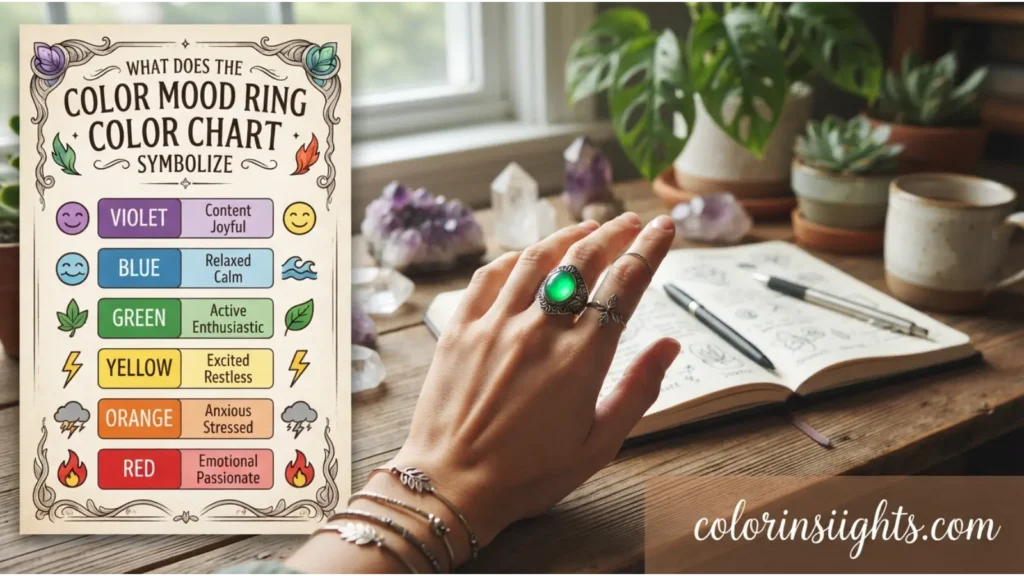
What Does the Color Mood Ring Color Chart Symbolize?
Unlike a single color, a mood ring color chart symbolizes the relationship between changing colors and emotional interpretation. Each color represents a different psychological or emotional state based on traditional mood ring guides rather than scientific diagnosis.
Common symbolic themes include:
- Emotional awareness
- Personal reflection
- Self-expression
- Emotional balance
- Curiosity about feelings
- Energy changes
- Relaxation and stress
- Creativity and confidence
Mood rings became popular in the 1970s as novelty jewelry and remain a fun way to reflect on emotional symbolism through changing colors.
Psychological Characteristics of the Color Mood Ring Color Chart
Color psychology suggests people naturally associate certain colors with specific emotions. Mood rings use these common associations to interpret changes in color.
Emotional Associations
- Blue represents calmness and relaxation.
- Green symbolizes balance and stability.
- Purple reflects imagination and romance.
- Red suggests excitement and strong emotions.
- Yellow indicates optimism or heightened activity.
- Brown often relates to uncertainty.
- Black commonly symbolizes stress or emotional overload.
Psychological Effects
Different colors may encourage people to think about their current emotional state.
For example:
- Cool colors encourage feelings of peace.
- Warm colors often represent increased energy.
- Dark colors may be interpreted as fatigue or stress.
- Bright colors are generally linked with optimism.
Positive Emotional Responses
- Confidence
- Happiness
- Emotional security
- Relaxation
- Creativity
- Hope
- Focus
Negative Emotional Responses
- Anxiety
- Frustration
- Fear
- Fatigue
- Isolation
- Stress
- Irritability
Impact on Mood and Behavior
Although mood rings cannot accurately measure emotions, they often encourage:
- Self-reflection
- Emotional awareness
- Conversation about feelings
- Mindfulness
- Personal expression
Typical Reactions
People often view mood ring colors as:
- Fun conversation starters
- Symbolic emotional reminders
- Fashion accessories
- Personalized gifts
- Stress-awareness tools
Spiritual Meaning of the Color Mood Ring Color Chart
Spiritually, changing colors are often interpreted as representing changing energy rather than fixed emotional truths.
Common Spiritual Associations
- Holiness: White or clear shades may symbolize purity.
- Wisdom: Deep blue often represents inner knowledge.
- Purity: Light colors suggest innocence.
- Transformation: Color changes symbolize personal growth.
- Healing: Green commonly represents emotional healing.
- Protection: Dark blue is often linked to emotional stability.
- Power: Red symbolizes strength and courage.
- Enlightenment: Violet represents higher awareness.
- New Beginnings: Bright green may indicate renewal.
- Eternity: Indigo sometimes symbolizes spiritual depth.
These interpretations come from spiritual traditions rather than scientific evidence.
Positive and Negative Meanings of the Color Mood Ring Color Chart
Positive Meanings
Different mood ring colors often represent positive emotional experiences.
Calmness
Dark blue frequently symbolizes peace during meditation or relaxation.
Balance
Green commonly reflects emotional stability after resolving stress.
Happiness
Bright blue or turquoise often suggests cheerful emotions.
Creativity
Purple is associated with imagination and artistic inspiration.
Love
Pink may symbolize affection and emotional warmth.
Confidence
Red or reddish-purple can represent courage and excitement.
Hope
Light green often signifies optimism and fresh beginnings.
Emotional Awareness
Changing colors remind wearers to reflect on their feelings.
Negative Meanings
Some colors are traditionally linked with emotional challenges.
Stress
Black commonly appears when hands are cold or under stress.
Example:
Someone feeling anxious before an exam may notice darker colors.
Nervousness
Amber can represent uncertainty.
Example:
Speaking before a large audience.
Fatigue
Gray may symbolize emotional exhaustion.
Example:
After a long workday.
Emotional Distance
Brown sometimes suggests confusion or emotional withdrawal.
Frustration
Dark red may symbolize anger or intense emotion.
Overthinking
Very dark shades can represent emotional overload.
Meanings of the Color Mood Ring Color Chart
The meaning depends on the specific color displayed.
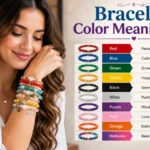
| Mood Ring Color | Common Meaning |
|---|---|
| Black | Stress, cold temperature, tension |
| Gray | Fatigue, uncertainty |
| Brown | Restlessness, anxiety |
| Amber | Nervousness, mixed emotions |
| Yellow | Excitement, curiosity |
| Green | Balance, calmness |
| Blue-Green | Relaxation, optimism |
| Blue | Peace, happiness |
| Dark Blue | Calm, confidence |
| Purple | Passion, creativity |
| Violet | Romance, imagination |
| Red | Energy, excitement |
| Pink | Love, affection |
Feng Shui
Although mood ring colors constantly change, their symbolism can be connected to Feng Shui.
Associated Elements
- Blue: Water
- Green: Wood
- Red: Fire
- Yellow: Earth
- White: Metal
Energy Symbolism
- Blue promotes calm energy.
- Green encourages growth.
- Purple symbolizes abundance.
- Red activates motivation.
Best Rooms
- Bedrooms: Blue and green
- Offices: Green and blue
- Living rooms: Warm colors
- Meditation rooms: Purple
Recommended Color Combinations
- Blue and white
- Green and beige
- Purple and silver
- Red with neutral accents
Decorating Tips
Use calming colors in restful spaces while limiting highly stimulating colors in bedrooms.
Marketing
Brands use similar color psychology principles in branding.
Branding Psychology
- Blue builds trust.
- Green communicates health.
- Purple suggests luxury.
- Red attracts attention.
- Yellow creates optimism.
Consumer Perception
Colors influence first impressions and purchasing decisions.
Trust Signals
Financial institutions and technology companies often favor blue because consumers associate it with reliability.
Product Packaging
Natural products frequently use green, while premium packaging often incorporates black or purple.
Advertising Applications
Bright colors increase visibility, while cooler colors build credibility.
Examples
- Facebook — Blue
- Ford — Blue
- Starbucks — Green
- Cadbury — Purple
- Coca-Cola — Red
- McDonald’s — Red and Yellow
Design
Mood ring colors inspire designers by demonstrating how different colors communicate emotion.
Interior Design
- Blue creates peaceful environments.
- Green adds freshness.
- Purple creates luxury.
Graphic Design
Designers select colors based on desired emotional responses.
Web Design
Blue increases perceived trust, while green works well for sustainability websites.
User Experience
Color helps guide attention, reinforce actions, and improve usability.
Minimalist Aesthetics
Neutral backgrounds paired with accent colors create visual balance.
Fashion
Color choices influence how clothing is perceived.
Clothing Symbolism
- Blue suggests professionalism.
- Green appears approachable.
- Purple communicates creativity.
- Red projects confidence.
Seasonal Use
- Spring: Green
- Summer: Bright blue
- Autumn: Amber
- Winter: Deep blue and purple
Styling Effects
Color combinations affect visual harmony and outfit mood.
Personality Impressions
People may perceive certain colors as energetic, calm, sophisticated, or artistic.
Advantages
- Easy emotional expression
- Greater outfit versatility
- Strong visual impact
Disadvantages
- Cultural interpretations vary.
- Some colors dominate attention.
- Trends change over time.
Color Associations Are Not Universal
Western Cultures
Blue commonly symbolizes trust, while green represents growth. Black may signify elegance or mourning.
Eastern Cultures
Red often symbolizes prosperity and celebration, while white may represent mourning in some countries.
Religious Traditions
- Christianity often associates white with purity.
- Hindu traditions frequently connect saffron with spirituality.
- Buddhism associates orange with wisdom.
- Islam commonly associates green with paradise and renewal.
Historical Interpretations
Royal families historically favored purple because purple dye was rare and expensive.
Modern Global Interpretations
Global branding has made many color associations more universal, although cultural differences remain important.
What Mood Ring Color Chart Says About Your Personality
People who enjoy mood rings are often interested in emotions, creativity, and self-expression. However, color preference alone cannot accurately determine personality.
Strengths
- Curious
- Emotionally aware
- Creative
- Open-minded
- Reflective
Weaknesses
- May overanalyze emotions
- Can become overly sensitive
- Occasionally indecisive
Social Behavior
Often enjoys meaningful conversations and expressing feelings.
Work Style
May appreciate creative environments, teamwork, and flexibility.
Relationships
Often values communication, empathy, and emotional connection.
Emotional Tendencies
Interested in understanding changing moods and personal growth.
Important: Scientific research does not support using mood ring colors as reliable indicators of personality or emotional health.
FAQs:
What defines a mood ring color chart?
A mood ring color chart explains the symbolic meanings associated with each color displayed by a mood ring.
What does a mood ring color chart symbolize?
It symbolizes changing emotional states based on traditional color associations rather than scientific measurement.
Why is a mood ring color chart important?
It helps users interpret common mood ring colors and understand popular emotional symbolism.
Is every mood ring color scientifically accurate?
No. Mood rings respond primarily to temperature changes, not direct emotional measurement.
What emotions do mood ring colors represent?
Depending on the color, they may symbolize calmness, happiness, stress, excitement, love, creativity, or anxiety.
What does blue mean on a mood ring?
Blue generally represents calmness, relaxation, confidence, and emotional balance.
What does black mean on a mood ring?
Black often indicates cold temperatures, stress, tension, or inactivity of the liquid crystals.
What colors pair well with mood ring-inspired designs?
Blue, green, silver, black, white, and purple create attractive combinations.
What does liking mood rings say about a person?
It may suggest curiosity, creativity, and interest in self-expression, although personality cannot be determined by preferences alone.
Can mood rings predict emotions?
No. Mood rings reflect temperature changes, while their emotional meanings are symbolic rather than scientifically proven.
Conclusion
A mood ring color chart offers a fascinating blend of color psychology, symbolism, and popular culture. While mood rings rely on thermochromic technology that responds to changes in skin temperature, the meanings attached to their colors have become widely recognized as symbols of relaxation, excitement, creativity, stress, confidence, and emotional balance.
Rather than serving as scientific emotional detectors, mood rings are best appreciated as fun accessories that encourage self-reflection and conversation. Understanding each color’s traditional meaning can help you enjoy the symbolism behind every color change while recognizing that emotions are far more complex than any single color can represent.