Star Wars lightsaber colors do more than make battles visually exciting. Each blade color represents distinct values, philosophies, character traits, and connections to the Force. While many meanings originated in Star Wars Legends, modern canon also assigns symbolic significance to several colors based on a wielder’s journey, beliefs, and purpose.
Fans often associate lightsaber colors with courage, wisdom, justice, healing, leadership, and personl growth. Understanding these meanings offers deeper insight into the Jedi, Sith, and other Force users while highlighting how color symbolism influences storytelling.
Quick Answer:
Star Wars lightsaber color meanings symbolize a Force user’s personality, values, abilities, and relationship with the Force, although some meanings vary between Star Wars canon and Legends.
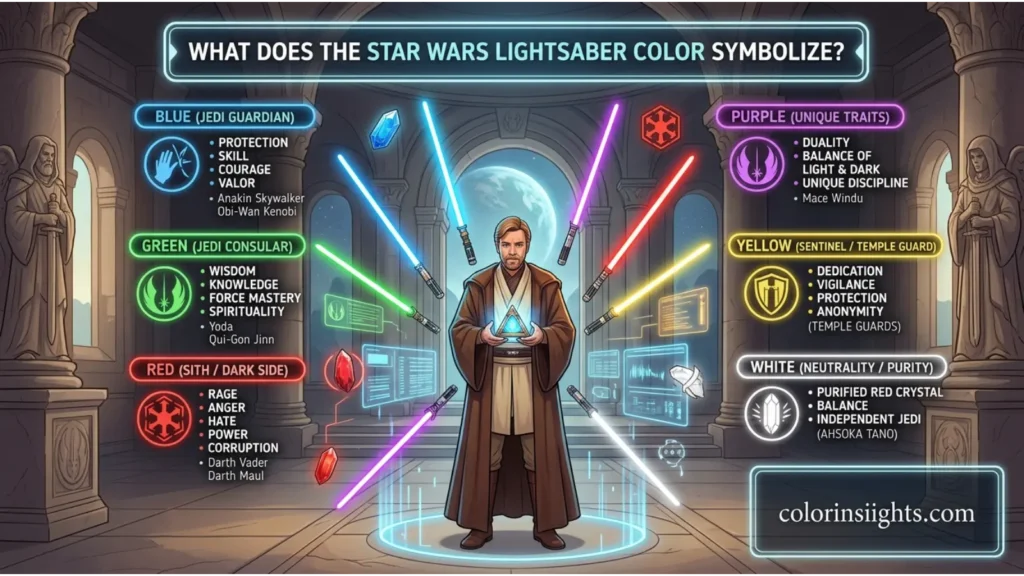
What Does the Color Star Wars Lightsaber Symbolize?
Unlike ordinary colors, lightsaber colors represent fictional identities rooted in the Star Wars universe. Every color reflects different ideals, emotions, and responsibilities rather than fixed personality types.
Some of the most recognized lightsaber color meanings include:
- Blue: Courage, justice, discipline, and protection.
- Green: Wisdom, harmony, knowledge, and spiritual growth.
- Red: Power, anger, aggression, and the dark side.
- Purple: Balance between passion and control.
- Yellow: Vigilance, adaptability, and service.
- White: Purity, independence, healing, and neutrality.
- Black (Darksaber): Leadership, authority, legacy, and unity.
- Orange: Creativity, compassion, and unconventional paths (modern canon).
- Cyan: Heroism and balance (primarily associated with games and Legends).
- Magenta and other rare colors: Individuality and unique Force connections in Legends.
Overall, lightsaber colors symbolize a character’s philosophy, choices, and evolving relationship with the Force rather than supernatural personality tests.
Psychological Characteristics of the Color Star Wars Lightsaber
Although lightsaber colors belong to fiction, they draw heavily from real-world color psychology.
Emotional Associations
- Blue encourages confidence, loyalty, and calm decision-making.
- Green promotes wisdom, patience, and inner peace.
- Red evokes intensity, dominance, ambition, and danger.
- Purple combines authority with creativity.
- Yellow represents optimism and alertness.
- White suggests clarity and emotional balance.
Psychological Effects
Viewers naturally associate different blade colors with specific character roles.
- Blue feels dependable and heroic.
- Green appears thoughtful and peaceful.
- Red creates tension and anticipation.
- Purple conveys uniqueness.
- White suggests renewal.
- Black communicates mystery and authority.
Positive Emotional Responses
- Inspiration
- Hope
- Trust
- Confidence
- Courage
- Curiosity
- Compassion
- Determination
Negative Emotional Responses
- Fear
- Aggression
- Isolation
- Suspicion
- Emotional conflict
- Intimidation
- Obsession
Impact on Mood and Behavior
Lightsaber colors influence audience perception before characters even speak.
- Heroic colors increase trust.
- Dark colors create suspense.
- Neutral colors imply independence.
- Rare colors spark curiosity and individuality.
People typically respond emotionally because filmmakers intentionally use color symbolism to reinforce storytelling.
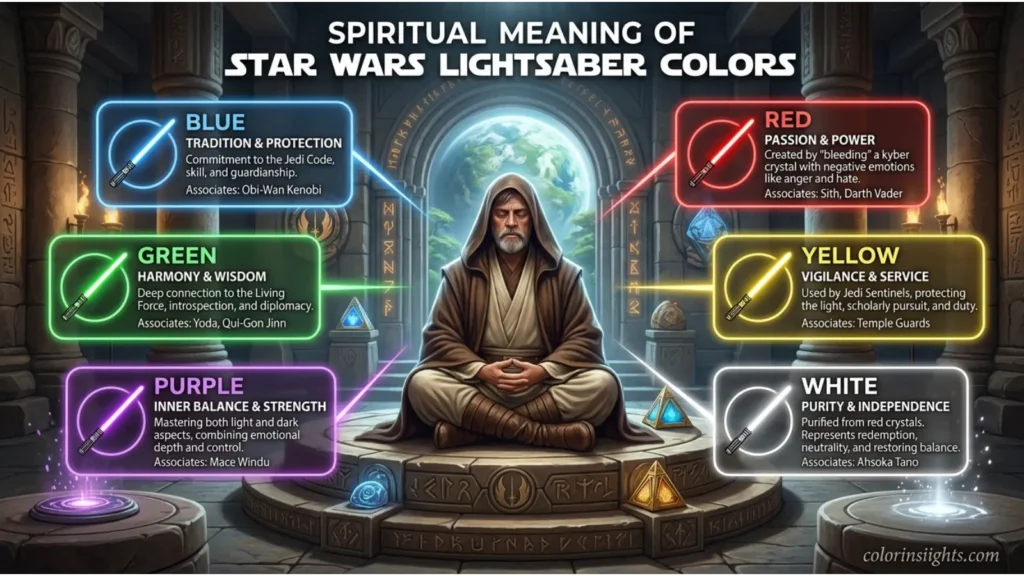
Spiritual Meaning of the Color Star Wars Lightsaber
Lightsaber colors borrow many symbolic themes from real-world spirituality, even though they belong to science fiction.
Common Spiritual Associations
- Holiness: White often represents purification and freedom from corruption.
- Wisdom: Green symbolizes lifelong learning and spiritual understanding.
- Purity: White reflects moral clarity and compassion.
- Transformation: Red crystals symbolize corruption, while purified crystals become white.
- Healing: Green and white commonly represent restoration and balance.
- Protection: Blue symbolizes guardianship and defense.
- Power: Purple and black often reflect exceptional leadership.
- Enlightenment: Green represents harmony with the Force.
- New Beginnings: White symbolizes redemption and fresh purpose.
- Eternity: The Force itself represents an ongoing cycle connecting all living things.
These interpretations come from Star Wars storytelling rather than established religious doctrine.
Positive and Negative Meanings of the Color Star Wars Lightsaber
Positive Meanings
Each lightsaber color highlights admirable qualities depending on the character.
- Purity: White lightsabers represent freedom from corruption.
- Peace: Green symbolizes diplomacy over conflict.
- Simplicity: Blue reflects clear moral purpose.
- Clarity: Jedi often use calm judgment before action.
- Freshness: New colors often signal character development.
- Hope: Heroic lightsabers inspire resistance against evil.
- Balance: Purple represents emotional control despite inner conflict.
- Harmony: Green reflects unity with nature and the Force.
Example:
A Jedi Master choosing diplomacy before combat demonstrates harmony and wisdom.
Negative Meanings
No lightsaber color is entirely positive because context shapes interpretation.
- Emptiness: White may represent separation from traditional groups.
- Isolation: Independent Force users often walk alone.
- Coldness: Emotional restraint may appear distant.
- Sterility: Strict devotion to rules can reduce compassion.
- Boredom: Excessive predictability may weaken storytelling.
- Emotional Distance: Duty sometimes outweighs personal relationships.
- Perfectionism: Jedi discipline occasionally creates unrealistic expectations.
Example:
A Jedi refusing emotional attachments may unintentionally isolate themselves from loved ones.
Meanings of the Color Star Wars Lightsaber
Lightsaber color meanings depend on storytelling, character development, audience perception, and symbolic context. Outside Star Wars, the same colors may represent completely different ideas.
Feng Shui
Lightsabers do not originate from Feng Shui, but their colors align with traditional color symbolism.
- Element: Green relates to Wood, red to Fire, white to Metal, blue to Water, and yellow to Earth.
- Energy Symbolism: Green encourages growth, blue promotes calm, and red activates energy.
- Best Rooms: Green suits offices, blue works in bedrooms, yellow fits study spaces, and red works as an accent.
- Recommended Color Combinations: Blue with white, green with brown, red with black, or yellow with gray.
- Home Decorating Tips: Use these colors moderately to create balanced visual energy rather than overwhelming a room.
Marketing
Brands rely on color psychology much like Star Wars does.
- Blue builds trust and professionalism.
- Green communicates sustainability and wellness.
- Red increases urgency and excitement.
- Yellow attracts attention.
- Black signals luxury and exclusivity.
- White emphasizes simplicity and cleanliness.
Examples of famous brands:
- Blue: Facebook, Intel, Ford
- Red: Coca-Cola, Netflix, YouTube
- Green: Starbucks, Spotify
- Yellow: McDonald’s, IKEA
- Black: Nike, Chanel
- White: Apple frequently uses white within minimalist branding.
Design
Lightsaber-inspired color palettes influence many creative industries.
- Interior Design: Blue creates relaxing spaces, while green encourages balance.
- Graphic Design: Bright colors improve visual hierarchy.
- Web Design: Blue buttons often increase perceived trust.
- User Experience: Color helps users recognize important actions.
- Minimalist Aesthetics: White and black provide clean, modern contrast.
Fashion
Color symbolism also influences clothing choices.
- Blue projects confidence during interviews.
- Green communicates calm sophistication.
- Red creates bold statement outfits.
- Purple suggests creativity and individuality.
- White suits weddings, summer wear, and minimalist fashion.
- Black remains popular for formal occasions.
Advantages include stronger first impressions and coordinated styling, while excessive use of one color may appear overwhelming or overly formal.
Color Associations Are Not Universal
Western Cultures
Western audiences often connect blue with heroism, green with wisdom, white with purity, and red with danger. These interpretations align closely with Star Wars storytelling.
Eastern Cultures
Many Eastern traditions associate red with celebration, prosperity, and happiness instead of evil. White may symbolize mourning in several Asian cultures, demonstrating that meanings vary widely.
Religious Traditions
Christianity often associates white with holiness, while Buddhism links saffron and yellow with spiritual devotion. Hindu traditions frequently view red as auspicious and symbolic of life, marriage, and strength.
Historical Interpretations
Throughout history, purple represented royalty because purple dyes were rare and expensive. Gold symbolized divine authority, while black often represented both power and mystery.
Modern Global Interpretations
Global media has blended many cultural meanings. Today, audiences often recognize lightsaber colors through Star Wars first, even though the same colors maintain different meanings in psychology, religion, art, and design.
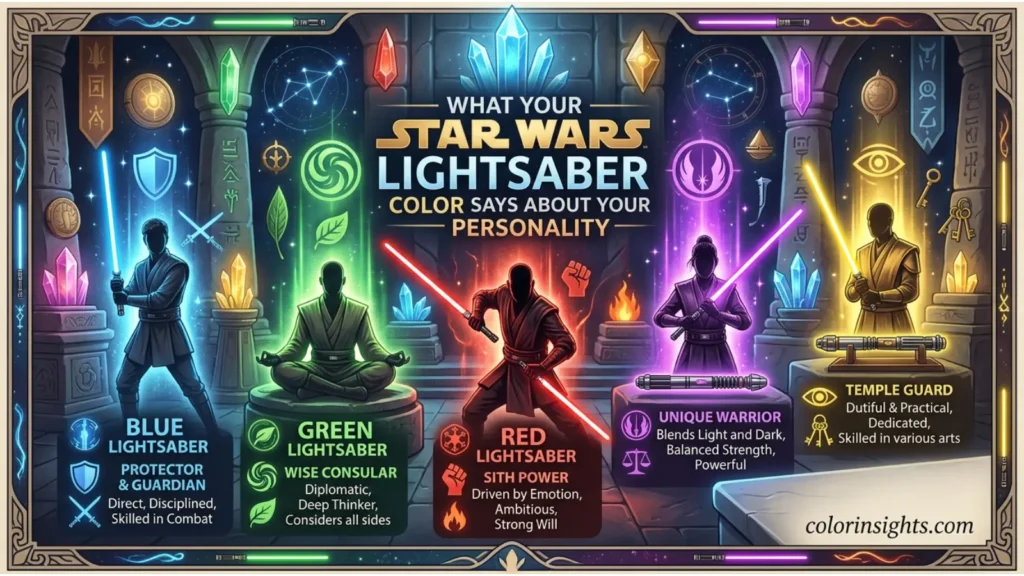
What Star Wars Lightsaber Says About Your Personality
Many fans enjoy identifying with a favorite lightsaber color, but no scientific evidence shows that color preference accurately predicts personality.
People who prefer certain lightsaber colors may identify with the values those colors represent.
Strengths
- Leadership
- Loyalty
- Wisdom
- Creativity
- Courage
- Compassion
- Independence
- Adaptability
Weaknesses
- Perfectionism
- Emotional intensity
- Stubbornness
- Overthinking
- Risk-taking
- Excessive independence
Social Behavior
Blue and green enthusiasts often value teamwork, while purple and orange fans may appreciate individuality and unconventional thinking.
Work Style
Many people attracted to blue prefer structured environments, whereas those drawn to green enjoy learning and mentoring. Yellow admirers often excel at problem-solving, while purple enthusiasts embrace innovation.
Relationships
People may seek honesty, trust, emotional growth, and shared values that match the symbolic qualities they admire in their favorite lightsaber color.
Emotional Tendencies
Fans often resonate with colors reflecting their aspirations rather than their actual personalities. Personal experiences, culture, and interests influence these preferences more than color alone.
FAQs:
What defines Star Wars lightsaber color meanings?
They represent symbolic traits, Force philosophies, character roles, and narrative themes within the Star Wars universe.
What do Star Wars lightsaber colors symbolize?
They symbolize values such as courage, wisdom, justice, balance, power, healing, and personal growth.
Why are lightsaber colors important?
They help communicate character identity, moral alignment, and storytelling without extensive dialogue.
Is every lightsaber color officially canon?
No. Some meanings come from current Star Wars canon, while others originate in Star Wars Legends or video games.
Are lightsaber colors warm or cool colors?
It depends on the specific blade. Blue and green are cool colors, while red, orange, and yellow are warm colors.
What emotions do lightsaber colors represent?
They can represent courage, peace, confidence, anger, determination, hope, compassion, or authority depending on the color.
What is the spiritual meaning of lightsaber colors?
They often symbolize enlightenment, transformation, healing, protection, redemption, and connection with the Force.
Which colors pair well with lightsaber-inspired themes?
Black, silver, white, gray, gold, and complementary accent colors create balanced Star Wars-inspired designs.
What does liking a certain lightsaber color say about a person?
It may reflect the qualities someone admires, but color preference alone cannot accurately determine personality.
Which lightsaber color is the rarest?
White, black (the Darksaber), and certain unique colors like orange have historically been among the rarest in Star Wars storytelling.
Conclusion
Star Wars lightsaber color meanings combine fictional lore with universal color symbolism to create memorable characters and compelling stories. Blue stands for courage, green for wisdom, red for power and corruption, purple for balance, yellow for vigilance, white for purity, black for leadership, and other rare colors for individuality and transformation.
Although these meanings vary between canon and Legends, they continue to enrich the Star Wars universe by giving visual expression to each character’s beliefs, choices, and connection to the Force. Like all color symbolism, their interpretations are meaningful but remain context-dependent rather than absolute.