Witchcraft color meanings play an important role in many modern pagan, Wiccan, and folk magic traditions. Rather than having universal definitions, these colors act as symbolic tools that help practitioners focus intentions during rituals, meditation, spellwork, altar decoration, and seasonal celebrations.
Each color carries psychological associations while also reflecting spiritual themes such as protection, healing, abundance, wisdom, or transformation. Although interpretations vary among traditions and practitioners, understanding these symbolic meanings can help you appreciate how color influences emotion, ritual practice, and personal spirituality.
Quick Answer:
Witchcraft color meanings represent symbolic energies used to support intentions. Colors like black, white, red, green, blue, purple, and gold commonly symbolize protection, purification, love, prosperity, wisdom, spiritual growth, and success.
What Does the Color Witchcraft Symbolize?
Unlike standard color symbolism, witchcraft color meaning refers to a collection of colors, each representing a different magical intention rather than a single color. These symbolic associations help practitioners align rituals with specific goals.
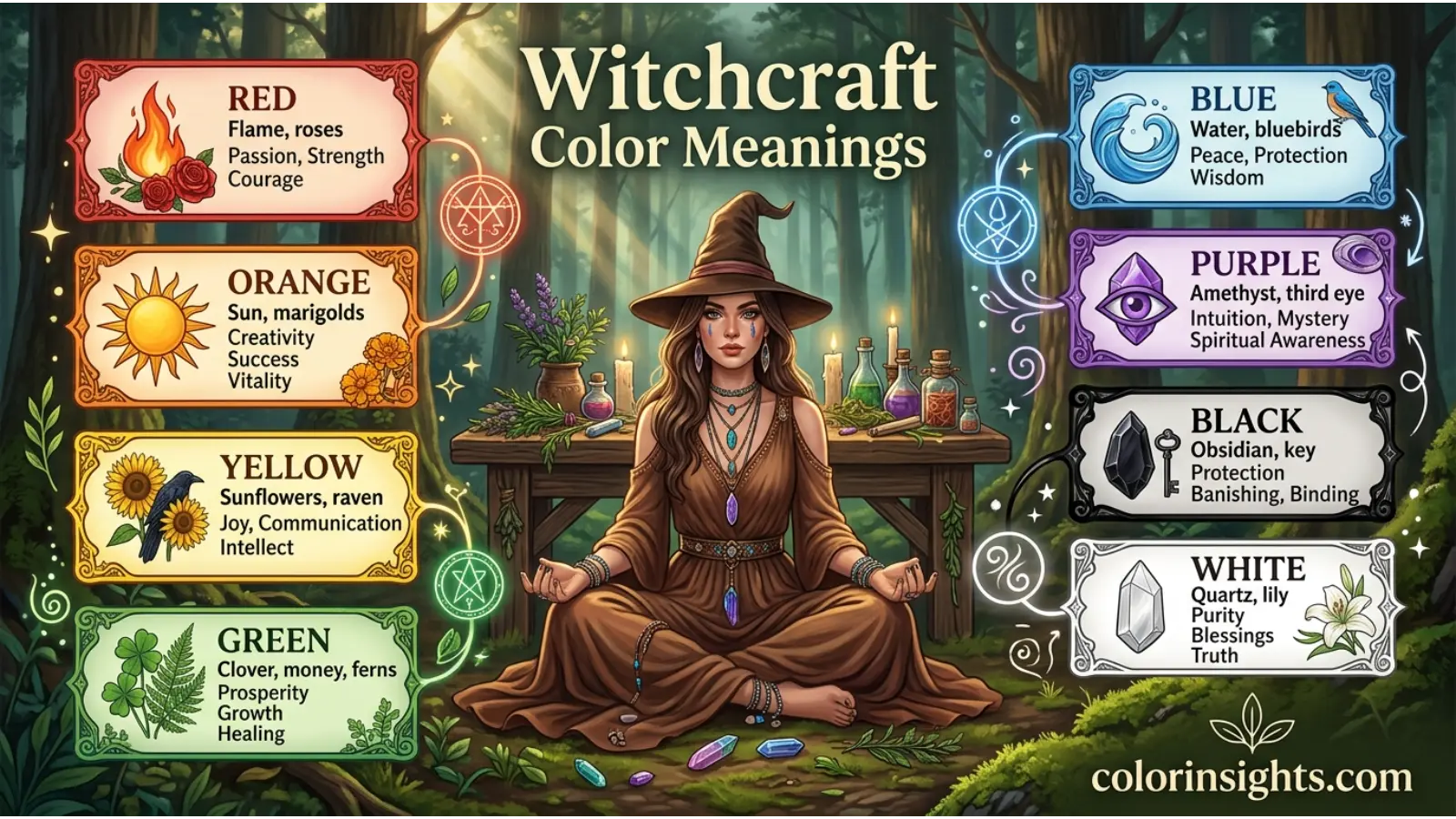
Common witchcraft color symbolism includes:
- Black: Protection, banishing negativity, grounding, mystery, and spiritual boundaries.
- White: Purification, peace, healing, truth, and new beginnings.
- Red: Passion, courage, vitality, strength, and motivation.
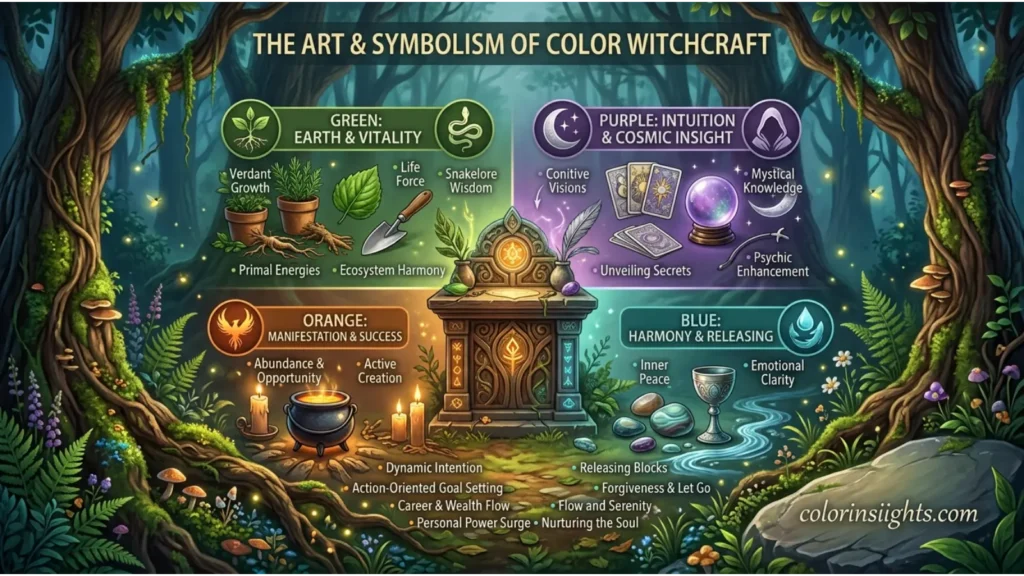
- Green: Prosperity, fertility, growth, luck, and abundance.
- Blue: Calmness, wisdom, communication, emotional healing, and intuition.
- Purple: Psychic awareness, spirituality, transformation, and higher consciousness.
- Yellow: Confidence, creativity, learning, optimism, and mental clarity.
- Pink: Compassion, friendship, romance, and emotional healing.
- Orange: Energy, ambition, confidence, and opportunity.
- Brown: Stability, home, nature, grounding, and resilience.
- Silver: Moon energy, intuition, feminine wisdom, dreams, and reflection.
- Gold: Success, divine power, achievement, prosperity, and solar energy.
These meanings often guide candle magic, crystal selection, altar decorations, herbs, clothing, and visualization practices.
Psychological Characteristics of the Color Witchcraft
From a color psychology perspective, witchcraft colors influence emotional focus because people naturally associate colors with particular feelings and experiences. While psychology does not validate magical effects, it recognizes that colors can shape mood, attention, and behavior.
Emotional Associations
- Protection and security through darker colors.
- Calmness through cool colors.
- Energy through warm colors.
- Hope through lighter colors.
- Spiritual reflection through purple and silver.
- Prosperity through green and gold.
Psychological Effects
- Colors improve concentration during meditation.
- They reinforce symbolic intentions.
- They enhance visualization exercises.
- They strengthen emotional commitment to personal goals.
Positive Emotional Responses
- Confidence
- Comfort
- Inspiration
- Optimism
- Peace
- Motivation
- Emotional balance
Negative Emotional Responses
- Fear from excessive black symbolism.
- Overstimulation from intense reds.
- Sadness from muted blues.
- Isolation from excessive gray tones.
- Anxiety if colors conflict with personal associations.
Impact on Mood and Behavior
People often respond emotionally before they consciously interpret a color. Bright colors may increase energy, while darker shades encourage introspection. In ritual settings, carefully chosen colors help participants remain mentally focused on their intentions.
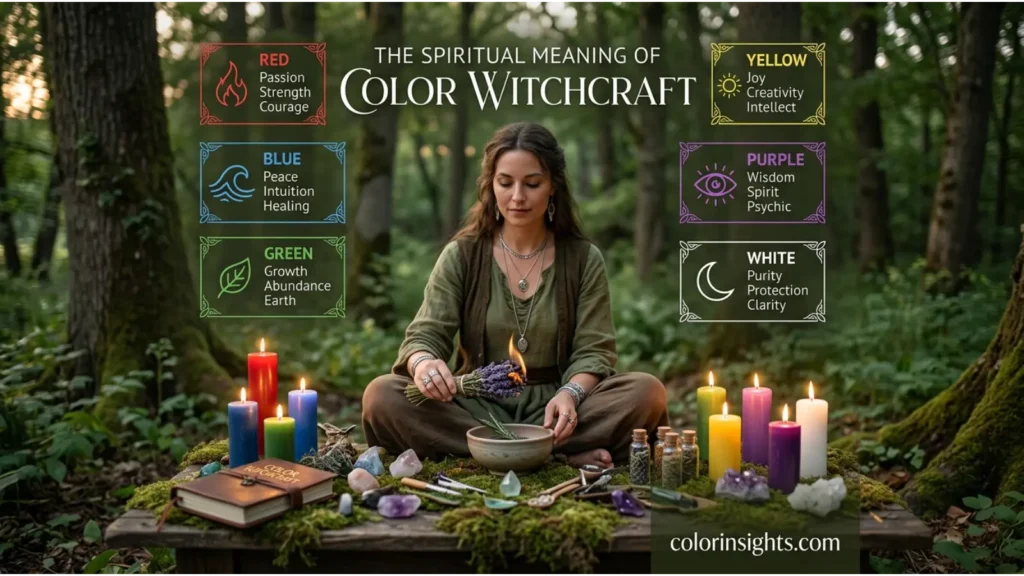
Spiritual Meaning of the Color Witchcraft
In spiritual traditions, colors represent symbolic energies rather than supernatural powers. Different paths—including Wicca, folk magic, ceremonial magic, and nature-based spirituality—may interpret them differently.
Common spiritual meanings include:
- Holiness: White symbolizes spiritual purity and sacred space.
- Wisdom: Purple represents higher knowledge and intuition.
- Purity: White reflects cleansing and honest intentions.
- Transformation: Black and purple often represent personal growth through change.
- Healing: Blue and green symbolize emotional and physical renewal.
- Protection: Black creates symbolic spiritual boundaries against negativity.
- Power: Red and gold represent courage, leadership, and personal strength.
- Enlightenment: Purple, white, and gold symbolize expanded awareness.
- New Beginnings: White and green support fresh starts and renewal.
- Eternity: Silver and gold often represent timeless spiritual cycles.
Many practitioners combine several colors to reflect multiple intentions during rituals.
Positive and Negative Meanings of the Color Witchcraft
Positive Meanings
Although meanings differ by tradition, witchcraft colors commonly express positive symbolism.
- Purity: White candles are frequently used before meditation or ritual cleansing.
- Peace: Blue encourages relaxation during reflection.
- Simplicity: Neutral colors help minimize distractions on altars.
- Clarity: Yellow supports study, planning, and decision-making.
- Freshness: Green represents springtime, growth, and renewal.
- Hope: Gold symbolizes success after challenges.
- Balance: Black and white together represent harmony between opposing forces.
- Harmony: Mixed natural colors reflect balance between humanity and nature.
Negative Meanings
Color symbolism also reflects life’s challenges.
- Emptiness: Too much white may symbolize emotional emptiness.
- Isolation: Gray or dark palettes sometimes represent loneliness.
- Coldness: Blue may appear emotionally distant in some contexts.
- Sterility: Excessive white can feel clinical rather than comforting.
- Boredom: Overuse of neutral colors may reduce visual interest.
- Emotional Distance: Black may seem intimidating when used excessively.
- Perfectionism: Highly controlled color schemes can symbolize unrealistic expectations.
These interpretations depend heavily on culture, personal experience, and context.
Meanings of the Color Witchcraft
Because witchcraft involves many symbolic colors, meanings change according to purpose, tradition, and setting. The same color may represent different intentions in healing rituals, seasonal celebrations, meditation, or decorative design.
Feng Shui
Although Feng Shui and witchcraft developed independently, some practitioners combine both systems.
- Associated elements: Green (Wood), Red (Fire), White (Metal), Black (Water), Yellow (Earth).
- Energy symbolism: Colors help balance different forms of energy within living spaces.
- Best rooms: Green suits living rooms, blue works well in bedrooms, yellow benefits study areas, and white complements meditation spaces.
- Recommended combinations: Green with brown, blue with silver, purple with white, or black with gold.
- Decorating tips: Use symbolic colors as accents instead of overwhelming an entire room.
Marketing
Many brands rely on established color psychology rather than witchcraft symbolism, yet the emotional associations often overlap.
- Black suggests luxury and sophistication.
- Green communicates sustainability and wellness.
- Blue builds trust and reliability.
- Purple represents creativity and premium quality.
- Gold symbolizes achievement and excellence.
Famous examples include luxury fashion brands using black, financial companies using blue, and environmentally focused brands featuring green.
Design
Designers choose colors based on usability and emotional impact.
- Interior design: Earth tones create comfort, while purple adds dramatic accents.
- Graphic design: Contrasting colors improve readability and visual hierarchy.
- Web design: Blue increases trust, while green highlights positive actions.
- User experience: Color guides navigation and reinforces brand identity.
- Minimalist aesthetics: Neutral backgrounds with symbolic accent colors create balanced compositions.
Fashion
Color choices communicate personality and intention.
- Black clothing often conveys confidence and elegance.
- White represents simplicity and freshness.
- Green reflects a connection with nature.
- Purple creates a mystical or artistic appearance.
- Red projects confidence and determination.
Advantages include stronger self-expression and visual impact. However, wearing intense colors in inappropriate settings may send unintended social signals.
Color Associations Are Not Universal
Western Cultures
In many Western societies, black often symbolizes mystery, authority, and mourning, while white represents weddings, innocence, and purity. Green commonly reflects prosperity and environmental awareness.
Eastern Cultures
Several Eastern traditions associate red with celebration, prosperity, and happiness. White may symbolize mourning in some cultures, demonstrating that color meanings vary significantly across regions.
Religious Traditions
Christianity, Buddhism, Hinduism, Judaism, Islam, and Pagan traditions all assign different meanings to colors. White may symbolize holiness in one tradition, while saffron, green, or purple carries greater religious significance in another.
Historical Interpretations
Ancient civilizations often connected colors with natural elements, celestial bodies, royal authority, or seasonal cycles. Many modern witchcraft traditions draw inspiration from historical symbolism while adapting it to contemporary spiritual practices.
Modern Global Interpretations
Global media, branding, fashion, and digital communication continue reshaping color symbolism. Today, many people interpret colors through both cultural traditions and personal experiences rather than fixed universal meanings.
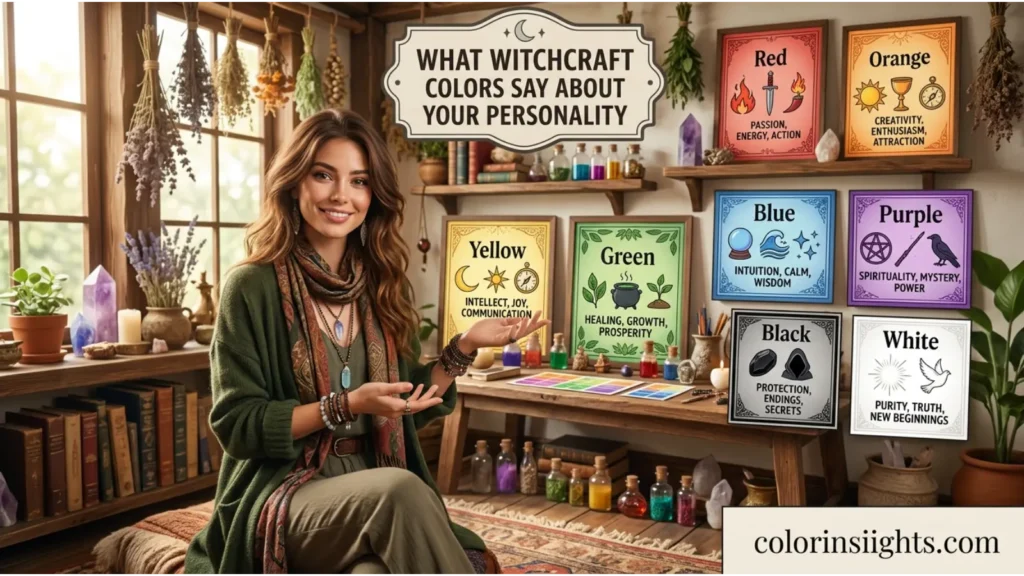
What Witchcraft Colors Say About Your Personality
People who feel drawn to witchcraft-inspired color symbolism often enjoy expressing themselves through symbolism, creativity, or spirituality. However, psychologists emphasize that favorite colors do not reliably determine personality.
Some commonly associated tendencies include:
Strengths
- Imaginative thinking
- Curiosity
- Creativity
- Appreciation for symbolism
- Open-mindedness
- Self-reflection
Weaknesses
- Overthinking
- Emotional sensitivity
- Preference for solitude
- Difficulty making quick decisions
Social Behavior
These individuals may enjoy meaningful conversations, artistic communities, nature, or spiritual exploration rather than large social gatherings.
Work Style
They often value creativity, independence, careful planning, lifelong learning, and flexible environments where innovative thinking is encouraged.
Relationships
Many appreciate honesty, emotional depth, trust, and mutual respect. Symbolic gestures and thoughtful communication may be especially meaningful to them.
Emotional Tendencies
People attracted to symbolic color systems often enjoy reflection, mindfulness, journaling, meditation, or creative hobbies that encourage emotional awareness.
Remember that personality develops through genetics, life experiences, culture, education, and environment—not color preference alone.
FAQs:
What defines witchcraft colors?
Witchcraft colors are symbolic colors used in many magical and spiritual traditions to represent different intentions such as protection, healing, prosperity, wisdom, or love.
What do witchcraft colors symbolize?
They symbolize focused intentions rather than universal supernatural meanings. Interpretations vary among traditions and practitioners.
Why are witchcraft colors important?
They help practitioners organize rituals, strengthen visualization, and reinforce symbolic goals during meditation or spellwork.
Are witchcraft colors warm or cool colors?
There is no single witchcraft color. Both warm and cool colors are used depending on the intended purpose.
What emotions do witchcraft colors represent?
Common emotions include peace, courage, confidence, hope, compassion, security, inspiration, and emotional balance.
What do witchcraft colors mean spiritually?
Spiritually, they represent concepts such as purification, protection, transformation, healing, wisdom, abundance, and personal growth.
What colors pair well in witchcraft symbolism?
Popular combinations include black and white, green and gold, blue and silver, purple and white, or red and black, depending on the ritual intention.
What does liking witchcraft color symbolism say about a person?
It may suggest an appreciation for symbolism, creativity, spirituality, or personal expression, but it does not scientifically determine personality.
Which witchcraft color represents protection?
Black is commonly associated with protection, grounding, and banishing negativity in many modern magical traditions.
Which color represents prosperity in witchcraft?
Green is widely associated with abundance, financial growth, fertility, and success.
Conclusion
Witchcraft color meanings provide a symbolic framework that helps many practitioners express intentions through ritual, meditation, and personal reflection. Rather than representing fixed universal rules, these colors combine cultural traditions, historical symbolism, psychological associations, and individual interpretation.
Whether used in candles, clothing, altar decorations, design, or mindfulness practices, color symbolism can encourage focus and emotional awareness. Understanding these meanings allows you to appreciate both the spiritual traditions that use them and the broader role colors play in shaping human perception, creativity, and communication.