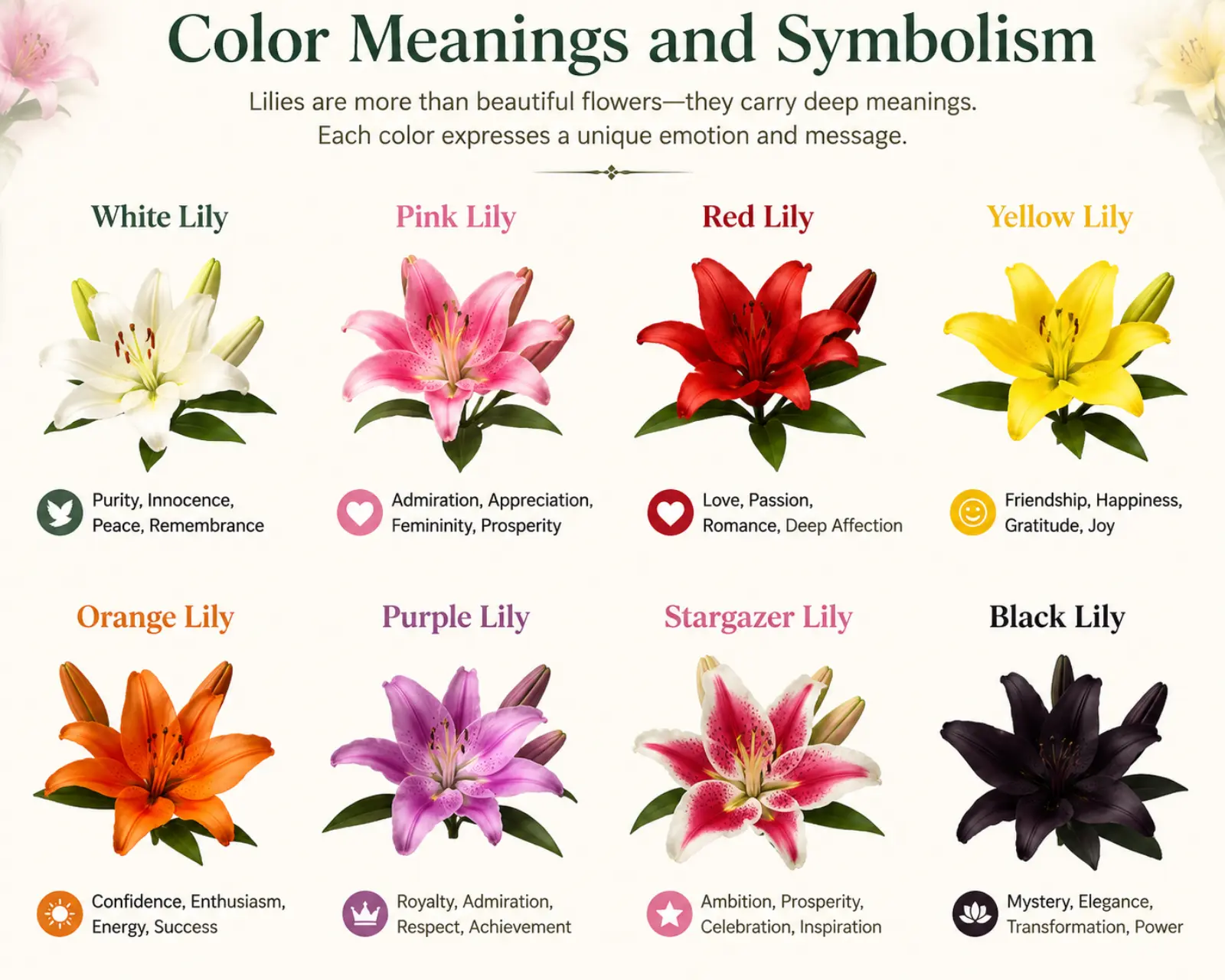
Color meanings and symbolism influence how people think, feel, communicate, and make decisions every day. Across psychology, art, religion, marketing, and design, colors carry emotional and cultural messages that shape human experiences. While some associations are rooted in biology, many develop through history, tradition, and personal experience.
Understanding color symbolism helps people choose effective colors for branding, fashion, interior design, and everyday communication. Whether selecting a logo, decorating a home, or expressing emotions through clothing, knowing what different colors represent provides valuable insight into human behavior and visual perception.
Quick Answer:
Color meanings and symbolism refer to the emotional, psychological, cultural, and spiritual associations people connect with different colors, although these meanings may vary across cultures and individual experiences.
What Does the Color Meanings and Symbolism Represent?
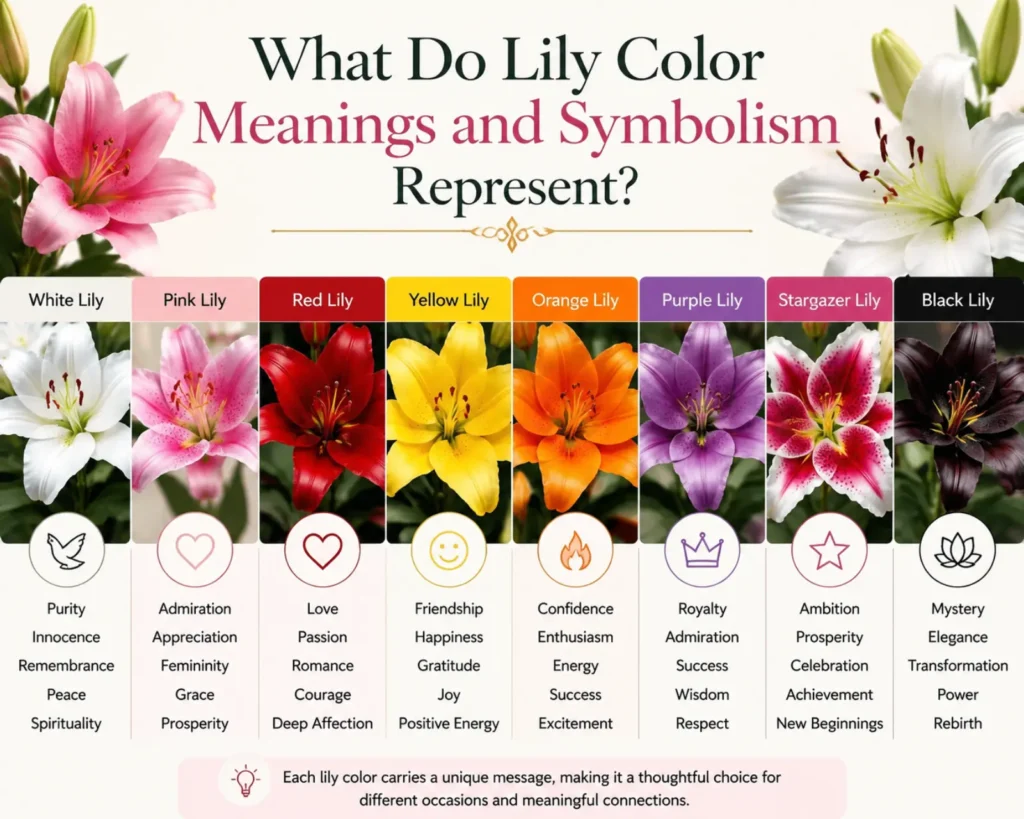
Color meanings and symbolism represent the messages, emotions, and ideas that people associate with different colors. Rather than belonging to one specific shade, color symbolism explains how various colors communicate concepts such as love, trust, peace, energy, danger, wisdom, prosperity, or renewal.
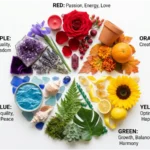
For example, red often symbolizes passion and urgency, blue is commonly linked with trust and calmness, green reflects nature and growth, while white frequently represents purity and simplicity. These meanings influence branding, education, healthcare, architecture, fashion, and digital design.
Although many interpretations are widely recognized, color symbolism is not universal. Cultural traditions, historical events, religious beliefs, and personal experiences all influence how people perceive individual colors.
Psychological Characteristics of Color Meanings and Symbolism
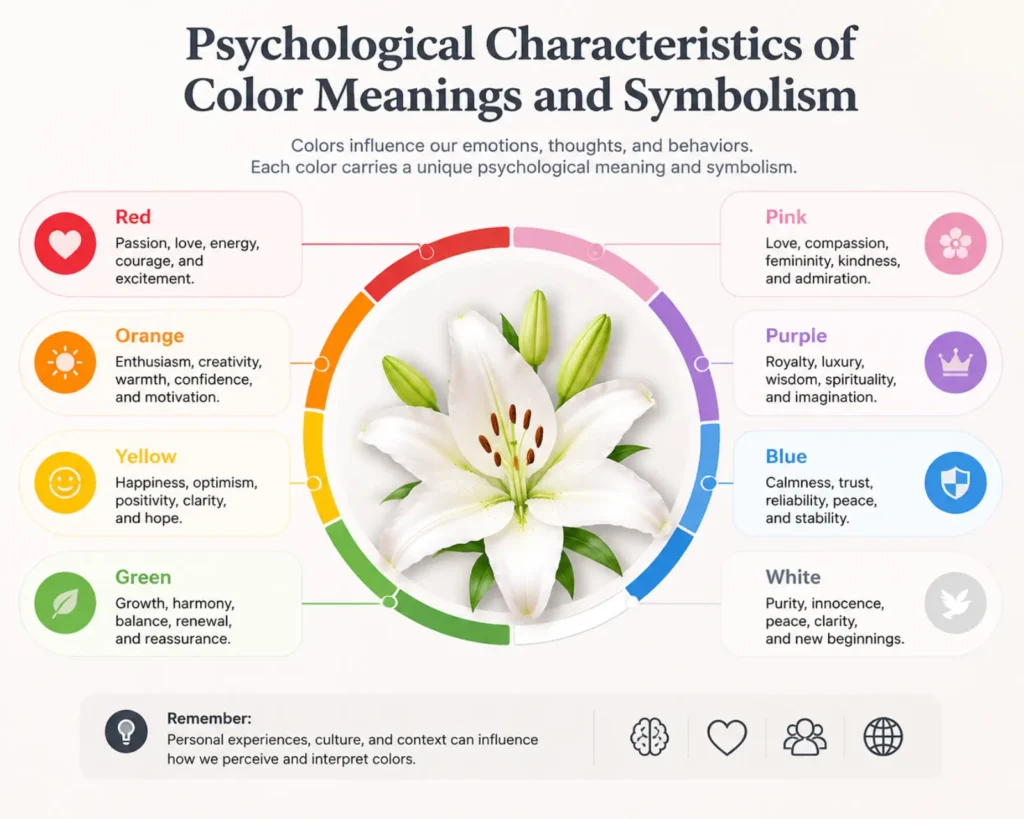
Color psychology examines how colors affect emotions, thoughts, and behavior. Researchers generally agree that colors can influence perception, although responses vary among individuals.
Common psychological characteristics include:
- Colors influence mood, attention, and emotional reactions.
- Warm colors often stimulate energy, excitement, and urgency.
- Cool colors generally encourage relaxation, concentration, and calmness.
- Bright colors usually create optimism and enthusiasm.
- Muted or darker tones may encourage reflection, seriousness, or sophistication.
Positive emotional responses include:
- Comfort
- Happiness
- Confidence
- Creativity
- Motivation
- Hope
- Trust
- Relaxation
Negative emotional responses may include:
- Anxiety from overly intense colors
- Sadness associated with darker shades
- Mental fatigue caused by excessive visual stimulation
- Stress from high-contrast environments
- Emotional discomfort when colors conflict with expectations
Color also influences behavior. Restaurants often use energetic colors to encourage appetite, healthcare facilities prefer calming palettes to reduce stress, while workplaces frequently balance neutral and cool tones to improve concentration and productivity.
Spiritual Meaning of Color Meanings and Symbolism
Across many spiritual traditions, colors represent qualities that go beyond physical appearance. Their meanings differ between religions and belief systems but often share common symbolic themes.
- Holiness: White and gold frequently symbolize sacredness and divine presence.
- Wisdom: Purple and deep blue are often associated with knowledge and spiritual understanding.
- Purity: White commonly represents innocence, truth, and moral cleanliness.
- Transformation: Green reflects personal growth, renewal, and positive change.
- Healing: Green and turquoise are regularly connected with restoration and emotional balance.
- Protection: Black, blue, and red may serve as protective colors in different traditions.
- Power: Red, gold, and purple often symbolize authority, courage, and leadership.
- Enlightenment: Gold and white commonly represent higher awareness and spiritual awakening.
- New Beginnings: Green and light yellow frequently signify fresh opportunities.
- Eternity: Blue often symbolizes infinity, stability, and everlasting truth.
These spiritual meanings should be viewed as traditional interpretations rather than universal rules.
Positive and Negative Meanings of Color Meanings and Symbolism
Positive Meanings
Colors often communicate encouraging messages depending on their context.
- Purity: White clothing is commonly worn during weddings and religious ceremonies.
- Peace: Soft blue interiors promote calm environments.
- Simplicity: Neutral colors create clean and uncluttered designs.
- Clarity: Bright white backgrounds improve readability.
- Freshness: Green packaging suggests natural ingredients.
- Hope: Yellow flowers often express optimism.
- Balance: Earth tones create harmonious living spaces.
- Harmony: Coordinated color palettes strengthen visual unity.
Negative Meanings
Colors can also communicate less desirable emotions.
- Emptiness: Large white spaces may appear cold or impersonal.
- Isolation: Grey surroundings sometimes feel emotionally distant.
- Coldness: Blue lighting may create an unwelcoming atmosphere.
- Sterility: Excessive white can resemble hospitals or laboratories.
- Boredom: Overuse of neutral colors may reduce visual interest.
- Emotional Distance: Muted palettes sometimes appear unfriendly.
- Perfectionism: Extremely minimalist color schemes can seem rigid or unattainable.
The overall meaning depends on lighting, surrounding colors, culture, and context.
Meanings of Color Meanings and Symbolism
Color symbolism changes depending on where and how colors are used.
Feng Shui
In Feng Shui, every color corresponds with one of the five elements and influences the flow of energy.
- Associated elements: Wood, Fire, Earth, Metal, and Water.
- Energy symbolism: Colors help balance positive energy within living spaces.
- Best rooms: Blues suit bedrooms, greens work well in family rooms, while reds are often used sparingly in social spaces.
- Recommended combinations: Green with brown, blue with white, and earth tones with soft neutrals.
- Decorating tips: Use accent colors thoughtfully instead of overwhelming an entire room with one strong shade.
Marketing
Marketing professionals rely heavily on color psychology to influence customer perception.
- Colors build instant brand recognition.
- Blue commonly communicates trust and reliability.
- Green suggests sustainability and health.
- Red attracts attention and creates urgency.
- Black often represents luxury and sophistication.
Well-known brands use color strategically. Coca-Cola is recognised for red, Facebook and IBM for blue, Starbucks for green, McDonald’s combines red and yellow for energy, while Tiffany & Co. is famous for its distinctive robin’s egg blue.
Design
Designers use color to improve both aesthetics and usability.
- Interior designers create mood through coordinated palettes.
- Graphic designers establish hierarchy using contrasting colors.
- Web designers improve readability and accessibility with balanced color choices.
- UX designers use colors to guide user actions and highlight important elements.
- Minimalist design frequently relies on neutral palettes supported by carefully selected accent colors.
Successful design considers contrast, accessibility, consistency, and visual balance.
Fashion
Color plays a major role in personal style and first impressions.
- Black often communicates elegance and professionalism.
- White suggests freshness and simplicity.
- Red creates confidence and attracts attention.
- Blue conveys reliability and calmness.
- Green expresses balance and a connection with nature.
Lighter shades are generally popular during spring and summer, while richer, darker tones dominate autumn and winter wardrobes. Choosing colors that complement skin tone and occasion usually creates the most balanced appearance.
Color Associations Are Not Universal
Color symbolism varies considerably across societies.
Western cultures: White often represents weddings and purity, while black is traditionally associated with mourning. Red may symbolize romance, excitement, or danger.
Eastern cultures: In several East Asian traditions, red represents prosperity, celebration, and good fortune. White may be connected with mourning in certain cultural contexts rather than weddings.
Religious traditions: Christianity frequently associates white with holiness and resurrection, green with spiritual growth in Islam, saffron with devotion in Hinduism and Buddhism, and gold with divine glory across many faiths.
Historical interpretations: Ancient civilizations often connected purple with royalty because purple dyes were rare and expensive. Gold symbolized wealth, while blue represented status in many artistic traditions.
Modern global interpretations: Global brands increasingly adopt standardized color strategies, but local traditions remain important. Businesses expanding internationally often research regional color preferences before launching products or marketing campaigns.
What Color Meanings and Symbolism Say About Your Personality
People who enjoy learning about colors or consistently prefer certain color families may display patterns that reflect their interests and preferences. However, color preferences alone cannot accurately determine personality.
Possible strengths include:
- Creative thinking
- Visual awareness
- Appreciation for aesthetics
- Emotional sensitivity
- Open-mindedness
- Curiosity
Possible weaknesses may include:
- Overthinking visual details
- Emotional responses to environments
- Preference for familiarity
- Difficulty adapting to conflicting aesthetics
Socially, these individuals often notice design details others overlook and enjoy expressing themselves through clothing, artwork, or home decoration.
In professional settings, they may value creativity, organization, and visually appealing presentations.
Within relationships, they often appreciate meaningful environments and thoughtful gestures involving color, such as flowers, gifts, or personalized décor.
Although psychology identifies trends between color preferences and personality, these relationships are influenced by culture, upbringing, experiences, and individual differences rather than fixed psychological rules.
FAQs:
What defines color meanings and symbolism?
Color meanings and symbolism describe the emotional, cultural, psychological, and spiritual associations connected with different colors.
What do color meanings symbolize?
They symbolize ideas such as love, peace, trust, courage, hope, power, wisdom, growth, and renewal depending on the color and context.
Why are color meanings important?
They improve communication, branding, design decisions, artistic expression, and emotional understanding.
Are colors warm or cool?
Some colors are classified as warm, such as red, orange, and yellow, while blue, green, and purple are generally considered cool colors.
What emotions do colors represent?
Colors can evoke happiness, excitement, calmness, confidence, sadness, urgency, relaxation, or trust depending on their shade and context.
What is the spiritual meaning of colors?
Many traditions associate colors with purity, healing, wisdom, protection, transformation, enlightenment, and divine guidance.
What colors pair well together?
Balanced combinations include blue and white, green and brown, black and gold, navy and beige, and complementary color pairs such as blue with orange.
What does liking certain colors say about a person?
A color preference may reflect personal taste, experiences, cultural background, or emotional associations, but it does not reliably define personality.
How do businesses use color psychology?
Companies use color to build trust, attract attention, influence purchasing decisions, and strengthen brand recognition.
Can color meanings change over time?
Yes. Historical events, cultural trends, technology, and changing social values continually influence how people interpret colors.
Conclusion
Color meanings and symbolism shape communication, emotions, design, spirituality, and culture in powerful ways. From influencing consumer behavior and interior design to expressing religious traditions and personal identity, colors serve as a universal visual language that extends far beyond appearance.
While many color associations are widely recognized, their meanings continue to evolve across cultures and individual experiences. Understanding color symbolism enables people to make informed choices in branding, fashion, decorating, education, and everyday life while appreciating the rich diversity of interpretations that colors inspire around the world.