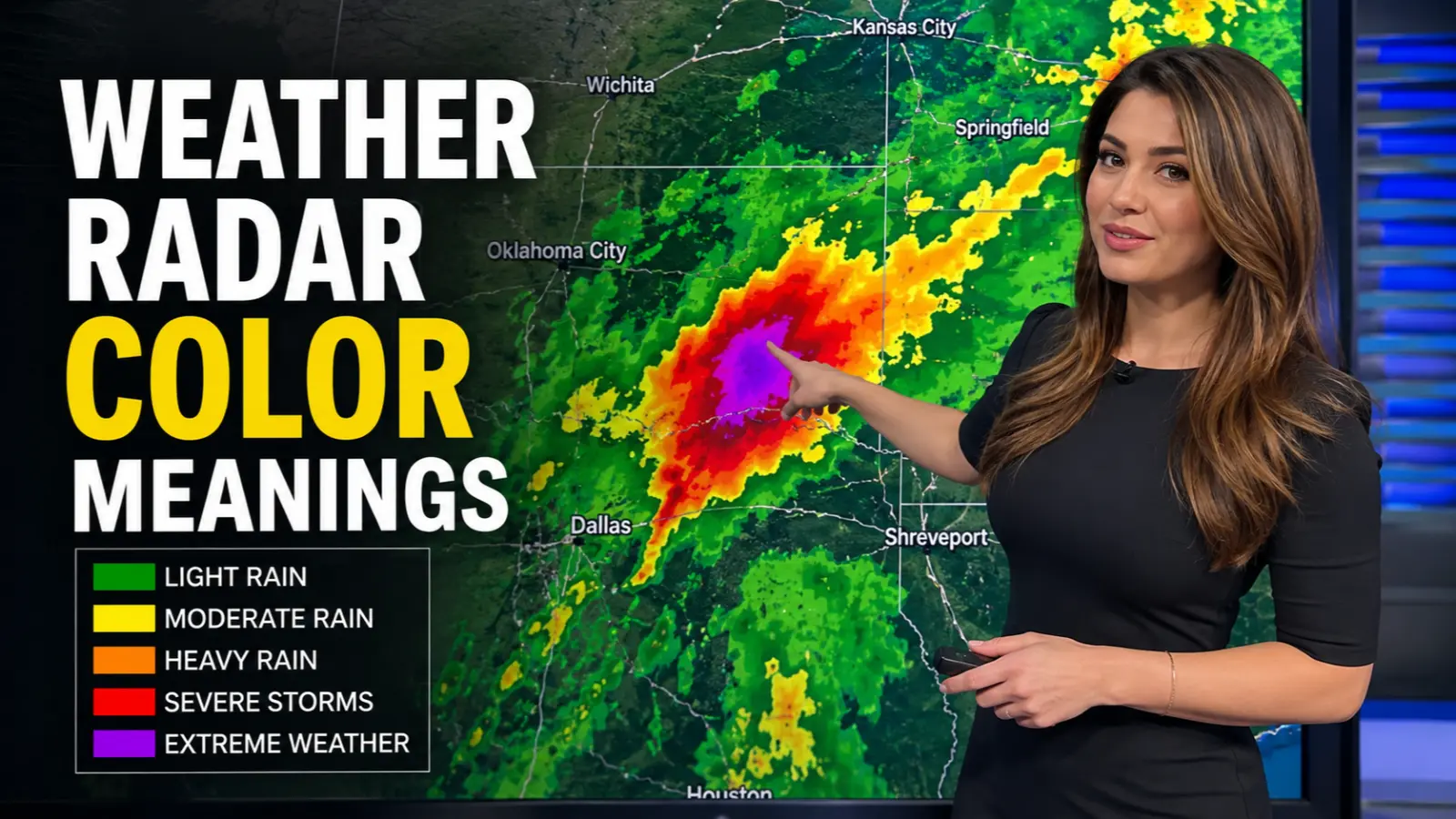
Weather radar color meanings help people quickly understand the intensity and type of precipitation shown on weather maps. Unlike symbolic color psychology, weather radar colors are standardized visual indicators used by meteorologists to communicate rainfall intensity, snowfall, hail potential, and severe storm activity.
Each color represents different reflectivity values measured by radar, making it easier to identify light rain, heavy thunderstorms, or dangerous weather conditions at a glance. Understanding these colors can improve weather awareness, travel planning, and storm preparedness.
Quick Answer:
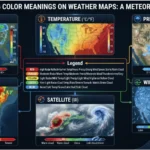
Weather radar colors generally progress from light blue or green (light precipitation) to yellow, orange, and red (heavy precipitation), while purple, pink, white, or black often indicate extremely intense storms, hail, mixed precipitation, or specialized radar products.
What Does the Color Weather Radar Symbolize?
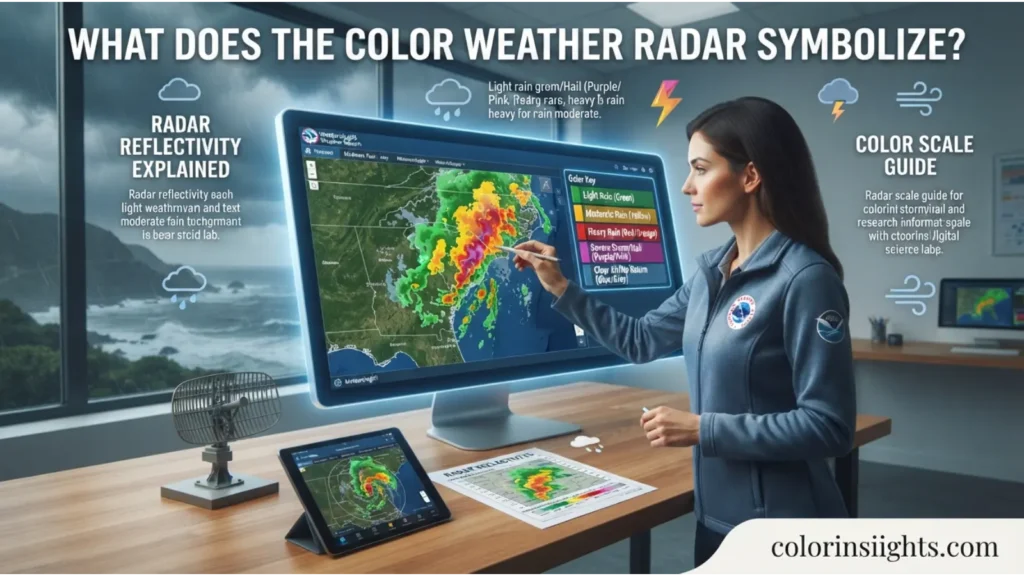
Weather radar colors symbolize the intensity, type, and potential severity of precipitation detected by Doppler radar. Rather than representing emotions or personality, these colors communicate scientific weather data using a standardized visual scale.
Generally:
- Light Blue or Light Green: Very light rain or snow.
- Green: Light rainfall.
- Yellow: Moderate rainfall.
- Orange: Heavy rainfall.
- Red: Very heavy rain and potentially severe thunderstorms.
- Purple or Magenta: Extremely high reflectivity that may indicate hail or intense storms.
- Pink: Mixed precipitation such as sleet or freezing rain on winter weather maps.
- White or Gray: Snow in many winter weather displays.
- Black or Dark Purple: Used by some radar systems for extreme reflectivity or specialized overlays.
Although exact colors vary slightly between weather services, the overall progression from cool to warm colors represents increasing precipitation intensity.
Psychological Characteristics of the Color Weather Radar
Although weather radar color meanings are scientific rather than symbolic, people naturally associate them with certain emotions because of learned experiences.
Emotional Associations
- Green creates reassurance because it often indicates light rainfall.
- Yellow signals caution.
- Orange increases alertness.
- Red evokes urgency and danger.
- Purple suggests extreme conditions.
- Blue often feels calm and safe.
Psychological Effects
Viewing radar maps influences decision-making by helping people judge weather risks quickly.
People commonly:
- Delay travel during red radar zones.
- Prepare for storms when orange appears.
- Feel relatively safe during green precipitation.
Positive Emotional Responses
- Better preparedness
- Increased confidence in weather planning
- Improved public safety awareness
- Reduced uncertainty
Negative Emotional Responses
- Storm anxiety
- Fear of tornado-producing storms
- Travel concerns
- Emergency stress during severe weather
Impact on Mood and Behavior
Weather radar colors often influence:
- Outdoor activity planning
- School and work decisions
- Emergency preparedness
- Event scheduling
- Driving behavior
Typical Reactions
- Green: Continue normal activities with caution.
- Yellow: Monitor changing conditions.
- Orange: Consider postponing outdoor plans.
- Red: Seek shelter if severe weather warnings exist.
- Purple: Treat as potentially dangerous weather.
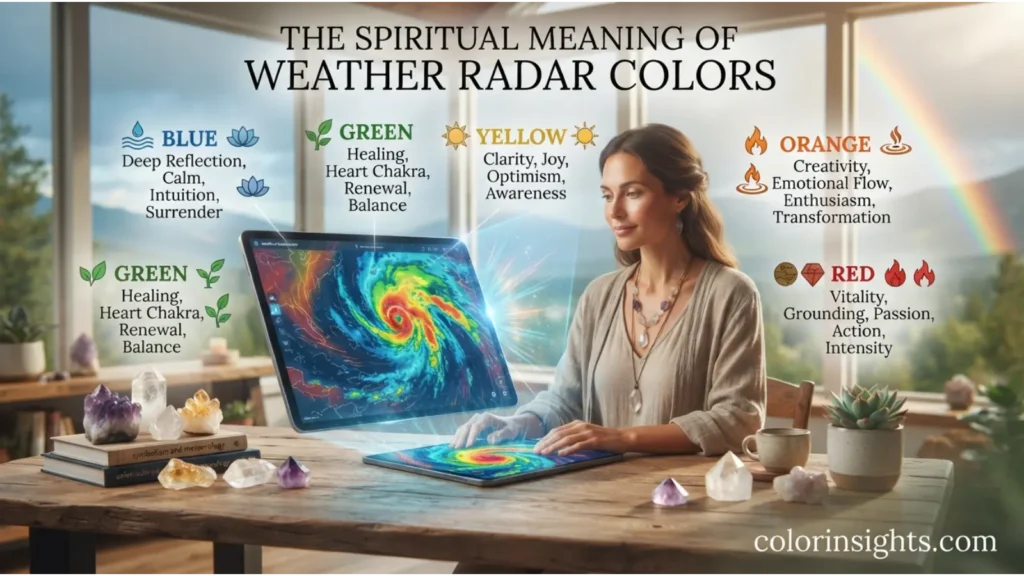
Spiritual Meaning of the Color Weather Radar
Weather radar colors themselves have no official spiritual meaning because they are scientific visualization tools. However, the individual colors often carry traditional symbolic interpretations.
- Blue: Calmness, healing, protection.
- Green: Renewal, growth, balance.
- Yellow: Wisdom, optimism, awareness.
- Orange: Transformation, energy.
- Red: Strength, courage, power.
- Purple: Spiritual awareness and higher wisdom.
- White: Purity and new beginnings.
- Pink: Compassion and emotional healing.
Many spiritual traditions interpret storms themselves as symbols of transformation, cleansing, or renewal rather than focusing on radar colors.
Positive and Negative Meanings of the Color Weather Radar
Positive Meanings
Weather radar colors support public safety by providing clear visual communication.
Examples include:
- Clarity: Easy interpretation of storm intensity.
- Preparedness: Better emergency planning.
- Safety: Early warning of dangerous weather.
- Awareness: Improved understanding of approaching storms.
- Confidence: Reliable weather monitoring.
- Protection: Supports timely evacuation decisions.
- Balance: Helps communities respond appropriately.
- Hope: Identifying improving weather as colors weaken.
Real-World Example
A family sees green changing to yellow on radar and decides to move a picnic indoors before heavy rain begins.
Negative Meanings
Certain radar colors can indicate hazardous weather.
Examples include:
- Danger: Bright red thunderstorms.
- Extreme Risk: Purple hail cores.
- Disruption: Orange rainfall causing flooding.
- Uncertainty: Rapidly changing storm cells.
- Stress: Severe weather warnings.
- Fear: Tornado-producing supercells.
- Property Damage: Intense hail signatures.
- Travel Hazards: Heavy snow shown by winter radar colors.
Real-World Example
A red and purple radar signature may signal severe thunderstorms capable of damaging winds and large hail.
Meanings of the Color Weather Radar
Weather radar colors change meaning depending on the weather product being displayed. Rainfall maps, winter precipitation maps, and specialized meteorological products may use different color scales.
Feng Shui
Weather radar colors are not traditional Feng Shui colors, but their individual meanings can be interpreted.
Associated Elements
- Blue: Water
- Green: Wood
- Red: Fire
- Yellow: Earth
- White: Metal
Energy Symbolism
- Green encourages growth.
- Blue promotes calm.
- Red activates energy.
- Yellow supports stability.
Best Rooms
- Blue for bedrooms.
- Green for living rooms.
- Yellow for kitchens.
- White for offices.
Recommended Color Combinations
- Blue and white
- Green and beige
- Yellow and gray
- Red with neutral tones
Decorating Tip
Balance energetic colors like red with calming shades to create comfortable interiors.
Marketing
Radar-inspired colors influence branding by communicating urgency, trust, or action.
Branding Psychology
- Blue builds trust.
- Green communicates environmental responsibility.
- Yellow attracts attention.
- Red creates urgency.
Consumer Perception
Consumers quickly recognize color intensity due to weather experiences.
Trust Signals
Weather companies commonly use:
- Blue
- Green
- White
to reinforce reliability.
Product Packaging
Outdoor gear often combines:
- Blue
- Green
- Orange
to communicate weather readiness.
Advertising Applications
Emergency alert systems frequently use:
- Yellow
- Orange
- Red
to emphasize important information.
Examples include weather services, emergency management agencies, outdoor equipment manufacturers, and navigation apps.
Design
Weather radar color palettes inspire many design fields.
Interior Design
Natural greens and blues create calming environments.
Graphic Design
Color gradients effectively communicate data intensity.
Web Design
Weather websites use radar colors for intuitive user interfaces.
User Experience
Sequential color scales improve information processing and accessibility.
Minimalist Aesthetics
Simple gradients with high contrast enhance readability.
Fashion
Radar colors also influence clothing trends.
Clothing Symbolism
- Blue projects reliability.
- Green suggests freshness.
- Yellow appears cheerful.
- Orange conveys confidence.
- Red symbolizes boldness.
- Purple reflects creativity.
Seasonal Use
- Blue and green suit spring.
- Yellow works well in summer.
- Orange complements autumn.
- White remains popular during winter.
Styling Effects
Accent colors can create energetic outfits without overwhelming the overall appearance.
Personality Impressions
People may perceive wearers of:
- Blue as dependable.
- Green as balanced.
- Red as confident.
- Yellow as optimistic.
Advantages
- Easy coordination.
- Strong visual impact.
- Seasonal flexibility.
Disadvantages
Bright reds and oranges may appear overwhelming in professional settings.
Color Associations Are Not Universal
Western Cultures
In the United States, green radar usually means light rain, while red often signals dangerous weather. These meanings are reinforced through weather broadcasts and emergency alerts.
Eastern Cultures
Many Asian meteorological agencies use similar radar scales, although slight variations in colors may appear depending on software and national standards.
Religious Traditions
Religious symbolism applies to the individual colors rather than weather radar itself. For example, white often represents purity, while red symbolizes sacrifice or strength in various traditions.
Historical Interpretations
Early weather maps relied on black-and-white shading. Advances in digital meteorology introduced standardized color gradients that improve readability and public understanding.
Modern Global Interpretations
Today, weather radar colors are widely standardized, allowing travelers and meteorologists worldwide to interpret storm intensity quickly despite minor differences among forecasting agencies.
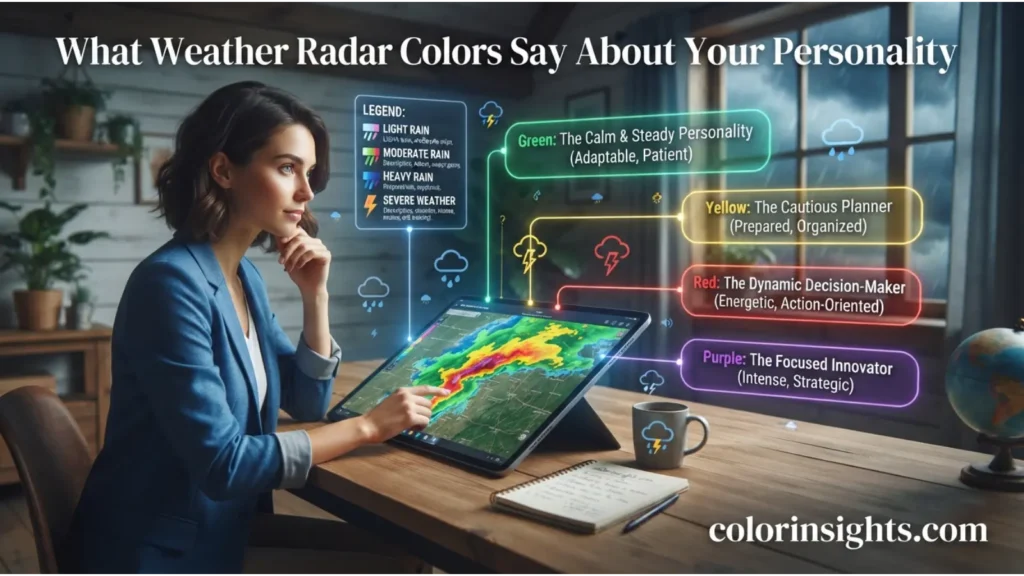
What Weather Radar Colors Say About Your Personality
Weather radar colors do not determine personality. However, if someone consistently prefers certain radar-inspired colors, general color psychology may offer interesting—but not scientific—insights.
Strengths
People preferring:
- Blue may value calmness.
- Green may appreciate balance.
- Yellow may enjoy optimism.
- Red may seek excitement.
Weaknesses
Possible tendencies include:
- Risk avoidance
- Impatience
- Overthinking
- Emotional intensity
Social Behavior
Color preferences may influence personal style but should never be used to judge character.
Work Style
Individuals drawn to cooler colors often appreciate organization, while those favoring warm colors may enjoy fast-paced environments.
Relationships
Color preferences sometimes reflect communication styles, though personality is shaped by many factors beyond color.
Emotional Tendencies
People may gravitate toward calming colors during stressful periods and brighter colors during energetic or optimistic moods.
FAQs:
What defines weather radar colors?
Weather radar colors represent different levels of precipitation intensity detected by Doppler radar using reflectivity measurements.
What do weather radar colors symbolize?
They symbolize the strength and type of precipitation, from light rain to severe thunderstorms and hail.
Why are weather radar colors important?
They help people recognize hazardous weather quickly and make informed safety decisions.
Are weather radar colors standardized?
Most weather services use similar color progressions, although exact shades may differ between radar providers.
Are weather radar colors warm or cool colors?
Radar displays include both cool colors (blue, green) and warm colors (yellow, orange, red), depending on precipitation intensity.
What emotions do weather radar colors represent?
People often associate green with safety, yellow with caution, red with danger, and purple with extreme weather.
What is the spiritual meaning of weather radar colors?
The radar system itself has no spiritual meaning, but the individual colors carry traditional symbolic interpretations in many cultures.
Which colors pair well with weather radar-inspired palettes?
Blue, green, gray, white, and dark navy create balanced weather-themed color schemes.
What does liking weather radar colors say about a person?
Enjoying these colors may reflect preferences for science, weather, or specific color aesthetics, but it does not accurately determine personality.
Why does weather radar sometimes show purple?
Purple usually indicates extremely high reflectivity, which may suggest large hail, intense thunderstorms, or exceptionally heavy precipitation.
Conclusion
Weather radar color meanings provide a universal visual language that helps meteorologists and the public understand weather conditions quickly. The progression from green to yellow, orange, red, and purple represents increasing precipitation intensity and potential hazards, making radar maps essential tools for forecasting and emergency preparedness.
While these colors have rich psychological and cultural symbolism individually, their primary purpose on weather radar is scientific communication. Learning to interpret radar colors allows you to make safer travel decisions, prepare for changing weather, and better understand forecasts with confidence.