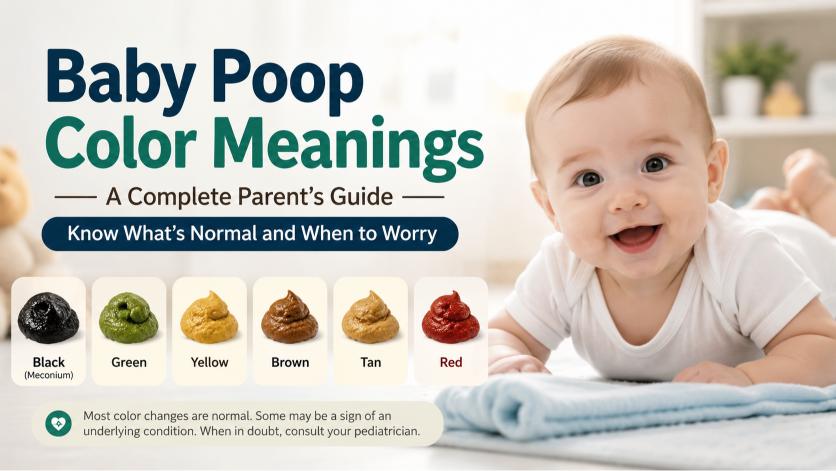
Baby poop changes color frequently during the first year of life, and most variations are completely normal. A baby’s age, diet, digestive development, medications, and overall health all influence stool color. Understanding baby poop color meanings helps parents recognize what is expected and identify signs that may require medical attention.
While colors such as yellow, green, and brown are usually healthy, white, red, or black stools (after the newborn period) can sometimes indicate an underlying medical condition. Learning the difference can provide peace of mind while helping you know when to contact your pediatrician.
Quick Answer:
Yellow, green, and brown baby poop are usually normal. White, red, and black stools (except newborn meconium) should be evaluated by a healthcare provider as soon as possible.
What Do Baby Poop Colors Mean?
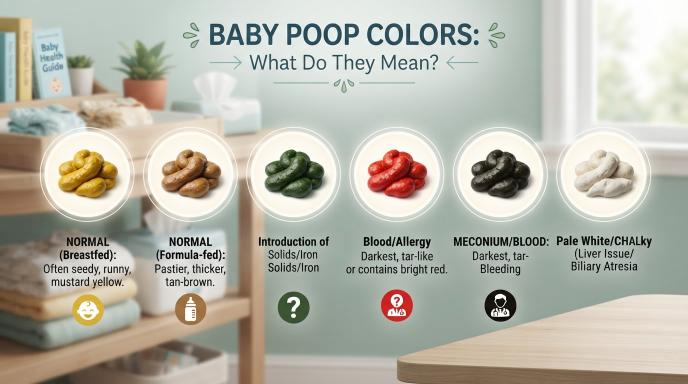
Baby poop color reflects how food is digested, how bile moves through the digestive system, and whether blood or certain foods are present in the stool. The meaning of each color depends on the baby’s age, feeding method, and overall health.
Black
Black stool is normal during the first two to three days after birth. This thick, sticky stool is called meconium, which contains materials swallowed before birth.
However, black stool appearing after the newborn period may indicate digested blood or gastrointestinal bleeding and should be evaluated by a healthcare professional.
Yellow
Mustard-yellow poop is the most common and healthiest color in breastfed babies. It is often loose, seedy, and mild-smelling.
Yellow stool generally indicates:
- Healthy digestion
- Proper milk intake
- Normal intestinal bacteria
Green
Green baby poop is usually harmless and can result from:
- Iron-fortified formula
- Iron supplements
- Fast digestion
- Foremilk-hindmilk imbalance in breastfed babies
- Eating green vegetables after solid foods begin
Occasional green stools rarely require treatment if the baby is feeding well and gaining weight.
Brown
Brown poop becomes more common once babies begin eating solid foods. Shades range from light brown to dark brown and usually indicate normal digestion.
Tan or Orange
Tan, orange, or golden stools are generally considered normal and often reflect dietary changes, especially after introducing fruits and vegetables.
Red
Red stool may occur from:
- Blood in the stool
- Constipation causing small anal tears
- Food coloring
- Beets or tomatoes after solid foods begin
Because blood can sometimes be serious, persistent red stool should always be discussed with a pediatrician.
White or Gray
White, chalky, or pale gray stool is uncommon but important. It may suggest that the liver is not producing enough bile or that bile is not reaching the intestines.
This color requires immediate medical evaluation.
Baby Poop Color Chart
| Baby Poop Color | Meaning | Normal? |
|---|---|---|
| Black (newborn) | Meconium | ✅ Yes |
| Yellow | Healthy breastfed baby | ✅ Yes |
| Green | Usually normal digestion | ✅ Usually |
| Brown | Normal after solids | ✅ Yes |
| Orange | Dietary changes | ✅ Yes |
| Tan | Healthy variation | ✅ Yes |
| Red | Possible blood or food coloring | ⚠ Consult doctor |
| White/Gray | Possible liver or bile problem | 🚨 Seek medical care |
Baby Poop Color Meanings by Feeding Type
Breastfed Baby Poop
Breastfed babies usually have:
- Mustard yellow color
- Soft or runny texture
- Small seed-like particles
- Mild odor
These characteristics are considered healthy.
Formula-Fed Baby Poop
Formula-fed babies often produce stools that are:
- Brown
- Tan
- Greenish-brown
- Firmer than breastfed stools
- Stronger smelling
These differences are normal because formula is digested differently than breast milk.
What Foods Change Baby Poop Color?
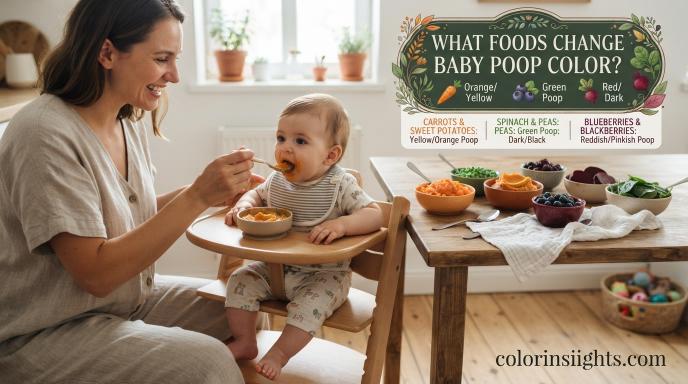
Once babies begin solid foods (typically around six months), stool color often changes.
Common examples include:
- Spinach → Green
- Peas → Green
- Carrots → Orange
- Sweet potatoes → Orange
- Blueberries → Dark blue or black
- Beets → Red
- Blackberries → Dark purple
Temporary color changes caused by food are usually harmless.
Can Medications Affect Baby Poop Color?
Yes. Several medications and supplements can change stool color.
Examples include:
- Iron supplements → Dark green or black stools
- Antibiotics → Green stools
- Certain vitamins → Darker stools
Always follow your pediatrician’s recommendations before giving supplements.
Baby Poop Texture and What It Means
Color is only one part of evaluating baby poop. Texture also provides useful information.
Soft and Seedy
Typical for breastfed infants and considered healthy.
Peanut Butter Consistency
Common after introducing solid foods.
Hard Pellets
Often indicate constipation.
Very Watery
May suggest diarrhea, especially if frequent and accompanied by fever or dehydration.
Mucus
Small amounts occasionally occur, but persistent mucus should be discussed with a healthcare provider.
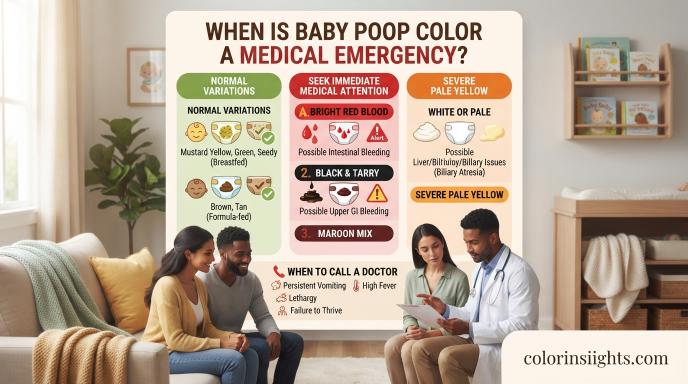
When Is Baby Poop Color a Medical Emergency?
Seek medical care immediately if your baby has:
- White or clay-colored stool
- Gray stool
- Black stool after the newborn period
- Large amounts of blood
- Persistent red stool
- Fever with bloody diarrhea
- Poor feeding
- Persistent vomiting
- Lethargy
- Signs of dehydration
Early evaluation helps identify conditions that may require prompt treatment.
Factors That Influence Baby Poop Color
Several everyday factors affect stool color.
These include:
- Breastfeeding
- Formula feeding
- Starting solid foods
- Hydration
- Iron intake
- Digestive maturity
- Certain medications
- Minor stomach illnesses
Most changes are temporary and resolve naturally.
Tips for Monitoring Baby Poop
Parents can monitor stool health by:
- Watching for sudden color changes
- Tracking feeding habits
- Recording unusual symptoms
- Taking a photo if the color appears abnormal
- Contacting a pediatrician when concerned
Monitoring patterns over time is often more helpful than focusing on a single diaper.
FAQs:
What is the healthiest baby poop color?
Mustard yellow, brown, green, and tan are generally considered healthy colors, depending on the baby’s age and diet.
Why is my baby’s poop green?
Green poop is commonly caused by iron, formula, rapid digestion, or green vegetables and is usually not a cause for concern.
Is yellow baby poop normal?
Yes. Yellow, seedy poop is typical and healthy in breastfed infants.
Why is my baby’s poop black?
Black stool is normal only during the first few days after birth due to meconium. Later black stools should be evaluated by a healthcare provider.
What does white baby poop mean?
White or pale stool may indicate a liver or bile duct problem and requires immediate medical attention.
Can formula change poop color?
Yes. Formula-fed babies often have tan, brown, or green stools.
Does solid food affect poop color?
Yes. Fruits and vegetables frequently change stool color without indicating illness.
When should I worry about baby poop color?
Contact your pediatrician if you notice white, gray, persistent red, or black stools after the newborn period, or if abnormal stool is accompanied by fever, vomiting, poor feeding, or dehydration.
Is orange baby poop normal?
Yes. Orange poop commonly appears after introducing vegetables like carrots or sweet potatoes and is usually harmless.
How often should babies poop?
The frequency varies widely. Some newborns poop after every feeding, while others may go several days between bowel movements. Normal frequency depends on age and feeding method.
Conclusion
Understanding baby poop color meanings helps parents distinguish between normal digestive changes and signs that deserve medical attention. Yellow, green, brown, tan, and orange stools are usually healthy and often reflect normal digestion, feeding patterns, or diet changes. In contrast, white, gray, persistent red, or black stools after the newborn period should never be ignored and warrant prompt medical evaluation.
Remember that stool color is only one part of your baby’s overall health. If your baby appears ill, has additional symptoms, or you are uncertain about any stool changes, consult your pediatrician for personalized guidance.