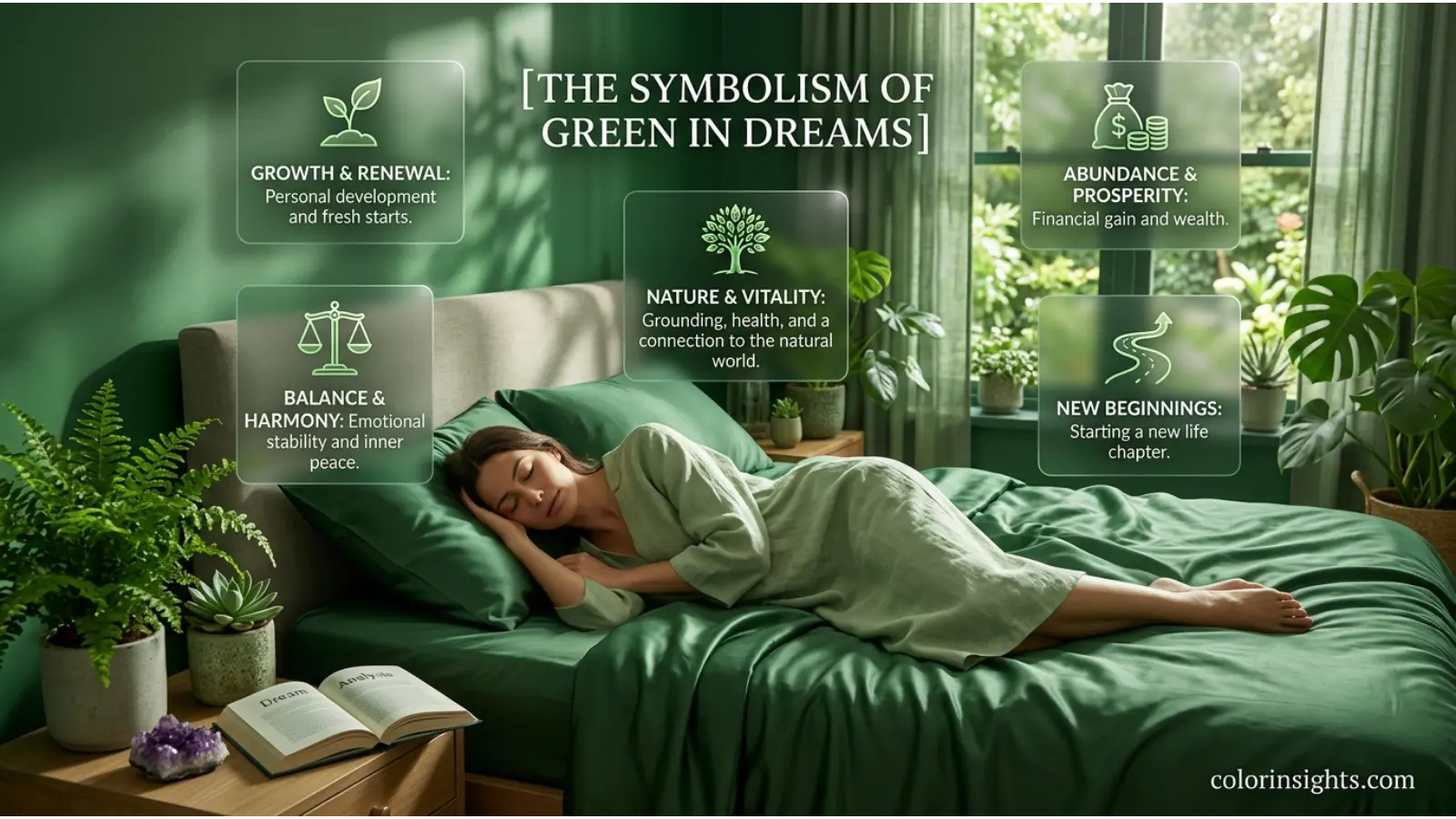
Color Meanings in Dreams often communicate through symbols rather than direct messages, and colors are among the most powerful symbols the mind uses. The colors you see in dreams can reflect emotions, thoughts, personal experiences, and even cultural or spiritual beliefs.
While dream interpretation is subjective, psychologists, spiritual traditions, and cultural studies have identified recurring themes associated with different colors. Understanding these meanings can help you gain insight into your emotional state, subconscious mind, and personal growth.
Rather than predicting the future, dream colors often provide clues about your current feelings, challenges, and aspirations.
Quick Answer:
Color meanings in dreams generally symbolize your emotional state, subconscious thoughts, spiritual journey, and personal experiences. Each color carries unique psychological and cultural associations that influence its interpretation within the context of the dream.
What Does the Color Mean in Dreams Symbolize?
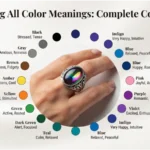
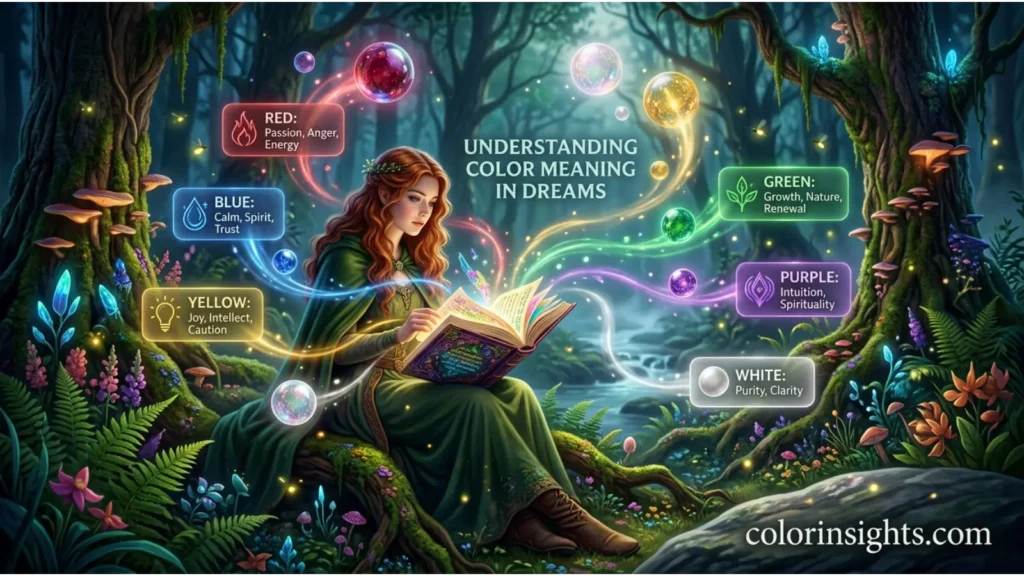
Colors in dreams symbolize far more than visual details. They often represent emotions, personality traits, spiritual messages, and subconscious concerns. The meaning of a dream color depends on the context of the dream, your personal associations with that color, and your cultural background.
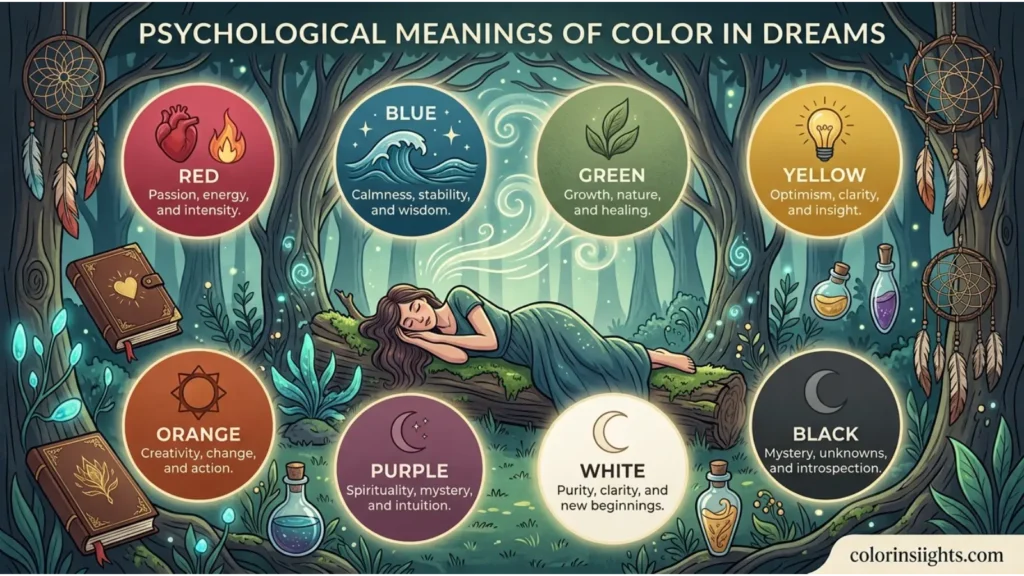
For example, dreaming of bright blue skies may represent inner peace and optimism, while a dark gray environment could reflect uncertainty or emotional exhaustion. Likewise, vibrant green landscapes often symbolize growth and renewal, whereas intense red imagery may point to passion, urgency, or unresolved conflict.
Dream researchers generally agree that dream colors can represent:
- Emotional well-being or distress.
- Personal transformation and self-discovery.
- Hidden fears or unresolved conflicts.
- Spiritual awareness or enlightenment.
- Creativity, motivation, and ambition.
- Relationships and interpersonal dynamics.
- Hope, healing, or new opportunities.
Unlike universal symbols, dream colors do not have a single fixed meaning. The same color may convey different messages depending on the dreamer’s life experiences, current emotions, and the surrounding dream narrative. Interpreting dream colors therefore requires considering both common symbolism and personal context.
Psychological Characteristics of the Color Meanings in Dreams
Color psychology suggests that the colors appearing in dreams often reflect the subconscious processing of emotions, memories, and daily experiences. Although dream interpretation is not an exact science, psychologists recognize that colors can influence mood and represent underlying psychological states.
Emotional Associations
Dream colors commonly correspond to emotional experiences, including:
- Calmness and emotional balance.
- Love and affection.
- Anger or frustration.
- Hope and optimism.
- Fear and uncertainty.
- Confidence and personal power.
- Sadness or grief.
- Curiosity and creativity.
For instance, soft pastel colors may accompany peaceful dreams, while darker shades frequently appear during stressful or emotionally intense dreams.
Psychological Effects
Different colors may symbolize various psychological processes, such as:
- Processing recent life events.
- Managing emotional stress.
- Exploring personal identity.
- Building self-confidence.
- Coping with change.
- Seeking emotional healing.
- Developing resilience.
Dream colors often mirror how the subconscious organizes emotional experiences rather than predicting future events.
Positive Emotional Responses
Certain dream colors are commonly linked with positive feelings, including:
- Joy and happiness.
- Hope for the future.
- Emotional healing.
- Confidence.
- Trust.
- Inner peace.
- Personal growth.
- Inspiration.
Bright, vibrant colors frequently accompany dreams involving achievement, meaningful relationships, or personal breakthroughs.
Negative Emotional Responses
Some colors may reflect emotional struggles, including:
- Anxiety.
- Loneliness.
- Confusion.
- Fear.
- Regret.
- Emotional distance.
- Stress.
- Uncertainty.
Muted, faded, or unusually dark colors can sometimes indicate emotional fatigue or unresolved concerns.
Impact on Mood and Behavior
Dream colors may influence how people feel upon waking. A dream filled with warm, bright colors may leave someone feeling energized and optimistic, while darker tones may create lingering feelings of tension or reflection.
Researchers believe these emotional responses occur because colors activate memories, emotions, and symbolic associations stored within the subconscious mind.
How People Typically React to Dream Colors
People often respond to dream colors by:
- Reflecting on recent emotional experiences.
- Looking for personal meaning.
- Connecting dreams with current life situations.
- Exploring spiritual or psychological interpretations.
- Keeping dream journals to identify recurring color patterns.
Rather than relying on one universal interpretation, experts recommend considering both personal experiences and established color symbolism.
Spiritual Meaning of the Color in Dreams
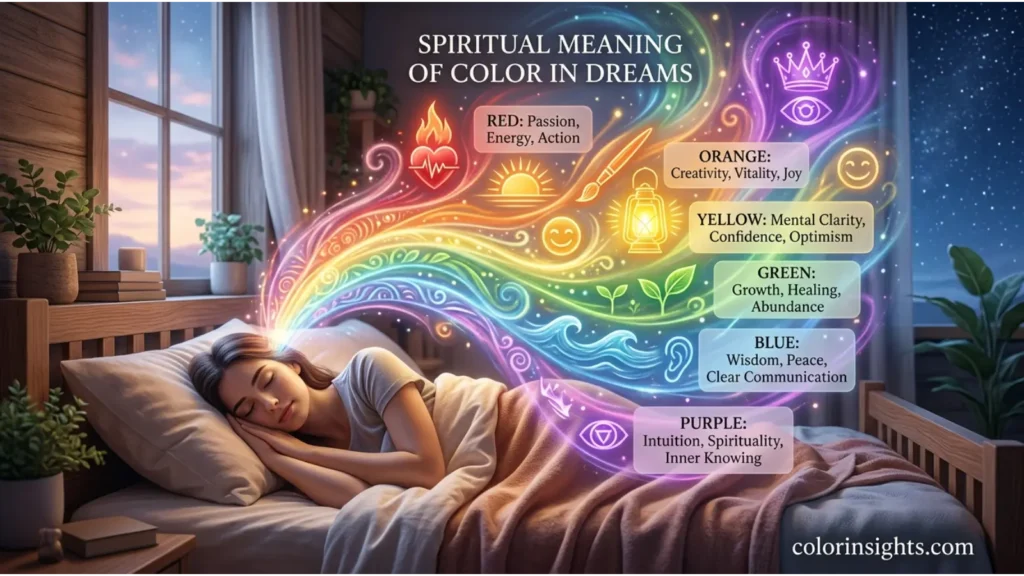
Across many spiritual traditions, colors appearing in dreams are viewed as symbolic messages that encourage reflection, healing, and personal growth. While interpretations vary among religions and belief systems, many traditions associate dream colors with stages of spiritual development rather than literal predictions.
Holiness
Light-filled colors such as white, gold, and radiant yellow often symbolize spiritual purity, divine guidance, and sacred experiences. Dreams featuring these colors may represent a desire for moral clarity or a deeper connection with one’s beliefs.
Wisdom
Blue, purple, and deep indigo frequently represent wisdom, intuition, and higher understanding. These colors may appear during periods of learning, self-reflection, or important life decisions.
Purity
White remains one of the most widely recognized symbols of innocence, honesty, and fresh beginnings. In dreams, it can represent emotional cleansing, forgiveness, or the release of past burdens.
Transformation
Colors such as green, orange, and violet are often associated with growth and transformation. Dreaming of these colors may reflect personal development, changing perspectives, or the beginning of a new life chapter.
Healing
Green is commonly linked to physical, emotional, and spiritual healing. Soft blues may also symbolize emotional restoration, inner peace, and recovery from stressful experiences.
Protection
Gold, silver, and deep blue are sometimes interpreted as symbols of spiritual protection. Some traditions believe these colors represent guidance, resilience, or the presence of supportive spiritual forces.
Power
Red and gold often symbolize strength, courage, leadership, and determination. When these colors appear prominently in dreams, they may encourage confidence and decisive action.
Enlightenment
Purple, violet, and brilliant white frequently represent enlightenment, expanded awareness, and spiritual awakening. These dreams may coincide with periods of personal insight or meaningful self-discovery.
New Beginnings
Fresh green, soft yellow, and white often symbolize hope, renewal, and the start of a new journey. These colors commonly appear during major life transitions or after overcoming personal challenges.
Eternity
Deep blue, black, and celestial shades are sometimes associated with eternity, mystery, and the infinite nature of existence. Rather than representing fear, these colors may invite contemplation about life’s deeper purpose and the unknown.
In spiritual dream interpretation, colors are generally viewed as symbolic guides rather than definitive answers. Their meaning becomes most valuable when considered alongside the dream’s setting, emotions, and the dreamer’s personal beliefs and life experiences.
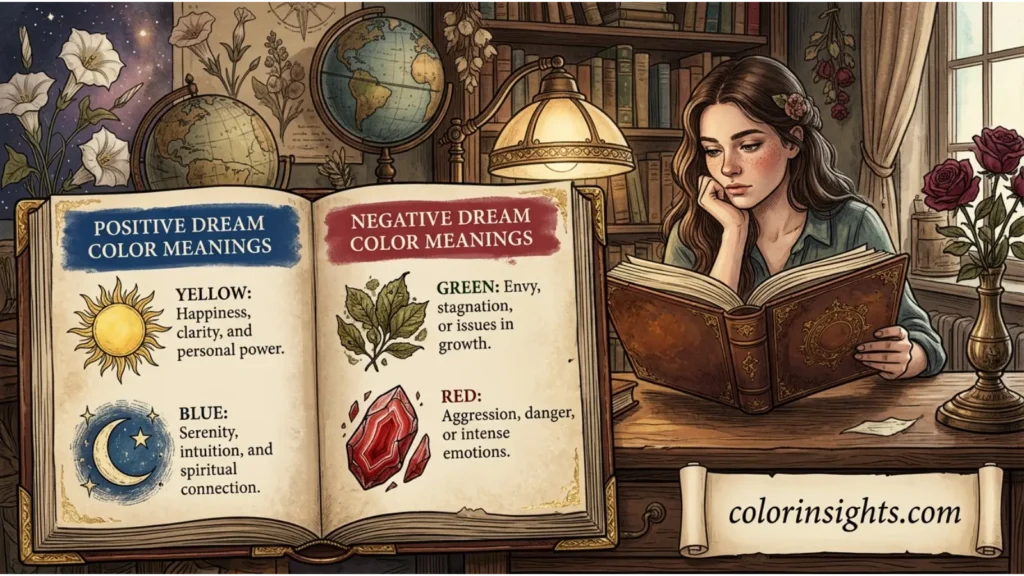
Positive and Negative Meanings of the Color Meanings in Dreams
The meaning of colors in dreams is not fixed. A color that represents hope in one dream may symbolize uncertainty in another, depending on the dream’s context, your emotions, and personal experiences. Understanding both the positive and negative symbolism provides a more balanced interpretation.
Positive Meanings
Dream colors often reflect uplifting emotions, personal development, and positive life changes.
Purity
White and light pastel colors frequently symbolize innocence, honesty, and emotional cleansing. For example, dreaming of a white flower may represent forgiveness or a fresh start after resolving a conflict.
Peace
Soft blue, lavender, and gentle green often indicate tranquility and emotional stability. A peaceful blue ocean in a dream may suggest that you have found inner calm despite life’s challenges.
Simplicity
Neutral shades such as beige, cream, and light gray can symbolize a desire to simplify your life. Dreaming of an uncluttered room with soft colors may reflect a need to reduce stress and focus on what truly matters.
Clarity
Bright yellow and clear white often represent understanding and mental clarity. Seeing sunlight illuminating a path in a dream may symbolize finding answers to an important question.
Freshness
Green commonly symbolizes renewal, recovery, and new opportunities. Dreaming of lush green fields may indicate personal growth, improved health, or the beginning of an exciting chapter.
Hope
Bright colors such as yellow, turquoise, and sky blue frequently represent optimism and confidence about the future. A colorful sunrise may symbolize renewed motivation after a difficult period.
Balance
Dreams featuring harmonious combinations of colors often reflect emotional stability and healthy decision-making. Balanced color schemes may suggest that different areas of your life are becoming more aligned.
Harmony
Natural colors, including greens, blues, and earthy browns, can represent healthy relationships and a strong connection with nature. Dreaming of a peaceful forest may symbolize emotional harmony and personal contentment.
Negative Meanings
Colors in dreams may also reflect emotional struggles, unresolved issues, or personal challenges. These interpretations should be viewed as opportunities for self-reflection rather than warnings.
Emptiness
Large white or gray spaces may symbolize feelings of loneliness or emotional numbness. For example, dreaming of an empty white room could reflect a sense of isolation during a major life transition.
Isolation
Dark blue, gray, or muted tones sometimes represent emotional withdrawal. A dream in which you walk alone through a gray landscape may mirror feelings of disconnection from others.
Coldness
Icy blue or stark white settings can occasionally symbolize emotional distance or difficulty expressing feelings. This may appear during periods of strained communication in relationships.
Sterility
Clinical white environments may represent perfectionism or a lack of emotional warmth. Dreaming of an empty hospital corridor, for instance, could reflect emotional exhaustion or excessive self-control.
Boredom
Dull, faded colors may indicate routine, lack of inspiration, or emotional stagnation. A dream with lifeless surroundings might encourage you to seek new experiences or creative outlets.
Emotional Distance
Muted shades of gray or pale blue sometimes symbolize unresolved emotional barriers. Such dreams may appear when communication problems remain unaddressed.
Perfectionism
Bright white or highly ordered environments may symbolize unrealistic expectations. Dreaming of constantly trying to keep everything spotless could reflect pressure to meet impossible standards.
Remember that no single color guarantees a particular meaning. The emotions you experience during the dream are often just as important as the colors themselves.
Meanings of the Color Meanings in Dreams
The symbolism of colors in dreams changes according to the situation, surrounding symbols, and personal experiences. A red rose may represent romance in one dream but grief or longing in another. Likewise, black can symbolize mystery, elegance, or fear depending on the emotional tone of the dream.
Outside dream interpretation, color symbolism also influences interior design, branding, fashion, and cultural traditions. These real-world associations often shape how our subconscious uses colors during dreams.
Feng Shui
Although dreams and Feng Shui are different practices, traditional Feng Shui symbolism can provide additional insight into dream colors.
Associated Element
Each color corresponds to one of the five Feng Shui elements:
- Green – Wood
- Red – Fire
- Yellow – Earth
- White – Metal
- Blue and Black – Water
Energy Symbolism
Each element represents a unique type of life energy:
- Wood encourages growth and vitality.
- Fire symbolizes passion and transformation.
- Earth promotes stability and grounding.
- Metal represents clarity and focus.
- Water reflects wisdom and adaptability.
Best Rooms
In home design, these colors are commonly recommended for:
- Blue in bedrooms for relaxation.
- Green in living rooms or offices to support growth.
- Yellow in kitchens to create warmth.
- White in workspaces for clarity.
- Red as an accent in social spaces to increase energy.
Recommended Color Combinations
Balanced combinations include:
- Blue and white for calm sophistication.
- Green and brown for natural harmony.
- Yellow and gray for modern warmth.
- Black and gold for elegance.
- White with soft earth tones for simplicity.
Home Decorating Tips
When using dream-inspired colors in your home:
- Choose calming colors for restful spaces.
- Use vibrant accents sparingly.
- Balance bold colors with neutral tones.
- Incorporate natural materials to complement color energy.
- Avoid overwhelming rooms with too many intense colors.
Marketing
Brands carefully select colors because they influence consumer perception, trust, and purchasing behavior. The emotional associations people develop with colors can also appear in dreams through familiar logos, advertisements, or products.
Branding Psychology
Companies use colors to communicate specific values:
- Blue suggests trust and reliability.
- Green represents sustainability and health.
- Red creates excitement and urgency.
- Black conveys luxury and sophistication.
- Yellow attracts attention and optimism.
Consumer Perception
Consumers often make quick judgments based on color before reading any text. Color helps create emotional connections with products and influences brand recognition.
Trust Signals
Financial institutions, healthcare providers, and technology companies frequently use blue because it communicates professionalism, security, and stability.
Product Packaging
Packaging colors influence expectations about a product. Green often suggests natural ingredients, black implies premium quality, and white communicates cleanliness and simplicity.
Advertising Applications
Advertisers use color to direct attention, reinforce brand identity, and encourage emotional responses. Strategic color choices help improve recall and strengthen marketing campaigns.
Examples of Well-Known Brand Color Strategies
- Blue is commonly used by technology and financial companies to inspire confidence.
- Green appears frequently in environmentally focused brands.
- Red is popular among food and entertainment brands seeking excitement.
- Black is favored by luxury fashion and premium product companies.
Design
Color plays a central role in creating visually appealing and functional environments.
Interior Design
Designers use color to shape mood and perception. Light colors make rooms feel larger, while darker shades add warmth, intimacy, and sophistication.
Graphic Design
Color establishes hierarchy, improves readability, and strengthens brand identity. Designers carefully balance contrast to guide the viewer’s attention.
Web Design
Digital designers use color to improve navigation, accessibility, and user engagement. Consistent color schemes also build trust and reinforce brand recognition.
User Experience (UX)
Buttons, alerts, and navigation elements rely on color to communicate actions quickly. Effective color choices make websites easier to understand and more enjoyable to use.
Minimalist Aesthetics
Neutral palettes combined with selective accent colors create clean, modern designs that emphasize simplicity without sacrificing visual interest.
Fashion
Color influences how clothing is perceived and how people express their personalities.
Clothing Symbolism
Different colors communicate different impressions:
- Black suggests sophistication.
- White represents simplicity.
- Blue conveys confidence.
- Green reflects balance.
- Red expresses passion and energy.
Seasonal Use
Fashion trends often change with the seasons:
- Pastels dominate spring.
- Bright colors appear in summer.
- Earth tones are popular during autumn.
- Deep jewel tones are common in winter.
Styling Effects
Colors can visually alter appearance. Dark shades often create a slimming effect, while lighter colors make outfits feel fresh and open.
Personality Impressions
People may associate certain colors with confidence, creativity, professionalism, or friendliness. These impressions are influenced by culture and individual perception rather than universal rules.
Advantages
- Enhances self-expression.
- Creates memorable first impressions.
- Supports personal branding.
- Allows versatile styling options.
Disadvantages
- Certain colors may not suit every occasion.
- Cultural interpretations vary.
- Trends change over time.
- Overusing bold colors can overwhelm an outfit.
For example, wearing navy blue to a job interview often projects professionalism, while bright yellow may be more appropriate for casual or creative settings.
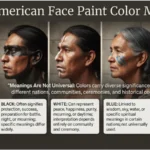
Color Associations Are Not Universal
Although many color meanings appear consistently across psychology and symbolism, interpretations are not universal. Culture, religion, history, and personal experience all influence how people understand colors in dreams.
Western Cultures
In many Western societies, colors often carry these symbolic meanings:
- White represents purity, weddings, innocence, and new beginnings.
- Black symbolizes mourning, mystery, elegance, and authority.
- Red is associated with love, passion, excitement, and danger.
- Blue represents trust, loyalty, and calmness.
- Green signifies nature, health, growth, and prosperity.
For example, dreaming of a white dress may be interpreted as a fresh start or emotional renewal, while a black doorway might symbolize uncertainty or the unknown.
Eastern Cultures
Many Eastern cultures assign different meanings to colors.
For instance, white is traditionally associated with mourning and funerals in several East Asian cultures rather than weddings. Red, on the other hand, symbolizes happiness, prosperity, celebration, and good fortune, making it a common color for weddings and festivals. Gold often represents wealth, success, and spiritual achievement.
These cultural differences demonstrate why dream interpretations should always consider a person’s background.
Religious Traditions
Religious symbolism also shapes the meaning of colors in dreams.
In Christianity, white often represents holiness, purity, and resurrection, while purple symbolizes royalty, repentance, and spiritual preparation. Green frequently represents eternal life and hope.
In Islam, green is widely associated with paradise, mercy, blessings, and spiritual peace. White often symbolizes purity and sincerity.
In Hinduism and Buddhism, saffron and orange commonly represent wisdom, sacrifice, spiritual discipline, and enlightenment.
Historical Interpretations
Throughout history, colors have represented social status, political power, and religious authority.
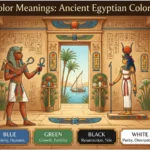
Purple was once reserved for royalty because producing purple dye was extremely expensive. Gold symbolized divine authority and wealth, while blue pigments were considered precious in ancient art and religious paintings.
These historical associations continue to influence modern symbolism and dream interpretation.
Modern Global Interpretations
Today, globalization has blended many traditional meanings.
People frequently associate:
- Blue with technology and trust.
- Green with environmental awareness.
- Black with luxury and sophistication.
- White with minimalism and cleanliness.
- Purple with creativity and innovation.
However, personal experiences remain equally important. Someone who associates yellow with happy childhood memories may interpret yellow dreams differently than someone who connects the same color with stressful events.
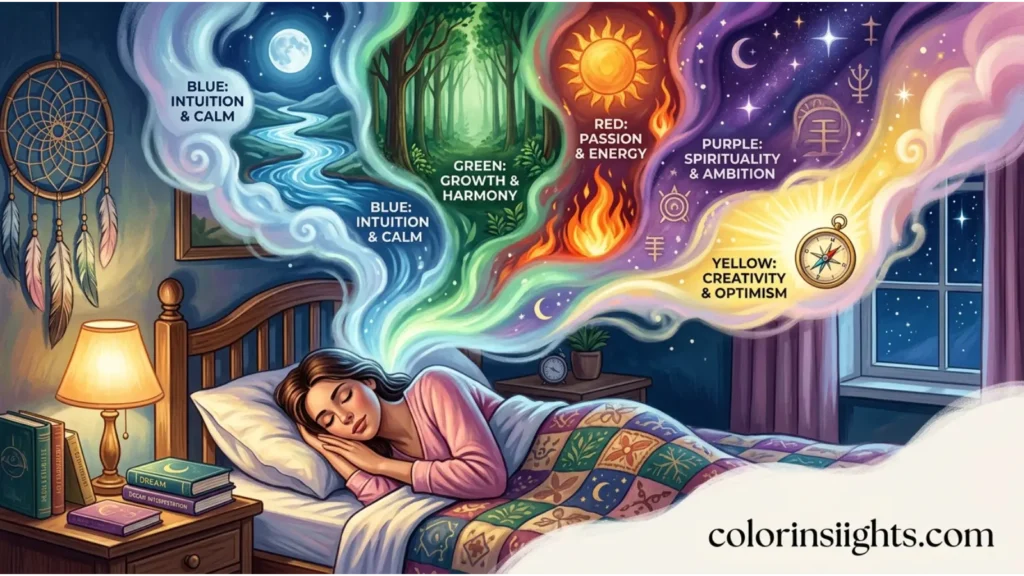
What Color Meanings in Dreams Say About Your Personality
People who are naturally drawn to certain colors often identify with the qualities those colors represent. However, psychologists emphasize that color preferences alone do not determine personality. They offer clues rather than definitive conclusions.
Strengths
Individuals attracted to meaningful dream colors often display qualities such as:
- Self-awareness.
- Curiosity.
- Creativity.
- Emotional intelligence.
- Adaptability.
- Open-mindedness.
- Appreciation for symbolism.
- Willingness to reflect on personal growth.
These strengths often encourage lifelong learning and thoughtful decision-making.
Weaknesses
Some people who place significant importance on dream symbolism may occasionally:
- Overanalyze situations.
- Become emotionally overwhelmed.
- Read too much into coincidences.
- Struggle with uncertainty.
- Find decision-making difficult.
Maintaining a balanced perspective helps prevent symbolic interpretations from becoming sources of unnecessary anxiety.
Social Behavior
People interested in dream colors are often thoughtful listeners who enjoy meaningful conversations. They may value empathy, emotional honesty, and authentic relationships over superficial interactions.
Work Style
They frequently perform well in careers involving:
- Psychology.
- Counseling.
- Education.
- Art and design.
- Writing.
- Marketing.
- Research.
- Creative problem-solving.
Their ability to notice patterns and interpret symbolism often supports innovative thinking.
Relationships
In personal relationships, these individuals often seek trust, emotional security, and open communication. They appreciate partners who respect personal growth and encourage honest conversations.
Emotional Tendencies
People fascinated by dream colors may spend considerable time reflecting on emotions and life experiences. While this self-awareness can promote resilience, it is most beneficial when balanced with practical thinking and evidence-based decision-making.
Ultimately, personality is shaped by genetics, environment, culture, and life experiences. Color preferences should be viewed as one small piece of a much larger picture.
FAQs
What defines color meanings in dreams?
Color meanings in dreams refer to the symbolic interpretations of colors that appear during dreams. These meanings often reflect emotions, subconscious thoughts, cultural influences, and personal experiences rather than fixed predictions.
What do colors in dreams symbolize?
Colors in dreams commonly symbolize emotional states, psychological processes, spiritual themes, personal growth, relationships, and significant life changes. Their meaning depends heavily on the dream’s context.
Why are color meanings in dreams important?
They can encourage self-reflection by helping people recognize emotions, identify recurring concerns, and better understand their subconscious thoughts and experiences.
Are colors in dreams universal in meaning?
No. Cultural traditions, religious beliefs, personal memories, and life experiences all influence how colors are interpreted. The same color may carry different meanings for different individuals.
What emotions do colors in dreams represent?
Dream colors may represent happiness, peace, fear, confidence, sadness, hope, love, anger, healing, or uncertainty. The emotional atmosphere of the dream is essential for accurate interpretation.
What is the spiritual meaning of colors in dreams?
Spiritually, colors may symbolize enlightenment, healing, protection, transformation, wisdom, renewal, or divine guidance. Different spiritual traditions emphasize different symbolic meanings.
Which colors commonly appear in dreams?
Frequently reported dream colors include white, black, blue, green, red, yellow, purple, and gold. Each is associated with unique emotional and symbolic themes.
Can dream colors predict the future?
There is no scientific evidence that dream colors predict future events. Most psychologists view them as symbolic reflections of current thoughts, emotions, and subconscious processing.
What colors pair well together in symbolic design?
Balanced combinations include blue and white for trust, green and brown for nature, black and gold for luxury, and yellow with gray for warmth and modern appeal. These combinations are widely used in design and branding.
What does liking certain dream colors say about a person?
A preference for certain dream colors may reflect personality tendencies, emotional preferences, or aesthetic interests. However, psychologists caution that color preference alone cannot accurately define someone’s personality.
Conclusion
Color meanings in dreams offer a fascinating way to explore the connection between emotions, psychology, spirituality, and personal experiences. While colors often carry widely recognized symbolic meanings, their interpretation is never completely universal.
Context, cultural background, personal memories, and the emotions experienced during the dream all contribute to their significance.
Rather than treating dream colors as predictions, it is more helpful to view them as symbolic messages that encourage self-reflection and emotional awareness.
By considering both established color symbolism and your own life experiences, you can develop a deeper understanding of what your dreams may be communicating about your thoughts, feelings, and personal journey.