Color ribbon are internationally recognized symbols used to raise awareness, show support, honor loved ones, and promote important social, medical, and humanitarian causes. While each ribbon color has its own meaning, the emotions behind them often include hope, compassion, remembrance, strength, and solidarity.
Over time, colored awareness ribbons have become powerful visual symbols in healthcare campaigns, charitable organizations, mental health advocacy, and community movements around the world.
Quick Answer:
Color ribbon meanings vary by color, with each representing a specific cause, awareness campaign, or message of support. Their symbolism is shaped by psychology, culture, history, and the communities that use them.
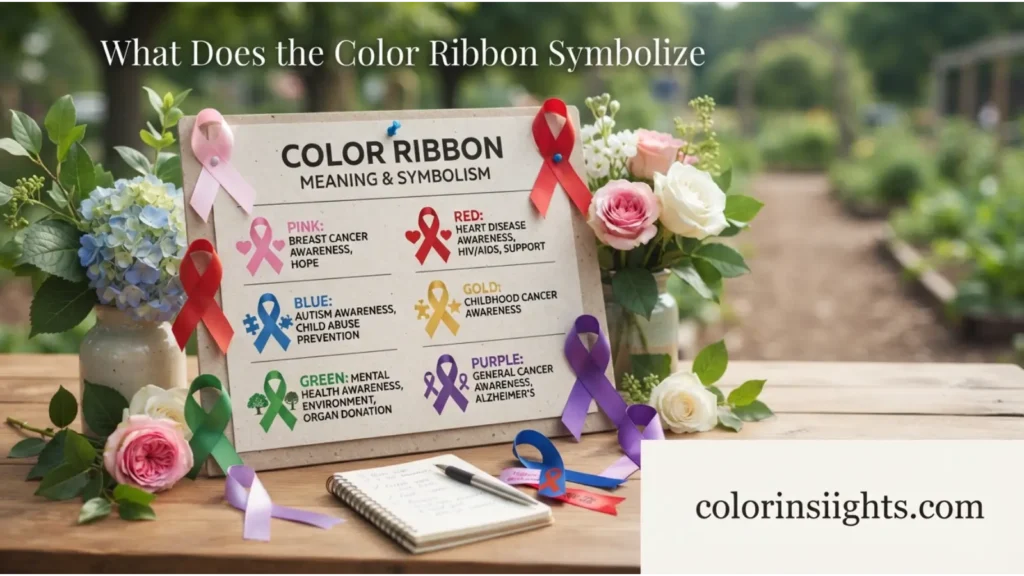
What Does the Color Ribbon Symbolize?
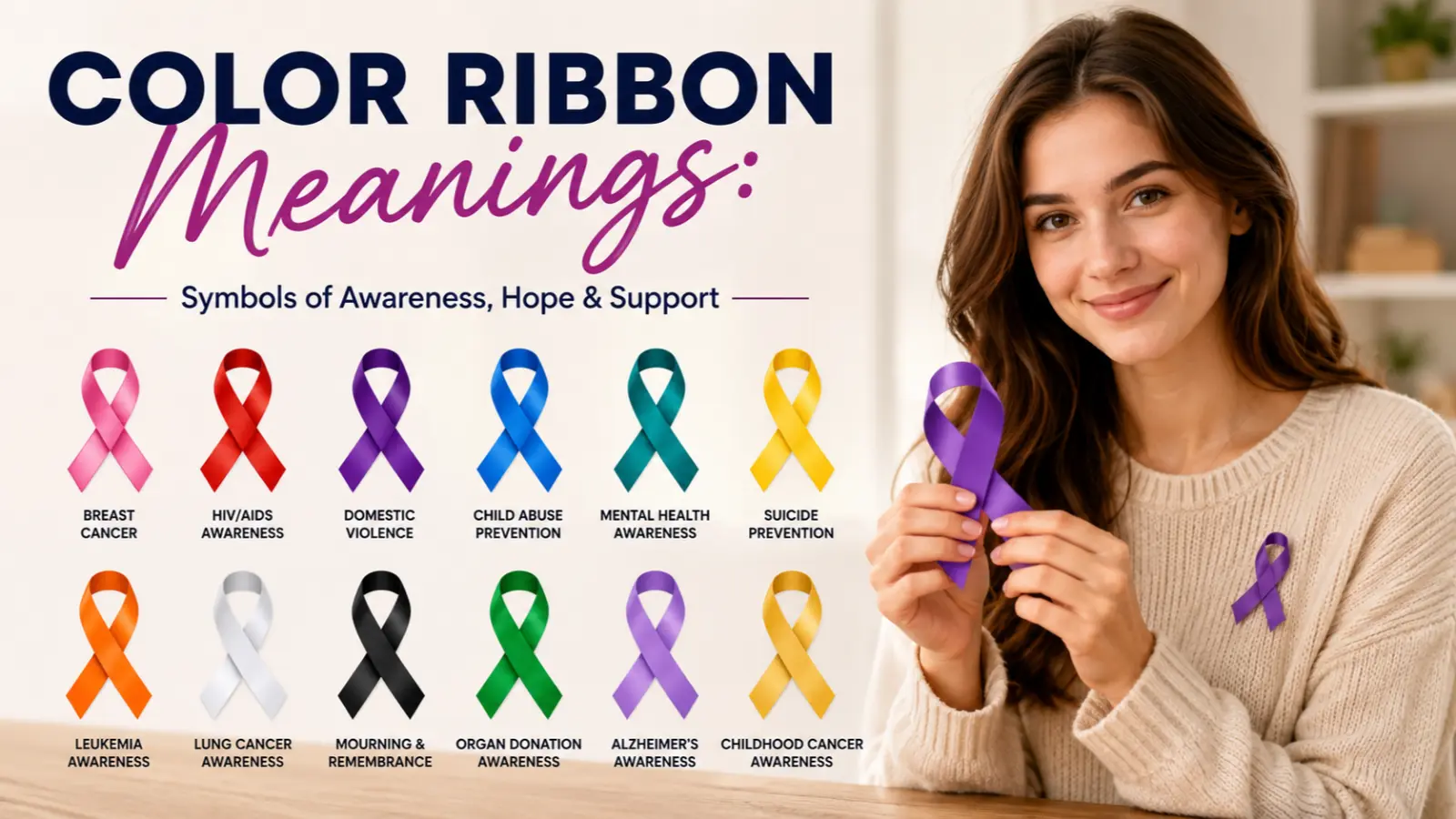
A color ribbon symbolizes awareness, remembrance, advocacy, and unity. It serves as a simple yet powerful visual reminder that people stand together in support of a cause or community.
Different ribbon colors communicate different messages. For example:
- Pink ribbon: Breast cancer awareness and hope.
- Red ribbon: HIV/AIDS awareness, compassion, and prevention.
- Purple ribbon: Domestic violence awareness, Alzheimer’s awareness, and epilepsy (depending on context).
- Blue ribbon: Child abuse prevention, prostate cancer awareness, and anti-bullying initiatives.
- Green ribbon: Mental health awareness, organ donation, and environmental causes.
- Yellow ribbon: Military support, suicide prevention, and hope for safe returns.
- Orange ribbon: Leukemia awareness and multiple sclerosis awareness in some campaigns.
- White ribbon: Peace, anti-violence campaigns, and lung cancer awareness.
- Black ribbon: Mourning, remembrance, and grief.
Although awareness campaigns assign official meanings to ribbon colors, some colors represent multiple causes depending on the organization or country.
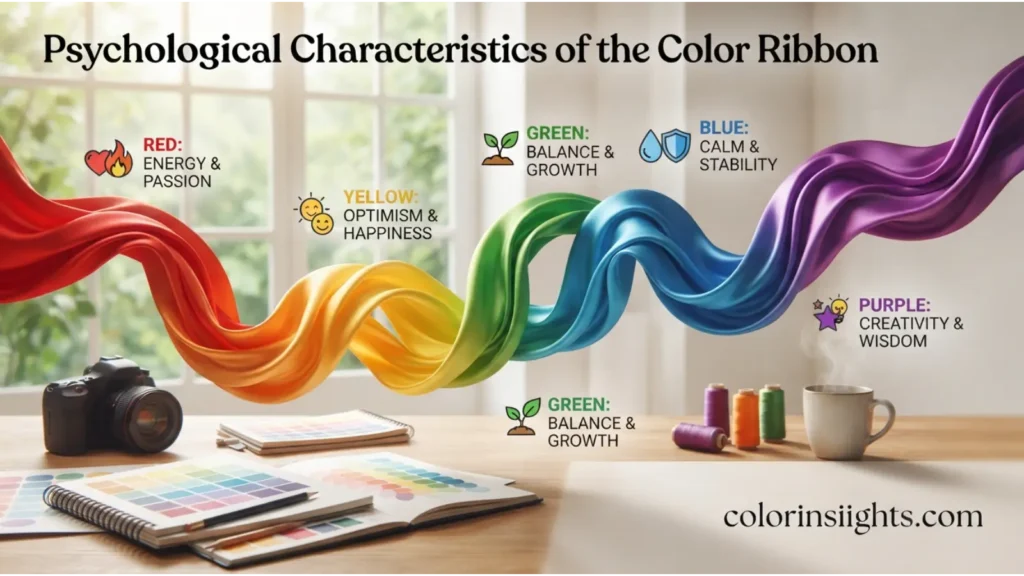
Psychological Characteristics of the Color Ribbon
Unlike a single color, ribbon meanings combine the psychology of color with the emotional significance of public support and awareness.
Emotional Associations
- Compassion
- Empathy
- Hope
- Courage
- Unity
- Healing
- Support
- Remembrance
Psychological Effects
Color ribbons encourage emotional connection by making important causes visible. They remind people that they are not alone while inspiring community participation.
Positive Emotional Responses
- Encourages optimism
- Builds social connection
- Promotes empathy
- Inspires charitable action
- Creates hope during difficult times
- Strengthens community identity
Negative Emotional Responses
Some ribbon colors may also remind people of painful experiences, including:
- Loss of loved ones
- Serious illness
- Trauma
- Grief
- Anxiety about health
- Emotional vulnerability
Impact on Mood and Behavior
Research in color psychology suggests that awareness symbols can increase emotional engagement and motivate positive behaviors such as:
- Donating to charities
- Volunteering
- Participating in awareness events
- Scheduling health screenings
- Supporting affected families
- Sharing educational information
How People Typically React
Most people view awareness ribbons as symbols of:
- Compassion
- Respect
- Social responsibility
- Advocacy
- Community support
- Hope for positive change
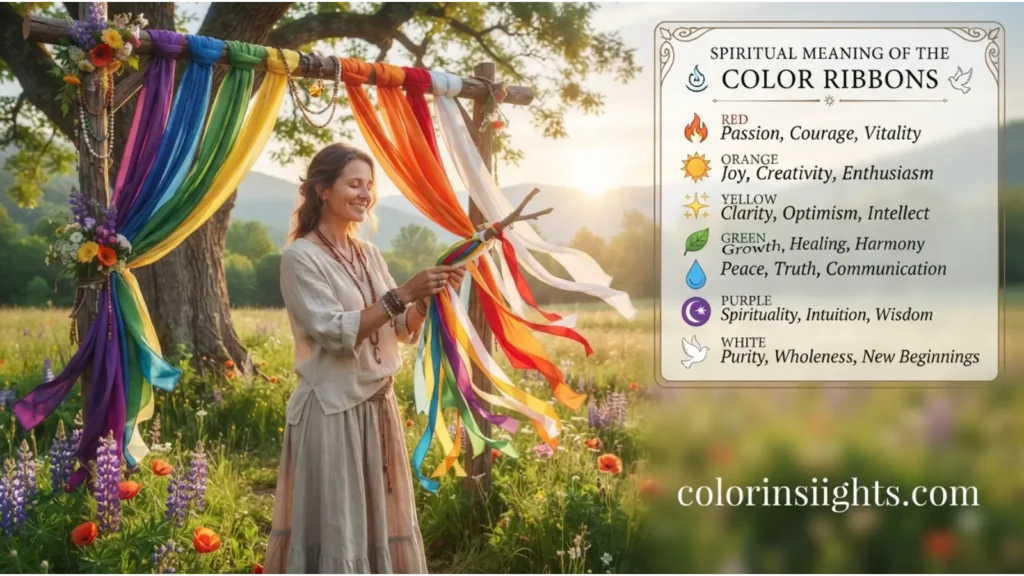
Spiritual Meaning of the Color Ribbon
The spiritual meaning of a ribbon depends largely on its color and the values associated with the cause it represents. Across many traditions, ribbons symbolize intention, healing, and remembrance.
Common spiritual interpretations include:
- Holiness: White and gold ribbons often represent purity and sacred intentions.
- Wisdom: Purple ribbons are associated with spiritual understanding and higher awareness.
- Purity: White ribbons symbolize innocence, peace, and moral clarity.
- Transformation: Butterfly-inspired awareness campaigns use ribbons to represent personal growth and recovery.
- Healing: Green ribbons frequently symbolize emotional, physical, and spiritual healing.
- Protection: Blue ribbons may represent divine guidance and protection.
- Power: Red ribbons symbolize courage, resilience, and life.
- Enlightenment: Violet and lavender ribbons often represent spiritual awakening.
- New Beginnings: Green and yellow ribbons can signify renewal and hope.
- Eternity: Black and white remembrance ribbons may represent everlasting love and memory.
Many people wear awareness ribbons not only to support a cause but also as personal reminders of faith, resilience, and compassion.
Positive and Negative Meanings of the Color Ribbon
Positive Meanings
Color ribbons commonly represent uplifting values.
- Hope: Pink ribbons encourage optimism during breast cancer treatment.
- Healing: Green ribbons promote recovery and mental wellness.
- Compassion: Red ribbons encourage empathy toward people living with HIV/AIDS.
- Unity: Awareness campaigns bring communities together.
- Strength: Yellow ribbons honor perseverance during difficult times.
- Support: Wearing a ribbon publicly demonstrates solidarity.
- Balance: Blue and green ribbons often represent emotional stability.
- Remembrance: Black ribbons respectfully honor lives lost.
Negative Meanings
Although ribbons are generally positive symbols, they may also remind people of difficult realities.
- Loss: Black ribbons symbolize mourning after tragedy.
- Illness: Certain ribbons remind families of ongoing health challenges.
- Grief: Memorial ribbons often trigger emotional memories.
- Fear: Cancer awareness ribbons may increase health anxiety.
- Trauma: Domestic violence ribbons acknowledge painful experiences.
- Emotional Distance: Some people avoid awareness symbols because they reopen emotional wounds.
- Perfectionism: Advocacy campaigns sometimes create pressure to appear constantly supportive.
Real-world examples:
Include memorial events, hospital fundraising campaigns, and annual awareness months that balance hope with remembrance.
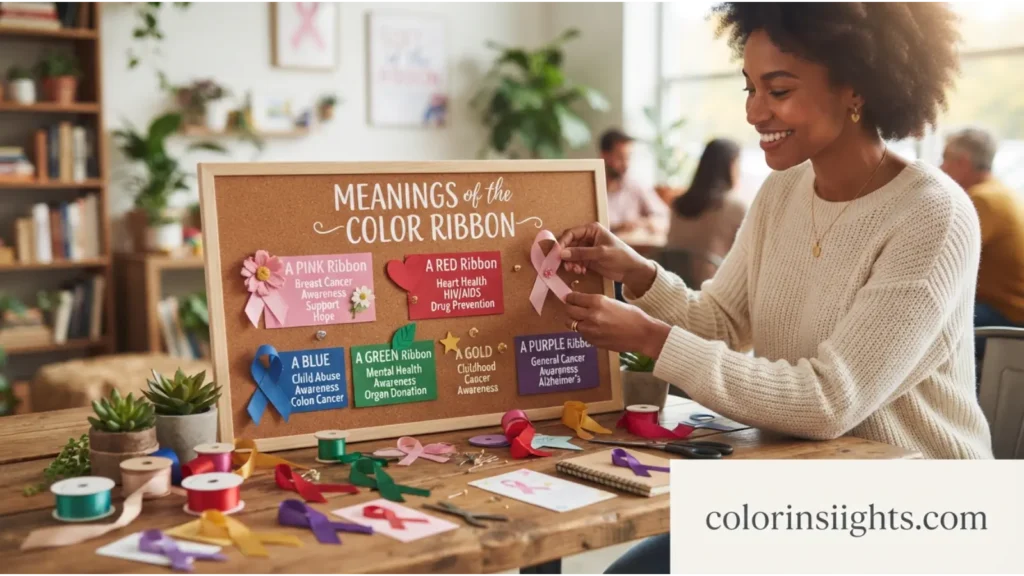
Meanings of the Color Ribbon
The meaning of a ribbon changes according to its color, organization, and purpose. A purple ribbon may represent domestic violence awareness in one campaign but epilepsy awareness in another. Therefore, context always matters.
Feng Shui
Although awareness ribbons are not traditional Feng Shui objects, their colors reflect Feng Shui energy principles.
- Associated element: Depends on the ribbon color (green—Wood, red—Fire, white—Metal, blue—Water, yellow—Earth).
- Energy symbolism: Encourages positive intention and healing.
- Best rooms: Meditation spaces, home offices, wellness rooms, and entryways.
- Recommended color combinations: White with green, blue with white, pink with soft gray, yellow with green.
- Decorating tips: Use ribbon colors as small accent pieces rather than overwhelming a room.
Marketing
Organizations use ribbon colors because they create immediate emotional recognition.
Applications include:
- Building trust and credibility
- Increasing awareness campaign visibility
- Encouraging donations
- Strengthening nonprofit branding
- Supporting public health initiatives
- Improving campaign recall
Famous organizations using awareness ribbons include:
- Susan G. Komen Foundation (pink ribbon)
- American Cancer Society (multiple ribbon colors)
- Alzheimer’s Association (purple ribbon)
- Mental Health America (green awareness campaigns)
- The Red Cross frequently incorporates red symbolism associated with care and humanitarian support.
Design
Ribbon colors play an important role in visual communication.
They are commonly used in:
- Healthcare websites
- Hospital branding
- Charity logos
- Educational materials
- Infographics
- Event banners
- Social media awareness campaigns
In UX and graphic design, ribbon icons quickly communicate the purpose of awareness content while maintaining a clean, recognizable appearance.
Fashion
Many people wear ribbon colors as meaningful accessories.
Fashion applications include:
- Awareness pins
- Bracelets
- Scarves
- T-shirts
- Lapel pins
- Jewelry
- Sports uniforms during awareness months
Advantages include expressing support and starting conversations about important causes.
Disadvantages include misunderstanding when a ribbon color represents multiple organizations.
For example, wearing a pink ribbon during October immediately communicates support for breast cancer awareness, while a green ribbon may prompt discussion about mental health or organ donation depending on context.
Color Associations Are Not Universal
Western Cultures
In North America and Europe, awareness ribbons are closely linked with charitable campaigns, fundraising events, healthcare initiatives, and advocacy organizations. Color meanings are generally standardized through national awareness months.
Eastern Cultures
Some Asian countries recognize international ribbon campaigns while also adapting colors to local traditions. White may symbolize mourning in several Eastern cultures, affecting how awareness messages are interpreted.
Religious Traditions
Religious communities often associate ribbon colors with compassion, remembrance, hope, charity, and prayer. Churches, synagogues, mosques, and temples sometimes distribute ribbons during memorial or community support events.
Historical Interpretations
The modern awareness ribbon became globally recognized after the red ribbon campaign for HIV/AIDS awareness in the early 1990s. Since then, many organizations have adopted unique ribbon colors for specific causes.
Modern Global Interpretations
Today, awareness ribbons are recognized worldwide through social media campaigns, fundraising events, nonprofit organizations, schools, sports leagues, and government awareness programs. However, meanings may still vary depending on the campaign sponsoring the ribbon.
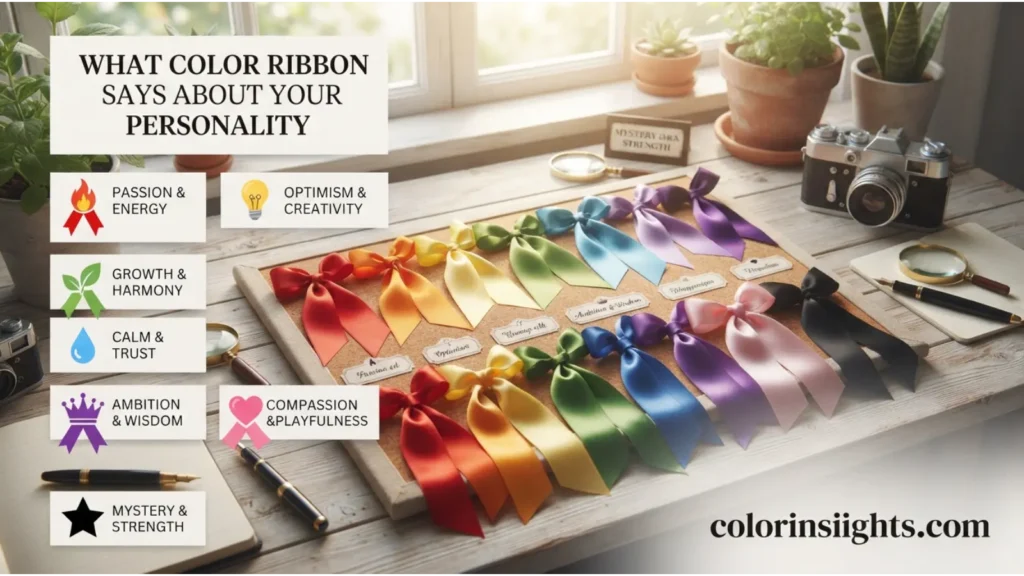
What Color Ribbon Says About Your Personality
Choosing to wear an awareness ribbon usually reflects personal values rather than fixed personality traits. Color preferences should never be used to define someone’s character with certainty.
People who frequently wear awareness ribbons are often associated with:
Strengths
- Compassionate
- Caring
- Community-minded
- Generous
- Supportive
- Empathetic
- Responsible
Weaknesses
- Emotionally sensitive
- May become overwhelmed by others’ struggles
- Can experience advocacy fatigue
- Sometimes overly self-sacrificing
Social Behavior
They often enjoy volunteering, helping others, participating in community events, and encouraging positive social change.
Work Style
Many value teamwork, service, ethical decision-making, and meaningful contributions over personal recognition.
Relationships
Supportive individuals often prioritize kindness, loyalty, understanding, and emotional connection.
Emotional Tendencies
They may experience strong empathy and feel deeply connected to causes affecting family, friends, or society.
Remember that personality is influenced by many biological, social, and environmental factors. Wearing or preferring a ribbon color is only one small expression of personal values.
FAQs:
What defines a color ribbon?
A color ribbon is a symbolic loop of colored fabric used to represent awareness, remembrance, advocacy, or support for a specific cause.
What does the color ribbon symbolize?
It symbolizes unity, compassion, hope, solidarity, education, and public awareness.
Why is the color ribbon important?
It increases visibility for important health, humanitarian, and social issues while encouraging education and community involvement.
Is there one official meaning for every ribbon color?
No. Many ribbon colors represent multiple causes depending on the organization or country.
What emotions do color ribbons represent?
Hope, empathy, courage, resilience, remembrance, compassion, healing, and support.
What is the spiritual meaning of color ribbons?
Spiritually, ribbons often represent healing, faith, protection, transformation, remembrance, and compassion.
Which ribbon color is most recognized?
The pink ribbon is one of the most widely recognized symbols because of its association with breast cancer awareness.
What colors pair well with awareness ribbon colors?
Neutral colors such as white, black, gray, and navy often complement awareness ribbon colors while keeping the focus on the message.
What does wearing an awareness ribbon say about a person?
It generally suggests empathy, support for a cause, or personal connection to the issue represented by the ribbon.
Why do some ribbon colors have multiple meanings?
Different nonprofit organizations independently adopted ribbon colors over time, resulting in multiple causes sharing the same color.
Conclusion
Color ribbon meanings extend far beyond simple color symbolism. They represent awareness, compassion, remembrance, advocacy, and hope for millions of people worldwide. Whether supporting medical research, honoring loved ones, promoting mental health, or encouraging social change, awareness ribbons communicate powerful messages with remarkable simplicity.
While individual ribbon colors may vary between organizations and cultures, their shared purpose remains constant: bringing people together, encouraging understanding, and inspiring meaningful action. Understanding color ribbon meanings helps individuals recognize these important symbols and appreciate the stories, communities, and causes they represent.