Flags communicate identity, warning, belonging, values, and emotion through shapes, symbols, patterns, and colors. Different color flag meanings can range from national identity and cultural heritage to safety warnings, maritime signals, sports traditions, and social movements.
There is no universal dictionary in which every color always means the same thing. For example, red can suggest danger in a beach-warning system, while it may represent courage, sacrifice, or historical identity on a national flag. Research also shows that people form systematic color-emotion associations, but these associations are influenced by shade, brightness, saturation, culture, and context.
Quick answer:
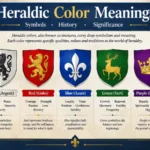
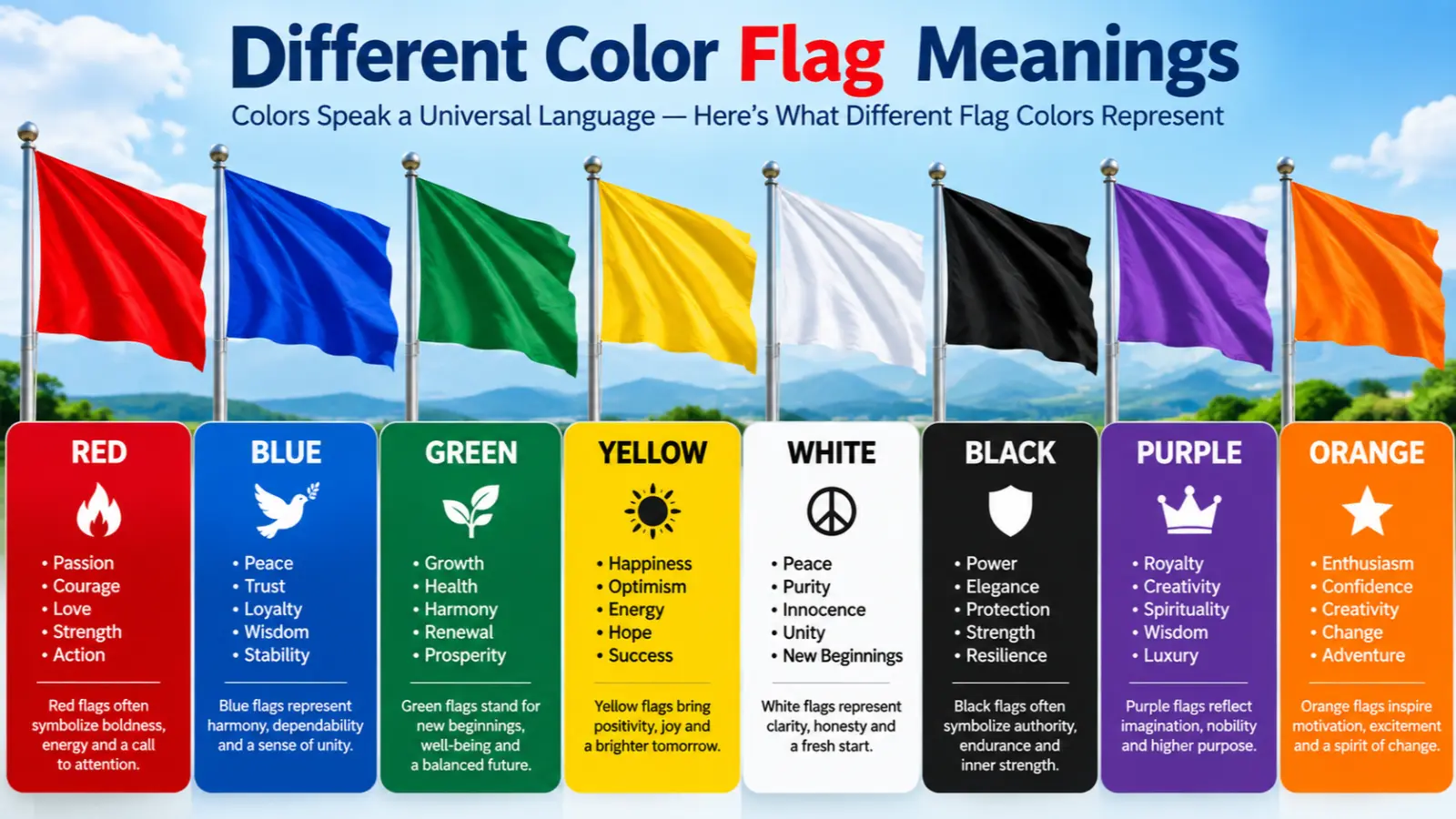
Red commonly communicates danger, energy, sacrifice, or action; blue often suggests peace, stability, water, or freedom; green is frequently associated with nature, growth, and safety; yellow or gold can represent sunlight, prosperity, or caution; white can suggest peace or purity; black can communicate strength, mourning, resistance, or formality; and purple may suggest spirituality, royalty, or distinction. However, a flag’s official meaning always depends on the particular flag and its historical context.
What Do Different Flag Colors Symbolize?
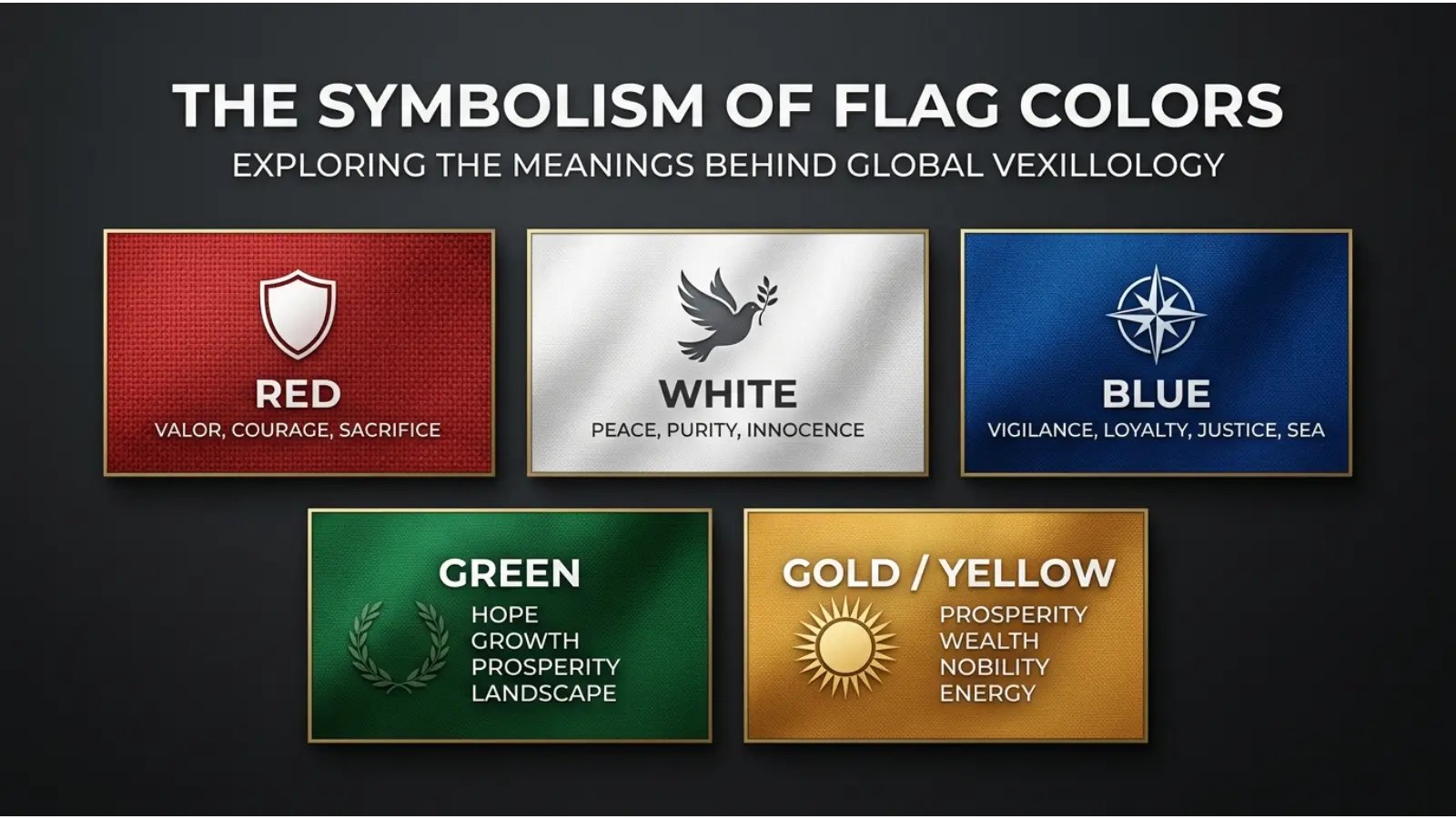
The meaning of a color on a flag is best understood as symbolism rather than a fixed psychological rule. A color may acquire meaning from nature, religion, political history, military traditions, national identity, or practical signaling.
Flags have been used for thousands of years as visual identifiers. Modern vexillology—the study of flags—examines how colors, designs, symbols, and historical circumstances combine to create meaning. The Smithsonian notes that flags are more than pieces of cloth: they can express history and culture and communicate identity across distance.
Common Flag Color Meanings at a Glance
| Color | Common symbolic associations | Common practical associations |
|---|---|---|
| Red | Courage, sacrifice, blood, passion, strength, revolution | Danger, stop, high hazard |
| Blue | Peace, sky, water, loyalty, freedom, stability | Information, maritime communication, calm |
| Green | Nature, fertility, growth, renewal, hope | Safe or lower-risk conditions in some systems |
| Yellow/Gold | Sun, prosperity, optimism, wealth, energy | Caution or warning in safety systems |
| White | Peace, purity, honesty, surrender, clarity | Visibility, neutrality, formal signaling |
| Black | Strength, mourning, resistance, authority, identity | Danger or prohibition in some systems |
| Orange | Energy, visibility, enthusiasm, warning | High visibility and safety |
| Purple | Spirituality, dignity, mystery, transformation | Special warnings in some beach systems |
| Pink | Compassion, affection, tenderness, identity | Often used for social or awareness symbolism |
| Brown | Earth, land, stability, heritage | Less common as a standardized signal |
These are general associations, not universal definitions. Scientific research has found recurring color-emotion patterns, but most associations are many-to-many rather than one color producing one emotion. Lightness, saturation, hue, and cultural experience all matter.
Psychological Characteristics of Different Flag Colors
Color psychology examines how people perceive and associate colors with emotions, concepts, and behavior. It is important to distinguish color associations from proven behavioral effects. A person may associate red with danger without necessarily becoming aggressive when exposed to red.
A large systematic review covering 132 empirical articles and more than 42,000 participants found systematic relationships between colors and emotional concepts. Red was associated with both positive and negative high-arousal emotions, yellow and orange with positive high-arousal emotions, and blue, green, and white with more positive, lower-arousal emotions. Black and gray showed more negative associations in the reviewed literature.
Red
Emotional associations
- Passion
- Love
- Anger
- Courage
- Urgency
- Strength
Psychological effects
- Often attracts visual attention.
- Can communicate intensity and urgency.
- May create a stronger sense of arousal than quieter colors.
Positive responses
- Energy
- Confidence
- Excitement
- Determination
Negative responses
- Anger
- Aggression
- Danger
- Stress
Impact on mood and behavior: Red is particularly powerful when used in warning flags. In beach safety systems, for example, a red flag can indicate hazardous swimming conditions. The National Weather Service describes a single red beach flag as a high-hazard warning in relevant U.S. systems.
Blue
Blue is commonly associated with:
- Calmness
- Stability
- Trust
- Water
- Sky
- Loyalty
- Freedom
Research frequently finds blue associated with positive and relatively low-arousal emotions.
In flags, blue may therefore contribute an impression of stability, openness, or connection with natural elements such as sky and water. However, the actual meaning must be established from the individual flag’s history.
Green
Green commonly evokes:
- Nature
- Growth
- Renewal
- Balance
- Hope
- Peace
- Vitality
In practical warning systems, green often communicates a relatively favorable condition. U.S. National Weather Service beach information, for example, describes green as indicating generally safe or low-hazard conditions, although local systems can differ.
Yellow and Gold
Yellow often produces associations with:
- Happiness
- Optimism
- Warmth
- Sunlight
- Energy
- Attention
Gold can additionally suggest:
- Wealth
- Achievement
- Prestige
- Precious materials
- Prosperity
Yellow also has an important practical function because its high visibility makes it effective for caution and warning signals.
White
White is often associated with:
- Peace
- Purity
- Simplicity
- Clarity
- Innocence
- Neutrality
Research has found white and other light colors frequently associated with positive emotional concepts.
Black
Black can communicate:
- Strength
- Authority
- Formality
- Mourning
- Resistance
- Mystery
- Power
Its associations can also become negative, including:
- Death
- Fear
- Threat
- Darkness
- Isolation
The same color can therefore carry very different emotional meanings depending on the flag and culture.
Orange
Orange combines some of the visual energy associated with red and yellow. It can suggest:
- Enthusiasm
- Energy
- Creativity
- Warmth
- Visibility
- Warning
Because orange is visually prominent, it is frequently useful in safety clothing, markers, and high-visibility applications.
Purple
Purple is often associated with:
- Spirituality
- Mystery
- Transformation
- Luxury
- Dignity
- Royal associations
In some beach-warning systems, purple has a very different practical meaning: the U.S. National Weather Service notes that a purple flag can indicate dangerous marine life.
Pink
Pink can suggest:
- Compassion
- Affection
- Gentleness
- Care
- Playfulness
Its meaning can become particularly context-dependent when used in social campaigns, awareness flags, fashion, or identity-related designs.
Spiritual Meaning of Different Flag Colors
Spiritual color symbolism is highly dependent on religion, tradition, geography, and historical interpretation. A color that represents purity in one tradition may represent mourning or another concept elsewhere.
Red — Power and Transformation
Red can symbolize:
- Life
- Blood
- Fire
- Passion
- Courage
- Sacrifice
- Transformation
- Vital energy
Its connection with fire and blood has made it a powerful spiritual and ceremonial color across many traditions.
Blue — Wisdom and Transcendence
Blue may symbolize:
- Sky
- Water
- Wisdom
- Peace
- Spiritual depth
- Protection
- Eternity
Its association with the sky and ocean can make blue a visual metaphor for vastness and transcendence.
Green — Renewal and Healing
Green can symbolize:
- Nature
- Growth
- Fertility
- Renewal
- Healing
- Hope
- Balance
Its connection with vegetation makes it a particularly common symbolic color for life and renewal.
Yellow and Gold — Enlightenment and Abundance
Yellow or gold may represent:
- Sunlight
- Illumination
- Wisdom
- Prosperity
- Divine radiance
- Achievement
- Hope
Gold has often been used in sacred art and ceremonial objects because of its visual association with preciousness and light.
White — Purity and Peace
White can symbolize:
- Purity
- Peace
- Holiness
- Innocence
- Clarity
- New beginnings
- Sincerity
However, white can also represent mourning in some cultural traditions, demonstrating why spiritual color interpretation cannot be separated from context.
Black — Mystery and Protection
Black may symbolize:
- Mystery
- The unknown
- Authority
- Protection
- Mourning
- Endurance
- Resistance
In spiritual contexts, black may represent either darkness and loss or strength and protection.
Purple — Spirituality and Transformation
Purple is frequently associated with:
- Spiritual authority
- Mystery
- Transformation
- Meditation
- Royal dignity
- Sacred ceremony
Orange — Vitality and Renewal
Orange may communicate:
- Vital energy
- Creativity
- Sacrifice
- Warmth
- Spiritual enthusiasm
- Renewal
Important: These are interpretive associations, not universal religious rules. Religious symbolism should always be understood within the particular tradition.
Positive and Negative Meanings of Different Flag Colors
Positive Meanings
Purity
White is commonly used to communicate purity, peace, simplicity, and sincerity.
Example: White may be used in ceremonial flags where the intended message emphasizes peace or reconciliation.
Peace
White and blue are frequently associated with peaceful or calm ideas.
Example: A white flag has historically become a widely recognized symbol of surrender or a desire to negotiate.
Simplicity
White, blue, and green can create clean and uncomplicated visual systems.
Example: A minimalist flag may use a limited palette to make its identity easy to recognize from a distance.
Clarity
Strong contrasts such as black-and-white or blue-and-white improve visual legibility.
Example: High-contrast flag designs can remain recognizable when viewed from far away.
Freshness
Green and light blue often evoke natural environments.
Example: Environmental organizations may use green to connect their identity with nature and sustainability.
Hope
Green and yellow can suggest renewal, sunlight, optimism, and a positive future.
Example: A national or community flag may use green to evoke growth or a connection with land.
Balance
Green and blue can visually communicate stability and natural harmony.
Example: A conservation-related flag may combine green with blue to connect land and water.
Harmony
Multiple colors can communicate unity when their arrangement is intentionally balanced.
Example: South Africa’s national flag uses six colors within a design whose central structure has been interpreted as the convergence of diverse elements and movement toward unity. The South African government specifically cautions that its individual colors should not be assigned universal meanings.
Negative Meanings
Emptiness
White can sometimes communicate emptiness or absence, especially when used without supporting visual elements.
Example: An entirely white design may appear sterile or unfinished depending on its application.
Isolation
Blue, gray, or white can sometimes suggest emotional distance when used in very cool or desaturated combinations.
Example: A flag dominated by pale blue-gray may feel distant rather than energetic.
Coldness
Cool colors can create a visually cool atmosphere.
Example: A flag using icy blue and white may feel formal or distant compared with a red-orange palette.
Sterility
White is useful for cleanliness but can become associated with clinical sterility when overused.
Example: A highly white institutional environment may feel medical rather than welcoming.
Boredom
Neutral colors can lose emotional energy if there is insufficient contrast.
Example: A flag using only muted gray tones may be difficult to remember.
Emotional Distance
Dark blue, gray, black, and desaturated colors may communicate seriousness or distance.
Example: A formal organization might deliberately use dark colors to communicate authority rather than friendliness.
Perfectionism
Highly controlled monochromatic designs can visually suggest precision and order.
Example: A black-and-white flag with rigid geometry may communicate discipline and exactness, but it may also appear less approachable.
Meanings of Different Flag Colors
The meaning of a flag color changes according to context. This is one of the most important principles in understanding color symbolism.
A red stripe on a national flag is not automatically a warning. A red beach flag is not necessarily a symbol of patriotism. A blue maritime signal does not necessarily mean peace. The system determines the meaning.
National and Cultural Flags
National flags usually develop their meanings through history, geography, political movements, religion, cultural traditions, and national narratives.
For example, Ukraine’s official national information portal explains the country’s blue-and-yellow flag through the traditional image of blue sky above golden wheat fields while also connecting the flag with national identity, dignity, and freedom.
South Africa provides another important example. Its government explicitly states that its six colors should not be assigned universal individual meanings; instead, the design and colors reflect elements of the country’s flag history, while the central form can be interpreted as convergence and unity.
This demonstrates why saying “green always means nature” or “red always means blood” is too simplistic.
Beach and Water-Safety Flags
In the United States, beach flag meanings are practical rather than primarily psychological.
Common meanings include:
- Green: Lower or generally safe conditions
- Yellow: Caution or moderate hazard
- Red: High or hazardous conditions
- Double red: Water closed in systems that use this designation
- Purple: Dangerous marine life may be present
The National Weather Service emphasizes that beach-warning systems are not identical everywhere and that meanings can vary by location. Beachgoers should read local signs and follow lifeguard instructions rather than relying on a color remembered from another beach.
Maritime Signal Flags
Maritime signal flags demonstrate that color combinations can function as a specialized language.
For example, the International Code of Signals includes:
- Q: Solid yellow
- O: Diagonal yellow and red
- V: White with a red diagonal cross
- W: Blue with a white border and red center
- X: White with a blue cross
These meanings are not simply psychological color associations; they are defined signals within a maritime communication system.
Sports and Racing Flags
Sports flags may use colors as standardized signals.
For example, racing organizations can use flags to communicate:
- Danger
- Track conditions
- Race stoppage
- Passing restrictions
- Competitor instructions
The exact meanings differ between sports and governing bodies, so the relevant rulebook is more authoritative than a general color-symbolism chart.
Feng Shui
Traditional Feng Shui assigns colors to the Five Elements. These associations are part of a traditional philosophical system rather than conclusions established by modern color psychology.
Common associations include:
- Red — Fire: energy, activation, warmth
- Green — Wood: growth, renewal, vitality
- Yellow — Earth: stability, grounding, nourishment
- White — Metal: clarity, precision, cleanliness
- Black/Blue — Water: depth, movement, reflection
Best Rooms
Traditional Feng Shui practitioners may use:
- Green in living spaces or areas associated with growth.
- Blue in spaces intended to feel calm and reflective.
- Yellow in areas where warmth and stability are desired.
- White in clean, organized spaces.
- Red as an accent rather than necessarily covering an entire room.
Recommended Color Combinations
Balanced combinations can include:
- Green + natural wood tones
- Blue + white
- Yellow + earthy neutrals
- Red + white
- Black + metallic or white accents
Home Decorating Tips
Use strong colors strategically. A bright red wall can dominate a room, while a red cushion, artwork, or decorative object can create a smaller focal point. Likewise, green can provide a natural atmosphere without overwhelming a neutral interior.
Marketing
Color is an important part of brand identity, packaging, advertising, and visual recognition. However, color alone does not guarantee a specific consumer response.
Branding Psychology
Brands may select colors to create associations such as:
- Red — energy and urgency
- Blue — stability and trust
- Green — nature and sustainability
- Yellow — optimism and visibility
- Black — sophistication and authority
- Purple — creativity or premium positioning
Research supports the existence of systematic color-emotion associations, but it also emphasizes that context and visual properties influence those associations.
Consumer Perception
Color can influence first impressions of a package, website, advertisement, or logo. Consumers interpret color alongside:
- Typography
- Shape
- Product category
- Photography
- Brand name
- Cultural expectations
- Price positioning
Trust Signals
Blue is frequently used by financial, technology, healthcare, and professional-service organizations because it can visually support associations with stability and reliability.
However, trust is not created by blue alone. Product quality, reputation, communication, and customer experience are much more consequential.
Product Packaging
Color helps consumers identify product categories quickly.
Examples include:
- Green for natural or environmentally positioned products
- Black for premium or luxury positioning
- Yellow for energetic or cheerful products
- White for clean or minimalist packaging
- Red for high-energy food and beverage categories
Advertising Applications
High-contrast colors can attract attention, while muted palettes may create a more sophisticated visual atmosphere.
Examples of familiar brand-color associations include:
- Coca-Cola — red
- IBM — blue
- Starbucks — green
- McDonald’s — red and yellow
- Nike — predominantly black and white in many identity applications
The meaning comes from the entire brand system, not simply from the color itself.
Design
Interior Design
Color can influence the perceived atmosphere of a room.
- Blue can create a calm visual environment.
- Green can introduce natural associations.
- Yellow can add visual warmth.
- Red can create energy and emphasis.
- White can increase the perception of openness.
- Black can add contrast and visual weight.
Graphic Design
Flags and logos require strong visual communication. Designers consider:
- Contrast
- Hue
- Saturation
- Brightness
- Shape
- Repetition
- Visual hierarchy
A color that looks attractive on a screen may lose clarity when printed or viewed from a distance.
Web Design
Color can establish:
- Brand recognition
- Navigation hierarchy
- Call-to-action emphasis
- Background contrast
- Accessibility
- Emotional tone
For websites, color should never be the only way to communicate important information because users with color-vision deficiencies may not distinguish certain colors reliably.
User Experience
UX designers use color to distinguish states such as:
- Success
- Warning
- Error
- Information
- Disabled controls
A common pattern is green for success, yellow for warning, and red for error. However, these should be reinforced with text, icons, or other indicators.
Minimalist Aesthetics
White, black, gray, and muted colors are frequently used in minimalist design because they provide visual structure without overwhelming the content.
A single accent color can then attract attention to a specific action or element.
Fashion
Clothing Symbolism
Color can influence how an outfit is perceived.
- Red may appear energetic or attention-grabbing.
- Blue can appear calm and professional.
- Green can appear natural or refreshing.
- Black can appear formal and sophisticated.
- White can appear clean and minimal.
- Yellow can appear cheerful and expressive.
- Purple can appear creative or distinctive.
These are social impressions rather than fixed personality judgments.
Seasonal Use
Traditional fashion palettes often change seasonally:
- Light colors are commonly associated with spring and summer.
- Earth tones are frequently associated with autumn.
- Darker neutrals are common in winter collections.
Fashion trends, however, regularly challenge these conventions.
Styling Effects
Color can change perceived visual balance.
Dark colors may create visual weight, while lighter colors can appear more open or visually expansive. High-saturation colors tend to attract attention more strongly than muted colors.
Personality Impressions
People may infer personality from clothing color, but these judgments are not reliable personality tests.
For example:
- Red clothing may be perceived as confident.
- Blue may be perceived as dependable.
- Black may be perceived as sophisticated.
- Green may be perceived as relaxed.
- Yellow may be perceived as cheerful.
Advantages and Disadvantages
Advantages of strong colors:
- High visibility
- Strong personal expression
- Memorable appearance
- Clear visual focal point
Potential disadvantages:
- May attract more attention than intended
- Can clash with other colors
- Cultural meanings may differ
- Very saturated colors can feel visually intense
Color Associations Are Not Universal
Color symbolism is influenced by culture, religion, history, language, geography, and personal experience. Research has identified both cross-cultural similarities and meaningful differences in color-emotion associations.
Western Cultures
In many Western contexts:
- White is commonly associated with weddings, purity, and peace.
- Black can be associated with mourning, formality, and sophistication.
- Red may represent love, danger, courage, or urgency.
- Blue often communicates stability or calm.
- Green can suggest nature or environmental awareness.
These are broad tendencies, not universal rules.
Eastern Cultures
Eastern cultures contain enormous diversity, so “Eastern color meaning” should never be treated as a single system.
For example, color traditions in South Asia can connect colors with religion, festivals, social customs, and ceremonial life. Smithsonian research on Holi describes green in some Indian traditions as connected with nature and happiness, while yellow has associations with sunlight, religious imagery, and cultural traditions.
Religious Traditions
Religious symbolism can give colors highly specific meanings.
White may represent purity or holiness in one tradition, while another tradition may associate white with mourning. Gold can represent divine light or sacred value. Purple may be associated with religious authority or ceremony.
The safest interpretation is therefore to identify the specific religious tradition before assigning a meaning.
Historical Interpretations
Colors can acquire meanings from historical events.
A flag’s colors may represent:
- A revolution
- A royal dynasty
- A geographic landscape
- Religious identity
- Military history
- Independence
- A liberation movement
- A previous national flag
This is why historical research is essential when explaining a national flag.
Modern Global Interpretations
Global media has created some increasingly recognizable associations. Red, yellow, green, blue, and black can often communicate broad emotional concepts across cultures, but local meanings remain important.
The study of color terminology itself demonstrates cultural variation: languages differ in how they categorize and name colors, even though researchers have also identified recurring patterns in basic color categories.
What Different Flag Colors Say About Your Personality
People sometimes use color preferences to describe personality traits. These descriptions can be entertaining and useful for self-reflection, but they should not be treated as scientifically validated personality tests.
A person’s favorite flag color may reflect:
- Personal experience
- Cultural background
- Fashion preferences
- Memories
- Aesthetic taste
- Emotional associations
- Social identity
Red Preferences
Often associated with:
- Confidence
- Energy
- Assertiveness
- Passion
- Action orientation
Possible challenges may include appearing intense or impatient.
Blue Preferences
Often associated with:
- Calmness
- Reliability
- Reflection
- Preference for stability
- Thoughtfulness
Possible challenges may include appearing reserved or emotionally distant.
Green Preferences
Often associated with:
- Balance
- Nature orientation
- Growth
- Patience
- Harmony
Possible challenges may include resistance to sudden change or a strong preference for stability.
Yellow Preferences
Often associated with:
- Optimism
- Creativity
- Curiosity
- Sociability
- Playfulness
Possible challenges may include appearing restless or overly stimulated in some contexts.
White Preferences
Often associated with:
- Organization
- Simplicity
- Clarity
- Minimalism
- Preference for order
Possible challenges may include perfectionistic tendencies or a dislike of visual clutter.
Black Preferences
Often associated with:
- Independence
- Sophistication
- Strength
- Privacy
- Authority
Possible challenges may include appearing intimidating or emotionally reserved.
Purple Preferences
Often associated with:
- Imagination
- Individuality
- Creativity
- Spiritual curiosity
- Appreciation for uniqueness
Possible challenges may include appearing unconventional or highly selective.
Orange Preferences
Often associated with:
- Enthusiasm
- Sociability
- Adventure
- Energy
- Creativity
Possible challenges may include impatience or a preference for stimulation.
Important perspective: Color preference does not determine personality. Modern psychological research supports recurring color-emotion associations, but those associations should not be converted into a diagnosis or definitive personality profile.
Frequently Asked Questions
What defines different flag colors?
Different flag colors are defined by the particular flag system in which they appear. National flags may use colors to represent history, geography, identity, or cultural values, while safety flags use colors as practical signals.
What does red flag color symbolize?
Red can symbolize courage, sacrifice, passion, strength, danger, or urgency. In U.S. beach-warning systems, a red flag generally indicates hazardous conditions, although exact systems can vary by location.
Why is flag color important?
Flag colors make symbols recognizable and memorable. They can communicate identity, historical narratives, warnings, group membership, or cultural values without requiring written language.
Is blue a warm or cool color?
Blue is conventionally classified as a cool color. It is often associated with water, sky, calmness, stability, and distance.
What emotions do different flag colors represent?
Common associations include red with high-energy emotions, yellow with joy and optimism, blue and green with calmer positive emotions, white with positive or peaceful concepts, and black with more intense or negative associations. Scientific research shows that these relationships are tendencies rather than universal rules.
What do flag colors mean spiritually?
Spiritual meanings vary by religion and tradition. White may represent purity, blue wisdom or transcendence, green renewal, red life or sacrifice, gold illumination, black mystery or mourning, and purple spirituality or transformation.
What colors pair well on a flag?
Effective combinations depend on the purpose of the flag. Common visually strong combinations include:
- Red and white
- Blue and white
- Green and white
- Black and yellow
- Blue and yellow
- Red, white, and blue
- Green, yellow, and black
Contrast is particularly important when a flag must be recognized from a distance.
What does liking a particular flag color say about a person?
Color preference may reflect aesthetic taste, cultural experience, memories, or emotional associations. It can be used for self-reflection, but it cannot reliably determine someone’s personality.
What does a green flag mean?
In many U.S. beach-warning systems, green indicates relatively favorable or low-risk water conditions. In national and cultural flags, green may instead represent nature, land, growth, religion, or historical identity. Always check the specific flag system.
What does a yellow flag mean?
Yellow commonly communicates caution or warning in safety systems. At many U.S. beaches, a yellow flag indicates moderate hazard or that caution is required. In national flags, yellow or gold can instead represent sunlight, wealth, prosperity, land, or cultural heritage.
What does a white flag mean?
A white flag is widely recognized as a symbol of surrender or a desire for negotiation in historical and military contexts. More generally, white can symbolize peace, purity, neutrality, or clarity.
Do flag colors have universal meanings?
No. Flag colors do not have a universal dictionary. South Africa’s government, for example, explicitly states that individual colors or color combinations in its national flag can have different meanings to different people and that no universal symbolism should be attached to them.
Conclusion
Different color flag meanings are best understood as a combination of visual psychology, cultural symbolism, historical context, and practical communication. Red may signal danger on a beach but represent sacrifice or identity on a national flag. Green can communicate safety in one system and nature or religious meaning in another. Blue can suggest calmness, water, freedom, or national heritage, while white may represent peace, purity, surrender, or mourning depending on the culture. The most reliable way to interpret a flag is therefore to ask three questions: What kind of flag is it? What culture or organization created it? What historical or practical system gives its colors meaning? Color psychology can explain broad emotional associations, but the flag’s documented history and official interpretation should take priority.