Family crest color meanings have played an important role in heraldry for centuries, representing the values, achievements, beliefs, and aspirations of noble families, clans, and organizations. In traditional heraldry, every color—known as a tincture—carries symbolic significance rather than serving as mere decoration.
These colors communicate virtues such as courage, loyalty, wisdom, generosity, and honor, making family crests visual representations of identity and legacy. While interpretations have evolved over time and can vary by region, heraldic color symbolism remains influential in genealogy, historical research, and modern logo design.
Quick Answer:
Family crest color meanings symbolize personal virtues, family heritage, social ideals, and moral character. Each heraldic color represents unique qualities such as bravery, faithfulness, justice, purity, prosperity, or perseverance.
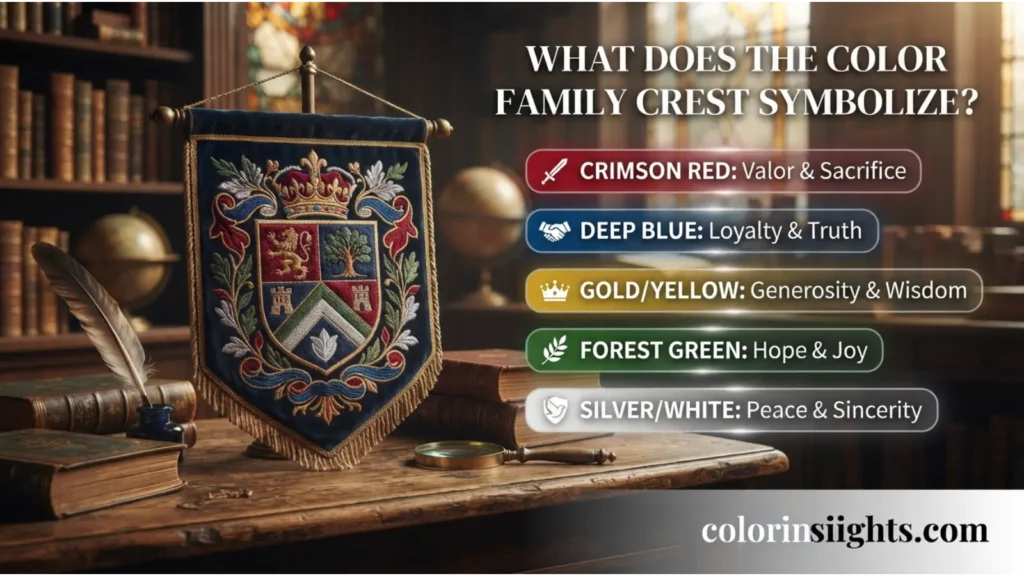
What Does the Color Family Crest Symbolize?
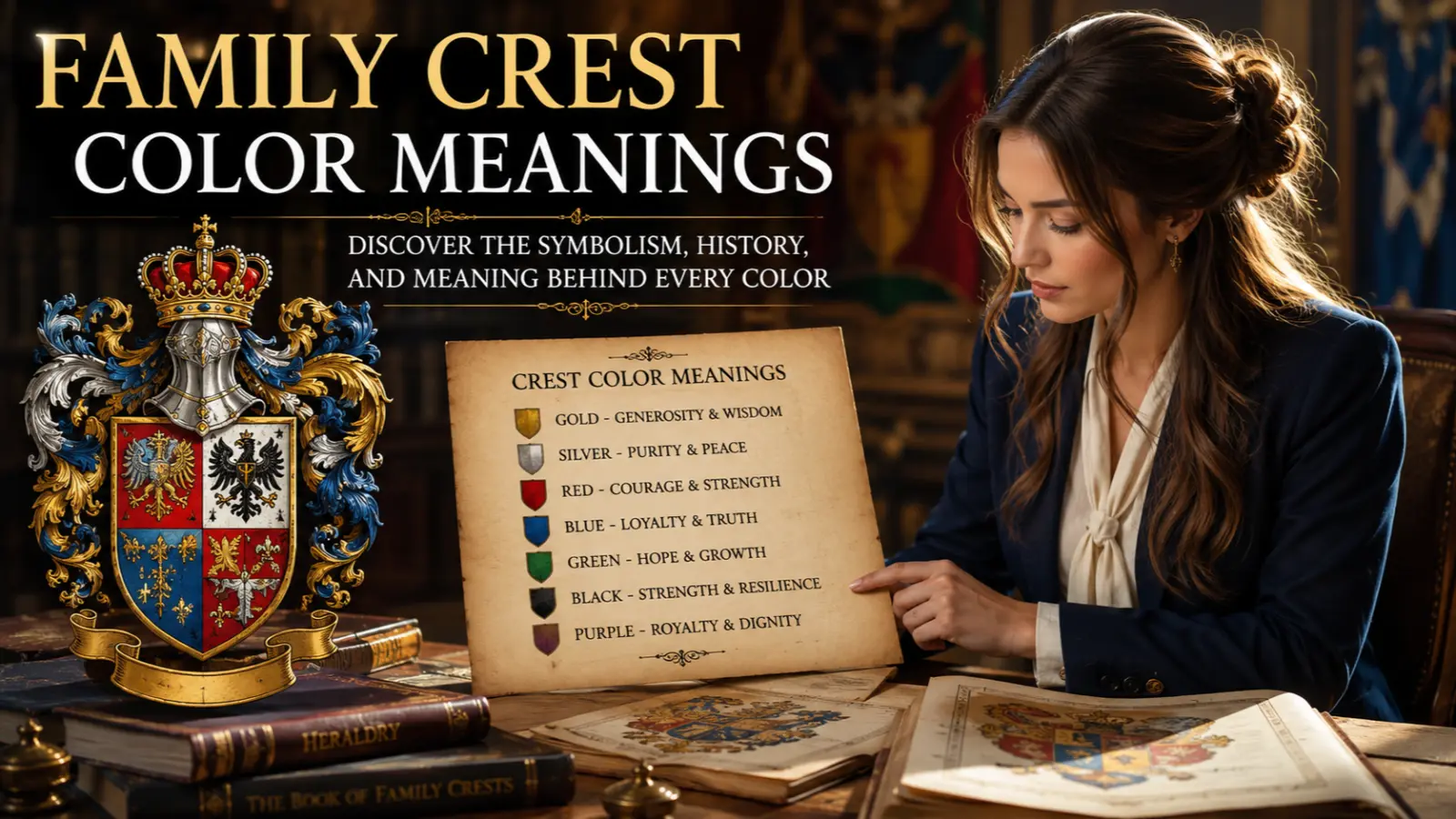
Unlike a single color psychology topic, family crest color symbolism refers to the collective meanings assigned to the traditional heraldic colors used in coats of arms. Medieval heralds carefully selected colors to communicate the reputation and values of a family.
The most common heraldic colors include:
- Gold (Or): Generosity, wealth, wisdom, honor
- Silver or White (Argent): Purity, sincerity, peace
- Red (Gules): Courage, military strength, sacrifice
- Blue (Azure): Loyalty, truth, justice
- Green (Vert): Hope, growth, joy, renewal
- Black (Sable): Constancy, determination, wisdom
- Purple (Purpure): Royalty, dignity, sovereignty
- Orange (Tenné): Ambition, endurance (rare)
- Maroon (Sanguine): Patience and resilience (rare)
Rather than reflecting personality alone, these colors traditionally represented ideals that families wished to preserve across generations.
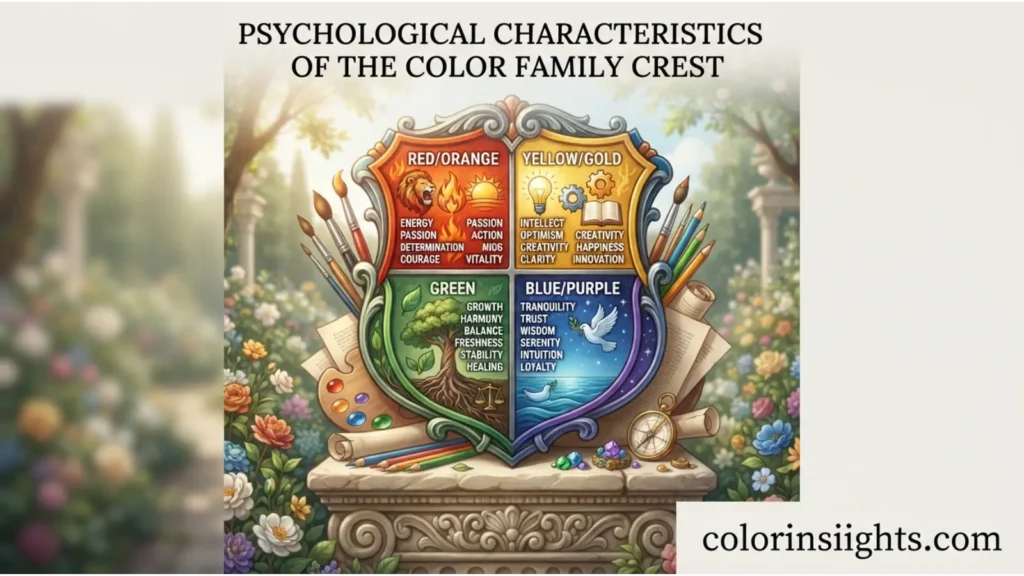
Psychological Characteristics of the Color Family Crest
Although heraldic colors originated long before modern psychology, many of their traditional meanings closely align with contemporary color psychology.
Emotional Associations
Different family crest colors evoke different emotions:
- Gold inspires confidence and success.
- Blue creates feelings of trust and reliability.
- Red stimulates courage and determination.
- Green promotes optimism and balance.
- White conveys honesty and simplicity.
- Black suggests authority and resilience.
- Purple communicates prestige and wisdom.
Psychological Effects
Family crest colors influence how viewers perceive a family or institution.
- Bright metallic colors attract attention.
- Cool colors create stability.
- Warm colors communicate action and energy.
- Dark colors project seriousness and authority.
Positive Emotional Responses
People commonly associate heraldic colors with:
- Honor
- Pride
- Security
- Heritage
- Nobility
- Respect
- Tradition
- Leadership
Negative Emotional Responses
Depending on context, certain colors may also suggest:
- Aggression (red)
- Excessive pride (gold)
- Mystery (black)
- Emotional distance (blue)
- Jealousy (green)
- Elitism (purple)
Impact on Mood and Behavior
Heraldic colors often encourage:
- Respect for history
- Confidence in institutions
- Appreciation of tradition
- Emotional connection to ancestry
- Cultural identity
Typical Human Reactions
Most people instinctively perceive family crest colors as symbols of:
- Authenticity
- Heritage
- Stability
- Prestige
- Honor
- Historical importance
Spiritual Meaning of the Color Family Crest
Many heraldic colors also carry spiritual symbolism that overlaps with religious traditions and philosophical beliefs.
Holiness
- White symbolizes purity and divine grace.
- Gold often represents heavenly glory.
Wisdom
- Blue reflects truth and spiritual understanding.
- Purple symbolizes higher knowledge.
Purity
- Silver and white represent innocence.
- They often appear in religious heraldry.
Transformation
- Green symbolizes renewal and spiritual growth.
- Red may represent sacrifice leading to transformation.
Healing
- Green is associated with restoration.
- White symbolizes cleansing.
Protection
- Red historically represented warriors defending their people.
- Black sometimes symbolized steadfast protection.
Power
- Gold and purple traditionally represented rulers.
- Red reflected military authority.
Enlightenment
- Gold symbolizes divine wisdom.
- Blue reflects spiritual insight.
New Beginnings
- Green represents fresh starts.
- White symbolizes a clean path forward.
Eternity
- Gold’s lasting brilliance represents immortality.
- Blue symbolizes enduring faith and permanence.
Positive and Negative Meanings of the Color Family Crest
Positive Meanings
Family crest colors generally communicate admirable virtues.
- Purity: White symbolizes moral integrity.
- Peace: Silver often represents harmony.
- Simplicity: White emphasizes honesty.
- Clarity: Blue reflects truthfulness.
- Freshness: Green represents renewal.
- Hope: Green inspires optimism.
- Balance: Blue and green create stability.
- Harmony: Balanced color combinations reflect unity.
Real-World Examples
- Universities frequently use blue to inspire trust.
- Government seals often feature gold to symbolize authority.
- Religious organizations commonly incorporate white for purity.
- Military emblems often include red for courage.
Negative Meanings
No heraldic color has an entirely positive interpretation.
Emptiness
Excessive white may appear plain or lacking personality.
Isolation
Large amounts of blue may feel emotionally distant.
Coldness
Silver and white sometimes create an impersonal appearance.
Sterility
Minimalist white designs can seem clinical.
Boredom
Poor color combinations may appear lifeless.
Emotional Distance
Dark blue and black can appear overly formal.
Perfectionism
Gold and white together may communicate unrealistic standards.
Real-World Examples
- Luxury branding that overuses gold may appear arrogant.
- Corporate logos dominated by black may seem intimidating.
- Excessive white packaging can appear sterile rather than premium.
Meanings of the Color Family Crest
Family crest color meanings depend heavily on historical, cultural, and design context. The same color may represent military courage in one coat of arms while symbolizing spiritual devotion in another. Understanding heraldry requires interpreting colors alongside symbols, animals, shields, and mottos.
Feng Shui
Although heraldry and Feng Shui developed independently, similar symbolic themes can be observed.
Associated Elements
- Red — Fire
- Green — Wood
- Blue and Black — Water
- White — Metal
- Gold — Earth and Metal
Energy Symbolism
- Red encourages active energy.
- Blue promotes calm.
- Green supports growth.
- Gold attracts abundance.
Best Rooms
- Blue for offices
- Green for living rooms
- Red for dining spaces
- Gold for entryways
- White for bedrooms
Recommended Color Combinations
- Blue and gold
- Green and white
- Black and gold
- Red and silver
Decorating Tips
Use heraldic-inspired colors sparingly as accents through artwork, cushions, framed family crests, or decorative accessories rather than overwhelming entire rooms.
Marketing
Many businesses unknowingly rely on traditional heraldic color meanings.
Branding Psychology
- Blue builds trust.
- Red creates urgency.
- Green communicates sustainability.
- Gold suggests premium quality.
- Black conveys luxury.
Consumer Perception
Customers often associate heraldic colors with:
- Heritage
- Authenticity
- Excellence
- Stability
Trust Signals
Blue and gold frequently appear in finance, education, and government branding because they communicate credibility.
Product Packaging
Luxury packaging commonly combines:
- Black and gold
- White and silver
- Blue and gold
Advertising Applications
Brands use heraldic-inspired colors to communicate tradition and reliability.
Examples include:
- Rolex (green and gold)
- Ford (blue)
- Cadbury (purple)
- Ferrari (red)
- John Deere (green)
Design
Family crest color symbolism continues influencing modern design.
Interior Design
Heraldic colors create elegant traditional spaces.
Graphic Design
Designers use heraldic palettes for:
- Logos
- Badges
- Certificates
- Luxury branding
Web Design
Blue improves credibility.
Gold highlights premium features.
White improves readability.
User Experience
Balanced color contrast increases accessibility and trust.
Minimalist Aesthetics
Modern designers often simplify heraldic palettes while preserving symbolic meaning.
Fashion
Heraldic colors remain timeless in clothing.
Clothing Symbolism
- Red shows confidence.
- Blue represents professionalism.
- Green reflects natural elegance.
- Gold suggests luxury.
- White symbolizes sophistication.
Seasonal Use
- Green suits spring.
- White excels in summer.
- Red complements autumn.
- Black and gold dominate winter.
Styling Effects
Heraldic color combinations create refined, classic outfits.
Personality Impressions
Observers often perceive wearers as:
- Confident
- Reliable
- Sophisticated
- Successful
Advantages
- Timeless appearance
- Rich symbolism
- Easy coordination
Disadvantages
- Excessive gold may appear flashy.
- Too much black may seem intimidating.
Practical Example:
A navy blazer with gold accessories projects professionalism and authority, while a green tie can add freshness and balance.
Color Associations Are Not Universal
Western Cultures
European heraldry largely defines today’s family crest color meanings. Red symbolizes bravery, blue represents loyalty, and gold reflects generosity.
Eastern Cultures
Many Eastern traditions assign different meanings. For example, red often symbolizes celebration and prosperity, while white may represent mourning in several Asian cultures.
Religious Traditions
Christian symbolism often links white with holiness, purple with spiritual authority, green with eternal life, and gold with divine glory. Other faiths interpret these colors differently based on their own traditions.
Historical Interpretations
During the Middle Ages, heraldic colors indicated noble virtues, military service, and family honor. Their meanings were influenced by feudal society and chivalric ideals rather than modern psychology.
Modern Global Interpretations
Today, family crest colors are appreciated worldwide for genealogy, branding, education, and historical preservation. Modern audiences often blend traditional heraldic symbolism with contemporary color psychology.
What Family Crest Colors Say About Your Personality
Although color preferences cannot accurately determine personality, people are often drawn to heraldic colors that reflect their values and aspirations.
Strengths
Individuals who appreciate heraldic colors may value:
- Loyalty
- Integrity
- Leadership
- Tradition
- Responsibility
- Achievement
Weaknesses
Some may also display tendencies toward:
- Perfectionism
- Conservatism
- Stubbornness
- Pride
Social Behavior
They often enjoy preserving traditions, supporting family, and building lasting relationships.
Work Style
These individuals may prefer structured environments where reliability, discipline, and long-term planning are appreciated.
Relationships
They usually value trust, commitment, honesty, and mutual respect.
Emotional Tendencies
Many seek stability, purpose, and a strong sense of belonging. However, personality is shaped by many factors—including upbringing, culture, and life experiences—so favorite colors alone should never be used to draw firm psychological conclusions.
FAQs:
What defines family crest colors?
Family crest colors, known as heraldic tinctures, are traditional colors used in coats of arms to symbolize virtues, achievements, and family identity.
What do family crest colors symbolize?
They symbolize qualities such as courage, loyalty, purity, wisdom, generosity, justice, hope, and perseverance.
Why are family crest colors important?
They preserve family heritage, communicate moral values, and help identify noble or historical lineages.
Are family crest colors based on color psychology?
They originated before modern psychology, but many traditional meanings closely align with contemporary color psychology principles.
Which family crest color represents courage?
Red (Gules) is traditionally associated with courage, military strength, and sacrifice.
What is the spiritual meaning of family crest colors?
Spiritually, heraldic colors can represent holiness, protection, enlightenment, healing, transformation, eternal life, and divine wisdom.
What colors pair well in heraldic design?
Classic combinations include blue and gold, red and silver, black and gold, green and white, and purple with gold.
Can family crest colors have different meanings in different cultures?
Yes. Cultural, religious, and historical contexts influence how colors are interpreted around the world.
What do family crest colors say about a person?
People attracted to heraldic colors may appreciate honor, loyalty, and tradition, but color preference alone cannot accurately define personality.
Are heraldic colors still used today?
Yes. They remain popular in family genealogy, institutional emblems, universities, military insignia, sports logos, luxury branding, and ceremonial design.
Conclusion
Family crest color meanings are rooted in centuries of heraldic tradition, where each tincture was chosen to represent virtues, achievements, and family identity. Gold signifies generosity, red reflects courage, blue conveys loyalty, green symbolizes hope, white represents purity, black expresses resilience, and purple embodies dignity and wisdom.
While these interpretations originated in medieval Europe, they continue to influence modern branding, design, fashion, and genealogy. Understanding heraldic color symbolism provides valuable insight into historical identity while demonstrating how color remains a powerful visual language that communicates values, heritage, and character across generations.