Lotus color meanings represent some of the most profound symbols found in nature, combining beauty, resilience, spirituality, and emotional growth. Across cultures and religions, the lotus flower rises from muddy waters to bloom with remarkable elegance, making its colors powerful representations of purity, enlightenment, compassion, wisdom, and transformation.
Each lotus color carries its own unique symbolism, influencing emotions, artistic expression, branding, fashion, interior design, and spiritual practices. Understanding lotus color meanings helps people appreciate the flower’s deeper significance beyond its appearance.
Quick Answer:
Lotus color meanings generally symbolize purity, spiritual awakening, wisdom, compassion, hope, renewal, and personal transformation, with each lotus color conveying a distinct emotional and cultural message.
What Does the Color Lotus Symbolize?
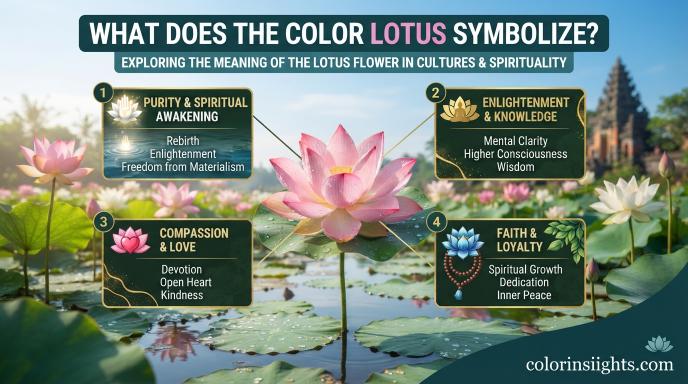
Lotus color symbolism varies depending on the flower’s color, but the lotus itself universally represents overcoming adversity through inner strength. Since lotus flowers emerge from muddy water without losing their beauty, they symbolize rising above life’s challenges while maintaining purity and integrity.
Common lotus color meanings include:
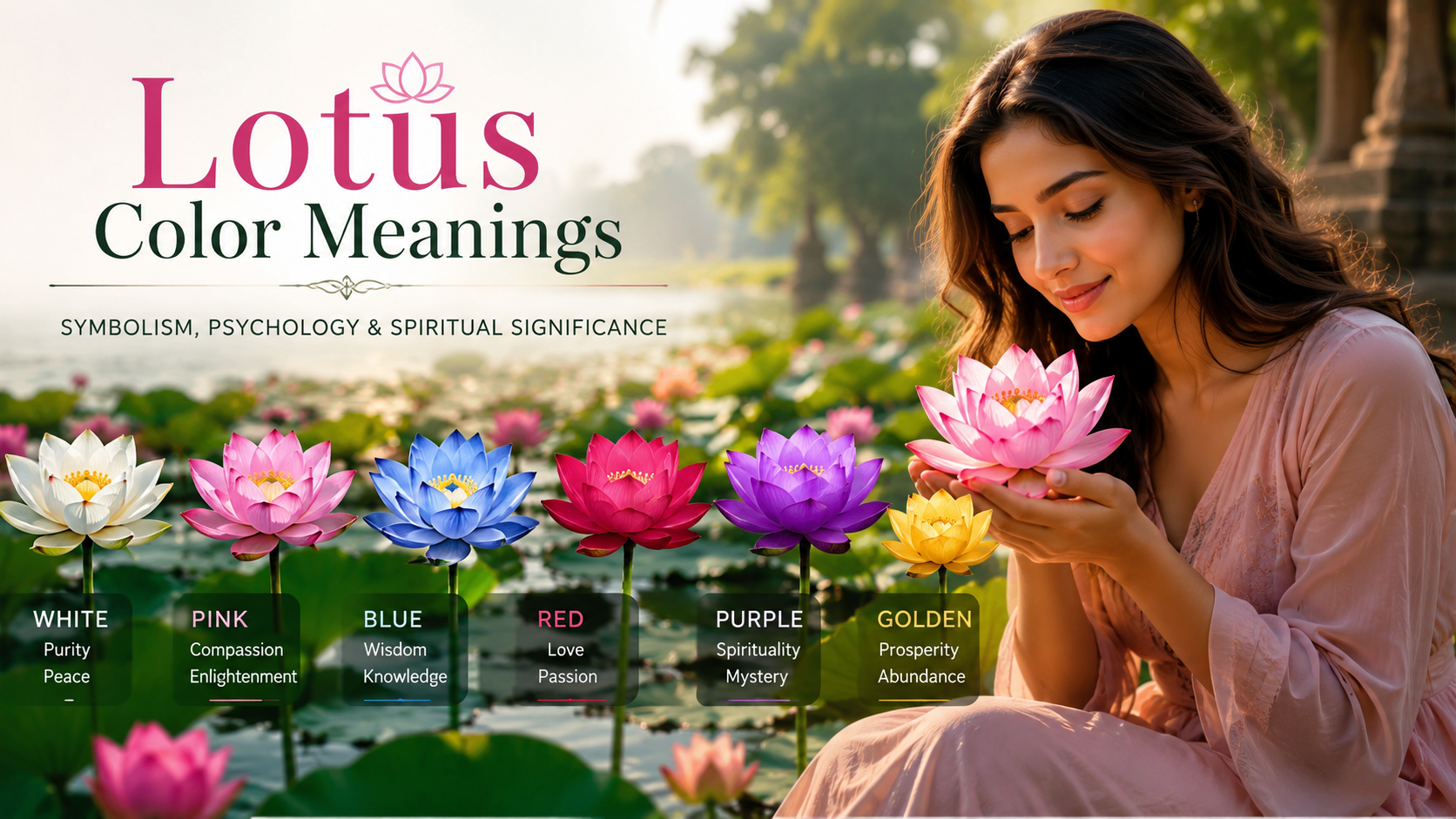
- White lotus: Purity, peace, innocence, and spiritual perfection.
- Pink lotus: Divine love, compassion, enlightenment, and the highest spiritual ideals.
- Blue lotus: Wisdom, knowledge, self-control, and intellectual growth.
- Red lotus: Love, passion, kindness, and heartfelt emotions.
- Purple lotus: Spiritual awakening, mystery, meditation, and higher consciousness.
- Golden lotus: Prosperity, divine wisdom, abundance, and success.
Across philosophy, religion, art, and modern symbolism, lotus colors encourage personal growth, emotional resilience, hope, and inner balance.
Psychological Characteristics of the Color Lotus
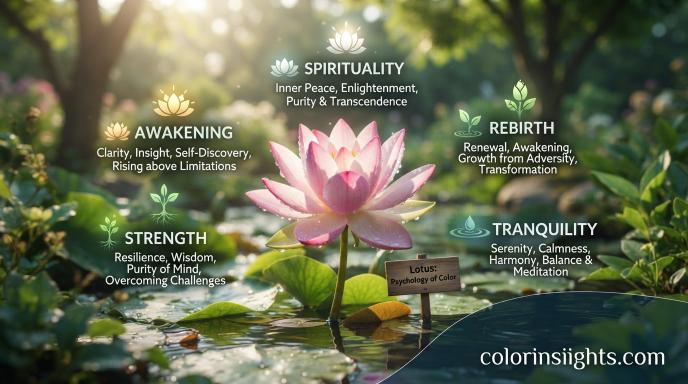
Although lotus is not a single color, lotus-inspired shades evoke specific emotional and psychological responses depending on their hue. Color psychology suggests that lotus colors generally promote calmness, optimism, emotional healing, and mindfulness.
Emotional Associations
People commonly associate lotus colors with:
- Inner peace
- Emotional balance
- Compassion
- Hope
- Purity
- Self-discovery
- Renewal
- Harmony
Psychological Effects
Lotus colors often help create environments that feel:
- Relaxing and peaceful
- Inspirational
- Clean and refreshing
- Emotionally safe
- Spiritually uplifting
- Mentally focused
Positive Emotional Responses
Exposure to lotus-inspired colors may encourage:
- Optimism
- Calmness
- Gratitude
- Patience
- Forgiveness
- Creativity
- Confidence
- Mindfulness
Negative Emotional Responses
Depending on context, some lotus colors may also suggest:
- Emotional detachment
- Excessive idealism
- Perfectionism
- Isolation
- Overthinking
- Unrealistic expectations
Impact on Mood and Behavior
Lotus colors often reduce visual stress while promoting thoughtful decision-making. They encourage slower, more reflective behavior, making them popular in wellness centers, meditation spaces, healthcare facilities, and luxury hospitality environments.
How People Typically React
Most people perceive lotus-inspired colors as:
- Elegant
- Sophisticated
- Gentle
- Trustworthy
- Spiritual
- Clean
- Comforting
Because these colors rarely appear overwhelming, they are often considered emotionally balanced and universally appealing.
Spiritual Meaning of the Color Lotus
The spiritual meaning of lotus colors extends across Buddhism, Hinduism, Jainism, Ancient Egyptian beliefs, and many modern mindfulness traditions. Each lotus color communicates a different stage of spiritual development while sharing themes of transformation and enlightenment.
Spiritual Symbolism Includes
- Holiness: The lotus represents sacred purity despite difficult surroundings.
- Wisdom: Blue and golden lotus flowers symbolize higher knowledge and understanding.
- Purity: White lotus reflects spiritual and moral cleanliness.
- Transformation: Growing through muddy water symbolizes personal evolution.
- Healing: Lotus imagery encourages emotional, mental, and spiritual recovery.
- Protection: Many traditions view the lotus as a symbol of divine guidance.
- Power: The lotus represents inner strength rather than physical dominance.
- Enlightenment: Pink and white lotus flowers symbolize awakening and spiritual fulfillment.
- New Beginnings: Blooming each day reflects renewal and fresh opportunities.
- Eternity: The lotus reminds believers that spiritual truth transcends time.
For many spiritual practitioners, the lotus serves as a reminder that growth often begins during life’s most challenging circumstances.
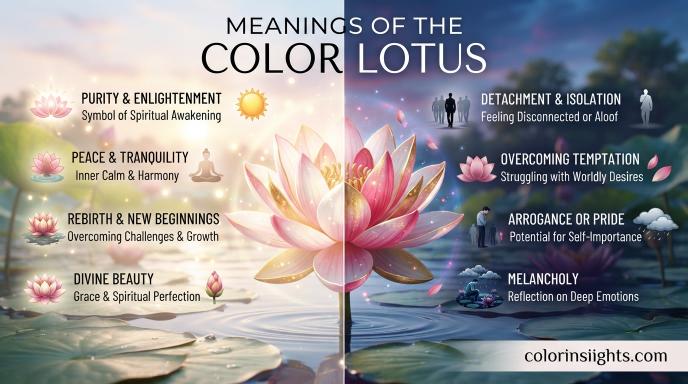
Positive and Negative Meanings of the Color Lotus
Positive Meanings
Lotus color meanings are overwhelmingly positive and frequently associated with growth and harmony.
Purity: White lotus flowers symbolize moral integrity and clean intentions.
Peace: Lotus-inspired colors create calm environments in homes, spas, and meditation spaces.
Simplicity: Their gentle appearance reflects elegance without excess.
Clarity: Blue and white lotus colors encourage focused thinking and emotional understanding.
Freshness: Soft lotus shades communicate renewal and healthy beginnings.
Hope: Blooming above muddy water inspires resilience during adversity.
Balance: Lotus colors combine emotional warmth with mental stability.
Harmony: Their soothing appearance promotes healthy relationships and peaceful surroundings.
Negative Meanings
Like every symbolic color, lotus colors can also have less favorable interpretations depending on cultural or personal context.
Emptiness: Extremely pale lotus tones may feel emotionally vacant in sterile environments.
Isolation: Excessive use of soft whites may create feelings of loneliness.
Coldness: Minimalist interiors dominated by pale lotus shades sometimes appear unwelcoming.
Sterility: Hospitals often use white extensively, causing some people to associate it with clinical settings.
Boredom: Monochromatic lotus-inspired spaces may lack excitement.
Emotional Distance: Very restrained color palettes can appear formal rather than affectionate.
Perfectionism: White lotus symbolism may create unrealistic expectations of flawlessness.
Real-world context always influences whether these meanings become positive or negative.
Meanings of the Color Lotus
Lotus color meaning changes significantly based on culture, religion, design, marketing, fashion, and personal experiences. While one person may view a white lotus as peaceful, another may associate it with sacred rituals or spiritual devotion.
Feng Shui
In Feng Shui, lotus symbolism represents purity, harmony, prosperity, and positive life energy.
- Associated element: Water with supportive Earth energy
- Energy symbolism: Spiritual growth, peace, abundance, and healing
- Best rooms: Meditation rooms, bedrooms, living rooms, entryways, and home offices
- Recommended color combinations: White with gold, pink with green, blue with silver, and purple with cream
- Home decorating tips: Use lotus artwork, floral patterns, ceramic décor, or soft lotus-inspired colors to create tranquil and welcoming interiors.
Marketing
Brands frequently use lotus-inspired colors to communicate elegance, wellness, and trust.
Branding psychology suggests lotus colors express:
- Premium quality
- Purity
- Luxury
- Calmness
- Authenticity
- Emotional wellness
Consumers often perceive lotus-inspired branding as trustworthy, environmentally friendly, and sophisticated.
These colors appear frequently in:
- Beauty products
- Skincare
- Yoga brands
- Spa businesses
- Luxury cosmetics
- Organic wellness products
Companies such as L’Oréal, The Body Shop, Dove, Lotus Herbals, and various luxury wellness brands often incorporate soft lotus-inspired palettes to reinforce cleanliness, natural beauty, and self-care.
Design
Lotus-inspired colors work exceptionally well in multiple design disciplines.
Interior Design
- Creates peaceful living spaces.
- Enhances natural lighting.
- Supports wellness-focused interiors.
Graphic Design
- Communicates elegance and simplicity.
- Works well for luxury branding.
- Enhances readability through clean visual hierarchy.
Web Design
- Creates relaxing user experiences.
- Encourages trust.
- Reduces visual fatigue.
User Experience
Soft lotus palettes improve accessibility while maintaining visual sophistication.
Minimalist Aesthetics
Lotus colors complement Scandinavian, Japandi, Zen, and modern minimalist styles because they emphasize openness and balance.
Fashion
Lotus-inspired colors symbolize elegance, refinement, and emotional confidence.
They are commonly worn during:
- Spring
- Summer
- Weddings
- Religious ceremonies
- Wellness retreats
- Formal celebrations
Styling Effects
- Brightens the complexion.
- Creates graceful silhouettes.
- Produces timeless outfits.
Personality Impressions
People wearing lotus-inspired colors are often perceived as:
- Calm
- Kind
- Organized
- Sophisticated
- Compassionate
Advantages
- Easy to coordinate.
- Timeless appeal.
- Suitable for formal and casual wear.
Disadvantages
- Light shades stain easily.
- Some colors require careful maintenance.
- Monochromatic outfits may appear understated without contrasting accessories.
For example, a blush pink lotus-inspired dress paired with neutral accessories creates an elegant yet approachable appearance.
Color Associations Are Not Universal
Color meanings always depend on culture, history, and personal experience.
Western Cultures
In many Western societies, lotus-inspired colors represent peace, wellness, luxury, purity, mindfulness, and emotional healing. They are common in healthcare, weddings, and wellness branding.
Eastern Cultures
Across India, China, Japan, Thailand, and other Asian cultures, lotus flowers carry profound religious significance. Pink and white lotus flowers symbolize enlightenment, compassion, wisdom, and divine beauty.
Religious Traditions
In Buddhism, the lotus represents spiritual awakening and freedom from suffering. Hinduism associates the lotus with divine creation, prosperity, and gods such as Lakshmi and Brahma. Ancient Egyptian traditions viewed the lotus as a symbol of rebirth and the rising sun.
Historical Interpretations
For centuries, artists, poets, and philosophers have used lotus imagery to represent resilience, personal growth, purity, and eternal life. Ancient civilizations often linked the flower with cosmic creation and spiritual renewal.
Modern Global Interpretations
Today, lotus symbolism extends beyond religion into wellness culture, yoga, mindfulness, luxury branding, sustainable design, and personal development. It has become a universal symbol of hope, resilience, and emotional well-being.
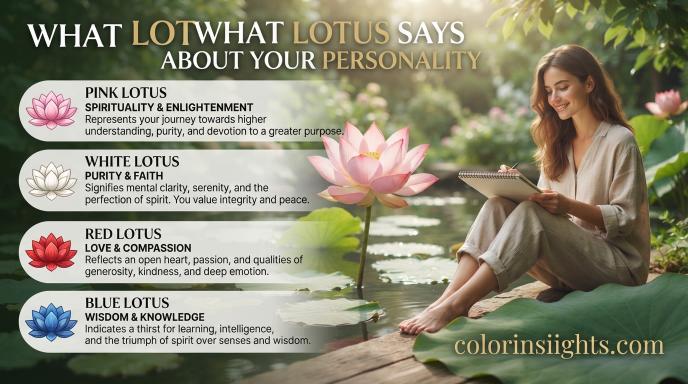
What Lotus Says About Your Personality
People who are naturally drawn to lotus colors often share certain personality characteristics. However, color preference alone cannot accurately define personality, and these associations should be viewed as general tendencies rather than scientific conclusions.
Strengths
They may be:
- Compassionate
- Patient
- Thoughtful
- Optimistic
- Emotionally intelligent
- Creative
- Balanced
- Spiritually curious
Weaknesses
Some may occasionally become:
- Overly idealistic
- Sensitive to criticism
- Perfectionistic
- Emotionally reserved
- Conflict-avoidant
Social Behavior
Lotus color enthusiasts often enjoy meaningful conversations, supportive friendships, and peaceful social environments rather than constant excitement.
Work Style
They usually value:
- Collaboration
- Creativity
- Organization
- Ethical decision-making
- Long-term planning
- Positive workplace culture
Relationships
In personal relationships, they often seek trust, loyalty, empathy, and emotional stability while preferring honest communication over unnecessary conflict.
Emotional Tendencies
Many appreciate mindfulness, personal growth, and emotional reflection. They often recover from setbacks by focusing on learning, resilience, and self-improvement rather than dwelling on failure.
FAQs:
What defines lotus color meaning?
Lotus color meaning refers to the symbolic, emotional, cultural, and spiritual significance associated with different lotus flower colors.
What does the color lotus symbolize?
Lotus colors symbolize purity, enlightenment, hope, resilience, compassion, wisdom, and personal transformation.
Why is lotus important?
The lotus represents overcoming adversity while maintaining inner beauty and integrity, making it one of the world’s most meaningful spiritual symbols.
Is lotus a warm or cool color?
Lotus is not one specific color. Individual lotus shades may be warm, cool, or neutral depending on whether they are pink, white, blue, purple, red, or golden.
What emotions do lotus colors represent?
They commonly evoke peace, hope, compassion, serenity, inspiration, confidence, gratitude, and emotional healing.
What is the spiritual meaning of lotus?
Spiritually, the lotus represents enlightenment, purity, transformation, divine wisdom, protection, renewal, and eternal growth.
What colors pair well with lotus-inspired colors?
Popular combinations include gold, sage green, cream, soft gray, navy blue, charcoal, silver, and natural wood tones.
What does liking lotus colors say about a person?
People who prefer lotus-inspired colors are often associated with empathy, balance, creativity, optimism, and an appreciation for beauty and personal growth.
Why are lotus colors popular in design?
Designers use lotus-inspired palettes because they create calming, elegant, and welcoming environments while supporting modern minimalist aesthetics.
Are lotus color meanings universal?
No. Cultural traditions, religion, historical context, and personal experiences all influence how lotus colors are interpreted.
Conclusion
Lotus color meanings combine beauty with profound symbolism, making them timeless across cultures, religions, psychology, design, and everyday life. Whether represented by white purity, pink compassion, blue wisdom, red love, purple spirituality, or golden abundance, each lotus color tells a story of growth, resilience, and transformation.
While interpretations vary worldwide, the lotus consistently reminds us that true strength often emerges from life’s greatest challenges. Understanding lotus color meanings allows us to appreciate not only the flower’s visual beauty but also its enduring message of hope, balance, enlightenment, and renewal.