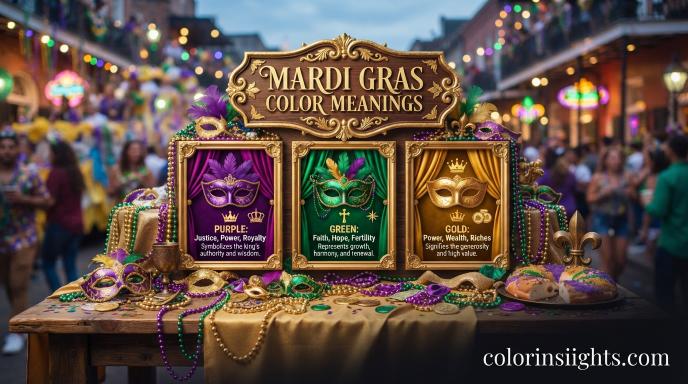
Mardi Gras color meanings are deeply connected to celebration, history, faith, and cultural identity. The traditional Mardi Gras color palette—purple, green, and gold—has represented the famous carnival season for more than a century.
While these colors are instantly recognizable during parades and festivals, they also carry rich symbolic meanings that extend into psychology, spirituality, design, fashion, and branding. Together, they communicate values such as justice, faith, prosperity, renewal, and joy.
Understanding Mardi Gras color meanings helps explain why these colors continue to inspire celebrations worldwide and remain an enduring symbol of unity and festivity.
Quick Answer:
Mardi Gras colors symbolize justice (purple), faith (green), and power or prosperity (gold). Together, they represent celebration, hope, dignity, abundance, and community spirit.
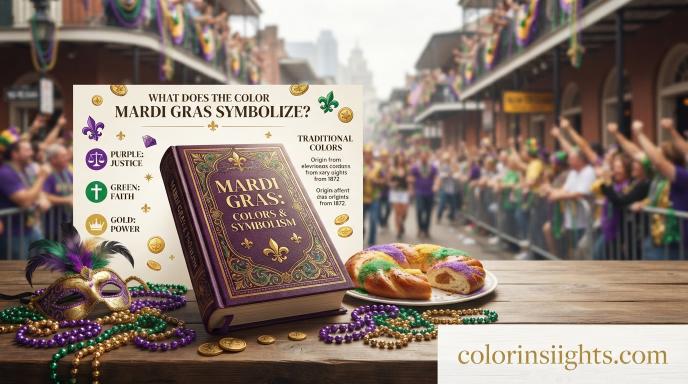
What Does the Color Mardi Gras Symbolize?
Unlike a single color, the Mardi Gras palette combines three distinct colors that work together to create a powerful symbolic message.
- Purple symbolizes justice, dignity, wisdom, and honor.
- Green represents faith, hope, growth, renewal, and new beginnings.
- Gold symbolizes power, wealth, achievement, generosity, and success.
Historically, these colors became the official colors of Mardi Gras in New Orleans in 1872, when the Rex Organization adopted them for the annual celebration. Since then, they have become internationally recognized symbols of carnival traditions.
Collectively, Mardi Gras colors symbolize:
- Celebration and joy
- Community and togetherness
- Hope for the future
- Spiritual renewal
- Prosperity and abundance
- Creativity and artistic expression
- Tradition and cultural heritage
The combination creates a vibrant visual identity that feels festive without losing its historical significance.
Psychological Characteristics of the Color Mardi Gras
From a color psychology perspective, Mardi Gras colors create a balanced emotional experience because each color contributes different psychological effects.
Emotional Associations
- Excitement
- Optimism
- Confidence
- Celebration
- Creativity
- Friendship
- Hope
- Achievement
Psychological Effects
Purple stimulates imagination, encourages reflection, and creates a sense of luxury.
Green reduces stress, promotes emotional balance, and symbolizes personal growth.
Gold increases perceptions of success, confidence, optimism, and prestige.
Together, these colors create an atmosphere that feels energetic yet welcoming.
Positive Emotional Responses
- Happiness
- Inspiration
- Confidence
- Gratitude
- Enthusiasm
- Generosity
- Curiosity
- Social connection
Negative Emotional Responses
When overused, Mardi Gras colors may also evoke:
- Visual overstimulation
- Excessiveness
- Materialism
- Competition
- Emotional intensity
- Sensory overload
Impact on Mood and Behavior
Research in environmental color psychology suggests colorful environments often encourage social interaction and positive emotions. Mardi Gras colors are frequently used during festivals because they naturally:
- Increase excitement
- Encourage participation
- Improve perceived energy
- Enhance memorable experiences
- Promote group identity
How People Typically React
Many people associate these colors with:
- Festivals
- Music
- Dancing
- Community gatherings
- Family traditions
- Cultural pride
- Hospitality
- Celebration
These positive associations explain why Mardi Gras-inspired palettes are often used in event branding and entertainment marketing.
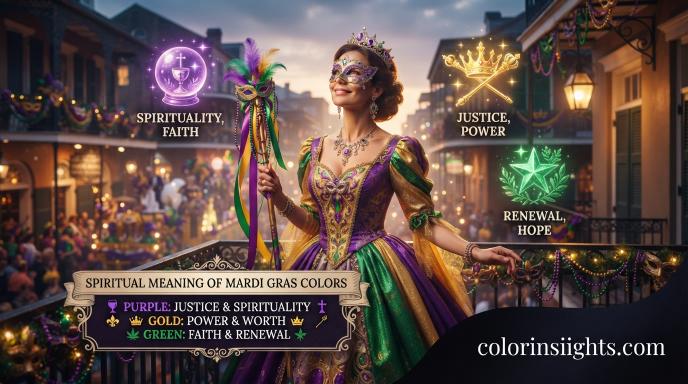
Spiritual Meaning of the Color Mardi Gras
Although Mardi Gras is widely known as a carnival celebration, its colors also carry meaningful spiritual symbolism rooted in Christian tradition and broader cultural interpretations.
Spiritual Symbolism
- Holiness: Purple has long represented sacred devotion and preparation in many Christian traditions.
- Wisdom: Purple symbolizes insight, maturity, and thoughtful leadership.
- Purity: Green reflects renewal of the heart and spiritual growth.
- Transformation: The combination represents moving from celebration toward reflection before Lent.
- Healing: Green symbolizes restoration, balance, and emotional recovery.
- Protection: Purple is often associated with divine guidance and spiritual strength.
- Power: Gold represents divine authority, honor, and noble purpose.
- Enlightenment: Together, the colors encourage personal awareness and inner growth.
- New Beginnings: Green symbolizes fresh starts and hope for the future.
- Eternity: Gold is commonly linked with everlasting value and spiritual abundance.
While interpretations differ across faiths and cultures, the Mardi Gras palette often reflects both joyful celebration and meaningful reflection.
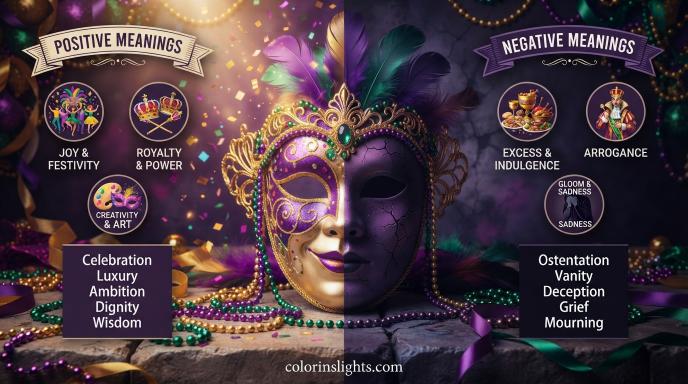
Positive and Negative Meanings of the Color Mardi Gras
Positive Meanings
The Mardi Gras palette is commonly associated with uplifting symbolism.
- Justice: Purple reflects fairness and moral integrity.
- Faith: Green symbolizes trust, optimism, and perseverance.
- Prosperity: Gold represents abundance and success.
- Celebration: The colors encourage happiness and togetherness.
- Hope: Green inspires renewal after difficult times.
- Harmony: The three-color combination creates visual balance.
- Creativity: Bright colors encourage imagination and artistic expression.
- Community: Festivals unite people from diverse backgrounds.
Real-world examples:
- Mardi Gras parades celebrating local culture.
- Community festivals promoting inclusion.
- Decorative themes for charity events.
- School celebrations highlighting teamwork and creativity.
Negative Meanings
Context also influences how people interpret these colors.
- Excess: Bright celebrations may symbolize indulgence.
- Materialism: Gold can sometimes suggest greed or status.
- Overstimulation: Highly saturated colors may feel overwhelming.
- Distraction: Busy color combinations may reduce visual focus.
- Competition: Lavish displays can create social comparison.
- Temporary Excitement: Festivals may emphasize short-term enjoyment over lasting reflection.
- Commercialization: Cultural symbols may lose meaning when used only for marketing.
- Misinterpretation: Outside Mardi Gras traditions, people may not recognize the historical symbolism.
These meanings depend largely on cultural context and personal experience.
Meanings of the Color Mardi Gras
Because Mardi Gras combines multiple colors, its meaning changes depending on how it is used.
Feng Shui
Although Mardi Gras colors are not a traditional Feng Shui palette, each color corresponds with familiar energy principles.
- Associated elements: Green relates to Wood, purple to Fire, and gold to Earth.
- Energy symbolism: Growth, prosperity, recognition, and joyful energy.
- Best rooms: Living rooms, entertainment spaces, creative studios, dining rooms, and celebration areas.
- Recommended combinations: White, cream, black, and natural wood help balance the vibrant palette.
- Decorating tips: Use gold as an accent, green through plants or textiles, and purple in artwork or decorative accessories for an elegant yet festive appearance.
Marketing
Businesses use Mardi Gras-inspired colors to capture attention while expressing celebration and luxury.
Branding psychology
- Purple communicates premium quality and creativity.
- Green suggests freshness, sustainability, and trust.
- Gold reinforces prestige and achievement.
Consumer perception
Consumers often associate this palette with excitement, entertainment, exclusivity, and memorable experiences.
Trust signals
When balanced properly, green adds reliability while gold increases perceived value.
Product packaging
The palette frequently appears on:
- Limited-edition products
- Festival merchandise
- Premium chocolates
- Specialty beverages
- Gift packaging
Advertising applications
Businesses often use Mardi Gras colors for seasonal promotions, tourism campaigns, event marketing, hospitality, and entertainment advertising.
Examples of brands using similar colors
Companies such as Hallmark, Cadbury, Subway, Rolex, and Louis Vuitton use one or more of these colors to communicate creativity, growth, prestige, or luxury, although not specifically as a Mardi Gras palette.
Design
Mardi Gras colors create bold visual contrast and strong emotional impact.
Interior design
- Accent walls
- Statement furniture
- Decorative pillows
- Event venues
- Entertainment spaces
Graphic design
Designers use the palette for posters, festival branding, invitations, logos, and promotional materials because it quickly attracts attention.
Web design
The colors are effective for event websites, tourism pages, and entertainment platforms when paired with neutral backgrounds for readability.
User experience
Bright accent colors help emphasize buttons, promotions, and calls to action while maintaining visual hierarchy.
Minimalist aesthetics
Instead of using all three colors equally, designers often feature one dominant color with subtle complementary accents for a cleaner appearance.
Fashion
Mardi Gras colors have become a popular choice for festive and statement-making outfits.
Clothing symbolism
- Purple conveys elegance.
- Green reflects freshness.
- Gold communicates confidence.
Seasonal use
Most common during carnival season, parties, festivals, and themed celebrations.
Styling effects
The palette creates bold, energetic, and memorable looks.
Personality impressions
People wearing these colors may appear:
- Outgoing
- Creative
- Optimistic
- Confident
- Social
- Expressive
Advantages
- Eye-catching
- Memorable
- Celebratory
- Luxurious
Disadvantages
- May appear too bold for formal business settings.
- Can become visually overwhelming if overused.
For example, a purple blazer with gold accessories and green accents creates a festive yet sophisticated appearance.
Color Associations Are Not Universal
Color symbolism varies across cultures and historical traditions.
Western Cultures
In the United States and much of Europe, Mardi Gras colors symbolize carnival celebrations, justice, faith, prosperity, and community events. They are strongly connected with New Orleans culture.
Eastern Cultures
Purple often represents nobility and spirituality, green symbolizes harmony and nature, while gold is widely associated with wealth, success, and good fortune. Together, these colors may be viewed as fortunate and prestigious rather than specifically linked to Mardi Gras.
Religious Traditions
Purple is associated with Lent, repentance, and royalty in Christianity. Green often symbolizes life, hope, and renewal. Gold represents divine glory, sacred light, and heavenly reward in many religious traditions.
Historical Interpretations
Historically, purple dyes were rare and expensive, making purple a symbol of royalty. Gold has represented wealth across civilizations, while green has consistently reflected agriculture, fertility, and renewal.
Modern Global Interpretations
Today, Mardi Gras colors are recognized internationally through tourism, media, festivals, sports events, and cultural celebrations. However, people unfamiliar with Mardi Gras may simply interpret them as vibrant festive colors.
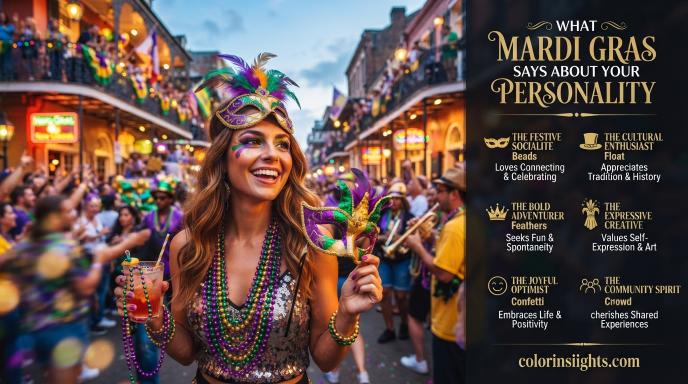
What Mardi Gras Says About Your Personality
Although favorite colors cannot accurately determine personality, color psychology suggests that people drawn to Mardi Gras colors often share certain tendencies.
Strengths
- Creative
- Optimistic
- Confident
- Generous
- Social
- Imaginative
- Energetic
- Open-minded
Weaknesses
- May become impulsive
- Occasionally seek excitement over routine
- Can appear dramatic
- Sometimes overcommit socially
Social Behavior
People attracted to these colors often enjoy celebrations, teamwork, cultural experiences, and bringing people together.
Work Style
They may thrive in creative careers, marketing, hospitality, event planning, education, design, entertainment, or leadership roles.
Relationships
They typically value loyalty, meaningful friendships, generosity, and shared experiences.
Emotional Tendencies
These individuals often appreciate positivity and optimism but also seek recognition and opportunities for self-expression.
Remember that personality is shaped by many factors, including culture, upbringing, and life experiences. Color preferences offer interesting insights but should not be viewed as scientific personality tests.
FAQs:
What defines Mardi Gras color meanings?
Mardi Gras colors are the traditional combination of purple, green, and gold, representing justice, faith, and power or prosperity.
What does the color Mardi Gras symbolize?
The palette symbolizes celebration, community, hope, creativity, dignity, abundance, and cultural tradition.
Why are Mardi Gras colors important?
They preserve the history of Mardi Gras while expressing values of unity, generosity, faith, and joyful celebration.
Is Mardi Gras a warm or cool color?
It is a mixed palette. Purple is generally cool, green is balanced, and gold is warm, creating a visually dynamic combination.
What emotions do Mardi Gras colors represent?
They commonly evoke excitement, optimism, confidence, joy, creativity, gratitude, and social connection.
What is the spiritual meaning of Mardi Gras colors?
Spiritually, they represent justice, faith, renewal, wisdom, divine authority, hope, and transformation.
What colors pair well with Mardi Gras colors?
White, black, cream, silver, natural wood tones, and deep navy help balance the vibrant palette.
What does liking Mardi Gras colors say about a person?
People who enjoy these colors may appreciate creativity, celebration, self-expression, and community, although color preference alone does not define personality.
Why is purple important in Mardi Gras?
Purple symbolizes justice, dignity, honor, and wisdom, making it one of the most meaningful colors in the Mardi Gras tradition.
Where are Mardi Gras colors commonly used?
They are widely used in festivals, event branding, fashion, decorations, tourism, marketing campaigns, and cultural celebrations.
Conclusion
Mardi Gras color meanings extend far beyond festive decorations. The combination of purple, green, and gold reflects centuries of history, cultural heritage, and symbolic tradition. Together, these colors represent justice, faith, prosperity, creativity, and joyful community spirit. Their influence can be seen in psychology, spirituality, branding, fashion, design, and cultural celebrations around the world.
While interpretations vary across cultures and personal experiences, Mardi Gras colors continue to inspire optimism, unity, and celebration, making them one of the most recognizable and meaningful color palettes in modern culture.