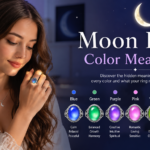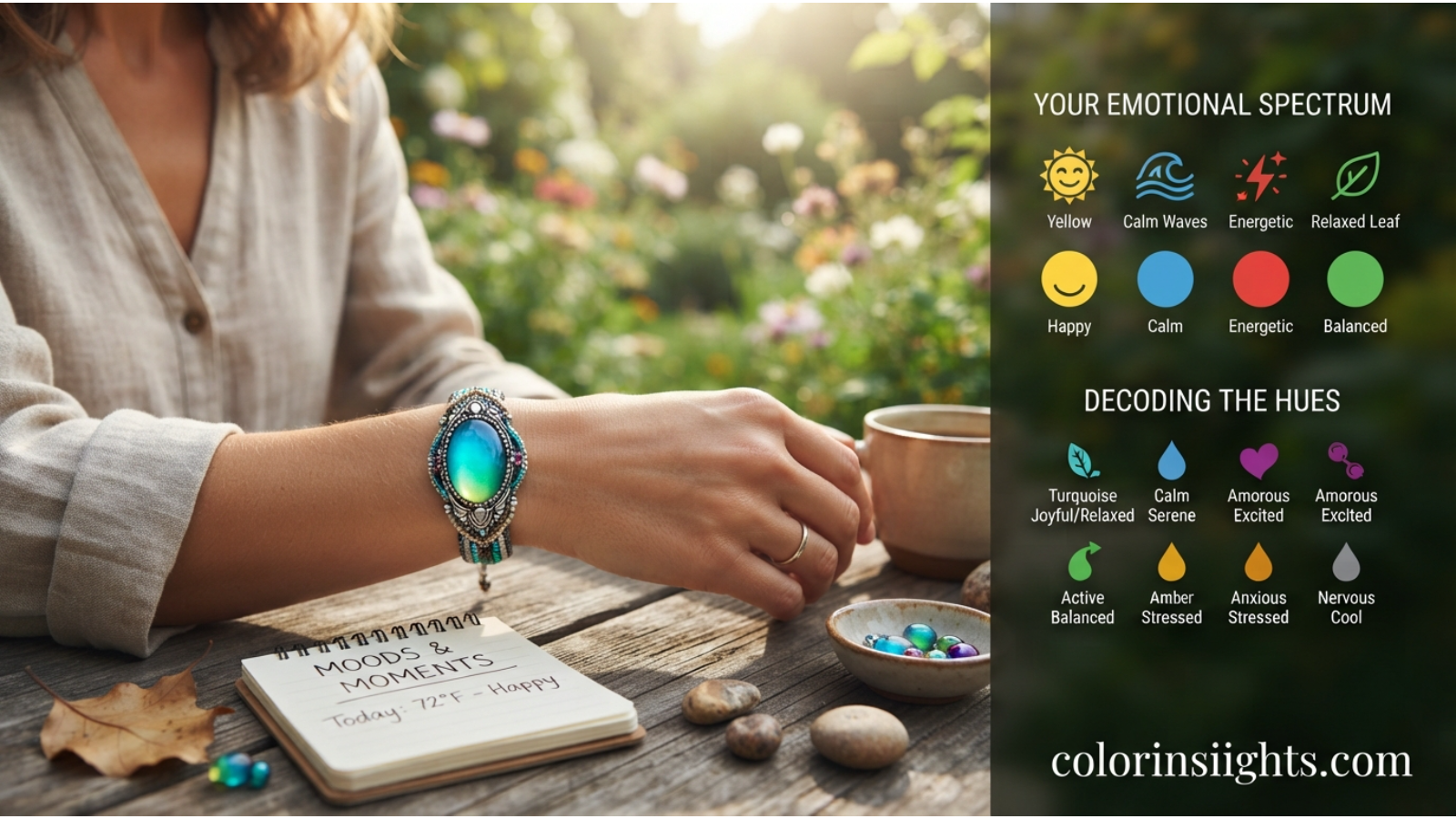
Mood changing bracelets, also known as mood bracelets or thermochromic mood jewelry, have fascinated people for decades by displaying different colors that respond to changes in body temperature. While these bracelets do not scientifically measure emotions, each color has developed symbolic meanings associated with moods, personality, emotional states, and energy. Their popularity comes from the blend of psychology, color symbolism, fashion, and personal expression.
Understanding mood changing bracelet color meanings can help you appreciate the symbolism behind each shade while recognizing that the colors primarily reflect skin temperature rather than directly detecting emotions.
Quick answer:
Every mood bracelet color represents a traditional emotional interpretation—from calm blues and happy greens to passionate reds and stressed blacks—making them a fun way to explore color psychology and emotional symbolism.
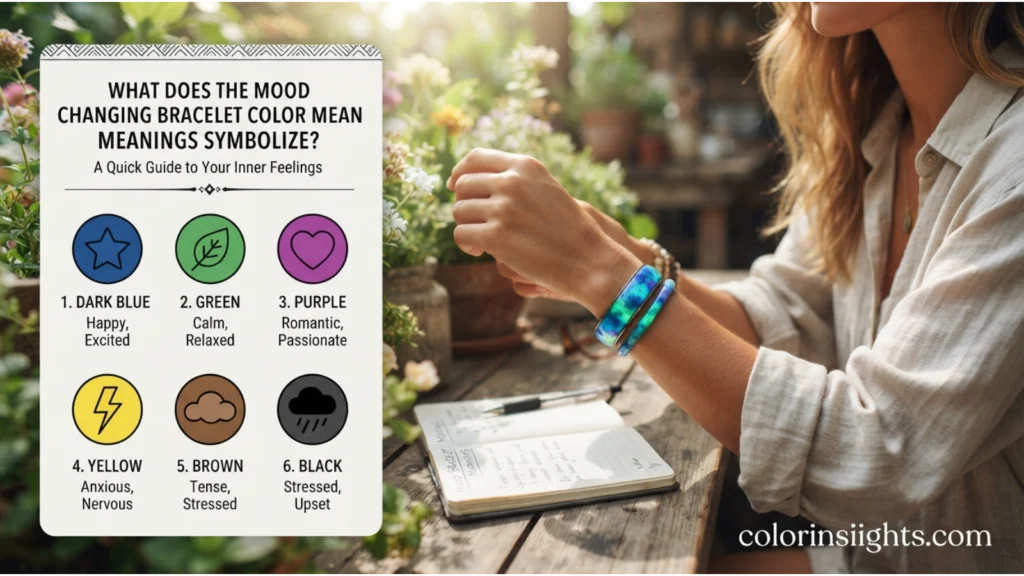
What Does the Mood Changing Bracelet Color Meanings Symbolize?
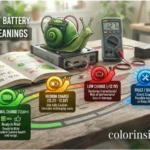
Mood changing bracelet color meanings symbolize the connection between colors, emotions, and human behavior. Although the bracelet changes color because of heat-sensitive liquid crystals reacting to skin temperature, the assigned meanings are based largely on color psychology and cultural symbolism.
Each color represents a different emotional interpretation. For example:
- Blue commonly symbolizes calmness, confidence, and relaxation.
- Green often represents balance, optimism, and emotional stability.
- Yellow symbolizes creativity, curiosity, and happiness.
- Purple reflects imagination, wisdom, and spiritual awareness.
- Red is linked with passion, excitement, determination, and energy.
- Black may represent stress, fatigue, or emotional overload.
Rather than functioning as a medical or psychological diagnostic tool, mood bracelets offer a symbolic reflection of emotional experiences through universally recognizable color associations.
Psychology of Mood Changing Bracelet Color Meanings
Color psychology suggests that colors influence emotions, perception, decision-making, and behavior. The meanings assigned to mood bracelets mirror these widely accepted psychological associations.
Emotional Associations
- Blue promotes tranquility and emotional security.
- Green encourages harmony and emotional balance.
- Yellow stimulates optimism and curiosity.
- Orange inspires enthusiasm and sociability.
- Red increases excitement and motivation.
- Purple encourages creativity and reflection.
- Black often reflects emotional exhaustion or uncertainty.
Psychological Effects
Different colors can influence how people perceive themselves and others.
- Cool colors generally reduce stress.
- Warm colors encourage action.
- Neutral colors provide emotional balance.
- Dark colors may signal caution or seriousness.
Positive Emotional Responses
- Confidence
- Inner peace
- Happiness
- Compassion
- Creativity
- Motivation
- Emotional balance
Negative Emotional Responses
- Anxiety
- Stress
- Frustration
- Fatigue
- Emotional distance
- Restlessness
- Overstimulation
Impact on Mood and Behavior
Many people subconsciously associate certain bracelet colors with emotional expectations. For example, seeing blue may encourage calm thinking, while seeing red may increase alertness or excitement.
How People Typically React
People often use mood bracelets as:
- Conversation starters
- Fashion accessories
- Personal reminders for emotional awareness
- Stress-management tools
- Symbolic expressions of personality
Although scientific evidence does not support emotional detection, the symbolic meanings can encourage mindfulness and self-reflection.
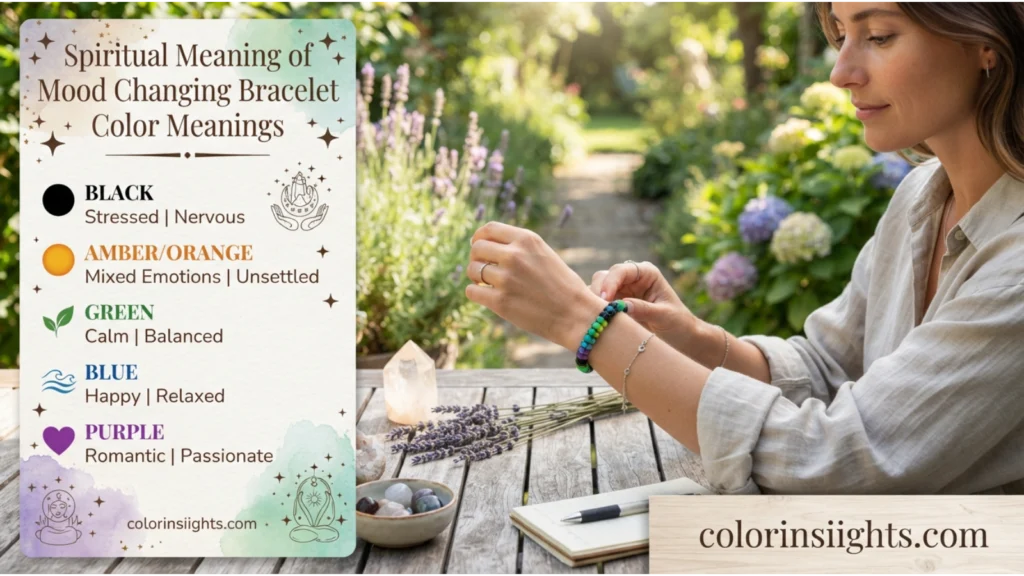
Spiritual Meaning of Mood Changing Bracelet Color Meanings
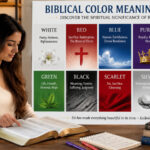
Across many spiritual traditions, colors carry symbolic meanings that extend beyond physical appearance. Mood bracelet colors are often interpreted through these broader spiritual themes.
Common Spiritual Associations
- Holiness: White and light blue symbolize spiritual purity and divine peace.
- Wisdom: Purple represents higher knowledge and intuition.
- Purity: White signifies innocence and fresh beginnings.
- Transformation: Orange reflects personal growth and life changes.
- Healing: Green symbolizes restoration and emotional recovery.
- Protection: Dark blue is associated with spiritual protection.
- Power: Red represents courage, life force, and determination.
- Enlightenment: Violet is linked to higher consciousness.
- New Beginnings: Yellow symbolizes hope and optimism.
- Eternity: Deep blue reflects stability, continuity, and infinite wisdom.
Many modern spiritual practices also associate bracelet colors with chakra symbolism, meditation, and energy awareness, though these interpretations vary among traditions.
Positive Mood Changing Bracelet Color Meanings
Positive Meanings
Each bracelet color can communicate uplifting emotional symbolism.
- Blue: Peace, trust, confidence, and relaxation.
- Green: Balance, healing, harmony, and growth.
- Yellow: Hope, joy, creativity, and optimism.
- Orange: Enthusiasm, adventure, and friendliness.
- Purple: Wisdom, imagination, and spirituality.
- Red: Passion, courage, motivation, and strength.
- Pink: Love, compassion, and kindness.
Real-world examples
- Wearing blue during stressful workdays may remind someone to remain calm.
- Green accessories are often chosen for wellness events.
- Yellow jewelry complements positive celebrations and creative environments.
Negative Meanings
Some colors also represent emotional challenges.
- Black: Stress or emotional fatigue.
- Gray: Uncertainty or emotional detachment.
- Dark Brown: Nervousness or discomfort.
- Dark Red: Anger or heightened emotional intensity.
- Very Dark Shades: Low energy or emotional exhaustion.
Real-world examples
- Someone experiencing workplace pressure may notice darker bracelet colors because cooler skin temperatures affect the liquid crystals.
- During illness or fatigue, mood bracelets sometimes display darker shades due to changes in body temperature.
Feng Shui
In Feng Shui, colors represent different elements and energies.
- Associated element: Depends on the displayed color.
- Blue represents Water.
- Green represents Wood.
- Red represents Fire.
- Yellow represents Earth.
- White represents Metal.
Energy symbolism
Each color encourages different life energies such as healing, prosperity, confidence, or tranquility.
Best rooms
- Blue for bedrooms.
- Green for living rooms.
- Yellow for kitchens.
- Red for social spaces.
- White for offices.
Recommended color combinations
- Blue and white
- Green and brown
- Red and gold
- Yellow and beige
Home decorating tips
Use balanced combinations rather than overwhelming a room with one dominant color.
Marketing
Brands carefully use color psychology to influence customer perception.
Branding Psychology
- Blue builds trust.
- Green supports sustainability.
- Red creates urgency.
- Yellow attracts attention.
- Purple suggests luxury.
Consumer Perception
Customers often judge products within seconds based partly on color choices.
Trust Signals
Financial institutions commonly use blue because it communicates reliability.
Product Packaging
Natural products frequently feature green packaging, while premium cosmetics often use black, purple, or gold.
Advertising Applications
Retail promotions commonly use red and orange to encourage quick decisions.
Examples of brands
- Facebook – Blue
- IBM – Blue
- Starbucks – Green
- McDonald’s – Red and Yellow
- Cadbury – Purple
- Target – Red
Design
Design professionals rely heavily on color psychology.
Interior Design
Different colors create different emotional atmospheres throughout homes.
Graphic Design
Color guides visual hierarchy and emotional messaging.
Web Design
User interfaces often use blue for trust, green for success notifications, and red for warnings.
User Experience (UX)
Strategic color choices improve readability, accessibility, and engagement.
Minimalist Aesthetics
Neutral colors combined with one vibrant accent create modern, balanced designs.
Fashion
Fashion uses color as a powerful communication tool.
Clothing Symbolism
Colors help express confidence, elegance, creativity, or warmth.
Seasonal Use
- Spring favors green and yellow.
- Summer embraces bright colors.
- Autumn highlights earthy tones.
- Winter often features darker shades.
Styling Effects
A colorful mood bracelet pairs well with neutral clothing, allowing the accessory to become a focal point.
Personality Impressions
People often perceive:
- Blue as dependable.
- Green as balanced.
- Red as confident.
- Purple as creative.
Advantages
- Personal expression
- Versatile styling
- Conversation starter
Disadvantages
- Color meanings remain subjective.
- Bracelet readings are influenced by temperature rather than emotions.
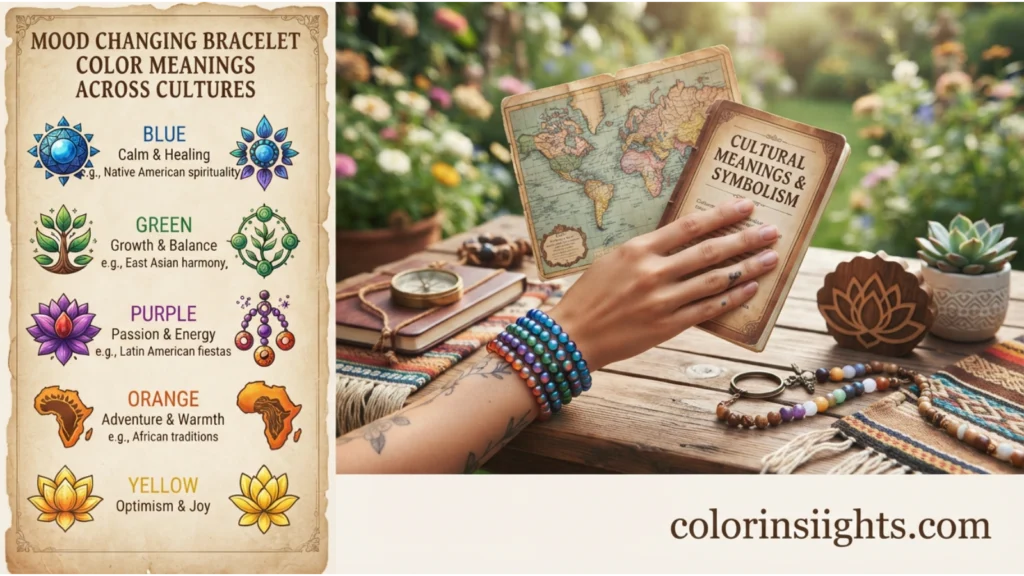
Mood Changing Bracelet Color Meanings Across Cultures
Color symbolism differs around the world.
Western Cultures
White often symbolizes purity, while black commonly represents mourning. Blue reflects trust, and green is associated with health and nature.
Eastern Cultures
In parts of Asia, red symbolizes prosperity, happiness, and celebration. White may represent mourning in some traditions rather than purity.
Religious Traditions
Christian symbolism frequently associates white with holiness. Buddhism often links saffron and orange with enlightenment and devotion. Hindu traditions connect multiple colors with different deities and virtues.
Historical Interpretations
Throughout history, purple represented royalty because purple dye was rare and expensive. Gold symbolized wealth and divine authority across many civilizations.
Modern Global Interpretations
Global media has made many color meanings more universal, yet cultural differences remain important. Businesses entering international markets often adapt color choices to local traditions.
What Mood Changing Bracelet Color Meanings Say About Your Personality
People often identify with specific bracelet colors because they reflect how they see themselves. However, color preference does not scientifically determine personality and should be viewed as symbolic rather than definitive.
Strengths
Those drawn to calming colors may value empathy, patience, creativity, and emotional stability.
Weaknesses
Preferences for intense colors may sometimes align with impulsiveness, competitiveness, or emotional sensitivity.
Social Behavior
Color preferences can influence how individuals present themselves socially, whether as energetic leaders, calm listeners, or imaginative thinkers.
Work Style
Blue and green enthusiasts often appreciate organization and teamwork, while red and orange lovers may enjoy fast-paced environments and leadership roles.
Relationships
Warm colors are commonly linked with affection and passion, while cooler colors often suggest loyalty and emotional security.
Emotional Tendencies
People frequently select colors that reflect their desired emotional state rather than their current mood, making mood bracelets both symbolic and aspirational.
FAQs:
What defines mood changing bracelet colors?
They are thermochromic colors produced by liquid crystals that react to changes in skin temperature.
What does the mood changing bracelet symbolize?
It symbolizes emotional awareness, self-expression, and the traditional psychological meanings associated with different colors.
Why are mood changing bracelet color meanings important?
They help people understand common emotional associations with colors and make mood bracelets more meaningful as personal accessories.
Are mood changing bracelets scientifically accurate?
No. They respond to body temperature rather than directly measuring emotions.
Is every mood bracelet color warm or cool?
No. Mood bracelets display both warm and cool colors depending on temperature changes.
What emotions do mood bracelet colors represent?
Common interpretations include calmness, happiness, excitement, confidence, stress, creativity, love, and balance.
What is the spiritual meaning of mood changing bracelet colors?
Many spiritual traditions associate different colors with healing, wisdom, protection, transformation, and personal growth.
Which colors pair well with mood bracelets?
Neutral clothing in black, white, gray, or beige allows colorful bracelets to stand out, while complementary colors create balanced fashion combinations.
What does liking certain mood bracelet colors say about a person?
It may reflect personal preferences, values, or desired emotional states, but it does not reliably predict personality.
Why does my mood bracelet turn black?
A black color usually indicates cooler skin temperature, often caused by environmental conditions rather than emotional distress alone.
Conclusion
Mood changing bracelet color meanings combine science, symbolism, psychology, fashion, and spirituality into one fascinating accessory. While the bracelet itself responds to temperature instead of directly detecting emotions, the traditional meanings associated with each color continue to inspire self-expression and personal reflection.
Understanding these color associations can deepen your appreciation of mood jewelry while reminding you that emotional experiences are complex and cannot be fully represented by a single color.
Whether worn for style, mindfulness, or curiosity, mood bracelets remain a timeless example of how color influences perception, communication, and human culture.