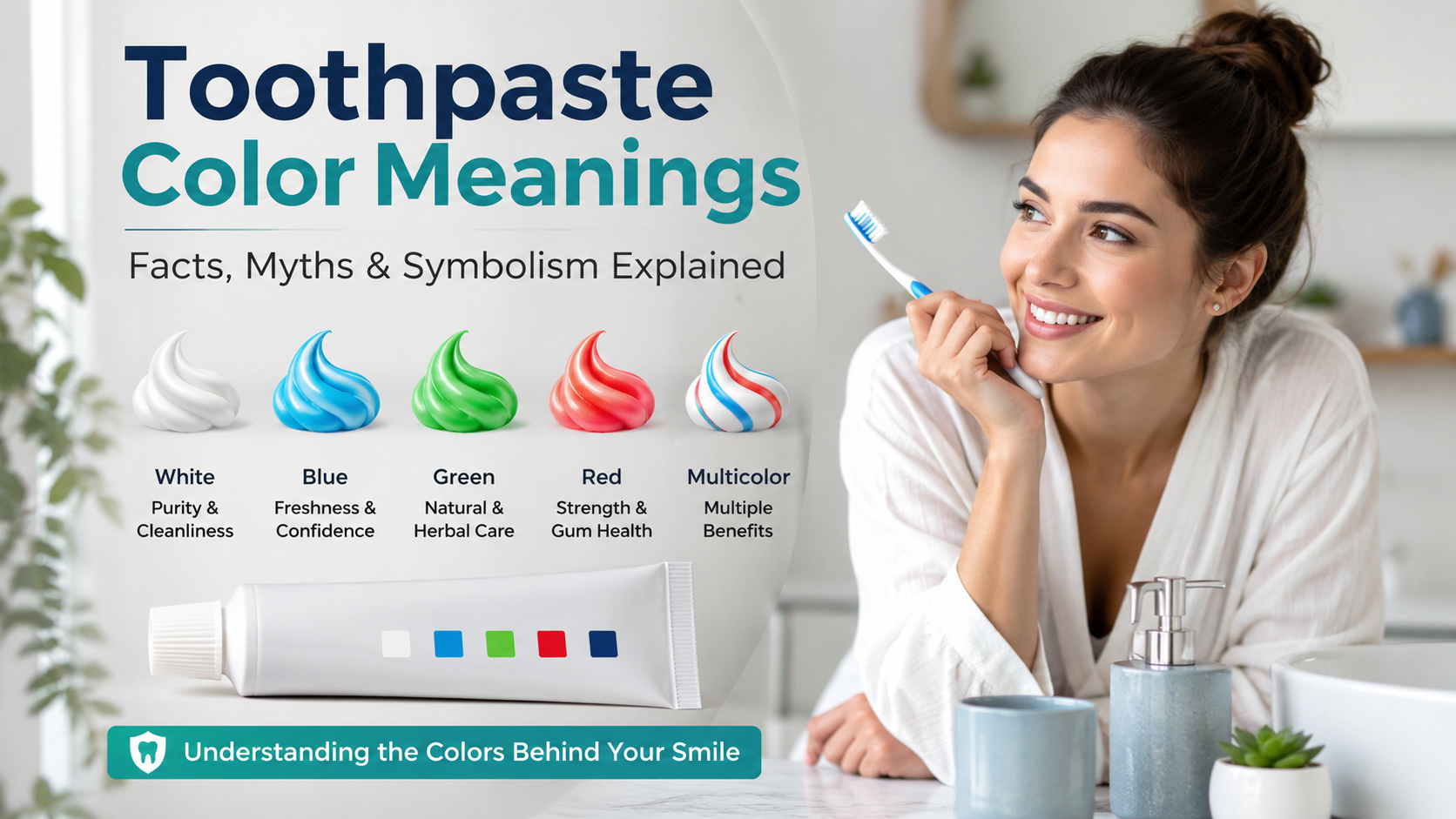
Toothpaste color meanings have sparked online debates for years, with many people believing that the colored squares or stripes on toothpaste tubes reveal the ingredients or safety of the product. In reality, these claims are myths. The colored marks on toothpaste packaging are manufacturing registration marks used during the printing and sealing process, not indicators of chemical content or quality.
While the colors inside toothpaste—such as white, blue, green, or red—can influence consumer perception through color psychology, they do not represent standardized ingredient categories. Understanding toothpaste color meanings requires separating marketing symbolism from scientific facts.
Quick Answer:
Toothpaste color meanings are largely based on branding and color psychology. The colored marks on toothpaste tubes are printing guides, while toothpaste colors themselves are chosen to communicate freshness, cleanliness, whitening, or herbal qualities rather than ingredient composition.
What Does the Color Toothpaste Symbolize?
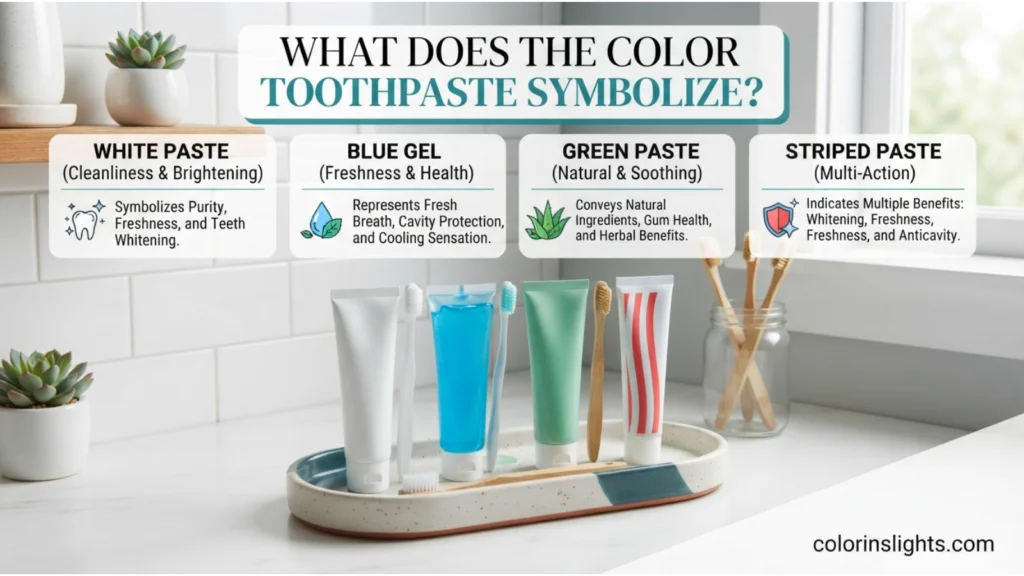
The toothpaste color meaning depends on the visible color of the toothpaste itself and the branding strategy behind it rather than any universal industry standard. Color is one of the first visual cues consumers notice, making it a powerful communication tool in oral care marketing.
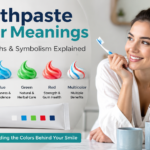
Common toothpaste color symbolism includes:
- White: Cleanliness, purity, whitening, and professional dental care.
- Blue: Fresh breath, trust, hygiene, coolness, and clinical effectiveness.
- Green: Natural ingredients, herbal formulas, sustainability, and gentle care.
- Red: Energy, gum health, strength, and vitality.
- Transparent Gel: Modern technology, freshness, and advanced cleaning.
- Multicolored Stripes: Multiple benefits such as cavity protection, whitening, and fresh breath.
Although brands often use similar color associations, there is no legal or scientific rule requiring specific toothpaste colors to represent certain ingredients.
Psychology of Toothpaste Color Meanings
Color psychology plays a significant role in how consumers perceive toothpaste before they ever use it. Manufacturers carefully choose colors that create emotional responses associated with cleanliness, confidence, and oral health.
Emotional Associations
- Freshness
- Hygiene
- Confidence
- Safety
- Health
- Professional care
- Natural wellness
Psychological Effects
Consumers often judge toothpaste effectiveness based solely on its appearance.
For example:
- White suggests superior whitening.
- Blue creates feelings of cool freshness.
- Green encourages trust in natural ingredients.
- Transparent gels appear technologically advanced.
Positive Emotional Responses
- Feeling clean
- Increased confidence
- Calmness
- Trust in product quality
- Perception of freshness
- Comfort
Negative Emotional Responses
Certain colors may also create unintended reactions.
Examples include:
- Excessive white may seem overly clinical.
- Dark colors can appear unpleasant for oral products.
- Bright red may seem harsh or medicinal.
- Artificial neon colors may reduce perceptions of naturalness.
Impact on Mood and Behavior
Consumers frequently associate cool colors with refreshing experiences and warm colors with stronger medicinal action.
Color can influence:
- Purchase decisions
- Brand loyalty
- Perceived product effectiveness
- Expectations before brushing
Typical Consumer Reactions
Most consumers subconsciously interpret toothpaste colors as indicators of:
- Fresh breath
- Whitening ability
- Gentle cleaning
- Herbal ingredients
- Professional dental care
Research in consumer psychology suggests these impressions are driven primarily by learned associations rather than objective product performance.
Spiritual Meaning of Toothpaste Color Meanings
Although toothpaste itself has no established spiritual symbolism, the colors commonly used in toothpaste reflect broader spiritual color meanings found across many traditions.
White
- Purity
- Holiness
- Peace
- Spiritual cleansing
- Truth
Blue
- Wisdom
- Protection
- Inner peace
- Calm communication
- Divine guidance
Green
- Healing
- Renewal
- Nature
- Growth
- Balance
- New beginnings
Red
- Life force
- Courage
- Strength
- Vitality
- Passion
Many spiritual traditions also associate oral cleansing with symbolic purification, making clean white imagery especially meaningful in wellness branding.
Positive and Negative Toothpaste Color Meanings
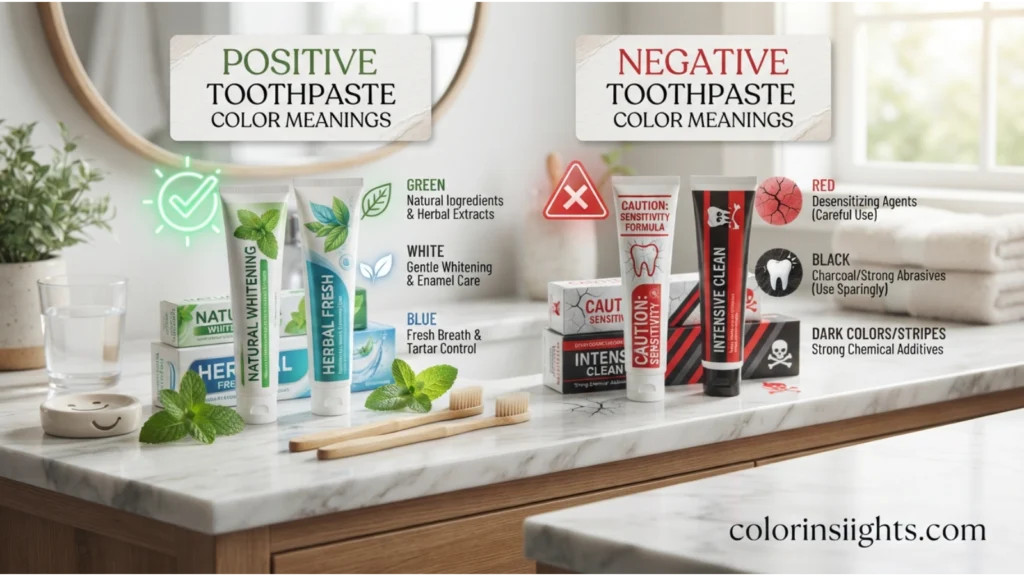
Positive Toothpaste Color Meanings
The colors used in toothpaste packaging and product design often communicate positive qualities.
Purity
White toothpaste symbolizes clean teeth and healthy smiles.
Peace
Cool blue shades create a calming brushing experience.
Simplicity
Minimal white packaging suggests honesty and transparency.
Clarity
Clear gels communicate openness and modern science.
Freshness
Blue and mint green reinforce cool breath and cleanliness.
Hope
Whitening products often symbolize confidence and self-improvement.
Balance
Green toothpaste frequently represents balanced oral care.
Harmony
Natural color palettes appeal to consumers seeking holistic wellness.
Negative Toothpaste Color Meanings
While colors usually communicate positive messages, they may also have less favorable interpretations.
Emptiness
Very plain white packaging can feel generic.
Isolation
Highly clinical designs may appear impersonal.
Coldness
Blue-heavy branding sometimes feels overly medical.
Sterility
Excessive white may resemble hospital environments.
Boredom
Minimal color use may reduce shelf appeal.
Emotional Distance
Scientific branding occasionally lacks warmth.
Perfectionism
Whitening campaigns may unintentionally promote unrealistic beauty standards.
Real-world example: Luxury whitening toothpaste often uses bright white and silver packaging to emphasize perfection, which some consumers appreciate while others perceive as intimidating.
Toothpaste Color Meanings in Different Contexts
The meaning of toothpaste colors changes depending on how and where the colors are used.
Toothpaste Color Meanings in Feng Shui
Although toothpaste is not a traditional Feng Shui object, its colors align with Feng Shui elements.
Associated Elements
- White: Metal
- Blue: Water
- Green: Wood
- Red: Fire
Energy Symbolism
- White supports clarity.
- Blue encourages calm communication.
- Green promotes healing.
- Red represents vitality.
Best Rooms
- Bathroom
- Vanity area
- Wellness spaces
Recommended Color Combinations
- White and blue
- White and green
- Green with natural wood tones
Decorating Tip
Choose organized bathroom storage with soft white or natural colors to create a clean and peaceful atmosphere.
Toothpaste Color Meanings in Marketing
Color psychology strongly influences oral care marketing.
Branding Psychology
Brands use colors to instantly communicate product benefits.
Consumer Perception
Consumers commonly associate:
- White with whitening
- Blue with freshness
- Green with herbal ingredients
Trust Signals
Dental brands frequently use blue and white because these colors increase perceptions of professionalism and safety.
Product Packaging
Color coding helps shoppers quickly distinguish:
- Sensitive formulas
- Whitening products
- Children’s toothpaste
- Herbal toothpaste
Advertising Applications
Commercials often combine sparkling white smiles with blue water or green leaves to reinforce cleanliness and natural care.
Examples of brands using these colors include:
- Colgate
- Crest
- Sensodyne
- Aquafresh
- Tom’s of Maine
- Parodontax
Toothpaste Color Meanings in Design
Designers use toothpaste-inspired colors to communicate cleanliness and trust.
Interior Design
White and blue bathrooms feel hygienic and spacious.
Graphic Design
Healthcare graphics frequently use blue, white, and mint green.
Web Design
Dental clinics often rely on cool color palettes to inspire confidence.
User Experience
Soft blues reduce visual stress and improve readability.
Minimalist Aesthetics
Simple white layouts reinforce professionalism and cleanliness.
Toothpaste Color Meanings in Fashion
Although toothpaste colors are not fashion categories, these shades influence clothing choices.
Clothing Symbolism
- White represents elegance and cleanliness.
- Blue communicates reliability.
- Green reflects eco-conscious values.
Seasonal Use
- White for summer.
- Blue throughout the year.
- Green especially during spring.
Styling Effects
Cool colors create polished, professional appearances.
Personality Impressions
People wearing these colors are often viewed as:
- Organized
- Calm
- Trustworthy
- Friendly
Advantages
- Timeless
- Easy to coordinate
- Suitable for professional settings
Disadvantages
- White stains easily.
- Blue may feel overly corporate.
- Green is not universally flattering.
Toothpaste Color Meanings Across Cultures
The symbolism of toothpaste colors varies by cultural background and historical context.
Western Cultures
White symbolizes cleanliness, hygiene, innocence, and professional healthcare. Blue is associated with trust and medical expertise, making these colors dominant in dental branding.
Eastern Cultures
Green often reflects harmony, health, nature, and longevity. White may symbolize purity in some contexts but can also represent mourning in certain cultures, giving it different emotional meanings.
Religious Traditions
Many faiths associate white with holiness, spiritual purity, and moral integrity. Green frequently symbolizes life, paradise, renewal, and divine blessing.
Historical Interpretations
Historically, white powders and herbal mixtures were common forms of dental cleaning. Modern toothpaste colors evolved alongside advancements in branding and consumer psychology rather than ancient symbolism.
Modern Global Interpretations
Today, toothpaste colors communicate product positioning more than cultural symbolism. White, blue, and green have become internationally recognized visual signals for freshness, cleanliness, and oral health.
What Toothpaste Color Meanings Say About Your Personality
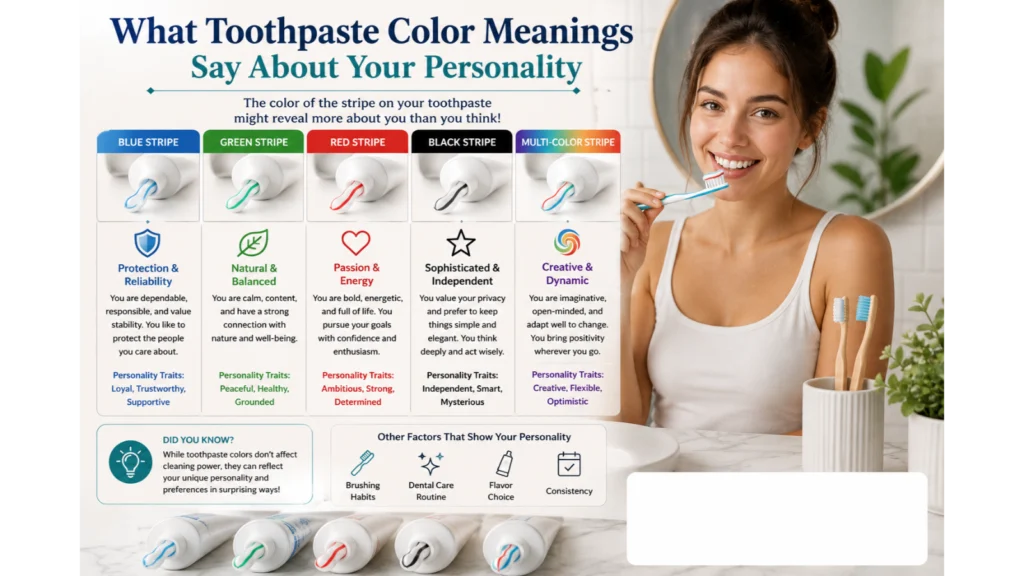
People sometimes identify with certain toothpaste colors because they reflect broader color preferences. However, color preference alone does not determine personality, and these associations should be viewed as general tendencies rather than scientific conclusions.
White Preference
- Honest
- Organized
- Detail-oriented
- Appreciates simplicity
Blue Preference
- Calm
- Reliable
- Logical
- Patient
Green Preference
- Nature-loving
- Compassionate
- Balanced
- Health-conscious
Red Preference
- Energetic
- Confident
- Determined
- Passionate
Work Style
Individuals drawn to cooler colors often value structure, planning, and consistency.
Relationships
Green and blue preferences are commonly linked with loyalty, empathy, and emotional stability.
Emotional Tendencies
White and blue enthusiasts may seek peace and order, while red enthusiasts often enjoy excitement and action.
Remember that personality is influenced by genetics, experiences, culture, and environment—not color preference alone.
FAQs:
What defines toothpaste color meanings?
Toothpaste color meanings refer to the symbolic and psychological associations of toothpaste colors used in products and branding. They do not indicate ingredient composition.
What does toothpaste color symbolize?
Toothpaste colors generally symbolize freshness, cleanliness, whitening, natural care, or advanced technology depending on the color used.
Why are toothpaste color meanings important?
They influence consumer perception, purchasing decisions, and expectations about product performance.
Is toothpaste color warm or cool?
Most toothpaste colors—especially white, blue, and green—are considered cool or neutral because they communicate cleanliness and freshness.
What emotions do toothpaste colors represent?
Common emotions include trust, confidence, calmness, freshness, cleanliness, safety, and wellness.
What is the spiritual meaning of toothpaste colors?
Spiritually, white often symbolizes purity, blue represents wisdom and peace, green signifies healing and renewal, and red reflects vitality and strength.
What colors pair well with toothpaste-inspired colors?
White pairs well with blue, silver, gray, mint green, teal, navy, and natural wood tones.
Do the colored squares on toothpaste tubes indicate ingredients?
No. The colored squares or rectangles on toothpaste tubes are manufacturing registration marks used by printing equipment and do not identify natural or chemical ingredients.
Why is blue commonly used in toothpaste?
Blue is associated with freshness, trust, cleanliness, coolness, and professional dental care, making it highly effective for oral hygiene branding.
What does liking toothpaste-inspired colors say about a person?
People who prefer these colors may appreciate cleanliness, organization, health, or calm environments, but personality cannot be accurately determined from color preferences alone.
Conclusion
Toothpaste color meanings combine science, marketing, and psychology rather than hidden manufacturing codes or ingredient secrets. While online myths continue to circulate, the colors seen in toothpaste and its packaging are carefully selected to communicate freshness, cleanliness, trust, and wellness.
White, blue, green, and other shades shape consumer expectations through well-established color psychology principles, helping brands build recognition and confidence. By understanding the difference between symbolic color associations and factual manufacturing practices, consumers can make informed choices and better appreciate how color influences perception in everyday oral care products.