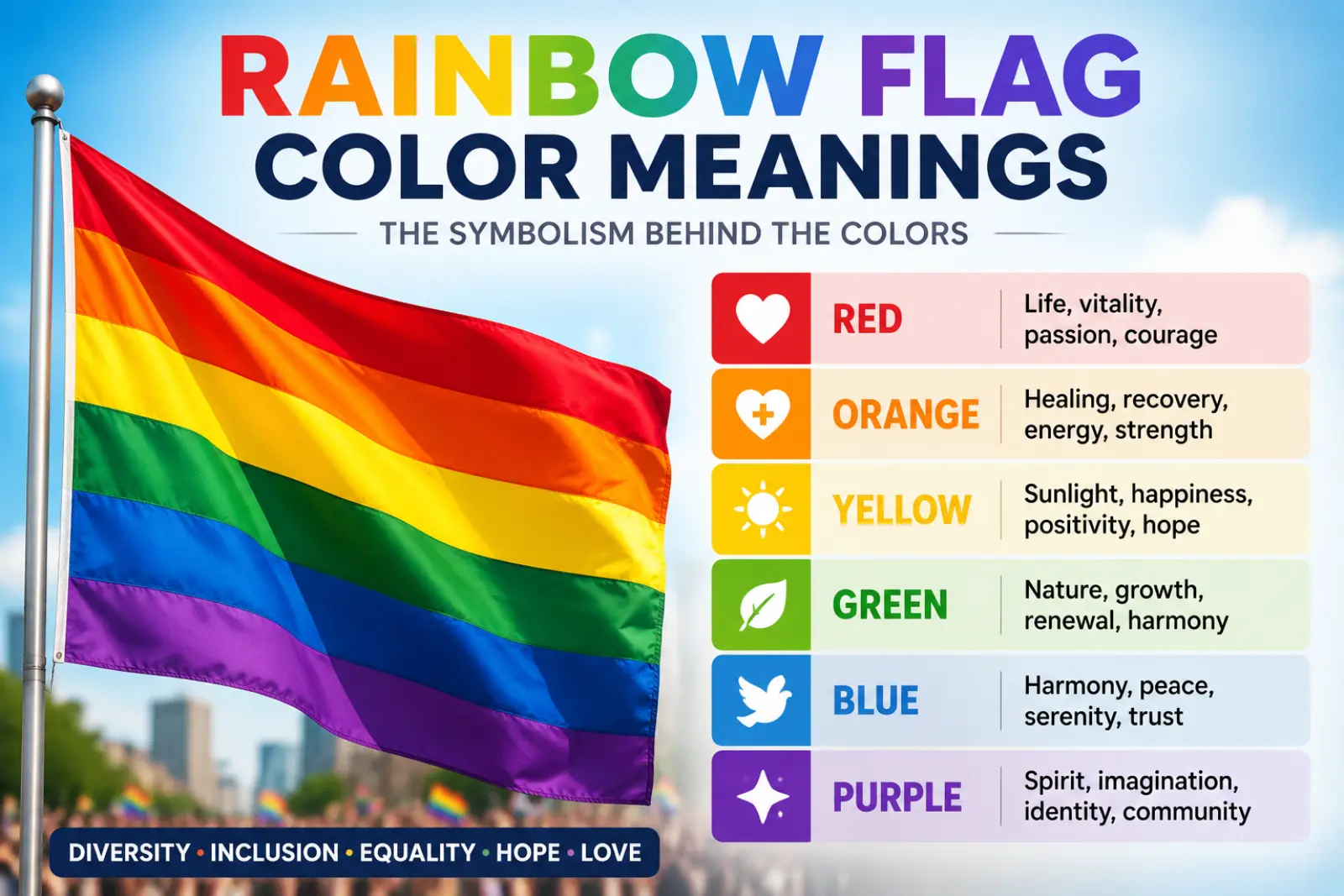
The rainbow flag is one of the most recognizable symbols of diversity, identity, inclusion, and community around the world. Each color in the flag carries its own symbolism, representing important values such as life, healing, nature, harmony, and spirituality. Over time, the rainbow flag has evolved into a powerful visual symbol used in cultural events, social movements, design, and public expression. Rainbow Flag Color Meanings vary across the communities.
Quick answer:
The rainbow flag color meanings represent different aspects of human experience and shared values, with each color symbolizing ideas such as life, healing, sunlight, nature, harmony, and spirit.
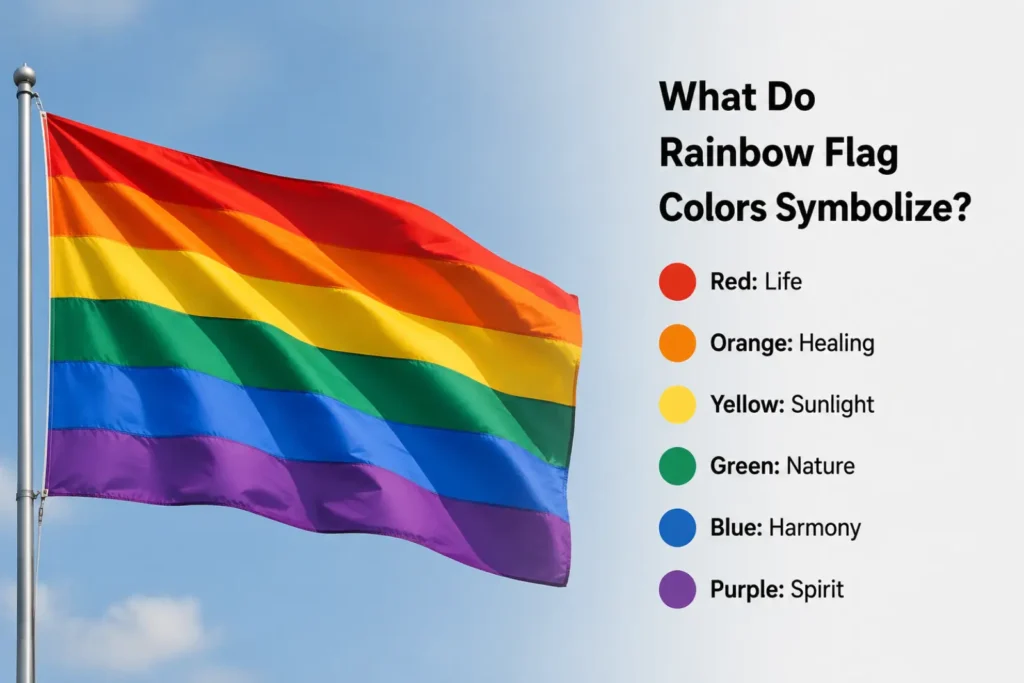
What Do Rainbow Flag Colors Symbolize?
Rainbow flag colors symbolize diversity, unity, hope, and the importance of recognizing different human experiences. The combination of multiple colors creates a message that no single identity, culture, or perspective represents everyone.
Unlike many traditional flags that represent a country or territory, the rainbow flag represents a community and a set of values. Its colors work together to communicate ideas of acceptance, visibility, equality, and belonging.
The main symbolic themes associated with rainbow flag colors include:
- Diversity: Different colors represent the variety of human experiences and backgrounds.
- Unity: Multiple colors appear together as one complete symbol.
- Hope: The rainbow has historically represented optimism and positive change.
- Identity: Colors help communicate personal and community expression.
- Visibility: The flag represents recognition and representation.
- Connection: The rainbow symbolizes shared humanity across differences.
The meaning of the rainbow flag comes not only from individual colors but also from the way those colors appear together as a complete visual message.
History of the Rainbow Flag
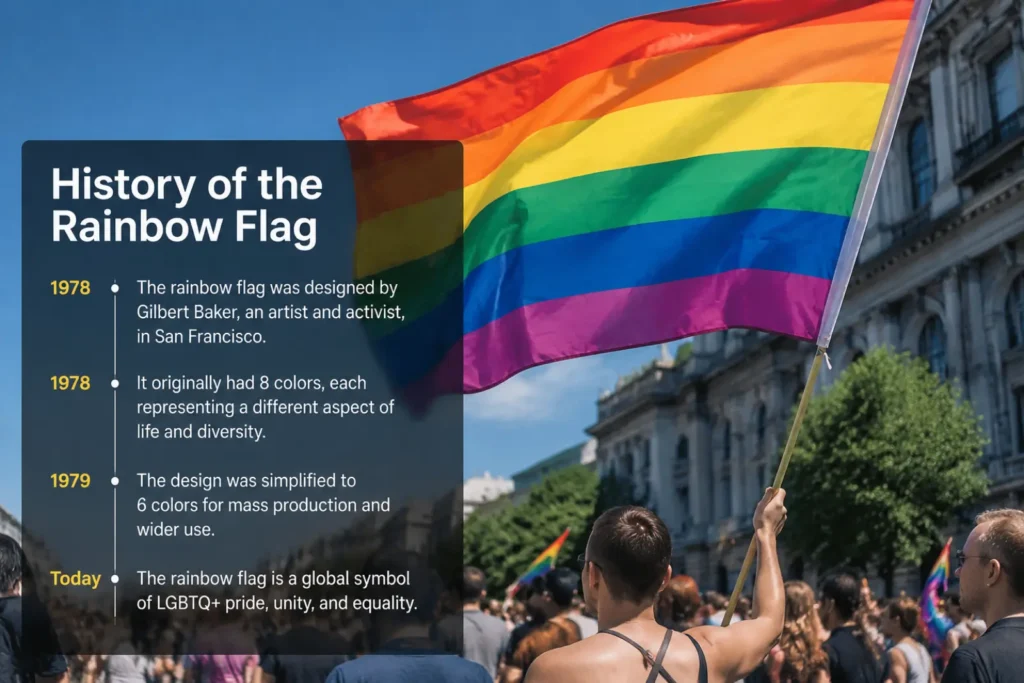
The original rainbow flag was created in 1978 as a symbol for a growing social movement seeking visibility, equality, and representation. The first version included eight colors, with each color representing a specific idea.
The original eight-color design included:
- Hot pink: Sexuality
- Red: Life
- Orange: Healing
- Yellow: Sunlight
- Green: Nature
- Turquoise: Magic and art
- Indigo: Harmony
- Violet: Spirit
Due to practical issues with fabric availability, later versions simplified the design into the well-known six-color rainbow flag.
The six-color version became one of the most recognized forms:
- Red
- Orange
- Yellow
- Green
- Blue
- Purple
Over time, additional versions appeared to represent broader experiences and communities. These include designs such as the Philadelphia Pride Flag and Progress Pride Flag, which add colors representing racial diversity and transgender inclusion.
The history of the rainbow flag shows how symbols can evolve as communities grow and conversations about representation change.
Meaning of Each Rainbow Flag Color
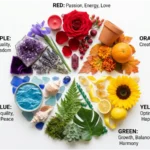
Red Color Meaning
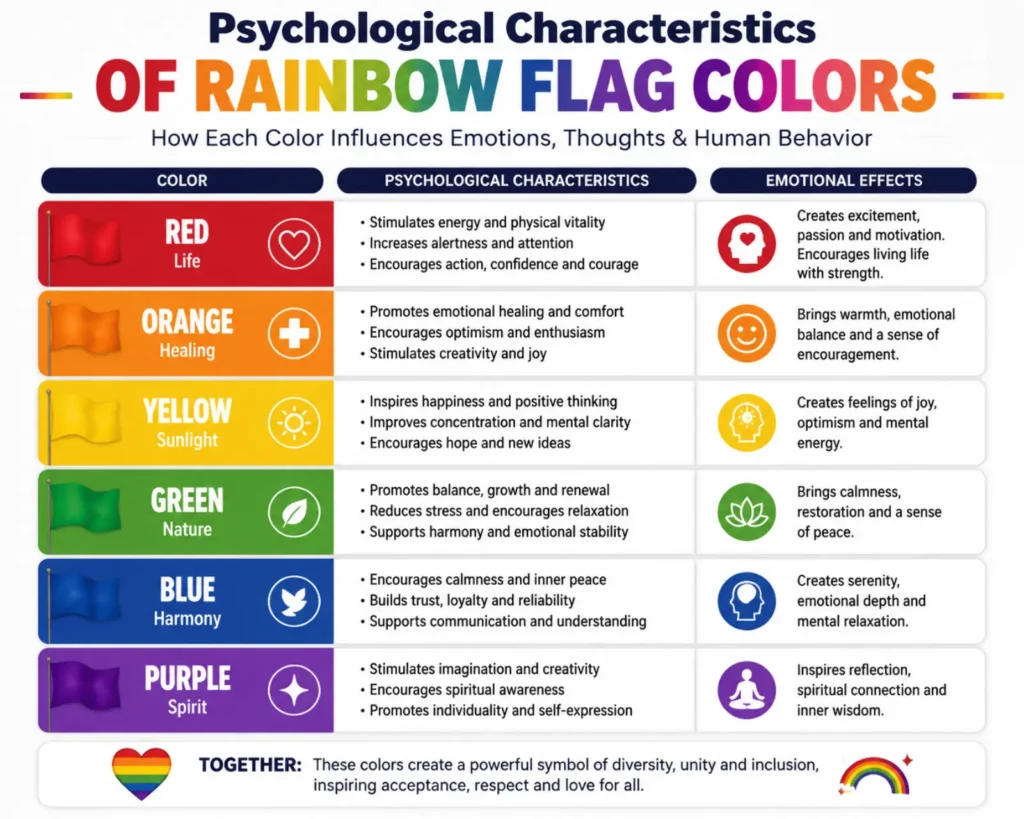
Red represents life, energy, and vitality.
The color red is often associated with:
- Strength
- Passion
- Human energy
- Courage
- Action
In color psychology, red is considered an attention-grabbing color that can create feelings of excitement and intensity.
Within the rainbow flag, red represents the importance of life and human experience.
Orange Color Meaning
Orange represents healing and recovery.
The symbolism of orange includes:
- Restoration
- Emotional healing
- Warmth
- Support
- Renewal
Orange is often viewed as an energetic and optimistic color. In design and psychology, it can create feelings of friendliness and encouragement.
Yellow Color Meaning
Yellow represents sunlight, happiness, and positivity.
The color yellow is commonly associated with:
- Joy
- Hope
- Awareness
- Optimism
- Energy
Because sunlight supports life and growth, yellow has often been connected with positive emotions and inspiration.
Green Color Meaning
It represents nature, growth, and renewal.
Green symbolism includes:
- Balance
- Environmental connection
- Freshness
- Development
- Harmony
Across many cultures, green is strongly connected with nature, plants, and restoration.
Blue Color Meaning
It represents harmony, peace, and calmness.
Blue is commonly associated with:
- Trust
- Stability
- Serenity
- Communication
- Understanding
Color psychology often connects blue with feelings of reliability and emotional calm.
Purple Color Meaning
It represents spirit, imagination, and deeper meaning.
Purple symbolism includes:
- Creativity
- Individuality
- Spiritual connection
- Inspiration
- Reflection
Historically, purple has also been associated with royalty, wisdom, and importance because purple dyes were once rare and expensive.
Psychological Characteristics of Rainbow Flag Colors
Color psychology explains how colors influence emotions, attention, and perception. While individual responses vary, color combinations can create strong emotional impressions.
The rainbow flag uses multiple colors together, creating a visual experience connected with:
Emotional Associations
Rainbow colors can communicate:
- Happiness
- Energy
- Openness
- Creativity
- Connection
- Hope
Psychological Effects
A combination of bright colors can:
- Attract attention
- Create feelings of optimism
- Encourage emotional engagement
- Communicate diversity and celebration
Positive Responses
People may associate rainbow colors with:
- Freedom
- Acceptance
- Community
- Celebration
- Expression
Negative Responses
Interpretations can vary depending on personal beliefs, cultural background, and social experiences. Some people may view the symbol differently because colors often carry personal and cultural meanings.
Impact on Design and Behavior
Bright color combinations are commonly used in:
- Events
- Advertising
- Digital design
- Educational materials
- Community campaigns
The rainbow palette creates a strong visual identity because humans naturally notice contrast and color variation.
Spiritual and Cultural Meaning of the Rainbow Flag
Rainbows have carried symbolic meanings throughout human history. Long before modern uses of the rainbow flag, rainbows appeared in mythology, religion, and cultural traditions.
Common symbolic meanings include:
Hope
Many traditions view the rainbow as a sign of hope after difficulty or change.
Connection
Rainbows are often interpreted as a bridge between different worlds, communities, or experiences.
Transformation
The appearance of a rainbow after rain has made it a symbol of renewal and positive transformation.
Unity
Multiple colors existing together can represent cooperation and harmony.
Spiritual Reflection
In some traditions, rainbow colors are associated with spiritual energy, balance, and enlightenment.
The spiritual meaning of rainbow symbols differs across cultures and religions, so interpretations should always consider historical and cultural context.
Rainbow Flag Variations and Their Meanings
Rainbow Flag Color Meanings has developed into several variations over time.
Original Rainbow Flag
The original eight-color flag included additional colors and meanings related to life, healing, sunlight, nature, art, harmony, and spirit.
Six-Color Rainbow Flag
The six-color version is the most widely recognized design:
- Red
- Orange
- Yellow
- Green
- Blue
- Purple
It represents diversity, unity, and community.
Philadelphia Pride Flag
This version added:
- Black
- Brown
These colors highlight racial diversity and inclusion.
Progress Pride Flag
The Progress Pride Flag incorporates:
- Black
- Brown
- Light blue
- Pink
- White
These additions represent broader inclusion and recognition of different communities.
Rainbow Flag Colors in Design and Marketing
Colors are powerful communication tools in branding and visual design.
Branding Psychology
Brands use color to influence perception.
Rainbow colors may communicate:
- Creativity
- Openness
- Diversity
- Innovation
- Community values
Consumer Perception
Color choices influence how audiences emotionally respond to brands and messages.
Product and Event Design
Rainbow colors are often used in:
- Campaign graphics
- Event branding
- Social media designs
- Educational materials
Digital Design
Designers use rainbow colors to create:
- Attention
- Visual interest
- Emotional connection
- Strong identity
However, organizations should use symbolic colors thoughtfully and understand the cultural meaning behind them.
Rainbow Colors in Different Cultures
Rainbows have different interpretations around the world.
Western Cultures
Many Western societies associate rainbows with hope, diversity, and positive transformation.
Eastern Cultures
Some Eastern traditions connect rainbows with spiritual ideas, natural balance, and connections between heaven and earth.
Religious Traditions
Different religions interpret rainbows in unique ways. For example, some traditions view rainbows as symbols of promises, blessings, or divine connection.
Historical Interpretations
Throughout history, rainbows have appeared in myths, artwork, and stories as symbols of change, protection, and connection.
Modern Global Interpretations
Today, rainbow symbolism appears in:
- Art
- Fashion
- Social movements
- Advertising
- Popular culture
Meanings continue to evolve based on social and cultural context.
What Rainbow Flag Colors Represent About Community Values
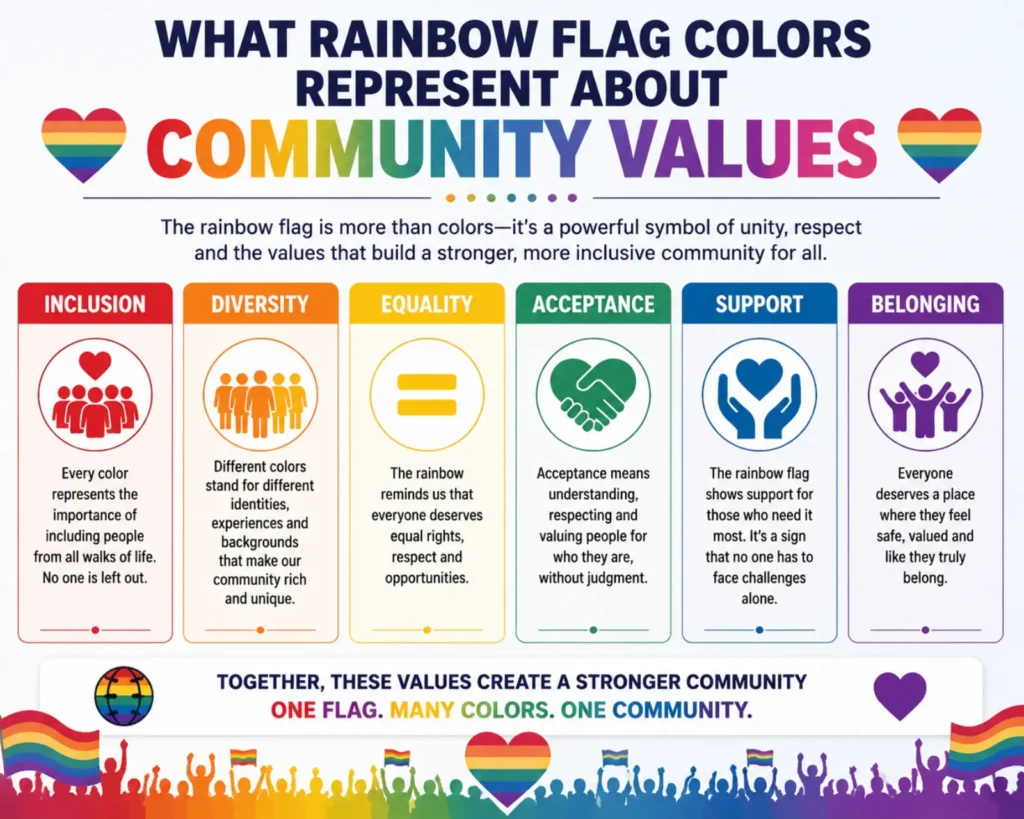
Rainbow flag colors are commonly associated with values such as:
Inclusion
The many colors represent recognition of different experiences and backgrounds.
Diversity
Each color contributes to the complete symbol, showing that differences can exist together.
Equality
The rainbow flag is often connected with ideas of fairness and equal recognition.
Belonging
The symbol communicates community connection and visibility.
Hope
The rainbow continues to represent optimism and positive change.
FAQs:
What do rainbow flag colors mean?
Rainbow flag colors represent ideas such as life, healing, sunlight, nature, harmony, and spirit.
What is the meaning of the rainbow flag?
The rainbow flag symbolizes diversity, inclusion, identity, community, and equality.
Who created the rainbow flag?
The original rainbow flag was designed in 1978 and later evolved into different versions.
What does each color on the rainbow flag represent?
Each color has symbolic meaning, including life, healing, sunlight, nature, harmony, and spirit.
Why does the rainbow flag have different versions?
Different versions were created to represent broader communities and experiences.
What does the six-color rainbow flag symbolize?
The six-color rainbow flag represents diversity, unity, and community through its combination of colors.
Are rainbow colors meaningful in different cultures?
Yes. Rainbow symbolism changes across cultures, religions, and historical traditions.
Why are rainbow colors used in design?
Rainbow colors attract attention and communicate creativity, diversity, and emotional connection.
What does the rainbow symbolize spiritually?
Rainbows often symbolize hope, transformation, connection, and renewal.
Can rainbow colors have different meanings?
Yes. Color meanings depend on culture, history, context, and personal interpretation.
Conclusion
Rainbow flag color meanings show how colors can communicate powerful ideas beyond simple decoration. Each color contributes to a larger message of life, healing, hope, nature, harmony, and spirit.
The meaning of rainbow colors can change depending on cultural background, historical context, and personal interpretation. Understanding these differences helps people use colors more thoughtfully in communication, design, and social expression.
Whether used in art, events, branding, or cultural discussions, the rainbow flag remains a strong example of how colors can bring together symbolism, identity, and shared human values.