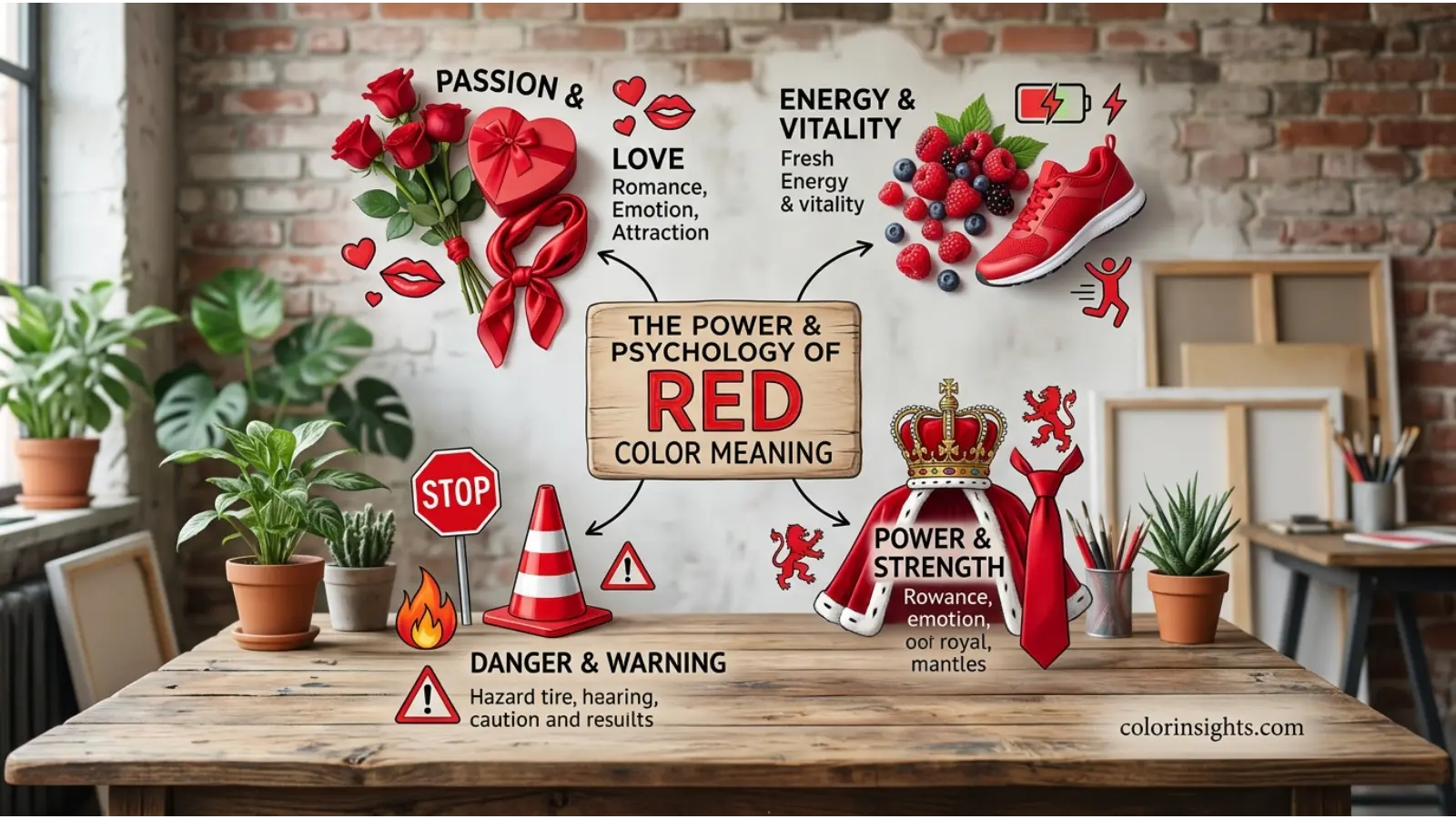
Red is one of the most powerful and emotionally charged colors in the visible spectrum. It instantly captures attention and has been associated with passion, love, courage, danger, energy, and strength throughout history.
From ancient ceremonies and national flags to branding, fashion, and interior design, red carries meanings that can inspire excitement or signal caution depending on the context.
Because it stimulates both emotional and physical responses, red remains one of the most influential colors in psychology and visual communication.
Quick Answer:
Red color meaning is most commonly associated with passion, love, energy, courage, power, confidence, strength, excitement, and action, although it can also symbolize danger, anger, aggression, and warning depending on cultural and situational contexts.
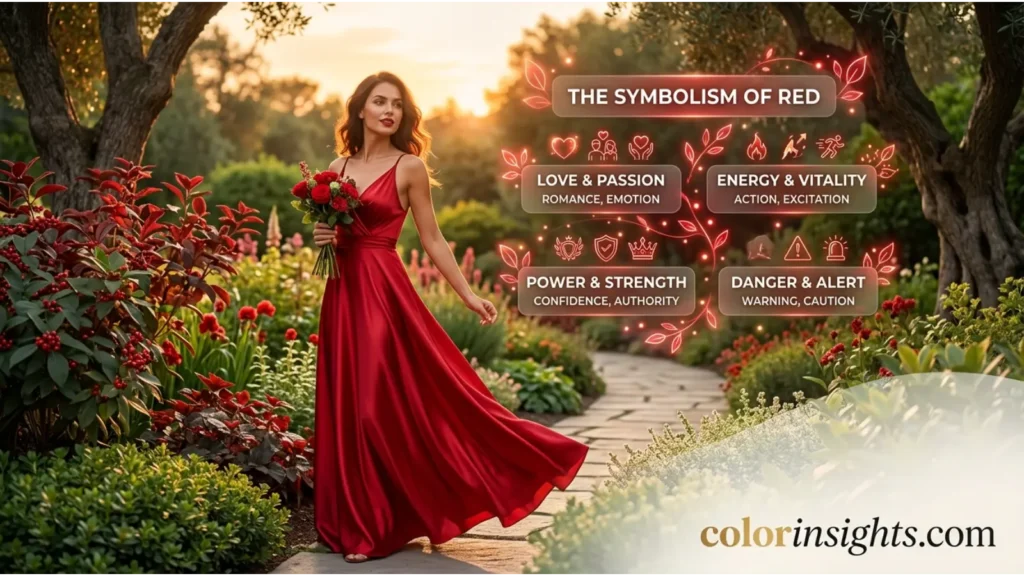
What Does the Red Color Symbolize?
Red symbolizes powerful emotions, vitality, and intense human experiences. As the color of blood and fire, it naturally represents life, survival, warmth, and energy. Across many cultures, it signifies courage, celebration, prosperity, romance, and authority, while also serving as a universal warning color for danger and emergencies.
The symbolism of red often depends on how and where it is used:
- Love and romance
- Passion and desire
- Energy and vitality
- Courage and bravery
- Leadership and authority
- Power and determination
- Celebration and prosperity
- Danger and warning
- Anger and aggression
- Sacrifice and strength
Because of its visual intensity, red is often chosen whenever immediate attention or strong emotional engagement is desired.
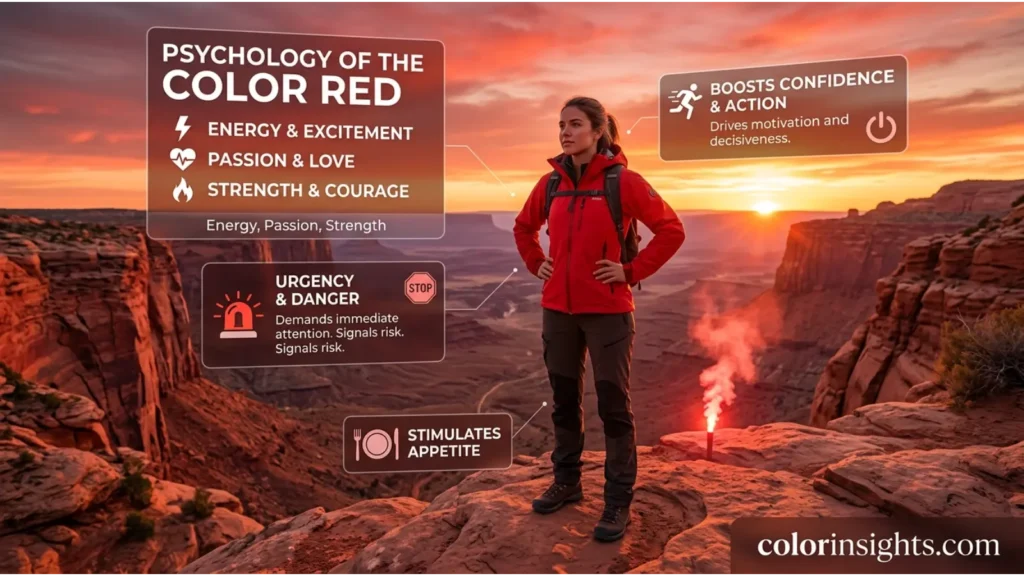
Psychological Characteristics of the Red Color
The psychology of red suggests that it is one of the most stimulating colors for the human mind. Research in color psychology indicates that red can increase alertness, raise perceived energy levels, and encourage action.
Emotional Associations
People commonly associate red with:
- Passion
- Love
- Excitement
- Confidence
- Courage
- Power
- Urgency
- Determination
Psychological Effects
Red often produces measurable psychological responses, including:
- Increased attention
- Greater mental alertness
- Higher excitement levels
- Faster decision-making
- Increased physical energy
- Stronger emotional reactions
Positive Emotional Responses
- Motivation
- Enthusiasm
- Confidence
- Warmth
- Romance
- Empowerment
- Determination
- Optimism
Negative Emotional Responses
- Anger
- Aggression
- Anxiety
- Impatience
- Stress
- Danger awareness
- Emotional overload
- Impulsiveness
Impact on Mood and Behavior
Red often encourages action rather than reflection. It may inspire people to take initiative, compete, or make quick purchasing decisions. Restaurants frequently incorporate red because it can stimulate appetite and create an energetic dining atmosphere.
However, excessive exposure to bright red may increase feelings of tension or restlessness, especially in environments intended for relaxation.
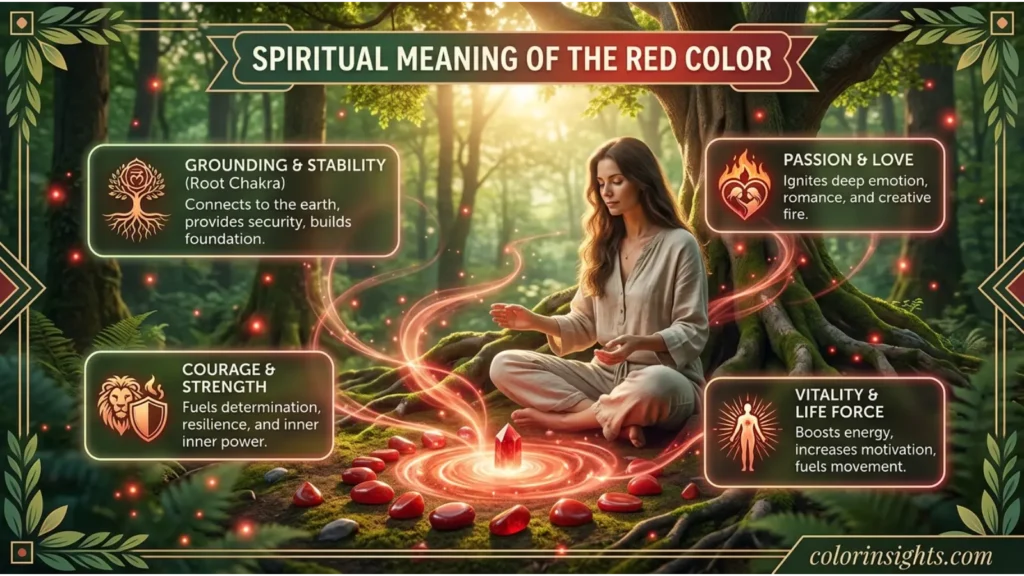
Spiritual Meanings Of The Red Color
The spiritual meaning of red varies across religious traditions and spiritual practices, but it generally represents life force, divine strength, transformation, protection, and sacred energy.
Common Spiritual Symbolism
- Holiness: Used in religious ceremonies to represent sacred sacrifice and divine love.
- Wisdom: Symbolizes experience gained through courage and perseverance.
- Purity: In some traditions, red reflects purified spiritual strength after overcoming hardship.
- Transformation: Represents personal growth through challenges.
- Healing: Associated with physical vitality and life energy.
- Protection: Used in amulets and rituals to ward off negative influences.
- Power: Represents spiritual authority and inner strength.
- Enlightenment: Symbolizes awakened consciousness achieved through discipline.
- New Beginnings: Marks fresh starts filled with courage and determination.
- Eternity: Reflects the enduring force of life and the continuity of existence.
In energy-based spiritual systems, red is commonly linked with the Root Chakra, representing stability, grounding, survival, and physical security.
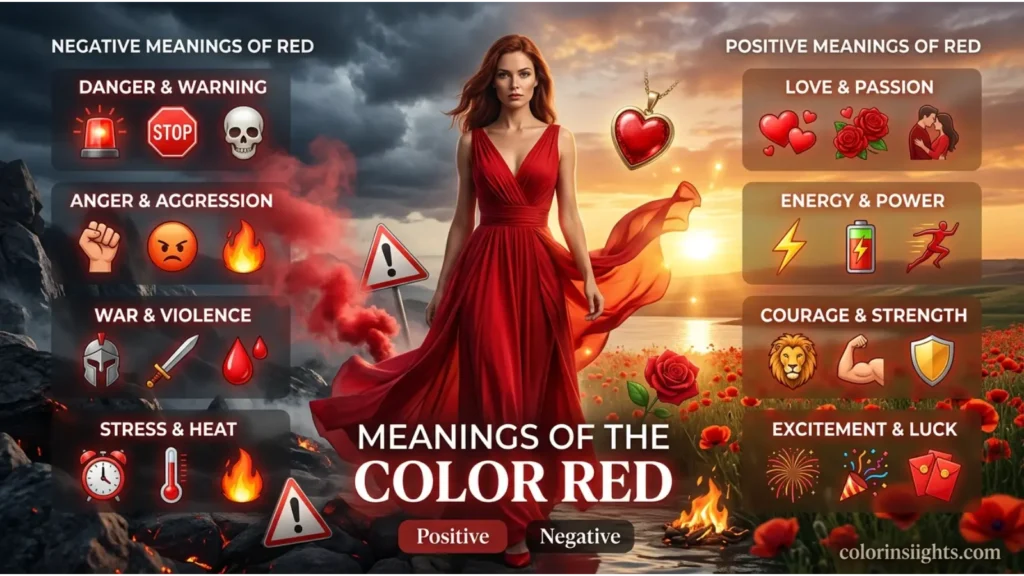
Positive and Negative Meanings
Positive Meanings
Red has many uplifting symbolic meanings that explain its popularity across cultures.
Love
Red roses remain one of the world’s most recognized symbols of romantic affection.
Courage
Military decorations, national flags, and historical emblems frequently use red to honor bravery.
Strength
Athletes often wear red uniforms to project confidence and competitive spirit.
Passion
Artists use red to express intense emotions and creativity.
Energy
Fitness brands commonly feature red to encourage movement and motivation.
Leadership
Corporate logos often include red to communicate authority and decisiveness.
Celebration
In many Asian cultures, red decorations are central to weddings and New Year celebrations.
Determination
Achievement awards and motivational campaigns frequently use red to symbolize persistence.
Negative Meanings
Although powerful, red also has cautionary symbolism.
Danger
Stop signs and emergency equipment use red because it demands immediate attention.
Anger
Expressions like “seeing red” connect the color with intense frustration.
Aggression
Sports rivalries and competitive environments sometimes associate red with confrontation.
Warning
Traffic lights, hazard labels, and alarms rely on red for universal recognition.
Impulsiveness
Bright red environments may encourage rushed decisions or emotional reactions.
Violence
Historically, red has represented warfare and bloodshed.
Stress
Large amounts of vivid red in workspaces can feel overwhelming.
Dominance
Overuse may appear intimidating or overly controlling.
Meanings of the Color Red
The meaning of red changes according to its context. A deep burgundy conveys sophistication, while bright scarlet communicates excitement and urgency. Designers, marketers, and artists carefully select shades of red to achieve specific emotional effects.
Feng Shui
In Feng Shui, red is among the most auspicious colors.
- Associated element: Fire
- Energy symbolism: Passion, vitality, prosperity, protection, and success
- Best rooms: Living rooms, dining rooms, entryways, and celebration spaces
- Recommended color combinations: White, gold, black, cream, and natural wood tones
- Home decorating tips: Use red as an accent through cushions, artwork, rugs, or decorative accessories instead of overwhelming an entire room.
Balanced use creates warmth without excessive stimulation.
Marketing
Red is one of the most influential marketing colors because it quickly attracts attention and creates emotional engagement.
Brands use red to communicate:
- Energy
- Excitement
- Confidence
- Passion
- Urgency
- Action
Consumers often perceive red products as bold, exciting, and memorable.
Common marketing applications include:
- Call-to-action buttons
- Promotional sales
- Fast-food branding
- Sports branding
- Entertainment advertising
- Product packaging
Well-known brands using red include:
- Coca-Cola
- Netflix
- YouTube
- Target
- Canon
- Nintendo
- LEGO
- CNN
Red is particularly effective for limited-time offers because it encourages immediate action.
Design
Red plays an important role across multiple design disciplines.
Interior Design
- Creates warmth and energy
- Serves as an eye-catching accent
- Works well in social gathering spaces
- Adds visual drama
Graphic Design
- Highlights important information
- Creates visual hierarchy
- Increases attention
- Builds emotional impact
Web Design
- Encourages clicks on call-to-action buttons
- Highlights promotions
- Draws attention to important announcements
User Experience (UX)
- Indicates errors or warnings
- Directs user focus
- Improves interface visibility when used sparingly
Minimalist Aesthetics
A single red accent against neutral colors creates a clean yet striking visual composition.
Fashion
Red has long symbolized confidence and bold personal expression.
Clothing Symbolism
- Confidence
- Passion
- Authority
- Strength
- Glamour
Seasonal Use
- Bright reds suit spring and summer.
- Deep crimson works well during fall and winter.
Styling Effects
Red instantly becomes the focal point of an outfit.
Personality Impressions
People wearing red are often perceived as:
- Confident
- Outgoing
- Ambitious
- Energetic
- Passionate
Advantages
- Makes a memorable impression
- Enhances confidence
- Draws attention
- Suitable for formal and casual wear
Disadvantages
- May appear overpowering
- Can dominate coordinated outfits
- Less suitable for conservative professional settings when overused
For example, a red tie can communicate confidence during presentations, while a red evening dress often conveys elegance and sophistication.
Color Associations Are Not Universal
Although many interpretations of red are widespread, its symbolism varies across societies.
Western Cultures
In North America and much of Europe, red commonly symbolizes love, passion, courage, excitement, danger, and warning. Valentine’s Day, emergency vehicles, and stop signs all reinforce these meanings.
Eastern Cultures
Across China and several East Asian cultures, red symbolizes prosperity, happiness, celebration, success, and good fortune. It is widely used during weddings, festivals, and Lunar New Year celebrations.
Religious Traditions
In Christianity, the color red represents Christ’s sacrifice, the presence of the Holy Spirit, and the courage of martyrs. In Hinduism, it is associated with purity, marriage, fertility, prosperity, and the sacred feminine. Within Buddhism, red symbolizes vitality, inner strength, and the transformative journey toward spiritual awakening.
Historical Interpretations
Historically, red pigments were expensive and associated with royalty, military power, and political authority. Throughout history, rulers and religious leaders frequently wore red garments to demonstrate influence.
Modern Global Interpretations
Today, globalization has expanded red’s meanings. It represents excitement in entertainment, urgency in marketing, confidence in fashion, and celebration in international events while continuing to serve as an important warning color in safety systems.
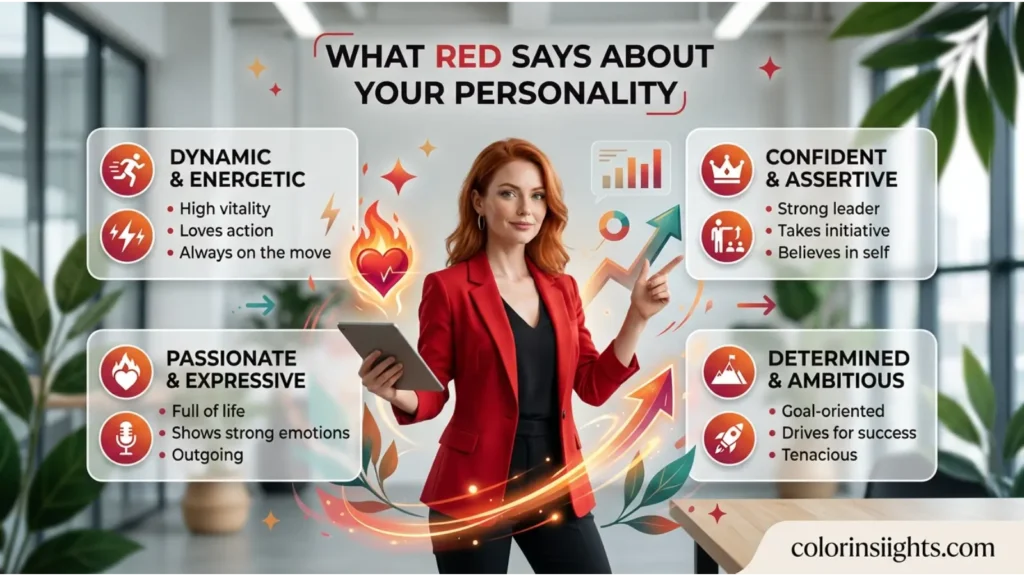
What Red Says About Your Personality
People who enjoy red are often described as energetic and action-oriented, although color preference alone cannot accurately determine personality.
Strengths
- Confident
- Courageous
- Passionate
- Motivated
- Determined
- Competitive
- Charismatic
- Ambitious
Weaknesses
- Impatient
- Impulsive
- Easily frustrated
- Strong-willed
- Sometimes overly competitive
Social Behavior
Those attracted to red often enjoy leadership roles, social interaction, and dynamic environments.
Work Style
They may thrive in careers requiring initiative, quick decisions, and high energy, including entrepreneurship, sales, athletics, emergency services, and management.
Relationships
Red lovers often value loyalty, passion, honesty, and emotional intensity within close relationships.
Emotional Tendencies
They typically embrace challenges enthusiastically but may need to balance excitement with patience and thoughtful decision-making.
While these traits are common associations in color psychology, individual personality is shaped by many factors beyond color preference.
FAQs
What defines red color?
Red is a warm color with the longest visible wavelength in the color spectrum. It is associated with energy, passion, strength, and attention.
What does red symbolize?
Red symbolizes love, courage, power, excitement, vitality, danger, warning, determination, and celebration.
Why is red important?
Red plays an essential role in communication, branding, safety systems, cultural traditions, and emotional expression because it attracts attention more quickly than many other colors.
Is red a warm or cool color?
Red is considered a warm color because it evokes feelings of heat, energy, and activity.
What emotions does red represent?
Red commonly represents love, excitement, confidence, passion, courage, anger, urgency, and determination.
What does red mean spiritually?
Spiritually, red symbolizes life force, protection, grounding, transformation, divine strength, and personal empowerment.
What colors pair well with red?
Red pairs beautifully with white, black, gray, gold, cream, navy blue, beige, and natural wood tones depending on the desired aesthetic.
What does liking red say about a person?
A preference for red is often associated with confidence, ambition, enthusiasm, and assertiveness, though personality cannot be determined solely by color preference.
Why do marketers use red?
Marketers use red because it captures attention, creates urgency, stimulates emotional engagement, and encourages action.
Is red suitable for home interiors?
Yes. Red works best as an accent color in living rooms, dining areas, or entertainment spaces where warmth and energy are desirable.
Conclusion
Red is one of the most influential colors in human perception, carrying rich symbolism across psychology, spirituality, design, marketing, fashion, and culture.
It represents love, courage, confidence, vitality, and leadership while also serving as a universal signal for danger, urgency, and strong emotion.
Although its interpretations differ across cultures and historical traditions, red consistently evokes powerful emotional responses that shape communication, branding, and personal expression.
Understanding red color meaning allows individuals, designers, businesses, and educators to use this dynamic color more intentionally and effectively in everyday life.




 Welcome to The colorinsiights.com