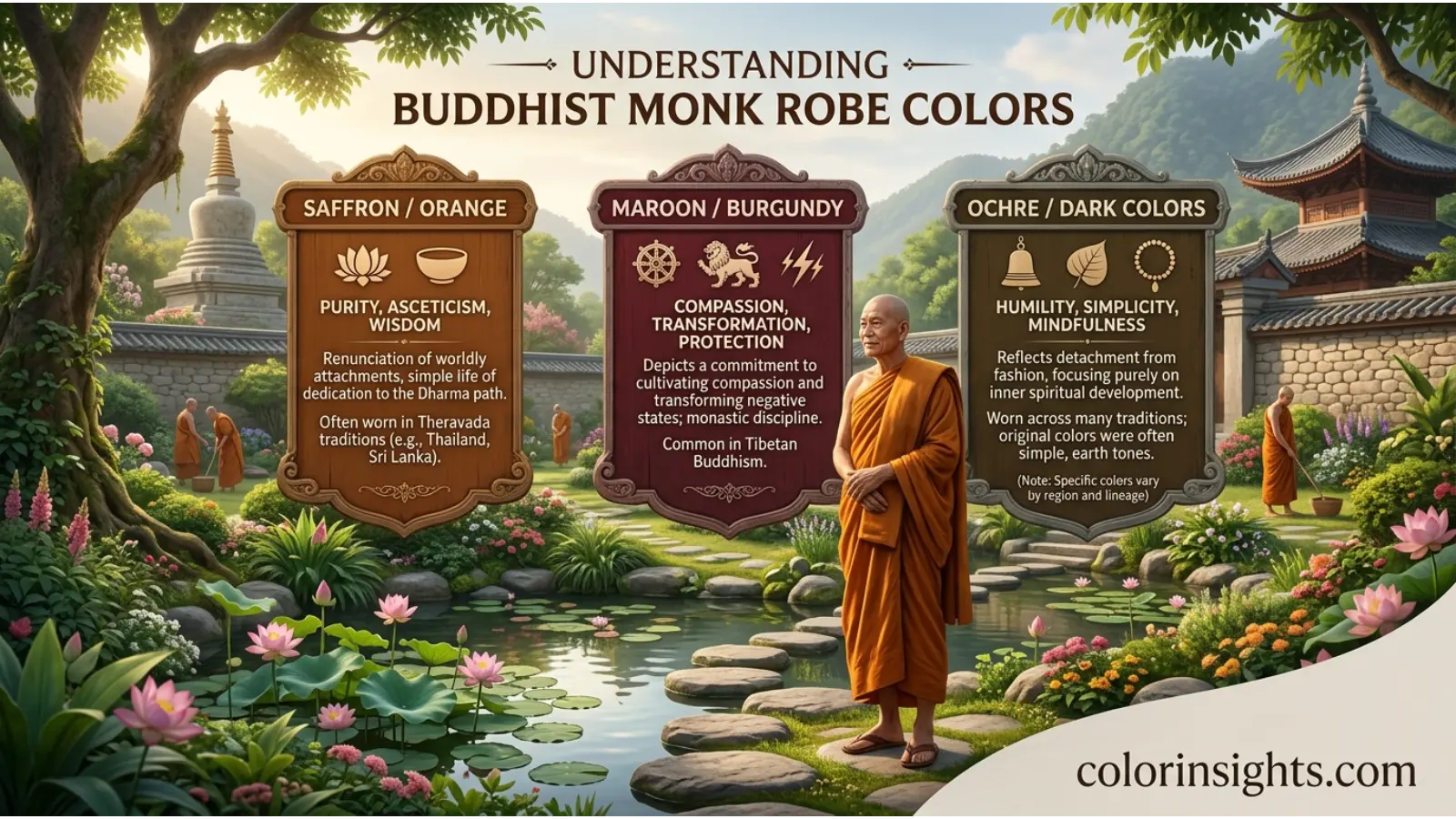
Buddhist monk robe color meanings carry deep spiritual, cultural, and historical meanings that reflect Buddhist teachings, traditions, and the journey toward enlightenment. Unlike ordinary clothing, monk robes symbolize simplicity, detachment, humility, and dedication to spiritual practice.
Different Buddhist traditions use colors such as saffron, orange, yellow, brown, gray, and maroon to represent values like wisdom, purity, compassion, and discipline.
Quick Answer:
Buddhist monk robe colors symbolize spiritual commitment, renunciation, wisdom, and cultural identity, with meanings varying across Buddhist schools and regions.
What Does the Color of Buddhist Monk Robes Symbolize?
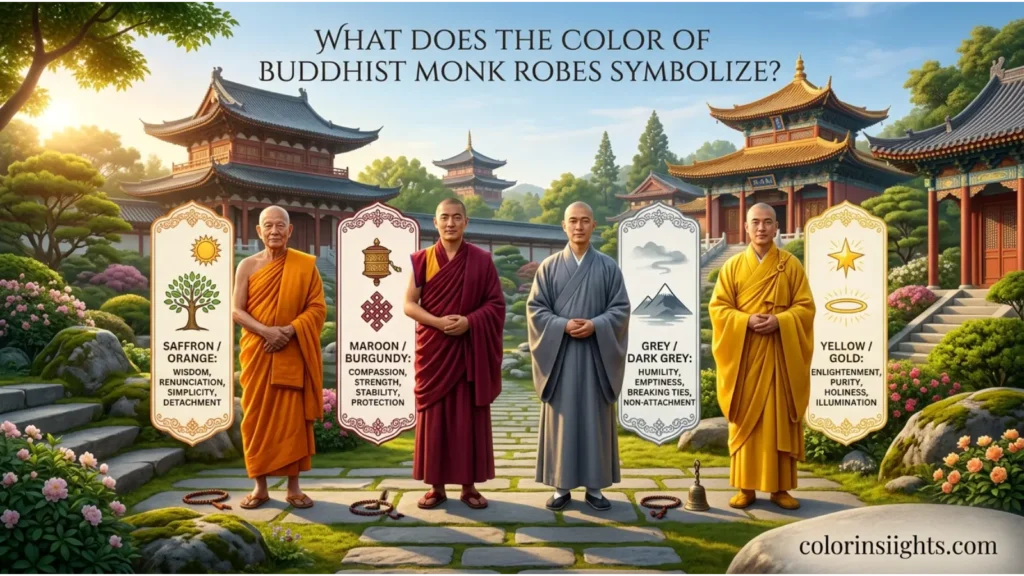
Buddhist monk robe colors symbolize a monk’s commitment to the path of awakening, self-discipline, and freedom from material attachment. The robes, traditionally called kasaya or kashaya, represent simplicity and the rejection of worldly desires.
Common Buddhist robe colors include:
- Saffron and Orange: Wisdom, humility, spiritual transformation, and the pursuit of enlightenment.
- Yellow: Purity, learning, and the teachings of the Buddha.
- Brown and Earth Tones: Simplicity, grounding, and connection with nature.
- Maroon and Dark Red: Compassion, spiritual strength, and devotion, especially in Tibetan Buddhism.
- Gray or Black: Discipline, humility, and monastic tradition in some East Asian Buddhist schools.
The Buddhist monk robe color meaning depends largely on geography, historical development, and the specific Buddhist tradition.
Psychological Characteristics of Buddhist Monk Robe Colors
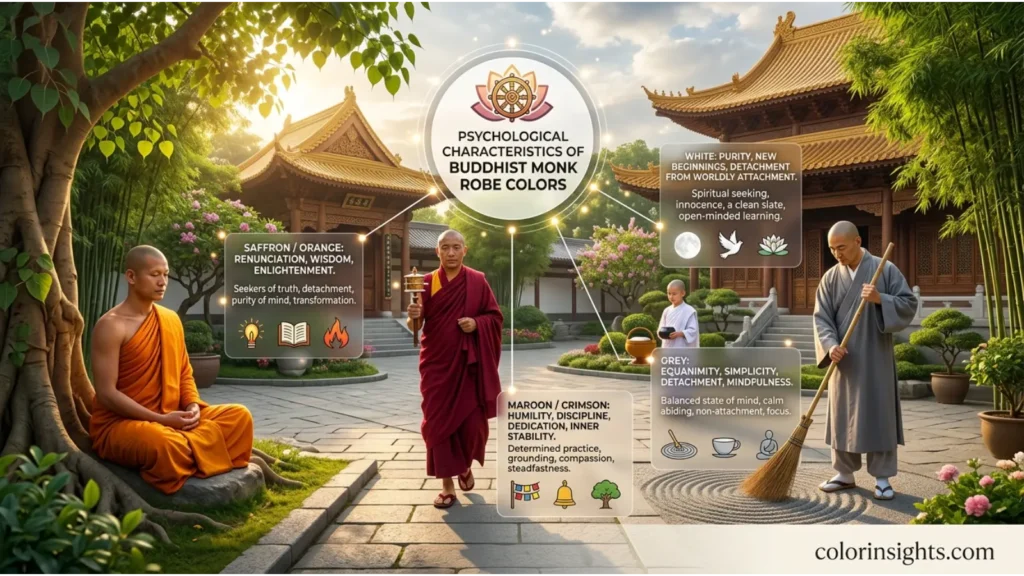
Color psychology examines how colors influence emotions, perceptions, and human behavior. Buddhist robe colors often create psychological associations connected with calmness, discipline, and spiritual awareness.
Emotional Associations
Buddhist robe colors commonly evoke:
- Peace and calmness: Soft yellow, brown, and gray tones create feelings of stability.
- Wisdom and awareness: Orange and saffron are often associated with learning and transformation.
- Compassion and strength: Deep red and maroon can represent emotional depth and commitment.
Psychological Effects
These colors may influence perception by creating:
- A sense of simplicity and mindfulness.
- Feelings of respect and spiritual seriousness.
- Reduced focus on material appearance.
- A connection with nature and inner balance.
Positive Emotional Responses
People often associate Buddhist robe colors with:
- Tranquility.
- Self-control.
- Reflection.
- Emotional balance.
- Spiritual growth.
Negative Emotional Responses
Depending on personal and cultural experiences, some people may perceive darker robe colors as:
- Serious or distant.
- Traditional or restrictive.
- Less expressive.
Impact on Mood and Behavior
Monastic robe colors support the visual message of Buddhist teachings by encouraging:
- Mindfulness.
- Humility.
- Detachment from possessions.
- Focus on inner development.
People typically react to these colors with feelings of calmness, respect, and contemplation.
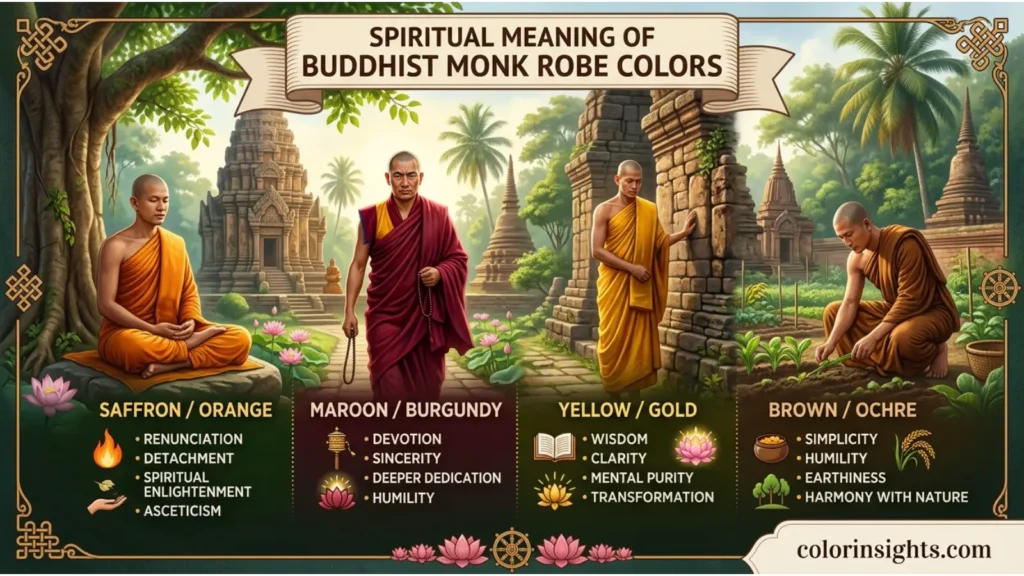
Spiritual Meaning of Buddhist Monk Robe Colors
Buddhist robe colors hold strong spiritual symbolism connected with the monk’s journey toward enlightenment. They represent values taught in Buddhist philosophy, including wisdom, compassion, discipline, and liberation.
Holiness
Monk robes symbolize dedication to a sacred path. The simple colors remind monks to focus on spiritual practice rather than external appearance.
Wisdom
Saffron, orange, and yellow robes often represent knowledge, awareness, and the wisdom gained through meditation and Buddhist teachings.
Purity
Yellow and light-colored robes symbolize purity of intention, ethical living, and commitment to spiritual discipline.
Transformation
Orange and saffron represent personal transformation, reflecting the journey from ordinary life toward enlightenment.
Healing
The calming nature of earth tones represents emotional healing, inner peace, and freedom from suffering.
Protection
Traditional robes symbolize protection from distractions and worldly attachments that prevent spiritual growth.
Power
Maroon and deep red robes in Tibetan traditions represent spiritual strength, compassion, and devotion.
Enlightenment
The colors reflect the Buddhist goal of awakening, awareness, and understanding the true nature of existence.
New Beginnings
The act of wearing a monk robe represents a new spiritual chapter focused on discipline and self-discovery.
Eternity
The timeless designs and traditional colors represent the continuation of Buddhist teachings across generations.
Positive and Negative Meanings of Buddhist Monk Robe Colors
Positive Meanings
Purity
Buddhist robes represent purity of thought, action, and intention. The simple appearance encourages spiritual sincerity.
Peace
Neutral and warm colors create associations with meditation, harmony, and emotional calm.
Simplicity
The plain robe design reflects a lifestyle free from unnecessary possessions.
Clarity
The colors symbolize mental focus and awareness developed through meditation.
Freshness
Light yellow and saffron tones can represent renewal and spiritual awakening.
Hope
Buddhist teachings emphasize liberation from suffering, making robe colors symbols of hope and transformation.
Balance
Earth tones represent harmony between humans, nature, and spiritual practice.
Harmony
Traditional robe colors communicate unity within Buddhist communities.
Negative Meanings
Emptiness
Some people may associate simple robes with absence or lack of individuality.
Example:
A minimalist appearance may appear emotionally distant to people unfamiliar with Buddhist traditions.
Isolation
Monastic clothing can symbolize separation from ordinary society.
Example:
A monk’s robe may represent withdrawal from worldly life.
Coldness
Gray or dark robes may appear formal or emotionally reserved.
Sterility
Extremely simple colors may feel plain or lacking warmth.
Boredom
People who prefer bright expressions may view traditional robes as visually limited.
Emotional Distance
The disciplined appearance can sometimes be interpreted as serious or detached.
Perfectionism
The symbolism of purity and discipline may create associations with strict standards.
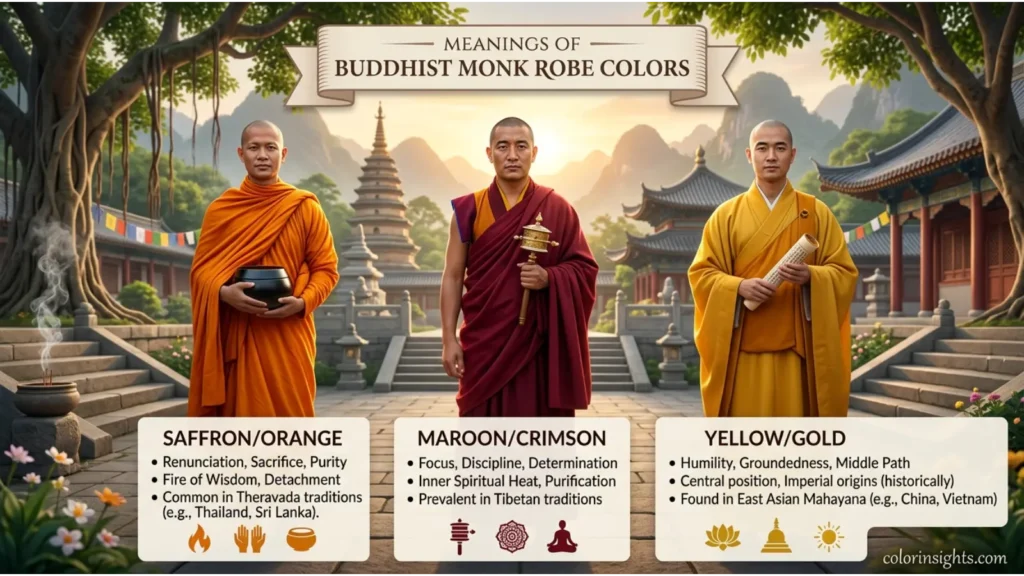
Meanings of Buddhist Monk Robe Colors
The meaning of Buddhist monk robe colors changes depending on religious tradition, cultural environment, and practical use. A saffron robe in Thailand may represent spiritual discipline, while a maroon robe in Tibet may reflect compassion and deep Buddhist practice.
Feng Shui
Buddhist robe colors are sometimes used in spiritual-inspired Feng Shui spaces.
- Associated Elements: Earth tones connect with the Earth element, while orange and yellow relate to warmth and energy.
- Energy Symbolism: These colors represent grounding, wisdom, stability, and spiritual harmony.
- Best Rooms: Meditation rooms, study spaces, and peaceful areas benefit from these tones.
- Recommended Combinations: Pair saffron with beige, brown with cream, or maroon with neutral shades.
- Decorating Tips: Use these colors through cushions, artwork, fabrics, or small decorative elements to create a calm environment.
Marketing
Although Buddhist robe colors are not commonly used in mainstream branding, their symbolism influences spiritual, wellness, and mindfulness industries.
Branding Psychology
Brands use similar colors to communicate:
- Authenticity.
- Calmness.
- Natural living.
- Wisdom.
- Trust.
Consumer Perception
Earthy and warm colors often make products appear:
- Reliable.
- Organic.
- Traditional.
- Meaningful.
Trust Signals
Colors inspired by Buddhist traditions can suggest:
- Balance.
- Ethical values.
- Simplicity.
Product Packaging and Advertising
Meditation apps, wellness products, yoga brands, and spiritual organizations often use saffron, gold, and earthy tones.
Examples include wellness brands and mindfulness-focused businesses that use warm natural palettes to communicate peace and awareness.
Design
Interior Design
Buddhist-inspired interiors use robe colors to create peaceful spaces through:
- Warm earth tones.
- Natural textures.
- Minimal decoration.
Graphic Design
Saffron, gold, and brown shades communicate:
- Tradition.
- Wisdom.
- Spiritual depth.
Web Design
These colors work well for:
- Meditation websites.
- Wellness platforms.
- Educational resources.
User Experience
Calming colors can reduce visual stress and create a relaxing digital experience.
Minimalist Aesthetics
Buddhist robe colors support minimalist design by emphasizing simplicity and balance.
Fashion
Clothing Symbolism
Buddhist-inspired colors often communicate:
- Humility.
- Natural elegance.
- Thoughtfulness.
Seasonal Use
- Orange and saffron work well in autumn-inspired fashion.
- Brown and beige fit earthy seasonal styles.
- Maroon adds richness during colder months.
Styling Effects
These colors create a grounded and sophisticated appearance.
Personality Impressions
People wearing these colors may appear:
- Calm.
- Reflective.
- Practical.
- Spiritually minded.
Advantages and Disadvantages
Advantages:
- Timeless appearance.
- Easy to combine.
- Creates a peaceful impression.
Disadvantages:
- May appear too traditional.
- Can feel less energetic compared with brighter colors.
Color Associations Are Not Universal
Western Cultures
In Western societies, Buddhist robe colors are often associated with meditation, spirituality, and Eastern philosophy. Saffron robes may be viewed as symbols of wisdom and peaceful living.
Eastern Cultures
In countries such as Thailand, Sri Lanka, Myanmar, Tibet, China, and Japan, robe colors carry specific religious meanings connected to Buddhist traditions and monastic roles.
Religious Traditions
Different Buddhist schools interpret colors differently. Theravada traditions commonly use saffron and orange robes, while Tibetan Buddhism often uses maroon and red tones.
Historical Interpretations
Historically, Buddhist monks used dyed cloth from discarded materials, creating the traditional connection between robes and humility.
Modern Global Interpretations
Today, Buddhist robe colors are recognized worldwide as symbols of mindfulness, peace, and spiritual dedication.
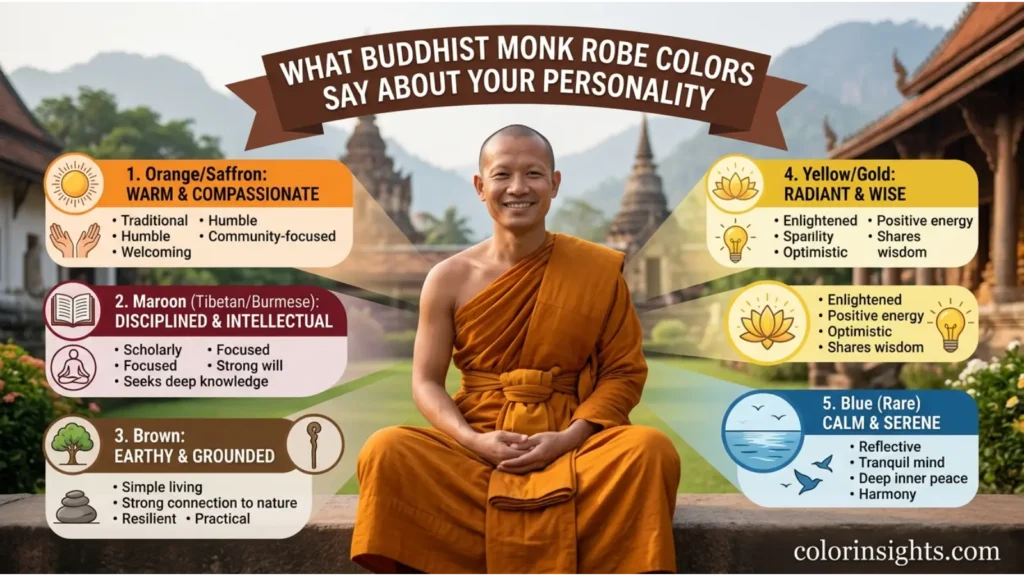
What Buddhist Monk Robe Colors Say About Your Personality
People who are attracted to Buddhist-inspired colors may appreciate qualities associated with simplicity, reflection, and balance. However, color preference does not determine personality with certainty.
Strengths
Such preferences may suggest appreciation for:
- Calm environments.
- Personal growth.
- Wisdom.
- Emotional balance.
Weaknesses
Possible challenges include:
- Avoiding excessive change.
- Preferring routine.
- Appearing reserved.
Social Behavior
People drawn to these colors may enjoy meaningful conversations and peaceful relationships.
Work Style
They may value:
- Focus.
- Organization.
- Purpose-driven work.
Relationships
They may seek:
- Stability.
- Loyalty.
- Emotional understanding.
Emotional Tendencies
They may prefer reflection and thoughtful decision-making.
FAQs:
What defines Buddhist monk robe colors?
Buddhist monk robe colors are traditional shades worn by monks to represent spiritual commitment, humility, and Buddhist teachings.
What does the Buddhist monk robe color symbolize?
Buddhist robe colors symbolize wisdom, purity, discipline, compassion, and the journey toward enlightenment.
Why are Buddhist monk robes important?
They represent a monk’s dedication to spiritual practice and a life focused on simplicity and awareness.
Is saffron a warm or cool color?
Saffron is a warm color associated with energy, transformation, and spiritual wisdom.
What emotions do Buddhist robe colors represent?
They commonly represent peace, reflection, compassion, stability, and mindfulness.
What is the spiritual meaning of Buddhist monk robe colors?
They symbolize enlightenment, purity, transformation, and freedom from material attachment.
What colors pair well with Buddhist-inspired colors?
They work well with beige, cream, brown, gold, white, and natural green tones.
What does liking Buddhist-inspired colors say about a person?
It may suggest an appreciation for calmness, simplicity, and meaningful experiences, but it does not define personality.
Conclusion
Buddhist monk robe colors carry centuries of spiritual symbolism connected with wisdom, humility, discipline, and enlightenment. From saffron robes representing transformation to maroon robes symbolizing compassion and strength, each color reflects important Buddhist values.
While these meanings vary across cultures and traditions, the overall message remains consistent: simplicity, awareness, and inner development. Understanding Buddhist monk robe color meanings provides insight into how colors communicate spiritual beliefs, cultural identity, and human emotions.