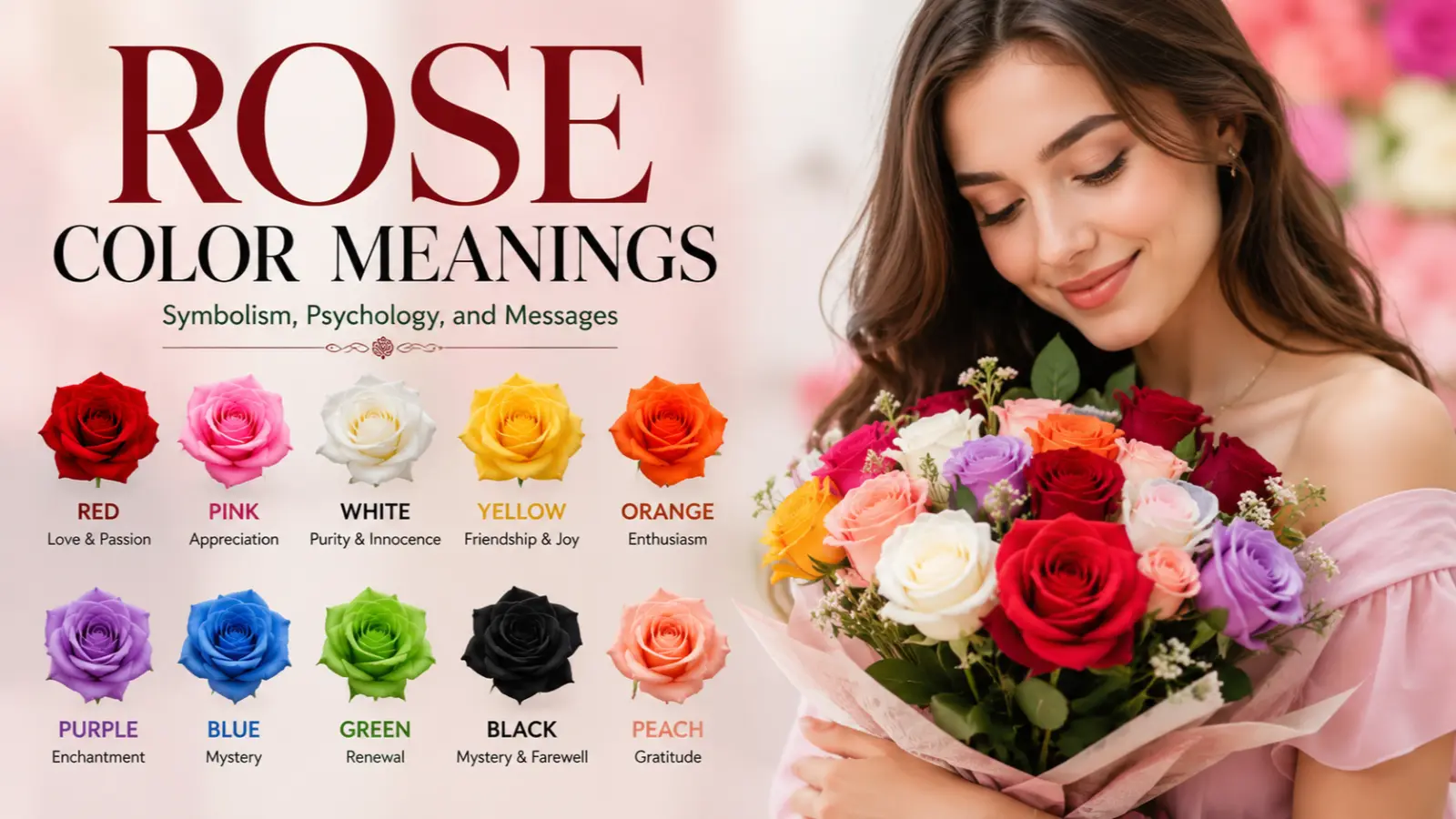
Rose color meanings have symbolised love, friendship, gratitude, remembrance, and celebration for centuries. Different rose colors carry their own traditional meanings, making roses one of the most meaningful flowers for expressing emotions on special occasions. Whether you’re choosing a bouquet for a loved one, a friend, or a family member, understanding rose color meanings can help you select the perfect blooms for any event.
These interpretations come from flower traditions, color psychology, religion, art, and cultural customs. Understanding rose color meanings can help people choose flowers more thoughtfully for weddings, anniversaries, condolences, friendships, and personal decoration.
Note: Rose color meanings are based on long-standing cultural traditions, floral symbolism, and social customs. Meanings may vary between countries, communities, and personal interpretations.
Rose Color Meanings at a Glance
If you’re looking for a quick answer, the table below summarises the traditional meanings most commonly associated with different rose colors.
| Rose Color | Traditional Meaning | Popular Occasions |
|---|---|---|
| Red | Love, romance, and deep affection | Valentine’s Day, anniversaries, romantic gifts |
| White | Purity, innocence, and new beginnings | Weddings, sympathy, memorials |
| Pink | Gratitude, admiration, and appreciation | Birthdays, Mother’s Day, thank-you gifts |
| Yellow | Friendship, happiness, and joy | Celebrations, friendship, congratulations |
| Orange | Enthusiasm, passion, and excitement | Achievements, encouragement, celebrations |
| Peach | Sincerity, appreciation, and gratitude | Thank-you gifts, professional gestures |
| Lavender | Enchantment, admiration, and elegance | Special occasions, admiration, unique gifts |
| Black (symbolic) | Farewell, mystery, or transformation | Artistic expression, gothic themes, symbolic arrangements |
Although these meanings are widely recognised, interpretations may vary depending on cultural traditions, personal experiences, and the occasion.
Quick answer:
Rose colors communicate different emotions, including love, friendship, gratitude, innocence, admiration, mystery, healing, and remembrance.
What Do Rose Colors Symbolize?
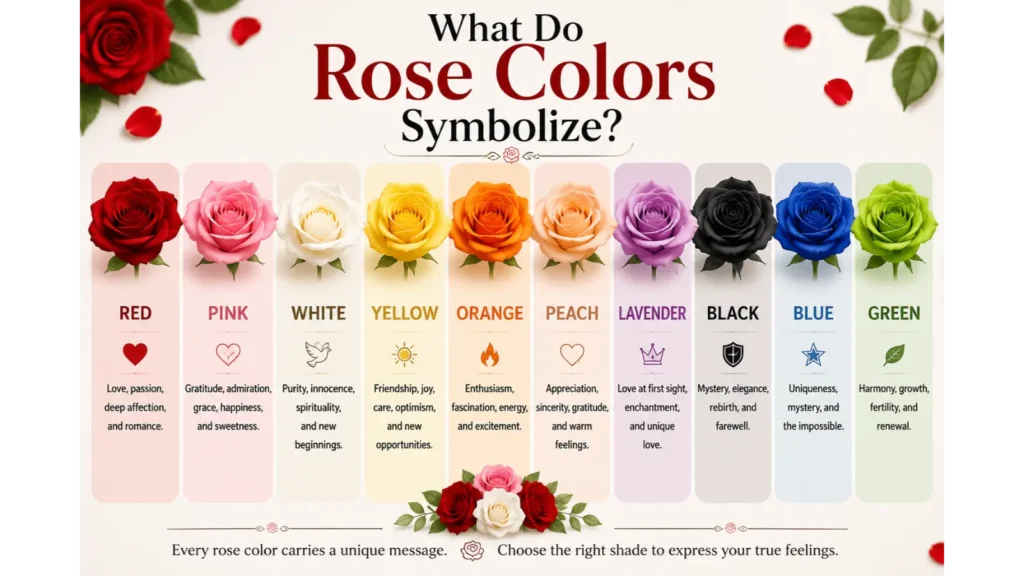
Rose colors symbolize emotional messages that combine the traditional meaning of the rose with the psychological associations of color. The rose symbolizes love, beauty, affection, secrecy, honor, and emotional expression.
Its color provides a more specific meaning.
Common rose color meanings include:
- Red roses: Romantic love, passion, desire, and commitment.
- Pink roses: Appreciation, grace, sweetness, admiration, and affection.
- White roses: Purity, innocence, spirituality, sympathy, and new beginnings.
- Yellow roses: Friendship, happiness, warmth, optimism, and celebration.
- Orange roses: Energy, enthusiasm, attraction, excitement, and confidence.
- Purple roses: Enchantment, mystery, royalty, fascination, and spiritual awareness.
- Blue roses: Impossibility, mystery, uniqueness, and unattainable love.
- Green roses: Renewal, balance, growth, fertility, and abundance.
- Black roses: Endings, grief, rebellion, transformation, and mystery.
- Peach roses: Gratitude, sincerity, modesty, and gentle appreciation.
A white rose at a wedding may represent innocence and a fresh beginning, while the same flower at a memorial may symbolize peace and remembrance.
Psychological Characteristics of Rose Colors
Color psychology examines how colors may influence emotions, attention, perception, and behavior. Rose colors can affect the emotional tone of a bouquet or setting because people often respond to both the flower and its dominant hue.
Emotional associations
- Red creates intensity and may increase feelings of passion, urgency, or excitement.
- Pink produces a softer emotional response associated with comfort and tenderness.
- Yellow feels cheerful, energetic, and socially welcoming.
- White communicates simplicity, calmness, cleanliness, and emotional clarity.
- Orange suggests stimulation, enthusiasm, and outgoing energy.
- Purple creates impressions of imagination, elegance, and mystery.
- Green symbolizes restoration, balance, and natural growth.
- Black or very dark roses can appear dramatic, unconventional, or emotionally heavy.
Psychological effects
Bright rose colors tend to attract attention and create stronger emotional stimulation. Softer shades often feel more calming, intimate, or refined. A vivid red bouquet may create excitement, while blush-pink roses may make a room feel gentle and reassuring.
Positive emotional responses can include affection, joy, comfort, hope, gratitude, and admiration. Negative responses may include sadness, emotional pressure, jealousy, grief, or discomfort, depending on the color and occasion.
People also react according to personal memories. Someone who received yellow roses during a joyful event may associate them with happiness, while another person may connect them with separation because of a past experience. Color psychology identifies tendencies rather than universal rules.
Spiritual Meaning of Rose Colors
Roses have appeared in spiritual art, religious traditions, mystical writings, and ceremonial practices for centuries. Their beauty, fragrance, thorns, and layered petals have made them symbols of divine love, sacrifice, secrecy, spiritual growth, and the human soul.
- Holiness: White and red roses may represent sacred devotion, spiritual love, or religious sacrifice.
- Wisdom: Purple and blue roses are often associated with contemplation, mystery, and higher understanding.
- Purity: White roses symbolize innocence, moral clarity, and spiritual cleansing.
- Transformation: Black, deep purple, and burgundy roses can represent endings followed by renewal.
- Healing: Pink, green, and white roses may symbolize emotional recovery, compassion, and restoration.
- Protection: Rose imagery has historically been used as a symbol of guarded beauty and sacred boundaries.
- Power: Red, burgundy, and purple roses can communicate strength, authority, and spiritual courage.
- Enlightenment: Golden, white, and yellow roses may represent illumination, hope, and awakened consciousness.
- New beginnings: White, peach, and green roses commonly suggest rebirth, fresh intentions, and personal growth.
- Eternity: Circular rose patterns and unfolding petals may symbolize timeless love and the continuing journey of the soul.
Spiritual meanings vary by faith and tradition. They should be understood as symbolic interpretations rather than fixed religious rules.
Positive and Negative Meanings of Rose Colors
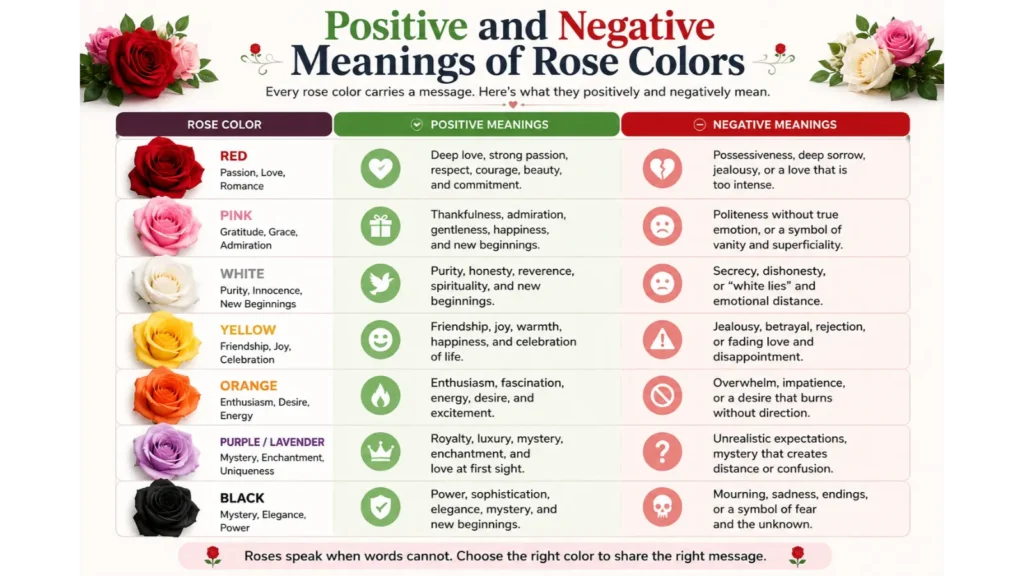
Positive Meanings
Rose colors carry many uplifting meanings:
- Love: Red roses are widely used to express romantic devotion.
- Peace: White roses may communicate reconciliation, serenity, or remembrance.
- Friendship: Yellow roses are popular gifts between close friends.
- Gratitude: Peach and pink roses can express sincere thanks.
- Hope: Yellow, white, and green roses may represent optimism and recovery.
- Harmony: Soft pink, cream, and white arrangements create a balanced visual effect.
- Freshness: Green and white roses work well in spring celebrations and modern interiors.
- Admiration: Pink, lavender, and orange roses can express respect or fascination.
For example, a bouquet of peach roses can thank a host, while pink roses may congratulate a graduate or colleague without suggesting romantic intent.
Negative Meanings
Some rose colors may also communicate difficult emotions:
- Grief: Black, dark red, and white roses may be used in mourning arrangements.
- Jealousy: Yellow roses once carried associations with jealousy in some European traditions.
- Emotional distance: White roses can sometimes feel formal or impersonal.
- Obsession: Extremely dark red roses may suggest intense or possessive passion.
- Endings: Black roses are commonly used to represent farewell or finality.
- Ambiguity: Blue roses can symbolize something impossible or emotionally unreachable.
- Secrecy: Deep purple or black roses may create an atmosphere of concealment.
- Rebellion: Black roses are often used in alternative fashion and anti-establishment symbolism.
A dark bouquet may be appropriate for gothic design or a theatrical event but could feel unsuitable for a cheerful birthday celebration.
Meanings of Rose Colors
Rose color meaning changes according to shade, arrangement, culture, relationship, and occasion. A single red rose may communicate direct romantic interest, while red and white roses together can symbolize unity. Pale pink feels gentle and appreciative, whereas hot pink appears energetic and celebratory.
Feng Shui
In feng shui-inspired decorating, roses are used to influence the emotional atmosphere of a space.
- Associated element: Red and orange roses connect with fire energy; white roses relate to metal; blue and dark colors suggest water; green roses represent wood.
- Energy symbolism: Roses encourage affection, beauty, warmth, and emotional openness.
- Best rooms: Pink or red roses suit bedrooms and relationship areas. Yellow roses work well in kitchens and social spaces. White roses complement entrances, offices, and meditation rooms.
- Recommended combinations: Pink and white create softness; red and cream balance passion with elegance; yellow and green support freshness.
- Decorating tips: Remove dead flowers promptly, avoid overcrowded arrangements, and choose colors that support the room’s intended mood.
Marketing
Brands use roses and rose colors to influence consumer perception. Red roses communicate desire, luxury, and romance, making them common in Valentine’s Day advertising, perfume campaigns, and premium gift packaging.
Pink roses are frequently used in beauty, skincare, bridal, and lifestyle marketing because they suggest softness and elegance. White roses support minimalist branding, luxury packaging, and purity-focused products. Yellow and orange roses create cheerful, energetic promotions.
Brands such as Lancôme, Jo Malone London, Dior, and Victoria’s Secret have used rose imagery or rose-inspired colors in beauty and fragrance marketing. The flower acts as a trust signal when a product emphasizes natural ingredients, romance, refinement, or sensory pleasure.
Design
In interior design, roses add organic form and emotional warmth. White roses support minimalist spaces, red roses create a dramatic focal point, and blush roses soften neutral rooms.
Rose colors can also guide user experience. Soft pink backgrounds may feel welcoming, while bright red elements attract attention and should be used carefully for buttons, warnings, or promotional highlights.
Fashion
Rose colors influence clothing symbolism and personal impressions.
Rose colors are especially popular in spring and summer, although burgundy and dark floral patterns work well in autumn and winter.
Practical styling examples include:
- Pair blush pink with beige, cream, gray, or navy.
- Combine burgundy with black, camel, or gold.
- Use a red rose accessory as a statement piece.
- Match yellow floral prints with white or denim.
- Balance bold rose patterns with simple, solid garments.
The advantage of rose-inspired fashion is emotional impact. The disadvantage is that intense floral prints or romantic colors may feel overly formal, sentimental, or visually busy in some settings.
Color Associations Are Not Universal
Western cultures
Red roses strongly represent romantic love, especially on Valentine’s Day and anniversaries. White roses are common at weddings and funerals, while yellow roses usually express friendship and happiness.
Eastern cultures
Rose symbolism may combine local color traditions with imported floral customs. Red often represents prosperity, celebration, and good fortune in Chinese culture, while white may be associated with mourning in several East Asian societies.
Religious traditions
Christianity has used roses to symbolize divine love, martyrdom, purity, and the Virgin Mary. In Islamic art and poetry, roses may represent beauty, spiritual longing, divine creation, and the beloved.
Historical interpretations
During the Victorian era, flowers were used to communicate coded messages. Red roses suggested love, pink roses admiration, and yellow roses could indicate jealousy or declining affection.
Modern global interpretations
Social media, commercial floristry, and international marketing have created more standardized meanings. However, personal intention and cultural context remain important.
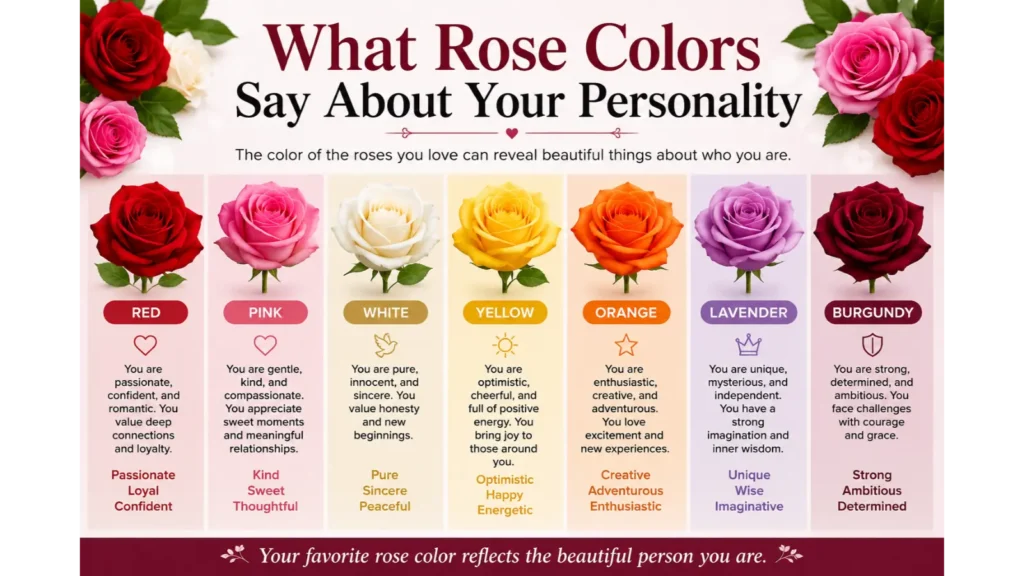
What Rose Colors Say About Your Personality
A preferred rose color may reflect emotional taste, aesthetic preference, or current mood, but it does not determine personality with certainty.
People drawn to red roses may value passion, confidence, loyalty, and emotional intensity. Pink-rose admirers are often associated with warmth, diplomacy, gentleness, and appreciation. Those who prefer white roses may favor order, simplicity, sincerity, and calm environments.
Yellow-rose enthusiasts may appear sociable, hopeful, and energetic. Purple-rose admirers may appreciate creativity, individuality, symbolism, and luxury. People attracted to black roses may value independence, unconventional beauty, transformation, or dramatic self-expression.
Potential weaknesses may mirror these strengths. Passion can become impatience, sensitivity can become overthinking, and a love of order can become perfectionism. Social behavior, work style, relationships, and emotional tendencies are shaped by many factors beyond color preference, including upbringing, experiences, values, and temperament.
How to Choose the Right Rose Color
Choosing the right rose color depends on the message you want to convey and the occasion you’re celebrating. While traditional rose color meanings provide helpful guidance, personal preferences and cultural customs can also influence your choice.
Here are some popular recommendations:
| Occasion | Recommended Rose Color | Why It Fits |
|---|---|---|
| Romantic partner | Red | Symbolises deep love, passion, and commitment. |
| Wedding | White | Represents purity, unity, and new beginnings. |
| Birthday | Pink | Expresses admiration, appreciation, and happiness. |
| Friendship | Yellow | Celebrates friendship, joy, and positive energy. |
| Congratulations | Orange | Reflects enthusiasm, success, and excitement. |
| Thank-you gift | Peach | Conveys sincerity, gratitude, and appreciation. |
| Sympathy or remembrance | White | Offers a respectful symbol of peace and remembrance. |
| Someone special | Lavender | Represents admiration, elegance, and enchantment. |
There is no single “correct” rose color for every situation. The most meaningful choice is one that reflects your relationship with the recipient, the occasion, and the message you want to express.
FAQs:
What defines a rose’s color?
A rose’s color is determined by pigments, genetics, growing conditions, breeding, and sometimes artificial dyeing. Natural colors include red, pink, yellow, orange, white, green, lavender, and deep burgundy.
What do different rose colors symbolize?
Different rose colors symbolize emotions such as love, friendship, gratitude, purity, admiration, enthusiasm, mystery, grief, and renewal.
Why are rose color meanings important?
They help people choose flowers that match the emotional tone of an occasion and reduce the risk of sending an unintended message.
Are rose colors warm or cool?
Red, orange, yellow, and peach roses are warm. Blue, purple, lavender, and some pink roses are cool. White and green can appear neutral or cool.
What emotions do red roses represent?
Red roses represent romantic love, passion, desire, courage, respect, and commitment. Dark red may also suggest deep devotion or intense attraction.
What do rose colors mean spiritually?
Spiritually, rose colors may represent divine love, purity, healing, transformation, enlightenment, sacrifice, protection, and renewal.
What colors pair well with roses?
Rose colors pair well with white, cream, green, gold, gray, navy, beige, and complementary floral shades. The best combination depends on the mood and setting.
What does liking pink roses say about a person?
It may suggest an appreciation for tenderness, beauty, kindness, emotional warmth, and graceful communication, although personality cannot be diagnosed through color preference.
What color rose represents friendship?
Yellow roses most commonly represent friendship, optimism, affection, and shared happiness.
What color rose represents a new beginning?
White, green, peach, and pale pink roses can represent fresh starts, new relationships, healing, and hopeful transitions.
Conclusion
Rose color meanings provide a rich visual language for expressing emotion. Red communicates love, yellow celebrates friendship, white represents purity or remembrance, pink conveys admiration, and purple suggests enchantment. Other shades add messages of gratitude, renewal, excitement, mystery, or transformation.
Because symbolism changes across cultures and occasions, the most accurate meaning comes from considering the color, relationship, setting, and intention together. Choosing the right rose color can turn a simple floral gift into a thoughtful and emotionally precise message.