
Vaginal discharge is a normal part of the body’s reproductive system and helps keep the vagina clean, lubricated, and protected from infection. The Different Discharge Color Meanings , consistency, and amount of discharge can change throughout the menstrual cycle due to hormonal fluctuations, pregnancy, sexual activity, or menopause. While many color changes are completely normal, others may indicate an infection or another health condition that requires medical evaluation.
Understanding different discharge color meanings can help you recognise when changes are normal and when medical advice may be needed. Because discharge should always be considered alongside symptoms such as odour, itching, burning, pain, or fever, color alone cannot diagnose a medical condition.
Important Medical Information
This article is intended for educational purposes only and should not be used to diagnose or treat any medical condition. Vaginal discharge can vary from person to person, and the same color may have different causes depending on age, menstrual cycle, pregnancy, medications, sexual activity, and other symptoms. If you experience persistent changes in discharge, severe pain, fever, heavy bleeding, or discharge during pregnancy that concerns you, seek advice from a qualified healthcare professional promptly.
Quick Answer:
Clear or milky white vaginal discharge is often normal, while yellow, green, grey, or bloody discharge—especially when accompanied by symptoms such as a strong odour, itching, pelvic pain, or fever—may indicate an underlying condition and should be assessed by a healthcare professional.

What Do Different Discharge Colors Mean?
The colour of vaginal discharge can provide helpful information about reproductive health, but it should never be used on its own to diagnose a medical condition. Normal discharge varies throughout the menstrual cycle, and factors such as pregnancy, hormonal changes, medications, and menopause can also affect its appearance.
The following table explains the most common different discharge color meanings and when they may require medical attention.
| Discharge Color | Common Meaning | When to Seek Medical Advice |
|---|---|---|
| Clear | Usually normal and may increase around ovulation or sexual arousal. | If accompanied by pain, bleeding, or an unusual odour. |
| Milky White | Often normal, especially when odourless and not associated with discomfort. | If thick, clumpy, or accompanied by itching or burning. |
| Cream or Off-White | May be a normal variation depending on the menstrual cycle. | If it develops a foul smell or other concerning symptoms. |
| Yellow | Can sometimes be harmless, but may also indicate an infection, particularly if accompanied by odour or discomfort. | If persistent or associated with itching, pain, fever, or pelvic discomfort. |
| Green | May be associated with certain infections and should be evaluated by a healthcare professional. | Prompt medical assessment is recommended. |
| Grey | May be linked with bacterial vaginosis, particularly when accompanied by a strong fish-like odour. | Medical evaluation is recommended. |
| Pink | May occur before or after menstruation or after minor cervical irritation. | If unexplained, persistent, or associated with pregnancy or heavy bleeding. |
| Brown | Often represents older blood leaving the body before or after a menstrual period. | If persistent, occurs after menopause, or is accompanied by pain or heavy bleeding. |
| Red or Bloody | Usually related to menstruation, but bleeding outside expected periods may have other causes. | Seek medical advice if unexpected, heavy, persistent, or during pregnancy. |
Remember that discharge color is only one part of the overall picture. Symptoms such as itching, burning, pelvic pain, fever, unusual odor, or heavy bleeding provide important information and should always be considered together with color changes.
What Is Considered Normal Vaginal Discharge?
Healthy vaginal discharge is usually clear, white, or off-white and may change slightly throughout the menstrual cycle. It helps clean the vagina, maintain its natural balance, and protect against infection.
Normal discharge is typically:
- Clear, white, or cream colored
- Mild or odourless
- Smooth, thin, or slightly stretchy depending on the stage of the menstrual cycle
- Not associated with itching, burning, severe pain, or fever
Understanding different discharge color meanings starts with knowing what healthy vaginal discharge normally looks like. These changes are often expected, but any persistent or concerning symptoms should be discussed with a healthcare professional.
When Should You See a Doctor?
While many changes in vaginal discharge are harmless, some symptoms may indicate an infection or another condition that requires medical evaluation. You should contact a healthcare professional if you experience:
- Green, grey, or unusually coloured discharge that does not improve
- A strong or unpleasant odour
- Thick, cottage cheese-like discharge with itching or burning
- Pelvic or lower abdominal pain
- Fever or chills together with abnormal discharge
- Bleeding between periods, after menopause, or during pregnancy
- Pain during urination or sexual intercourse
- Persistent changes that last for several days or continue to worsen
Early medical assessment can help identify the cause and ensure appropriate treatment when necessary. Avoid self-diagnosing based on color alone.
What Can Affect the Color of Vaginal Discharge?
Many everyday factors can influence the appearance of vaginal discharge without indicating a serious health problem. These include:
- Different stages of the menstrual cycle
- Ovulation
- Pregnancy
- Breastfeeding
- Menopause
- Hormonal contraceptives
- Sexual activity
- Certain medications, including antibiotics
- Changes in the vaginal microbiome
Because discharge naturally changes over time, healthcare professionals consider color together with consistency, odour, duration, medical history, and accompanying symptoms before determining whether further investigation is needed.

Psychological Characteristics of Different Discharge Colors
Although discharge color meanings do not carry psychological symbolism in the way traditional colors do, they often influence emotional responses because they relate to personal health.
Emotional Associations
- Reassurance when discharge appears normal.
- Curiosity about unexpected color changes.
- Concern regarding possible infection.
- Anxiety while waiting for medical evaluation.
- Relief after understanding the cause.
Psychological Effects
- Increased awareness of reproductive health.
- Encourages routine self-monitoring.
- Promotes preventive healthcare.
- May temporarily increase health-related anxiety.
Positive Emotional Responses
- Confidence in normal body function.
- Greater body awareness.
- Improved understanding of menstrual health.
- Motivation for preventive healthcare.
Negative Emotional Responses
- Fear of serious illness.
- Embarrassment discussing symptoms.
- Stress while awaiting test results.
- Uncertainty about whether symptoms are normal.
Impact on Mood and Behavior
People noticing unusual discharge may:
- Schedule medical appointments sooner.
- Improve personal hygiene practices.
- Seek reliable health information.
- Monitor additional symptoms more carefully.
Spiritual Meaning of Different Discharge Colors
There is no established spiritual or religious doctrine assigning symbolic meanings to vaginal discharge colors. Across most faith traditions, discharge is viewed primarily as a natural biological process rather than a spiritual sign.
Some holistic wellness traditions may interpret bodily changes as reminders to care for physical and emotional well-being, but these interpretations are personal beliefs rather than medically supported conclusions.
General wellness themes sometimes associated include:
- Respect for the body’s natural cycles.
- Personal healing and recovery.
- Physical renewal.
- Self-care.
- Health awareness.
- Balance between body and mind.
- Appreciation for reproductive health.
- New life and fertility in appropriate contexts.
These interpretations should never replace professional medical assessment when abnormal symptoms are present.
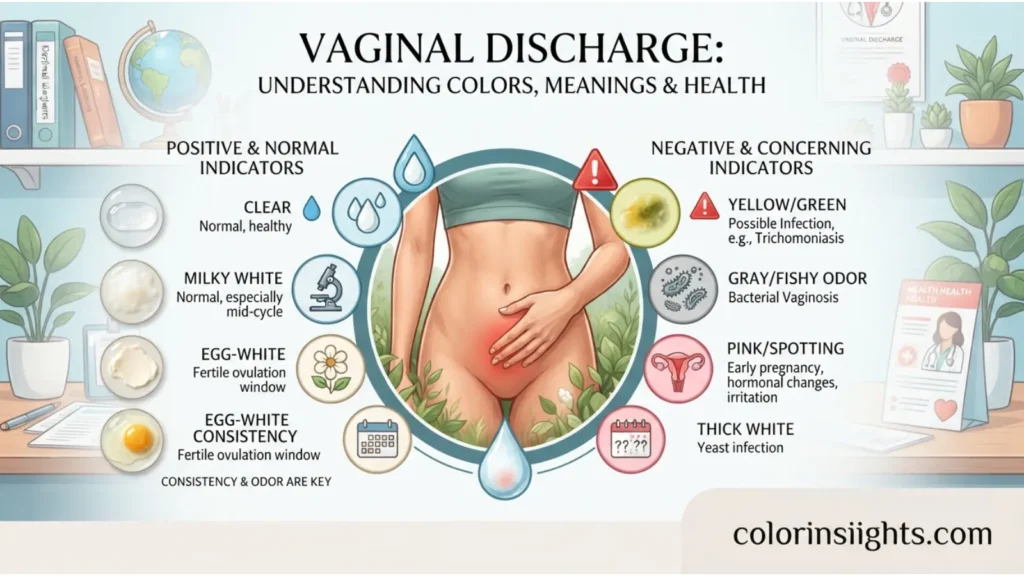
Positive and Negative Meanings of Different Discharge Colors
Positive Meanings
Several discharge colors commonly reflect healthy bodily processes.
Clear Discharge
Usually indicates healthy vaginal lubrication, ovulation, or sexual arousal.
Example:
Clear, stretchy discharge around ovulation often reflects peak fertility.
Milky White Discharge
Typically represents a healthy vaginal environment maintained by beneficial bacteria.
Example:
Light white discharge before or after menstruation is common.
Cream-Colored Discharge
May occur because of hormonal fluctuations throughout the menstrual cycle.
Example:
Slightly creamy discharge before a period can be perfectly normal.
Light Pink Discharge
Sometimes appears after ovulation, implantation, or mild cervical irritation.
Example:
Spotting shortly after ovulation may occur without indicating disease.
Negative Meanings
Certain colors may warrant medical evaluation, especially when accompanied by itching, burning, pain, or a strong odor.
Yellow Discharge
May indicate infection if thick, foul-smelling, or associated with discomfort.
Example:
Dark yellow discharge with pelvic pain should be assessed by a healthcare provider.
Green Discharge
Often suggests bacterial infection or certain sexually transmitted infections.
Example:
Green discharge with burning during urination requires prompt medical evaluation.
Gray Discharge
Frequently associated with bacterial vaginosis.
Example:
Thin gray discharge accompanied by a fishy odor is a common presentation.
Brown Discharge
Usually contains old blood but persistent brown discharge outside menstruation should be evaluated.
Example:
Brown spotting after a period often reflects remaining menstrual blood.
Bright Red Discharge
May represent menstrual bleeding, but unexpected bleeding between periods or after menopause should always be discussed with a healthcare professional.
Meanings of Different Discharge Colors
The meaning of discharge color depends on menstrual timing, age, pregnancy status, medications, hormonal changes, and accompanying symptoms. No single color provides a complete diagnosis.
Fertility and Ovulation
Clear, stretchy discharge commonly appears during ovulation due to rising estrogen levels.
Menstrual Cycle
White, cream, pink, brown, and red discharge often occur naturally throughout different stages of the menstrual cycle.
Pregnancy
Hormonal changes frequently increase normal white discharge called leukorrhea. Any unusual bleeding or abnormal-colored discharge during pregnancy should be evaluated promptly.
Infection
Yellow, green, or gray discharge—especially with odor, itching, burning, or pelvic pain—may indicate infection requiring medical treatment.
General Health
Hydration, hormonal contraception, menopause, antibiotics, stress, and underlying medical conditions can all influence discharge appearance.
Color Associations Are Not Universal
Medical interpretation varies depending on the complete clinical picture rather than color alone.
Individual Differences
Normal discharge appearance differs between individuals based on hormones, age, menstrual cycle, and reproductive health.
Medical Context
Healthcare professionals combine color with odor, consistency, laboratory testing, symptoms, and medical history before making a diagnosis.
Pregnancy
Certain discharge changes considered normal during pregnancy might require investigation in non-pregnant individuals.
Menopause
Hormonal changes after menopause often alter discharge patterns and vaginal health.
Global Healthcare Perspectives
Medical guidelines across countries generally agree that persistent abnormal discharge accompanied by pain, fever, odor, itching, or unusual bleeding deserves professional evaluation.

What Different Discharge Colors Say About Your Health
Discharge colors do not reveal personality traits. Instead, they provide potential clues about reproductive health.
Healthy discharge may indicate:
- Normal hormonal function.
- Balanced vaginal microbiome.
- Healthy cervical mucus production.
- Normal reproductive physiology.
Abnormal discharge may suggest:
- Bacterial infection.
- Yeast infection.
- Sexually transmitted infection.
- Hormonal imbalance.
- Cervical or uterine conditions.
Remember that discharge color alone cannot determine the exact cause. Laboratory testing and professional evaluation may be necessary.
FAQs:
Is clear vaginal discharge normal?
Yes. Clear discharge is usually a normal part of the menstrual cycle and may increase during ovulation, pregnancy, or sexual arousal. If it is accompanied by pain, a strong odour, or unusual bleeding, consult a healthcare professional.
What does yellow discharge mean?
Yellow discharge can sometimes be harmless, but if it is persistent or accompanied by a foul odour, itching, pelvic pain, or fever, it may indicate an infection and should be medically evaluated.
Is green discharge a sign of infection?
Green vaginal discharge is not considered typical and may be associated with certain infections. It is advisable to seek prompt medical advice, especially if other symptoms are present.
Why is my discharge grey?
Grey discharge, particularly when accompanied by a fish-like odour, may be associated with bacterial vaginosis. A healthcare professional can confirm the cause and recommend appropriate treatment.
What causes brown discharge?
Brown discharge often contains older blood and may appear before or after a menstrual period. Persistent brown discharge, especially after menopause or during pregnancy, should be assessed by a healthcare professional.
Can pregnancy change vaginal discharge?
Yes. Pregnancy commonly increases vaginal discharge due to hormonal changes. However, sudden changes in colour, odour, or associated symptoms should be discussed with a healthcare provider.
Does vaginal discharge change during ovulation?
Yes. Around ovulation, discharge often becomes clearer, thinner, and more stretchy. This is usually a normal hormonal change.
Can discharge colour alone diagnose an infection?
No. Colour is only one part of the assessment. Healthcare professionals also consider symptoms such as odour, itching, burning, pain, bleeding, medical history, and laboratory tests when necessary.
Why is it important to understand different discharge color meanings?
Learning about different discharge color meanings can help you recognise normal changes and identify symptoms that may require evaluation by a healthcare professional. However, colour alone cannot diagnose a medical condition.
Conclusion
Changes in vaginal discharge are common and are often influenced by the menstrual cycle, hormones, pregnancy, and other natural factors. While many color changes are normal, some may indicate an infection or another condition that requires medical attention, particularly when accompanied by symptoms such as pain, itching, burning, fever, or a strong odour.
Understanding different discharge color meanings can help you make informed decisions about your reproductive health, but persistent or concerning symptoms should always be assessed by a qualified healthcare professional. Remember that color alone cannot diagnose a medical condition. If you are concerned about persistent or unusual symptoms, consult a qualified healthcare professional for an accurate assessment and appropriate care.
Editorial Note: This article is written for educational purposes and is based on guidance from recognised health authorities. It is reviewed periodically to keep the information accurate and up to date. It is not a substitute for professional medical advice, diagnosis, or treatment.
References
Information in this article is based on guidance from recognised health organisations and educational resources, including:
- American College of Obstetricians and Gynecologists (ACOG)
- Centers for Disease Control and Prevention (CDC)
- NHS (UK)
- Mayo Clinic
- Cleveland Clinic