Different color evil eye meanings have been passed down through generations in many Mediterranean, Middle Eastern, and surrounding cultures. While the traditional blue evil eye is the most widely recognised symbol, other colors have developed their own symbolic associations through folklore, spiritual traditions, and modern interpretations. Many people wear evil eye jewellery or display decorative charms as cultural symbols of protection, good fortune, or positive intentions.
Although color meanings vary between traditions and individuals, understanding the symbolism behind different evil eye colors can help you appreciate their historical and cultural significance. These meanings should be viewed as cultural beliefs rather than scientifically proven effects.
Understanding Evil Eye Color Symbolism
The meanings of evil eye colours are rooted in cultural traditions, folklore, and spiritual beliefs rather than scientific evidence. Different communities may interpret the same colour in different ways, and modern jewellery designers sometimes use colours symbolically without following a single historical tradition.
This guide explains the most commonly recognised meanings while acknowledging that interpretations may differ across countries, cultures, families, and personal beliefs.
Quick Answer:
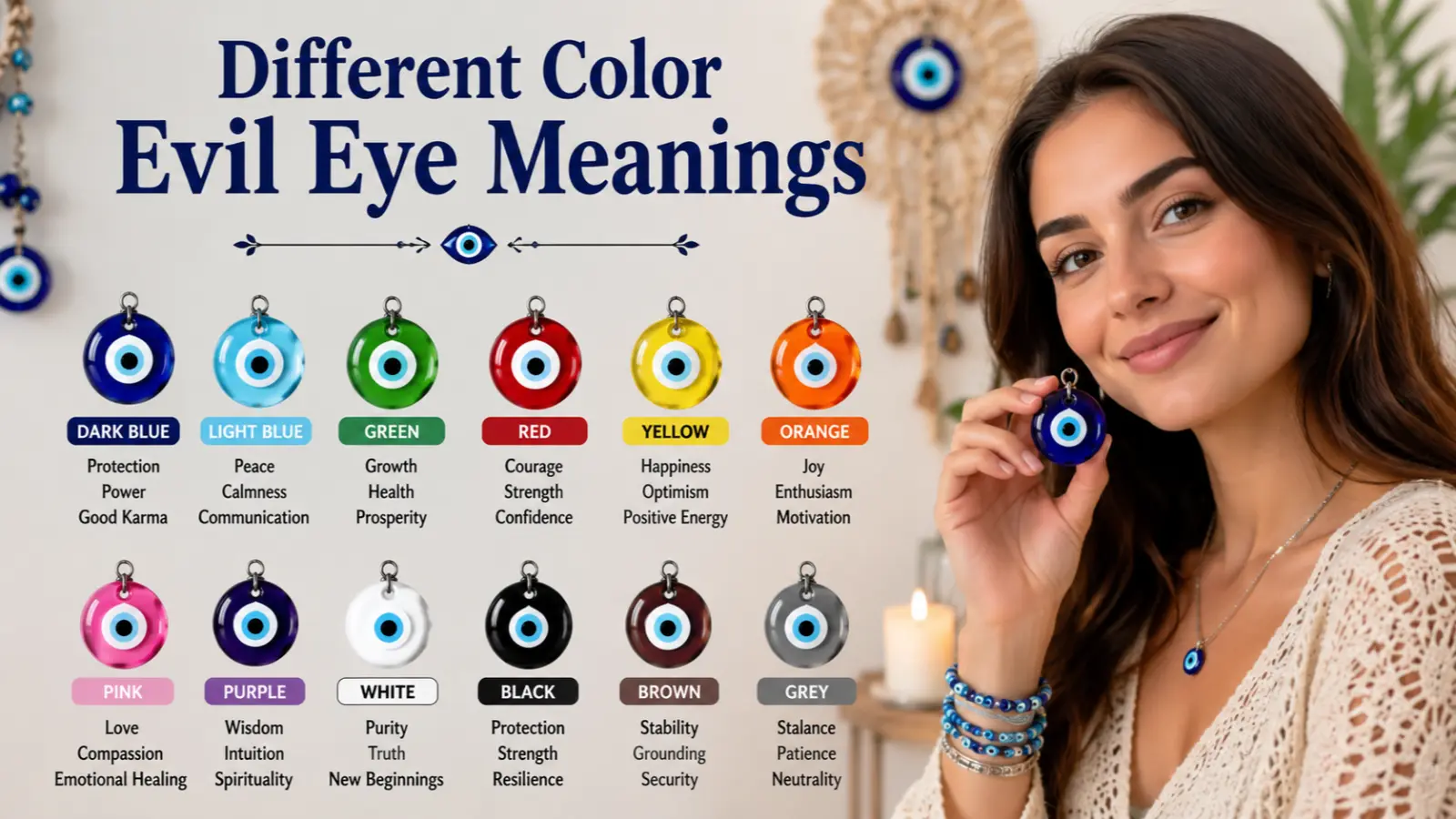
Different evil eye colors are traditionally associated with different symbolic meanings. Blue commonly represents protection, red may symbolise courage and vitality, green is often linked with growth, white with purity, black with strength, and purple with wisdom or creativity. Interpretations vary across cultures and traditions.
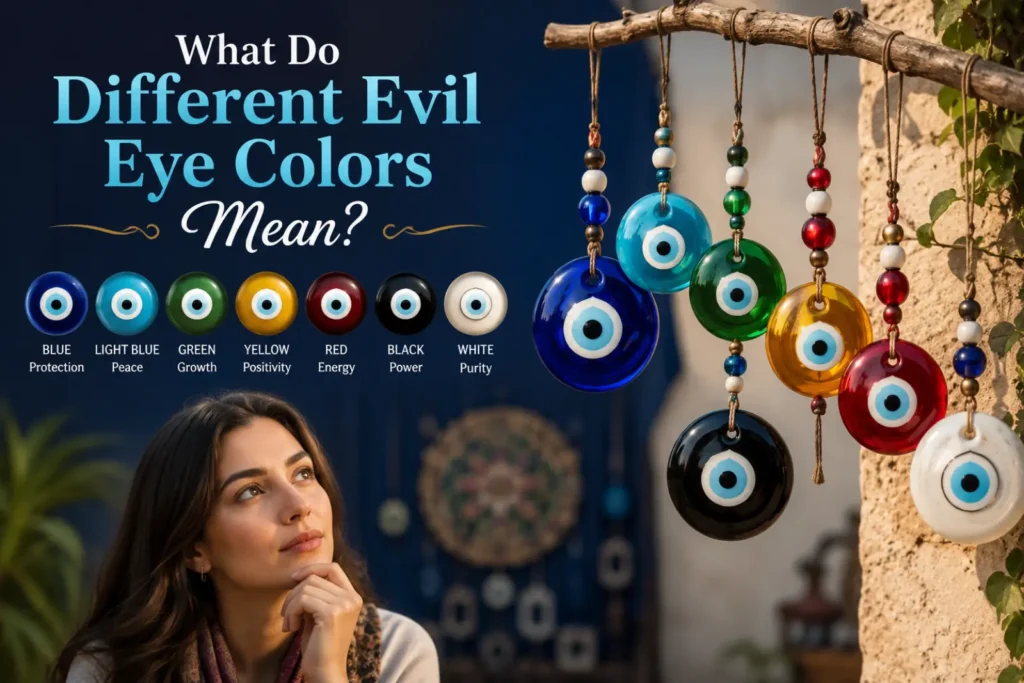
What Do Different Evil Eye Colors Mean?
Different evil eye colors are traditionally associated with different symbolic meanings in various cultures. These interpretations come from folklore, cultural customs, and spiritual traditions rather than scientific evidence. Because beliefs vary between countries and communities, the meanings below should be understood as commonly recognised interpretations rather than universal rules.
| Evil Eye Color | Common Traditional Meaning |
|---|---|
| Blue | Protection, peace, calmness, and warding off negative energy. |
| Light Blue | Clarity, open communication, and inner peace. |
| Red | Courage, confidence, strength, and vitality. |
| Green | Growth, renewal, balance, and prosperity. |
| Yellow | Happiness, optimism, creativity, and mental clarity. |
| Orange | Motivation, joy, personal development, and enthusiasm. |
| Pink | Love, friendship, kindness, compassion, and emotional healing. |
| Purple | Wisdom, imagination, spirituality, and creativity. |
| White | Purity, new beginnings, honesty, and positive intentions. |
| Black | Strength, resilience, determination, and protection against negativity. |
| Brown | Stability, grounding, connection with nature, and reliability. |
| Grey | Balance, neutrality, emotional stability, and reflection. |
Although many people share these meanings, no single authority defines every evil eye color. Regional customs, family traditions, and modern interpretations shape how people understand different evil eye colors today.
Why Are There Different Evil Eye Colors?
Many Mediterranean cultures have long associated the color blue with protection, making blue the traditional color of the evil eye amulet. Over time, artisans and jewellery makers introduced additional colors to represent different hopes, intentions, and personal preferences.
People today choose different evil eye colors to represent symbolic themes such as love, prosperity, courage, healing, creativity, and personal growth. While these modern interpretations are popular, they often build upon cultural traditions rather than replacing them.
Because there is no universal system of color meanings, the significance of an evil eye charm may differ depending on the country, family tradition, spiritual practice, or individual interpretation.
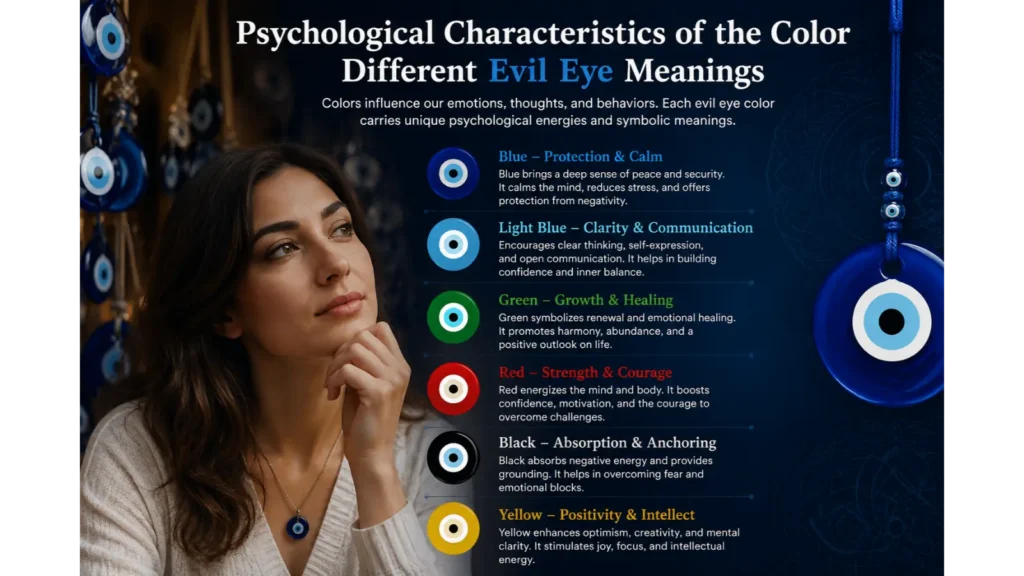
Psychological Characteristics of the Color Different Evil Eye Meanings
Color psychology suggests that people naturally associate different colors with particular emotions and behaviours. While evil eye color meanings come from tradition rather than psychology, the emotional impact of each color often aligns with psychological research.
Emotional Associations
- Blue encourages calmness and trust.
- Green promotes balance and growth.
- Red stimulates confidence and action.
- Yellow inspires optimism.
- Purple encourages imagination.
- White represents simplicity and clarity.
- Black suggests strength and authority.
Psychological Effects
- Different colors can influence mood and perception.
- Bright colors often increase energy.
- Cooler colors tend to reduce stress.
- Neutral colors promote emotional stability.
Positive Emotional Responses
- Hope
- Confidence
- Comfort
- Security
- Inspiration
- Emotional balance
- Motivation
- Positivity
Negative Emotional Responses
- Overstimulation from bright colors
- Emotional intensity
- Feelings of distance
- Fear or seriousness from darker colors
- Mental fatigue when colors are overused
Impact on Mood and Behaviour
Many people choose an evil eye charm based on personal goals. For example, someone beginning a new career may prefer green, while another seeking emotional peace might choose light blue or white.
Typical Human Reactions
People often perceive:
- Blue as dependable.
- Green as healthy.
- Red as energetic.
- Yellow as cheerful.
- White as peaceful.
- Black as powerful.
History of the Evil Eye Symbol
The belief in the evil eye is among the world’s oldest cultural traditions, with records dating back thousands of years. Ancient civilisations in Mesopotamia, Egypt, Greece, and Rome believed that envy or a malicious gaze could bring bad luck, illness, or misfortune.
To help guard against these perceived negative influences, many cultures created protective symbols and amulets. One of the best-known is the blue Nazar bead, which became especially popular in Türkiye before spreading across the Mediterranean, the Middle East, North Africa, and beyond.
Today, evil eye charms remain important cultural symbols for many people. Some wear them because of family traditions or spiritual beliefs, while others appreciate them as meaningful jewellery or decorative art. Although interpretations differ, the symbol continues to represent protection and positive intentions in many communities.
Evil Eye Colors in Different Cultures
Although the evil eye symbol is recognised worldwide, the meanings attached to its colours can vary between cultures and traditions.
Türkiye
The blue Nazar bead is the most familiar evil eye symbol in Türkiye. It is commonly displayed in homes, businesses, vehicles, and jewellery as a traditional symbol believed to offer protection from envy and negative intentions.
Greece
In Greece, the mati (eye) is an important cultural symbol. Blue is the traditional colour, but modern jewellery also features green, red, white, black, and other colours with symbolic interpretations.
Middle Eastern Traditions
Across many Middle Eastern communities, evil eye amulets are valued as traditional symbols associated with protection and good fortune. The meanings of different colours may vary depending on local customs and family traditions.
Modern Global Use
Today, evil eye jewellery is worn around the world. Some people choose a colour based on its traditional symbolism, while others simply enjoy its design, cultural heritage, or personal meaning.
Color Associations Are Not Universal
Color symbolism changes considerably across cultures.
Western Cultures
Blue commonly represents trust and stability, while white symbolizes purity and weddings. Red often communicates passion and excitement.
Eastern Cultures
Many Asian traditions associate red with prosperity and celebration. White may symbolize mourning in several East Asian cultures.
Religious Traditions
Islamic, Christian, Jewish, Hindu, and Buddhist traditions each use colors differently within religious art, clothing, and ceremonies. Evil eye traditions themselves appear in various cultural communities with unique interpretations.
Historical Interpretations
Ancient Mediterranean civilizations widely used blue protective amulets against envy. Over centuries, additional colors were introduced as symbolic variations.
Modern Global Interpretations
Today, people often choose evil eye colors based on personal preference rather than strict cultural rules, blending traditional symbolism with contemporary fashion and wellness practices.
Common Reasons People Choose Different Evil Eye Colors
People frequently select colors that reflect how they see themselves or what they hope to cultivate. However, colour preference does not scientifically determine personality.
Strengths
People attracted to different evil eye colors may value:
- Personal growth
- Optimism
- Emotional balance
- Creativity
- Compassion
- Courage
- Self-improvement
Weaknesses
Depending on individual circumstances, they may also experience:
- Overthinking
- Emotional sensitivity
- Perfectionism
- Impatience
- Idealism
Social Behaviour
They often appreciate meaningful relationships, cultural traditions, and thoughtful communication.
Work Style
Many prefer organised environments, collaborative teams, and work that aligns with personal values.
Relationships
They often seek trust, honesty, emotional support, and long-term stability.
Emotional Tendencies
Individuals may choose different colors to remind themselves to stay calm, confident, hopeful, or resilient during life’s challenges.
How to Choose the Right Evil Eye Color
Choosing an evil eye color is a personal decision that often depends on cultural traditions, symbolic meanings, and individual preferences. There is no universally “correct” color, and many people select an amulet based on what it represents to them.
Here are a few factors to consider:
- Traditional symbolism: Some people choose a color associated with protection, love, courage, prosperity, wisdom, or new beginnings.
- Cultural heritage: If the evil eye has significance in your family’s traditions or community, you may prefer colours commonly used within that culture.
- Personal intention: Others select a colour that reflects a personal goal, such as seeking confidence, balance, creativity, or emotional well-being.
- Style and design: Many people simply choose the colour that best matches their jewellery, clothing, or home décor.
Ultimately, the meaning of an evil eye charm is personal. While traditional symbolism can provide guidance, the color you choose should reflect what feels most meaningful to you.
FAQs:
What defines different color evil eye meanings?
Different evil eye charm colors traditionally symbolise specific intentions. Each colour represents a unique purpose, such as protection, courage, prosperity, or healing.
What do different evil eye colors symbolize?
Each color represents a unique traditional meaning. Blue signifies protection, green symbolizes growth, red represents courage, and white reflects purity.
Why are different evil eye colors important?
They allow individuals to choose symbols that align with personal goals, emotions, or spiritual intentions.
Are evil eye colors warm or cool colors?
The collection includes both warm colors (red, orange, yellow) and cool colors (blue, green, purple), along with neutral shades like white, grey, brown, and black.
What emotions do different evil eye colors represent?
They commonly represent peace, confidence, optimism, resilience, compassion, wisdom, and emotional balance.
What is the spiritual meaning of different evil eye colors?
Traditionally, they symbolize different forms of protection, healing, transformation, prosperity, and spiritual growth.
What colors pair well with evil eye jewelry?
Blue pairs well with white and silver, green with gold or earth tones, purple with black, and red with neutral colours.
What does liking a certain evil eye color say about a person?
It may reflect personal preferences or aspirations, but color choices cannot accurately predict personality.
Which evil eye color is considered the most protective?
Traditional beliefs most commonly associate dark blue with general protection against negative energy and envy.
Can I wear multiple evil eye colors together?
Yes. Many people combine different colors to symbolically represent several personal intentions at the same time.
Conclusion
Different evil eye colors have rich symbolic meanings rooted in centuries of cultural traditions and folklore. People across countries, families, and communities interpret evil eye colors differently, but they commonly associate each color with protection, courage, growth, wisdom, love, or renewal.
Whether you wear an evil eye charm because of its traditional symbolism, cultural heritage, or simply because you appreciate its design, understanding these meanings can help you make a more informed choice. Remember that evil eye color associations are cultural beliefs rather than scientifically proven effects, making them meaningful expressions of tradition and personal significance rather than universal facts.