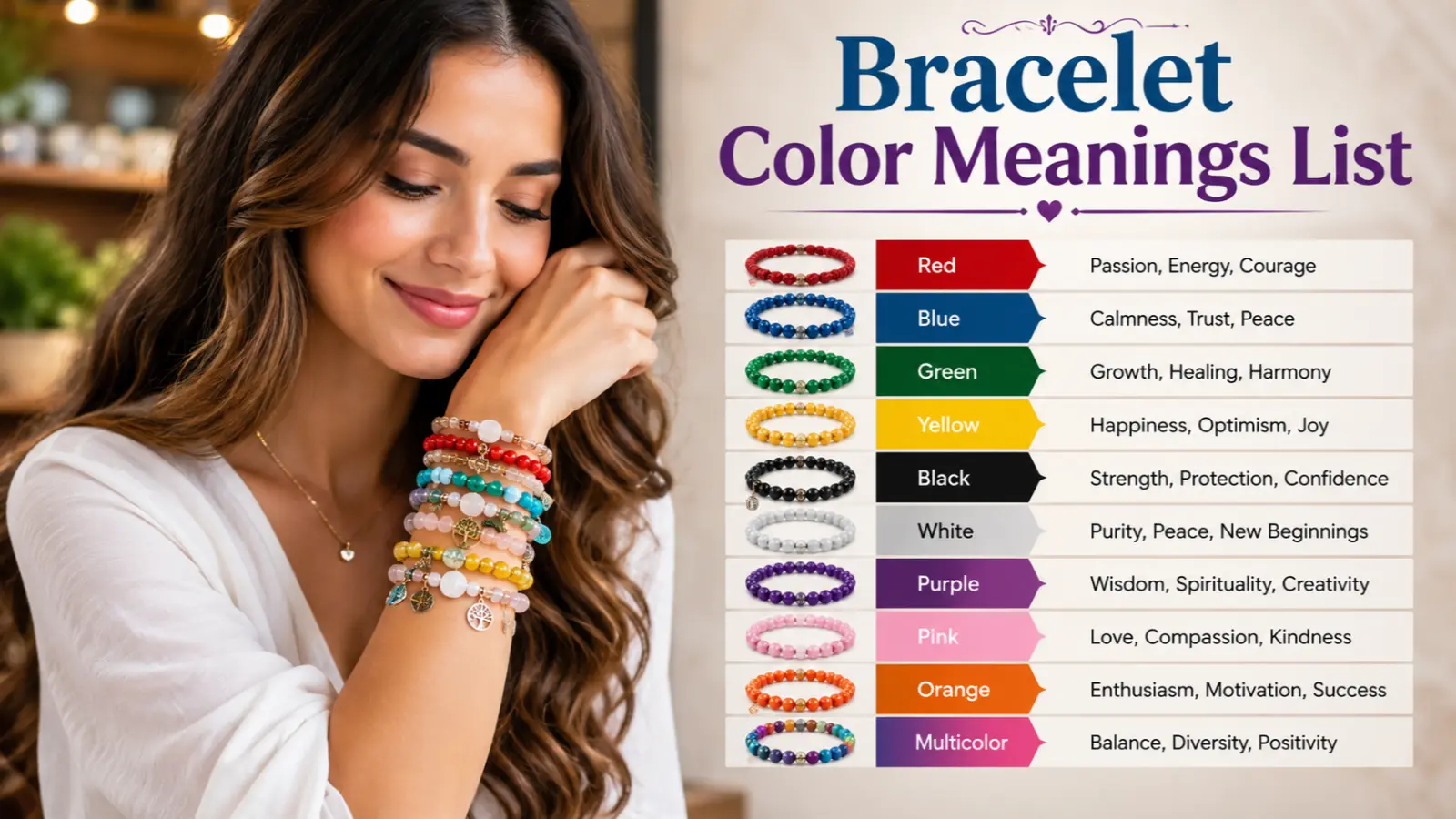
Bracelet color meanings list guides help explain what different bracelet colors traditionally symbolise and why people choose them for fashion, friendship, spirituality, awareness, or personal expression. While meanings can vary across cultures and individual beliefs, many bracelet colors are commonly associated with emotions, values, and important life events. Understanding these traditional interpretations can help you choose a bracelet that reflects your style, celebrates a special occasion, or conveys a meaningful message.
Bracelet Color Meanings at a Glance
Bracelet colors are often chosen to express emotions, beliefs, personal style, or support for a meaningful cause. While interpretations vary between cultures and individuals, the table below summarises some of the most widely recognised bracelet color meanings.
| Bracelet Color | Common Symbolism |
|---|---|
| Red | Love, passion, courage, and strength |
| Blue | Trust, peace, loyalty, and calmness |
| Green | Growth, hope, renewal, and prosperity |
| Yellow | Happiness, optimism, and friendship |
| Orange | Energy, enthusiasm, and creativity |
| Pink | Compassion, kindness, and affection |
| Purple | Wisdom, imagination, and spirituality |
| White | Purity, peace, and new beginnings |
| Black | Strength, elegance, resilience, and protection |
| Brown | Stability, reliability, and connection with nature |
| Grey | Balance, neutrality, and maturity |
Although these meanings are widely recognised, bracelet color symbolism is not universal. Personal preferences, cultural traditions, fashion trends, and the purpose of the bracelet can all influence how a color is interpreted.
Quick Answer:
A bracelet color meanings list generally includes red for passion and courage, blue for trust and calmness, green for growth and healing, yellow for optimism, black for strength, white for purity, purple for wisdom, pink for compassion, orange for enthusiasm, and rainbow colors for diversity and inclusion.
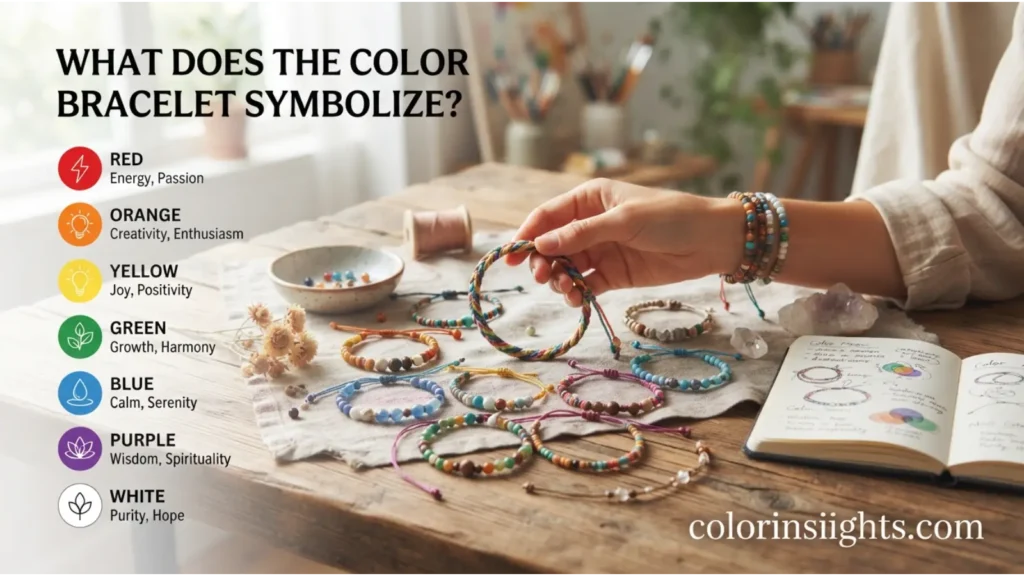
What Do Bracelet Colors Symbolize?
Unlike a single color, bracelet colors symbolize different ideas depending on their shade and purpose. Bracelets have historically been used as protective charms, friendship tokens, religious symbols, fashion accessories, and awareness ribbons. Today, their colors often communicate emotions, beliefs, causes, or personality.
Common symbolic meanings include:
- Love and affection
- Friendship and loyalty
- Protection from negativity
- Spiritual growth
- Personal transformation
- Awareness and advocacy
- Confidence and courage
- Peace and harmony
- Hope and optimism
- Strength and resilience
The meaning of a bracelet is influenced by both its color and the intention of the wearer.
Why Do Bracelet Colors Have Meanings?
Bracelet colours have been associated with symbolic meanings for centuries through cultural traditions, fashion, religious practices, awareness campaigns, and personal expression. Although bracelets are often worn as accessories, the colours people choose can also represent emotions, beliefs, relationships, achievements, or support for meaningful causes.
Today, bracelet colors may carry different meanings depending on the type of bracelet. For example, friendship bracelets often symbolise appreciation and lasting connections, awareness bracelets represent support for specific causes, and fashion bracelets are commonly chosen to reflect personal style rather than a fixed symbolic meaning.
Because these interpretations have developed across different cultures and communities, there is no single universal meaning for every bracelet color. Understanding their origins helps explain why bracelet colors continue to be meaningful for many people today.
Spiritual Meaning of Bracelet Colors
Bracelets have spiritual significance in many traditions, with colors representing intentions, blessings, and personal growth.
Common spiritual interpretations include:
- Holiness: White bracelets often symbolize purity and sacred devotion.
- Wisdom: Purple bracelets represent spiritual understanding and higher knowledge.
- Purity: White signifies innocence and moral clarity.
- Transformation: Green reflects personal growth and renewal.
- Healing: Green and turquoise are linked with emotional and physical healing.
- Protection: Black bracelets are frequently worn as protective talismans against negative energy.
- Power: Red symbolizes courage, vitality, and inner strength.
- Enlightenment: Violet represents spiritual awakening.
- New Beginnings: Green encourages fresh starts and renewal.
- Eternity: Gold and white may symbolize timelessness and divine connection.
Many people wear colored bracelets during meditation, prayer, or personal reflection as reminders of their intentions rather than believing the colors possess supernatural power.
How to Choose the Right Bracelet Color
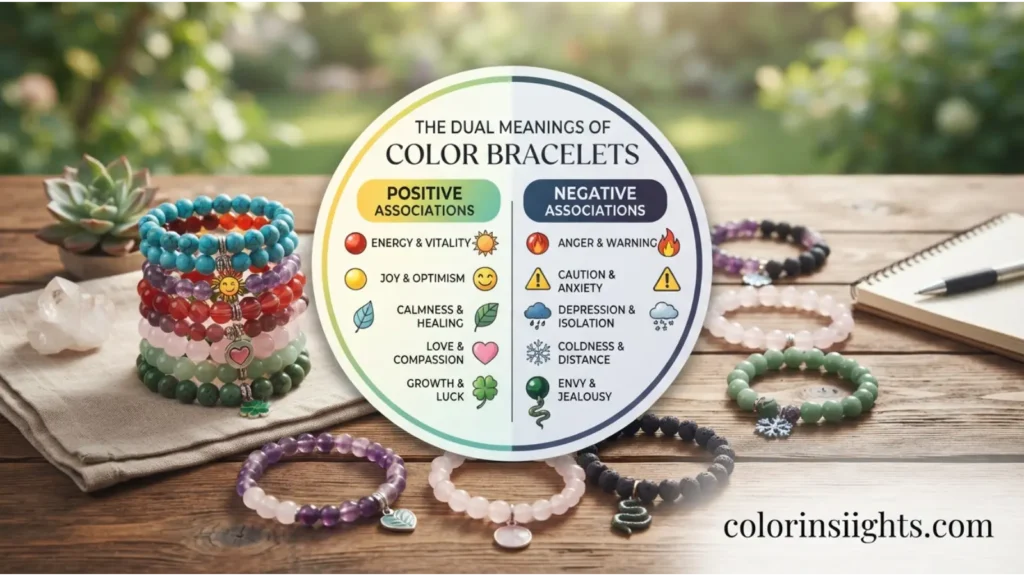
Positive Meanings
Bracelet colors often communicate uplifting qualities.
- Love: Pink and red bracelets symbolize affection and emotional connection.
- Peace: White and blue represent calmness and harmony.
- Hope: Yellow encourages optimism during difficult times.
- Growth: Green signifies learning, health, and progress.
- Strength: Black represents resilience and determination.
- Wisdom: Purple reflects maturity and thoughtful decision-making.
- Creativity: Orange inspires innovation and confidence.
- Trust: Blue promotes reliability in friendships and professional settings.
For example, friendship bracelets commonly use bright colors to represent loyalty and joyful relationships.
Negative Meanings
Depending on context, bracelet colors may also carry less favourable associations.
- Aggression: Excessive red may appear confrontational.
- Sadness: Dark blue can represent melancholy.
- Isolation: Black may suggest emotional distance.
- Jealousy: Green is occasionally associated with envy.
- Caution: Yellow may indicate warning in safety contexts.
- Mystery: Purple can appear overly secretive.
- Coldness: White sometimes reflects emotional detachment.
- Impulsiveness: Orange may be linked to risk-taking.
For instance, wearing an entirely black bracelet in a formal environment might project authority, while in another setting it could be interpreted as expressing grief or seriousness.
Color Associations Are Not Universal
Color symbolism varies widely around the world.
Western Cultures
In many Western countries, red symbolizes love, blue represents trust, white signifies weddings and purity, while black often reflects elegance or mourning depending on context.
Eastern Cultures
Several Asian traditions associate red with prosperity, celebration, and good fortune. White may represent mourning in some regions, demonstrating how interpretations differ significantly from Western customs.
Religious Traditions
Religious symbolism also varies. White commonly represents holiness and purity in Christianity, saffron carries spiritual significance in Hinduism and Buddhism, while green is especially meaningful within Islamic traditions because of its historical and spiritual associations.
Historical Interpretations
Historically, purple bracelets or garments were linked with royalty due to the rarity and expense of purple dye. Gold represented wealth and divine authority, while blue often symbolized protection in ancient cultures.
Modern Global Interpretations
Today, bracelet colors frequently support awareness campaigns, charitable causes, social movements, and personal identity. Social media and international fashion have expanded these meanings while allowing personal interpretation to remain important.
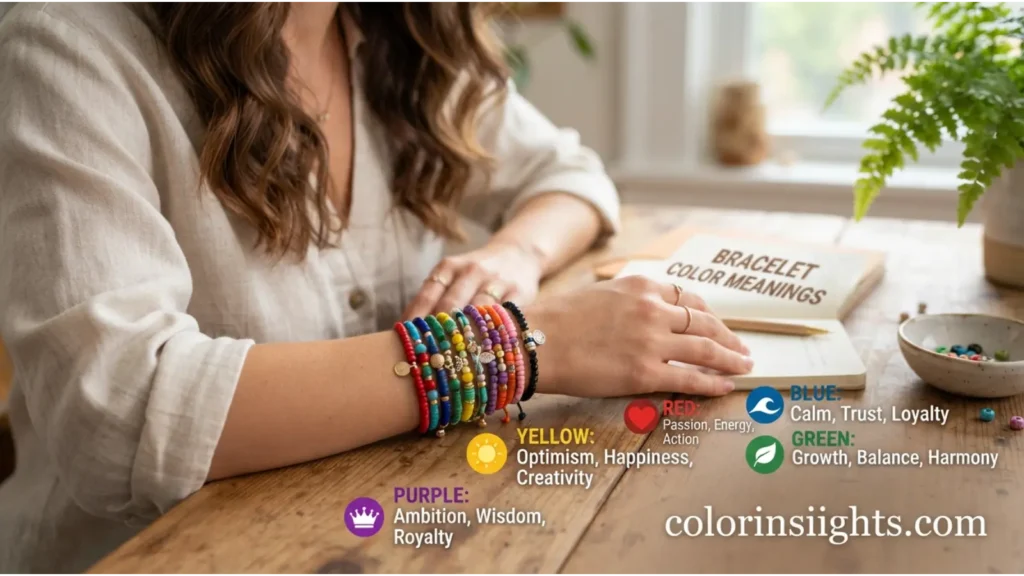
Common Reasons People Wear Different Bracelet Colors
People often choose bracelet colors that reflect their preferences, moods, or aspirations. However, color preference alone cannot accurately determine personality.
Common associations include:
Strengths
- Red lovers may appear confident and determined.
- Blue enthusiasts often value honesty and stability.
- Green supporters may appreciate nature and balance.
- Yellow fans usually display optimism.
- Purple admirers often enjoy creativity and imagination.
- Black wearers frequently appreciate elegance and independence.
Weaknesses
- Red preferences may sometimes appear impulsive.
- Blue lovers can become overly cautious.
- Green enthusiasts may resist rapid change.
- Yellow fans may occasionally seem restless.
- Purple admirers may become overly idealistic.
Social Behavior
Preferred bracelet colors may influence first impressions. Bright colors generally appear approachable, while darker shades often communicate confidence and professionalism.
Work Style
Color preferences can reflect different workplace approaches. Blue may suggest reliability, green may indicate collaboration, and orange may demonstrate innovation and enthusiasm.
Relationships
Many people choose bracelet colors that symbolise trust, affection, loyalty, or emotional security, particularly friendship bracelets exchanged between close companions.
Emotional Tendencies
Color choices often reflect current emotions rather than permanent personality. Someone may wear calming blue during stressful periods or energetic red when seeking motivation.
FAQs:
What defines bracelet color meanings?
Bracelet color meanings list refer to the symbolic, psychological, cultural, and spiritual interpretations associated with different bracelet colors.
What do bracelet colors symbolize?
Bracelet colors commonly symbolize emotions, beliefs, awareness causes, personality traits, protection, friendship, healing, and personal identity.
Why are bracelet colors important?
They allow people to express values, emotions, support charitable causes, and communicate personal style through visual symbolism.
Are bracelet color meanings universal?
No. Meanings differ across cultures, religions, historical periods, and personal experiences.
What emotions do bracelet colors represent?
Depending on the color, bracelets may represent love, peace, courage, hope, creativity, confidence, compassion, healing, or resilience.
What do bracelet colors mean spiritually?
Many spiritual traditions associate bracelet colors with protection, wisdom, healing, purification, transformation, and inner growth.
Which bracelet colors pair well together?
Popular combinations include blue and white, green and brown, black and silver, red and gold, purple and white, and pastel colours for softer styles.
What does liking certain bracelet colors say about a person?
Preferred bracelet colors may reflect current preferences, moods, or aspirations, but they do not scientifically determine personality.
Which bracelet color represents protection?
Black is commonly associated with protection, while red is also worn in several traditions as a protective symbol against negativity.
Which bracelet color is best for friendship?
Bright colors such as blue, pink, yellow, green, and multicolored woven bracelets are widely associated with friendship and positive relationships.
Conclusion
A bracelet color meanings list offers valuable insight into how colors communicate emotions, beliefs, cultural traditions, and personal identity. Whether chosen for fashion, spirituality, friendship, or awareness, bracelet color meanings list provide a simple yet meaningful form of self-expression.
While many interpretations are widely recognized, their meanings are not universal and should be understood within cultural and personal contexts. Ultimately, the most meaningful bracelet color is the one that aligns with your intentions, values, and individual story.