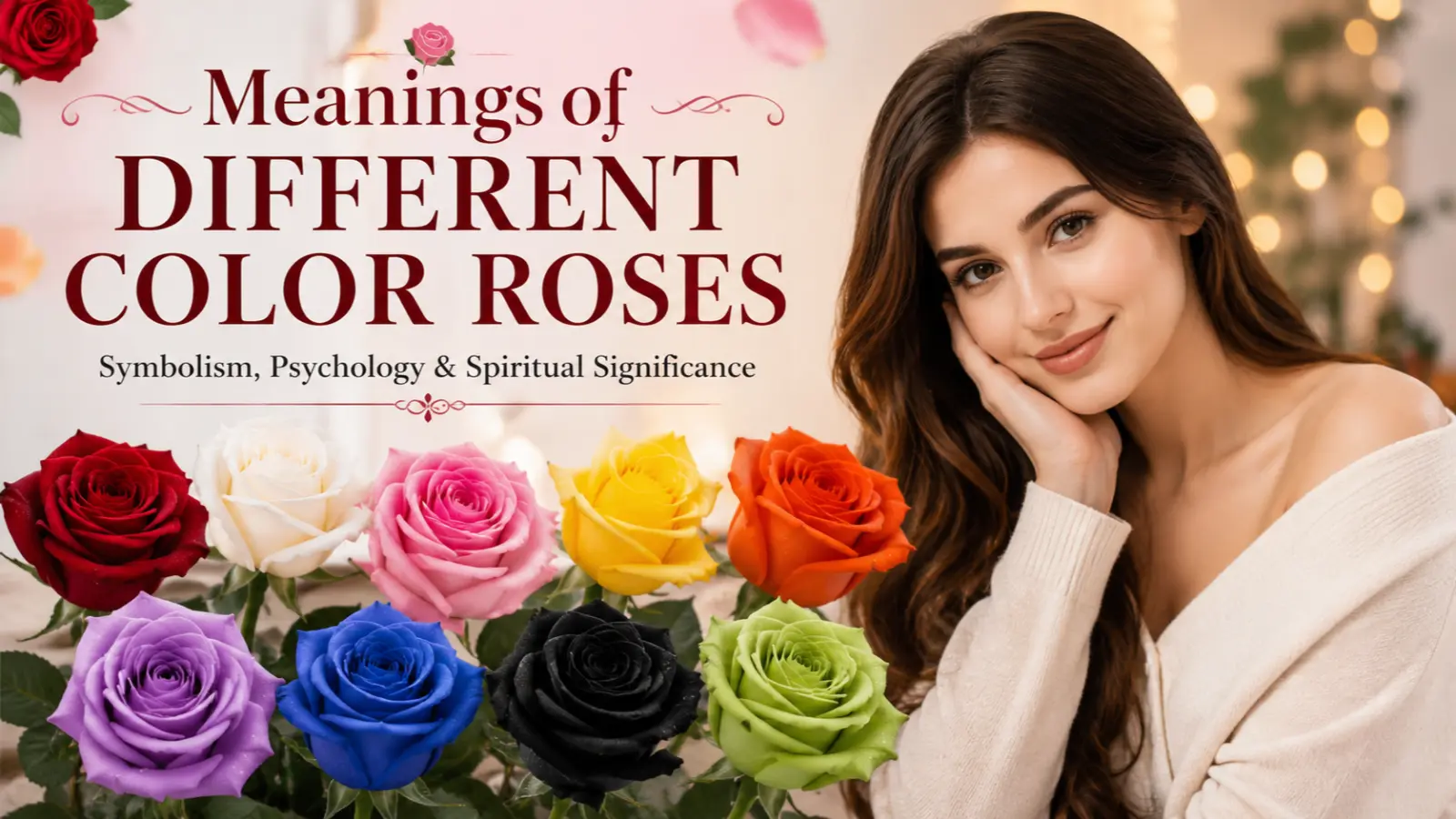
The meanings of different color roses have fascinated people for centuries, making roses one of the most symbolic flowers in history. Each rose color conveys a unique message, from romantic love and friendship to remembrance, gratitude, hope, and new beginnings. These meanings are influenced by cultural traditions, color psychology, floral symbolism, and historical customs.
Whether given as a gift, used in weddings, memorials, celebrations, or home décor, rose colors communicate emotions that words sometimes cannot express. Understanding what each rose color represents helps people choose the right flowers for every occasion while appreciating their deeper psychological and spiritual significance.
Different Rose Color Meanings at a Glance
If you’re looking for a quick answer, the table below summarises the traditional meanings of the most popular rose colors and the occasions they are commonly chosen for.
| Rose Color | Traditional Meaning | Popular Occasions |
|---|---|---|
| Red | Romantic love, passion, and devotion | Valentine’s Day, anniversaries, proposals |
| White | Purity, respect, and new beginnings | Weddings, sympathy, memorials |
| Pink | Gratitude, admiration, and appreciation | Birthdays, Mother’s Day, thank-you gifts |
| Yellow | Friendship, happiness, and joy | Celebrations, friendship, congratulations |
| Orange | Enthusiasm, excitement, and admiration | Achievements, graduations, congratulations |
| Peach | Sincerity, gratitude, and appreciation | Thank-you gifts, professional gestures |
| Lavender | Enchantment, admiration, and elegance | Romantic gestures, special occasions |
| Black (symbolic) | Mystery, farewell, or transformation | Symbolic arrangements, artistic displays |
Although these meanings are widely recognised, interpretations may vary depending on cultural traditions, personal preferences, and the occasion.
Quick Answer:
Different color roses symbolize different emotions red represents love, white signifies purity, yellow expresses friendship, pink conveys gratitude, orange symbolizes enthusiasm, purple represents enchantment, blue stands for mystery, black signifies farewell, and green represents renewal.
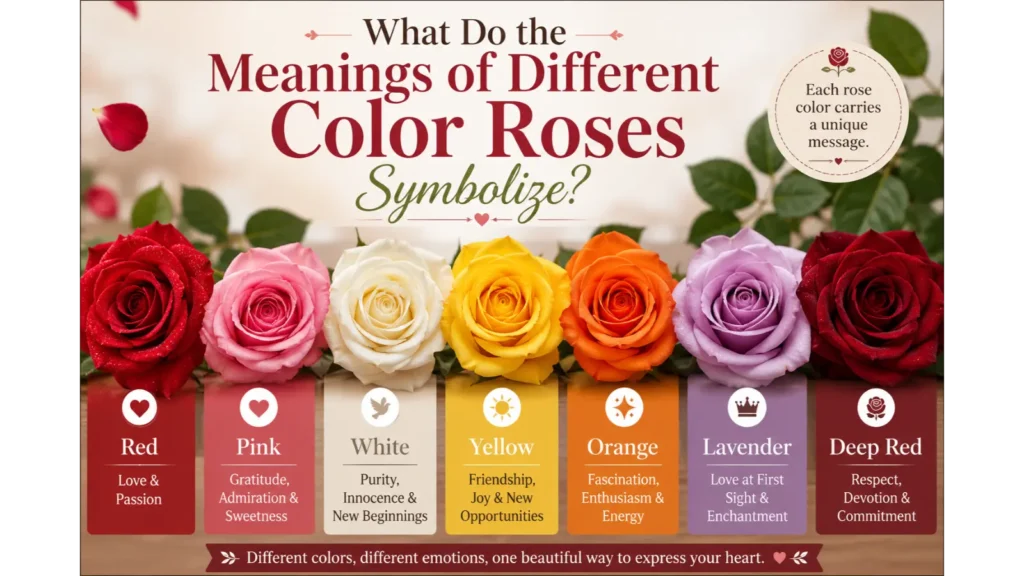
What Do the Meanings of Different Color Roses Symbolize?
Rose colors symbolize a wide spectrum of human emotions, values, and life experiences. Rather than carrying a single universal meaning, each color communicates a distinct emotional message shaped by tradition, psychology, and culture.
For example, red roses symbolize passionate love, while white roses represent innocence and remembrance. Yellow roses celebrate friendship and optimism, whereas pink roses express appreciation and admiration. Orange roses reflect excitement and confidence, while purple roses often symbolize royalty, fascination, and luxury.
The symbolism of rose colors continues to influence floral gifts, weddings, anniversaries, religious ceremonies, and celebrations around the world.
Psychological Characteristics of the Meanings of Different Color Roses
Color psychology suggests that the emotional impact of roses comes primarily from their color rather than the flower itself. Different colored roses can influence mood, emotional perception, and interpersonal communication.
Emotional Associations
- Red inspires love, passion, and courage.
- White creates feelings of peace and sincerity.
- Pink promotes kindness and affection.
- Yellow encourages happiness and friendship.
- Orange stimulates excitement and confidence.
- Purple evokes creativity and admiration.
- Blue encourages curiosity and imagination.
- Green promotes balance and renewal.
Psychological Effects
- Bright colors increase emotional energy.
- Soft colors reduce stress and create calmness.
- Warm-colored roses attract attention.
- Cool-colored roses encourage relaxation and reflection.
Positive Emotional Responses
- Love
- Joy
- Gratitude
- Trust
- Hope
- Optimism
- Compassion
- Encouragement
Negative Emotional Responses
Some colors may also trigger less positive interpretations depending on context.
- Red may suggest jealousy or obsession.
- Yellow can symbolize betrayal in some cultures.
- White may remind people of mourning.
- Black may evoke sadness or loss.
- Blue may create emotional distance.
Impact on Mood and Behavior
Receiving roses often increases positive emotions because flowers are associated with kindness, appreciation, and social bonding. The specific color reinforces the intended emotional message.
Typical Human Reactions
People generally associate:
- Red with romance.
- White with elegance.
- Yellow with happiness.
- Pink with gentleness.
- Purple with luxury.
- Orange with celebration.
- Green with growth.
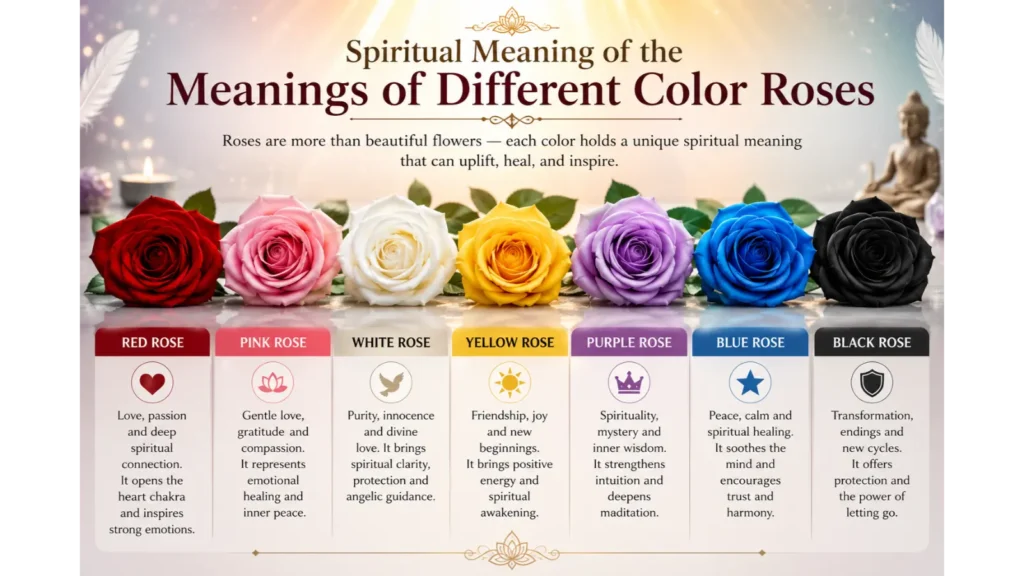
Spiritual Meaning of the Meanings of Different Color Roses
Across many spiritual traditions, rose colors represent inner growth, divine qualities, and emotional transformation.
Common Spiritual Symbolism
- Holiness: White roses symbolize spiritual purity and sacred devotion.
- Wisdom: Purple roses represent higher understanding and spiritual insight.
- Purity: White reflects innocence and truth.
- Transformation: Orange and green symbolize personal growth and positive change.
- Healing: Pink and green encourage emotional recovery and compassion.
- Protection: White roses are often associated with divine protection.
- Power: Red roses symbolize courage, strength, and heartfelt commitment.
- Enlightenment: Purple represents spiritual awakening.
- New Beginnings: Green and white roses symbolize fresh starts.
- Eternity: White roses often represent everlasting love and remembrance.
Many spiritual traditions use roses during ceremonies, meditation spaces, weddings, and memorial services because of their symbolic meanings.
Positive and Negative Meanings of the Meanings of Different Color Roses
Positive Meanings
Different colored roses communicate uplifting emotions and positive intentions.
- Love: Red roses symbolize deep romantic affection.
- Friendship: Yellow roses celebrate loyal relationships.
- Gratitude: Pink roses express appreciation and admiration.
- Hope: Green roses represent renewal and future possibilities.
- Purity: White roses symbolize innocence and honesty.
- Harmony: Soft-colored roses promote emotional balance.
- Celebration: Orange roses represent achievement and enthusiasm.
- Respect: Lavender roses communicate admiration and elegance.
Real-world example:
A bride carrying white roses symbolizes purity, while graduates receiving yellow roses celebrate friendship and success.
Negative Meanings
Context can change the interpretation of rose colors.
- Loss: Black roses symbolize endings or farewell.
- Isolation: Blue roses may represent unattainable dreams.
- Jealousy: Red occasionally symbolizes possessiveness.
- Betrayal: Yellow historically represented infidelity in some cultures.
- Distance: White may appear emotionally reserved in certain situations.
- Uncertainty: Mixed rose colors may communicate confusing emotions if chosen without intention.
Real-world example:
Black roses are often used in artistic themes to represent the end of a chapter rather than literal death.
Meanings of Different Color Roses
The symbolism of rose colors depends on the occasion, cultural traditions, and personal relationships. A red rose may express romance in one situation but respect or remembrance in another. Understanding context ensures the message matches the occasion.
Feng Shui
In Feng Shui, roses contribute both color energy and natural vitality.
- Associated element: Depends on the rose color, such as Fire for red and Wood for green.
- Energy symbolism: Love, harmony, prosperity, and emotional balance.
- Best rooms: Living rooms, bedrooms, entrances, and meditation spaces.
- Recommended combinations: White with green, red with gold, pink with cream.
- Home decorating tips: Fresh roses near natural light enhance positive energy, while balanced color combinations create visual harmony.
Marketing
Businesses often use rose-inspired colors to create emotional connections.
- Branding psychology: Red attracts attention, pink suggests care, and white represents simplicity.
- Consumer perception: Rose colors influence expectations before customers interact with a product.
- Trust signals: White and soft pink communicate honesty and quality.
- Packaging: Luxury beauty and fragrance brands frequently use rose-inspired palettes.
- Advertising: Floral colors evoke emotion, celebration, and elegance.
Examples include beauty, cosmetics, fragrance, chocolate, and luxury gift brands that frequently use rose-inspired color palettes to reinforce romance, sophistication, and premium quality.
Design
Rose colors are widely used across creative industries.
- Interior design: Soft pink creates relaxing spaces, while white enhances openness.
- Graphic design: Rose-inspired palettes communicate warmth and elegance.
- Web design: Gentle floral colors improve visual appeal and user comfort.
- User experience: Balanced color schemes support readability and emotional engagement.
- Minimalist aesthetics: White, blush pink, and muted green roses inspire clean, modern layouts.
Fashion
Rose colors influence personal style and first impressions.
- Clothing symbolism: Red projects confidence, pink expresses kindness, and white represents sophistication.
- Seasonal use: Pastels dominate spring, while deeper reds are popular during autumn and winter.
- Styling effects: Rose colors soften outfits and create approachable appearances.
- Personality impressions: Bright roses suggest confidence, while softer shades communicate warmth.
- Advantages: Versatile, timeless, and emotionally expressive.
- Disadvantages: Some colors may carry different meanings across cultures.
For example, a pink dress may communicate elegance at a daytime event, whereas a red outfit often becomes the focal point during evening celebrations.
Color Associations Are Not Universal
The meanings of different color roses vary across societies and historical periods.
Western cultures
Red roses symbolize romantic love, white roses represent weddings and remembrance, and yellow roses commonly celebrate friendship.
Eastern cultures
White may symbolize mourning in several Asian traditions, while red often represents prosperity, happiness, and celebration.
Religious traditions
Christianity frequently associates white roses with purity and the Virgin Mary, while roses in other faiths may symbolize divine beauty, compassion, or spiritual devotion.
Historical interpretations:
During the Victorian era, flowers formed a symbolic language known as floriography, allowing people to communicate emotions discreetly through specific rose colors.
Modern global interpretations:
Today, globalization has blended traditional meanings, but rose colors remain powerful emotional symbols in celebrations, condolences, anniversaries, and everyday gift-giving.
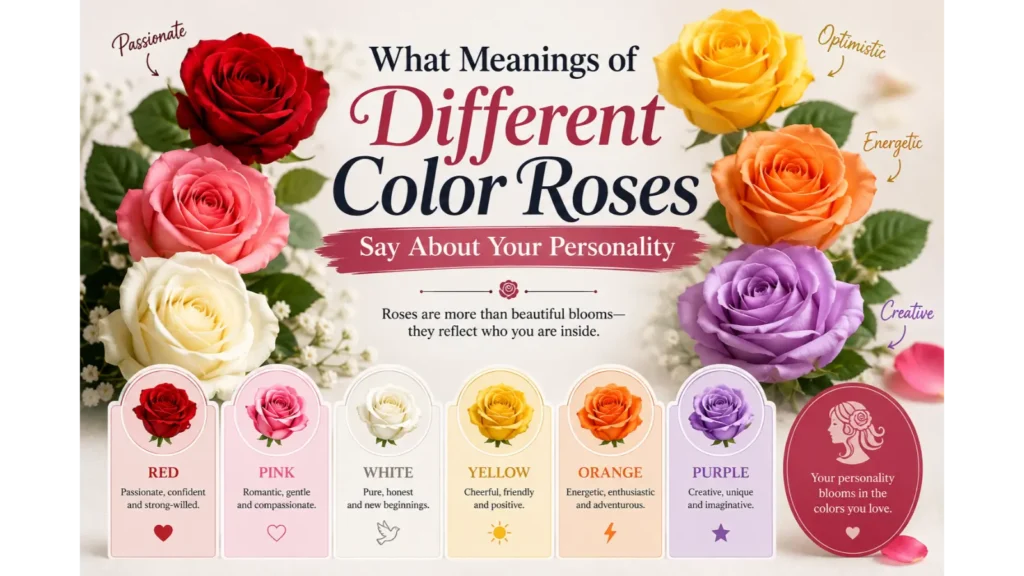
What Meanings of Different Color Roses Say About Your Personality
People often associate favorite rose colors with certain personality characteristics. However, these interpretations are descriptive rather than scientifically predictive, and color preferences alone cannot determine personality.
Strengths
Individuals drawn to different rose colors may value love, compassion, optimism, creativity, loyalty, elegance, or personal growth.
Weaknesses
Depending on the preferred color, people may sometimes appear overly emotional, perfectionistic, idealistic, reserved, or impulsive.
Social Behavior
Those attracted to warm-colored roses often enjoy social interaction, while people who prefer softer colors may appreciate peaceful and meaningful conversations.
Work Style
Rose color preferences are sometimes linked with creativity, collaboration, reliability, leadership, or thoughtful decision-making.
Relationships
Many people who appreciate rose symbolism value trust, emotional honesty, affection, and long-term commitment.
Emotional Tendencies
Favorite rose colors may reflect current emotions or life stages rather than fixed personality traits. Preferences often change with age, experiences, and cultural influences.
FAQs:
What defines the meanings of different color roses?
Different rose colors represent specific emotions, traditions, and symbolic messages shaped by history, culture, and color psychology.
What do different color roses symbolize?
They symbolize love, friendship, gratitude, purity, hope, remembrance, enthusiasm, mystery, renewal, and many other emotions depending on the color.
Why are different color roses important?
They help communicate feelings nonverbally and are widely used during celebrations, weddings, anniversaries, sympathy events, and religious ceremonies.
Are rose colors considered warm or cool?
Some, like red, orange, and yellow, are warm colors, while white, blue, purple, and green create cooler visual impressions.
What emotions do different color roses represent?
Rose colors commonly express love, happiness, appreciation, peace, compassion, admiration, hope, and encouragement.
What do different color roses mean spiritually?
Spiritually, they often symbolize purity, healing, divine love, transformation, protection, wisdom, and new beginnings.
Which colors pair well together in rose arrangements?
Popular combinations include red with white, pink with white, yellow with orange, purple with white, and green with cream for balanced floral designs.
What does liking certain rose colors say about a person?
Color preferences may reflect personal tastes, emotional states, or aesthetic preferences, but they should not be viewed as definitive indicators of personality.
Which rose color represents friendship?
Yellow roses are the traditional symbol of friendship, joy, encouragement, and positive relationships.
Which rose color represents true love?
Red roses remain the most recognized symbol of deep romantic love, passion, and lifelong commitment.
Conclusion
The meanings of different color roses extend far beyond their natural beauty. Each color carries distinct psychological, cultural, and spiritual symbolism that helps people express emotions, celebrate milestones, offer comfort, and strengthen relationships. From the passionate message of red roses to the peaceful elegance of white and the joyful optimism of yellow, every shade tells a unique story.
Although interpretations vary across cultures and traditions, understanding these symbolic meanings allows people to select roses thoughtfully and communicate heartfelt messages with greater confidence and authenticity.